



Blog
How ESG Market Intelligence Benefits Organizations
By: Stefan Gergely -
23 February 2026


We love our data, and now that you're here, you're one step closer to loving it too.
A wide sample of data, so you can explore what is possible with our data
Choose ->
built with procurement in mind. Focused on manufacturers, products and more
Choose ->
built with insurance in mind. Focused on classifications, business activity tags and more
Choose ->
built with sustainability in mind. Focused on sustainability commitments, and environmental and social governance insights.
Choose ->
built with strategic insights in mind. Focused on market trends, competitor analysis, and industry-specific data
Choose ->

Keep up to date with our technology, what our clients are doing and get interesting monthly market insights.

Key Takeaways:
Many companies find themselves in the following scenario: they set ambitious ESG targets, only to realize they have no idea how to track progress or prevent risks that inevitably crop up.
The lack of clarity and unnoticed pitfalls eventually derail their strategy and lead to outcomes that fall short of expectations.
The antidote to this?
Equipping yourself with the ESG market intelligence that you can turn into actionable insights.
In this article, you’ll learn exactly how it can help you, from spotting risks early to protecting brand value.
ESG market intelligence helps organizations identify environmental, social, and governance risks that traditional financial analysis often overlooks.
This is important because, as Deloitte’s former sustainability expert, Anne-Maria Björknäs, explains, sustainability-related risks can seriously harm organizations if they go unmanaged.
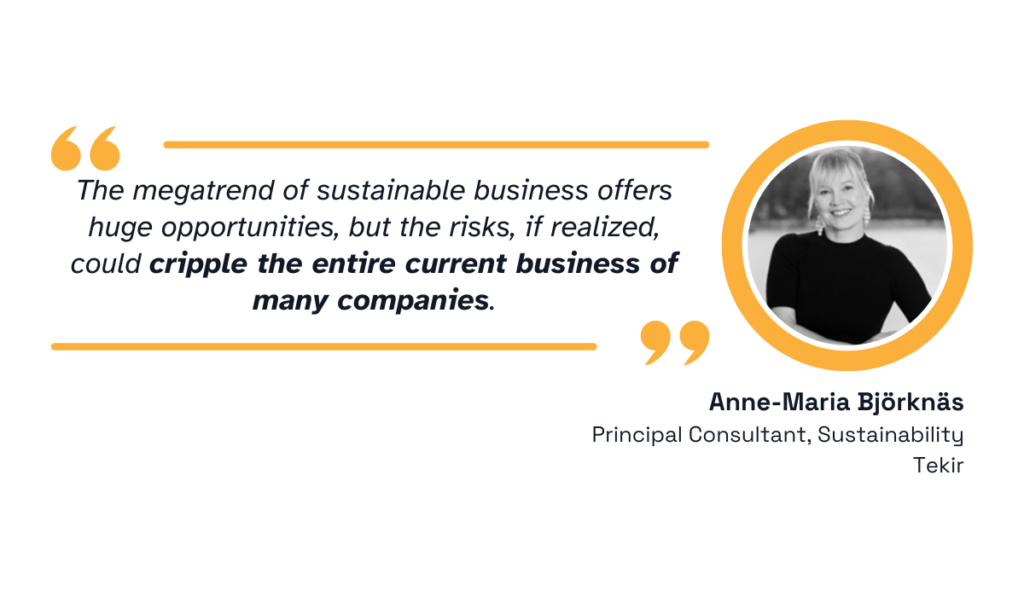
Illustration: Veridion / Quote: Deloitte
By keeping an eye on ESG factors like climate exposure, labor practices, regulatory compliance, and governance, companies can see potential disruptions coming sooner.
That gives them more time to spot emerging risks and deal with them before they spiral into, for example, supplier failures, reputational damage, or compliance issues.
A recent case study by S&P Global demonstrates this well.
It describes how a U.S.-based apparel retailer used S&P’s data to assess its suppliers for climate-related risks.
For one supplier, the analysis found that the risks of extreme heat and fluvial flooding are expected to double by 2040 and 2090, respectively.
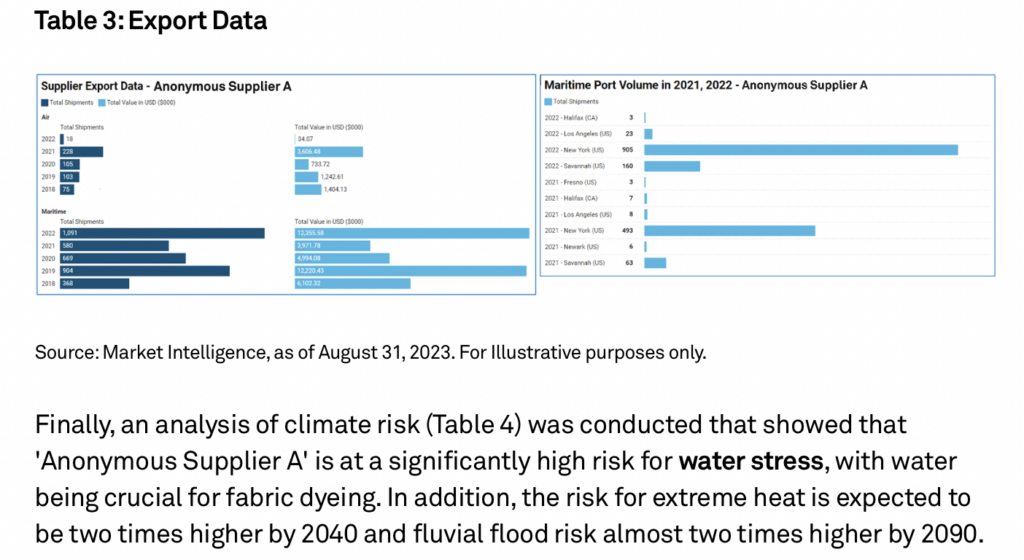
Source: S&P Global
So, if the retailer wanted to prevent a potential catastrophe, they needed to start taking action early, whether that meant adjusting sourcing or helping the supplier adapt.
These insights made that possible by identifying the risks in advance.
This shows the importance of having reliable third-party data.
Still, many companies struggle to collect it and keep it up-to-date internally.
The perfect solution could be using external data providers that equip teams with accurate, current data with no effort on their part.
Veridion is one such example.
This comprehensive market intelligence platform collects data on over 100M global companies and automatically assesses each one on 26 granular ESG risk factors.
That includes everything from carbon footprint to monopoly practices.
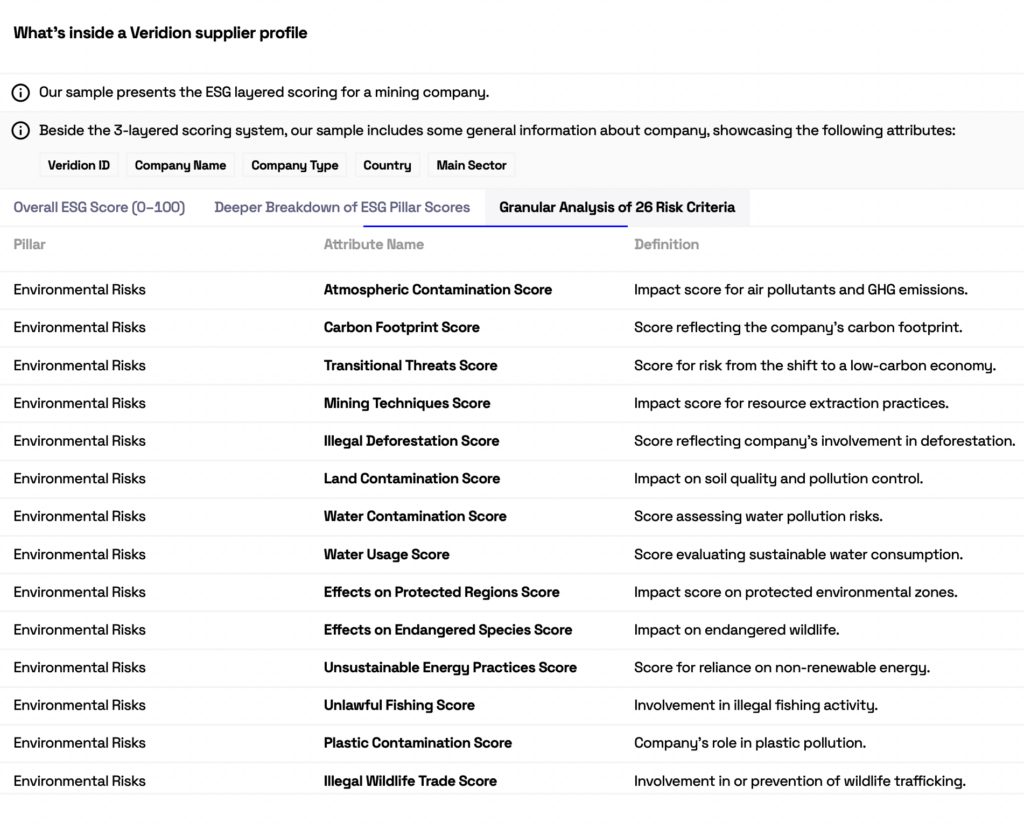
Source: Veridion
Based on these assessments and data, Veridion further assigns ESG scores to each supplier.
These scores make it easy to compare vendors and understand where ESG risks actually sit in the supply chain at a glance.
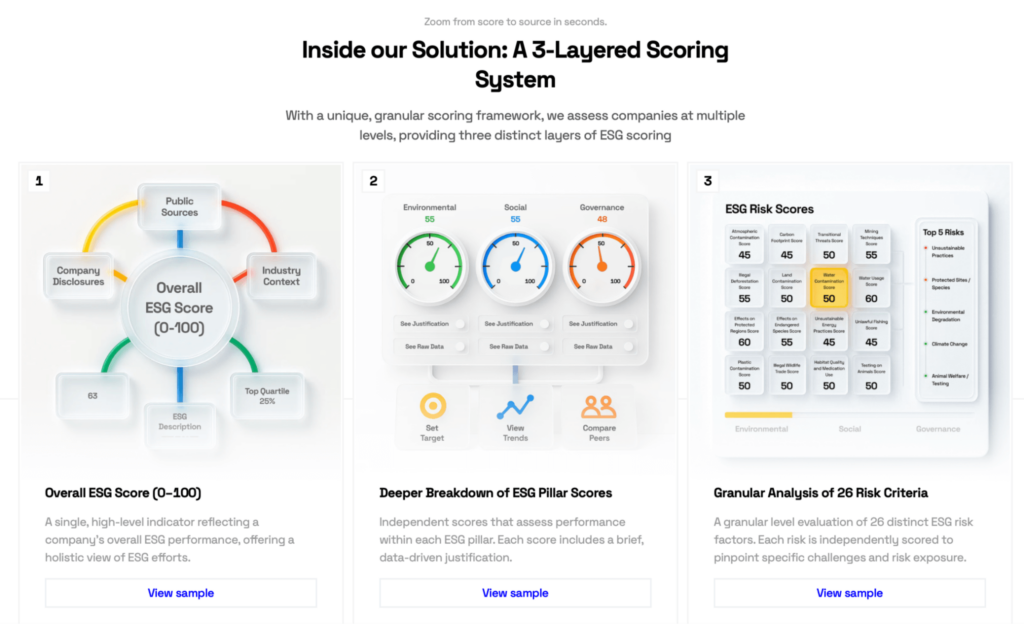
Source: Veridion
With risks made immediately visible, organizations can act sooner across even the most complex supply networks.
And because Veridion automates data collection and analysis, teams don’t need to invest extra time tracking suppliers or stitching insights together themselves.
This process is handled for them.
Global ESG regulations have increased by a staggering 155% in roughly the last decade alone.
These growing new mandates from various institutions, like the European Commission and the U.S. SEC, create a constantly moving target.
So, if organizations want to stay compliant, they need reliable intelligence.
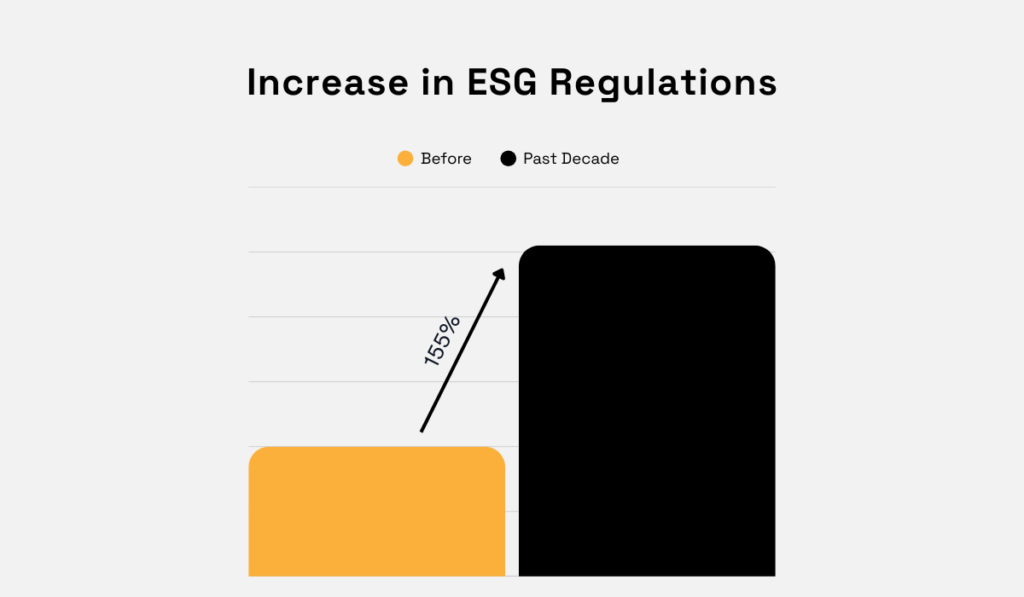
Illustration: Veridion / Data: ESG Book
ESG market intelligence platforms can help in this area, too.
By cross-referencing company operations and supply chains with evolving standards, they give companies a clear, up-to-date view of their compliance.
At the same time, they help compliance teams spot gaps early, such as newly required footprint metrics, and adjust before those gaps turn into problems.
Decision-makers are increasingly seeing the value of such a proactive approach to ESG compliance.
In KPMG’s 2024 study, nearly half said their main reason for conducting ESG due diligence was precisely to respond more effectively to regulatory requirements.
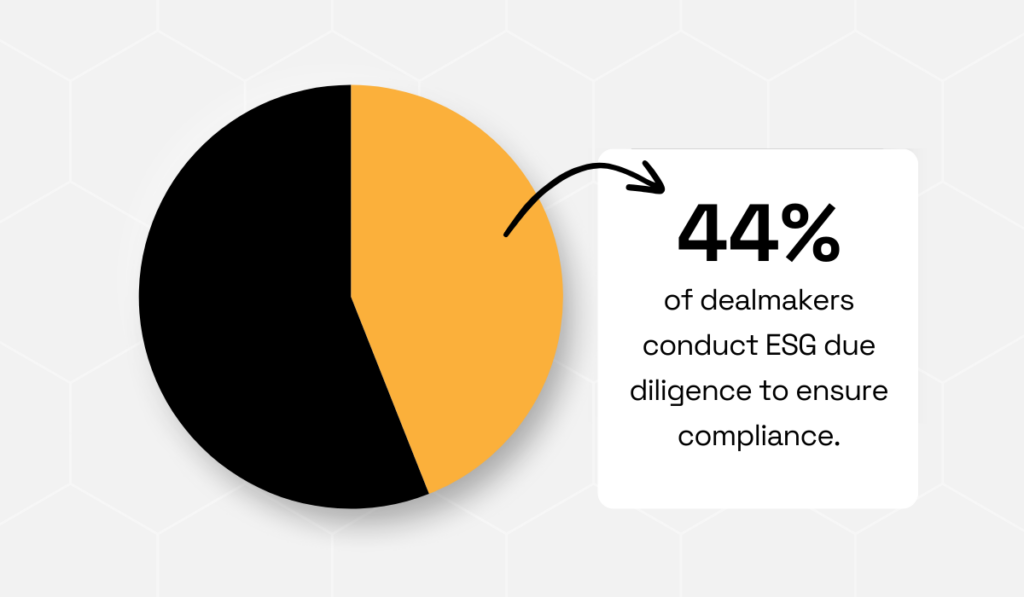
Illustration: Veridion / Data: KPMG
For many, the greatest concern is the risk of ESG-related penalties, which can be significant.
One recent case is Giorgio Armani, which was hit with a hefty €3.5 million fine.
According to the Italian Competition Authority (AGCM), the fine was imposed due to alleged misleading commercial practices.
The authority claims the company’s social and ethical responsibility statements didn’t reflect actual working conditions in its supply chain, pointing to subcontractor facilities where worker health and safety were at risk.

Source: AGCM
This shows that noncompliance risks for companies are real, even if they aren’t doing anything questionable themselves.
Their supply chains can still put them in danger, and saying ‘we didn’t know’ won’t cut it.
Companies need to know what’s happening in their network. Ignorance is no longer an option.
By providing verified, real-time data on suppliers and their practices, ESG market intelligence makes ESG disclosures more accurate and easier to defend.
And of course, taking the right action becomes much easier, too.
High-quality, up-to-date data also enables more reliable ESG reports.
Market intelligence connects metrics, like emissions, board diversity, and safety incidents, to real-world benchmarks, thus making disclosures verifiable.
This further helps benchmark performance against peers, which is important to both internal and external stakeholders.
For instance, one report explains how, internally, MI data helps companies“identify areas of progress and further improvement.
Externally, on the other hand, it enables investors to assess and compare companies more accurately.
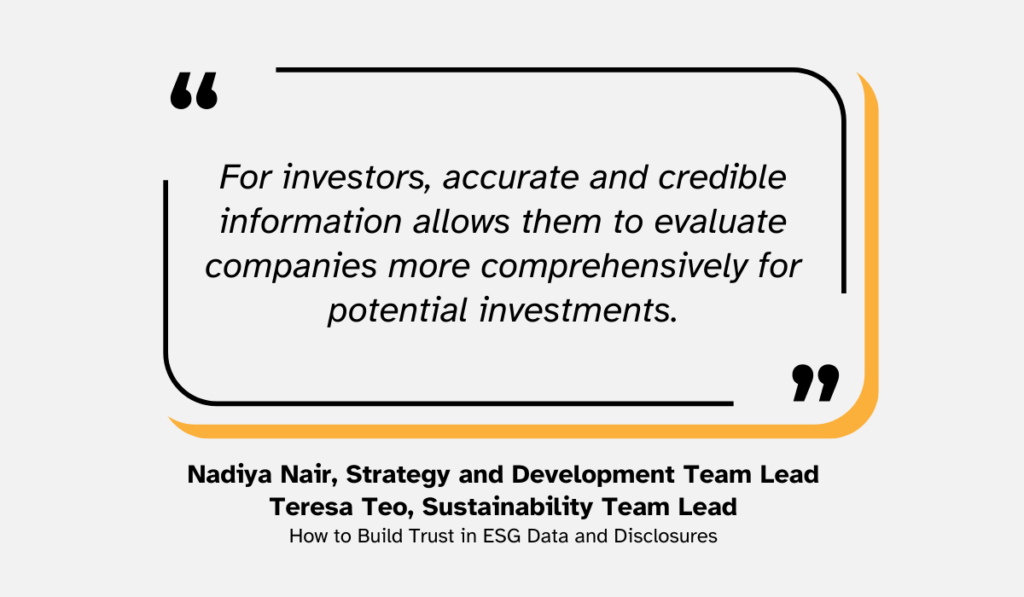
Illustration: Veridion / Quote: GFTN
But external benefits don’t end with investors.
Strong ESG reports make it easier for other third parties, like regulators, rating agencies, and customers, to trust your claims, too.
Now, the prerequisite for this is having verifiable, credible data. Without it, disclosures look suspect.
Given what the research shows, this is not surprising.
For instance, KPMG’s 2023 report showed that the majority of companies lack confidence in their own data.
Only about a quarter said they’re fully prepared for independent ESG assurance, which suggests their reports might not be entirely reliable.
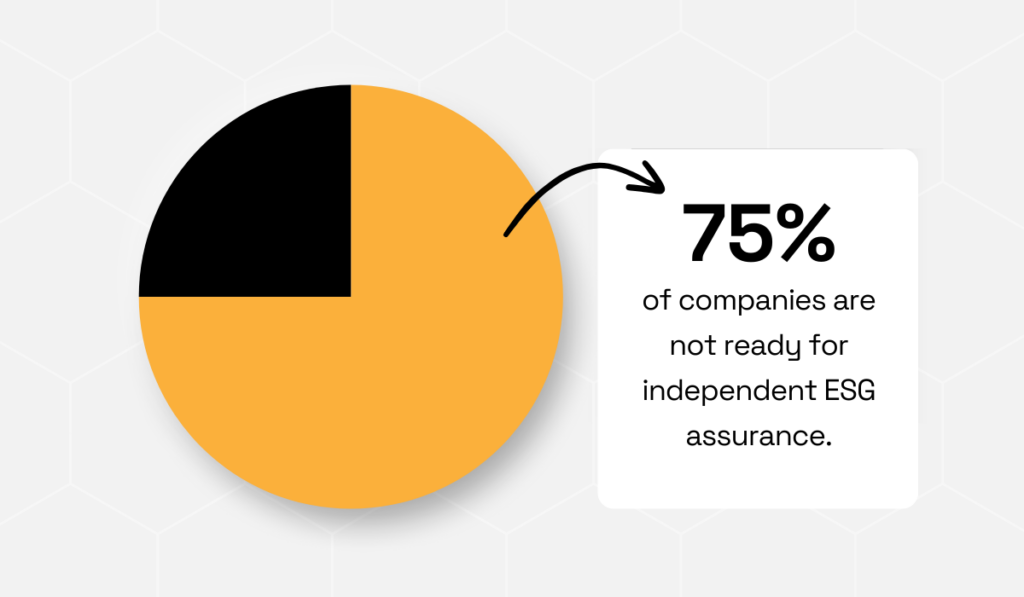
Illustration: Veridion / Data: KPMG
Intelligence tools once again help address this issue by automating data collection, eliminating duplicate data, and validating inputs.
In other words, they supply the evidence needed for credible reporting, thereby helping reduce skepticism both inside and outside the company.
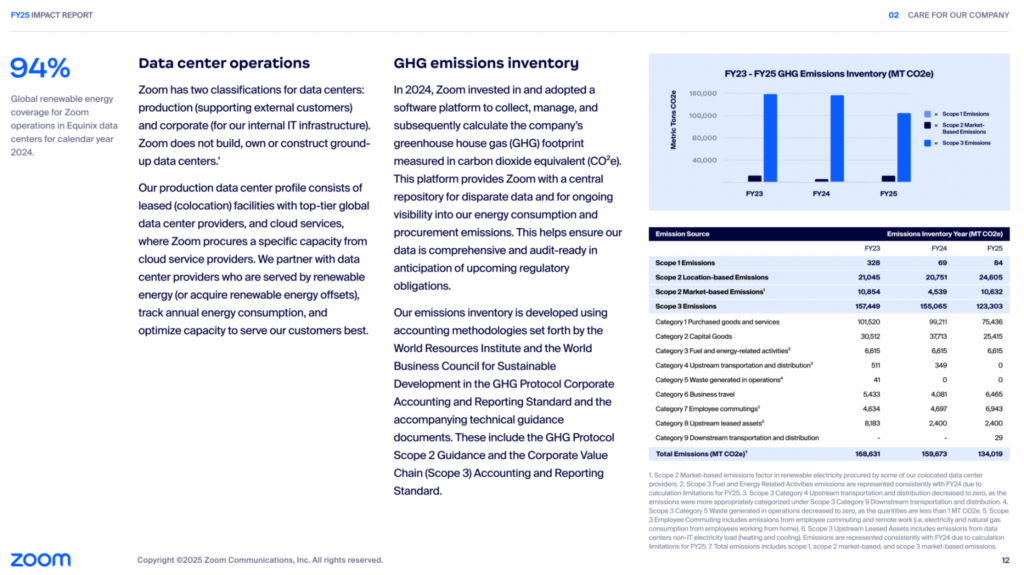
To see this in action, one can look at how Zoom backs its claims with hard data in its annual impact reports.
For example, their most recent report includes exact Scope 1-3 emission levels and breaks down exactly where emissions come from in the most critical scope.
Source: Zoom
As Zoom details in the report, the company uses a software platform to create this comprehensive emissions inventory.
They explicitly credit the platform with ensuring their data is complete and audit-ready.
This shows the importance of having specialized tools you can rely on and leverage during potential audits.
Today, many corporate decision-makers and investors recognize that ESG opportunities and risks can greatly impact long-term value.
That’s why they increasingly rely on ESG performance to guide investment.
In fact, according to Capital Group’s 2025 study, as many as 87% of investors now consider ESG issues in their decision-making.
This includes not just screening companies based on ESG performance, but also integrating ESG factors and intentionally allocating to strategies with sustainable investment criteria.
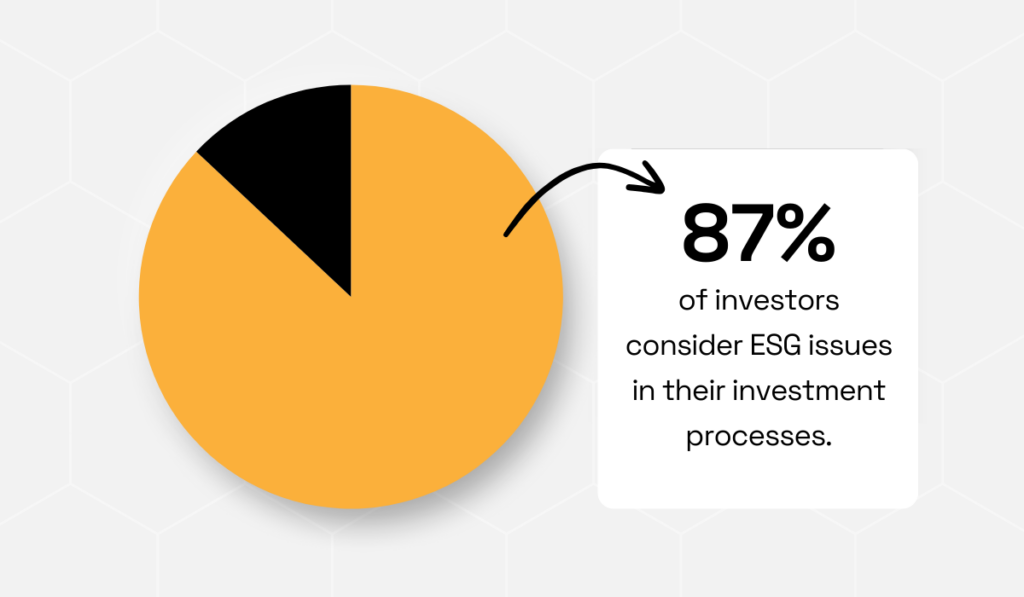
Illustration: Veridion / Data: Capital Group
While slightly below the record 90% adoption in previous years, these figures still demonstrate a broad commitment to ESG integration.
Additionally, among investors already using ESG criteria, 90% plan to keep or boost their sustainable investments over the next 12 months.
Kroll’s 2023 study suggests this is the right approach.
Its findings show that “ESG Leaders” significantly outperform laggards, averaging 12.9% annual returns versus 8.6% for low-ESG companies.
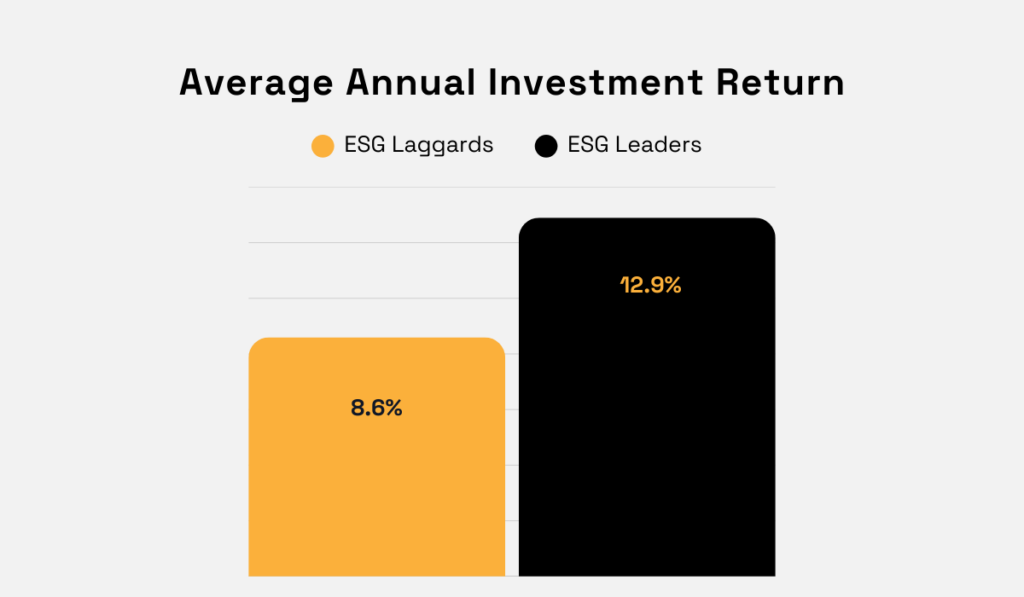
Illustration: Veridion / Data: Kroll
By making ESG-friendly investments, investors and internal capital allocators can strengthen long-term value creation and improve portfolio resilience.
To make these decisions effectively, they need reliable, actionable data.
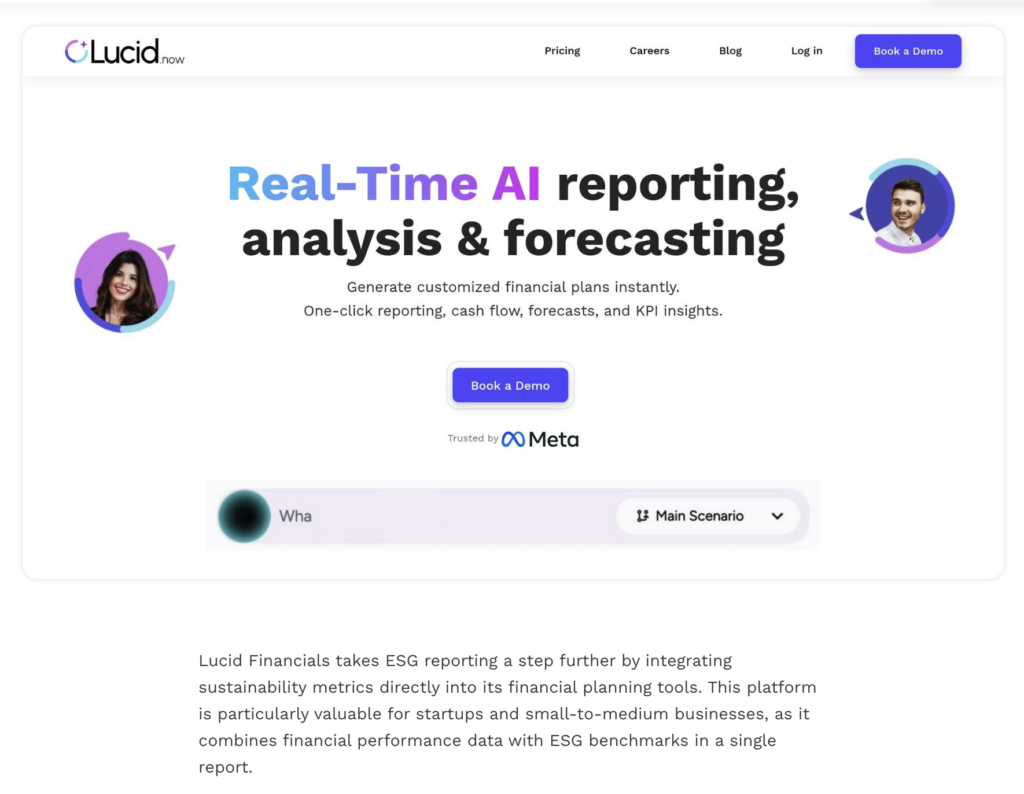
Market intelligence tools often provide the best solution by presenting ESG metrics alongside financial metrics, giving a comprehensive view to all stakeholders.
For example, Lucid Financials integrates ESG data directly into financial planning and reporting, making it easier to align sustainability with investment decisions.
Source: Lucid Financials
To ensure reliable data, companies can integrate platforms like this with specialized data and intelligence providers.
Once integrated, they gain a complete view of both financial performance and sustainability in a single place.
This helps companies attract more investors and larger investments, as it demonstrates strong, transparent ESG performance backed by credible data.
For investors, it enables better-informed decisions, improved portfolio resilience, and stronger long-term returns.
In short, it’s a win-win.
Stakeholders increasingly expect organizations to demonstrate responsible business practices.
And this expectation is not limited to just one group, but spans the board.
For example, as PwC’s survey showed, consumers, business leaders, and employees alike expect and favor ESG-friendly companies.
More specifically, 83% of consumers believe that companies should actively shape ESG best practices, while 86% of employees say they’d prefer to work for companies that care about issues that matter to them.
Business leaders are taking note, with over 90% of them feeling like their companies have a duty to act on ESG issues.
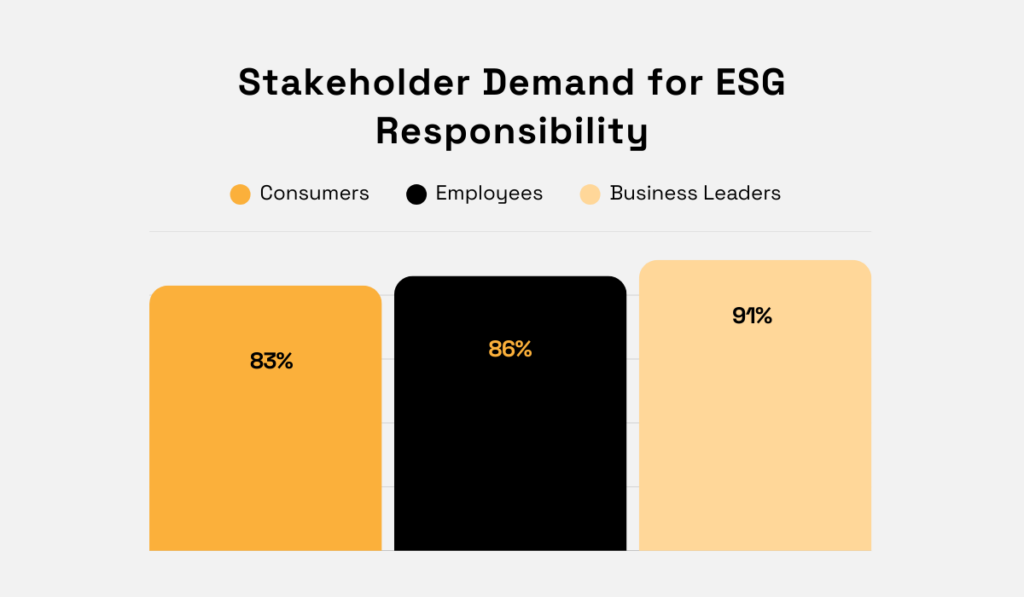
Illustration: Veridion / Data: PwC
This shows that companies shouldn’t be adopting ESG just for the sake of appeasing regulators.
Acting responsibly and committing to ESG goals helps protect brand reputation, too, across third-party stakeholders.
As a Thomson Reuters report concludes, ESG is not just a regulatory, but also a reputational risk, with numerous interested parties “keeping a watchful eye” on companies’ ESG alignment.
In practice, this means that ESG commitments are judged not only by what companies promise, but by how clearly and credibly they can communicate progress over time.
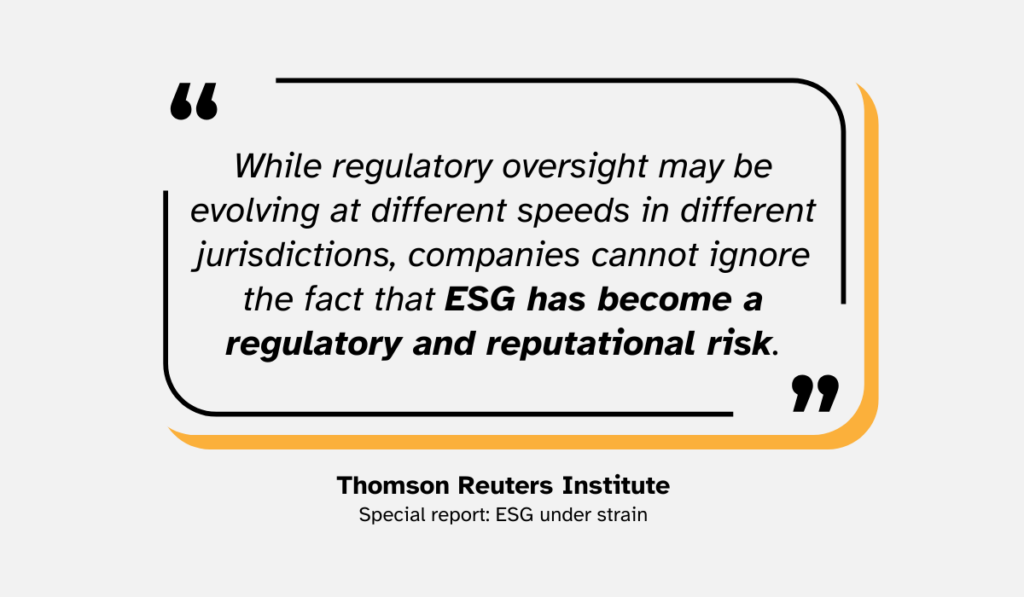
Illustration: Veridion / Quote: Thomson Reuters Institute
With that in mind, simply making bold ESG promises and setting ambitious targets won’t cut it.
Without consulting real data to set baselines and track progress, companies risk accusations of greenwashing or being unprepared for unexpected ESG issues.
This is especially critical for high-profile commitments.
As an example, consider the 630 companies that have publicly committed to net-zero carbon by 2040 by signing The Climate Pledge.
If successful, this project will put the signees an entire decade ahead of the Paris Agreement’s goal for 2050.

Source: The Climate Pledge
Ambitious, right?
That’s precisely why commitments like this increase reputational exposure if progress is unclear, targets evolve, or roadmaps change.
So, again, to counteract this, companies need to back ambition with credible data, continuous measurement, and clear reporting.
ESG market intelligence tools support this by helping track performance, as well as benchmark against peers, sectors, and regulatory expectations.
Additionally, they let companies monitor external perceptions, controversies, and emerging risks that could impact their reputation.
This gives them a chance to respond proactively and maintain trust with customers, investors, and partners.
There are many ways in which ESG market intelligence can benefit organizations.
In this article, we focused on just the five we considered the most significant.
In any case, as ESG slowly but surely becomes more and more mandatory, market intelligence will become essential for both setting realistic goals and reporting on progress.
So, why not leverage it while it’s still an asset?
Starting early can give you a competitive edge, allow enough time for mastering the tools, and building processes that stick.
Jump in now and get ahead of the curve!