



Blog
Top 7 Supply Chain Mapping Tools
By: Auras Tanase -
02 March 2026


We love our data, and now that you're here, you're one step closer to loving it too.
A wide sample of data, so you can explore what is possible with our data
Choose ->
built with procurement in mind. Focused on manufacturers, products and more
Choose ->
built with insurance in mind. Focused on classifications, business activity tags and more
Choose ->
built with sustainability in mind. Focused on sustainability commitments, and environmental and social governance insights.
Choose ->
built with strategic insights in mind. Focused on market trends, competitor analysis, and industry-specific data
Choose ->

Keep up to date with our technology, what our clients are doing and get interesting monthly market insights.

Today, supply chains are a lot like a spider web: interconnected and sensitive to disruption.
Global sourcing, subcontractors, and near-constant disruptions make supply chain mapping increasingly confusing.
So much so, in fact, that many organizations are working with suppliers they barely understand beyond Tier 1.
That’s where supply chain mapping tools come in.
They help you uncover who your suppliers depend on, where risks hide, and how exposure spreads across tiers and products.
But various tools target various goals.
That’s why we’ve compiled seven of the most relevant supply chain mapping tools today, so you can pick the right one for your needs.
We’ll start our list with Veridion because it approaches supply chain mapping from a unique angle.
It operates as a Data-as-a-Service provider, so it delivers global company data through APIs.
This means you don’t map supply chains by clicking through dashboards.
Instead, you build mapping, along with discovery and risk logic, directly into your own systems, be they procurement tools, risk engines, or analytics platforms.
This makes Veridion a top choice if you’re building automated supplier discovery, multi-tier risk screening, or large-scale vendor intelligence workflows. This tool gives you the raw power to do that at scale.
Supply chain mapping depends on so much more than knowing who your suppliers are.
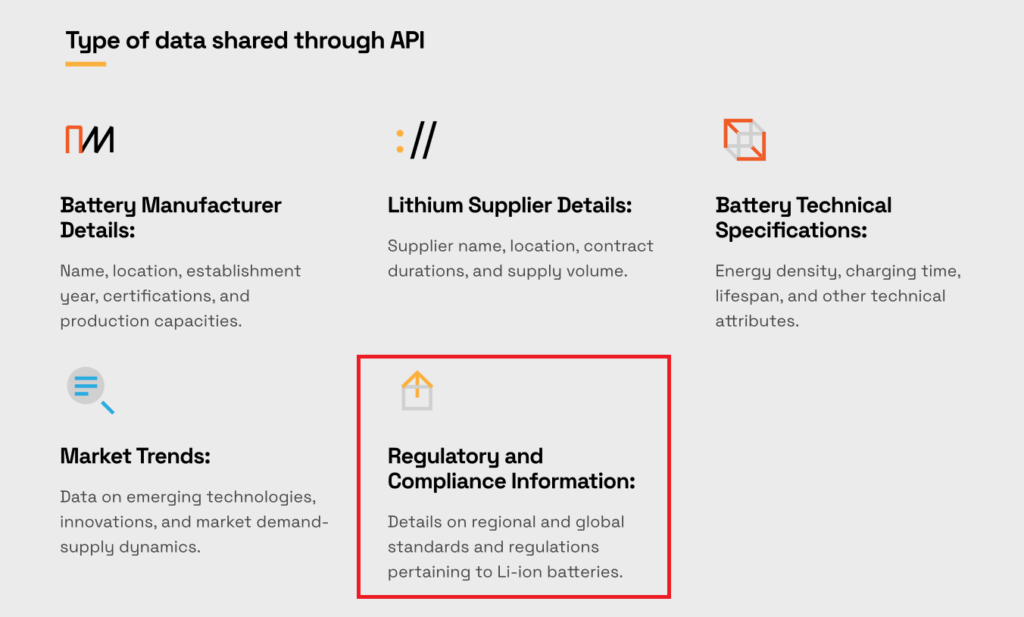
Through its APIs, Veridion exposes the underlying signals that shape supply chain risk and dependency, as shown in the example below:
Source: Veridion
These data points can be used to enrich supplier maps with context, thus helping teams understand exposure as much as connections.
Veridion’s other selling point is its global company data and immense coverage: 250 countries and counting, plus a strong representation of SMBs: the bit where so many legacy providers fall short.
And there’s another key benefit here.
Data is refreshed in near real time by continuously scanning the web and transforming unstructured signals into structured company profiles, including product-level intelligence and ESG indicators.
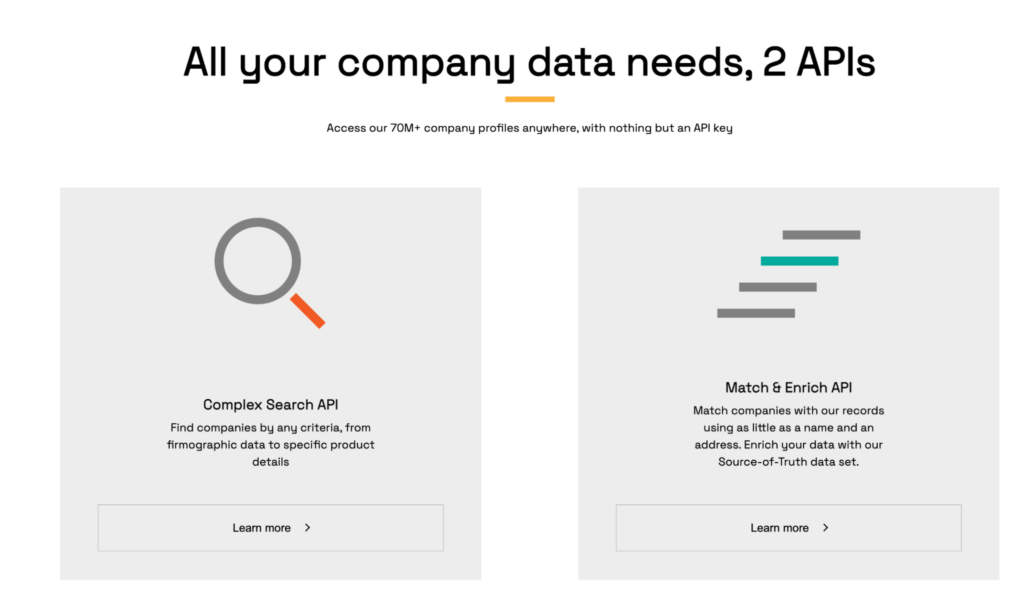
You access this data through two main APIs:
Source: Veridion
The Search API lets you find companies using rule-based logic: a mix of product keywords, technical specifications, location, employee count, and exclusion rules.
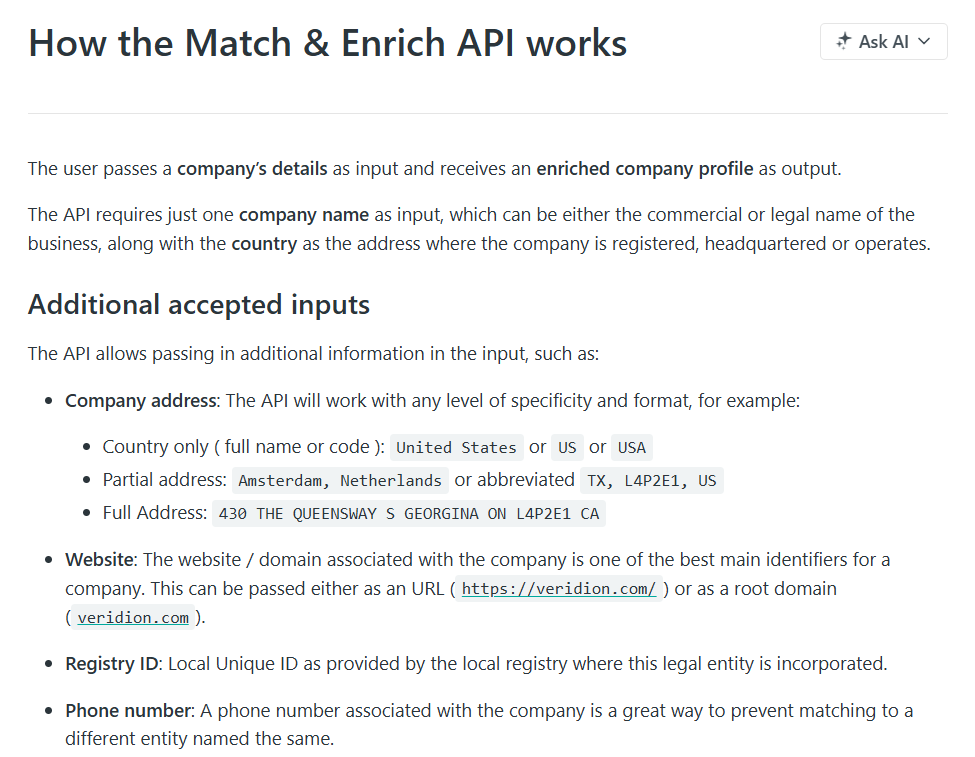
The Match & Enrich API works in reverse, so you can get an enriched company profile by inputting as few as two data points.
Source: Veridion
Each enriched profile includes confidence scores, which in turn help you make the right decisions down the line.
So here’s what you get with Veridion:
That said, Veridion is not a plug-and-play, UI-first tool.
Because it’s API-driven, it assumes a certain level of technical capability, and it’s not designed for ad-hoc, manual exploration.
Pricing follows the same logic.
Veridion uses custom, usage-based pricing. But you can explore a sample of our data first or speak to us for more information.
Compared to visually oriented platforms like Sourcemap or collaboration-focused tools like Kodiak Hub, Veridion prioritizes automation, depth, and scalability.
UI-driven tools may be better for instant visual maps. Veridion, however, is built for embedding supply chain intelligence directly into decision engines at scale.
And it really is unmatched at this.
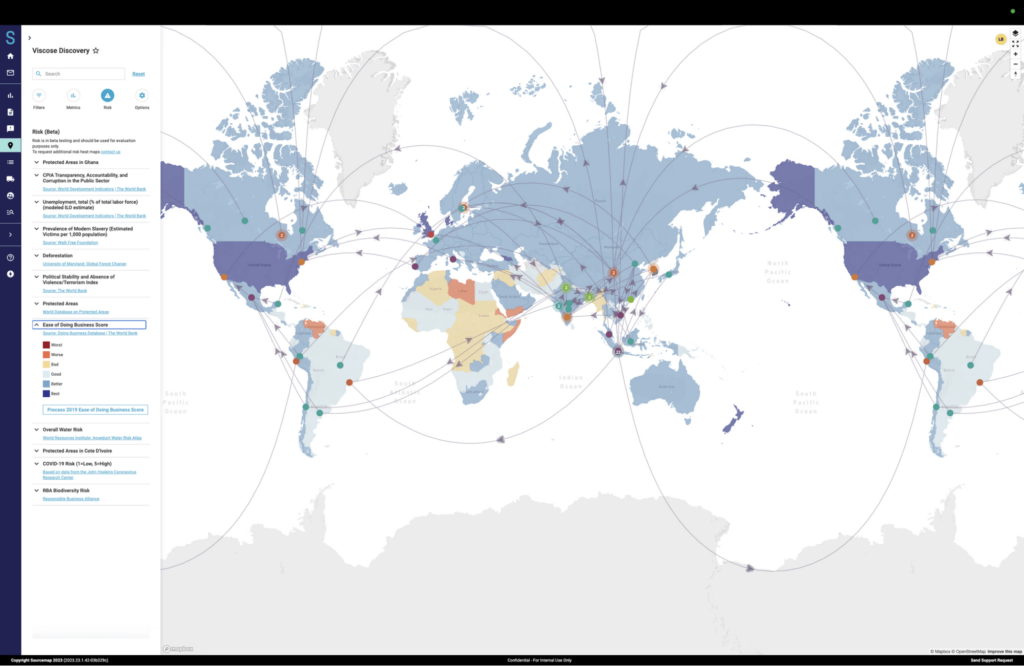
Sourcemap is one of the most established names in supply chain mapping, especially for its multi-tier visibility and sustainability focus.
Source: Sourcemap
Unlike Veridion’s API-driven approach, which feeds data directly into internal systems, Sourcemap centers on visualization and collaboration.
In other words, you interact with supply chain data through maps, diagrams, and dashboards.
It’s a great way to see and understand relationships, but also to explain them to other teams.
This is what makes Sourcemap a gold standard for organizations that prioritize transparency and traceability.
You can use Sourcemap to map suppliers across all tiers, visualize material flows, and layer in environmental and social impact data.
Speaking of environment and social impact, this is where Sourcemap really shines.
Their website is filled with sustainability report quotes from giant brands and manufacturers, describing how they’ve been using Sourcemap to sync with evolving requirements.
Take what Jonah Smith, IBM’s VP and Global Head of ESG, said:
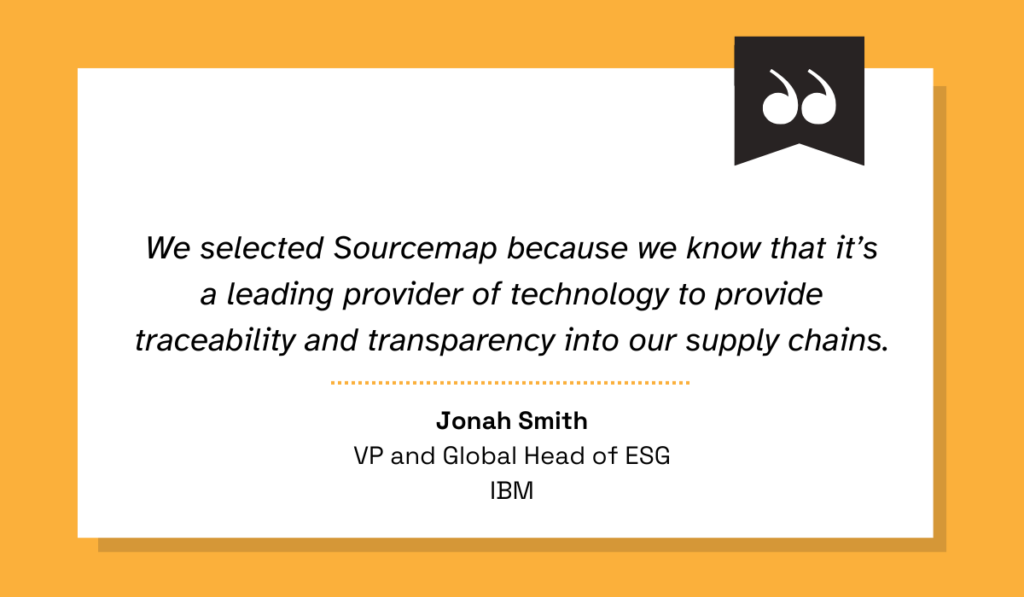
Illustration: Veridion / Quote: Sourcemap
Sourcemap brings lifecycle assessments, supplier disclosures, and risk signals together into interactive maps.
These can be easily shared across teams. Plus, they make sustainability impacts easy to see and understand.
This approach does come with a few trade-offs, though.
Sourcemap relies heavily on supplier-provided data, which can limit depth and freshness.
On top of that, its platform-centric design makes it less flexible for automation-heavy workflows or custom logic at scale.
Sourcemap overlaps with Resilinc in terms of multi-tier visibility but places less emphasis on real-time risk monitoring.
And unlike Kodiak Hub, which focuses on supplier risk and performance scoring, Sourcemap is primarily built around visual supply chain maps.
Their pricing model is custom and usually enterprise-focused.
Sourcemap is thus great if you want structure and usability out of the box. But it’s not the best choice if you’re looking for automation and flexible data integration.
The next noteworthy SC mapping tool is Resilinc.
They position themselves as a supply chain resilience and risk intelligence platform, with a clear focus on disruption monitoring and response.
So they answer the urgent questions, like what just broke, who is affected, and how fast you need to act.
Resilinc combines two key features.
One is multi-tier supply chain mapping:
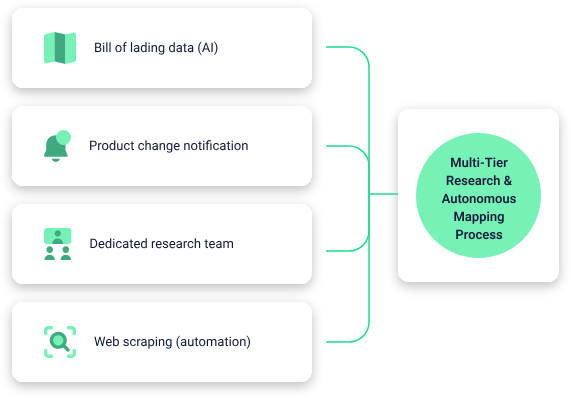
Source: Resilinc
The other is real-time risk alerts.
Namely, Resilinc continuously monitors events like natural disasters, geopolitical developments, cyber incidents, financial distress, and more.
Then, it maps how those disruptions cascade across supplier tiers.
This makes it indispensable in industries where downtime, shortages, or compliance failures can have immediate consequences and snowball fast.
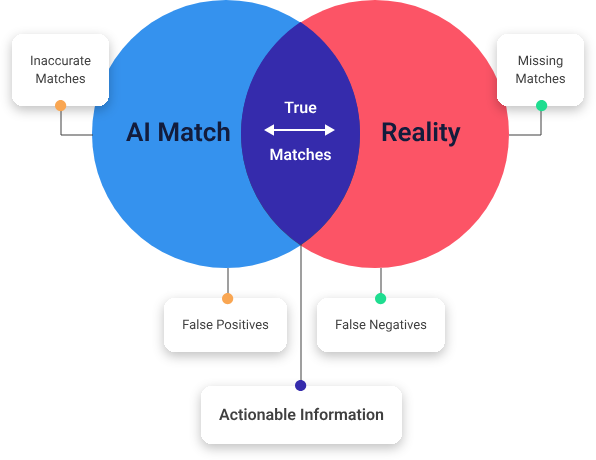
But perhaps Resilinc’s greatest strength lies in speed and prioritization.
And they have a smart AI solution to do just that:
Source: Resilinc
Their AI tool applies analytic techniques to cleanse and de-duplicate data. So raw and often chaotic data becomes structured and actionable.
That focus on real-time monitoring also shapes how Resilinc compares to other tools.
Its multi-tier focus may be similar to Sourcemap, but Resilinc places more emphasis on alerts and resilience planning than on sustainability reporting or lifecycle transparency.
And compared to Z2Data’s component-level focus or transparency platforms like TrusTrace and Origin, Resilinc is more event-driven.
Think detecting disruptions and guiding response over documenting supply chains over time.
And this is a perfect opportunity to discuss Resilinc’s shortcomings.
There’s simply less emphasis on deep company data enrichment, and its platform-driven model offers less flexibility for organizations looking to embed supply chain intelligence directly into internal systems.
Pricing is also relatively high compared to similar tools.
Some software pricing pages place it at an approximate $1,400/month, though it’s also custom and tied to the number of monitored suppliers and alerting scope.
So if your goal is to detect and respond to disruptions fast, Resilinc delivers. But you may have to look elsewhere for long-term supplier intelligence and embedded workflows.
Z2Data is made for electronics and hardware supply chains, so it goes deeper than most tools when it comes to components, compliance, and lifecycle risk.
It’s a niche platform. But within that niche, it’s one of the greatest options available.
Rather than starting with supplier discovery at the company level, Z2Data starts with the component itself.
This means you can upload full bills of materials and map individual parts to suppliers, manufacturing sites, and sub-tier dependencies like fabs, assembly plants, or EMS locations.
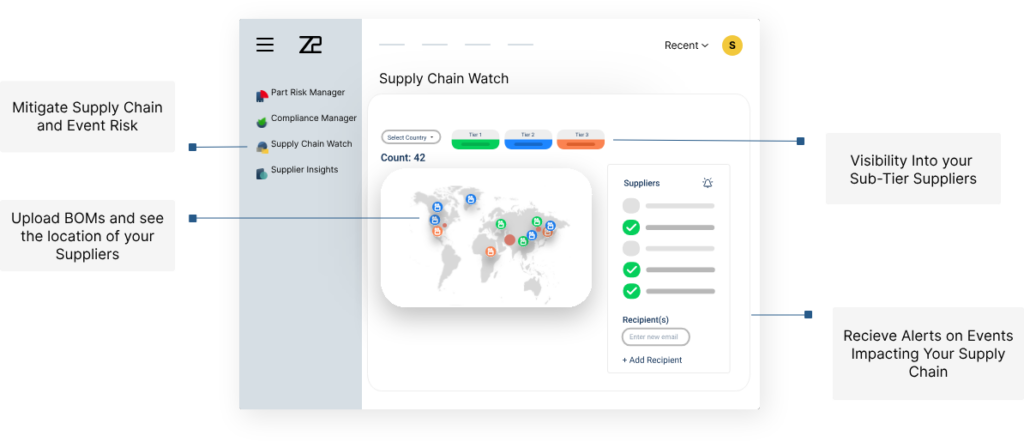
Source: Z2Data
So, if you’re in an industry where a single component shortage can halt production, Z2Data is for you.
The platform brings together BOM-level mapping, real-time obsolescence tracking, and compliance monitoring for regulations like RoHS, REACH, UFLPA, and Prop 65.
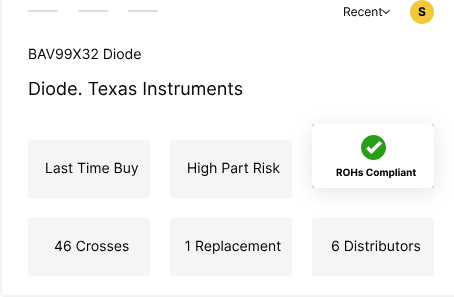
Source: Z2Data
Z2Data also layers in event monitoring and site-level risk analysis.
This means your team can see how, say, geopolitical shifts or regulatory changes affect specific parts. Then, of course, they can use this data to make the right decisions.
That depth is where Z2Data stands out.
This senior electrical engineer’s review goes to show just that:
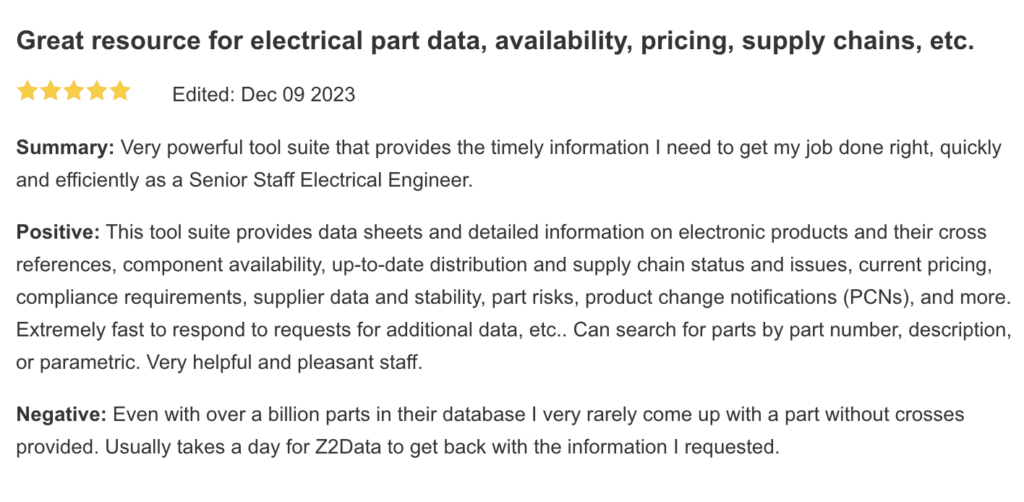
Source: Slashdot
Their data covers over a billion components, hundreds of thousands of manufacturing sites, and more than a million suppliers.
The downside? Scope.
As we mentioned, Z2Data is highly specialized, meaning limited applicability outside electronics-heavy industries.
Pricing is also custom, based on the number of parts you have, how many licenses you need, and more. They offer a free trial, though, so you can try it out before you commit.
Overall, Z2Data is a powerful choice if component-level risk is your biggest concern. But for broader, multi-industry supply chain mapping, other tools may do a better job.
Kodiak Hub is another great SC mapping tool because it approaches supply chain mapping through the lens of supplier risk management.
Instead of mapping every tier or component in exhaustive detail, you’re focusing on bringing supplier risk, performance, ESG, and compliance signals into a single, structured view.
This echoes the philosophy of Kodiak Hub’s founder, Malin Schmidt:
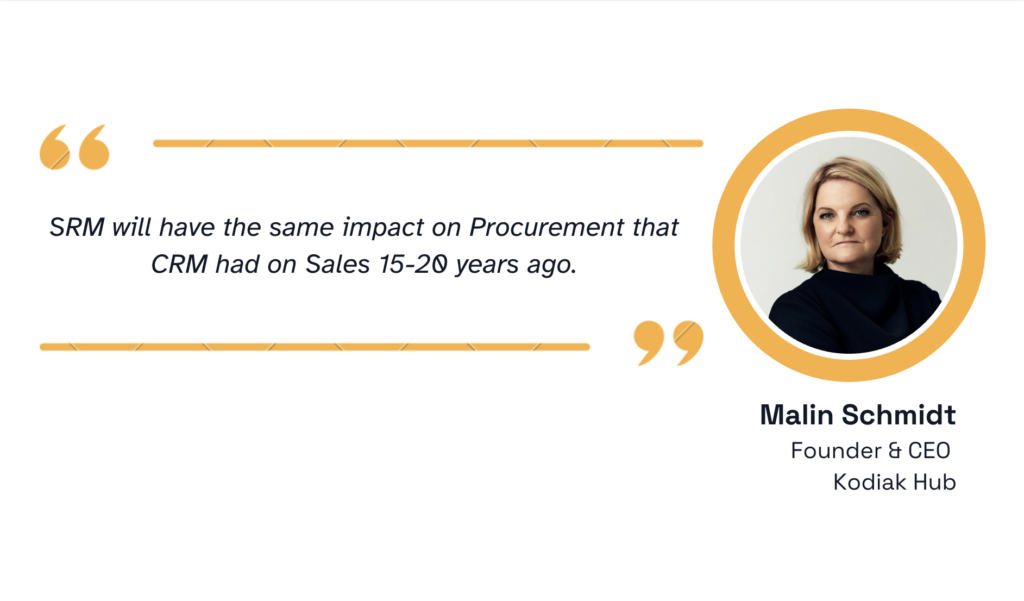
Illustration: Veridion / Quote: Kodiak Hub
Kodiak Hub works great for procurement teams that want clarity and consistency without building custom data pipelines.
A clear dashboard showing supplier data, ESG metrics, risk scores, and performance indicators also means better oversight of large supplier bases and better odds at prioritizing action well.
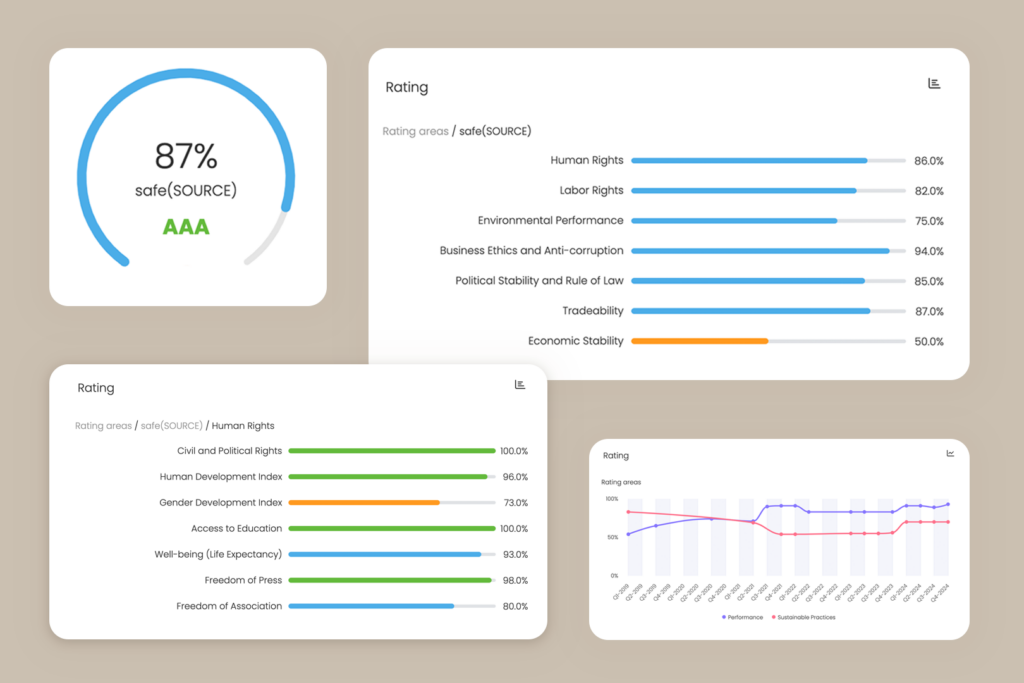
A vital thing to keep in mind, though, is that Kodiak Hub is used primarily to contextualize risk, not build highly granular supply chain graphs.
Kodiak Hub relies on predefined scoring models and thus offers less flexibility for automation-heavy or highly customized use cases.
Here’s a brief overview of its pros and cons:
| Pros | Cons |
|---|---|
| Clear risk-focused dashboards | Less customizable than API-first tools |
| ESG and compliance integration | Limited automation flexibility |
| Easy onboarding for non-technical teams |
Pricing is custom and tiered, based on supplier volume and selected modules.
And while Kodiak Hub doesn’t have clear pricing models listed on its website, several reviews give it 5/5 stars on value for money.
Overall, Kodiak Hub is a solid fit if your goal is streamlined supplier risk oversight, rather than building bespoke, data-driven mapping logic from scratch.
TrusTrace puts traceability, compliance, and sustainability front and center.
Yes, this is similar to Sourcemap, except TrusTrace has a strong foothold in fashion and consumer goods.
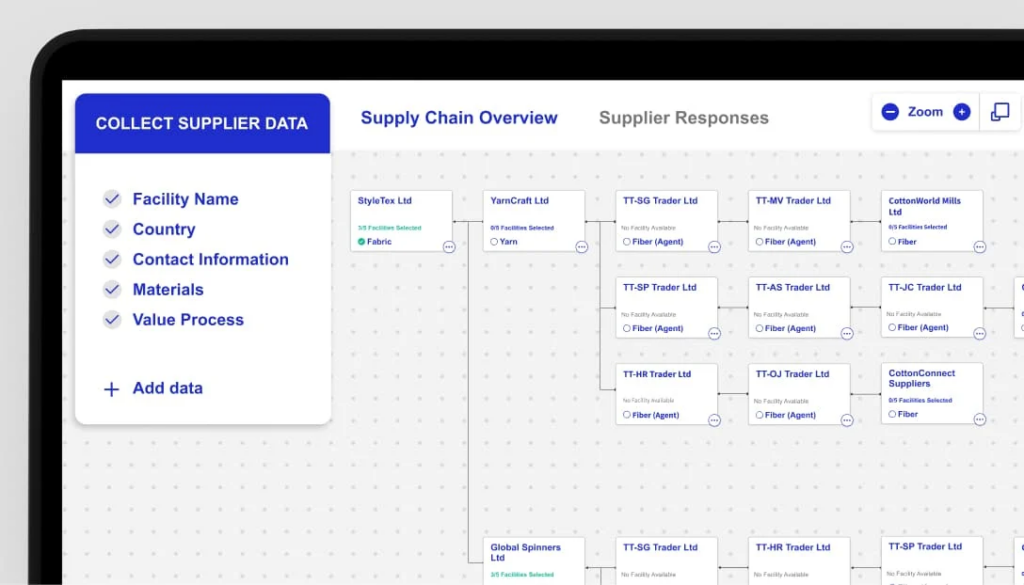
Source: TrusTrace
Its approach to supply chain mapping is deliberately narrative-driven.
Simply put, this tool focuses on where products come from, how they’re made, and whether sourcing aligns with ethical and regulatory expectations.
It’s what they call “forward traceability.”
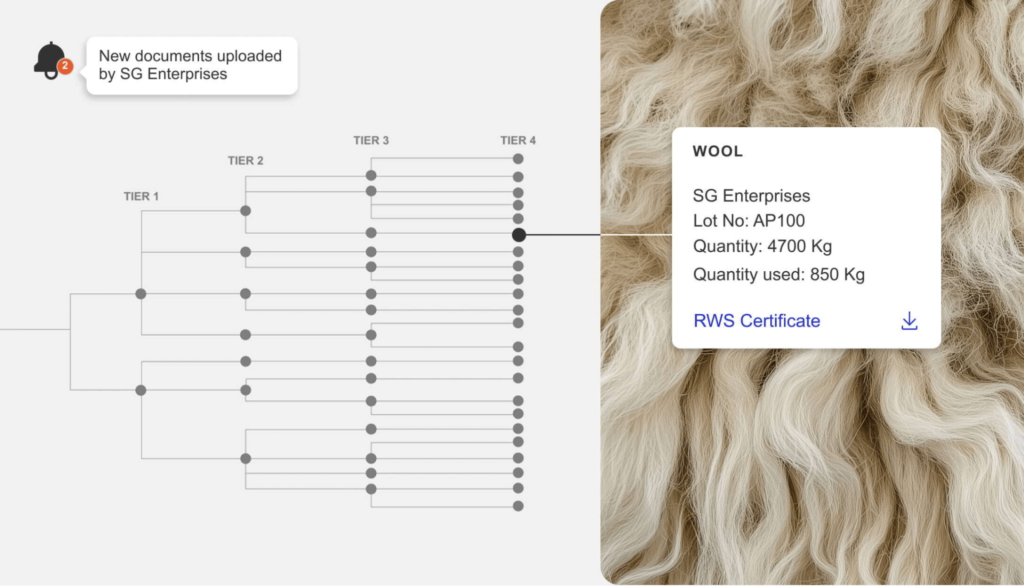
Source: TrusTrace
TrusTrace maps suppliers, materials, and certifications while supporting regulatory frameworks (such as the EU Due Diligence Act, for example).
Much of its value lies in turning complex supply chain data into documentation that can be shared with regulators, partners, and consumers alike.
Their risk dashboard, as you can see below, is quite user-friendly:
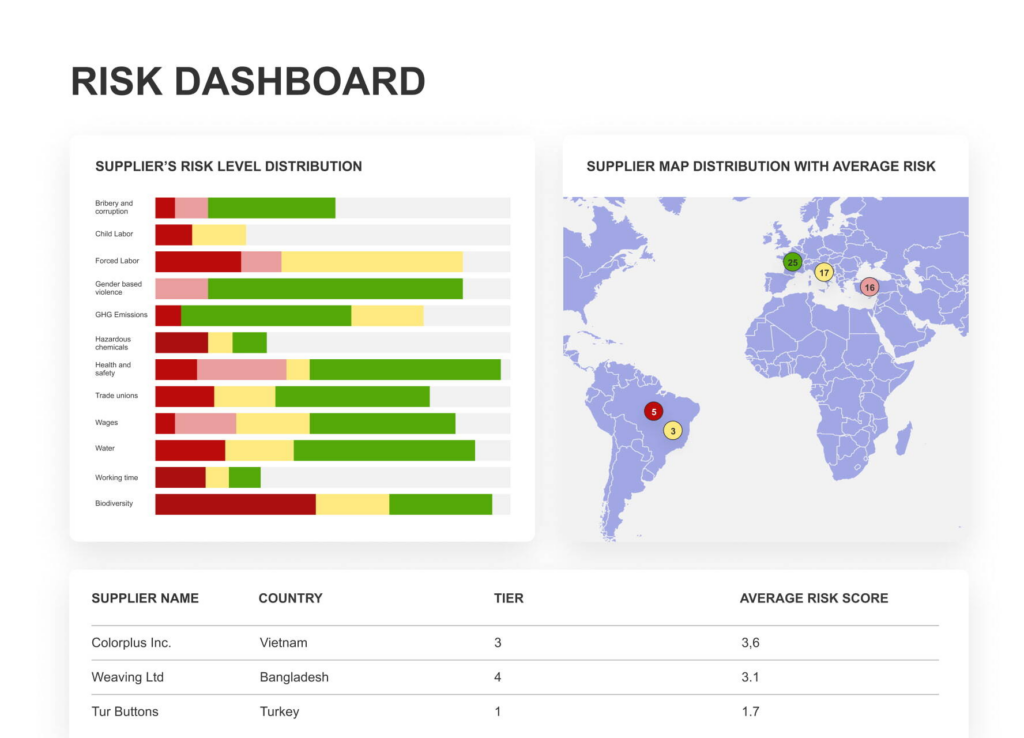
Source: TrusTrace
TrusTrace is excellent if your brand is under pressure to prove ethical sourcing, rather than only managing risk internally.
Clear supplier traceability and compliance-ready reporting help you skip the headache of piecing together information from multiple sources.
This focus, ironically, also defines TrusTrace’s limitations.
Their platform places less emphasis on deep data enrichment or automation, and its industry applicability is narrower than most general-purpose tools.
Compared to Sourcemap, it leans more toward reporting than visualization, and compared to Veridion, it trades raw, actionable company intelligence for clear(er) storytelling.
Pricing is also custom and aligned with your brand’s size and compliance scope.
TrusTrace excels if transparency and regulatory reporting are your priority. But it’s less suited for organizations looking for scalable, data-driven supply chain intelligence.
We’ll end our list with Origin.
This SC mapping tool positions itself at the intersection of supply chain visibility and supplier engagement.
Rather than treating mapping as a purely analytical exercise, it emphasizes collaboration.
It thus helps your team understand supplier networks and it actively involves suppliers in the process.
Their key features include:
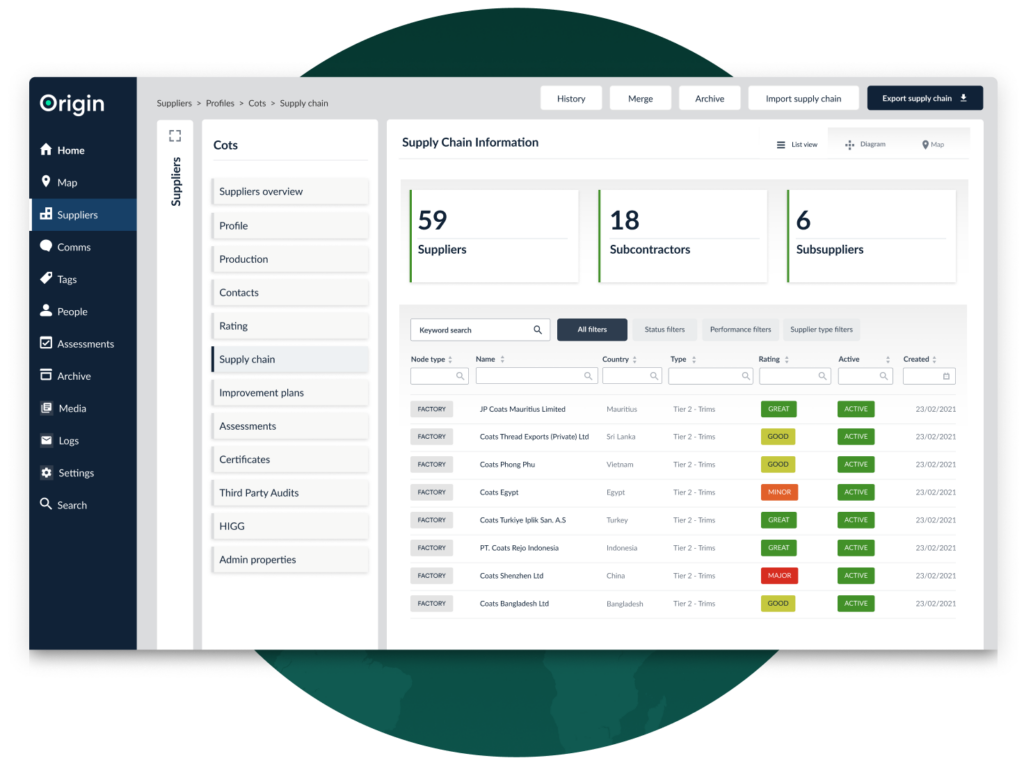
And their individual supply chains are a breeze to navigate:
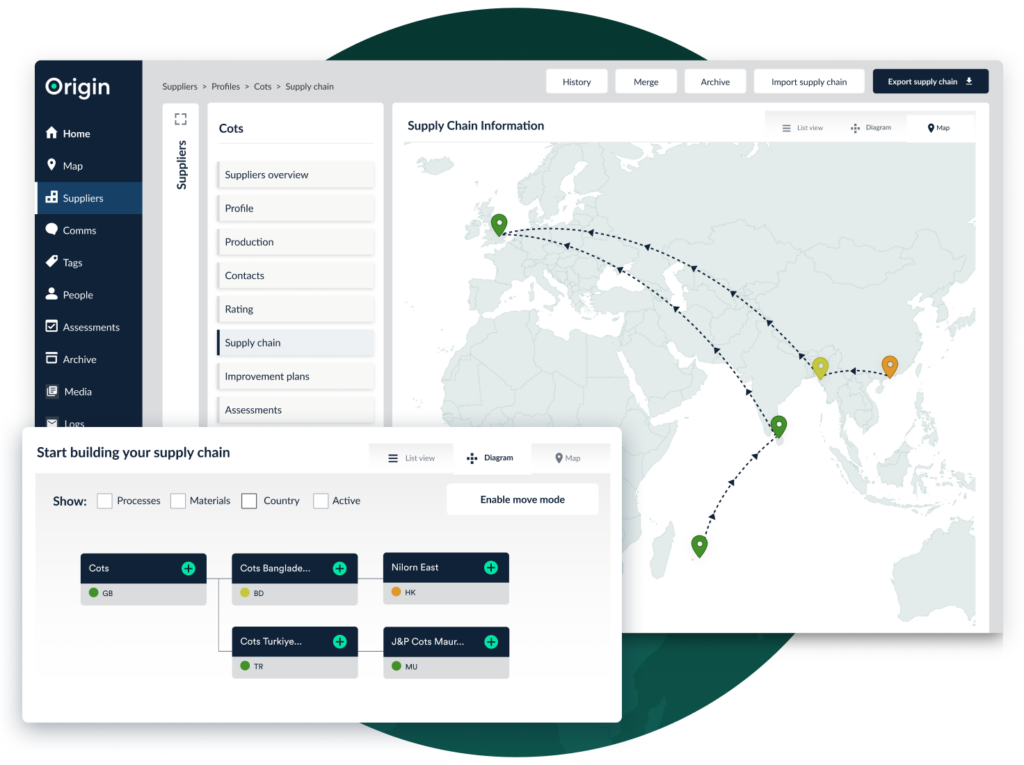
Source: Origin
The platform supports lots of features: multi-tier mapping, supplier surveys, risk assessment workflows, and more.
Source: Origin
And yes, it encourages suppliers to contribute data directly.
This participatory approach can prove really valuable in environments where long-term relationships matter as much as risk metrics.
There’s an extra benefit to suppliers being part of the loop.
Origin works great if you want to combine visibility with engagement.
It enables teams to gain insights, assess risk, and maintain dialogue without relying solely on third-party data sources.
That said, Origin is less data-driven than tools that operate independently of supplier disclosures.
It’s more relationship-focused than TrusTrace, and it offers less automation and scalability than Veridion.
At the same time, Origin is one of the rare tools that offers more transparent pricing models:
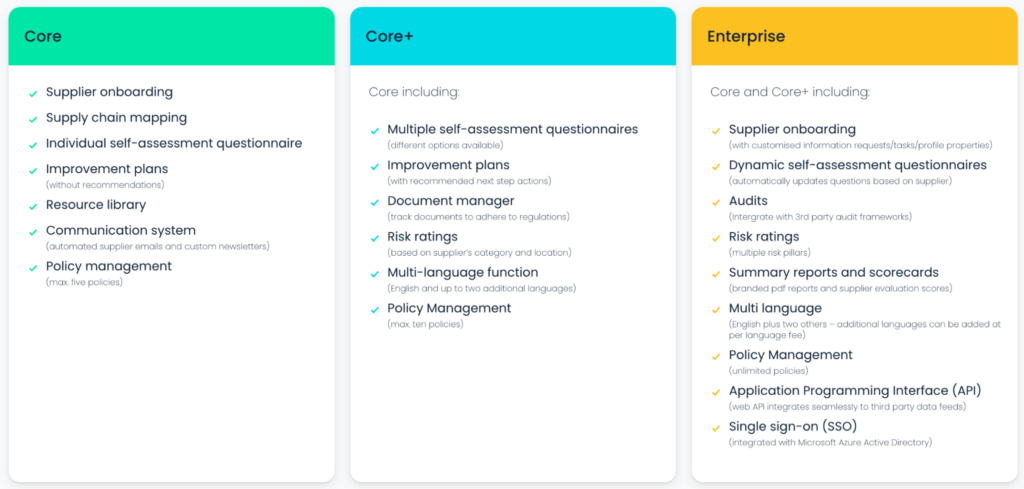
Source: Origin
Clear rates are not displayed, though, so you should still get in touch before you commit.
Overall, Origin is a good fit if collaboration is central to your supply chain strategy, but less ideal if you need fast, independent, or highly scalable supply chain intelligence.
The main takeaway? There are supply chain mapping tools for all needs.
Visualization-first platforms like Sourcemap are great for transparency and sustainability reporting.
Event-driven tools such as Resilinc shine when disruption response is the priority.
And if your goal is speed, global coverage, and scalable automation, API-first platforms like Veridion are often the winners.
So start with your objective, test with free trials where possible, and don’t hesitate to combine tools so you build a supply chain strategy that works for your specific needs and goals.