



Blog
What Is ESG Risk Management?
By: Auras Tanase -
03 March 2026

We love our data, and now that you're here, you're one step closer to loving it too.
A wide sample of data, so you can explore what is possible with our data
Choose ->
built with procurement in mind. Focused on manufacturers, products and more
Choose ->
built with insurance in mind. Focused on classifications, business activity tags and more
Choose ->
built with sustainability in mind. Focused on sustainability commitments, and environmental and social governance insights.
Choose ->
built with strategic insights in mind. Focused on market trends, competitor analysis, and industry-specific data
Choose ->

Keep up to date with our technology, what our clients are doing and get interesting monthly market insights.

Key Takeaways:
Effective ESG risk management is no longer an optional corporate social responsibility initiative.
It is a core business function that directly protects your organization’s financial performance, reputation, and long-term license to operate.
For executives and sustainability specialists, mastering this discipline is key to navigating a complex landscape of regulatory demands, investor scrutiny, and stakeholder expectations.
This article provides a clear overview of what ESG risk management entails and outlines actionable strategies for integrating it into your enterprise’s foundation.
Let’s get started by defining what it is.
ESG risk management means identifying and addressing harmful environmental, social, and governance issues before they get the chance to cause problems.
The framework breaks down into three interconnected pillars:
| ENVIRONMENTAL | Risks related to climate change impacts, resource depletion, pollution, and biodiversity loss. |
| SOCIAL | Risks stemming from labor practices, community relations, human rights, and product safety. |
| GOVERNANCE | Risks associated with corporate ethics, board oversight, executive compensation, and regulatory compliance. |
In practice, you systematically identify, assess, monitor, and mitigate ESG-related threats.
These span from carbon emissions and pollution to labor practices and governance failures, and they can impact your organization’s financial stability, operational continuity, and public standing.
The most concerning part?
They can come from anywhere: inside your company or anywhere along your value chain, like your suppliers, partners, or investments.
That’s right:
A failure in a supplier’s labor practices or environmental compliance can become your crisis.
The key is to stay proactive.
By anticipating ESG issues, you avoid costly fines, disruptions, and reputational damage down the road.
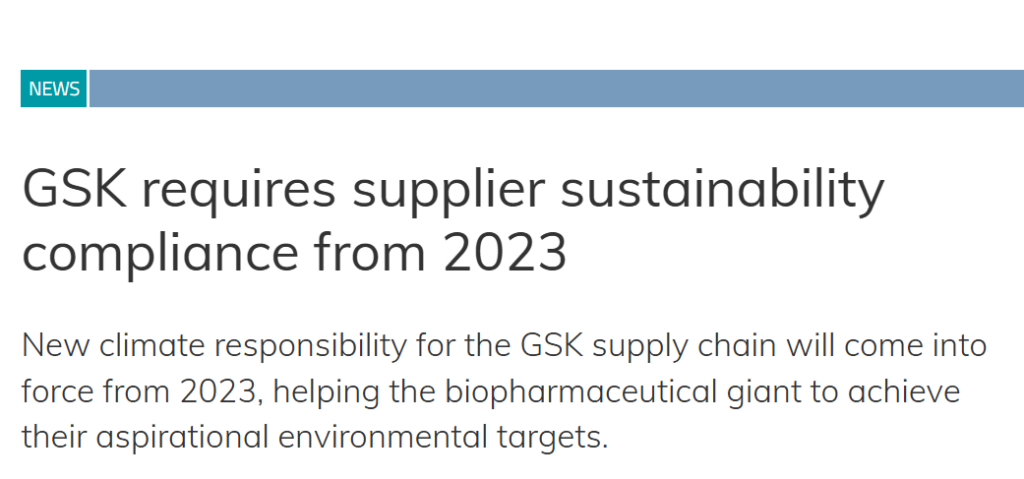
Companies like GSK and Johnson & Johnson know this, and are integrating ESG at the product level.
GSK, a British multinational pharmaceutical and biotechnology company, analyzes the carbon footprint of active pharmaceutical ingredients to find reduction opportunities.
Source: European Pharmaceutical Review
At the same time, J&J redesigned their packaging to cut cold-chain emissions, resulting in a 45% reduction in carbon footprint for some of their cold-chain operations.
Managing ESG risk has also become fundamental to corporate risk management.
In fact, research finds that ESG risk is a regular business risk:
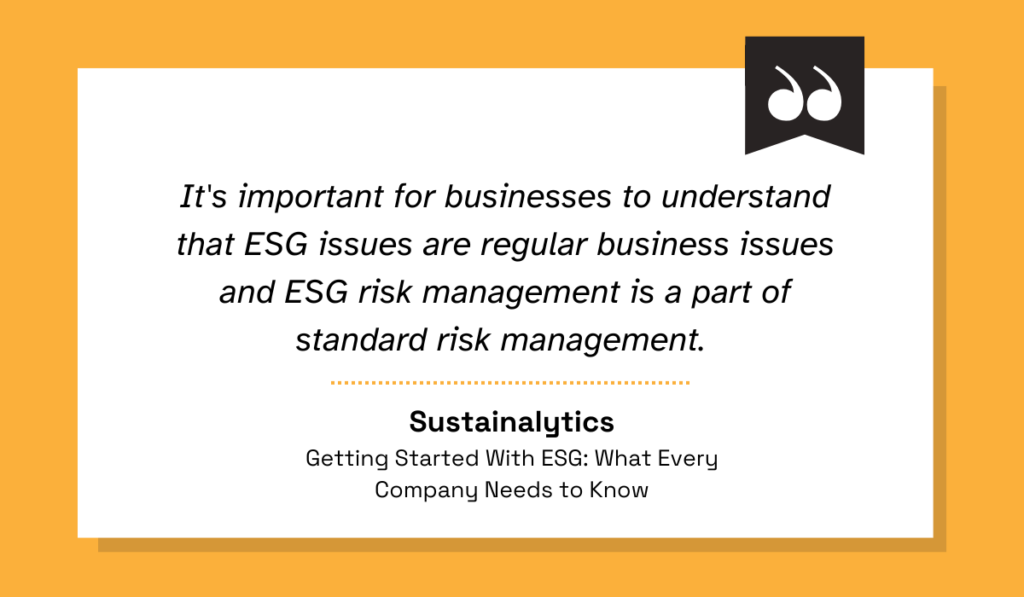
Illustration: Veridion / Quote: Sustainalytics
In other words, you already manage business risks every day, so ESG issues must be woven into those processes.
A comprehensive approach will prepare your company for future shocks and help you adapt more quickly when things change unexpectedly.
Ignoring ESG risks directly threatens enterprise value and exposes you to penalties, disruptions, and lost business.
Conversely, robust management creates a competitive advantage, protecting your enterprise value and building trust with investors and customers.
A 2023 IBM study found that organizations seen as ESG leaders are significantly more likely to outperform peers on profitability.
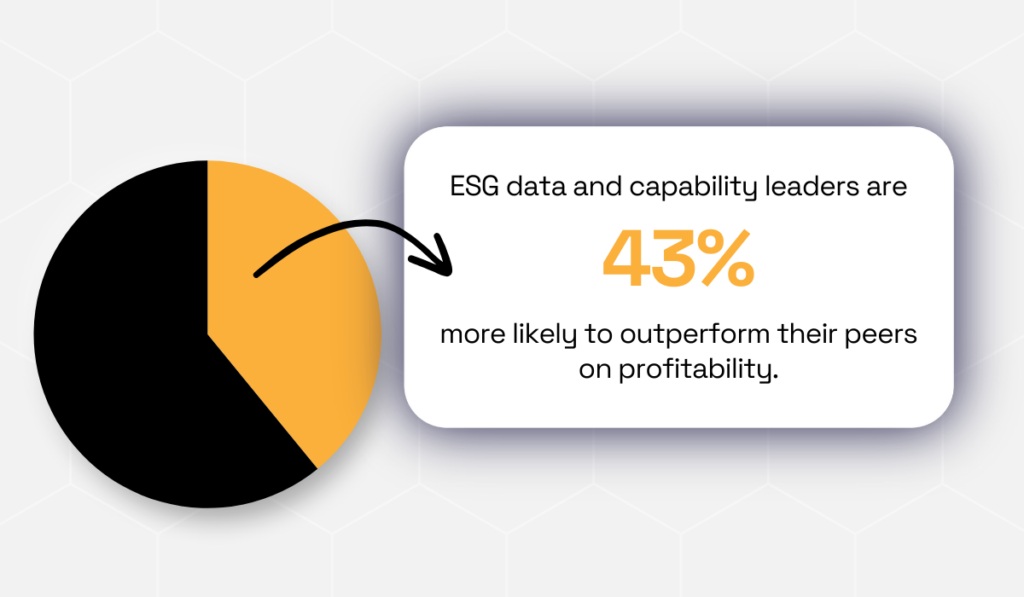
Illustration: Veridion / Data: IBM
By contrast, unsustainable practices can sap your value.
Consider what happened to a pharmaceutical company that collapsed after scandals.
In 2015, Valeant Pharmaceuticals lost 90% of its market value following an accounting scandal at a controlled pharmacy chain and political outrage over its sharp price hikes on essential drugs.
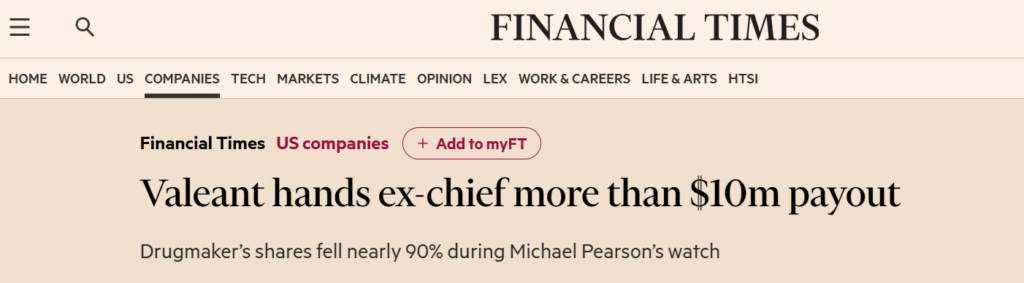
Source: Financial Times
The lesson here is clear: ESG failures don’t just damage reputations, but can also rapidly destroy enterprise value.
But when done right, managing ESG risk gives you a competitive edge by signaling responsibility and resilience to markets.
And market forces now demand it, which is reflected in the fact that large companies publish ESG reports, and investor pressure is intense.
Nearly 80% of investors say ESG is critical to their decisions, about 90% of S&P 500 firms already issue sustainability reports, and customers care, too.
About 68% of consumers say sustainability is very important, and roughly half paid extra for green products in the past year.
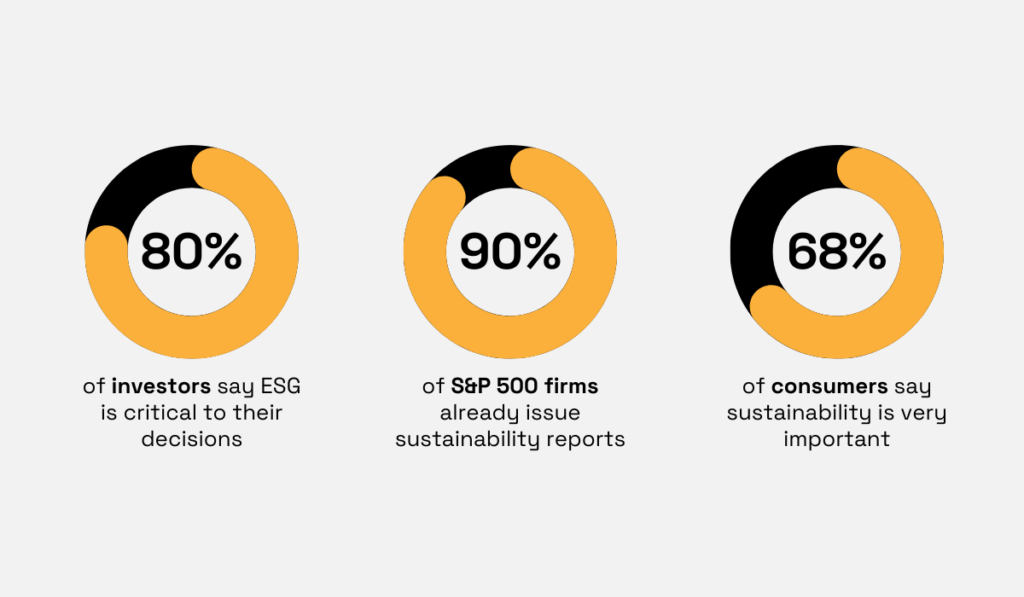
Illustration: Veridion / Data: PwC, G&A Institute, IBM
If you fail to manage ESG risks, investors may turn away, regulators may fine you, and customers may go elsewhere.
In short, ESG risk management isn’t a “nice-to-have”; it’s essential for protecting your bottom line, reputation, and license to operate.
You need a robust program to prevent material losses and maintain trust in today’s market.
Moving from awareness to effective implementation requires a structured approach.
Adopt these practices to make ESG risk management effective and ingrained in your organization.
ESG must be built-in, not bolted-on.
Treating it as a standalone compliance exercise guarantees failure.
Instead, integrate ESG risk considerations directly into your existing Enterprise Risk Management (ERM) governance, strategic planning, and decision-making processes.
For example, KPMG advises that ESG criteria be embedded in routine processes—such as how you do lending or approve projects—just as you would assess reputational or financial risks.
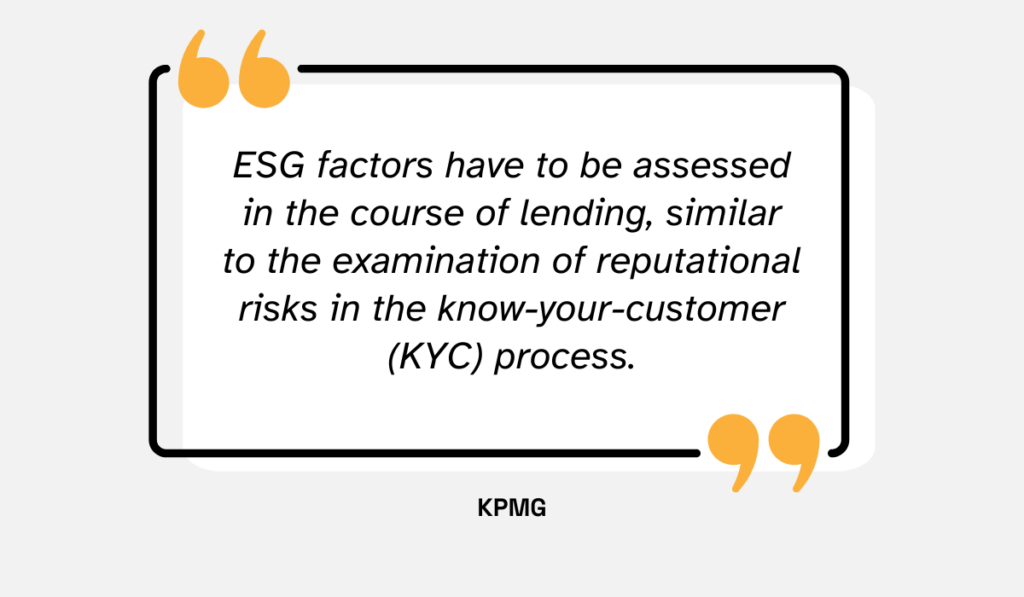
Illustration: Veridion / Quote: KPMG
This means incorporating clear ESG criteria into procurement, lending, investment, and operational workflows.
As the 2023 EY Global C-suite Insights Survey notes, integrated ESG risk management can serve as the backbone of a solid business strategy, linking ESG with traditional risk factors and even uncovering new opportunities.
Starbucks is a good example of this.
This coffee chain explicitly includes sustainable sourcing, waste reduction, and ethical labor standards in its strategy.
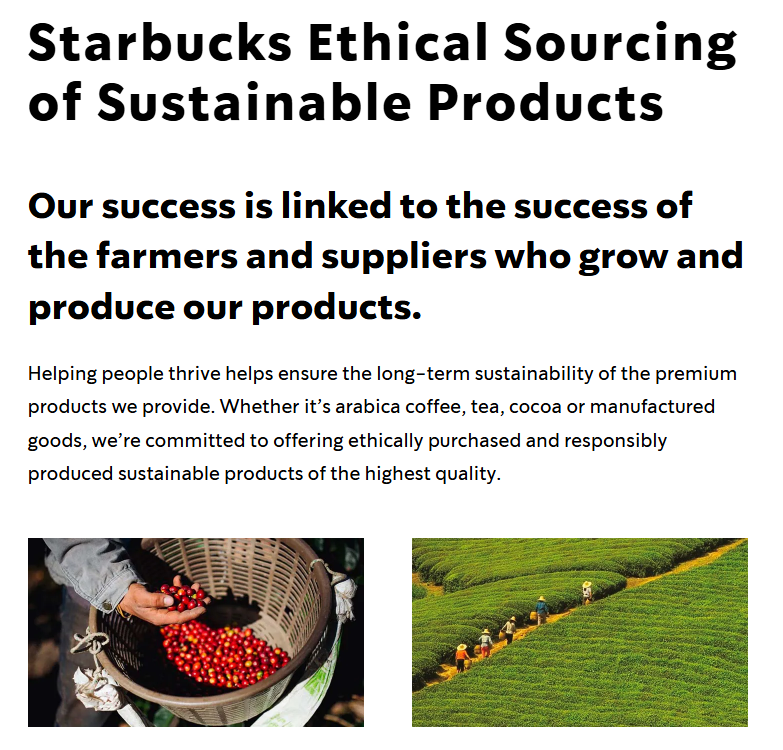
Source: Starbucks
A good place to start is to assign ESG roles to senior leaders and teams, and set ESG targets alongside financial ones.
Some companies even tie executive pay to ESG results.
For instance, Danone links 20% of its executives’ compensation to meeting social and environmental targets.
By building ESG into budgets, reporting, and incentive systems, you ensure it isn’t just an afterthought.
Bring employees, suppliers, customers, investors, and community members into the loop.
When you ask your teams, partner firms, and customers what concerns them, you gain context and early warning signals that data alone might miss.
For example:
By listening and acting on this input, you build trust and accountability, because people know you take ESG seriously and will speak up before small issues become crises.
For instance, Apple builds strong partnerships with suppliers to enforce its standards and even works with NGOs to broaden its reach.
Sabih Khan, Apple’s COO, elaborates:
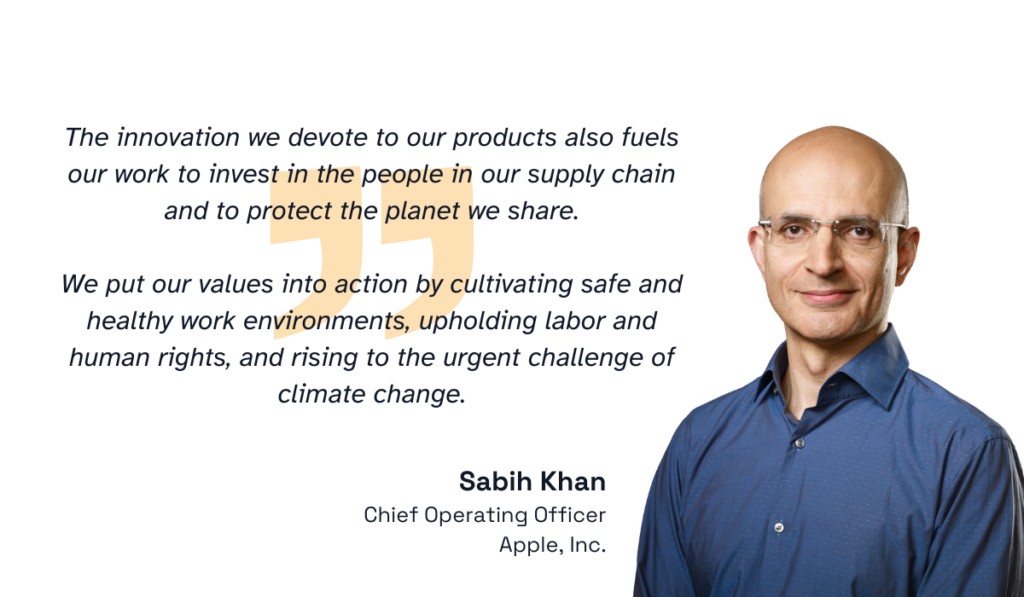
Illustration: Veridion / Quote: Apple
So, what do you need to do?
Hold regular dialogues and feedback loops, survey employees on safety and diversity issues, and meet with suppliers to review their ESG performance and discuss challenges.
Invite community groups or NGOs to discuss local impacts.
Projects impacting the environment or culture benefit from early discussion with local leaders, which can prevent costly delays or protests.
Make sure to document their input and adjust your risk assessments.
Also, invest in transparency by publishing an annual ESG or sustainability report. This proves you value stakeholder input and keeps you accountable.
Companies that do this pick up signals early, create understanding, and find solutions before problems get out of hand.
Managing ESG risks across a global value chain generates vast amounts of complex data.
Manual processes are error-prone and inefficient.
So, technology platforms are essential for aggregating, enriching, and analyzing this data at scale.
Modern ESG platforms gather, enrich, and analyze vast streams of information so you can manage risks efficiently.
They pull data from company filings, news, government records, and more, then flag the issues most relevant to your business.
This “all-in-one” data approach means you aren’t relying on guesswork or stale reports.
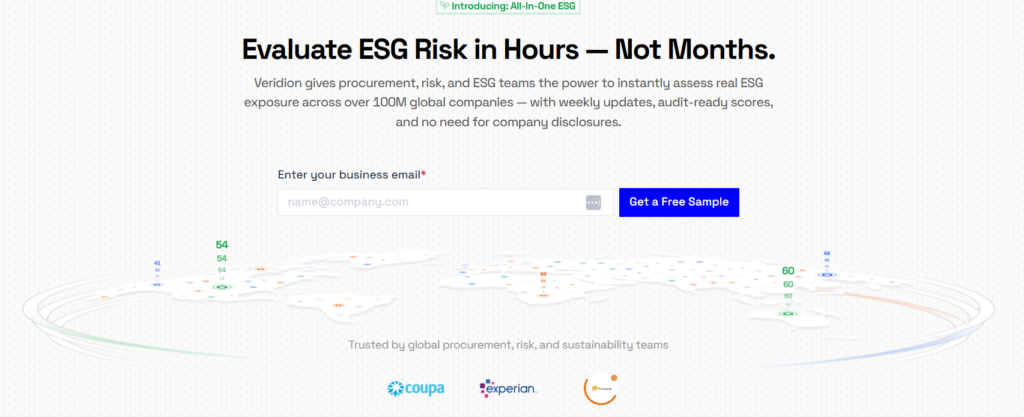
For instance, Veridion’s ESG data service covers over 100 million companies worldwide and is updated weekly, providing audit-ready scores and risk attributes.
Source: Veridion
Its procurement intelligence covers everything from supplier financial stability and ESG compliance to operational capacity and ownership structures.
Veridion tracks 220+ supplier attributes (ESG metrics, financials, products, ownership hierarchies, etc.) for more than 134 million entities.
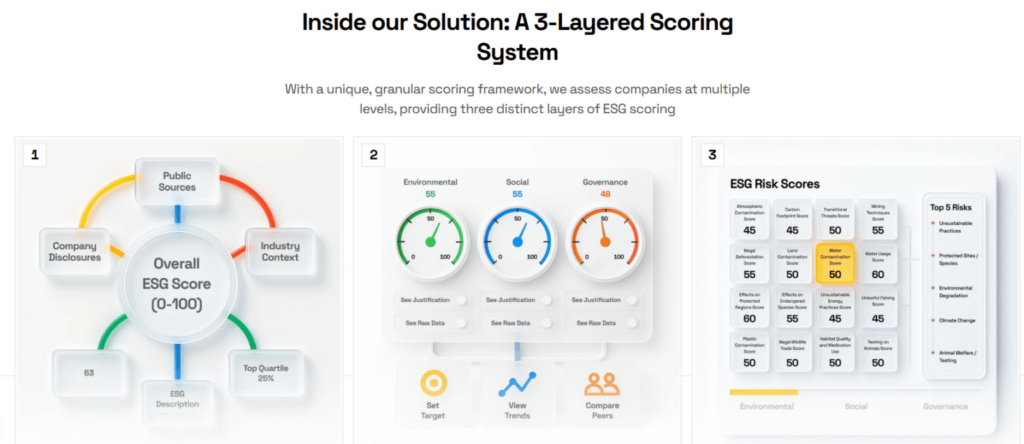
Source: Veridion
This level of detail lets you vet partners, spot hidden exposures, and predict trouble before it hits.
In short, data platforms like Veridion turn messy information into actionable insight.
They can automatically surface real issues, rather than just report good intentions.
By using such tools, your team can scale ESG due diligence and get timely alerts on critical risks.
That way, you can act fast and avoid unpleasant surprises.
Even with the best intentions, organizations face significant hurdles in implementing ESG risk management.
Two major challenges stand out, so let’s explore them in more detail.
The global landscape of ESG regulations is changing fast.
New rules—from the EU’s CSRD and CSDDD to proposed SEC climate disclosure rules and other country-specific laws—seem to multiply every year.
And keeping up them is a full-time job.
Regulators constantly specify increasingly detailed requirements, making ESG oversight a compulsory exercise and a matter of trust.
As Gurbir Grewal, former Director of the Securities and Exchange Commission’s Division of Enforcement, states, regulators treat misleading ESG disclosures with the same seriousness as financial fraud.
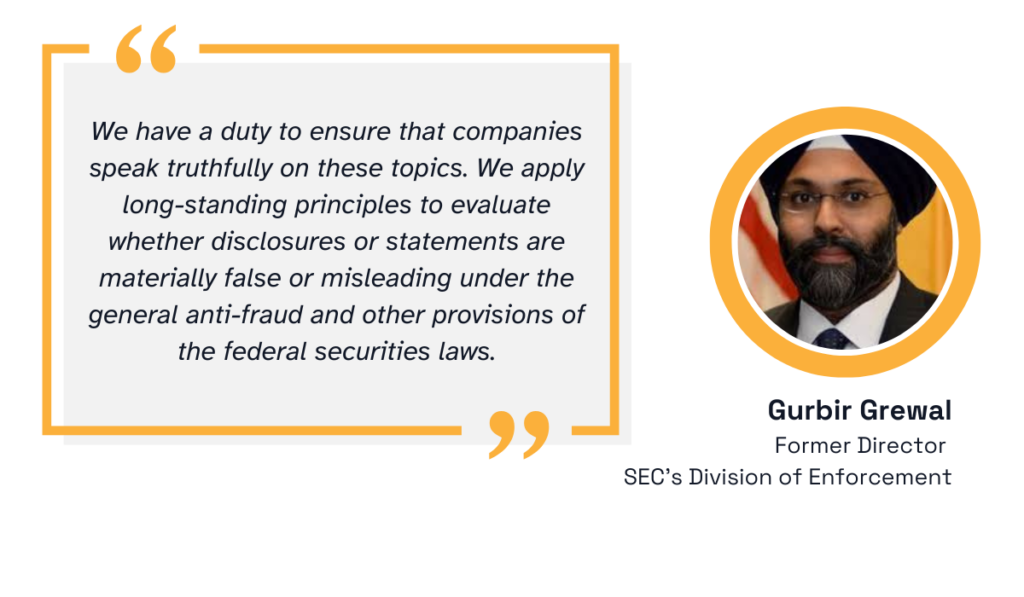
Illustration: Veridion / Quote: SEC
You may find your company subject to one set of rules for EU operations and another for US activities, which creates compliance uncertainty and a heavy reporting burden.
Non-compliance, on the other hand, risks fines or shareholder lawsuits.
Managing this requires dedicated tracking of regulations and flexible systems.
So, do your best to stay informed through industry groups or legal advisors.
In some sectors, regulators already require ESG risk plans: for example, finance regulators have started climate stress tests, and utilities must report carbon metrics.
Also, remember that voluntary frameworks (such as the UN SDGs or TCFD) can become de facto requirements, so preparing for them early can keep you ahead of regulations.
Not all ESG issues translate easily into dollars and cents.
Many are long-term, qualitative, or indirect, making them quite different from financial risks.
Think of climate risks that might materialize decades from now, or reputation damage that’s hard to quantify.
How do you weigh a potential future climate regulation against a current operational cost?
CFOs and risk officers often find it difficult to quantify such risks with the same rigor as a credit or foreign-exchange risk.
This uncertainty can lead to underestimating material risks or misallocating resources.
For example, reputational damage from an ESG lapse can be devastating yet is difficult to put on a balance sheet.
Volkswagen is a classic example of a company that prioritized sales and engineering prestige over compliance and ethical governance, misjudging the materiality of that risk.
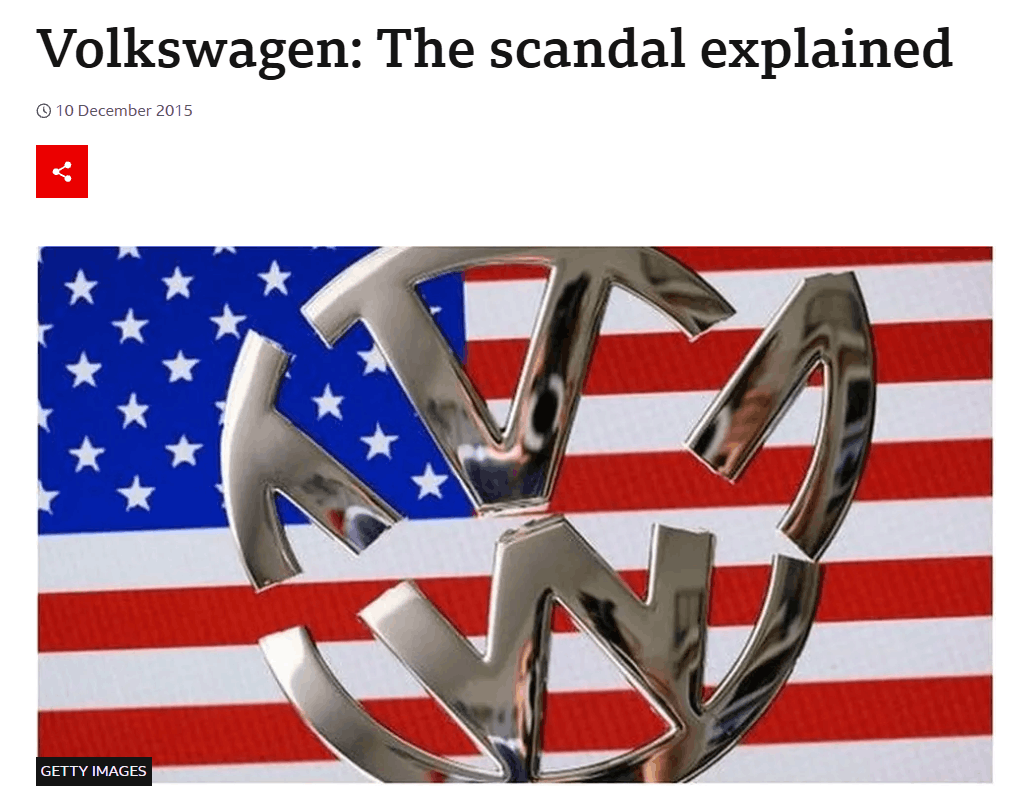
Source: BBC
In 2015, Volkswagen was exposed for installing “defeat device” software in nearly 11 million diesel vehicles worldwide to cheat emissions tests, emitting pollutants up to 40 times the legal limit.
The scandal exposed a catastrophic corporate culture driven by high-powered executive bonuses tied to aggressive sales and profit targets, which incentivized meeting financial goals at the expense of legal and ethical compliance.
The consequences were severe, including fines, settlements, and buyback costs totaling over €30 billion.
To prioritize ESG risks, companies use:
But it remains a strategic challenge to know which risks merit the most attention.
Document your methodology so that your process is transparent and auditable, and plan to revisit and revise your priorities as conditions change.
Expect surprises: new standards or crises (like a new environmental law or social upheaval) may suddenly elevate certain risks.
If you do that, your organization can respond faster and more confidently as ESG risks evolve.
ESG risk management is a definitive marker of modern, resilient leadership.
It transcends compliance to become a strategic function that safeguards value, fuels innovation, and builds enduring trust.
The cost of inaction—financial, reputational, and operational—is far too high.
By weaving ESG into your strategy, engaging the right stakeholders, and harnessing rich data, you turn a potential vulnerability into an advantage.
Each step you take—from embedding ESG criteria in decision-making to building reliable supplier oversight—makes your company stronger and more trusted.
You’ll be surprised by how much value awaits when you turn ESG risk management into a core strength!