



Blog
5 Best Practices for Supply Chain Mapping
By: Stefan Gergely -
16 March 2026


We love our data, and now that you're here, you're one step closer to loving it too.
A wide sample of data, so you can explore what is possible with our data
Choose ->
built with procurement in mind. Focused on manufacturers, products and more
Choose ->
built with insurance in mind. Focused on classifications, business activity tags and more
Choose ->
built with sustainability in mind. Focused on sustainability commitments, and environmental and social governance insights.
Choose ->
built with strategic insights in mind. Focused on market trends, competitor analysis, and industry-specific data
Choose ->

Keep up to date with our technology, what our clients are doing and get interesting monthly market insights.

Key Takeaways:
Today’s supply chain disruptions rarely originate where companies expect them.
They emerge upstream, beyond direct suppliers, where visibility is weakest.
At the same time, globalization, geopolitical risk, regulatory pressure, and supplier concentration have made it increasingly difficult for organizations to identify their true vulnerabilities.
Many companies believe they understand their supply chain, but they’re actually navigating blindly.
Their supply chain mapping often stops at Tier 1, relies on unstandardized supplier records, or treats every supplier as equally important.
The result is false confidence: visibility without accuracy.
In this guide, we explore five best practices to help organizations build supply chain maps that are accurate, enriched, validated, and focused on what truly matters.
One of the biggest obstacles to accurate supply chain mapping is inconsistent supplier data scattered across procurement platforms, ERP systems, and third-party risk tools.
A single supplier may appear under multiple names, legal entities, or address formats, which makes it difficult to establish a single source of truth.
For example, supplier XYZ Ltd. might be recorded as “XYZ Limited,” “XYZ Ltd,” and “X.Y.Z Ltd.,” in separate systems, each tied to different legal IDs or outdated addresses.
Without standardization, it’s unclear whether these records represent the same legal entity.
This leads to duplicate orders, compliance blind spots, and mismatched performance data that skew risk assessments and forecasts.
As R.J. Myers, VP of DCC Strategy and Support Services at Penske Logistics, notes:
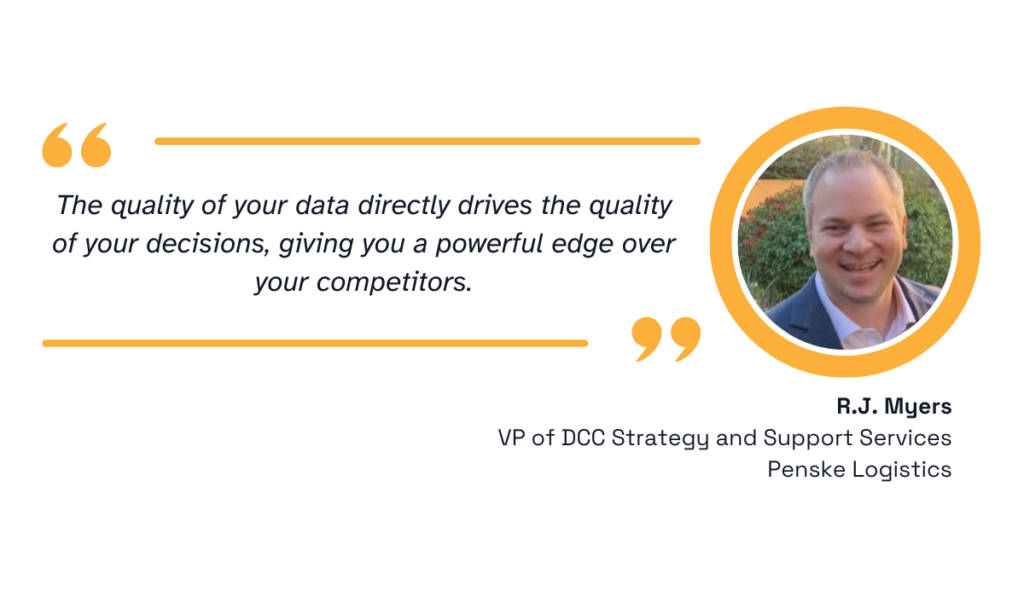
Illustration: Veridion / Quote: Penske Logistics
Supporting this is research.
Accenture reports that 76% of CFOs believe that without a single version of truth for data, meeting strategic objectives becomes significantly harder.
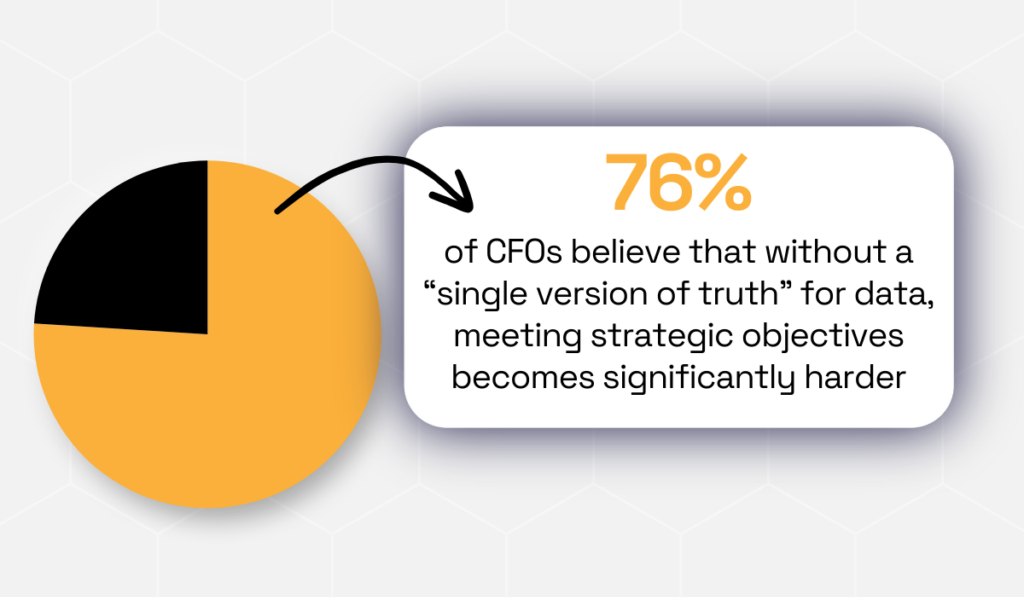
Illustration: Veridion / Data: Accenture
Standardizing supplier data by consolidating and normalizing names, legal entities, addresses, and unique identifiers lays the foundation for reliably tracing supplier relationships across tiers and geographies.
With consistent records, cross-functional teams can connect procurement, compliance, and risk data, ensuring upstream and downstream dependencies are accurately represented.
Beyond improving visibility, standardized data reduces manual reconciliation, minimizes errors, and simplifies reporting across the organization.
It also lays the groundwork for advanced analytics, scenario modeling, and risk assessment, enabling companies to move from reactive monitoring to proactive supply chain intelligence.
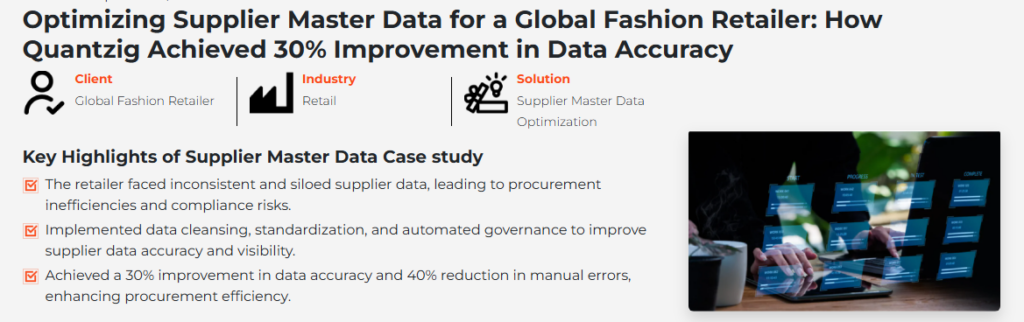
Consider this case study where a leading global fashion retailer struggled with inconsistent supplier data across multiple regions and systems.
Source: Quantzig
They faced inefficiencies in procurement, supply chain disruptions, compliance risks, and misclassified or duplicated suppliers
Once the retailer implemented a supplier master data governance framework and consolidated supplier records into a single golden profile, they improved supplier data accuracy by 30% and reduced manual data errors by 40%.
This example clearly demonstrates that standardizing supplier data across systems is essential to improving data accuracy, reducing errors, and enabling a more efficient supply chain.
While most companies focus primarily on their Tier 1 suppliers, the real supply chain risks often lie further upstream.
Tier 2 and Tier 3 suppliers provide components, raw materials, or services to your direct suppliers.
Yet they are frequently less visible, less standardized, and less monitored.
A recent Sphera study reported that over 50% of business executives report poor data quality beyond Tier 2, yet 85% of risk and critical incidents occur in Tier 2-4 suppliers.
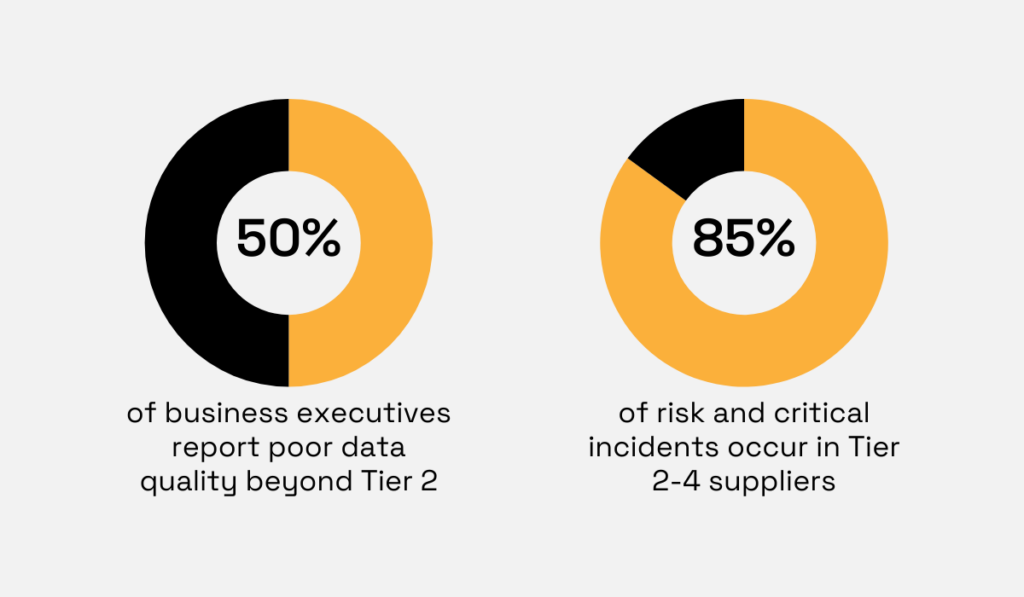
Illustration: Veridion / Data: Sphera
These figures reveal a steep “visibility cliff,” where risk accumulates out of sight until it impacts operations.
Upstream supplier tiers often host hidden bottlenecks, single points of failure, and critical operational dependencies that aren’t apparent when visibility stops at direct suppliers.
Paul Marushka, CEO & President at Sphera Solutions, a provider of ESM performance and risk management software, highlights how a lack of insight into upstream suppliers leaves organizations exposed to unforeseen risk:
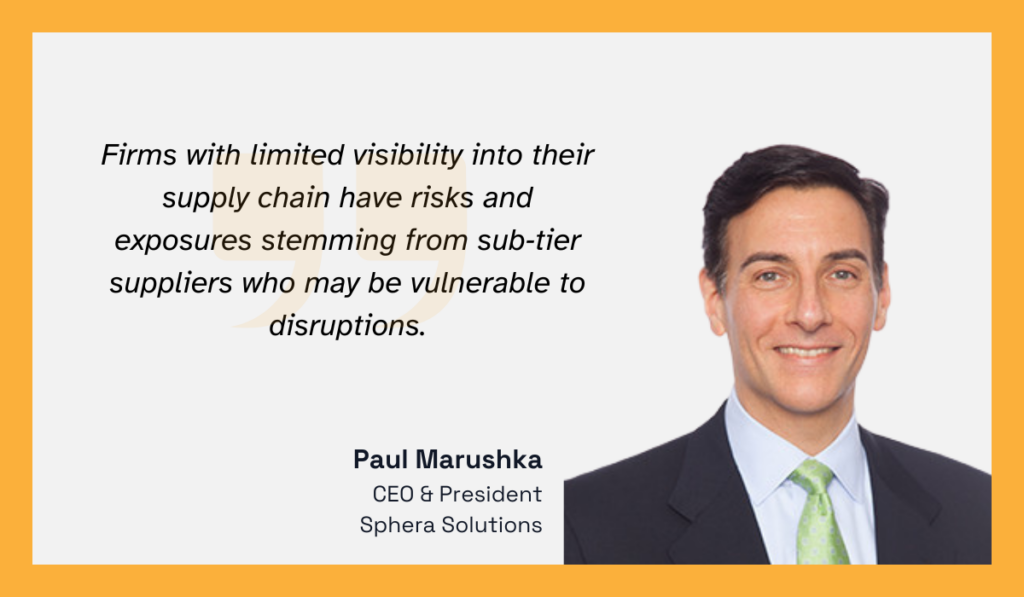
Illustration: Veridion / Quote: Sphera
For example, let’s say your company is a global consumer electronics firm that monitors only its Tier 1 suppliers.
When a Tier 3 semiconductor provider located in a politically volatile region experiences disruptions, the issue remains hidden until Tier 1 assembly plants begin missing production schedules.
Because the company lacks upstream insights, shortages go unnoticed, ultimately delaying product launches and incurring expedited shipping costs.
Extending visibility beyond Tier 1 is essential to uncover these hidden dependencies.
Multi-tier mapping enables earlier intervention through alternate sourcing, inventory buffering, or capacity reallocation, before disruptions cascade into operations.
By illuminating upstream constraints and interdependencies, organizations can move from reactive firefighting to proactive risk management, strengthening resilience across the entire supply network.
Internal supplier data is rarely sufficient for accurate multi-tier supply chain mapping.
Procurement and ERP systems are typically designed to manage direct relationships rather than capture the full scope of upstream dependencies, ownership structures, or operational footprints beyond Tier 1.
As a result, internal data often contains gaps, outdated records, or incomplete views of supplier relationships across tiers and geographies.
This is why external data enrichment is important.
By augmenting internal supplier records with verified third-party intelligence, organizations can fill blind spots that internal systems were never built to address.
Stephany Lapierre, Founder & Chief Brand Officer at TealBook, underscores this:
“Supplier data enrichment strengthens and broadens the information on suppliers, allowing businesses to make better, more informed decisions.”
Veridion, with its Match & Enrich API, plays a key role in enabling this deeper visibility.
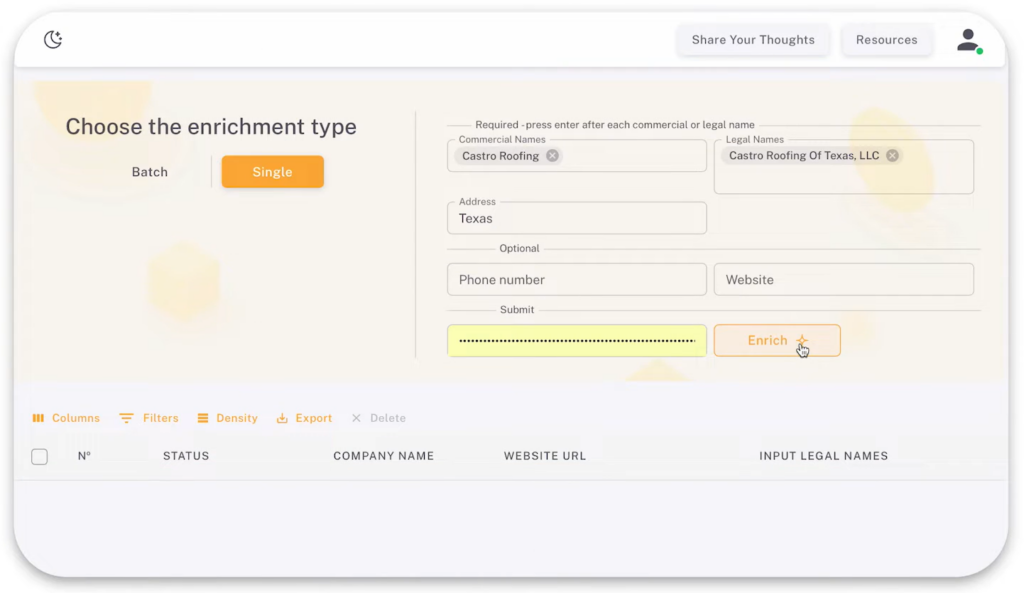
Source: Veridion
It takes existing supplier records and intelligently matches them to verified external entities, even when data is fragmented, outdated, or inconsistently formatted.
Using advanced entity resolution techniques, the API reconciles variations in supplier names, legal entities, and addresses to create a standardized, high-confidence supplier identity.
Once matched, supplier records are enriched with external intelligence, including the following:
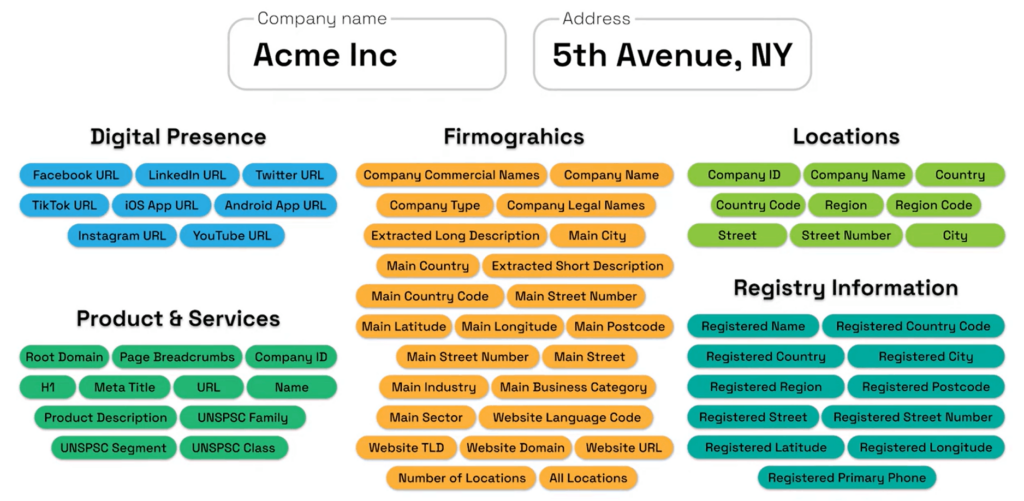
Source: Veridion
This added context helps organizations understand who a supplier is, what they do, where they operate, and how they’re connected across tiers.
By combining internal supplier data with Veridion’s enriched external profiles, organizations can uncover hidden sub-tier suppliers, validate supplier functions and locations, and resolve discrepancies that would otherwise distort supply chain maps.
This enrichment also helps surface shared ownership, regional concentrations, and upstream dependencies that are invisible when relying solely on internal systems.
And since supplier networks are dynamic, Veridion continuously updates enriched records as companies change ownership, open or close facilities, or shift operations.
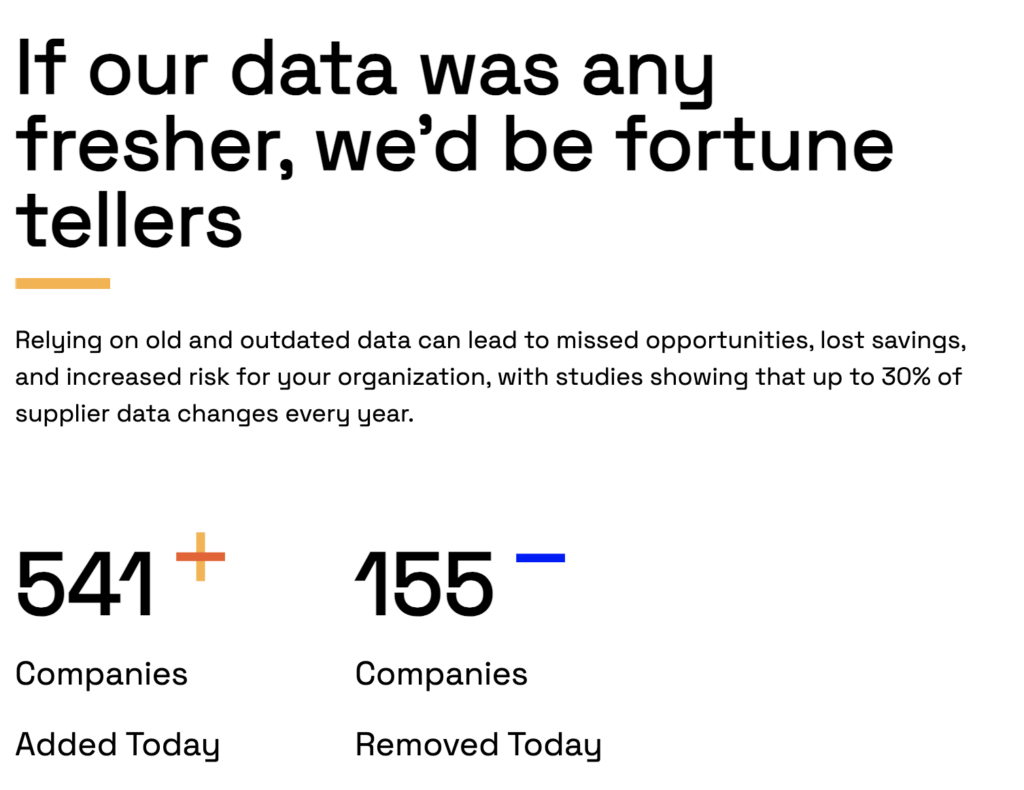
Source: Veridion
This ensures that supply chain maps remain accurate over time rather than becoming static snapshots that quickly lose relevance.
The result is a more accurate, comprehensive, and actionable view of the supply chain.
Ultimately, this enables organizations to trace dependencies across tiers, identify systemic risk earlier, and support advanced analytics, scenario modeling, and proactive risk mitigation.
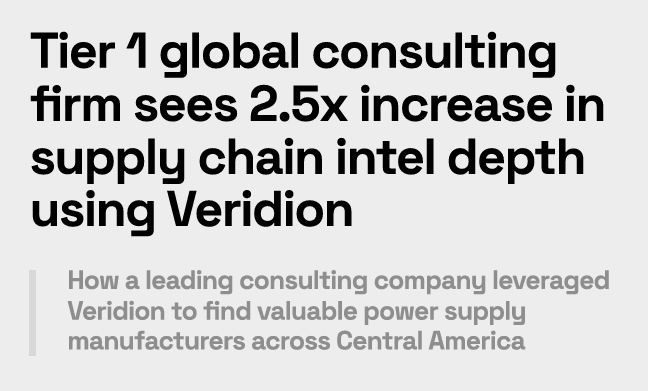
This US-based global consulting firm demonstrates this in action.
Source: Veridion
The firm leveraged Veridion’s enriched data to gain deeper visibility into its supply chain.
It expanded its coverage of manufacturer and supplier profiles, including power supply manufacturers in Central America, far beyond what internal systems or traditional vendor data tools provided.
In fact, the consultant exported twice as much supplier intelligence using Veridion’s enriched data compared with all other sources combined, significantly improving its ability to identify and evaluate strategic suppliers.
This proves that external data enrichment turns incomplete internal records into a living, reliable view of the supply chain.
Even the most sophisticated supply chain maps must be validated at the source.
Supplier engagement is a critical mechanism for confirming production sites, operational capacities, sub-tier dependencies, and recovery timelines that cannot always be inferred from data alone.
Do the internal systems and external intelligence provide a strong foundation?
Yes.
But supplier-reported information adds an essential layer of real-world confirmation.
Yet, many businesses treat their suppliers as nothing more than transactional partners.
Richard Hogg, CEO of the supplier collaboration and innovation platform Vizibl, observes:
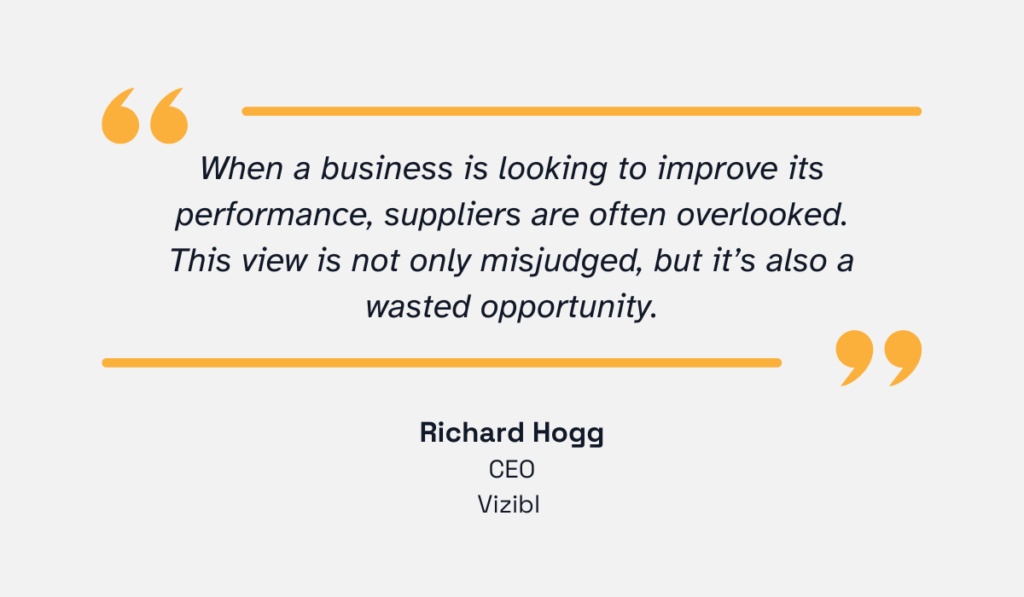
Illustration: Veridion / Quote: Procurement Mag
Engaging suppliers early and consistently ensures that mapping reflects real, validated relationships and not just internal assumptions.
Direct engagement allows organizations to verify whether mapped facilities are active, understand actual production constraints, and confirm which sub-tier suppliers are truly critical to ongoing operations.
Combining supplier-reported data with external intelligence significantly increases confidence in the supply chain map.
Yes, external data can highlight likely supplier relationships, ownership structures, and geographic footprints.
But supplier input helps validate these findings, clarify ambiguities, and surface discrepancies that internal systems alone may miss.
In many cases, supplier feedback reveals alternate production sites, informal sourcing arrangements, or dependencies that aren’t documented elsewhere.
This validation process reduces blind spots during disruptions.
When suppliers confirm recovery timelines, inventory buffers, and contingency plans, organizations gain a more realistic view of how disruptions may propagate across tiers and how quickly operations can stabilize.
Beyond risk management, validating findings through supplier engagement:
Over time, this ongoing dialogue improves data quality, accelerates issue resolution, and supports more resilient, responsive supply networks.
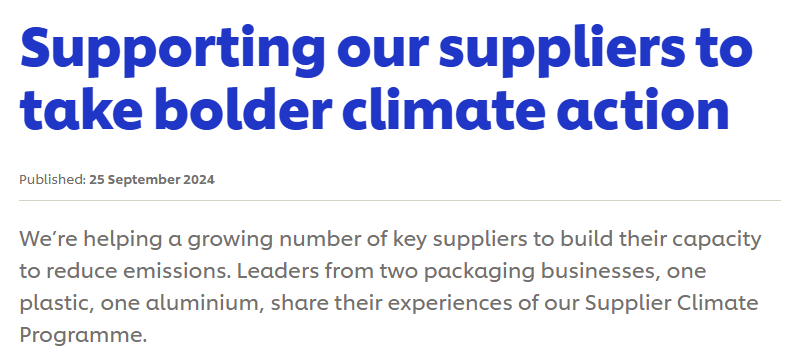
A case in point is Unilever’s Supplier Climate Programme.
Source: Unilever
Through this initiative, Unilever engages 300 priority suppliers to share product carbon footprint (PCF) data and collaborate on emissions-reduction activities.
By combining supplier-reported information with internal tracking and third-party verification, Unilever ensures its environmental data is accurate, actionable, and reflective of real upstream activities.
This structured engagement not only validates critical supplier information but also strengthens relationships, encourages transparency, and enables proactive planning to reduce operational and environmental risks.
Comprehensive supply chain mapping doesn’t mean treating every supplier or facility as equally important.
In reality, suppliers vary widely in their operational impact, revenue contribution, and replaceability.
Mapping efforts that prioritize coverage alone often spread resources too thin, creating broad visibility while failing to protect the nodes that pose the greatest threat to business continuity.
For mapping to be effective, it must focus on criticality, not completeness.
Lora Cecere, Founder of Supply Chain Insights, underscores the limitations of traditional visibility approaches:
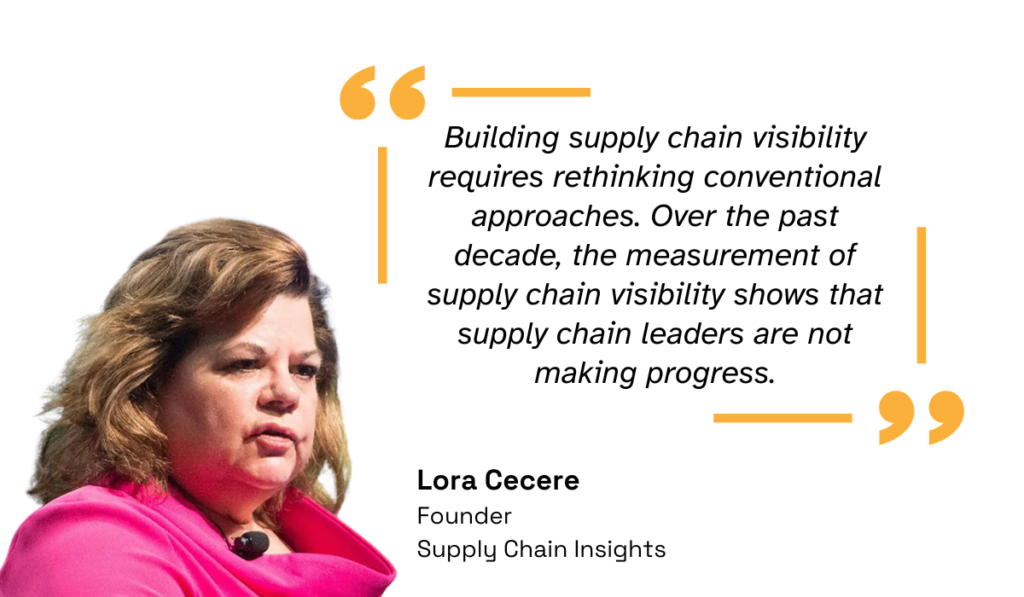
Illustration: Veridion / Quote: Forbes
This stagnation highlights why organizations must move beyond simply knowing who is in the supply chain to understanding who truly matters.
Focusing on criticality means identifying suppliers, facilities, and dependencies with the greatest potential impact on the business.
These typically include:
A single highly specialized sub-tier supplier can pose far greater risk than dozens of easily substitutable vendors.
Supplier tiering based on criticality ensures that limited resources are concentrated on the nodes where failure would cause the greatest operational or financial harm.
High-criticality suppliers can be mapped more deeply, validated more frequently, and monitored continuously for operational, financial, geopolitical, or environmental risk exposure.
Less critical suppliers may still be tracked, but with lighter-weight monitoring proportional to their impact.
This risk-based approach is becoming standard practice.
A Global Supply Chain Risk Report found that 68% of companies now identify and prioritize suppliers based on criticality at a high or very high level, enabling more targeted resilience investments and reducing exposure to disruption.
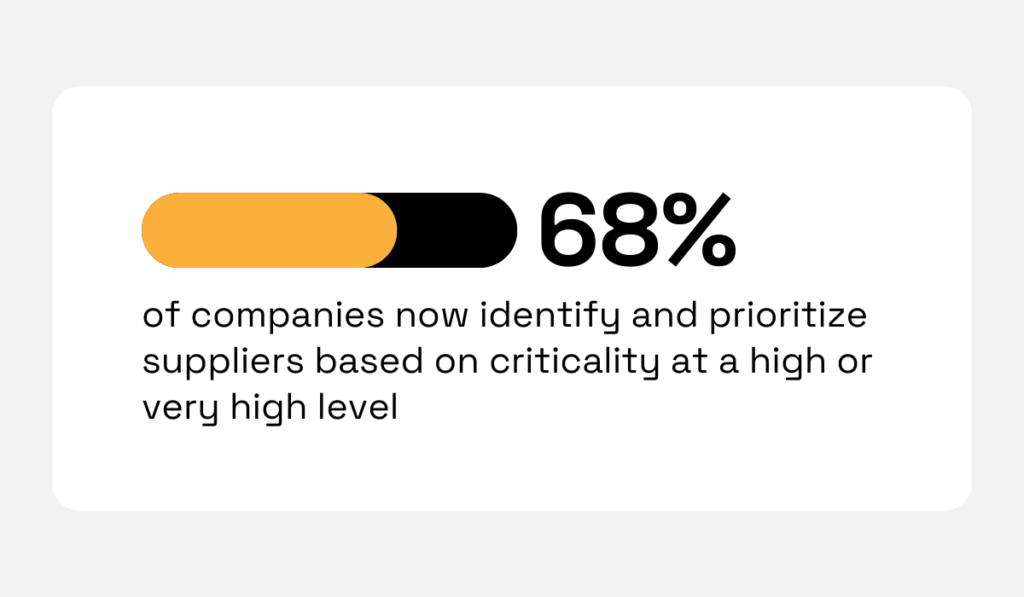
Illustration: Veridion / Data: Scribd
The risk-based approach ensures that supply chain intelligence efforts are aligned with real business vulnerability.
Instead of producing static maps with broad but shallow coverage, you gain a dynamic, prioritized view of where disruptions are most likely to cause material harm and where early intervention will have the greatest effect.
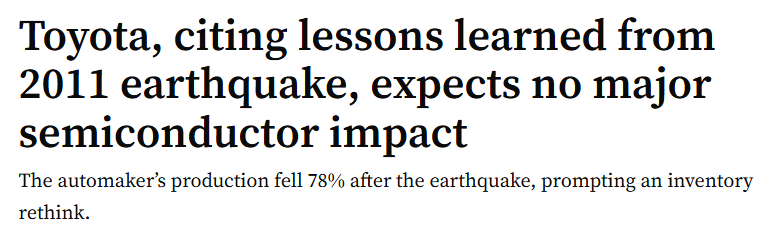
A real-world example of this approach is Toyota’s response to the 2011 Tōhoku earthquake and tsunami.
Source: Supply Chain Dive
The disruption exposed severe blind spots in Toyota’s just-in-time model, prompting a fundamental shift in how the company assessed supply chain risk.
Rather than treating all suppliers and components equally, the company identified 500 “priority parts”, including semiconductors and highly specialized components, whose disruption would halt vehicle production globally.
Toyota then mapped these critical parts across multiple supplier tiers, selectively increased buffer stock, and required deeper transparency from suppliers tied to those nodes.
This focus on criticality over completeness enabled Toyota to direct resilience efforts toward areas where failure would have the greatest operational and revenue impact, an approach that later helped the company outperform competitors during the global semiconductor shortage.
This demonstrates that, by prioritizing high-impact nodes over exhaustive coverage, organizations can direct resilience investments where disruption would cause the greatest operational or financial damage.
Each of the best practices discussed in this guide builds on the other.
They transform raw information into actionable insights that uncover hidden risks, strengthen resilience, and enable smarter decision-making.
Remember, visibility alone isn’t enough.
Accuracy, validation, and prioritization are what turn supply chain maps into strategic tools.
Organizations that adopt this approach will turn uncertainty into insight and their supply chains into a lasting competitive advantage.
Now is the moment to act.