



Blog
Small Business Data: A Quick Guide
By: Stefan Gergely -
06 April 2026


We love our data, and now that you're here, you're one step closer to loving it too.
A wide sample of data, so you can explore what is possible with our data
Choose ->
built with procurement in mind. Focused on manufacturers, products and more
Choose ->
built with insurance in mind. Focused on classifications, business activity tags and more
Choose ->
built with sustainability in mind. Focused on sustainability commitments, and environmental and social governance insights.
Choose ->
built with strategic insights in mind. Focused on market trends, competitor analysis, and industry-specific data
Choose ->

Keep up to date with our technology, what our clients are doing and get interesting monthly market insights.

Key Takeaways:
Despite their scale and impact, small suppliers often exist in data shadows:
Minimally disclosed, inconsistently classified, and rarely monitored beyond onboarding.
At the same time, regulators and investors are demanding unprecedented transparency into supplier diversity, labor practices, and sustainability performance several tiers deep.
Understanding and structuring small business data is foundational to building resilient, compliant, and opportunity-ready supply networks.
In this article, we examine what small business data is, why it matters, and how organizations can access it at scale.
Small business data refers to structured, standardized information about small and micro-sized companies that helps organizations understand who they are, how they operate, and how they fit into the broader market.
Unlike enterprise-level corporations, which are often subject to extensive reporting and disclosure requirements, small businesses typically operate with limited public visibility.
Most are privately held, publish no audited financial statements, and disclose minimal operational detail.
This makes reliable, aggregated data especially valuable for lenders, suppliers, insurers, and commercial partners.
As Ben Cutler, Vice President of Strategy and Growth Initiatives at LexisNexis Risk Solutions, explains:
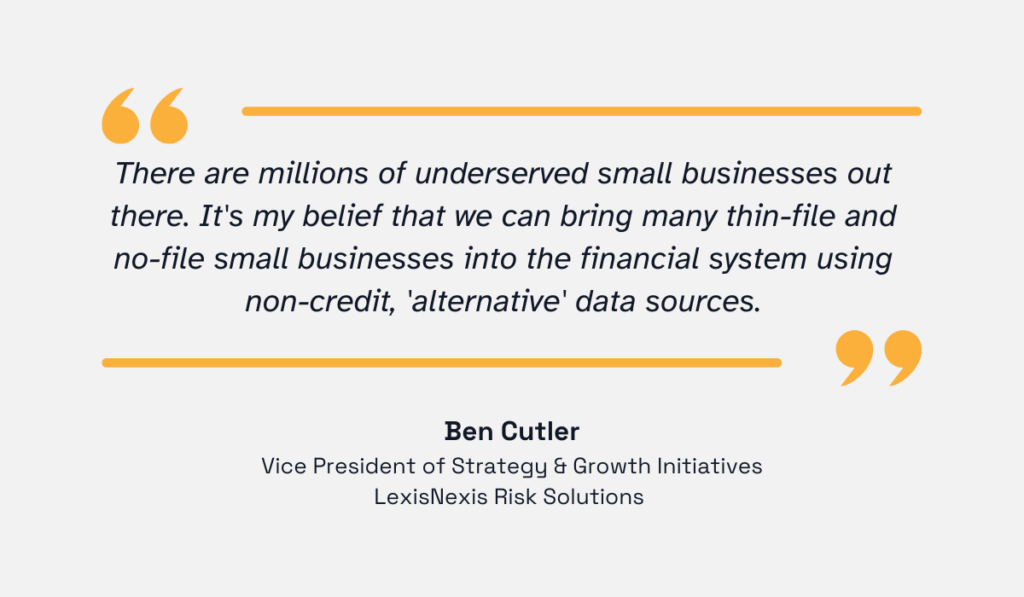
Illustration: Veridion / Quote: PR Newswire
In practice, small business data can span a wide range of attributes.
Core firmographic details, such as employee count, estimated revenue, industry classification, geographic location, and years in operation, form the foundation.
However, a comprehensive view should also include:
Together, these attributes help organizations assess a small business’s positioning, operations, and potential as a commercial partner.
Yet structured small business data is often fragmented.
Information is scattered across private credit bureaus, local registries, bank records, digital platforms, and alternative data sources.
Because most small businesses do not publish audited financial statements or standardized disclosures, much of their information must be inferred, aggregated, or enriched.
For example, in South Africa, only about 24.6% of small businesses use formal accounting systems.
This leaves the majority without standardized, easily accessible financial records.
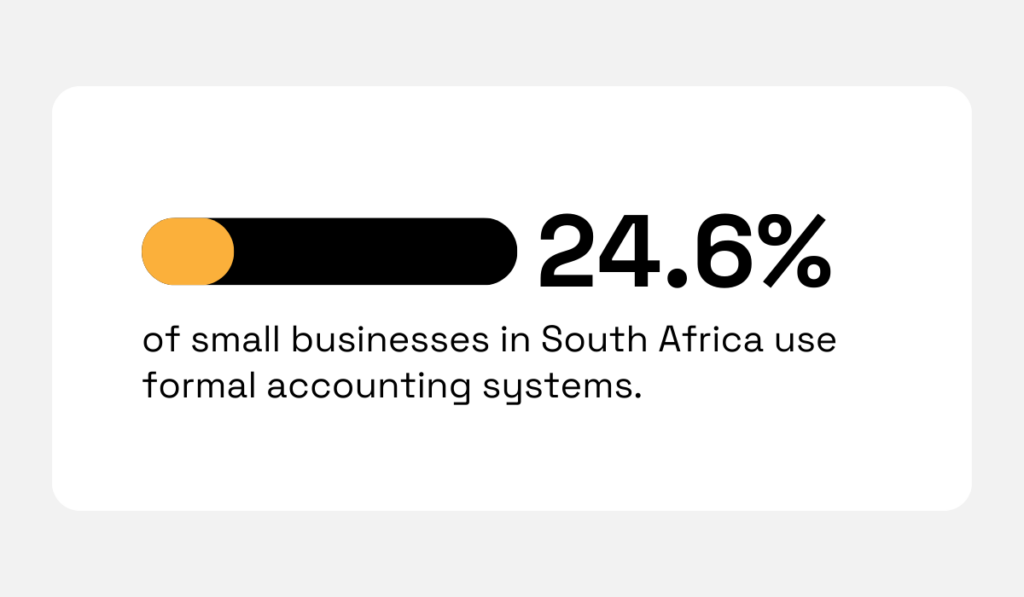
Illustration: Veridion / Data: Access to Finance Report
This stands in stark contrast to the comprehensive, regulated disclosures available for large corporations.
As a result, collecting accurate, up-to-date small business data requires sophisticated aggregation, validation, and enrichment processes to transform fragmented signals into actionable intelligence.
Collecting and structuring small business data does more than just improve visibility.
It enables smarter, faster, and more confident decision-making across the commercial ecosystem.
When properly aggregated and validated, small business data strengthens risk models, enhances due diligence, supports compliance efforts, and unlocks new growth opportunities.
Below are some of the most significant benefits.
Small businesses often occupy critical positions in supply chains as component manufacturers, last-mile logistics providers, or specialized service vendors.
However, compared to large enterprises, they often operate with narrower margins, fewer financial buffers, and less operational redundancy.
These characteristics increase vulnerability when operational shocks ripple through the supply chain.
Research from the MIT Supply Chain Management program highlights this hidden exposure.
The study found that small, specialized suppliers with low procurement spending, often classified as low-risk, were actually linked to up to 86% of total company revenue once their full network impact was mapped.
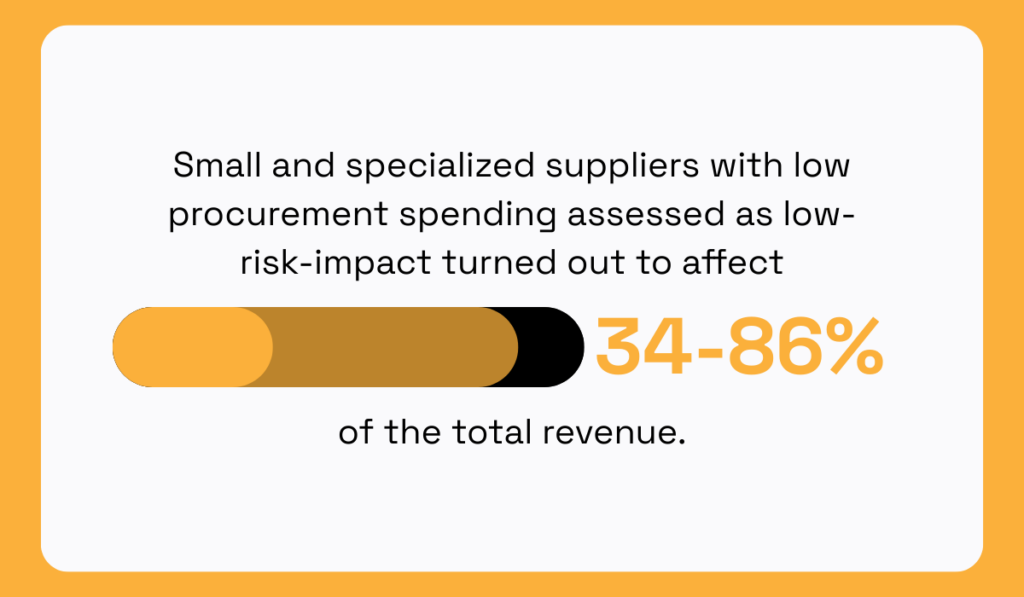
Illustration: Veridion / Data: MIT
In other words, suppliers once considered peripheral often proved to be mission-critical.
Yet traditional procurement models tend to assess risk primarily through spend volume, overlooking deeper structural dependencies.
Access to reliable small-business data enables organizations to evaluate supplier stability before engaging.
Firmographic indicators help assess maturity and scale, financial and credit signals provide insight into liquidity and payment reliability, and operational footprint data reveals geographic exposure and concentration risk.
Structured intelligence also enables companies to identify capacity constraints, ownership concentration, and single-site dependencies, all of which can materially affect resilience.
For example, let’s say you run a mid-sized electronics manufacturing company that sources a specialized connector component from a 12-person fabricator operating from a single coastal facility.
Your supplier has a strong informal reputation but no published financials, a formal credit rating, or a minimal digital footprint.
You classify the supplier as “low-risk” due to modest annual spend.
Then a hurricane shuts down the region for two weeks.
Without real-time monitoring or early-warning signals, you learn of the disruption only after shipments stop.
There is no pre-qualified secondary supplier, no buffer inventory strategy, and no visibility into whether the fabricator has the liquidity to restart operations quickly.
What appeared to be a small, low-risk supplier becomes a single point of failure.
Production delays stretch into weeks. Customer delivery commitments are missed. Revenue losses climb into the millions.
Not because of scale, but because of opacity.
Had structured supplier data, including geographic exposure, financial health indicators, and single-site operational dependency, been integrated during onboarding, the vulnerability would have been visible.
Mitigation strategies, such as secondary sourcing or contingency inventory planning, could have been implemented proactively rather than reactively.
Small businesses represent one of the largest and most diverse segments of the global economy.
The World Bank estimates that small and medium-sized enterprises (SMEs) account for more than 90% of businesses worldwide and over 50% of global employment.
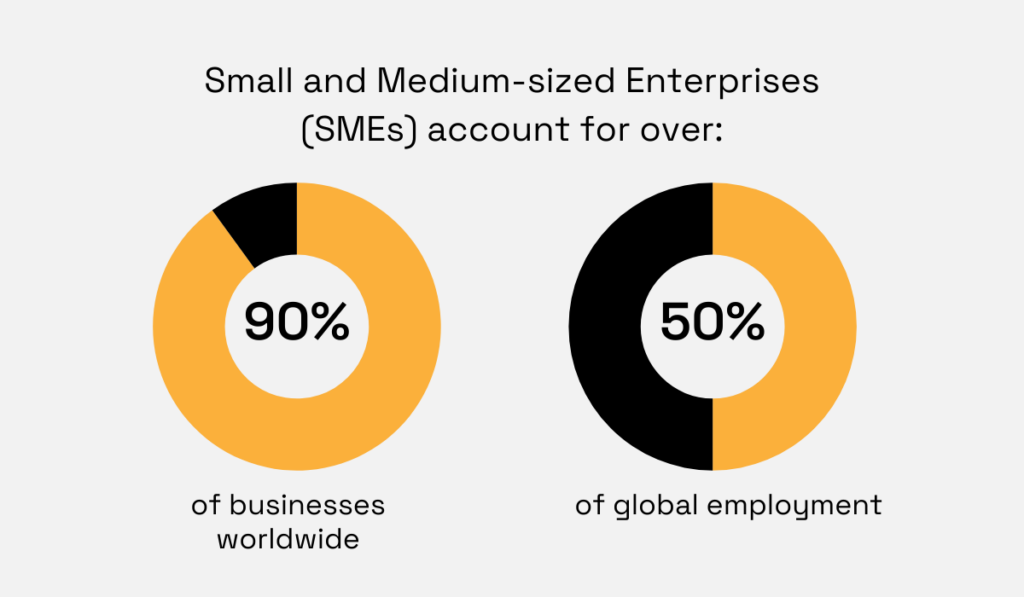
Illustration: Veridion / Data: World Bank
This underscores their central role in economic activity across both developed and emerging markets.
Across industries, SMEs serve as manufacturers, distributors, technology integrators, local service providers, and highly specialized niche operators.
However, their limited public visibility makes them difficult to identify through traditional sourcing methods.
Without structured data, partner discovery often defaults to referrals, trade directories, and word of mouth.
These approaches are slow, geographically constrained, and prone to reinforcing existing networks rather than uncovering better alternatives.
Small business data changes that.
Querying structured firmographic, financial, and operational attributes provides access to a far broader, more diverse pool of potential partners than any manual sourcing process could identify.
A logistics company seeking last-mile delivery providers in secondary markets can narrow its search to qualified operators based on location, fleet size, and years in operation.
A retailer looking for certified minority-owned distributors or a technology firm sourcing specialized integration partners can systematically identify businesses that would otherwise go unnoticed.
But why does this matter?
Because the most strategically valuable partners are often the least visible.
A niche manufacturer with deep material expertise or a regional distributor with strong relationships in an underserved geography may not appear in conventional supplier databases.
Data bridges that gap, transforming a fragmented, relationship-dependent process into a systematic, intelligence-driven one.
A real-world example of this approach in action is Unilever.
Managing a vast global supplier network, the company recognized that traditional sourcing methods were insufficient for surfacing qualified partners quickly and at scale.
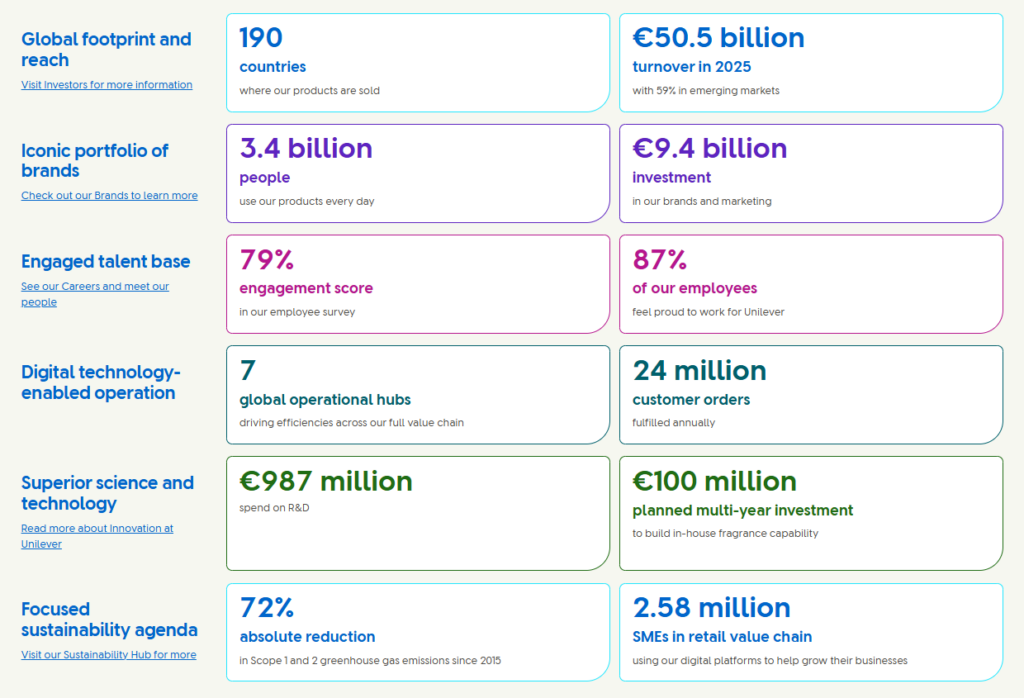
Source: Unilever
So, they adopted an AI-powered sourcing platform that scans millions of structured and unstructured data points—including certifications, sustainability metrics, client portfolios, and operational indicators—to match suppliers against highly specific procurement criteria.
Instead of relying solely on legacy vendor lists or keyword searches, Unilever’s procurement teams can now:
Crucially, many of the suppliers surfaced through this approach are small and medium-sized enterprises that would otherwise go unnoticed.
As Lullit Jezequel, Unilever’s former Procurement Manager for Sustainability and Partnerships, explains:
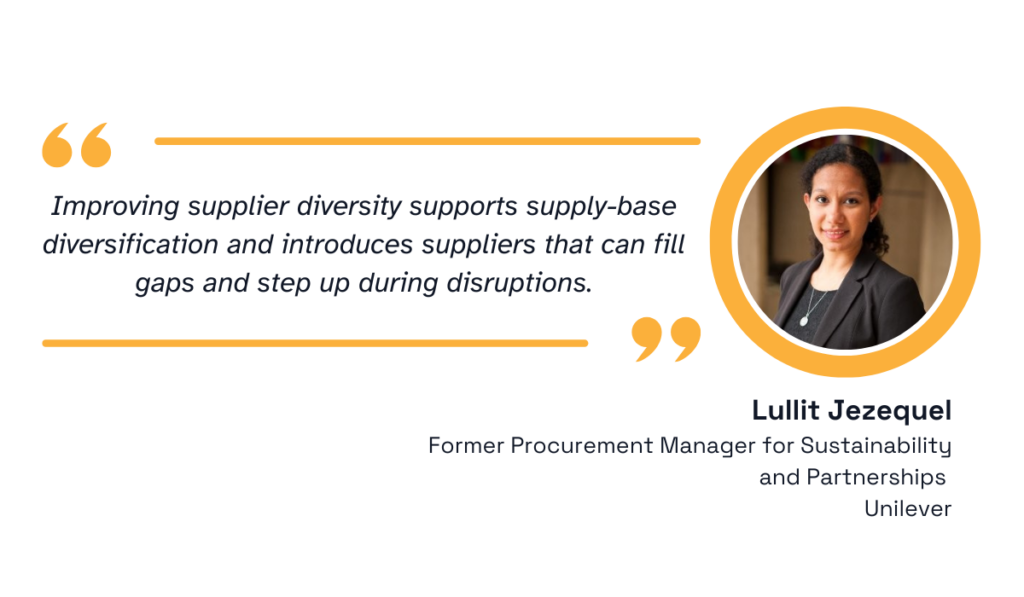
Illustration: Veridion / Quote: Opex Society
By transforming fragmented small business signals into searchable intelligence, Unilever effectively expands its partnership universe.
Rather than defaulting to incumbent large suppliers, the company can evaluate a broader, more diverse ecosystem of qualified partners, accelerating innovation, supporting sustainability goals, and strengthening supply resilience.
Regulatory pressure on supplier engagement has intensified over the past decade.
Governments, investors, and industry bodies now expect companies to demonstrate not just what they source, but who they source from and under what conditions.
Yet gaps remain.
According to the 2023 survey by Sedex, 40% of North American procurement leaders stated that sustainability wasn’t part of their decision-making, and 37% admitted they were unaware of legislation affecting their supply chains.
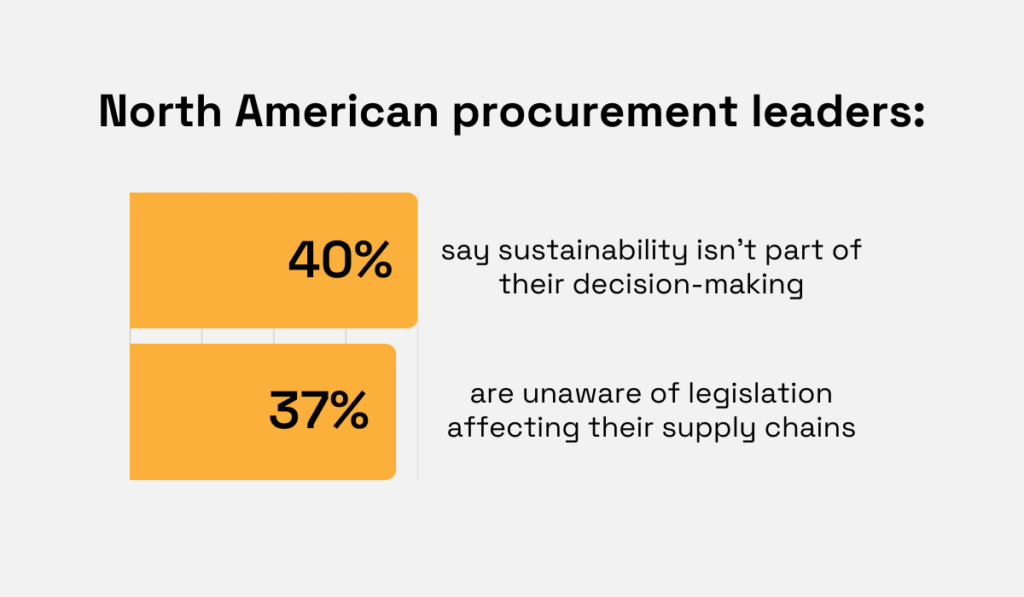
Illustration: Veridion / Data: Sedex
For many requirements, the critical data points lie not with large, publicly disclosed enterprise suppliers but with the small businesses that form the base of most supply chains.
From supplier diversity mandates tied to public sector contracts, to ESG disclosure frameworks that demand visibility into labor practices and environmental performance several tiers deep, the compliance burden now extends well beyond what any organization can track manually.
Small businesses rarely self-report sustainability metrics or labor audits, creating a blind spot precisely where regulators and investors are increasingly focused.
Structured small business data closes that gap.
Aylin Bason, CEO and Board Member at Supplier.io, underscores this:
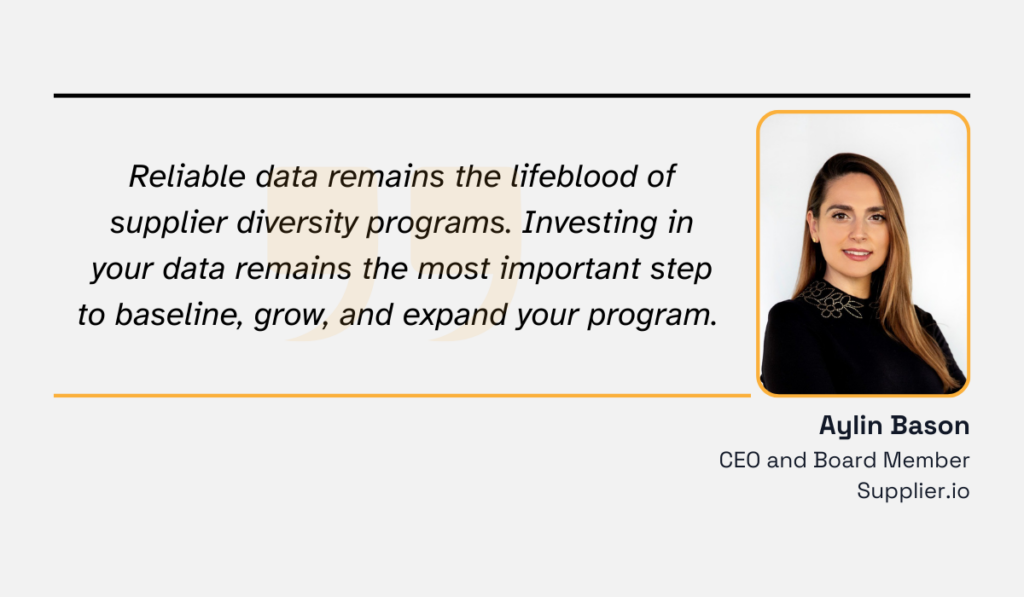
Illustration: Veridion / Quote: Supplier.io
By aggregating information on ownership structure, labor policies, environmental certifications, and operational practices, organizations can track adherence to legal requirements and internal ESG objectives.
This enables ethical sourcing and ensures reporting obligations under frameworks like the U.S. Supplier Diversity Initiative, the EU Corporate Sustainability Reporting Directive (CSRD), and industry-specific codes of conduct
Diversity certifications confirm minority-, women-, or veteran-owned supplier status.
Labor indicators help identify potential exposure or concentration risk in the supply chain.
Sustainability metrics, including energy usage, environmental certifications, and supply chain traceability, help organizations monitor and manage their environmental performance.
These metrics also enable compliance with regulatory and ESG reporting requirements, such as
The bottom line is, regulators and stakeholders no longer accept first-tier visibility as sufficient.
Investing in structured small business data does more than reduce risk.
It creates a scalable, credible system to demonstrate ethical sourcing across the full depth of the supply base.
The issue is that accurate small business data is difficult to obtain.
Information is scattered across government registries, financial databases, trade directories, and digital platforms.
And even when available, it’s often inconsistent, outdated, or incomplete.
Without consolidated insights, organizations face critical blind spots that can impact supplier selection, risk assessment, compliance monitoring, and partnership discovery.
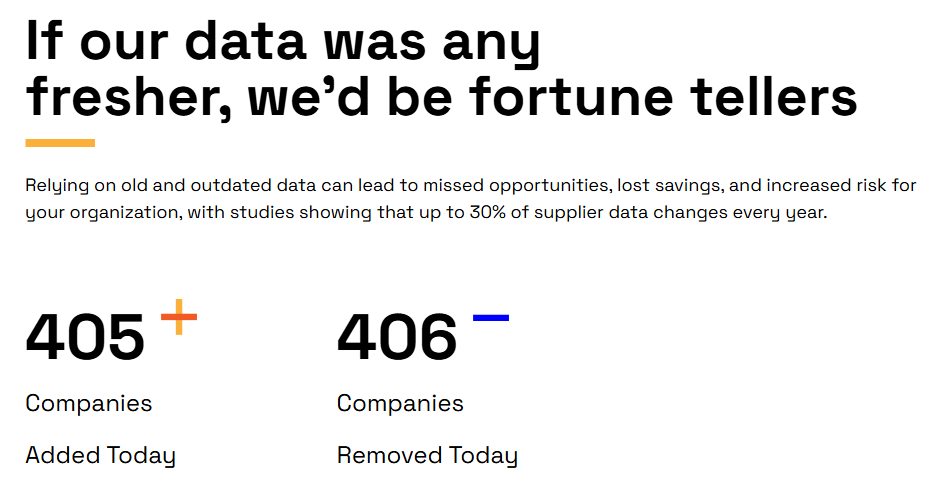
Veridion addresses these challenges directly by providing structured, continuously updated intelligence on companies worldwide, including small and micro-sized businesses.
Source: Veridion
Built on advanced AI and machine learning models, our platform indexes and synthesizes data from a wide variety of real-time sources, including:
This creates high-confidence business profiles that are regularly validated and refreshed.
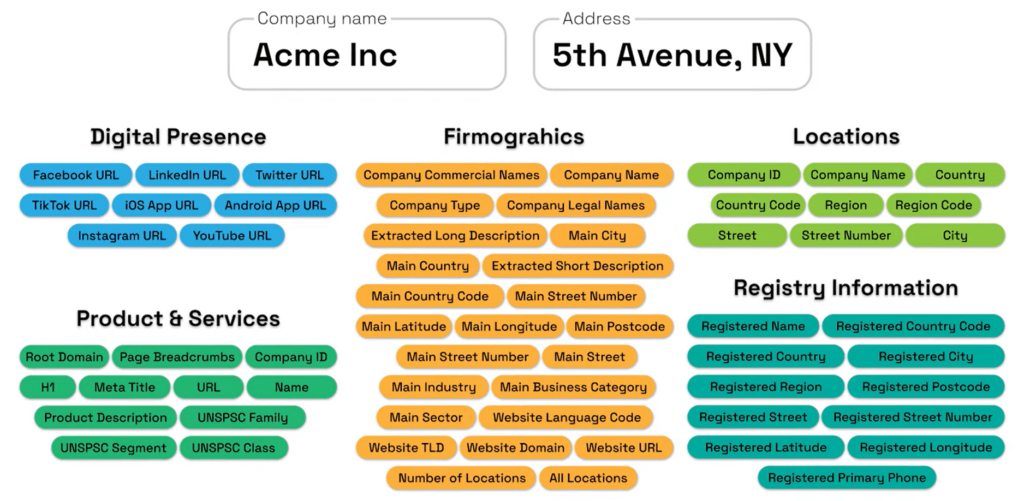
Veridion’s data coverage spans firmographics, operational footprint, industry classification, products and services, and sustainability indicators.
Source: Veridion
Ultimately, this gives organizations comprehensive visibility into even hard-to-find suppliers and partners.
Our platform supports flexible search and enrichment APIs designed for procurement, credit risk, insurance underwriting, compliance, and market intelligence use cases.
By transforming scattered signals into a unified, decision-grade dataset, Veridion enables organizations to:
| Capability | How Veridion Delivers Value |
|---|---|
| Accelerate Supplier Discovery | Identifies qualified small businesses that match specific geographic, industry, operational, or sustainability criteria. |
| Enhance Risk Management | Enables real-time monitoring and enrichment of company profiles to detect changes in operations, footprint, or risk indicators. |
| Support Regulatory Compliance & ESG Reporting | Provides visibility into supplier diversity status, sustainability policies, governance attributes, and other compliance-related data points. |
| Expand Partnership Opportunities | Surfaces niche vendors, emerging suppliers, and underserved market entrants that may not appear in traditional databases. |
| Automate Workflows | Streamlines data validation, supplier onboarding, enrichment, and portfolio monitoring processes through structured intelligence. |
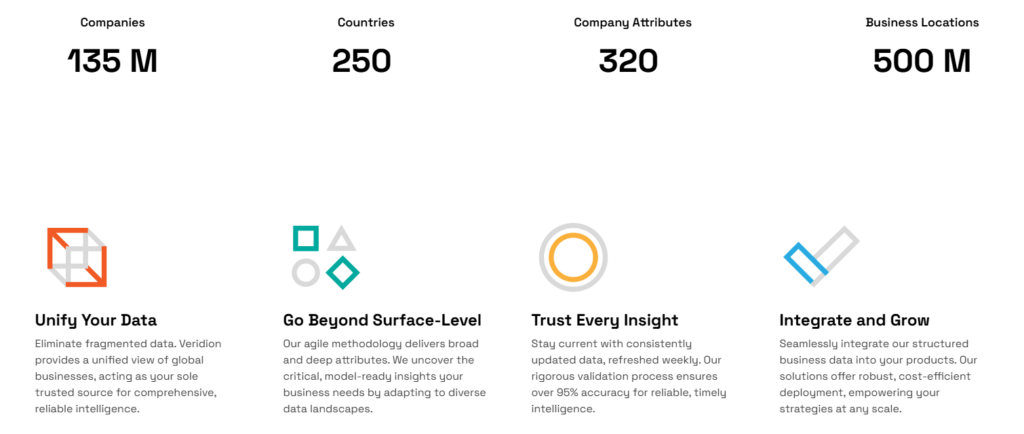
Veridion’s global business data is built for scale.
With coverage of hundreds of millions of active company profiles across more than 240 countries and territories and weekly refresh cycles, organizations can rely on fresh, accurate insights that keep pace with dynamic commercial environments.
Source: Veridion
In essence, Veridion equips teams with the visibility and context they need to reduce risk, improve operational efficiency, and make more informed decisions, turning fragmented small business information into actionable intelligence.
Small businesses aren’t peripheral to the global economy.
They’re its foundation.
Yet for many organizations, they remain the least visible part of the supply chain.
In an era of rising regulatory expectations, deepening ESG scrutiny, and increasingly complex supply networks, visibility into smaller suppliers is a strategic imperative.
Organizations that illuminate the unseen, measure what matters, and build supply networks that are efficient, ethical, and resilient gain more than compliance coverage.
They gain agility, risk intelligence, and access to untapped opportunity.
The future belongs to companies that can see the full depth of their supply base and act on it with confidence.