



Blog
How to Mitigate Geographic Concentration Risk
By: Stefan Gergely -
29 March 2026


We love our data, and now that you're here, you're one step closer to loving it too.
A wide sample of data, so you can explore what is possible with our data
Choose ->
built with procurement in mind. Focused on manufacturers, products and more
Choose ->
built with insurance in mind. Focused on classifications, business activity tags and more
Choose ->
built with sustainability in mind. Focused on sustainability commitments, and environmental and social governance insights.
Choose ->
built with strategic insights in mind. Focused on market trends, competitor analysis, and industry-specific data
Choose ->

Keep up to date with our technology, what our clients are doing and get interesting monthly market insights.

Key Takeaways:
A single flood in Thailand in 2011 shut down 25% of the global hard drive supply. It took the industry 18 months to recover.
Your suppliers do not need to be in the same country to share the same risk. They only need to be in the same place.
That place could be a floodplain. It could be a port city reliant on one shipping lane. It could be a region facing power shortages or labor strikes.
Yet most procurement teams still evaluate supplier risk at the company level.
They look at financial health. They look at quality scores. They rarely look at the map.
Here is how you move from blind spots to visibility.
This is your six-step process to mitigate geographic concentration risk.
You cannot mitigate what you do not measure. Start with the region, not the supplier.
Natural disasters, political unrest, labor constraints, and infrastructure gaps all vary by geography.
For example, extreme weather now causes billion-dollar losses roughly every three weeks.
In fact, according to a Gartner study, 40% of supply chains had already been hit by geopolitical disruptions.
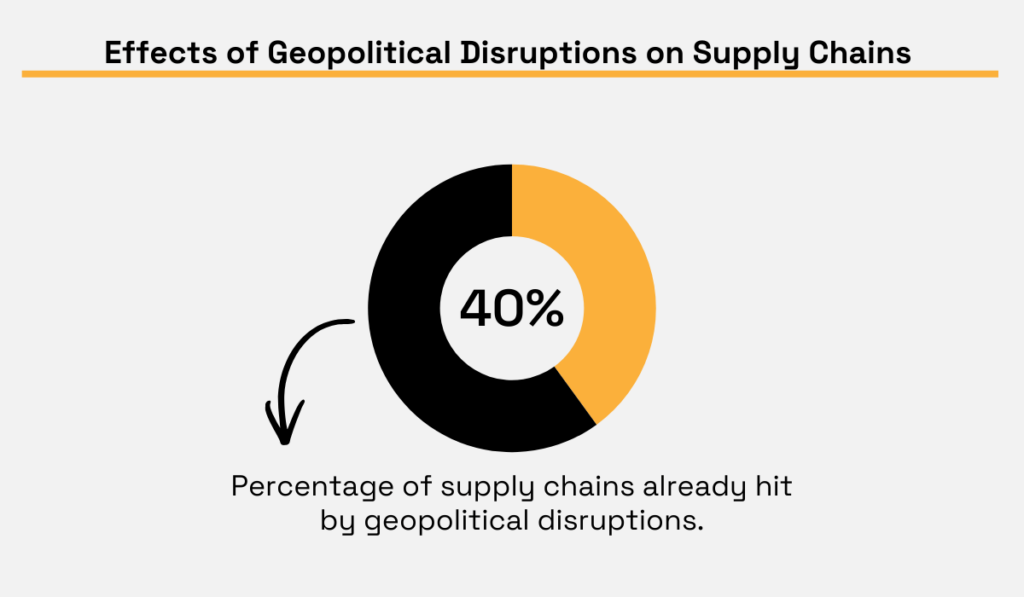
Illustration: Veridion / Data: Gartner
So, to avoid being part of this statistic, take proactive measures.
For one, you should rate each supplier region on these four factors:
This way, you’ll know which areas need the most attention.
Ask specific questions:
Next, compare those risk scores.
One region might be relatively stable but hit by hurricanes; another might be politically volatile but weather-free.
For instance, Vietnam offers lower labor costs than China, but its depth of component suppliers is shallower. A disruption there takes longer to fix.
In other words, geography fundamentally determines whether your suppliers can deliver during regional disruptions.
That’s why you need to create a risk heat map that defines areas as high, medium, or low risk for different categories, such as storm risk, conflict risk, labor risk, power grid risk, etc.
This will then allow you to prioritize, for example, a region with many hurricane-related issues but strong governance, versus one with low governance.
This regional risk landscape will then give you a sense of where to beef up your planning.
Headquarters tell you nothing.
Your supplier’s corporate office might be in Chicago, but their only factory might be in a flood-prone area of Bangladesh. You will not see the connection until you map the actual production sites.
Many companies only track a vendor’s main address, but that misses the real risk. You need the complete facility-level intelligence, including:
Here’s why this visibility is crucial.
Geography hides risk through co-location.
You might have 50 suppliers across 50 corporate entities, but if 48 of them operate in the same industrial park outside Shenzhen, you have one supplier from a risk perspective.
Additionally, if a supplier HQ is in City A but all their factories are in City B, a crisis in City B will still shut you down.
And disruptions of all kinds are all too frequent nowadays.
The BCI Supply Chain Resilience Report confirms this, revealing that the majority of companies experienced anywhere between one and five supply chain disruptions in 2023.
But for some, this figure was even higher, ranging from 10 to 50 supply chain incidents in a single year.
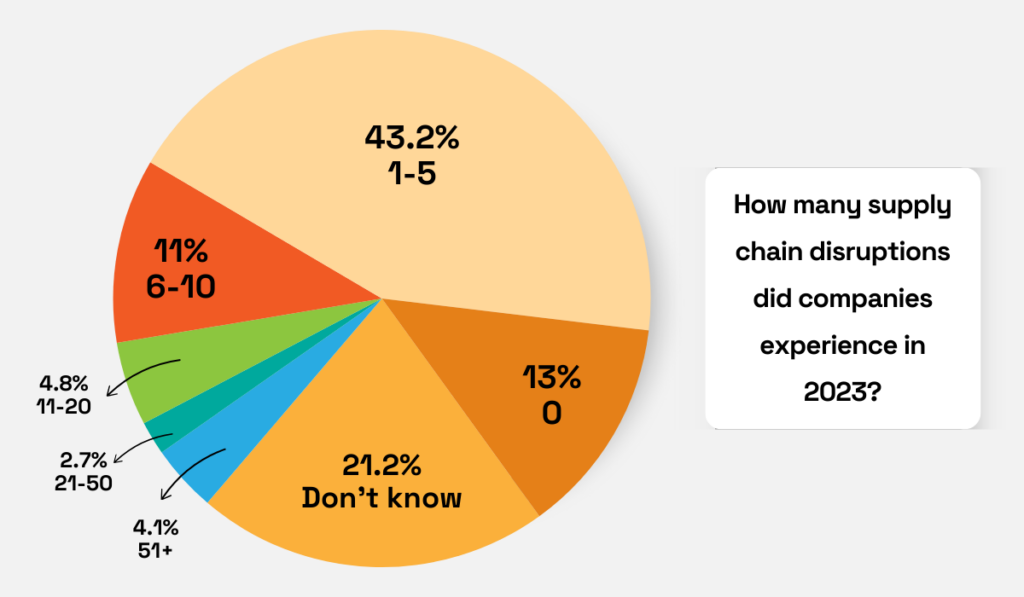
Illustration: Veridion / Data: The Business Continuity Institute
Let’s say you have several important suppliers that happen to have operations in the same industrial area. Well, guess what? A flood in that area means that those five suppliers will go offline at the same time.
That’s why geographic disruptions are so frequent and dangerous.
But with mapping, you immediately see those clusters and can take action.
There are several solutions that can help map these suppliers.
One example is Veridion’s supplier location intelligence platform. This tool helps map out each facility so that every site is represented on a map.
Source: Veridion
Veridion’s platform has over 400 million business locations across 250 geographies. Our database not only knows the addresses but also the purpose of each site and whether it’s even in operation.
This means that you will no longer have an abstract list of suppliers but will know exactly where they are.
If you see that five of your important suppliers are clustered in one particular county, then you know that you’ve found one point of failure. Now you know exactly how to handle the situation.
The answer to this problem is simple: map everything. Do you know exactly where your suppliers’ factories are? Do you know exactly where their ports are?
Well, you should. With this information, you should then ask yourself if you see any patterns. Is everything going through one particular transit point or country?
If so, mark it as a risk zone.
Visibility without action means very little.
If you don’t have a proactive plan in place, you risk unexpected disruptions and significant losses.
For example, after Ford’s key parts supplier caught fire in 2018, Ford had to halt production of its best-selling F-150 model, seriously impacting their bottom line and reputation.
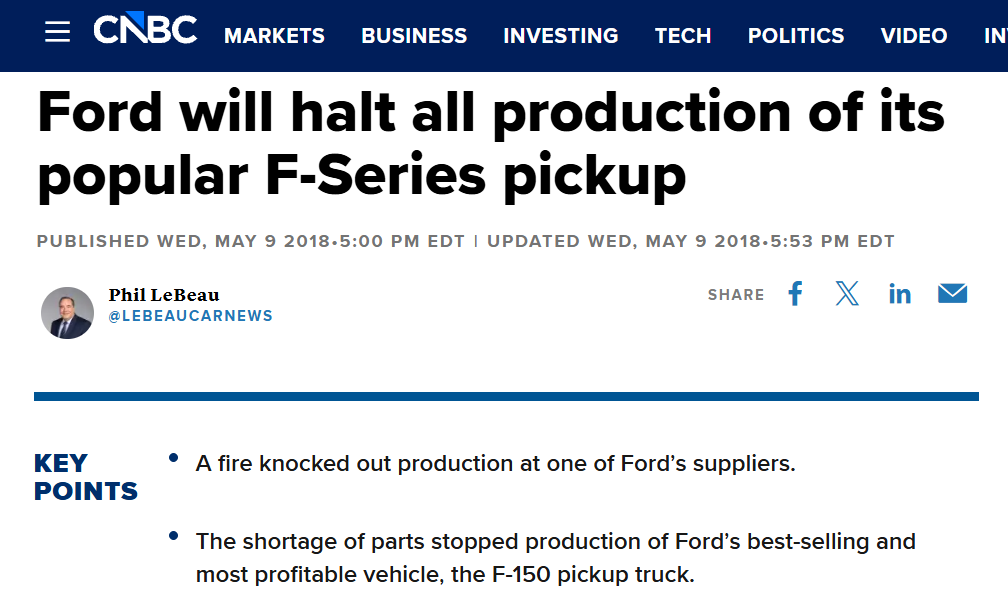
Source: CNBC
That’s why you always need to be ready with your Plan B.
Armed with the risk map, you need to tailor your contingency plans to each high-risk region. Generic contingency plans fail because every region breaks differently.
So, don’t just buy insurance, plan the logistics: identify alternate routes, backup carriers, or nearby ports in case a primary one is blocked.
Likewise, locate secondary suppliers outside that region who could step in immediately.
A port strike in Rotterdam requires a different playbook from a drought at the Panama Canal. Your plan must align with how the disruption occurs.
To create your regional contingency plans, start with three specific scenarios for each critical region:
| Alternative logistics routes | If the primary route is closed, what is the alternate route? Can we go through another gateway? What are the implications? |
| Backup suppliers | Identify at least one alternate supplier for critical parts outside the critical region |
| Emergency inventory buffers | If we are totally dependent on the critical region for parts or raw materials, how can we strategically build inventory levels? |
And remember, be sure to regularly review these plans.
Your needs, as well as the potential risks, change all the time, so you need to make sure you stay ahead of any disruptive shifts.
You cannot be the only one worried about geographic risk. Your suppliers must own it too.
Incorporate geographic resilience into your supplier qualification criteria. Don’t frame it as a request, but as a requirement.
When you qualify new vendors, require them to demonstrate how they would handle local disruptions.
For example, insist that critical parts aren’t made at just one single site.
If a supplier has only one factory for your product, encourage them to develop a second facility or to partner with another supplier in another location. Multi-site production is a powerful hedge.
You should make multi-location a plus in your scoring.
Also, embed continuity and disaster recovery plans into contracts.
During onboarding, have each key supplier complete a short business continuity questionnaire.
Damian Walch, Senior Director, Enterprise Risk Management and Compliance at James Hardie, producer of high-performance fiber cement and fiber gypsum building solutions, agrees with this:
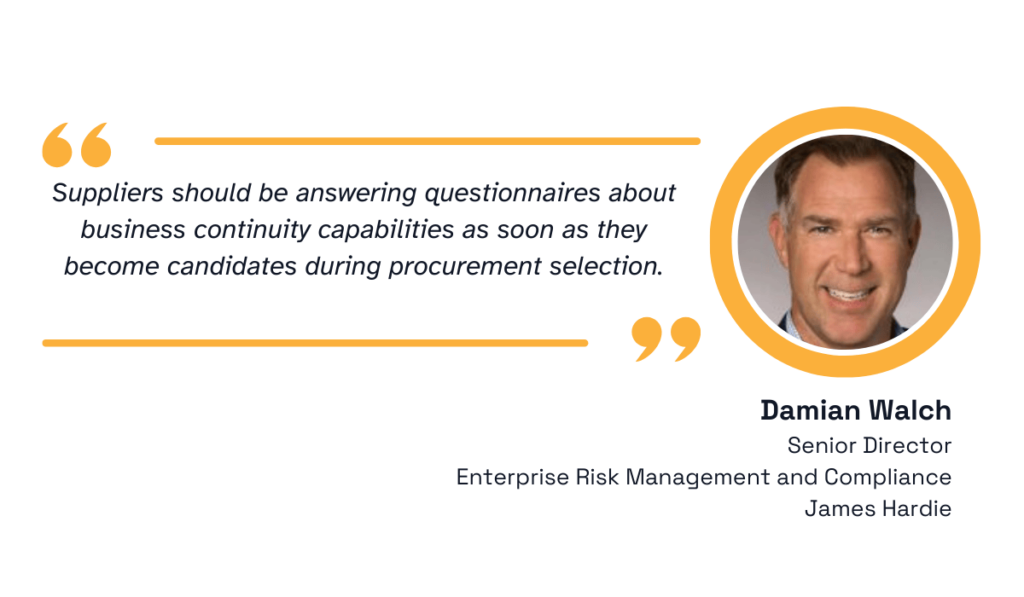
Illustration: Veridion / Quote: Risk and Resilience Hub
Include the questionnaires in procurement scorecards or audits. Do periodic reviews of those plans (perhaps annually) to ensure they stay current.
A contract clause can even require suppliers to maintain and test their disaster recovery plans.
This not only pushes them to prepare but also provides you with documented proof of their readiness.
Beyond contracts, encourage your suppliers to adopt industry standards.
For instance, ask critical suppliers if they are ISO 22301 certified or have a documented IT disaster recovery plan.
Make resilience a performance metric. Include it in quarterly business reviews. Tie it to contract renewals.
When suppliers see that geographic diversification influences your sourcing decisions, they will prioritize it.
In other words, by making resilience part of your qualification and review process, you build a culture where suppliers see preparedness as a competitive advantage.
Concentration is a choice. You can make a different one.
In many cases, the most direct fix is simply not to put all your eggs in one basket.
This doesn’t mean you need to abandon your primary source. But you should build alternatives.
So, look for opportunities to shift at least part of your sourcing to different countries or regions.
This might mean qualifying a second-tier supplier in another country, or even nearshoring some production to a nearby region.
Don’t follow in the footsteps of the apparel industry. Over 70% of global textile and apparel exports originate in Asia.
This concentration creates systemic vulnerability. A single port closure in Kaohsiung or a canal blockage immediately impacts global assortment and revenue.
Institute of Supply Management emphasizes that a second source in a different location reduces your exposure to region-specific risks.
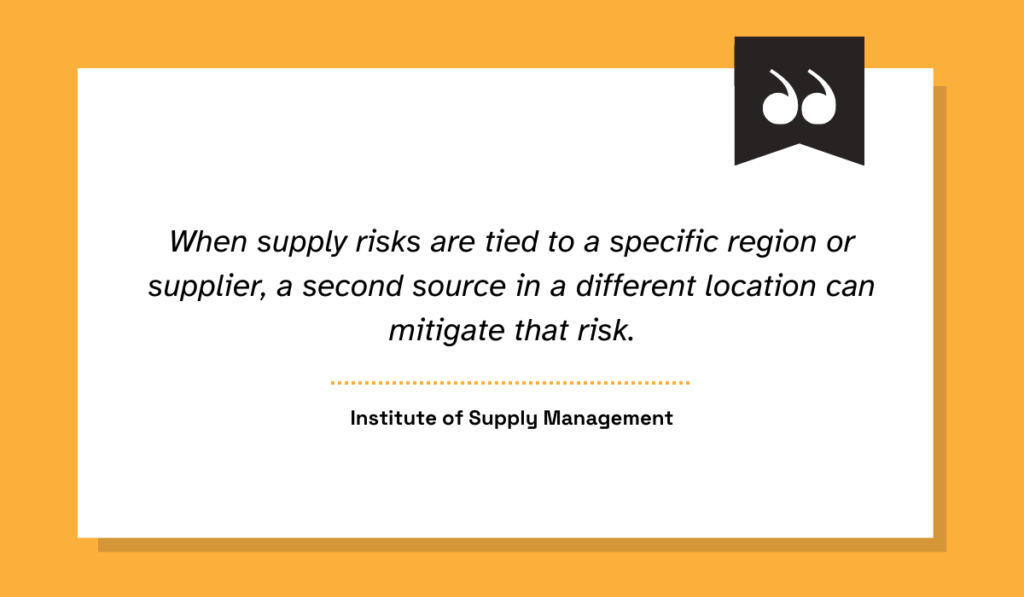
Illustration: :Veridion / Quote: ISM
The Economist Impact report advises companies to avoid being without adequate protection by concentrating on one area. Instead, find redundancy: even a partial move counts.
You don’t have to abandon a supplier to reduce risk; sometimes simply moving 20–30% of spend to an alternate supplier in another region can sharply cut your exposure to local disruptions.
In fact, research demonstrates that structured multi-sourcing reduces Time-to-Recovery by 20% and enables operational switching within seven days using digital twin and control tower platforms.
No wonder more and more companies are actively implementing this strategy.
A recent survey by the Chartered Institute of Procurement & Supply shows that around 69% of businesses are actively diversifying their supplier base to mitigate supply chain risk.
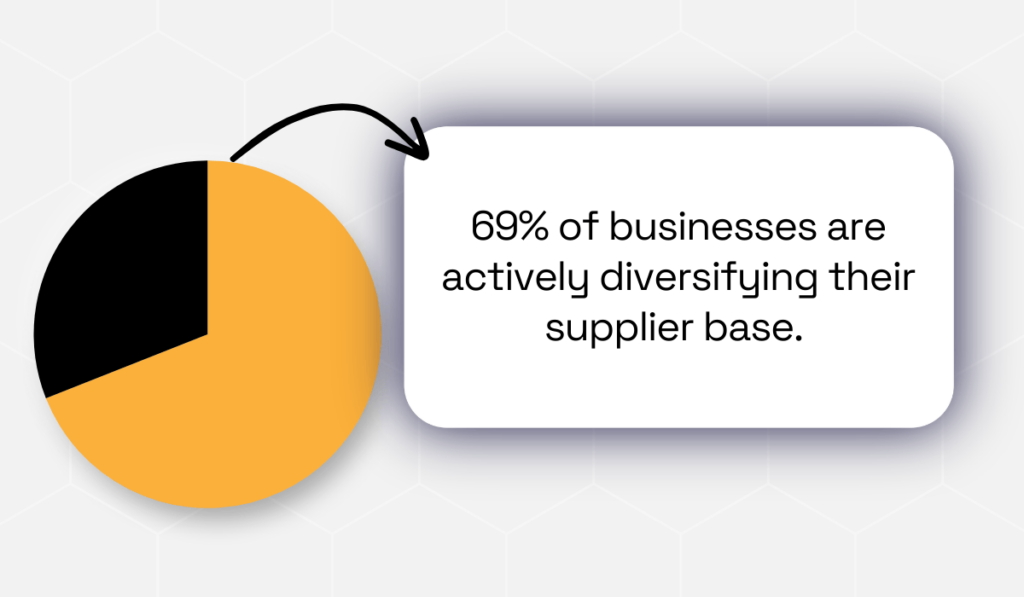
Illustration: Veridion / Data: CIPS
They know it works: after the Covid-19 shock, many shifted some production from a single country to two or three.
In short, multi-sourcing has proven time and again to be a viable mitigating strategy.
Therefore, cast a wider net. Seek capable suppliers in different geographies and split your orders among them.
You’ll pay a bit more in coordination, but you’ll sleep better knowing a problem in one region won’t stop all production.
Your supply chain is not static. Your suppliers open new plants, shut down old ones, and even acquire competitors with plants in areas you’ve never green-lit.
In other words, the geographic risk is always changing, and so too must your monitoring.
Implement a system that monitors in real time with relevant notifications. Many successful organizations now use risk intelligence platforms that monitor for new disruptions.
Specifically, you can automate notifications for your supplier map using reliable news sources and government websites for each region.
You want to be immediately notified of disruptions such as extreme weather, port closures, strikes, sanctions, or border closures.
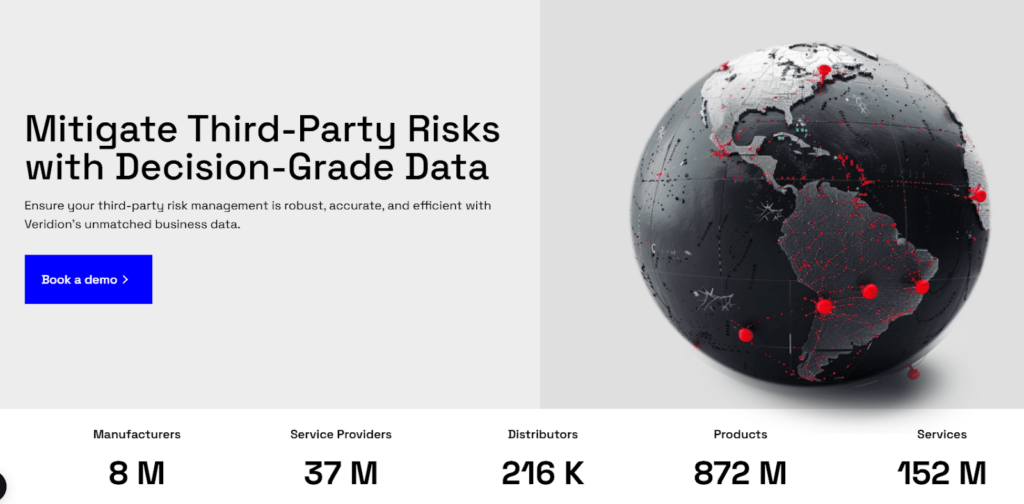
For instance, Veridion monitors disruptions across 220 countries and can notify you which of your supplier sites are at risk if a disruption occurs.
Source: Veridion
The key is that this system will filter out unimportant information, so instead of wading through useless information, you’ll receive targeted notifications such as:
“Typhoon headed for the eastern region: Supplier X (electronics) and Supplier Y (semiconductors) have facilities there; Material Z will be delayed.”
This type of targeted information can give your team valuable time to react.
When you monitor locations, you should keep things simple at first.
For every location you identify as a high-risk area, you should sign up for local incident feeds, including weather updates, political news, and updates on labor sites.
Ensure you have a system that connects these incidents with your suppliers. When you receive an alert, your system should trigger a process that includes a person who decides what action to take next.
The automation allows you to respond proactively, instead of discovering problems too late.
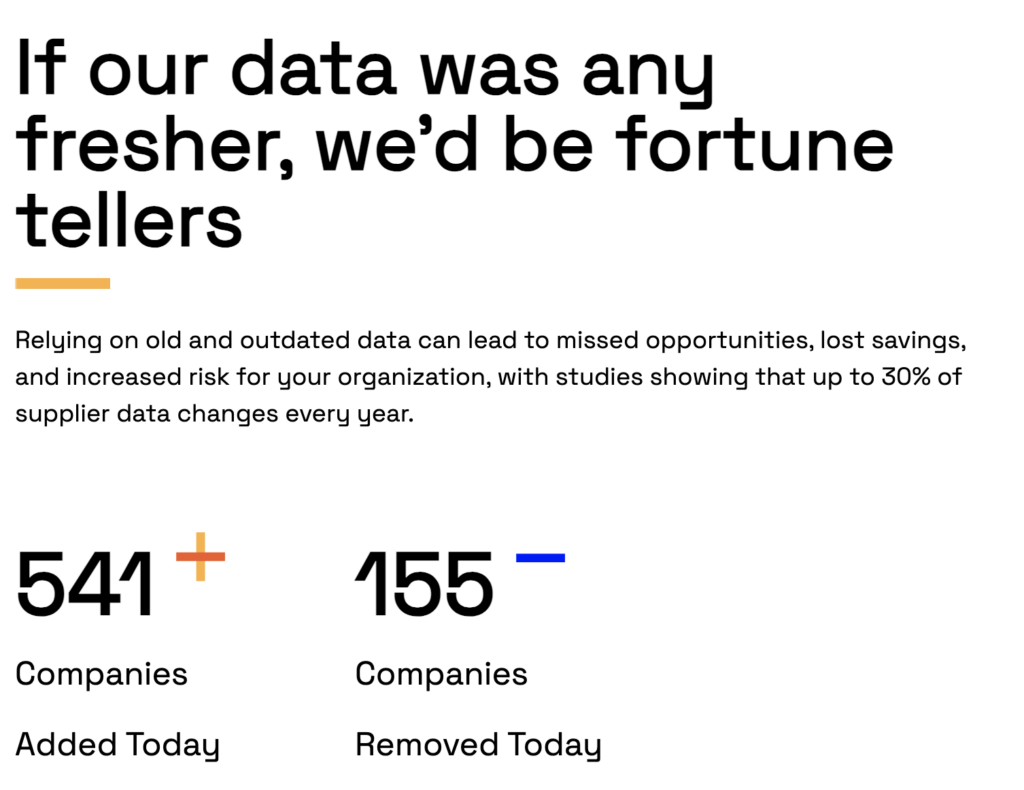
Industry Select noted that about 70% of business professionals encounter at least a single change in a location each year, and if you don’t keep up with these updates, you might miss a new hotspot of risk.
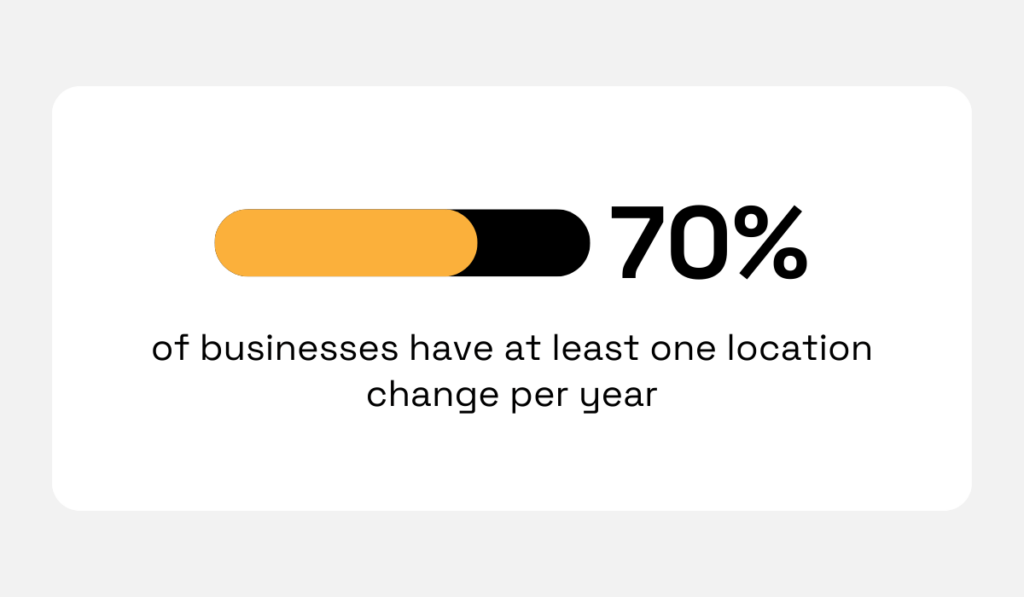
Illustration: Veridion / Data: Industry Select
By keeping your supplier information and regional profiles up to date, you can identify risks before they fully emerge.
The process of mitigating geographic concentration risk is an ongoing one of due diligence, planning, and action.
By assessing the risks in every region, plotting all your locations on a map, and requiring your suppliers to be resilient as well, you can uncover your hidden weak spots.
Add that to your diversification into alternative regions, and you can create a resilient supply chain that can withstand not just the storms nature sends our way, but also the metaphorical storms that can disrupt business as usual.
The road ahead is simple and proven: start implementing these strategies now to ensure your business remains resilient tomorrow.