



Blog
Benefits of Clear Data Ownership
By: Stefan Gergely -
10 April 2026


We love our data, and now that you're here, you're one step closer to loving it too.
A wide sample of data, so you can explore what is possible with our data
Choose ->
built with procurement in mind. Focused on manufacturers, products and more
Choose ->
built with insurance in mind. Focused on classifications, business activity tags and more
Choose ->
built with sustainability in mind. Focused on sustainability commitments, and environmental and social governance insights.
Choose ->
built with strategic insights in mind. Focused on market trends, competitor analysis, and industry-specific data
Choose ->

Keep up to date with our technology, what our clients are doing and get interesting monthly market insights.

Key Takeaways:
Data is the new oil.
Companies collect more of it than ever before, yet a surprising number of them still struggle to get real value from it.
The problem isn’t usually the data itself. It’s knowing who is responsible for it.
Clear data ownership is the foundation that determines whether your data helps you grow or quietly works against you.
This blog breaks down exactly why it matters.
When no one owns a piece of data, no one fixes it when it breaks.
An error enters a dataset. Nobody catches it because nobody’s watching. It gets picked up by a report, shapes a decision, and by the time anyone realizes something’s off, the damage is already done.
Clear ownership stops that cycle before it starts.
When someone is genuinely accountable for a dataset, they keep it accurate.
They catch problems early, before those problems become someone else’s headache. And the people relying on that data can actually trust what they’re looking at.
Here’s what the research says: A 2024 survey of over 550 data and analytics professionals found that 64% of organizations say data quality is their biggest challenge.
Even more striking: 67% admitted they don’t fully trust the data they use for business decisions.
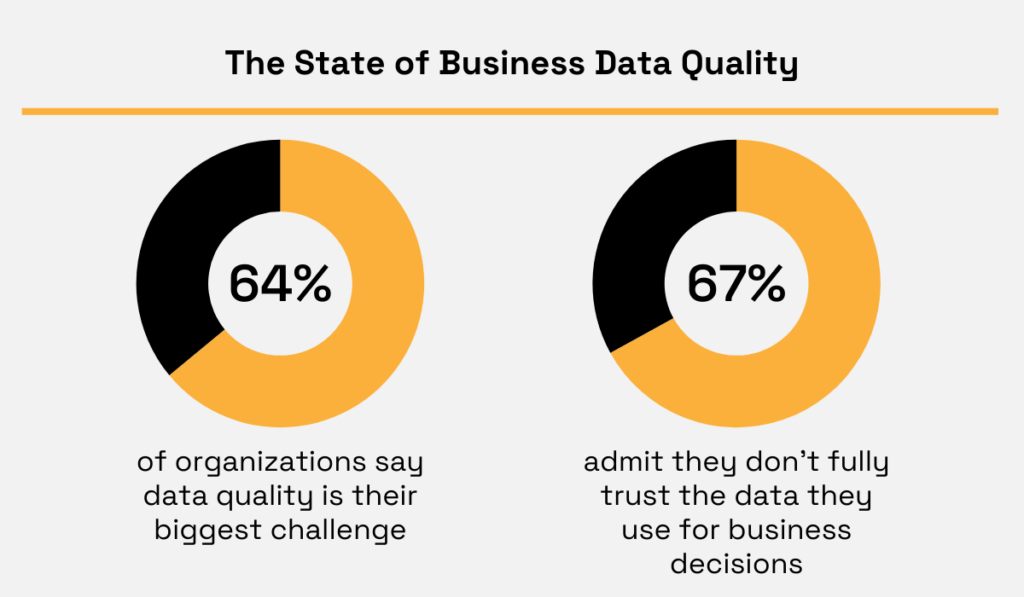
Illustration: Veridion / Data: Precisely
The majority of companies are making consequential calls on numbers they’re privately unsure about!
Imagine how much time your own team spends double-checking reports or quietly verifying a figure before walking into a meeting.
But the upside is just as significant.
Businesses operating on high-quality, well-governed data achieved up to 62% higher revenue growth and as much as 97% higher profit margins than competitors.
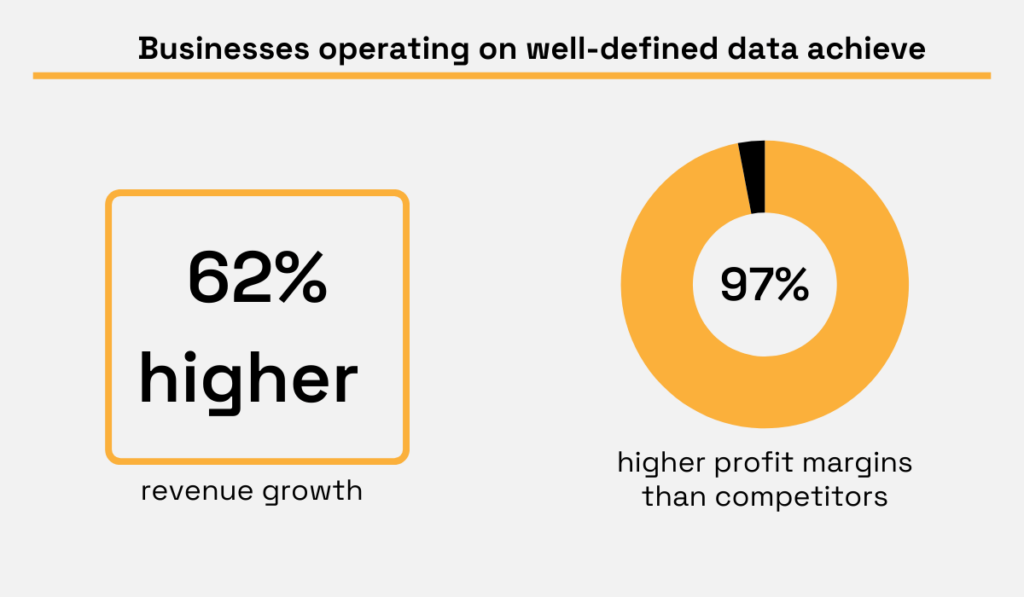
Illustration: Veridion / Data: MIT
Quality data compounds. Every good decision made on accurate data sets up the next one.
There’s also a less obvious benefit: Metadata.
When ownership is clear, your team understands what a dataset actually is, where it came from, and how it should be used. Without that context, institutional knowledge erodes quietly over time.
This is also where external data partnerships become relevant.
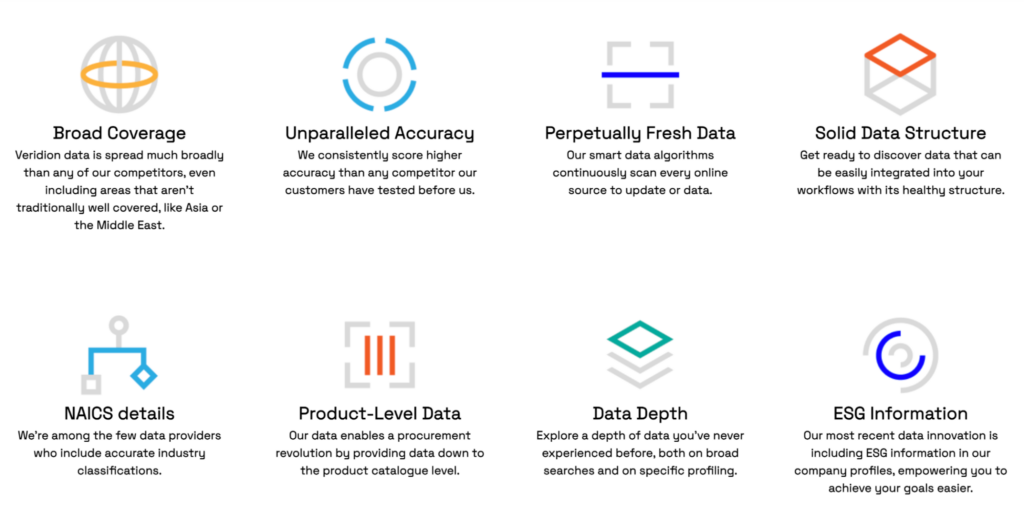
Veridion, for example, maintains a database covering over 135 million companies across 250 countries, with more than 320 attributes per company and 500 million business locations tracked.
Every record is refreshed weekly, and validation accuracy holds above 95% across the entire dataset.
Source: Veridion
That kind of consistency is the direct result of a rigorous, owned process for collecting, verifying, and updating data, one that combines AI with human review at every stage.
For businesses integrating Veridion into their MDM, ERP, SRM, or analytics platforms, the quality carries over.
The data doesn’t degrade as it moves into your systems because the ownership and validation standards travel with it.
Your procurement team, sales team, and risk team can all pull from the same source and land on the same answer about a company.
That’s what clear data ownership actually delivers, whether it’s built internally or sourced through a trusted partner.
When data ownership is clear, your teams don’t start from zero every time.
Access is known. Definitions are agreed on. Trust is already built in. Teams pick up the data and move.
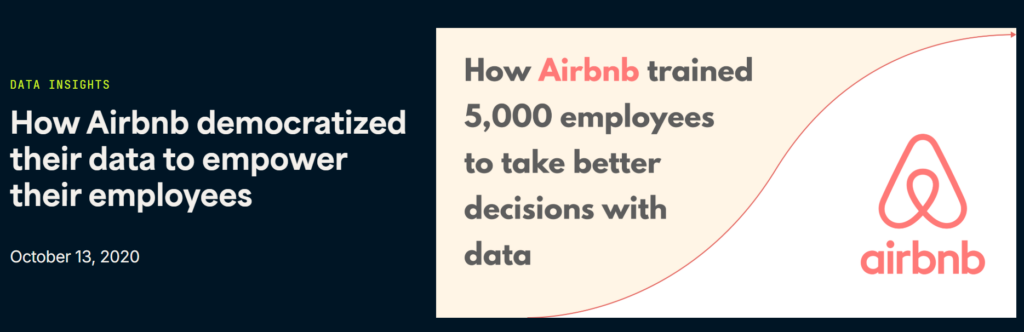
Airbnb built its entire internal decision-making culture around this idea.
Source: Fivetran
In 2016, they launched Data University. The goal was simple: every employee, regardless of role, should make data-informed decisions independently.
Not just analysts. Not just data scientists. Everyone.
For that to work, the data itself had to be trustworthy. And for data to be trustworthy, someone had to own it. That’s exactly what Airbnb put in place.
Before the program launched, only around 30% of Airbnb employees were weekly active users of their central data platform.
Within six months of Data University going live, that number jumped to 45%.
Leadership reinforced it at every level. Managers were expected to talk about data progression with their direct reports. Data-informed work became the standard.
And the results followed. Airbnb became profitable for the first time in the second half of 2016, the same year the program launched.
Was it only because of data ownership?
Not entirely. But a company where nearly half the workforce trusts and uses data every week operates faster. Decisions compound. Opportunities get caught earlier.
That’s what happens when your whole organization can access and trust its data.
Faster decisions ultimately mean:
In fast-moving markets, the gap between having information and acting on it is exactly where opportunities are lost.
Owned data closes that gap.
Clear ownership changes how accountability works. Here’s what your organization actually gains:
And, importantly, when something goes wrong, and eventually something will, there’s a clear path to resolution.
Citi, a major American multinational financial services corporation and one of the “Big Four” US banks, learned the hard way what happens when data accountability structures don’t exist.
Back in 2013, Citi entered a consent agreement to improve its anti-money-laundering compliance. In 2015, it was told to improve controls in its foreign exchange activities.
The issues kept building.
Finally, in 2020, US regulators issued a cease and desist order and a $400 million fine.
The charges? Failures across risk management, data governance, and internal controls.
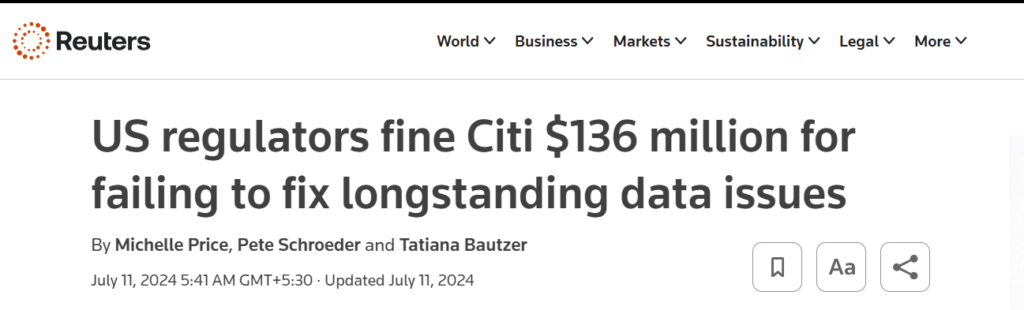
Source: Reuters
The bank pledged to fix it. Remediation plans were drawn up. Resources were committed.
But four years later, regulators came back.
The OCC amended the original order and added a $75 million fine. The Federal Reserve followed with $60.6 million more.
Why? Citi had failed to meet its remediation timeline, and the progress made was neither sufficient nor sustainable.
Acting Comptroller Michael Hsu was direct about it:
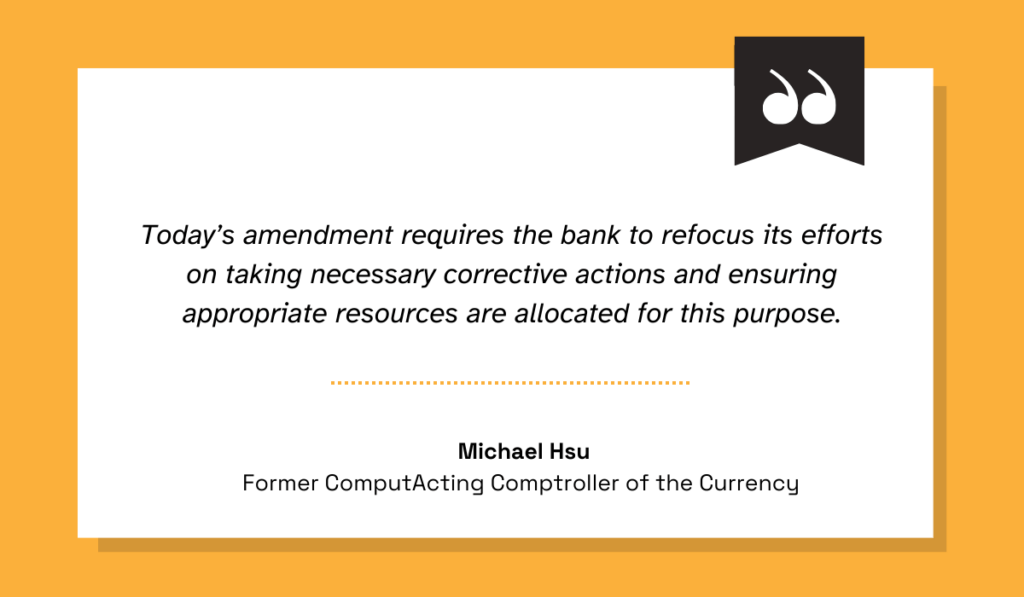
Illustration: Veridion / Quote: Finextra
Read that again. Particular weaknesses around data. At one of the world’s largest banks. Years after being told to fix it.
The total? Over half a billion dollars in penalties. Across multiple enforcement actions. Over four years.
All of it tracing back to the same root: accountability that existed on paper but never in practice.
When your organization builds real data ownership, with genuine authority and clear responsibility, compliance becomes something you can demonstrate at any time.
Not just before an audit.
How often does your team pull a number, only to have another team arrive with a completely different figure?
It happens constantly. And it costs more than you realize.
Just think of the time your teams spend tracking down which version of a report is right, or sitting in meetings where the first twenty minutes resolve a data conflict instead of making progress.
That time could’ve been spent on an actual strategy.
Clear data ownership addresses this exactly.
When a data domain has an owner, that owner defines the metric. What it means. How it’s calculated. Which version is authoritative.
This means your finance, sales, and product teams all work from the same number.
Handoffs between teams also get cleaner.
Your teams spend their energy on the problem, not the groundwork.
Target’s breach is a clear example of what fragmented ownership costs across departments, in the most expensive way possible.
In 2013, hackers accessed Target’s systems through a third-party HVAC vendor’s compromised credentials. Once inside, they moved across departments undetected.
Why? Because Target’s systems were deeply siloed. Finance, operations, and security weren’t connected.
There was no centralized visibility into what was happening across the organization.
The breach exposed 40 million debit and credit card records. Another 70 million customer records containing names, addresses, and emails were also compromised.
Total costs exceeded $250 million. That included an $18.5 million multistate settlement, a $10 million class action payout, and millions more in legal fees, fines, and technology overhauls.
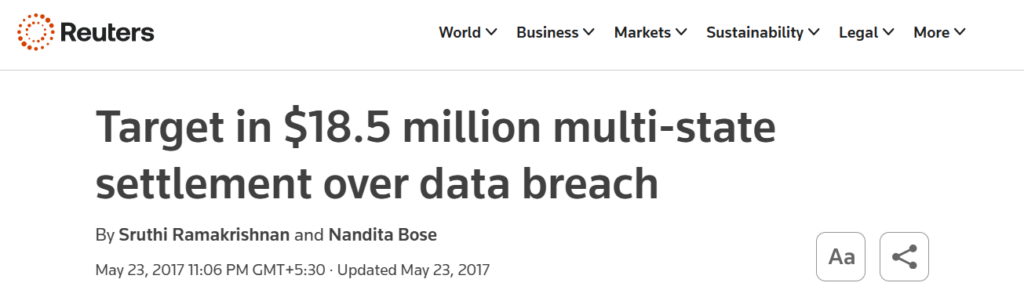
Source: Reuters
But here’s what Target did next.
They didn’t just patch the breach. They rebuilt how data moved across the entire organization.
They broke down the departmental silos entirely. Cybersecurity, IT, fraud detection, and compliance were brought together under one cross-functional structure.
They implemented centralized data oversight with clear ownership at the enterprise level. Defined who could access what, and under what conditions.
Within a year, the overhaul was complete. And it became a benchmark for the entire retail industry.
After the rebuild, Target achieved faster and safer data access across all departments.
The regulatory landscape around data has changed dramatically. And it’s not slowing down.
Today, more than 137 countries have national data privacy laws. That covers 70% of all nations, and 79.3% of the global population, roughly 6.3 billion people.
This has already surpassed Gartner’s own prediction that 75% of the world’s population would be covered by 2024.
If your organization operates across borders, you’re almost certainly touching multiple frameworks at once:
GDPR. HIPAA. BCBS 239. PCI DSS. The EU AI Act.
Each one asks your organization the same core question: Who is responsible for this data, and can you prove it?
That question only has a clean answer when ownership is clearly defined.
Mayo Clinic shows what that looks like in practice.
They didn’t just build systems to store patient data.
They built internal accountability structures to govern how that data gets used, including in some of the most complex and high-stakes applications, like AI in medical decision-making.
Mayo Clinic’s Center for Individualized Medicine underwent a significant digital transformation, equipping clinicians with tools to analyze data and surface insights that directly improved how patients were diagnosed and treated.
The outcomes improved across their entire health system, not because they had more data, but because they had clear structures around who was responsible for it and how it could be used.
The contrast becomes clear when ownership is absent. In October 2024, LinkedIn was fined €310 million by the Irish Data Protection Commission for violations of GDPR.
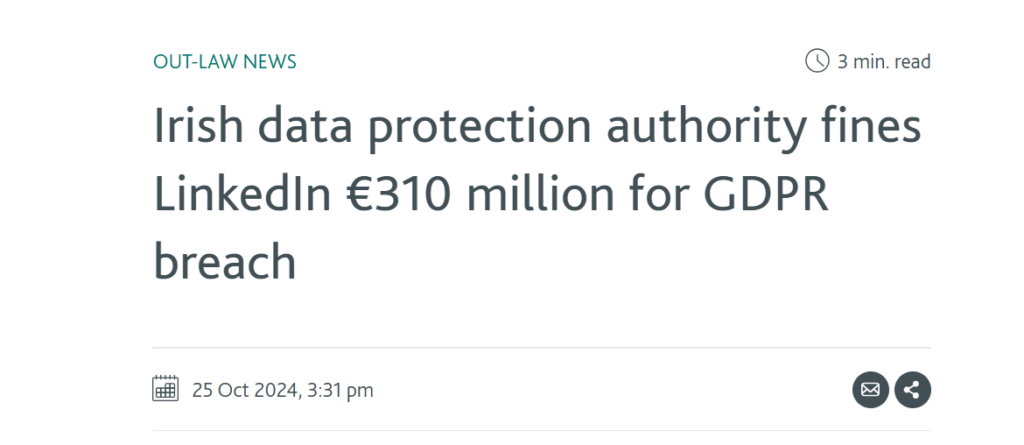
Source: Pinsent Masons
The regulator found that LinkedIn had processed member personal data for behavioral analysis and targeted advertising without a valid lawful basis.
Users hadn’t been properly informed about how their data was being used, and the company’s reliance on consent, legitimate interest, and contractual necessity all failed to meet the required thresholds.
A clearer internal ownership structure, with defined responsibility for how member data was governed, could have caught these gaps far earlier.
Now, clear data ownership won’t prevent every compliance issue.
But it creates something essential: visibility. You know what data you hold. You know who’s accountable for it. You catch problems before they become enforcement actions.
In a world where nearly 80% of the global population is now covered by data privacy law, that visibility isn’t a bonus. It’s literal survival.
Clear data ownership isn’t a governance formality.
It’s a practical decision that shapes how your organization runs every single day.
Better data quality. Faster decisions. Real accountability. Smoother collaboration. Compliance that holds.
All of it comes back to one thing: knowing who is responsible for your data and giving them the authority to act on it.
Start small. Pick one domain where the gaps are most visible. Assign a real owner. Give them real authority.
The results tend to show up faster than most organizations expect.