



Blog
How to Gather Competitive Insights for Business Growth
By: Stefan Gergely -
16 April 2026


We love our data, and now that you're here, you're one step closer to loving it too.
A wide sample of data, so you can explore what is possible with our data
Choose ->
built with procurement in mind. Focused on manufacturers, products and more
Choose ->
built with insurance in mind. Focused on classifications, business activity tags and more
Choose ->
built with sustainability in mind. Focused on sustainability commitments, and environmental and social governance insights.
Choose ->
built with strategic insights in mind. Focused on market trends, competitor analysis, and industry-specific data
Choose ->

Keep up to date with our technology, what our clients are doing and get interesting monthly market insights.

Key Takeaways:
Today, businesses are surrounded by competitors who launch faster, use better marketing strategies, and pivot quickly.
And thanks to digital channels, there’s no shortage of competitive data to analyze.
The problem?
Most companies collect information about their competitors, but only a few can turn it into real insight.
This leads to wrong decisions and missed growth opportunities hiding in plain sight.
To help you avoid this problem, we’ll show you how to gather competitive insights in a structured and strategic way.
You’ll learn how to identify the right competitors, track the right signals, and translate your findings into actions that fuel smarter positioning, better messaging, and sustainable business growth.
Start by putting your competitors into clear categories.
Direct competitors are the ones you’re fighting head-to-head. They offer the same products or services to the same customers you’re targeting.
Going against them isn’t easy, especially because today’s customers seem to be increasingly informed, decisive, and have clear preconceptions about the vendors they prefer.
In fact, Forrester found that 92% of B2B buyers start the process with at least one vendor on their shortlist, and 41% already have a single preferred vendor in mind.
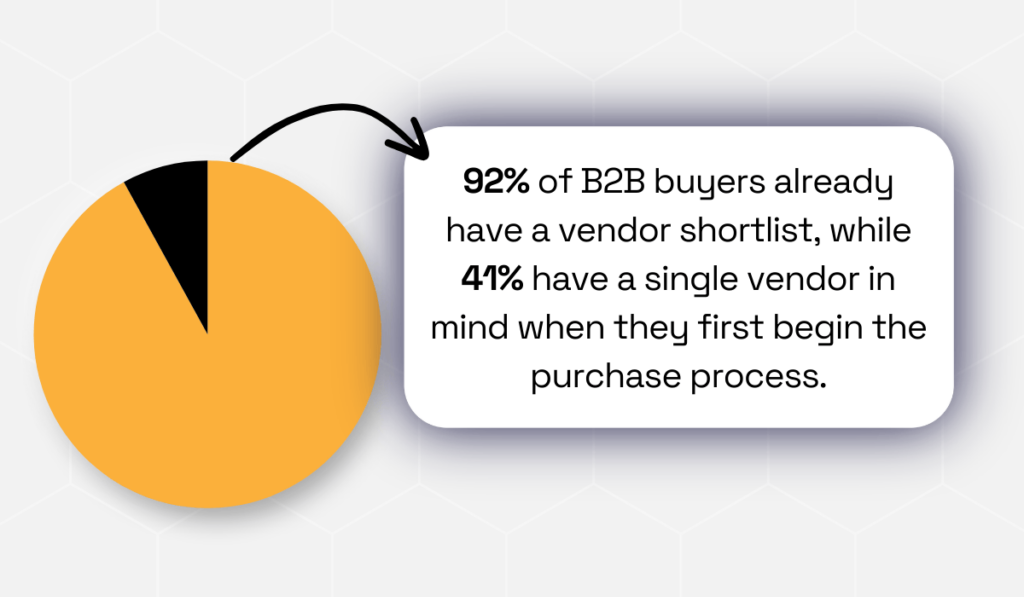
Illustration: Veridion / Data: Forrester
Understanding who your direct competitors are gives you a fighting chance to end up on that shortlist yourself.
So, direct competitors are your baselines. When you’re comparing features or pricing, direct competitors are where you should look first.
This is particularly important for B2B Saas companies, where 65% of sales opportunities are competitive.
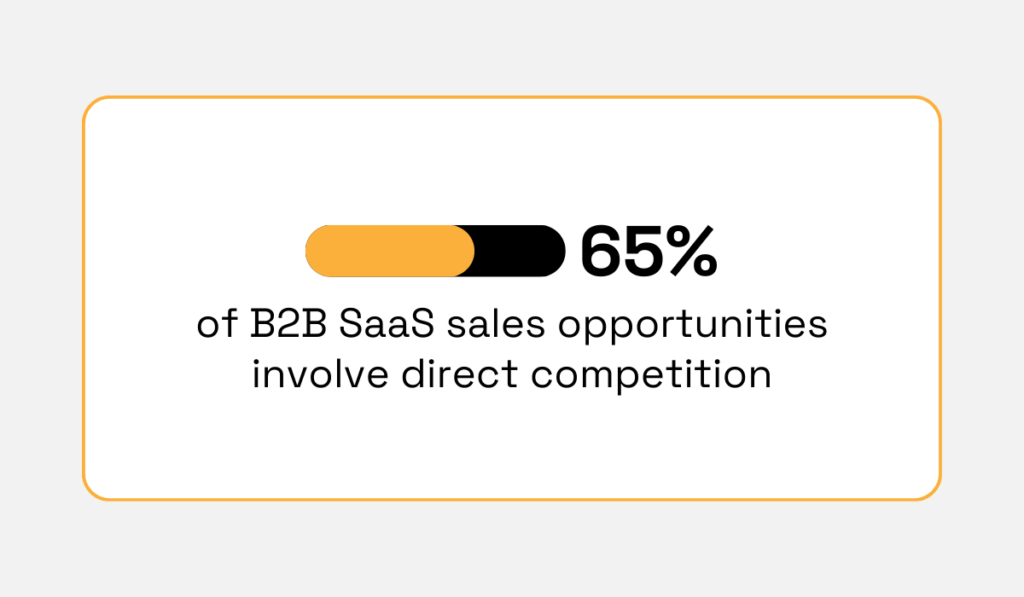
Illustration: Veridion / Data: Crayon
This means most deals come down to how you stack up against other vendors.
Then there are indirect competitors.
They take a different approach, but they’re solving the same problem for your customers.
Take HubSpot and WordPress as an example. HubSpot sells marketing software. WordPress is a website platform. But both serve businesses that need to build an online presence.
So the danger here is that indirect competitors can pull customers away by offering an alternative path to the same outcome.
Substitute competitors aren’t offering the same product at all. But they’re competing for the same dollars in your customer’s budget.
Substitutes can cap market demand by luring customers away.
Now, factor in geography.
Is your competitor local, operating in your city or region, or covering multiple states or even a continent?
After all, location still matters.
Consumer local discovery research shows that consumers use business information sites mostly to find new local businesses.
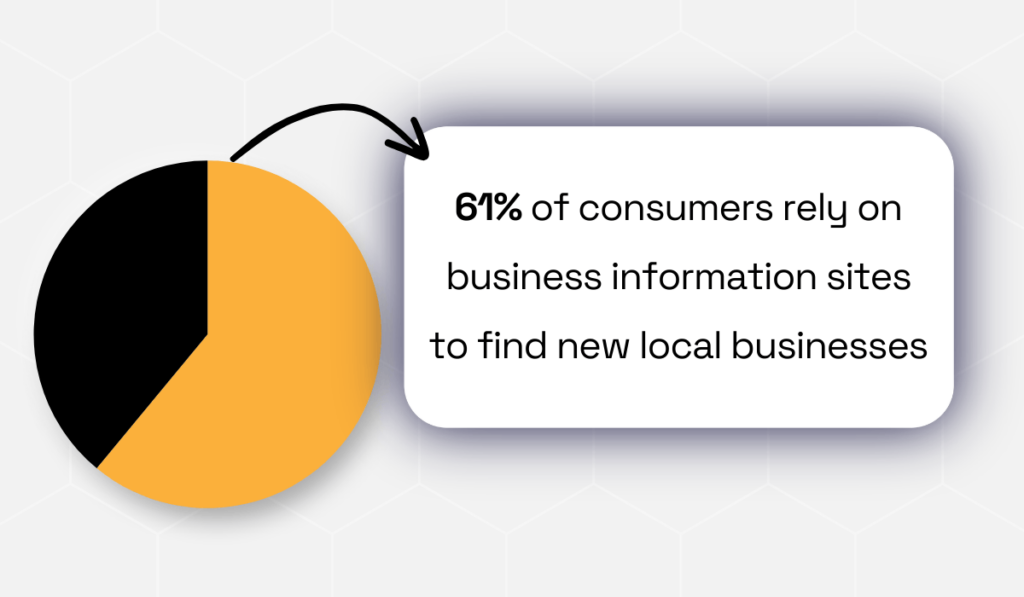
Illustration: Veridion / Data: Bright Local
Despite having the entire world in the palm of their hands, they are still interested in locally-owned companies.
It is imperative you know this. A local competitor requires a different response than a global one. Geography influences where you spend your time and resources.
Generally, categorization keeps you focused.
Without it, you’ll chase every name that comes up in a Google search. You’ll waste time analyzing companies that don’t actually threaten your business.
But when you segment competitors by type and scope, you know exactly where to dig deeper.
Begin by mining publicly available digital signals.
The intelligence you’re able to gather during this step will be the foundation of your decision-making and, if done right, business success.
Research shows that 61% of businesses say competitive intelligence has had a direct impact on revenue growth, emphasizing how structured monitoring affects real business outcomes.
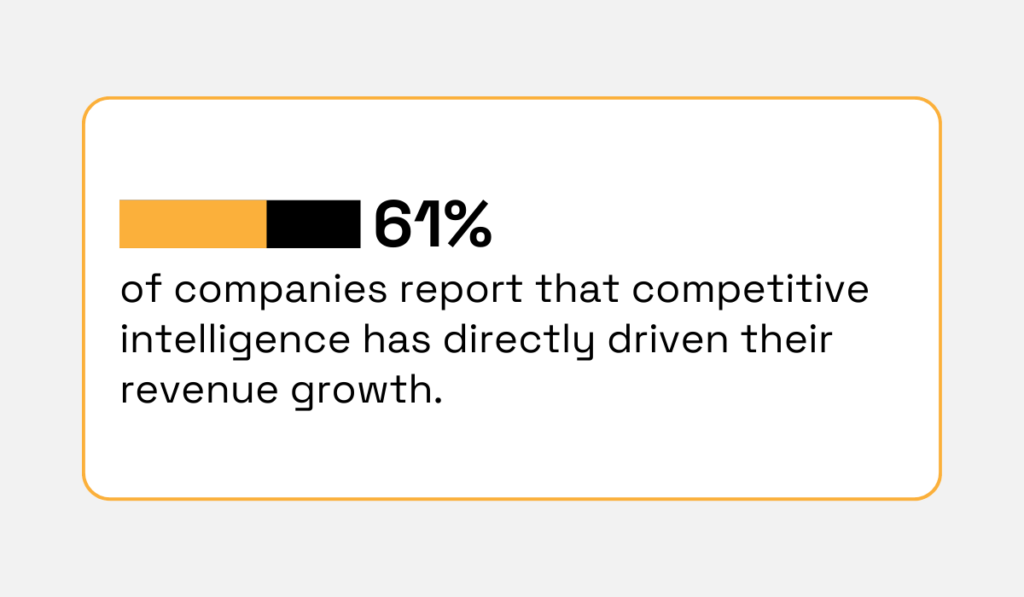
Illustration: Veridion / Data: Crayon
Online data sources can reveal a lot about competitors’ moves, often in real time.
Start with their website.
Your competitor’s site is a window into their strategy.
Look at their product pages. What features are they highlighting? What problems are they positioning themselves to solve?
Check their case studies and customer testimonials. You’ll see which industries they’re targeting and what value propositions are resonating.
Don’t skip the careers page, too: open roles tell you where they’re investing.
Next, track their pricing signals.
Pricing pages, if public, are goldmines. But even without explicit numbers, you can pick up directional signals.
Are they promoting discounts or free trials? That might indicate aggressive customer acquisition or pressure to move inventory.
But if they have new pricing tiers, they’re likely segmenting their market differently or moving upmarket.
Then monitor their partnerships and integrations.
In the financial sector, for example, two-thirds of new partnerships in 2023 contributed to business model innovation.
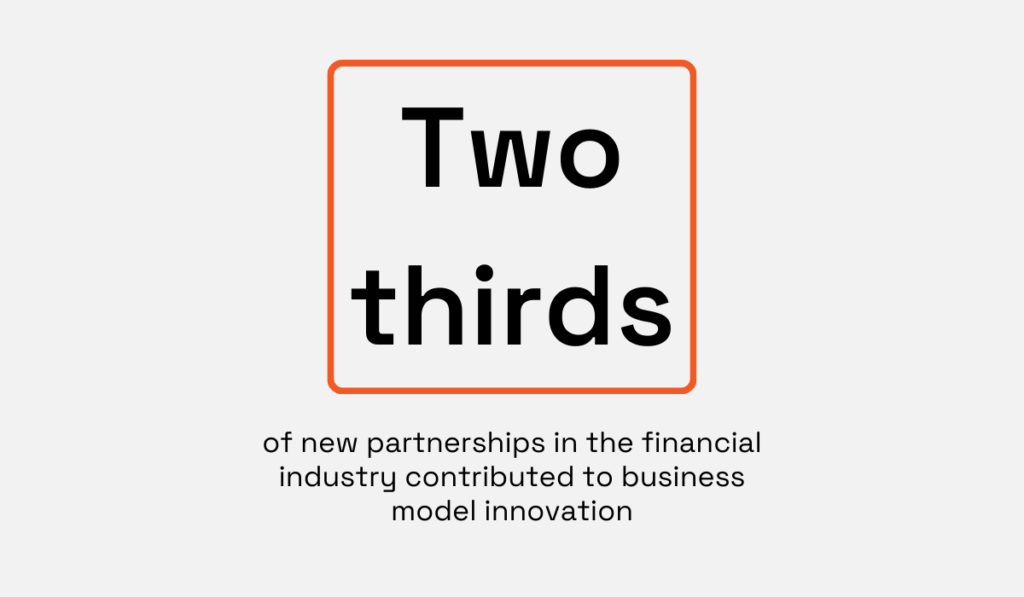
Illustration: Veridion / Data: PwC
It’s a signal that partnerships are often a route to new markets or capabilities.
Strategic partnerships reveal priority markets and distribution channels. For example:
These moves signal where they see growth and which ecosystems they want to embed themselves in.
Also, watch for geographic expansion.
New office locations, regional job postings, or localized versions of their website all point to expansion plans.
This tells you where they expect demand to grow and where you might face intensified competition soon.
After that, you want to analyze their digital footprint, including
What pain points are they addressing in their content? Which audiences are they trying to educate?
Press releases and news coverage can surface funding rounds, product launches, leadership changes, and strategic pivots before they hit your screen through other channels.
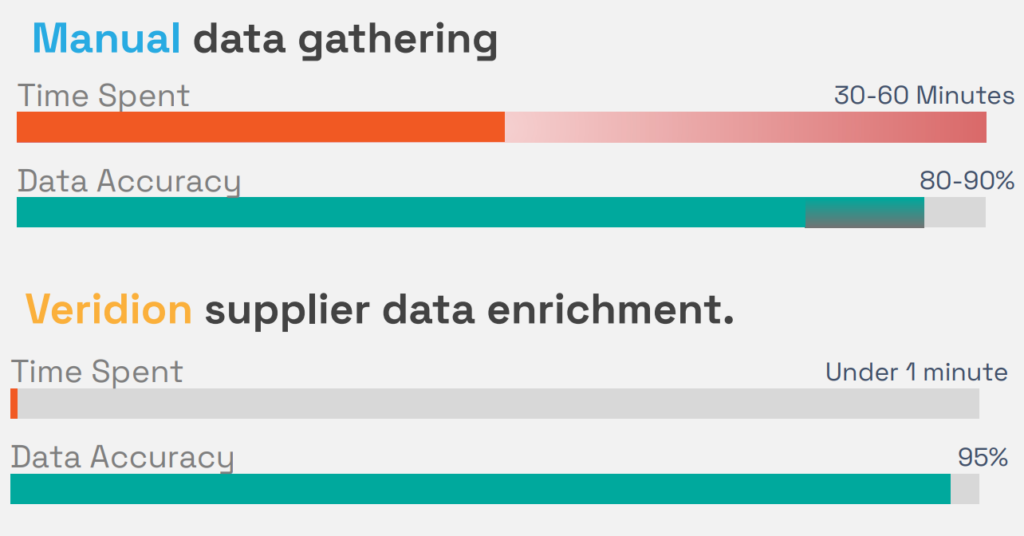
Now, doing all of this manually across dozens or hundreds of competitors isn’t realistic.
Luckily, platforms like Veridion can enhance this process by providing standardized company data at scale.
Source: Veridion
Instead of cobbling together information from fragmented sources, you get access to a vast global database of over 100 million companies, updated weekly.
Veridion supplements incomplete data, identifies potential risks, removes duplicates, and refreshes outdated information, resulting in a richer, more reliable dataset for advanced analytics and downstream use.
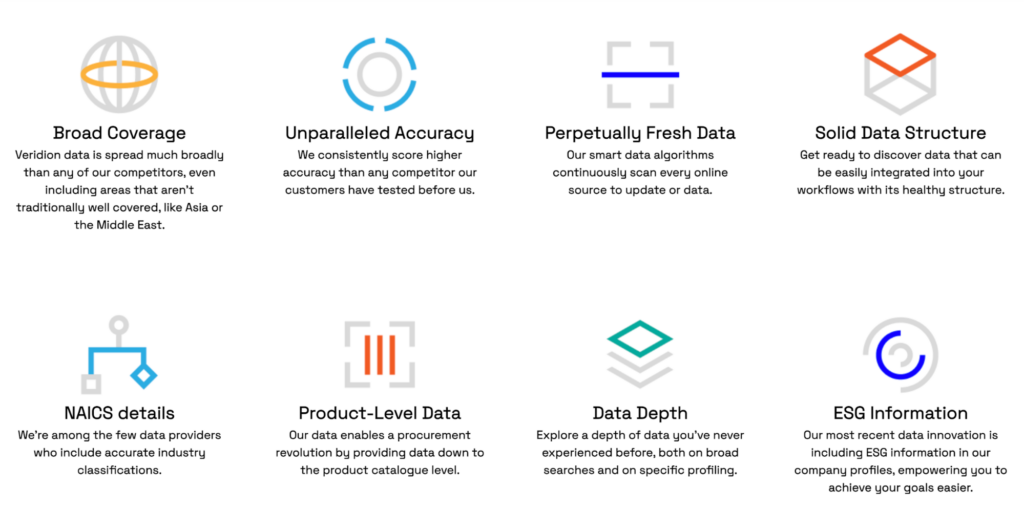
With over 300 company attributes, Veridion provides truly deep, actionable business profiles that power strategic decision-making.
Some of the data points you’ll find in these profiles are:
This allows you to see which companies are expanding into new regions, track supply chain relationships, identify emerging players, and so much more.
All in one place.
Source: Veridion
This kind of structured intelligence helps you become proactive. You’re not merely responding to competitor moves; you’re anticipating them.
Digital signals, however, only tell you part of the story.
You can track website updates and press releases all day. But without hearing from actual customers and market experts, you’re making decisions devoid of practical information.
Qualitative and quantitative market research fills that gap. They add context, validate assumptions, and surface insights you’d never find online.
No wonder nearly 80% of businesses conduct market research to better understand customers, competitors, and market conditions.
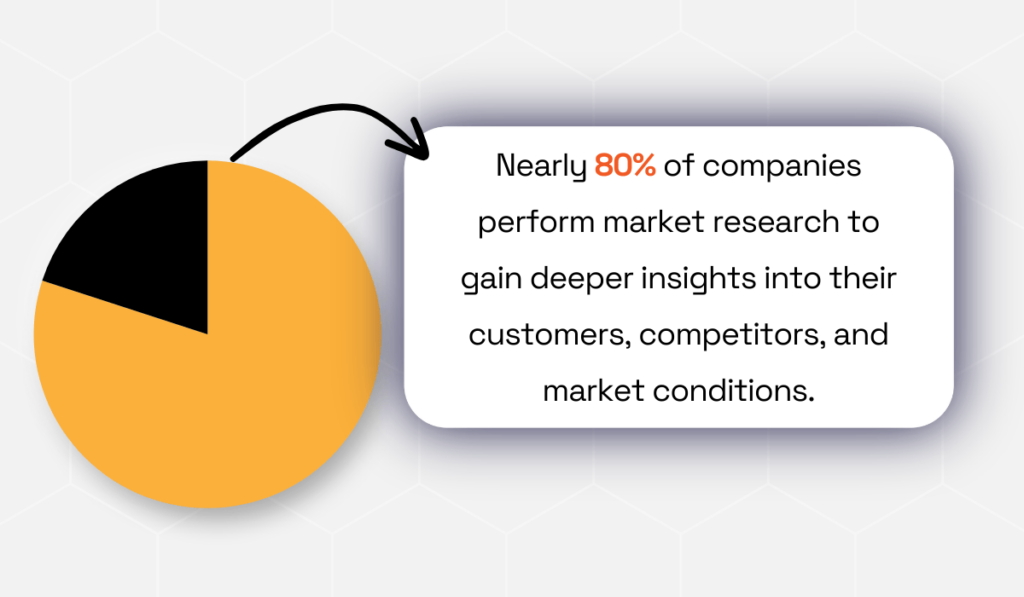
Illustration: Veridion / Data: Hanover Research
So, how do you start?
With customer surveys.
They give you hard numbers on what buyers actually care about.
In fact, online surveys are the dominant quantitative tool, used by roughly 85% of market researchers.
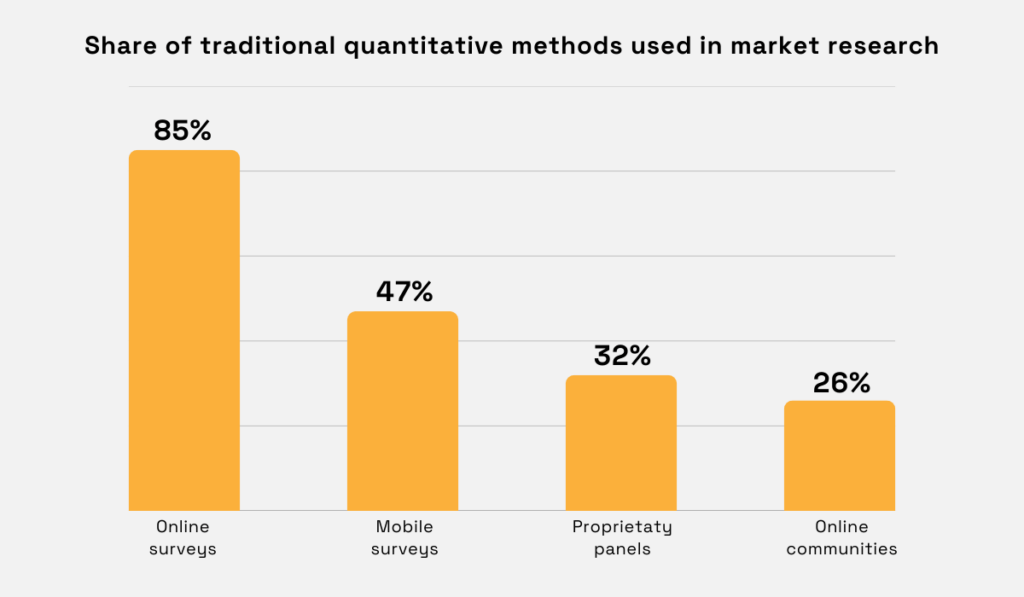
Illustration: Veridion / Data: Statista
They’re an efficient, scalable way to collect statistically valid data from your audience.
Surveys also reveal competitive positioning. If customers consistently name the same three competitors, then that’s your real battleground.
Go deeper with focus groups and interviews.
Surveys tell you what customers think, but focus groups tell you why.
Online focus groups are now a widely used qualitative tool, used regularly by about 28% of market researchers.
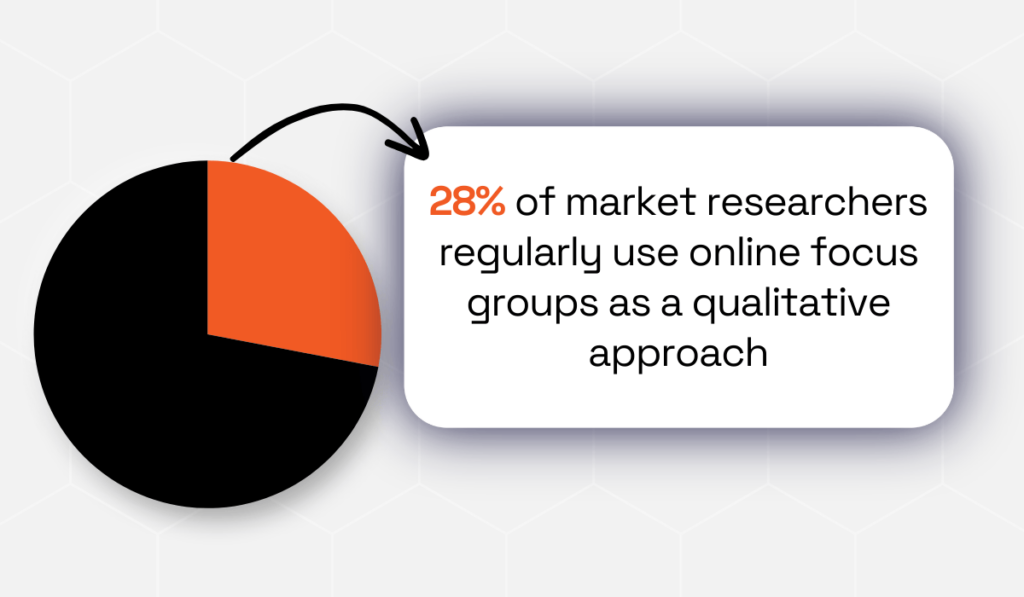
Illustration: Veridion / Data: Statista
They are offering a fast, cost-effective way to capture the ‘why’ behind survey numbers.
Bring together small groups of customers or prospects for moderated discussions or interviews. Let them react to competitor messaging, product demos, or new concepts you’re exploring.
Assuming your digital monitoring shows competitors touting “AI-powered analytics.” A focus group can tell you whether they find it useful or not.
These conversations surface emotional drivers, unmet needs, and the language customers actually use. That’s invaluable for positioning and messaging.
Now mine customer reviews and feedback.
Third-party review sites are honest and useful: about 76% of consumers regularly read online reviews when researching local businesses.
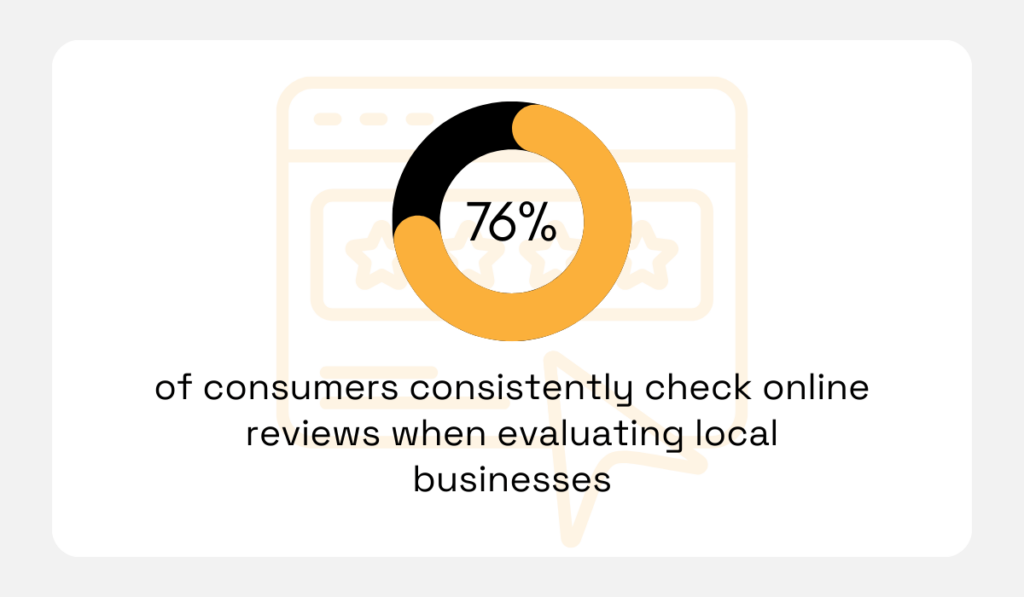
Illustration: Veridion / Data: Bright Local
Look at what customers love about your competitors. Those are strengths you need to match or counter.
Look at what they complain about, too. Those are weaknesses you can exploit.
Seventy-seven percent of consumers say negative reviews make them less likely to choose a business.
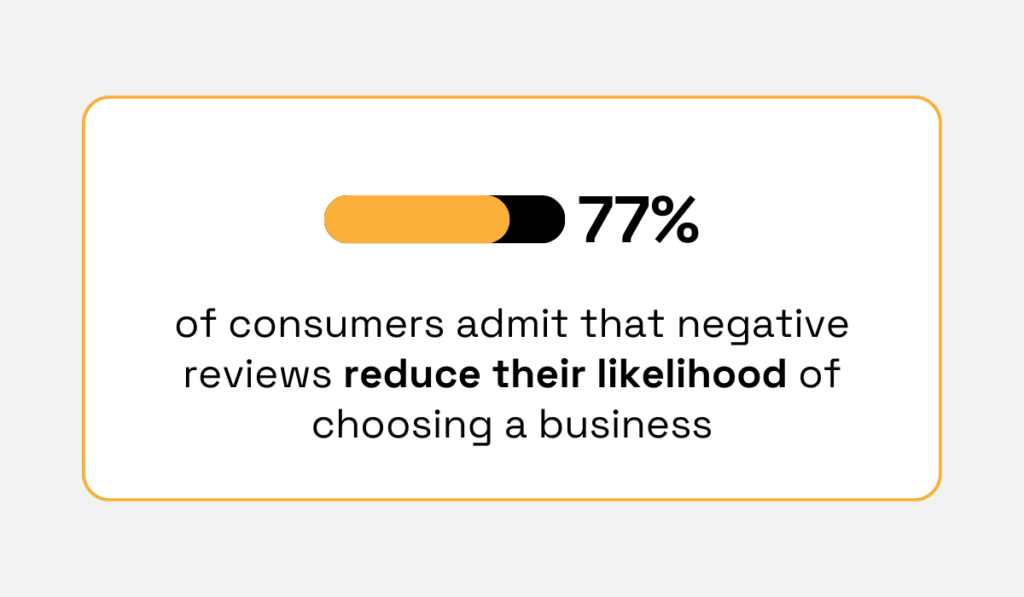
Illustration Veridion / Data: Bright Local
So patterns in complaints are practical levers you can use to win customers.
For example, if multiple reviews mention that a competitor’s customer support is slow, that’s a clear opportunity to differentiate on service.
Don’t stop at anonymous reviews. Run customer advisory boards or panels with your own clients.
They are one of the fastest ways to use client feedback for roadmap decisions.
Ask directly: “How do we compare to alternatives you’ve considered?”
When a customer says, “We switched from your company because your onboarding took three months,” you’ve just learned something no website will tell you.
Leverage industry analysts and research reports, too.
Analyst firms like Gartner, Forrester, and IDC publish reports that give you macro insights.
They’ll tell you market size, growth rates, adoption trends, and competitive rankings.
These reports also validate what your sales team tells you. If they say a competitor is gaining traction, analyst data can confirm whether that’s a real trend.
For broader market intelligence, explore:
They provide trend data on market share, demographic shifts, and regulatory changes that affect demand.
Combining these traditional research methods ensures you’re not making strategic decisions based on digital signals alone.
You’re grounding every insight in real customer voices and validated market data.
Now it’s time to make sense of everything you’ve gathered.
A SWOT (Strengths, Weaknesses, Opportunities, and Threats) analysis is a simple framework that works here.
In fact, 50% of competitive intelligence practitioners say this method is at least four out of five for its value towards reaching longer-term business goals.
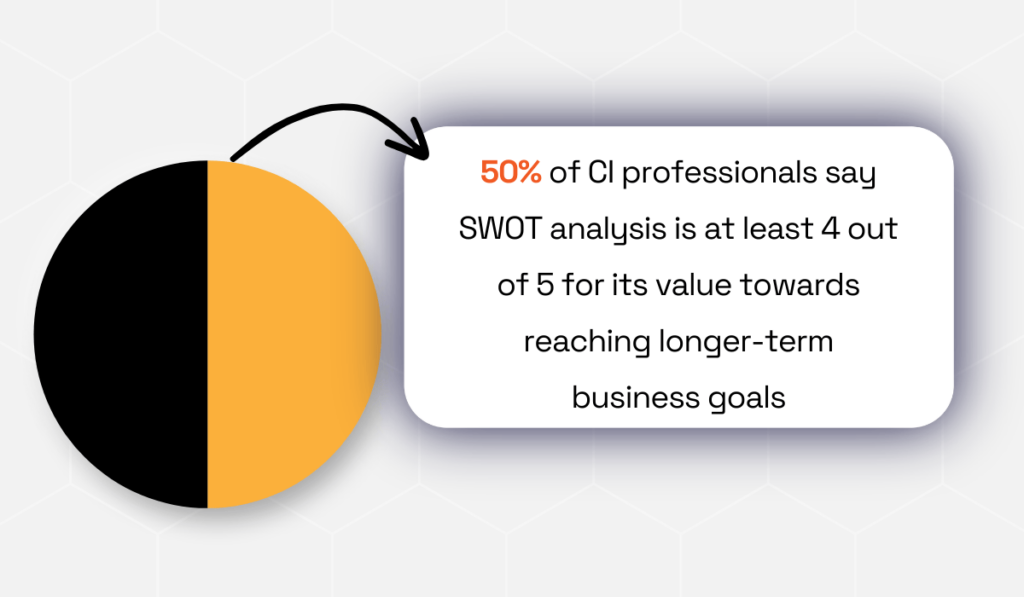
Illustration: Veridion / Data: Competitive Intelligence Alliance
Build a mini-SWOT for each major competitor and build one for your own business, too.
Then compare them side by side and map out capabilities and offerings.
Start with what each competitor does exceptionally well.
Take Apple, for instance. Their strength is a vertically integrated ecosystem: hardware and software work seamlessly together. That creates products customers see as innovative and intuitive.
But Apple also has a glaring weakness: over-reliance on iPhone sales. If iPhone demand reduces, their revenue model wobbles.
Understanding these dynamics tells you where a competitor can pivot quickly and where they can’t.
Examine pricing strategies.
As Warren Buffett, CEO of Berkshire Hathaway, famously said:
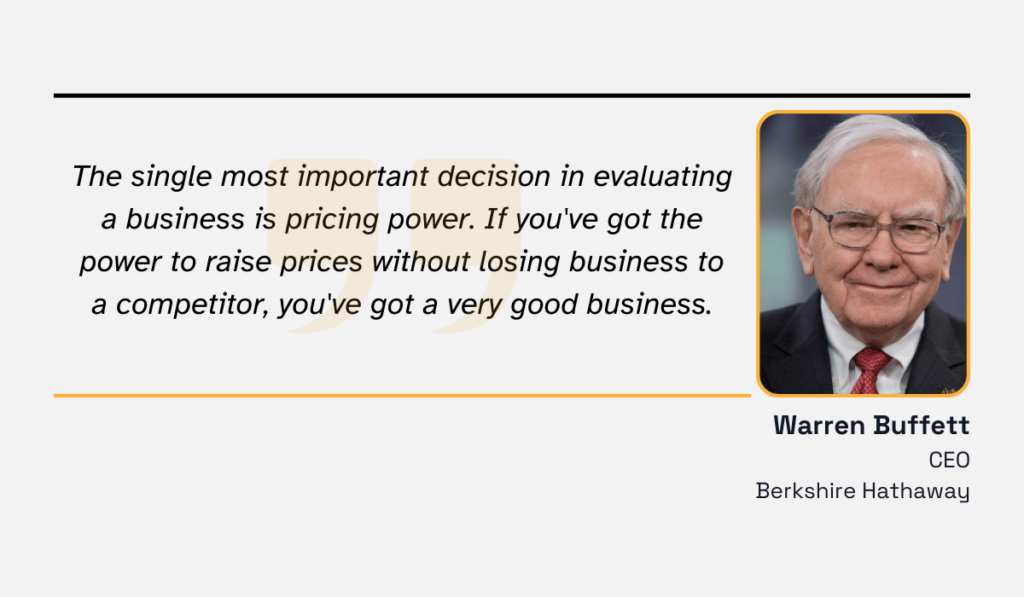
Illustration: Veridion / Quote: McKinsey
And if you have to have a prayer session before raising the price by 10 percent, he adds, then you’ve got a terrible business.
That’s the lens you should use here.
Pricing isn’t merely about numbers; it’s about leverage.
Where does each competitor sit on the price-quality spectrum?
Some play the premium game while others compete on volume with thin margins.
Note who’s pursuing price leadership and who’s carving out a premium niche. This tells you:
Next, assess distribution channels.
How does each competitor reach customers?
Do they sell globally through e-commerce, regionally through partners, or through a sprawling retail network?
If a competitor has exclusive distribution deals or strategic alliances, that’s a strength. If they’re absent from a key region, that’s a weakness and potentially your opening.
Evaluate market positioning and brand perception.
How do customers see each competitor?
Are they known for innovation and luxury? Dig into marketing messages and customer reviews.
One competitor might be seen as innovative but expensive. Another might be affordable but perceived as outdated.
These brand perceptions determine purchase decisions.
Studies show that 84% of consumers admit they need to share values with a brand or trust it before buying.
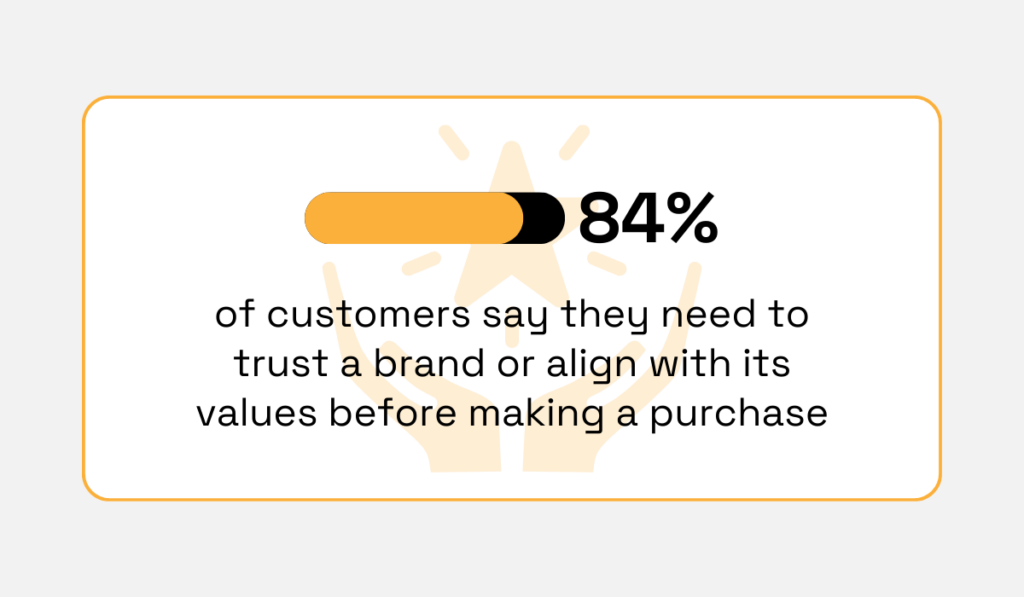
Illustration: Veridion / Data: Edelman
So perception gaps you spot in reviews or during research can be the difference between being considered or dismissed during purchase decisions.
And understanding them helps you position your own offering distinctly.
Compile your findings into a table or structured list and look for patterns.
This SWOT analysis connects your digital signals and customer research into a coherent picture. It highlights what competitors do well and where they’re vulnerable.
That clarity gives you direction on what to do differently to win.
After you’ve mapped strengths and weaknesses, find the gaps.
Compare competitors by:
Look for areas where no one dominates or where customer needs outweigh existing solutions.
Those gaps are your growth opportunities.
Spot product and feature gaps.
Are customers asking for something no one offers yet?
If surveys, reviews, or social listening reveal a missing feature, that’s your opening.
Don’t just react to complaints; look for unmet desires. What do customers wish existed?
Then find underserved pricing and service tiers.
Maybe all competitors target the high end, leaving budget-conscious buyers with no good option.
The 2022 Accenture survey shows there’s definitely a gap that needs to be filled.
As it turns out, 64% of consumers wish companies would respond faster to their changing needs.
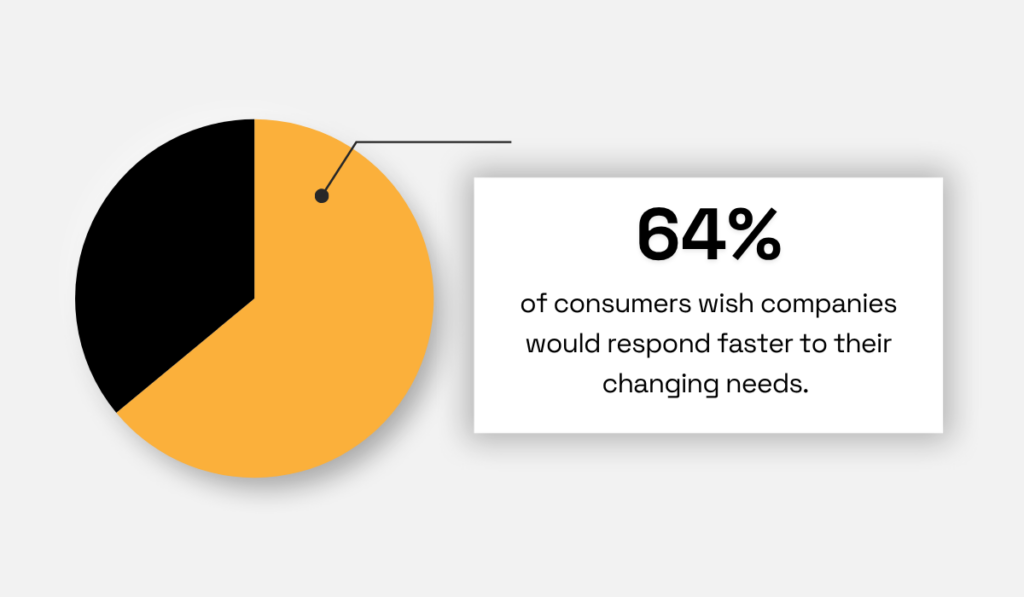
Illustration: Veridion / Data: Accenture
So, use competitor data to understand where others dominate and where they’ve left money on the table.
Also consider:
Now visualize the gaps.
Map out competitor features, pricing tiers, and regional coverage in charts or tables.
If all competitors cover X and Y but not Z, Z is your opportunity.
Use these insights to pinpoint exactly where growth can come from. It could be adding a feature, entering a new country, launching a new pricing tier, or forming a strategic partnership.
Then quantify the potential before you commit resources.
The goal is to identify the right opportunities that align with your capabilities and offer the highest return.
Gathering competitive intelligence is only half the battle.
Data sitting in a report won’t move the needle; you need to turn insights into decisions.
That means integrating what you’ve learned into your pricing strategy, product roadmap, marketing approach, and operations.
Competitive intelligence only creates value when it impacts decisions.
The difference between effective and ineffective competitive analysis is whether that data actually influences how you allocate resources, prioritize initiatives, and respond to market shifts.
And don’t make the mistake of treating competitive intelligence as a one-time or even one-department project.
Competitive awareness shouldn’t be confined to a strategy team. It should be embedded across functions.
Sales teams should know how to position against specific competitors.
Research shows that 86% of CI pros actively enable sales with CI deliverables.
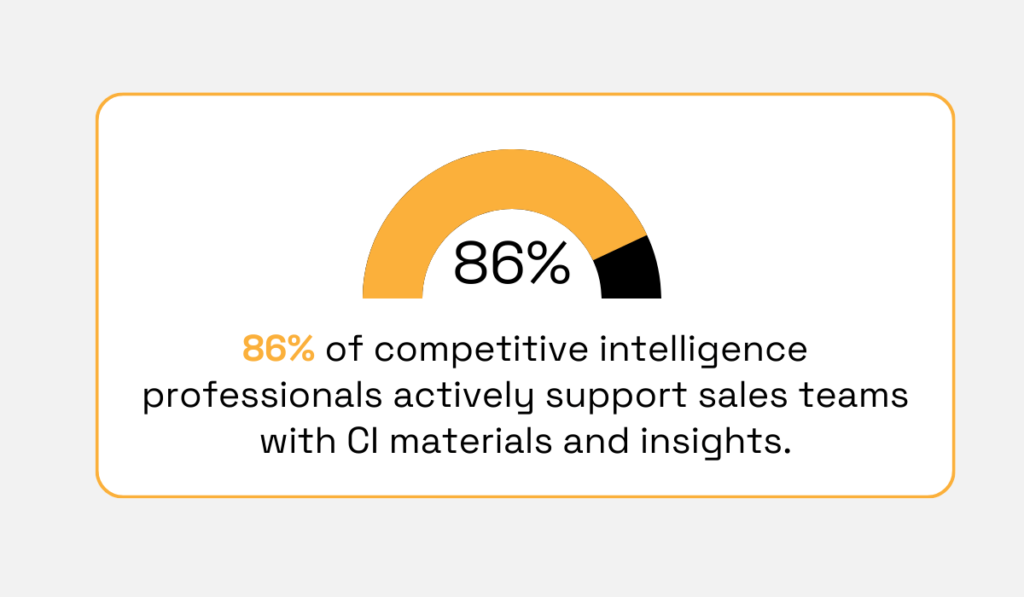
Illustration: Veridion / Data: Crayon
They understand that, when sales teams can access CI data, it actually shapes win/loss outcomes.
Similarly, product managers can track feature parity and innovation trends, and marketing teams understand competitive messaging and customer perceptions.
Everyone should understand the competitiveness and how their work contributes to winning in it.
That level of alignment requires leadership commitment, regular communication, and systems that make competitive data accessible and actionable.
Make that your standard and integrate it into regular strategy reviews and performance planning.
Competitive data is everywhere.
But access alone doesn’t create advantage; insight does.
When you approach competitor research with a clear process and defined goals, you stop reacting to market noise and start making deliberate, growth-driven decisions.
Gathering competitive insights doesn’t mean copying what others are doing. It involves understanding the market well enough to find your edge.
The businesses that grow fastest aren’t obsessing over competitors; they’re learning from them.
So build your system, stay consistent, and let competitive intelligence guide your next move.