



Blog
What Is Climate Intelligence
By: Auras Tanase -
17 April 2026


We love our data, and now that you're here, you're one step closer to loving it too.
A wide sample of data, so you can explore what is possible with our data
Choose ->
built with procurement in mind. Focused on manufacturers, products and more
Choose ->
built with insurance in mind. Focused on classifications, business activity tags and more
Choose ->
built with sustainability in mind. Focused on sustainability commitments, and environmental and social governance insights.
Choose ->
built with strategic insights in mind. Focused on market trends, competitor analysis, and industry-specific data
Choose ->

Keep up to date with our technology, what our clients are doing and get interesting monthly market insights.

Key Takeaways:
Businesses that fail to adapt to climate risks could face significant financial losses
These potential losses are comparable to experiencing a COVID-19-level economic disruption every two years, highlighting the urgency for corporate decision-makers.
Companies that recognize this reality are turning to climate intelligence to understand emerging threats better, protect operational assets, and guide strategic planning.
Climate intelligence is becoming a critical tool for executives who want to maintain resilience while navigating the uncertainties of a rapidly changing climate.
Climate intelligence refers to the systematic collection, analysis, and application of climate-related data to identify, assess, and manage climate change and associated risks.
Here are its main types:
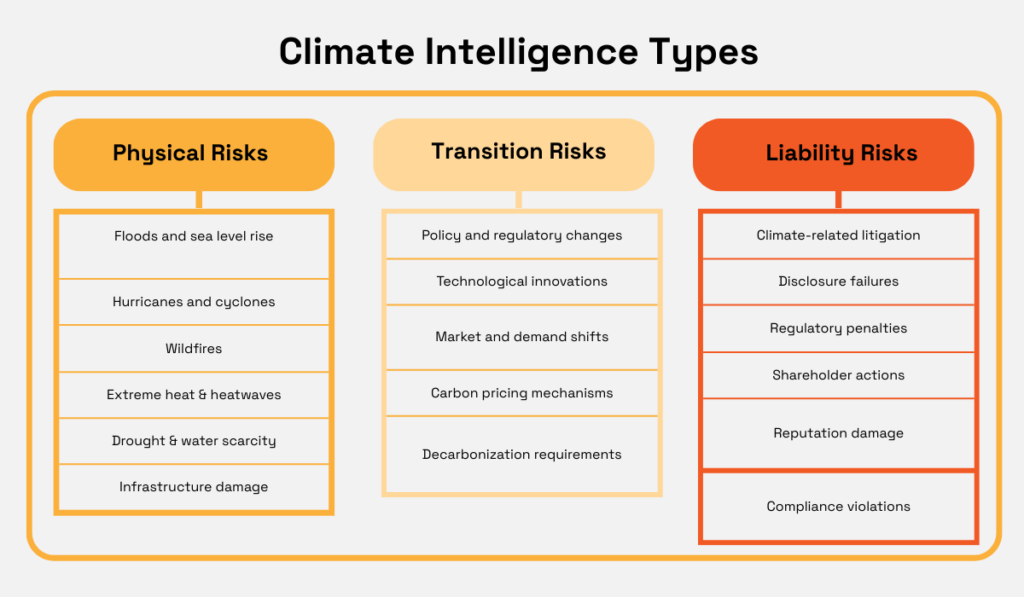
Source: Veridion
By combining historical records with predictive models, climate intelligence allows companies to anticipate how future events might affect assets, operations, and supply chains.
For example, the United Nations Environment Programme reports that extreme weather events caused $2.8 trillion in global economic losses between 2000 and 2022.
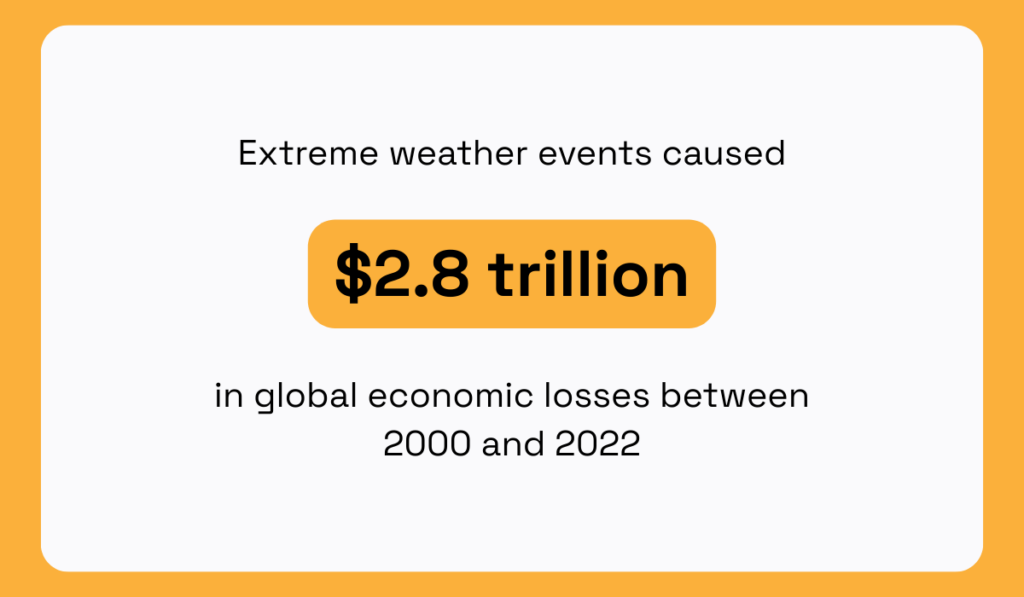
Illustration: Veridion / Source: United Nations Environment Programme
Similarly, the World Meteorological Organization highlights that the last decade was the warmest on record, with unprecedented rainfall patterns and rising temperatures affecting many regions.
By understanding these interconnected risks, climate intelligence allows companies to move beyond reactive responses.
Organizations can prioritize interventions based on projected impacts, evaluate operational vulnerabilities, and strengthen long-term resilience.
This structured approach turns complex climate data into actionable insights, enabling leaders to make informed decisions rather than relying on assumptions or outdated historical patterns.
The real value of climate intelligence lies in its ability to link scientific information to tangible business outcomes, from supply chain continuity to infrastructure protection and financial planning.
Integrating climate intelligence into corporate strategy delivers measurable benefits across multiple dimensions of business performance.
Rather than serving as a defensive measure alone, it creates tangible financial value.
Let’s explore climate intelligence benefits in more detail.
To make informed strategic decisions, companies must understand not only present exposure but also how that exposure will evolve.
Climate intelligence allows organizations to assess both immediate threats and long-term risk trajectories with greater clarity.
Here’s why that matters.
Global insured losses from natural catastrophes totaled $140 billion in 2024, making it the third most expensive year on record.
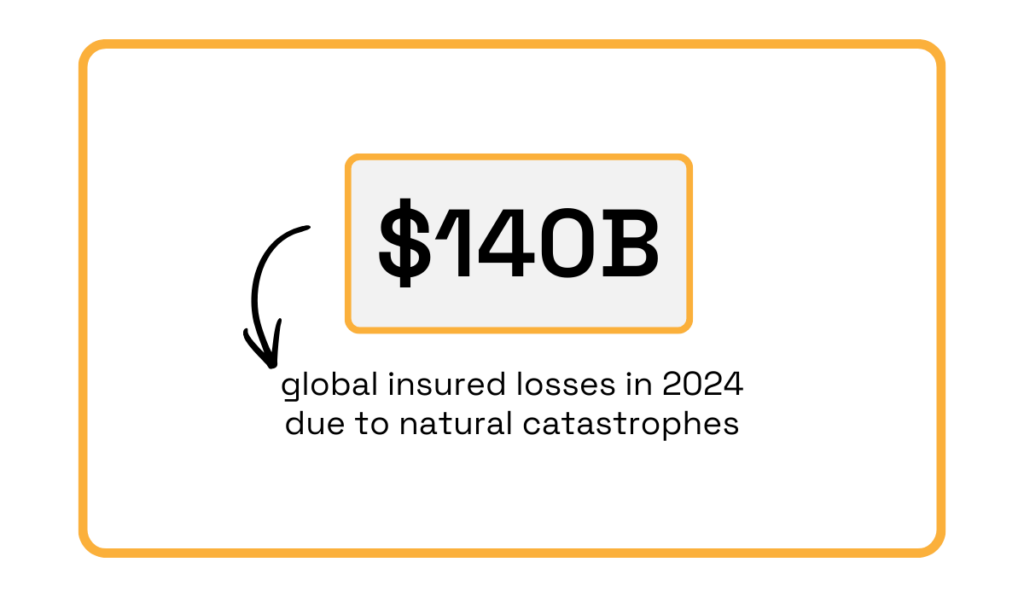
Illustration: Veridion / Source: Munichre
In terms of overall economic losses, 2024 ranks as the fifth costliest year since 1980.
These figures show that climate-related disruption is no longer a future concern but a present-day financial reality.
Looking ahead, forward-looking climate models allow organizations to project exposure to acute events such as hurricanes and chronic shifts like rising sea levels.
These projections help executives prioritize facilities and operations based on actual risk rather than assumptions.
For instance, the World Bank reports that over 1.2 billion people live in areas at high risk of flooding, emphasizing that many business operations are located in vulnerable regions.
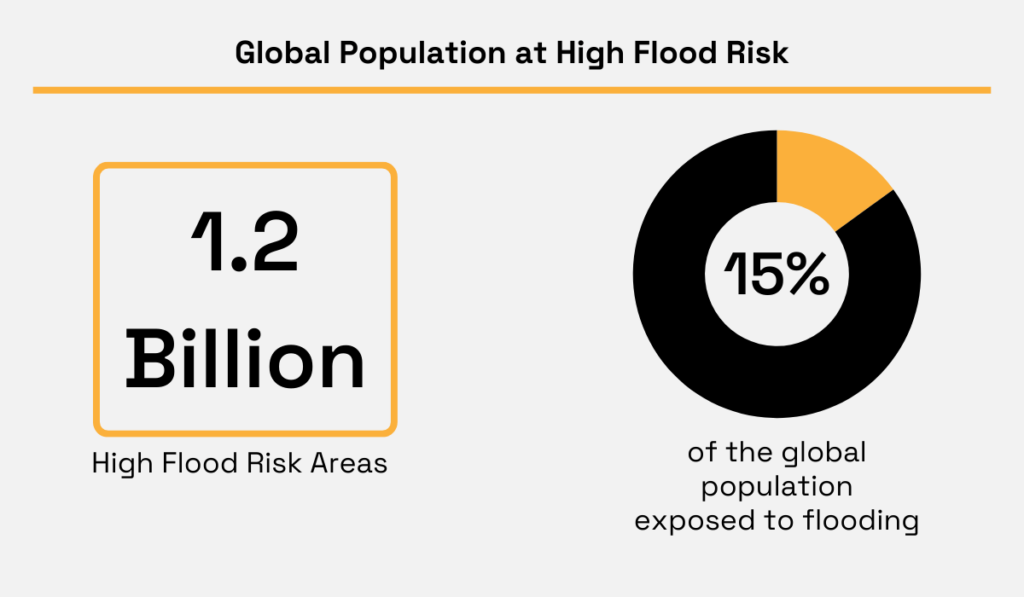
Illustration: Veridion / Source: World Bank
This geographic concentration of risk makes long-term planning essential rather than optional.
By combining past data with future projections, companies can identify which assets are currently at risk and how those risks may evolve over the next 10 to 30 years.
This enables them to plan ahead, such as relocating critical infrastructure, redesigning facilities, or adjusting supply chain routes, so they can direct their time and resources to where they are needed most.
Additionally, climate intelligence enables scenario planning for cascading effects.
A flood affecting a major supplier, for example, could disrupt production across multiple tiers of the supply chain.
Organizations that model these risks can implement contingency strategies, diversify suppliers, or build buffer inventories.
This transforms climate intelligence into actionable insight through quantifying financial risk from climate hazard scores, directly linking environmental exposure to measurable financial impact, and protecting operations and profitability.
Infrastructure represents one of the most exposed components of business operations to climate hazards, and the financial consequences of insufficient preparation are increasingly visible.
Extreme weather caused $162 billion in global economic losses in the first half of 2025 alone, demonstrating the tangible impact of unprepared assets.
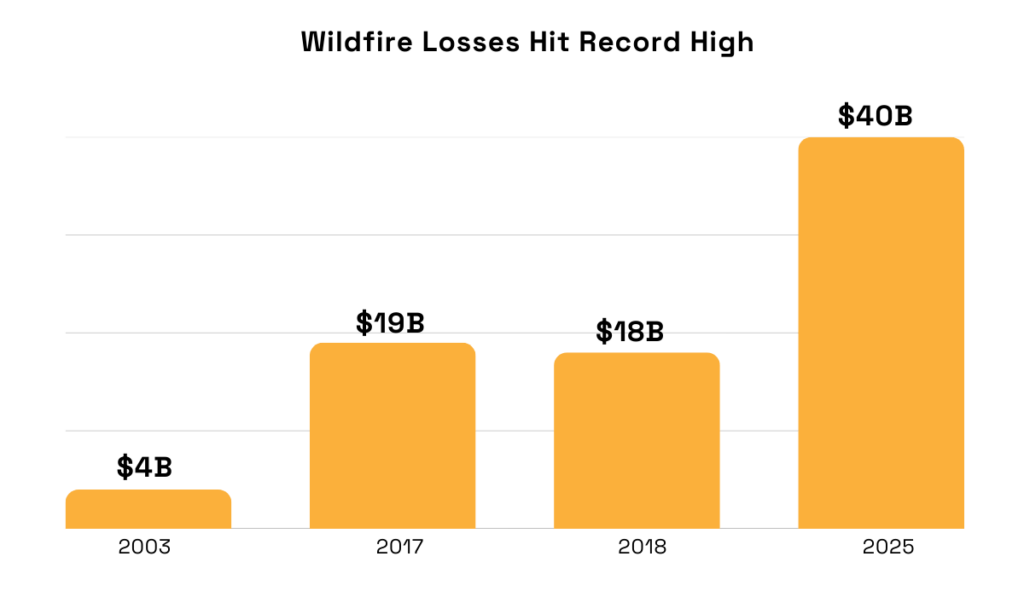
Illustration: Veridion / Source: WeForum
For example, Insured losses from wildfires have surged dramatically in recent years, with major events like the 2024 Palisades fire driving billions in damages globally.
Additionally, extreme heat and other climate hazards could lead to annual fixed asset losses of $560 billion to $610 billion for listed companies by 2035.
Telecommunications, utilities, and energy companies are likely to feel the impact the most.
Climate intelligence helps organizations take a close look at how resilient their infrastructure really is.
By identifying exposure to floods, heatwaves, storms, and other hazards, businesses can make informed decisions about whether to:
Research from the Global Facility for Disaster Reduction and Recovery shows that every dollar invested in resilient infrastructure can save up to four dollars in potential disaster losses.
This highlights how proactive adaptation is not only practical but also cost-effective.
Moreover, using climate intelligence for infrastructure planning helps companies reduce operational downtime and avoid financial losses.
For example, if predictive models show that certain production sites are increasingly exposed to flooding, executives can prioritize preventive maintenance, strengthen supply chain flexibility, or invest in redundancy measures.
These actions convert climate insights into operational strategy, ensuring continuity and profitability while building the foundation for effective ESG risk management across the organization.
Beyond operational risk, climate exposure is now firmly embedded in regulatory expectations.
Regulatory requirements around climate disclosure are expanding rapidly across jurisdictions, creating both compliance obligations and strategic considerations.
The European Union’s Corporate Sustainability Reporting Directive (CSRD), for example, requires approximately 50,000 companies to report climate data starting in 2024.
The CSRD applies to companies within the EU based on size thresholds and to non-EU companies with significant EU operations or subsidiaries.
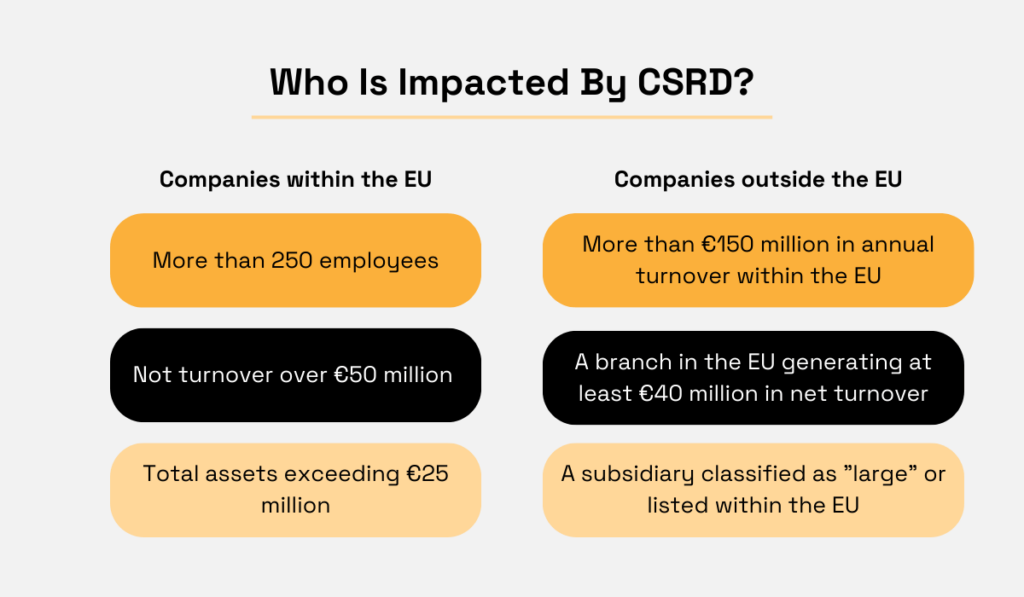
Illustration: Veridion / Source: Kodiachub
Similarly, the International Sustainability Standards Board (ISSB) standards affect jurisdictions representing over half of global GDP, while the U.S. Securities and Exchange Commission (SEC) has introduced climate disclosure requirements for registrants.
Together, these developments signal that climate reporting is becoming embedded within mainstream financial governance.
Climate intelligence provides the structured data foundation necessary to meet these requirements.
Organizations can collect and analyze reliable climate information, conduct scenario analyses required by frameworks like the Task Force on Climate-related Financial Disclosures, and demonstrate systematic risk management.
Ultimately, climate risk manifests in financial performance.
Unmanaged exposure results in asset damage, operational disruption, and escalating insurance costs.
Supply chains represent a particularly vulnerable area.
Research estimates that cumulative climate-driven supply chain losses could reach between $3.75 trillion and $24.7 trillion by 2060.
These figures highlight the systemic scale of potential disruption.
Companies that integrate climate intelligence into their planning can:
By linking environmental risk to business decisions, organizations can optimize capital allocation, reduce potential losses, and improve profitability.
Climate intelligence thus transforms abstract environmental data into a financial management tool, protecting earnings and sustaining long-term value creation.
Implementing climate intelligence is not straightforward.
While its benefits are substantial, organizations face obstacles that can slow adoption, reduce insight quality, and limit actionable outcomes.
These challenges mainly arise from fragmented data sources, difficulty translating technical information into business metrics, and the need to keep intelligence current as both climate conditions and operations evolve.
One of the most persistent challenges stems from data fragmentation.
Climate intelligence depends on integrating multiple, often disconnected datasets.
Organizations require climate models projecting future conditions, geospatial hazard maps, supplier records, and asset-level operational data.
However, each of these datasets typically resides in separate systems built on different formats and standards, making integration inherently complex.
The scale of this difficulty is reflected in reporting practices.
The GHG Protocol research shows that 83% of companies struggle to access the emissions data needed for accurate reporting, illustrating how even foundational climate metrics remain difficult to consolidate.
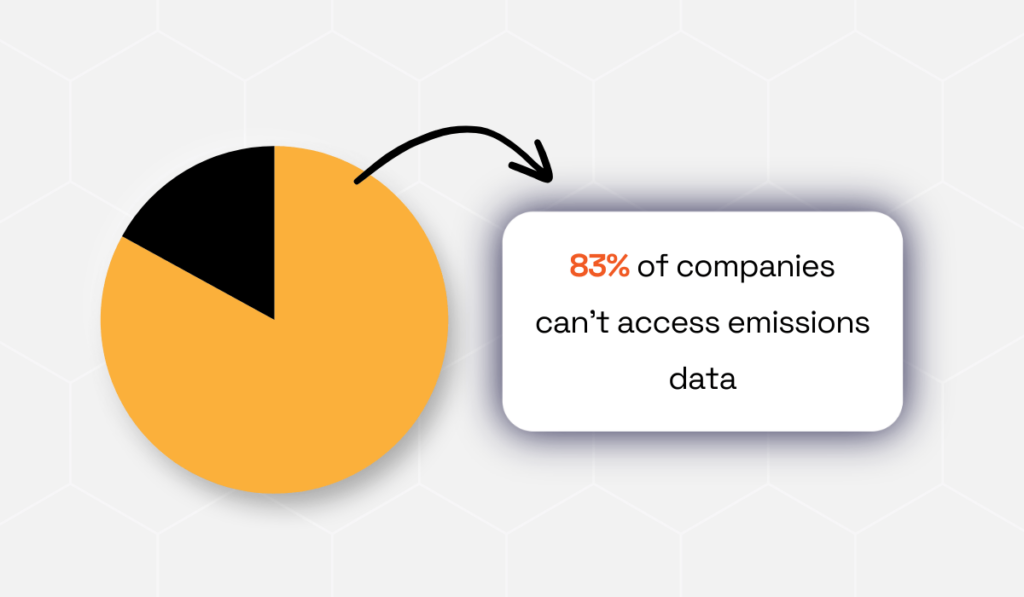
Illustration: Veridion / Source: GHG Protocol
This fragmentation slows analysis and undermines confidence in outputs.
In practical terms, inconsistent standards further complicate comparisons.
For example, a temperature dataset recorded in Celsius cannot be directly compared to one in Fahrenheit without conversion, and greenhouse gas categories often vary across reporting frameworks.
These discrepancies introduce friction at every stage of analysis.
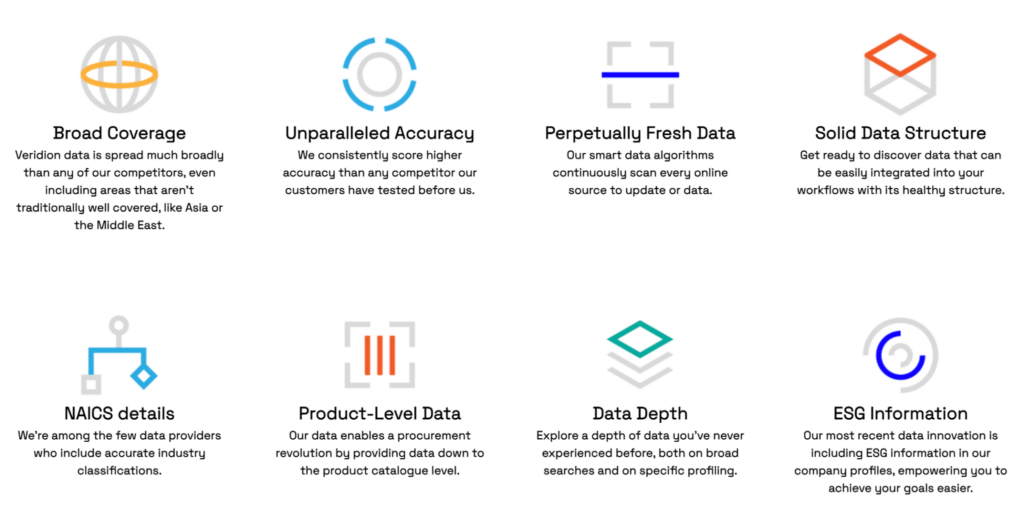
AI-powered big data platforms like Veridion address this issue by providing standardized, location-level business data that anchors climate risks directly to operational sites.
By aligning asset-level data with climate projections, organizations can map hazards accurately, evaluate exposure systematically, and base decisions on reliable information rather than assumptions.
Source: Veridion
Overcoming fragmentation, therefore, is not merely a technical improvement.
It is the foundation for converting raw climate data into actionable intelligence that strengthens operational and financial resilience.
Even when data integration is achieved, another challenge emerges: interpretation.
Raw climate data alone is rarely sufficient for executive decision-making.
Michael Palmer, VP, Executive Creative Director at Marketbridge, the Go-to-Market® growth firm, explained it like this:
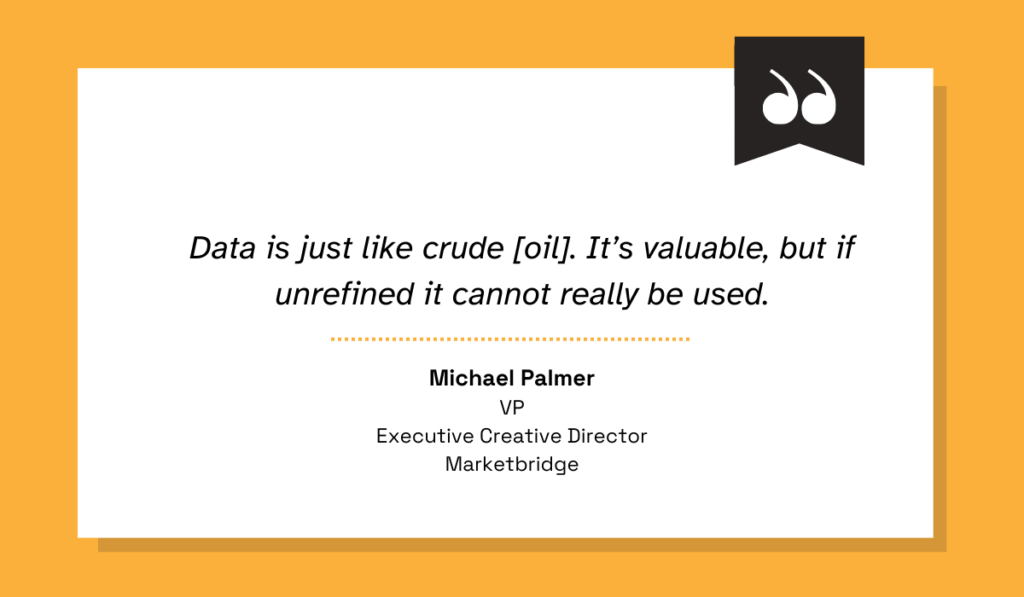
Illustration: Veridion / Quote: Business Reporter
Organizations may recognize that flood risk exists in a given region, yet still lack clarity on how that risk translates into production capacity constraints, revenue impact, or service disruption.
Without this connection, climate intelligence remains abstract rather than strategic.
This translation gap is widespread.
According to the EY Global Climate Risk Barometer 2023, 74% of surveyed companies fail to include quantitative impacts of climate risk in their disclosures.
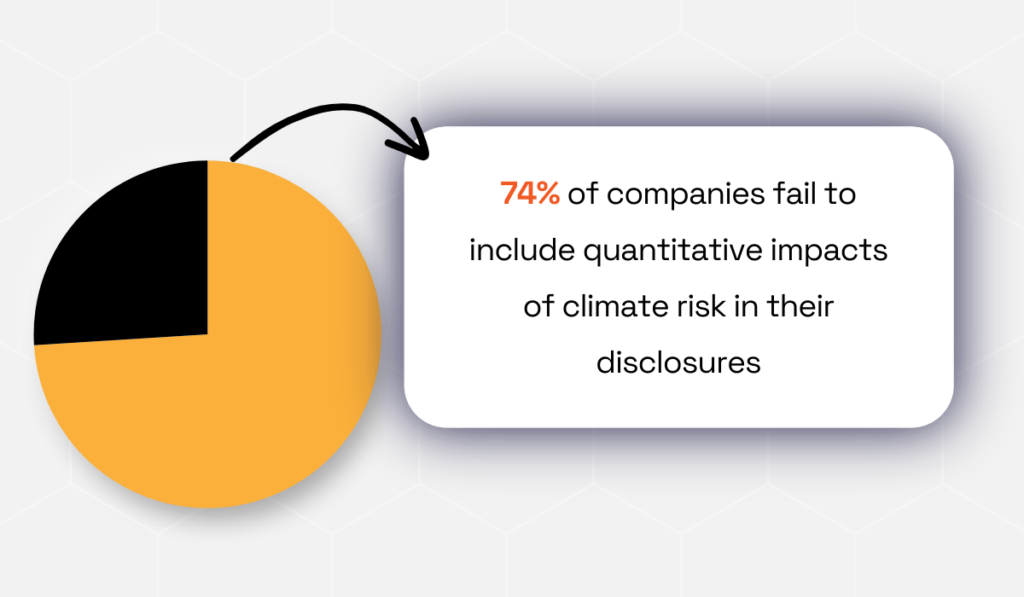
Illustration: Veridion / Source: EY Global Climate Risk Barometer 2023
This indicates that climate risks are still largely disconnected from core corporate strategy and financial reporting.
This statistic underscores a broader issue: technical projections often remain separate from business performance metrics.
Bridging this divide requires contextualization within operational and financial frameworks.
Companies must estimate potential production downtime, increased maintenance costs, insurance implications, or supply chain delays triggered by extreme events.
Moreover, risks are rarely isolated.
A drought affecting a supplier’s supplier can cascade through multiple tiers of the value chain and amplify disruption across regions and functions.
By systematically translating climate projections into business-relevant metrics, organizations transform complex datasets into strategic inputs.
This shift enables informed decisions that mitigate risk, protect enterprise value, and reinforce long-term resilience.
Beyond integration and interpretation lies a third challenge: maintaining relevance over time.
Climate intelligence is only valuable if it reflects evolving climate science and the changing realities of business operations.
Hazard models improve, new risks emerge, regulatory requirements shift, and asset portfolios expand or relocate. Static assessments quickly lose precision.
Capability constraints further complicate this effort.
The consequences of outdated assessments are substantial.
Climate inaction could cost companies 15% of their annualized revenue on average, yet less than 31% assess both the cost of action and the long-term cost of inaction, according to EY.
This gap between risk and response manifests in corporate performance.
While 64% of companies have transition plans, most show no progress or have moved backward on previous commitments as reality diverges from initial assessments.
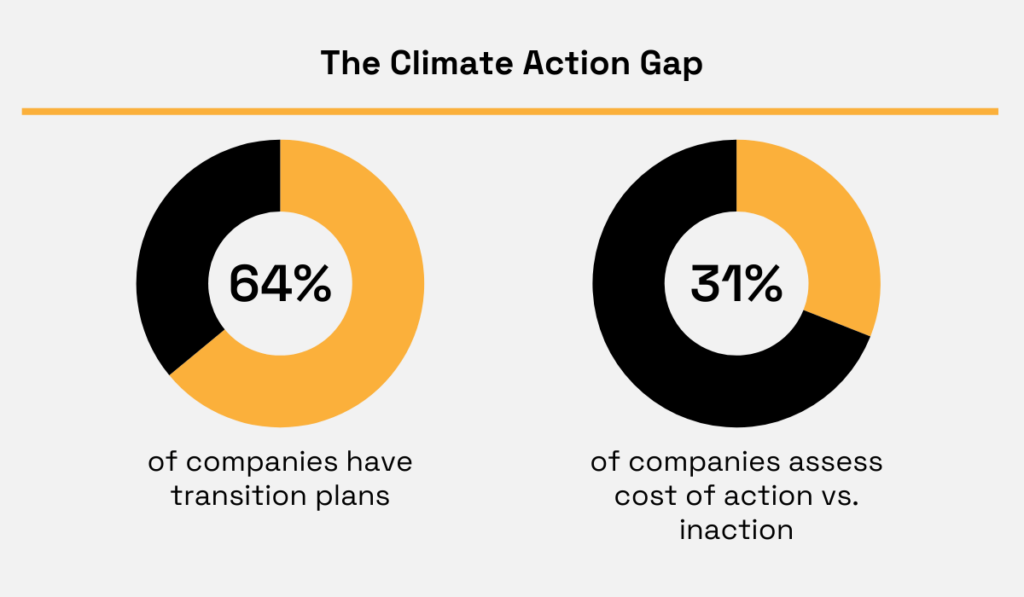
Illustration: Veridion / Source: EY
When internal expertise is limited, teams may rely on generic industry assumptions instead of assessing asset-specific exposures, resulting in incomplete or overly broad analyses.
Sustaining relevance, therefore, requires continuous updates, dedicated analytical capacity, and integration into core processes.
Data must be refreshed as climate science advances and as operational conditions evolve.
Embedding climate intelligence into ongoing strategic planning, rather than treating it as a one-off compliance exercise, ensures that insights remain accurate and decision-ready.
By institutionalizing this approach, organizations shift from reactive crisis management to proactive risk mitigation, safeguarding operations and financial performance over time.
Climate intelligence is no longer optional.
It is a practical tool for navigating uncertainty and making informed strategic decisions.
Organizations that act now will be better positioned to manage risk, protect performance, and move forward with confidence.
Building climate intelligence into everyday operations helps companies respond proactively to challenges and seize opportunities in a changing world.
Embracing this approach today sets the foundation for long-term resilience and sustainable growth.