



Blog
6 Data Enrichment Challenges to Overcome
By: Stefan Gergely -
22 April 2026


We love our data, and now that you're here, you're one step closer to loving it too.
A wide sample of data, so you can explore what is possible with our data
Choose ->
built with procurement in mind. Focused on manufacturers, products and more
Choose ->
built with insurance in mind. Focused on classifications, business activity tags and more
Choose ->
built with sustainability in mind. Focused on sustainability commitments, and environmental and social governance insights.
Choose ->
built with strategic insights in mind. Focused on market trends, competitor analysis, and industry-specific data
Choose ->

Keep up to date with our technology, what our clients are doing and get interesting monthly market insights.

Key Takeaways:
You know your data needs work. It’s incomplete, outdated, or scattered across your organization.
You see data enrichment as the solution.
And you are right.
Enriched data gives you a complete view of your customers and markets. It powers better decisions and drives revenue.
But the path to a fully enriched database is not without obstacles. Understanding these challenges before you start is how you ensure success.
Here are the six data enrichment challenges you need to overcome.
Your data is likely scattered across silos. Your CRM stores customer interactions. Your ERP system holds financial records. Your procurement platform tracks supplier relationships.
These systems often overlap but don’t match. They rarely talk to each other. Instead, they create conflicting records with different naming conventions.
For example, one system may label a field “Vendor Name,” while another may call it “Supplier.” Worse, the same company can appear as “Acme Inc.” in one place and “Acme Ltd.” in another.
This fragmentation directly impacts data enrichment.
Dan Vesset, General Manager, Global Research Operations at IDC, a provider of market intelligence, notes that:
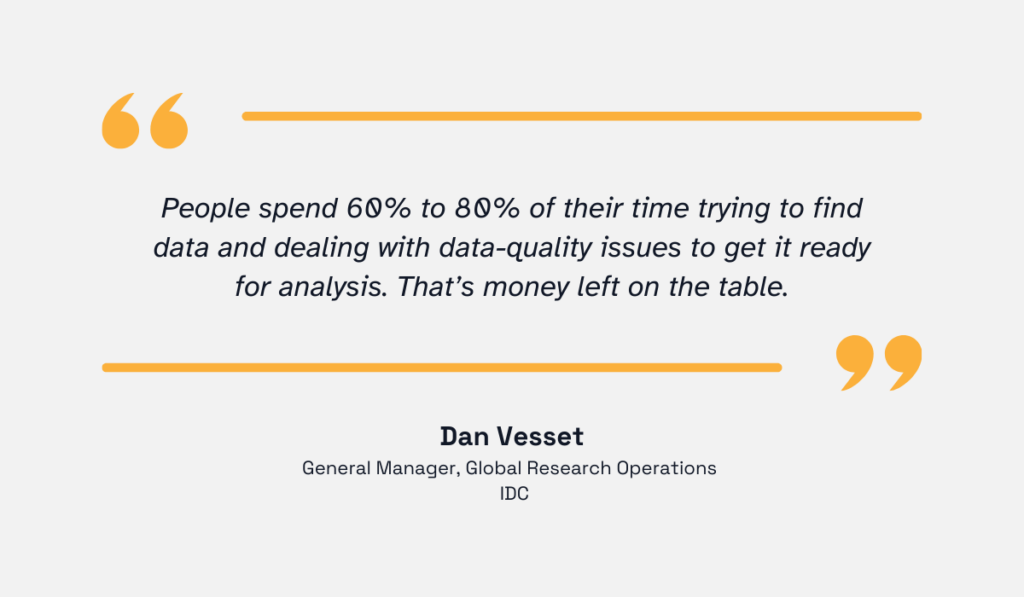
Illustration: Veridion / Quote: MIT
When you try to add data to a record, which version do you trust? The wrong match introduces errors instead of fixing them.
In fact, Gartner found that companies lose an average of $12.9 million per year to bad data, noting that duplicate data entered repeatedly messes up reports.
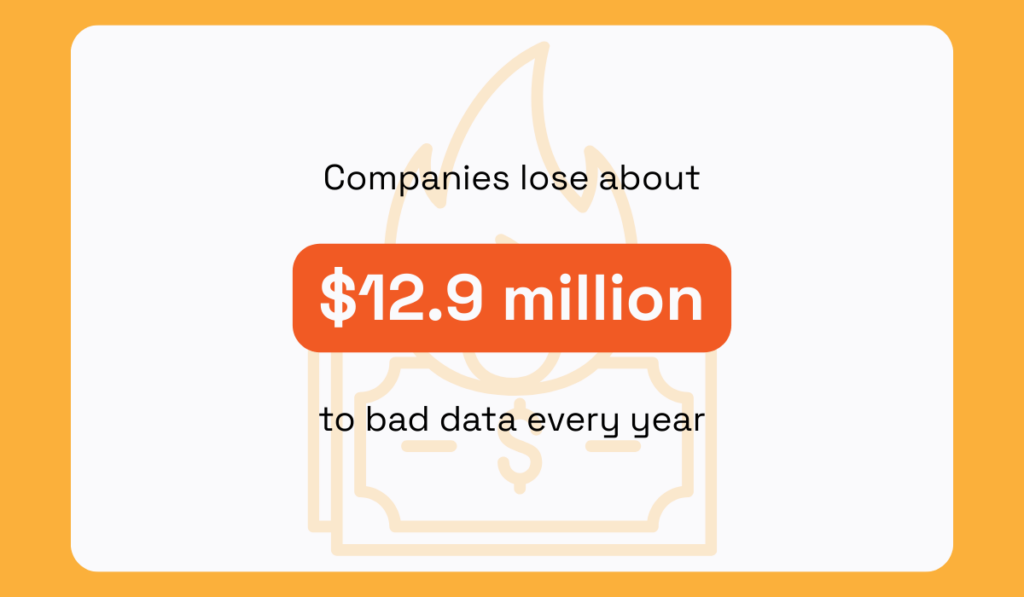
Illustration: Veridion / Data: Gartner
Independent tests show that typical data sources are only 50% accurate, meaning half your records could be wrong.
The result?
Conflicting data that breaks downstream analytics and enrichment.
You need a unified view of your data before enrichment. Otherwise, enrichment will only spread existing errors across systems, undermining your decisions.
Therefore, create a single source of truth. Conduct an audit of your current tools and information sources.
Then map what you own and identify where records conflict.
This step determines whether your enrichment project succeeds or fails.
Bad enrichment starts with bad input. Incomplete, incorrect, or outdated entries can derail any appending or cleansing effort.
When you feed an enrichment engine a record missing a ZIP code or an outdated phone number, the appended information will be partial or incorrect.
Consider what happens downstream: marketing may mail catalogs to the wrong locations, sales reps chase dead leads, and analytics produce garbage insights.
As Veda Bawo, Head of Data, Risk, and Control at First Citizens Bank, puts it,
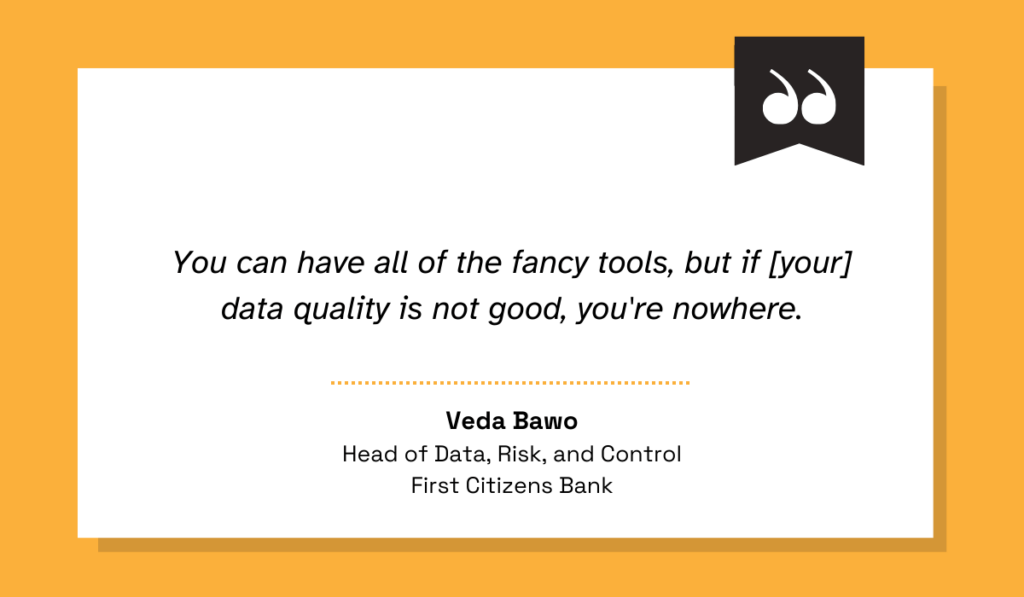
Illustration: Veridion / Quote: MIT Sloan
She’s right. Bad data is like trying to pour new oil into a leaky engine: the effort is wasted.
And once bad data is in your systems, enrichment tools can’t fix it.
To prevent this, enforce quality controls at capture. This will save significant time and cost by preventing errors before they spread.
Set up rules that check for completeness and format. Require certain fields (e.g., country, email format, phone number format) before allowing a record to save.
Use real-time validation and set up processes to catch errors immediately.
For example, many CRMs let you set up dropdown picklists for state names or enforce phone patterns. If a sales rep enters an email without an “@”, the system should flag it immediately.
Strong data governance is also key: define standards and train your teams.
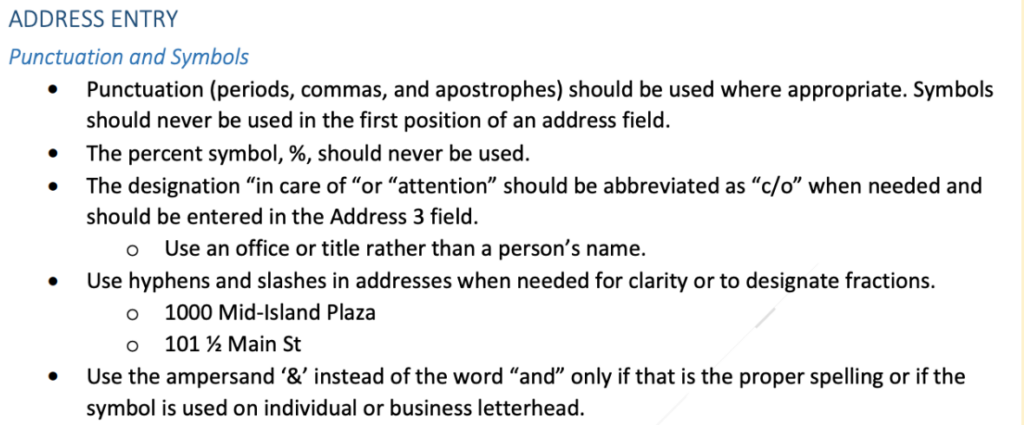
Create a simple “data handbook” of standards, like the one you see below:
Source: Kentucky Wesleyan College
In short, insist that “garbage in” never happens: validate emails, phone numbers, IDs, and names as users enter them.
This upfront governance determines whether enrichment becomes a strategic asset or just creates more noise.
Picking the right enrichment partner is tough because the market is crowded and every vendor claims accuracy and coverage.
But not all data providers are alike: their coverage, accuracy, and update schedules vary widely.
You need to assess providers on multiple criteria.
First, you need broad coverage of your markets, whether that’s Fortune 500 firms or niche SMBs.
For example, you may need contacts in Europe and Asia as well as North America, or details on both Fortune 500 firms and small startups. Ask providers for samples that match your target segments.
Second, you need fresh data. Here’s why freshness matters: business data decays rapidly, about 70% each year.
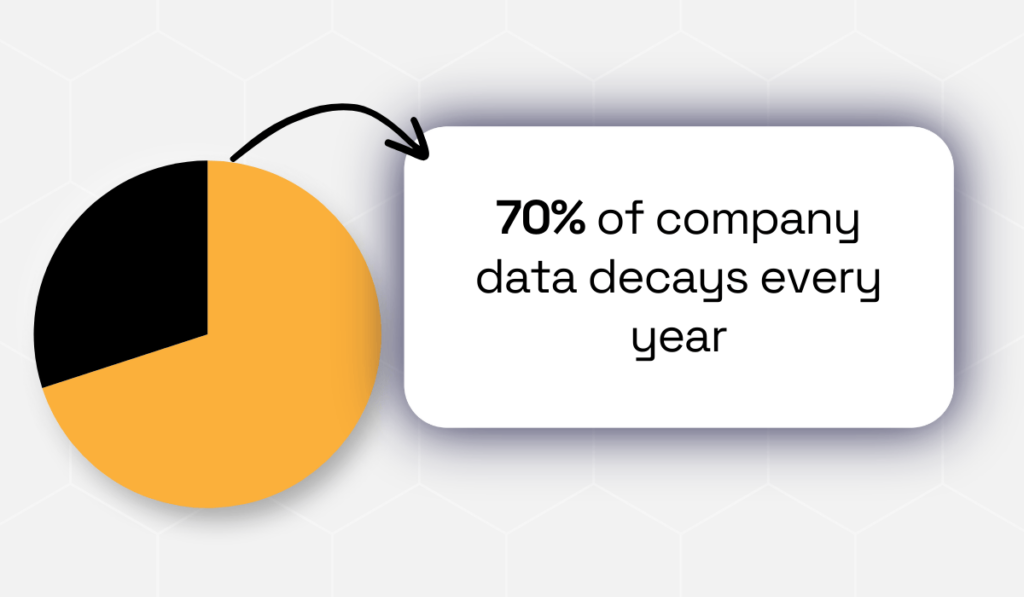
Illustration: Veridion / Data: Gartner
If you rely on a stale database refreshed only annually, a quarter of your records could be obsolete. Instead, look for vendors with frequent refresh cycles or real-time APIs.
Therefore, look for providers with frequent refreshes (some promise real-time or weekly updates).
Check accuracy claims carefully: marketing materials may tout “95% accuracy,” but independent audits often find true match rates closer to 50%.
Always test a vendor on a representative sample of your leads. Ask about their data sources—top providers combine firmographics (industry, size, revenue) with contacts from public records, news, and web crawls.
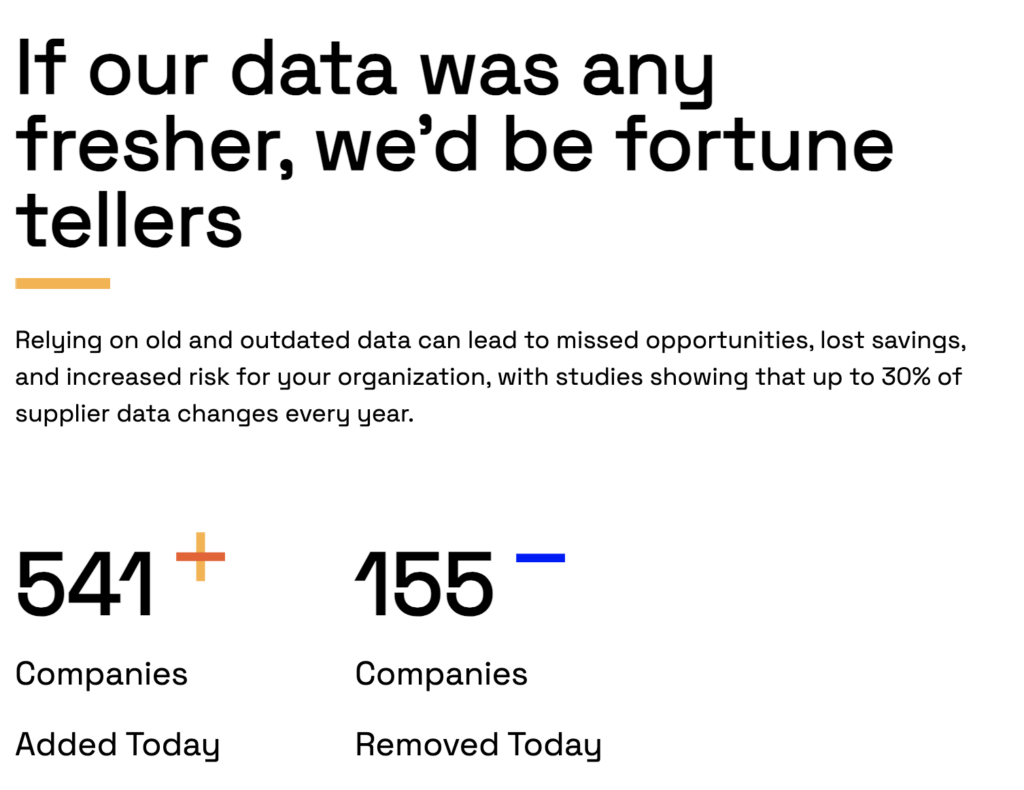
For example, Veridion‘s data platform is built around dynamic, continuously updated data, not the static “snapshots” you get from many list-based vendors.
In fact, the platform’s coverage is exceptionally broad; over 134 million company profiles worldwide, and it is refreshed weekly.
That means when you query our platform, you’re seeing an operational view of firms as they evolve, not a stale record from last quarter.
Source: Veridion
The platform uses data aggregators to continuously ingest firmographics, news events, and public filings.
The result is high-frequency, AI-driven company intelligence that surfaces changes in real time.
Additionally, Veridion offers Match and Enrich APIs that return enriched profiles on demand. This lets you fetch fresh data on the fly (e.g., during a sales call) rather than relying on a static snapshot.
Choosing the wrong data source wastes money and creates gaps.
If your provider lacks global coverage, your international records stay incomplete. If they update slowly, you end up enriching the records with already outdated information.
Before you commit to a data source, define your “must-have” capabilities and make a checklist. For example:
This will help you find a data provider that fits your needs perfectly.
You select a great provider. They return perfect, enriched records. Now you have a new problem.
How do you merge this data back into your CRM, ERP, and analytics tools without breaking everything?
Integration poses technical and operational hurdles. Format incompatibility is common.
Systems may use different formats and names for the same data. For example, a CRM might have a field “City,” but your ERP uses “OfficeCity.”
Also, data duplication can occur when new records create duplicates instead of matching existing ones.
Without mapping, the new data won’t land in the right place, and your “enriched” system becomes more chaotic than before. You’ll need to standardize and reconcile fields.
Erik Aasberg, CTO of eSmart Systems, an AI solutions provider for energy infrastructure, advises checking the practical reality of integration before committing.
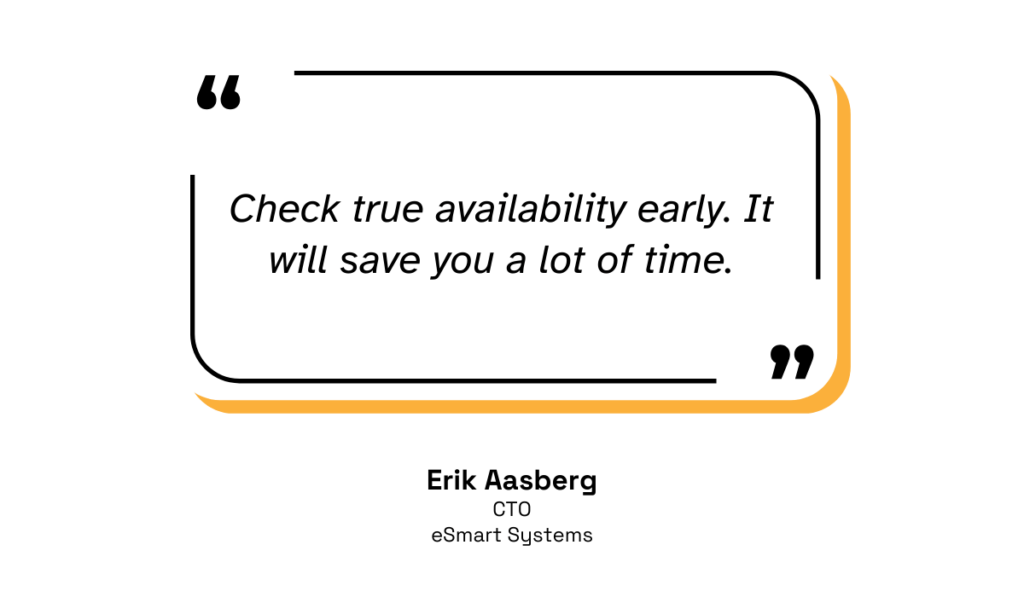
Illustration: Veridion / Quote: Forbes
So what can you do?
Adopt a layered architecture approach.
Use a platform with pre-built connectors to your existing sources (such as an integration platform as a service (iPaaS)) to avoid custom middleware.
These tools can convert formats, enforce rules, and move data without custom code.
Audit and standardize data to remove duplicates or outdated records before syncing.
Ensure that you first standardize field names and picklist values across systems. Establish match rules, such as email plus domain for contacts, to prevent duplicate creation.
You also must decide on a syncing strategy.
Source: Veridion
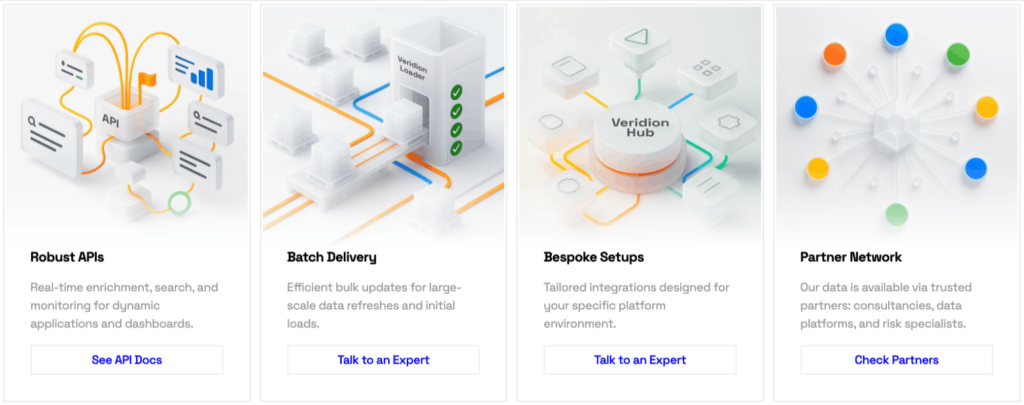
Real-time APIs work well for fast-changing data (like new leads). When a field updates in one system, it instantly pushes to others, which “eliminates lag and cuts down duplicate entries”.
For example, a supplier’s updated address entered in a portal could be synced to your ERP and CRM systems via APIs. That way, every department sees the same, accurate data.
Other data can go via batch jobs (nightly or weekly loads) if latency is acceptable. Just decide based on how fresh the data needs to be and how critical latency is to your users.
Data enrichment involves handling data. That triggers legal obligations.
Regulations such as the GDPR (EU) and the CCPA/CPRA (California) strictly govern how you collect, store, and use information.
So, when you combine your internal data with third-party datasets, you must ensure the entire process is compliant.
Nitesh Sinha, the Founder and CEO of Sacumen, a security product engineering company, insists that businesses must comply with privacy regulations when handling data.
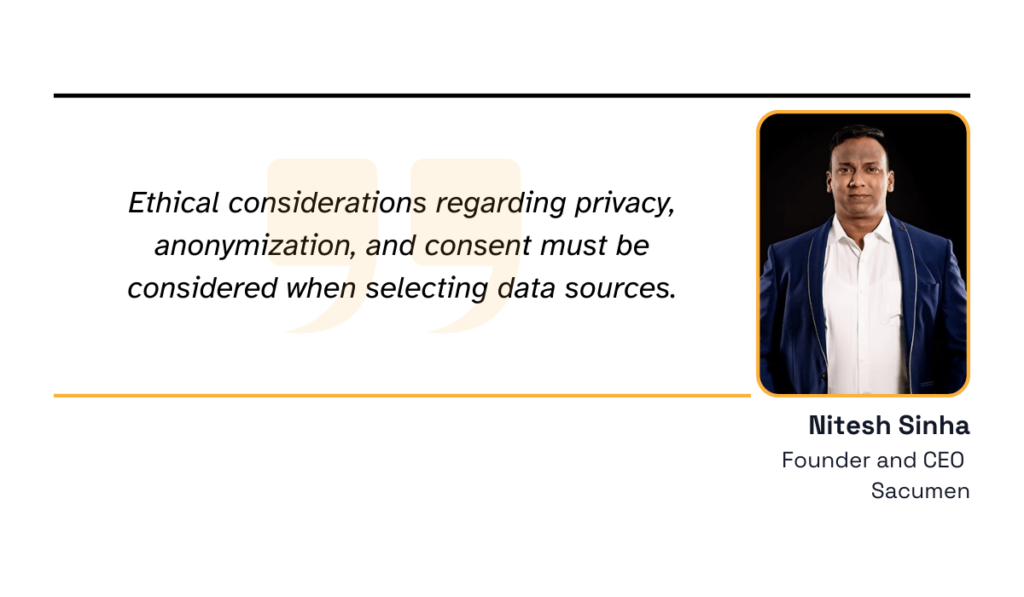
Illustration: Veridion / Quote: Forbes
In the B2B realm, work emails and titles are usually covered. Under the GDPR, you need a lawful basis (often legitimate interest) for enrichment, and you must respect rights such as the right to opt out and to data access.
CCPA originally exempted typical business contact data, but its successor, CPRA, narrows that carve-out; you still can enrich B2B data, but you must give notice and honor opt-outs.
When dealing with privacy regulations, the key is documentation.
Record why you have the data and how you process it. Sign Data Processing Agreements (DPAs) with any provider and enforce data minimization (only keep what’s needed).
On the provider side, work only with vendors that prioritize compliance and ethical data sourcing. Verify they follow a “privacy-first” approach:
You may also want to involve your legal/compliance teams early.
A complete audit of data flows and a simple review of opt-out processes can prevent costly fines and keep your enrichment program on the right side of the law.
Maintaining clean, permission-based data minimizes legal risk and protects your reputation.
You have solved the technical challenges. Your data is clean, enriched, and compliant.
Now your leadership asks the tough question: What did this cost, and what did we get?
Quantifying the value of enrichment is hard. The benefits are often distributed across sales, marketing, and operations. Direct attribution is difficult.
The truth, though, is that enrichment often pays off.
Studies show strong productivity gains. For example, companies using data enrichment tools have seen sales productivity increase by over 25%.
So how do you measure your enrichment value?
Tie enrichment to concrete KPIs.
Dr. Milan Kumar, CIO of commercial vehicles technology and solutions provider ZF Group, mentions sales growth as one of the best ways to demonstrate ROI.
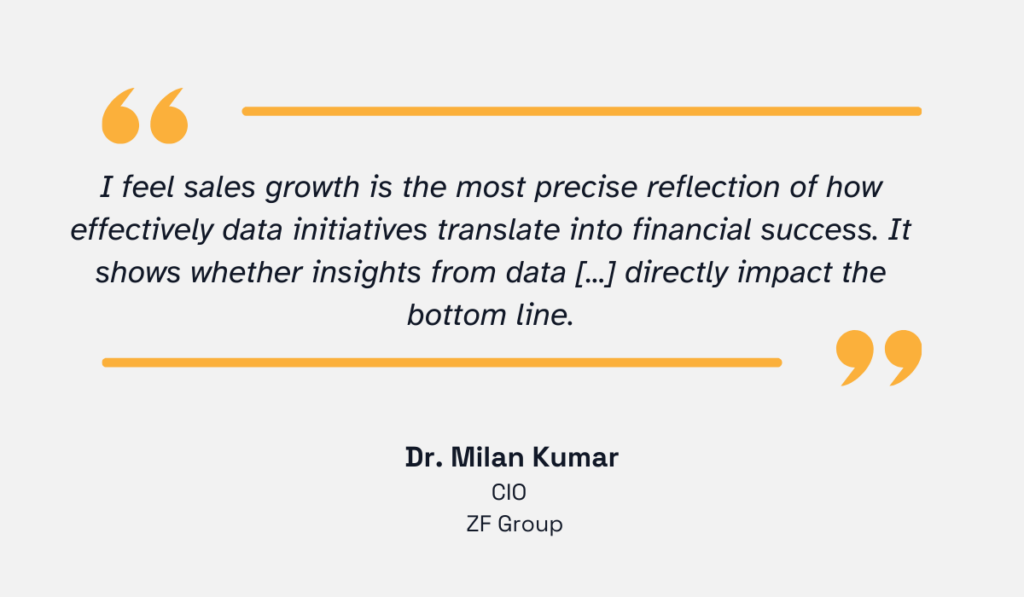
Illustration: Veridion / Quote: Forbes
Following this advice, track conversion or win rate before and after enrichment. If enriched leads convert at 8% instead of 5%, record the additional deals and revenue they represent.
Similarly, measure the time your sales team spends researching accounts instead of selling.
For example, if your team spends 10 hours/month doing data fixes, multiply that by their loaded hourly rate. That’s pure savings once the data is automated.
Also track reduced bounce rates and bad mail costs: a healthy database often hits <2% email bounces after enrichment (vs. 5–10% before).
You might also calculate opportunity cost: for every sale gained or error avoided, the value of enrichment compounds.
Even a small lift in reply rates can translate into tens of thousands in revenue gains with modest lead volume.
In practice, once you plug in the numbers from deals, deal size, rep time saved, etc., the math usually works out very much in your favor.
The key is to benchmark before and after enrichment. That way, you can point to percentage lifts or dollars saved as evidence that quality data is paying its way.
Data enrichment can transform your business, but only if you address these challenges head-on.
By recognizing these six challenges, you prepare your organization to overcome them.
Start with clear goals, choose your partners carefully, and measure your progress.
Do this, and you’ll turn messy records into a strategic asset; one that drives more sales, saves time, and supports smarter decisions.
In short, get your data ducks in a row now, and your enriched data will fuel growth later.