



Blog
Tips for Maximizing the Value of Competitive Insights
By: Auras Tanase -
25 April 2026


We love our data, and now that you're here, you're one step closer to loving it too.
A wide sample of data, so you can explore what is possible with our data
Choose ->
built with procurement in mind. Focused on manufacturers, products and more
Choose ->
built with insurance in mind. Focused on classifications, business activity tags and more
Choose ->
built with sustainability in mind. Focused on sustainability commitments, and environmental and social governance insights.
Choose ->
built with strategic insights in mind. Focused on market trends, competitor analysis, and industry-specific data
Choose ->

Keep up to date with our technology, what our clients are doing and get interesting monthly market insights.

Key Takeaways:
Have you ever lost a deal and only found out later that your competitor had already undercut your pitch?
In today’s market, the difference between winning and losing often comes down to who has better intelligence.
But the problem is: most organizations collect competitive data but never turn it into action, leaving growth opportunities on the table.
That’s why, in this post, we cover the five practices that turn competitive intelligence into a real advantage that helps you win more deals and outpace your competition.
Outdated competitive intelligence means you’re making today’s decisions based on yesterday’s market conditions.
This leads to flawed strategic choices that cost you market share before you realize competitors have changed their strategy.
In other words, outdated and poor-quality research data lead to decisions based on inaccurate customer insights, market conditions, and technology trends.
This disconnect results in wasted investment, missed opportunities, and reduced innovation. All of which costs money.
In fact, according to Forrester’s research on data quality, organizations lose millions due to poor data every year.
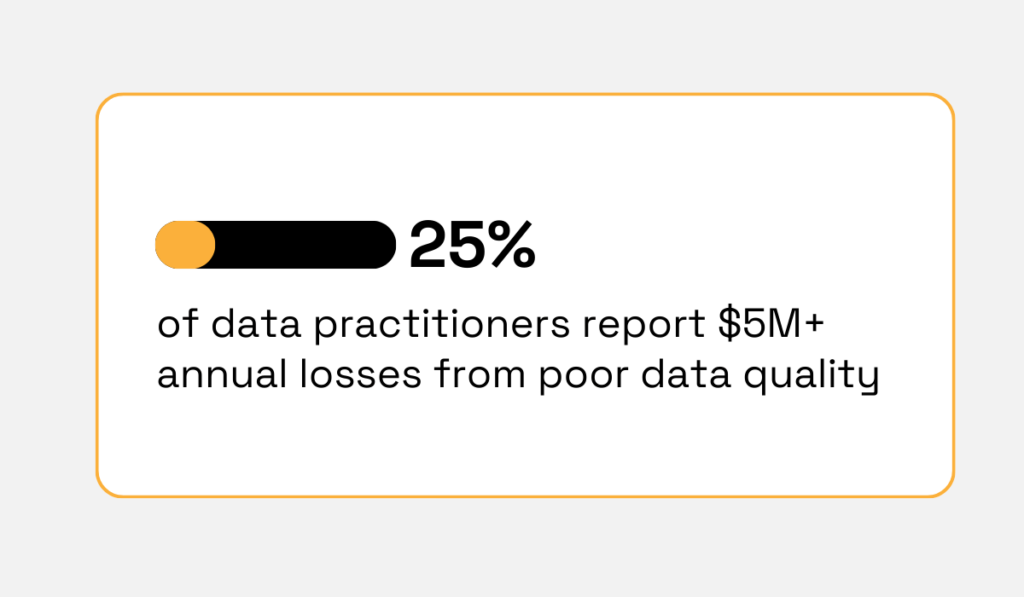
Illustration: Veridion / Data: Forrester
No wonder we see a shift away from manual data checks towards faster and more reliable competitive workflows.
Systematic automation keeps a constant watch over the competitive landscape and removes the delays that come with periodic reviews.
Automated monitoring tools track competitor websites, pricing changes, product launches, social media activity, press releases, and regulatory filings simultaneously, delivering a complete and real-time view of market activity.
Platforms such as Veridion provide continuously updated business data and surface relevant changes as they occur.
Teams receive alerts when competitors launch promotions or adjust pricing, enabling same-day responses instead of discovering critical shifts weeks later during quarterly reviews.
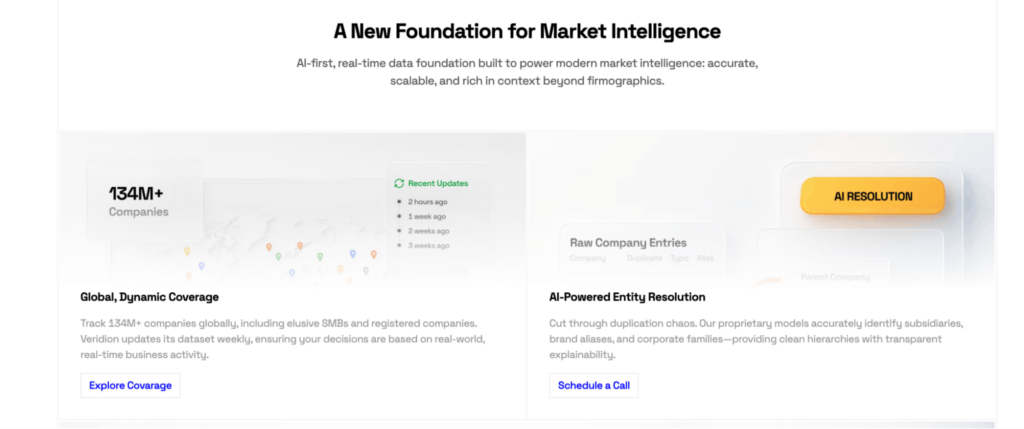
Source: Veridion
The frequency of intelligence updates should reflect the pace of the market.
Fast-moving technology sectors require weekly monitoring to remain competitive, while industries with longer sales cycles, such as industrial manufacturing, operate effectively with structured monthly updates.
Relying on a single source for competitive intelligence is like looking at your competitors through one window while missing everything happening in the rest of the house.
Organizations that combine primary and secondary sources, on the other hand, develop complete competitive pictures because each source type reveals different aspects of strategy.
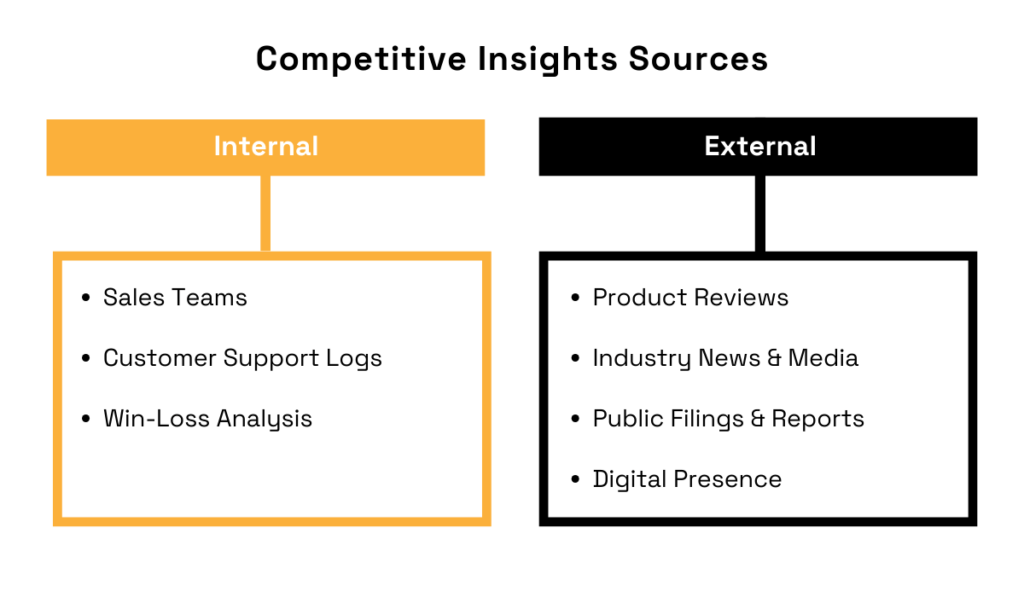
Source: Veridion
Primary research delivers depth through customer interviews that reveal why prospects choose competitors and conference attendance that exposes positioning strategies months before press releases.
When you talk directly to people in the market, you learn the real reasons behind competitive wins and losses.
Secondary research provides scale through competitor websites, financial filings, and job postings that signal where competitors are investing.
For example, when you see multiple machine learning job openings, that signals AI investment long before any product announcement.
Digital monitoring captures real-time signals through social media sentiment, review site feedback, and patent filings that forecast future product directions.
The global competitive intelligence market reached $53.2 billion in 2024, as organizations invest in platforms that automatically aggregate these diverse sources. And it will only continue to grow.
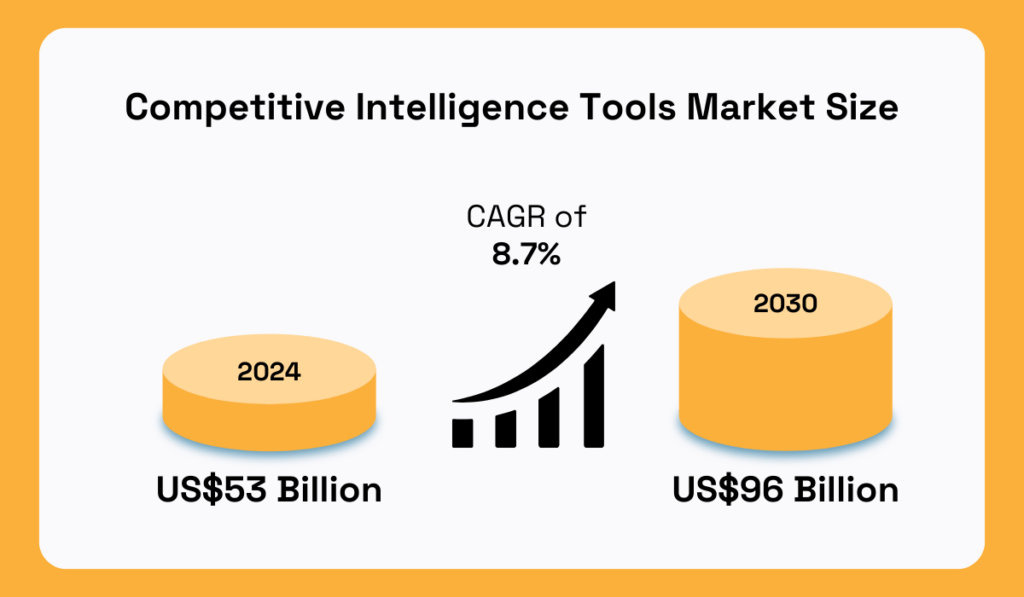
Illustration: Veridion / Data: ResearchGate
And for a good reason, too.
The real power emerges when you integrate insights across sources because individual data points that seem unimportant on their own reveal significant patterns when combined with other signals.
A competitor job posting for a regional sales director becomes strategically significant when combined with partnership announcements and increased advertising spend in that geography, suddenly revealing a coordinated expansion strategy.
Understanding different types of competitive intelligence helps you know which sources deliver which insights:
When you notice competitors simultaneously hiring new employees and announcing, you are seeing clear evidence of strategic investments well before anything’s officially announced.
This gives you lead time to prepare your competitive response through your own initiatives, differentiated marketing messages, or strategic partnerships that give you similar capabilities.
Competitive intelligence creates value only when it directly supports decisions that affect your growth, market positioning, or ability to reduce risks.
Many companies collect intelligence that never gets used because it doesn’t connect to actual business decisions.
Competitive intelligence expert and a former Senior Expert in the Strategy Practice of McKinsey & Company, John Horn, puts it perfectly:
“Companies doing competitive intelligence often try to collect all data about all competitors all at once, but they lack the staff or the ability to analyze the information and develop insights.”
Instead, he recommends starting small by identifying major competitors threatening your strategic objectives and determining what specific information would actually change your decisions.
The fundamental challenge isn’t gathering enough intelligence but filtering the signal from the noise.
Information overload occurs when excessive, irrelevant information is present. This flood of unnecessary data weakens decision-making within an organization.
You solve this by establishing frameworks that evaluate every intelligence piece against your defined business objectives. For example:
You need to frame your intelligence collection around specific questions that directly tie to business goals rather than trying to know everything about everyone.
Connect intelligence to tangible business outcomes by creating role-specific views that prioritize relevant intelligence based on actual decisions:
When you discover competitor supply chain vulnerabilities, that intelligence matters only if your organization can exploit those weaknesses through differentiated sourcing capabilities or reliability messaging in customer conversations.
Avoiding common competitive intelligence mistakes starts with recognizing that being comprehensive and being actionable often work against each other.
Concise insights highlighting decision-relevant information prove far more valuable than comprehensive competitor profiles that document everything knowable but provide no clear action guidance.
Focus on intelligence that changes what you do, not intelligence that simply informs you about what competitors are doing.
Disruption almost never comes from competitors you’re actively tracking today, but rather from unexpected sources in adjacent markets approaching customer problems from entirely different angles.
There are so many examples that support this:
These cases demonstrate disruption emerging entirely outside conventional competitive boundaries, with incumbents realizing the threat only when it was too late to respond effectively.
Adjacent market players can expand into existing spaces, offering substitute products that meet customer needs in different ways.
Startup activity often signals emerging competitive threats. Companies serving complementary customer needs or controlling critical value chain inputs represent natural expansion pathways.
For example, in the project management software market, communication tools, document collaboration platforms, and workflow automation providers all address different aspects of the same coordination problem.
This creates opportunities for overlap with existing products.
Harvard professor and author Clayton Christensen discusses the misuse of the word disruption when referring to business:
““Disruption” specifically refers to what happens when the incumbents are so focused on pleasing their most profitable customers that they neglect or misjudge the needs of their other segments.”
Competitive intelligence tools help monitor these broader competitive landscapes through continuous tracking of industry events, acquisition activity, and partnership announcements signaling shifting market boundaries.
This expanded view prevents strategic blindness to threats emerging from unexpected directions.
How competitors respond to market shifts reveals their strategic intent far more clearly than press releases or public statements.
Organizations that systematically observe competitor reactions to pricing changes, product launches, and regulatory developments gain intelligence that helps them anticipate future moves.
In fact, organizations adopting AI-enhanced competitive intelligence achieve 18-22% higher profitability than peers, demonstrating the tangible value of these advanced strategic insights.
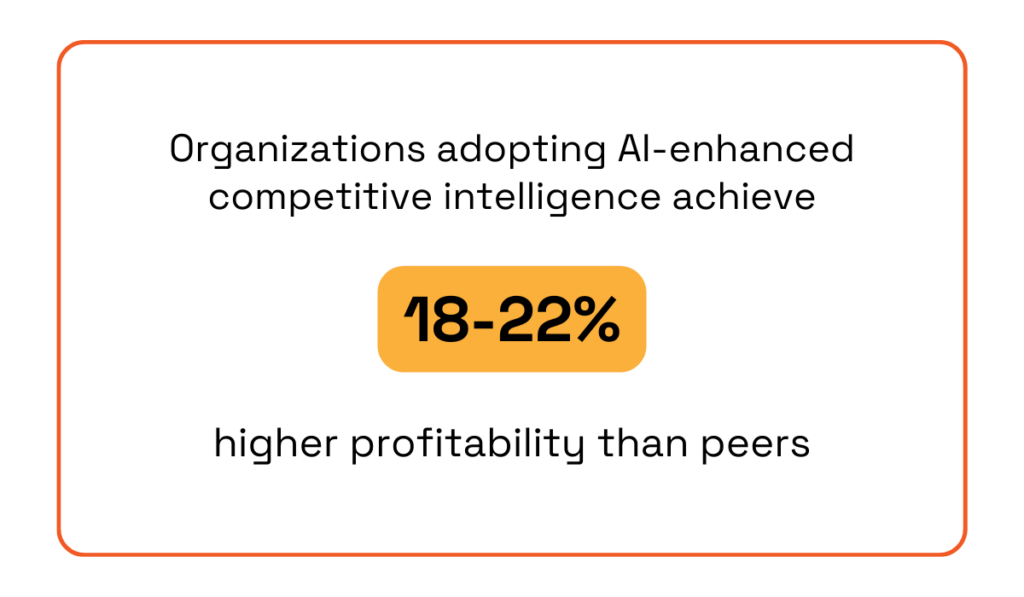
Illustration: Veridion / Data: ResearchGate
That’s partially because a clear understanding of competitor response patterns makes future reactions easier to anticipate.
According to McKinsey & Company, companies implementing advanced pricing analytics typically achieve a 2–7% increase in return on sales.
This improvement is driven by shifting from manual, gut-feeling, or outdated pricing to data-driven, dynamic, and AI-enabled strategies that optimize prices for customer demand, competitor activity, and profitability.
Hiring trends, partnership announcements, and regulatory engagement act as leading indicators of strategic direction.
A surge in job postings for machine learning specialists often signals AI initiatives well before product launches.
Expansion of sales teams in specific regions highlights geographic growth priorities. Open roles for partnership managers reflect ecosystem development strategies.
Partnership announcements frequently reveal capability gaps that competitors aim to close through collaboration.
Acquisition activity also signals intent, as the types of companies acquired point directly to future strategic direction.
When you observe competitors simultaneously hiring data scientists, announcing partnerships with AI vendors, and acquiring machine learning startups, those coordinated signals provide clear evidence of major strategic investment.
Your next step is simple.
Start by identifying two or three competitors that most threaten your strategic objectives.
Determine what specific intelligence about them would actually shift your decisions today.
You can build from that focused foundation rather than attempting comprehensive coverage from day one.
Understanding what competitive intelligence truly encompasses and moving past common myths will help you avoid common pitfalls.
Intelligence that changes decisions delivers value. Everything else is just noise.