



Blog
Looking for a Global Data Collection Partner? These Companies are Worth Considering
By: Stefan Gergely -
16 June 2026


We love our data, and now that you're here, you're one step closer to loving it too.
A wide sample of data, so you can explore what is possible with our data
Choose ->
built with procurement in mind. Focused on manufacturers, products and more
Choose ->
built with insurance in mind. Focused on classifications, business activity tags and more
Choose ->
built with sustainability in mind. Focused on sustainability commitments, and environmental and social governance insights.
Choose ->
built with strategic insights in mind. Focused on market trends, competitor analysis, and industry-specific data
Choose ->

Keep up to date with our technology, what our clients are doing and get interesting monthly market insights.

Approximately 402.74 million terabytes of data are created every day.
So, the challenge is definitely not finding data, but finding the right data for your use case.
That’s why, whether you’re sourcing suppliers, identifying sales opportunities, analyzing customer intent, or monitoring markets, you can benefit from partnering with a data collection company.
And to help you find the right fit, we’ve reviewed five of the best global data collection companies and what each one does best.
If you’re trying to find, evaluate, or monitor companies and suppliers anywhere in the world, Veridion is one of the strongest options available.
The platform collects data on more than 130 million companies across 250+ regions and tracks over 200 million products and services.
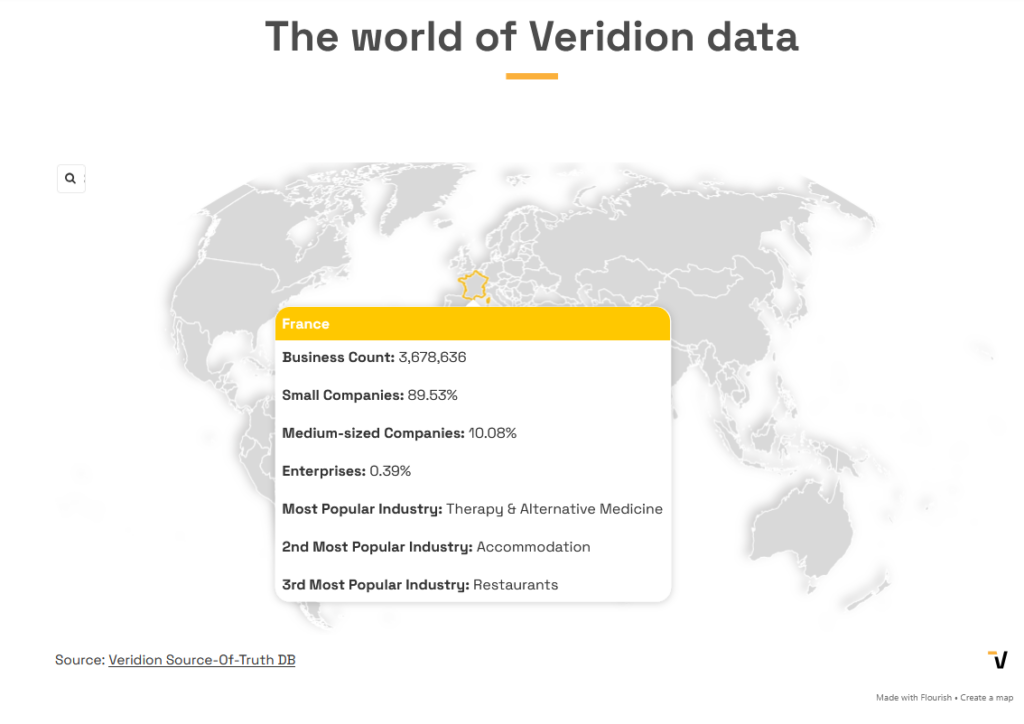
Source: Veridion
That scale makes it particularly useful if you’re working in procurement, market intelligence, supply chain management, insurance, or ESG analysis and need reliable company data at a global level.
What makes Veridion stand out is the depth of information available for each business.
Every company profile includes more than 300 data points covering firmographics, industry classifications, ownership structures, corporate hierarchies, product portfolios, ESG indicators, and more.
Below is just a small part of the product data Veridion collects:
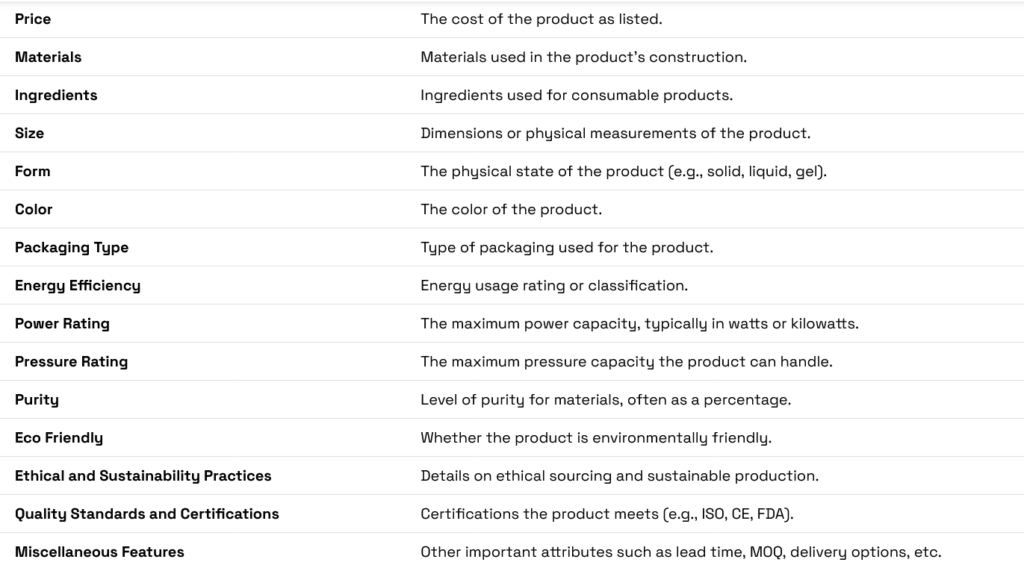
Source: Veridion
The data is refreshed weekly using information collected from company websites, legal registries, public filings, and other verified sources.
As a result, you get a more current and complete view of businesses than you would from many traditional databases.
One feature worth noting is Veridion’s ability to combine two different perspectives on a company.
Its Operating View captures a company’s digital footprint, including products, services, certifications, and online presence, while its Legal View focuses on official corporate records and ownership information.
Veridion is also particularly strong when it comes to supplier discovery and supply chain visibility.
If you’re looking for manufacturers that meet specific requirements, Veridion’s Scout can help you identify potential suppliers and evaluate them using operational, legal, and ESG data.
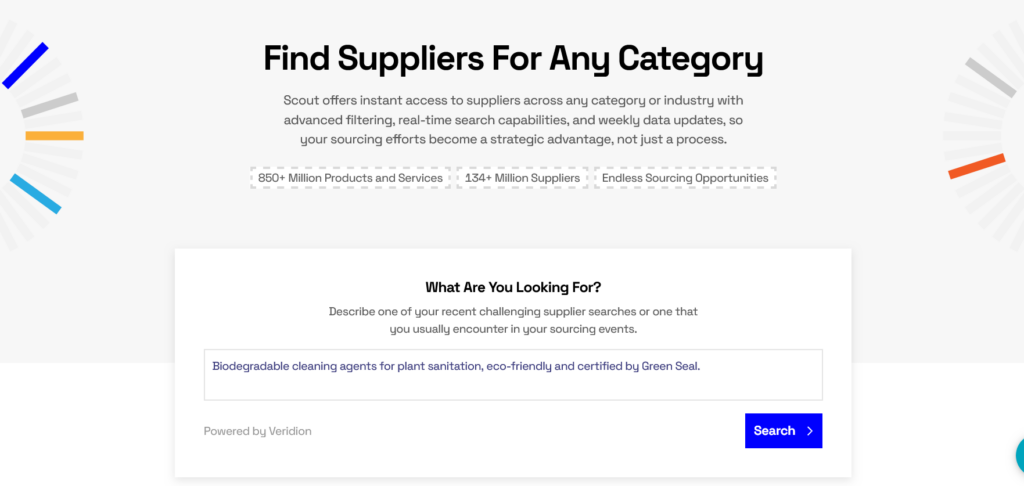
Source: Veridion
But the value goes beyond just finding suppliers.
Veridion can reveal relationships across multiple supplier tiers, helping you understand how companies connect throughout a supply chain.
This can be incredibly useful if you’re trying to identify concentration risks, uncover hidden dependencies, or understand where potential disruptions could originate.
The Toyota Yaris supply chain example below demonstrates this capability.
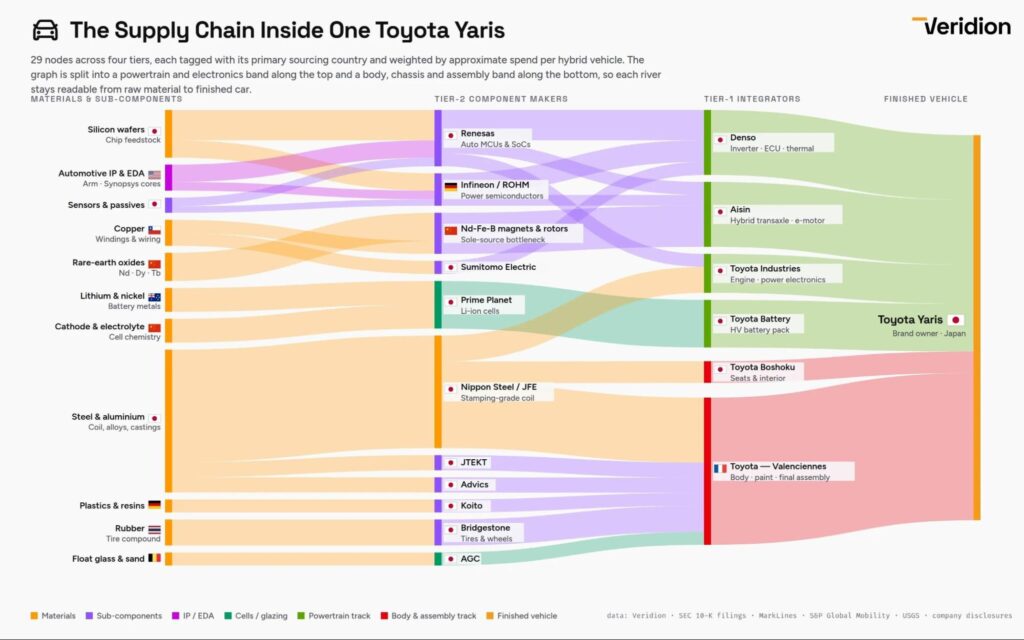
Source: Reddit
Rather than showing only direct suppliers, the visualization maps relationships from Tier 1 suppliers all the way down to Tier 2 and Tier 3 suppliers and the raw materials that support them.
This type of visibility can help you spot vulnerabilities that would otherwise remain hidden until a disruption occurs.
Pricing is customized based on your specific data requirements and use case.
If supplier discovery, company intelligence, ESG analysis, or supply chain visibility are important to your business, contact us to discuss what data would be most valuable for your needs.
Not all data tells you who a company is. Some data tells you what a company is interested in right now.
That’s the category Bombora operates in.
Rather than building company profiles or supplier databases, Bombora specializes in intent data; signals that indicate which organizations are actively researching specific products, services, or business challenges online.
The company collects data through its Data Co-op, a large network of B2B publishers, media companies, and content providers that includes publications such as Bloomberg, Fortune, and Fast Company, along with hundreds of industry-specific websites.
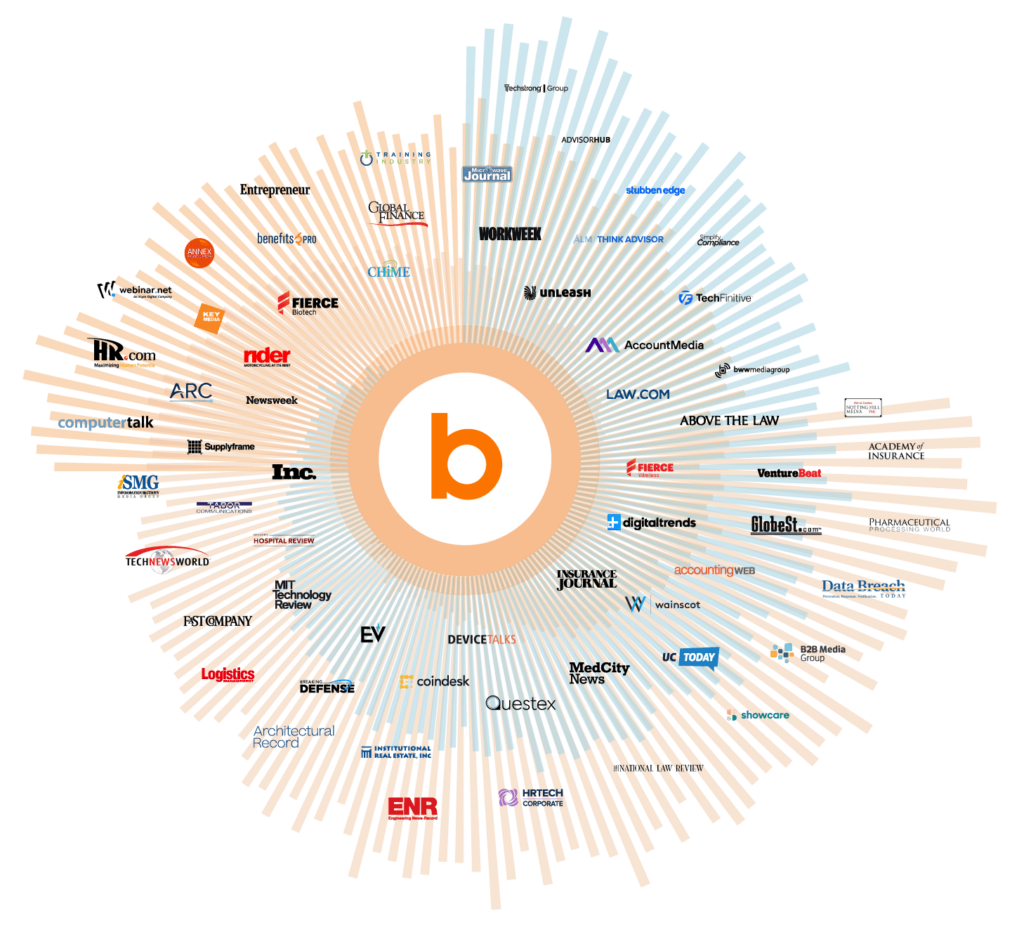
Source: Bombora
By analyzing content consumption patterns across this network, Bombora identifies topics that companies are researching at unusually high levels compared to their normal behavior.
This information is packaged through Bombora’s Company Surge® product, which helps sales and marketing teams identify accounts that may be entering the buying process.
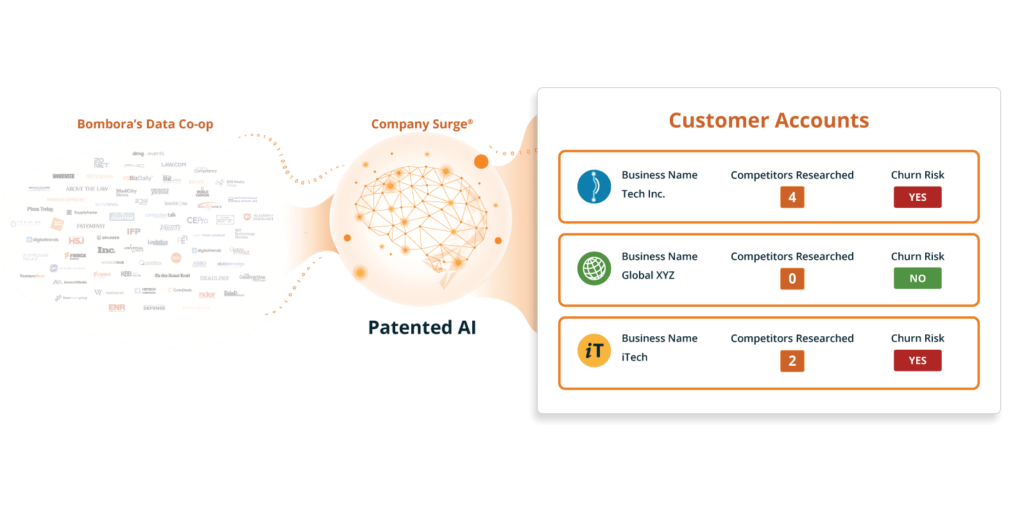
Source: Bombora
Organizations commonly use these insights to prioritize outreach, support account-based marketing (ABM) programs, and focus resources on prospects that are already showing interest in relevant topics.
Feedback from Bombora users highlights both the strengths and limitations of this approach.
In a Reddit discussion comparing intent data providers, one user described Bombora:

Source: Reddit
At the same time, several users noted that intent data should be treated as a signal rather than proof of purchase intent.
One Reddit user pointed out that because intent data must be collected, processed, and scored before delivery, some signals may already be several weeks old by the time they reach sales and marketing teams.
“They collect the data from their co-op publisher network. They process the data, and they are segmenting these companies into various grades of intent. When you go to activate the intent, it probably is already a few weeks old, if not a few months old.”
Overall, Bombora is a strong option if you want insight into what companies are researching before they become inbound leads.
Just keep in mind that intent data tends to be most valuable when combined with company, contact, CRM, or sales intelligence data rather than used on its own.
Bombora’s pricing is not publicly available, so you’ll need to contact them directly for a custom quote.
Sometimes the data you need doesn’t exist in a ready-made database. That’s where TAGX stands out.
Instead of focusing on a specific type of business, company, or intent data, TAGX specializes in custom data collection services and web scraping solutions.
Source: TAGX
The company helps organizations gather, structure, and enrich data from a wide range of online sources, making it a good fit for businesses that need datasets tailored to a specific project or use case.
Its offerings cover everything from e-commerce, jobs, and financial markets to real estate, competitor intelligence, customer sentiment, and AI training data.
For example, TAGX’s Ecommerce Data API can provide product descriptions, pricing information, customer reviews, inventory levels, sales rankings, promotions, and competitor insights collected from major online marketplaces.
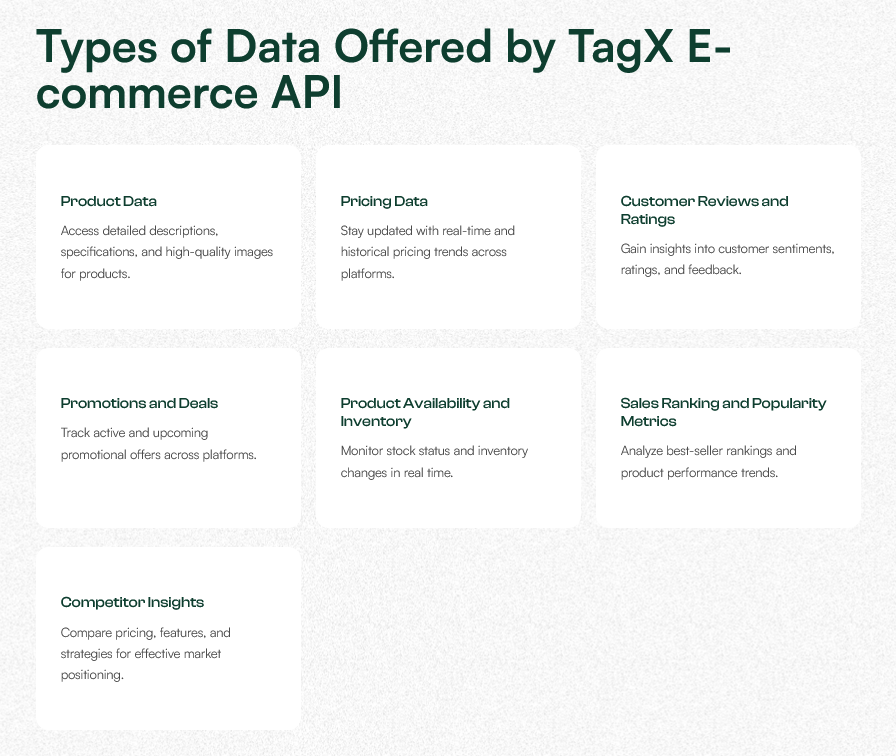
Source: TAGX
This makes TAGX particularly useful if you’re working on market research, competitive intelligence, analytics, AI development, or data-driven product development.
Another advantage is the variety of services available beyond data collection.
TAGX also offers data annotation, sentiment analysis, competitor analysis, lead generation data, and support for generative AI initiatives, allowing organizations to combine multiple data needs through a single provider.
The company states that it uses automated data collection, validation processes, manual quality checks, and regular updates to maintain data accuracy.
However, they don’t provide detailed information about the methodology.
Pricing is customized based on the datasets, APIs, and services you require.
If you need highly specific data that isn’t readily available through traditional providers, TAGX is worth exploring.
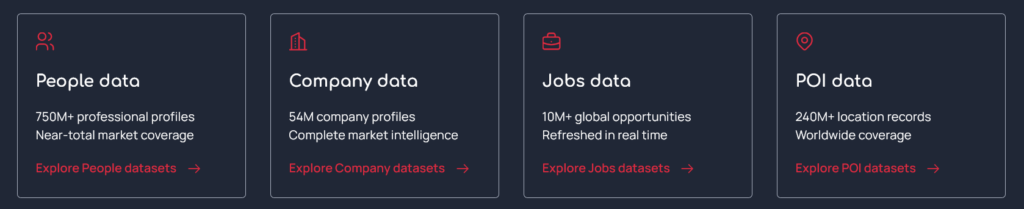
Xverum is best for organizations that need large-scale people, company, jobs, and location datasets delivered through APIs or bulk data feeds.
Its portfolio includes more than 750 million professional profiles, 50+ million company records, 240+ million points of interest (POIs), and millions of job listings that are refreshed continuously.
Source: Xverum
The company also offers data on hiring activity, company growth, and career movements, making it useful for recruiting, sales intelligence, workforce analytics, and market research.
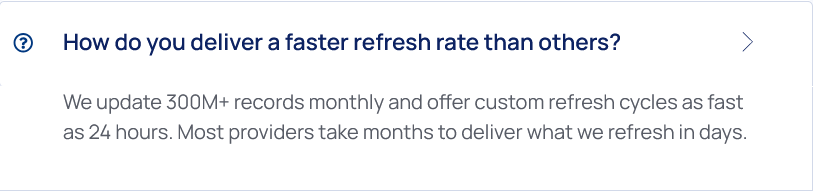
One of Xverum’s biggest strengths is its refresh frequency.
The company claims updates as fast as every 24 hours for some datasets and hundreds of millions of attribute updates every month.
Source: Xverum
Data is delivered in formats such as JSON and Parquet, making it easy to integrate into existing data pipelines and applications.
Compared to providers such as Veridion, which focus on ready-to-use company intelligence, Xverum is more geared toward technical teams that want raw, structured data they can integrate directly into their own products and workflows.
This makes it particularly appealing to AI, HR tech, sales tech, and analytics companies.
One thing worth keeping in mind is that Xverum has relatively few independent customer reviews compared to some of the more established providers on this list.
As a result, it can be harder to evaluate user satisfaction and data quality through third-party sources alone.
Pricing is not publicly available, though third-party sources suggest plans start at roughly $900–$1,000 per month.
A company’s website, mobile apps, hiring activity, and technology stack can reveal a lot about where it’s investing and how it operates.
That’s the type of intelligence MixRank specializes in.
The company collects and analyzes data from websites, mobile apps, advertising networks, social platforms, and other online sources.
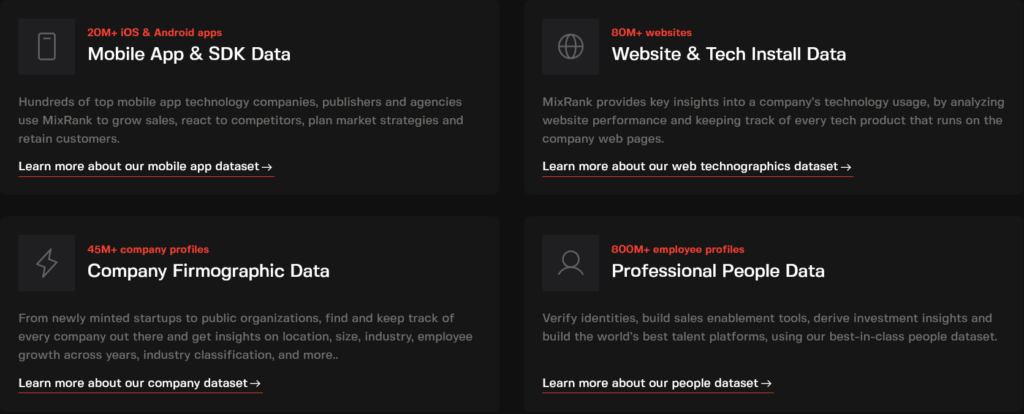
According to MixRank, it processes more than 3 petabytes of data every month and maintains datasets covering over 800 million professional profiles, 70 million companies, 1.2 billion job postings, and hundreds of millions of websites.
Source: MixRank
While MixRank offers company, people, and job datasets, its strongest differentiator is its focus on technographic and competitive intelligence data.
In addition to basic company information, the platform helps you understand a company’s digital footprint:
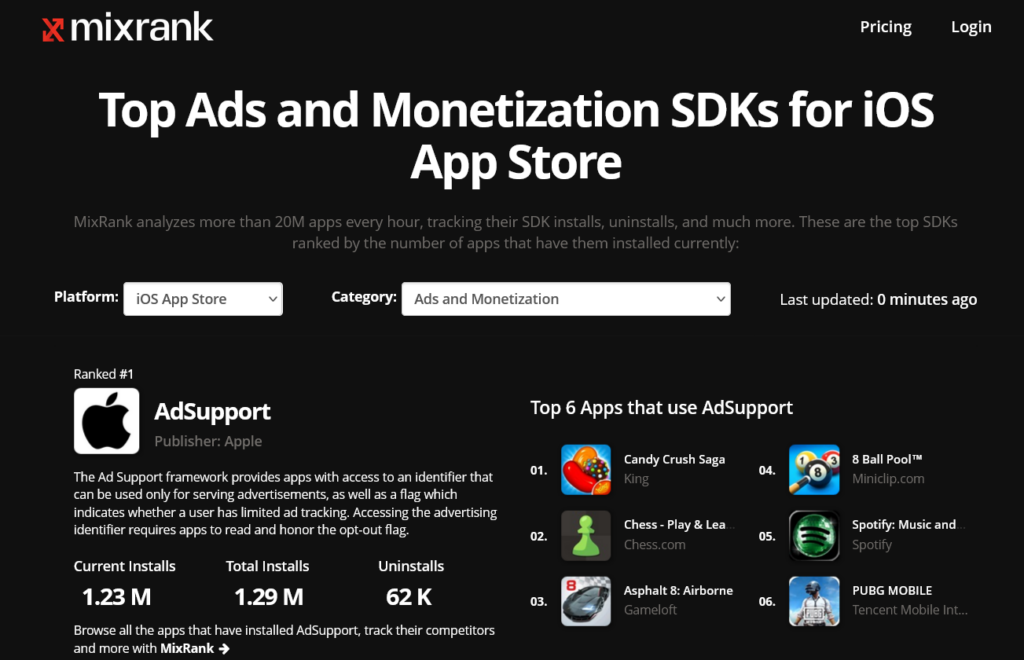
One particularly unique capability is MixRank’s mobile app and SDK intelligence database.
MixRank analyzes more than 20 million mobile apps and tracks the SDKs, analytics tools, advertising technologies, and other third-party services used within them.
Source: MixRank
This can help investors, product teams, adtech companies, and competitive intelligence professionals identify technology adoption trends, evaluate competitors, and uncover potential partnership opportunities.
MixRank also provides web technographic data, allowing you to identify the technologies used across hundreds of millions of websites.
If you’re building prospect lists, researching markets, or monitoring competitors, this type of information can provide valuable context that traditional company databases often don’t capture.
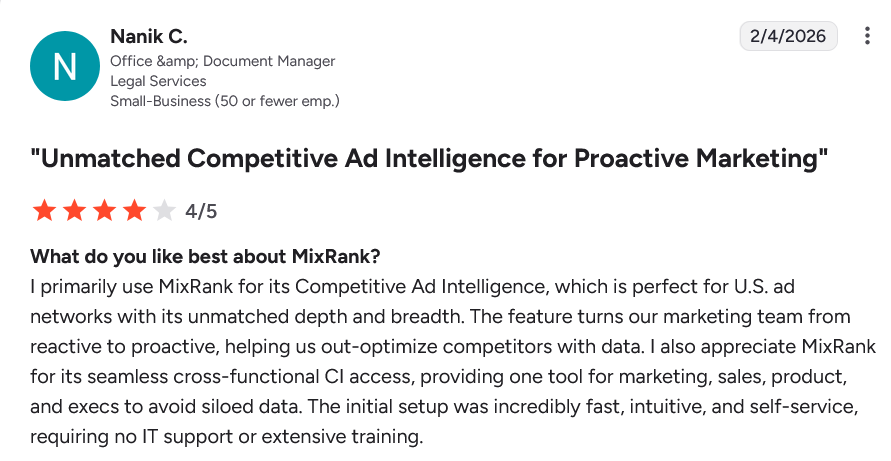
Customer reviews highlight the platform’s competitive intelligence capabilities.
Source: G2
That said, some users point out that while MixRank excels at showing what competitors are doing, it offers less visibility into how successful those activities are, particularly when it comes to conversion rates or other performance metrics.
“While I can see what competitors are running, there’s no clear way to gauge how well their ads are performing. I have to guess based on the longevity of a creative, like assuming a 6+ week ad is doing well.”
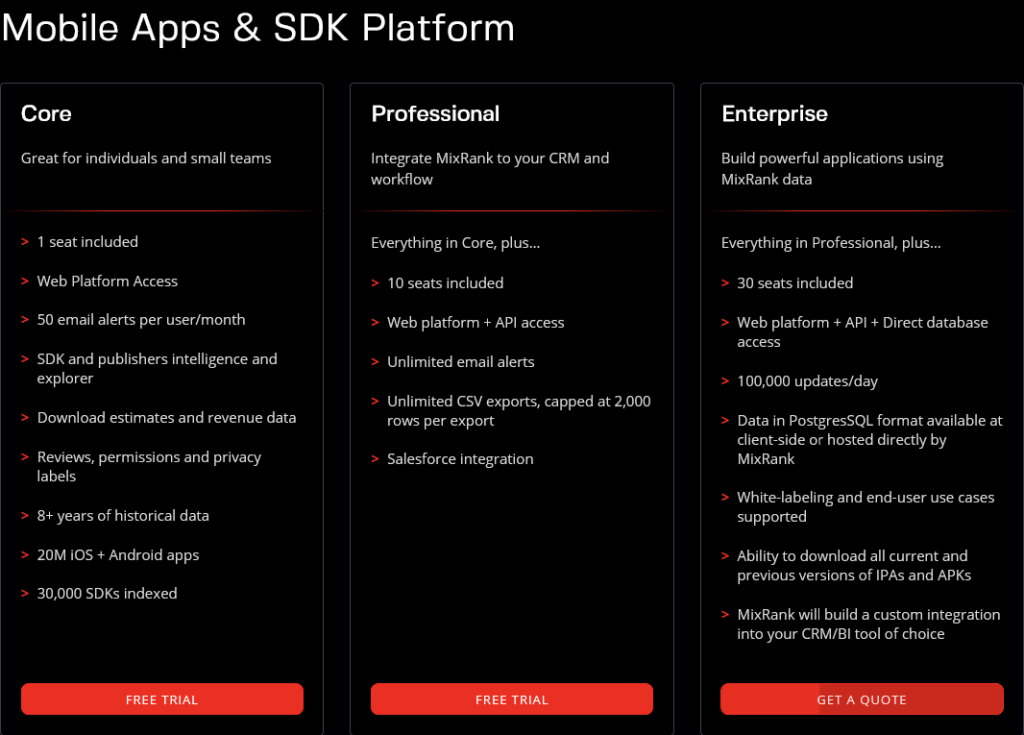
Unlike some providers on this list that require a custom quote for everything, MixRank publishes pricing for several of its products.
API plans start at around $1,000 per month, while larger company, people, and job datasets are priced based on your specific requirements.
If you’re interested in the company’s mobile app and SDK intelligence platform, plans range from small-team offerings to enterprise packages with API access, direct database delivery, and custom integrations.
Source: MixRank
Overall, MixRank is worth considering if you want to understand the technologies companies use, enrich your own datasets, monitor competitors, or build products powered by technographic and digital intelligence data.
After reviewing these providers, one thing is clear: there is no single “best” global data collection company.
The right choice depends entirely on the type of data you’re looking for and what you plan to do with it.
If you need supplier and company intelligence, you’ll likely gravitate toward Veridion. If you’re focused on buyer intent, Bombora may be a better fit. And if understanding technologies, apps, and digital ecosystems is your goal, MixRank stands out.
The good news is that you don’t need to evaluate every data provider on the market.
Start with your use case, identify the type of data that will help you make better decisions, and then choose the provider that specializes in that area.
That’s where you’ll find the greatest value.