



Blog
How to Collect E-Commerce Market Intelligence
By: Auras Tanase -
24 June 2026


We love our data, and now that you're here, you're one step closer to loving it too.
A wide sample of data, so you can explore what is possible with our data
Choose ->
built with procurement in mind. Focused on manufacturers, products and more
Choose ->
built with insurance in mind. Focused on classifications, business activity tags and more
Choose ->
built with sustainability in mind. Focused on sustainability commitments, and environmental and social governance insights.
Choose ->
built with strategic insights in mind. Focused on market trends, competitor analysis, and industry-specific data
Choose ->

Keep up to date with our technology, what our clients are doing and get interesting monthly market insights.

Key Takeaways:
Global e-commerce retail sales are projected to reach $7.88 trillion in 2028. In a market that large, which shows no signs of slowing down, flying blind isn’t an option.
Here, market intelligence should be your North Star. Treat it as your lens to focus on a particular goal your company has set.
But, crucially, you can never opt for a quantity-over-quality approach.
Every step of the way, you need purpose. The right data, collected in the right order, with a clear idea behind it.
Here’s how to do it.
Before you collect a single data point, you need to know what you’re actually trying to find out.
This sounds obvious. But in practice, it’s the step most teams skip, and by far the one that causes the most problems downstream.
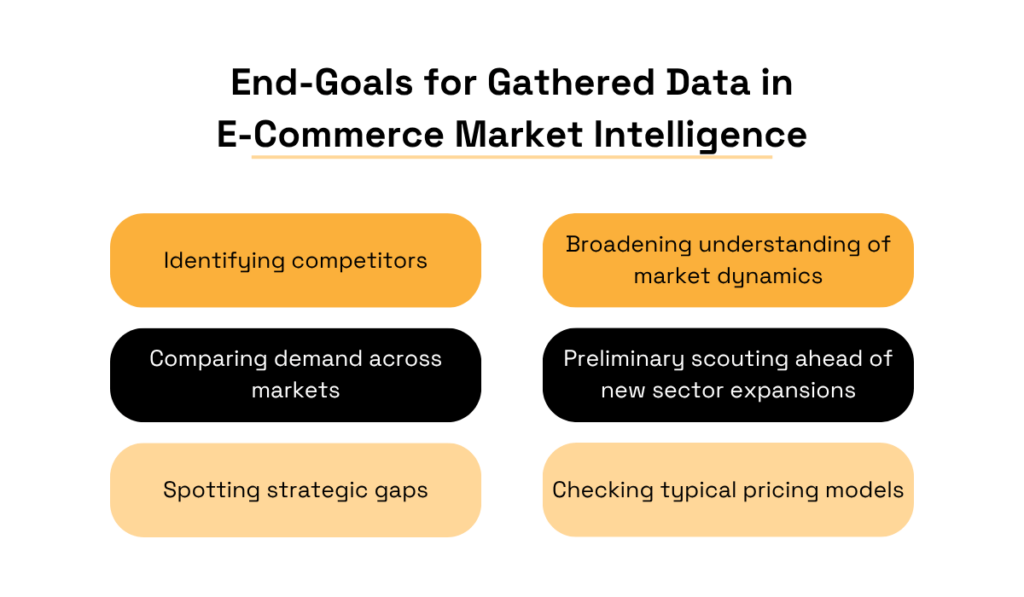
Gathering market intelligence in e-commerce can serve a wide range of goals, such as:
Source: Veridion
Each of these requires a different kind of data, sourced from different places, interpreted through a different lens.
Without a defined objective, you risk drowning in a sea of directionless information. A soup of data that you don’t know what to do with.
This phenomenon also has its own name: data overload. Surprisingly, it’s quite a common problem in e-commerce research.
A report by TheyDo claims that 50% of executives feel overwhelmed by the endless swaths of data and dashboards, and as many as 77% don’t ever actually dig deeper to question their veracity.
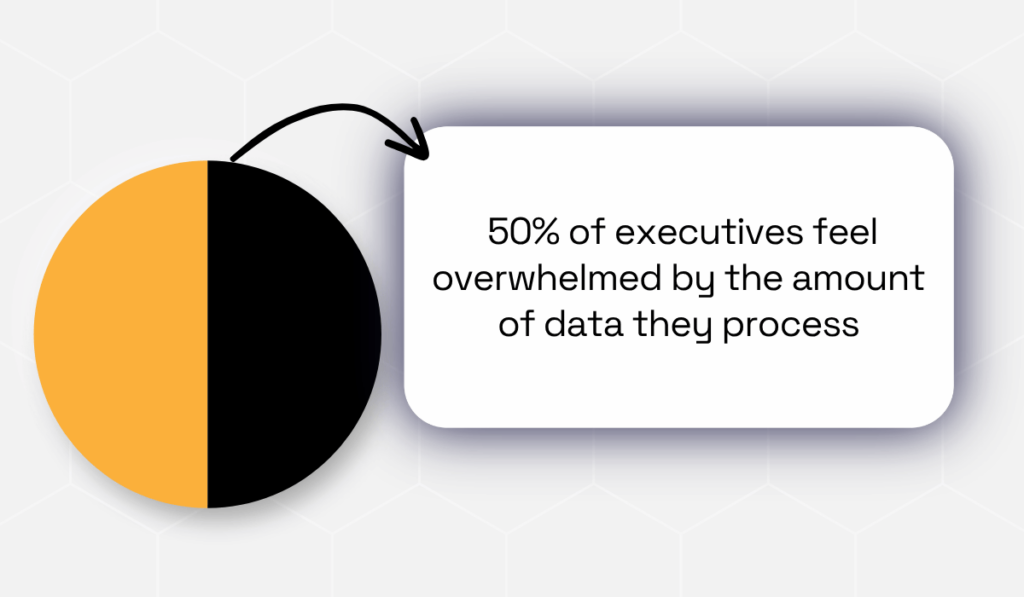
Illustration: Veridion / Data: TheyDo
When the goal is vague, the instinct is to gather everything and figure out what matters later.
You’d think that the more info you have, the clearer the picture.
But, somewhat counterintuitively, this approach often results in more workload instead.
More time and resources have to be assigned to sorting through the data than it took to collect, and the end result often produces insights that lack the necessary sharpness needed to translate into deliberate action.
The fix is to start with a focused research question. Not:
“What’s happening in our market?”
Questions of such a nature are simply far too general.
Instead, you need to zoom in on your issue more specifically:
“What pricing strategies are mid-market competitors in this category using, and how do they vary by region?”
See the difference?
The more specific the question, the more useful the data you collect in response to it.
It also helps to define success upfront.
Anchoring your intelligence effort to a concrete outcome (or several) keeps the process disciplined and makes it far easier to know when you’re done.
With your objective defined, the natural place to start your research is with the competition.
Competitor analysis gives you the lay of the land.
It answers the questions you need answered before anything else: who are the key players in this space, how are they positioned, how big are they, and what exactly do they offer?
Without that baseline, everything else you research lacks context. In turn, this means you’re making it harder for yourself to capitalize on the popularity the market currently enjoys.
E-commerce sales are steadily growing. eMarketer predicts that by 2028, they will reach nearly $8 trillion per year.
Expert voices resonate with this data as well. As stated by Zia Daniell Wigder, eMarketer’s Chief Content Officer:
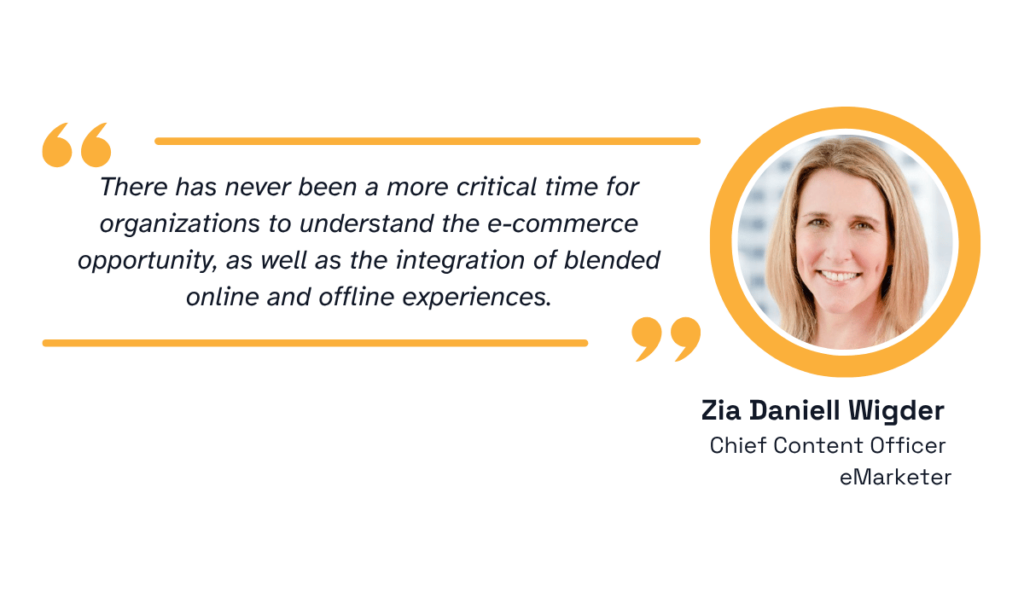
Illustration: Veridion / Quote: Business Wire
The bottom line: you can be absolutely certain that if you’re not taking advantage of what information is out there to narrow down your research goals and develop targeted strategies, then your competitors likely have a leg up on you.
And they are cashing in on this market while leaving you at a disadvantage.
The solution requires implementing simple methodologies.
Start by identifying the competitors that are most relevant to your objective. Depending on your goal, that might mean several different things:
A broad initial sweep is more useful than a targeted one. As long as you stay thorough, you can always narrow the field later.
From there, you want to build out profiles.
For each competitor, you’re looking to understand their core product and service offering, the markets and customer segments they serve, their industry positioning, their scale, and any risk or compliance indicators that might be relevant to how you interpret their moves.
This is where a platform like Veridion becomes useful.
Rather than manually piecing together competitor profiles from websites and public records, Veridion provides structured B2B data.
Company profiles, industry classifications, product and service portfolios, and ESG performance data – you gain access to all of that and more across a vast universe of companies, including smaller players that don’t always surface through conventional research.
Source: Veridion
For teams working at scale or entering markets where the competitive landscape isn’t well-documented, that kind of comprehensive, pre-structured market intelligence data is invaluable.
It significantly compresses the time it takes to move from “who’s out there” to “here’s what they’re doing.”
The output of this step should be a working competitive map: a clear, organized view of who the players are and how they relate to each other.
That map becomes the reference point for every step that follows.
Competitor data tells you what the market looks like. Consumer data tells you what it actually wants, and those two points are often further apart than you’d expect.
This step is about getting as close to the unfiltered customer voice as possible.
The most direct place to find it is product reviews.
Customers who share their opinions on products on platforms like Amazon, Trustpilot, and Google are a true gold mine for your operation that you just need to tap into.
Mind you, all of it is essentially market research you didn’t have to commission.
The cherry on top? Since it costs nothing, it’s got virtually infinite ROI.
Data gathered by BazaarVoice shows a 354% conversion rate increase and a 446% revenue increase on product pages with at least one singular review.
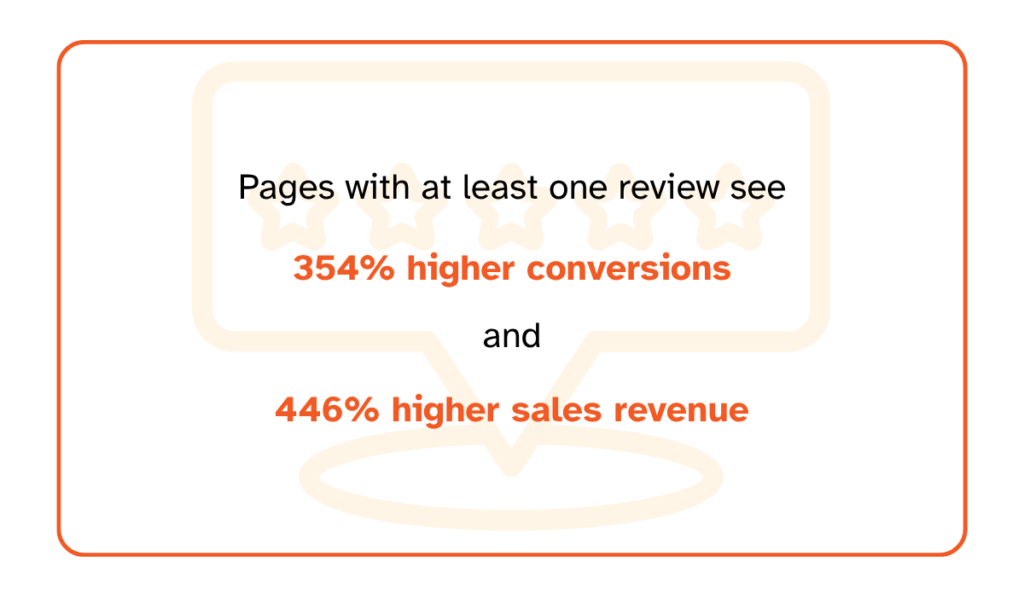
Illustration: Veridion / Data: BazaarVoice
However, it’s important not to focus on the easily scannable data, like numbers or star ratings. The far more useful treasure trove of information lies within the text.
There, you can find tons of priceless qualifying data:
Patterns in that language tell you where the market has unmet needs, and what you could (and should) capitalize on.
Social media and online communities add another layer.
Conversation mining on Reddit threads, niche Facebook groups, and industry forums will lead you to specialized communities where customers speak most candidly, often well before their feedback reaches a brand.
Monitoring relevant conversations across these channels surfaces emerging frustrations and desires early, well before any competitor can pick up on them and implement updates.
The numbers underline how much this matters.
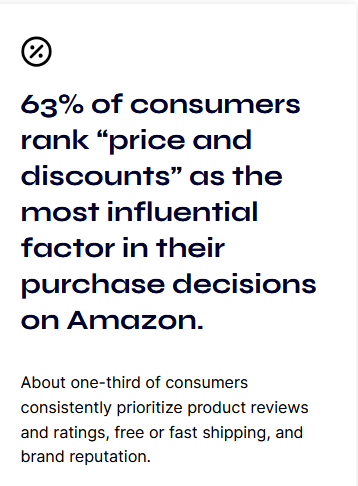
According to Jungle Scout’s 2025 Annual Consumer Trends Report, for 63% of consumers, price remains the most influential factor.
However, a by no means insignificant number – roughly one-third – consistently prioritizes product reviews and ratings as a key factor in purchase decisions.
That’s data you simply can’t ignore.
Source: JungleScout
To summarize, what you’re building as part of this step is a demand map: a clear picture of what customers want based on the current shortcomings of what’s out there.
That map feeds directly into the next step, which we cover below.
You now have data on competitors and consumers.
The next step is to put those two pictures side by side and look for the gaps between them.
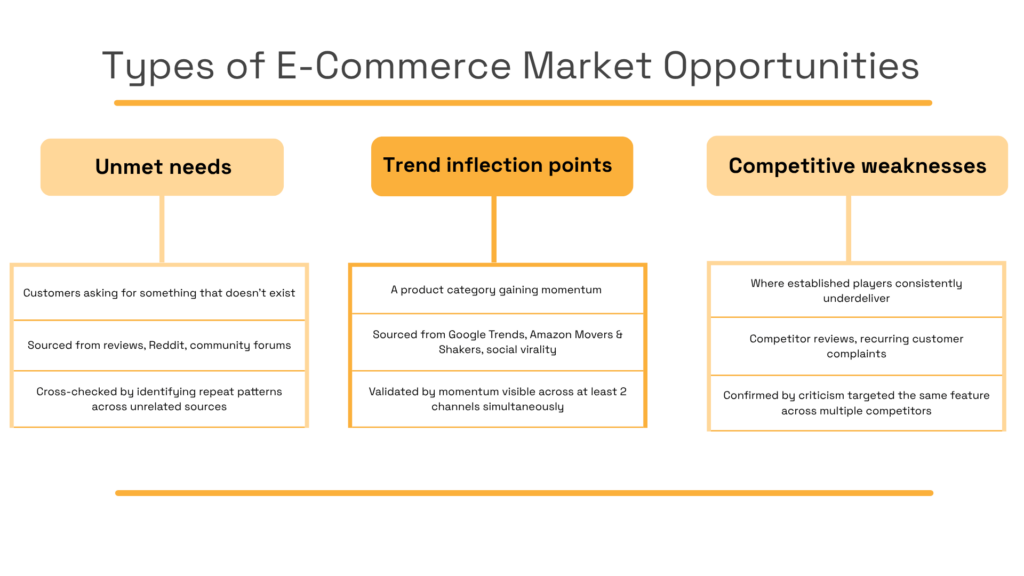
Market opportunities in e-commerce typically show up in one of three forms.
The first is an unmet need. Something customers are clearly asking for, across the aforementioned reviews and communities, that no current competitor addresses well.
By this point, you’ve hopefully identified them, or at least have a rough idea for an angle your company could take to respond to this need in the market.
The second is a trend inflection point.
A product category gaining momentum in search volume, social discussion, or sales data that hasn’t yet attracted serious competition presents a prime opportunity for your company to swoop in and gain a stake among your target.
The third is a competitive weakness.
An area where established players are consistently underperforming, leaving room for a better-executed alternative.
Source: Veridion
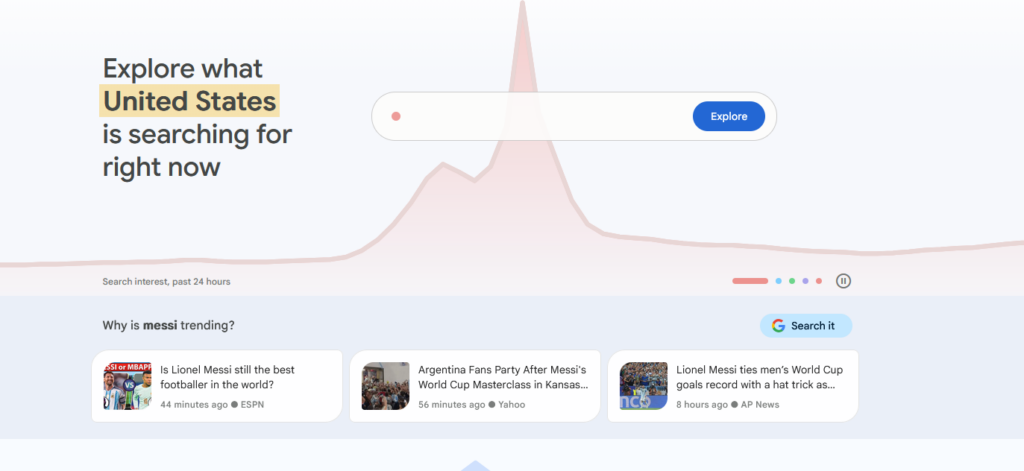
Finding trending products requires tracking signals across multiple channels simultaneously.
For example, Google Trends shows search momentum over time.
Amazon’s Movers and Shakers highlights what’s rising in sales rank.
Social platforms surface what’s getting organic traction before it becomes mainstream.
When the same product or category starts appearing across multiple signals at once, that’s worth paying attention to.
Source: Google Trends
Now, a word of caution on timing. It matters. Tremendously.
The window between “emerging trend” and “saturated category” can be narrow.
The goal isn’t to be first at any cost. Swooping in on a market without gathering proper intelligence first often yields disappointing results.
A far better intelligence strategy would involve identifying opportunities early enough that you can act on them with intent, rather than scrambling to catch up after the market has already moved.
This is precisely what the first three steps are designed to help you accomplish before diving headfirst into action.
By this point, you have a competitive map, a demand map, and a list of opportunities.
The final step is to figure out where you fit, how to articulate it, and how to capture a segment of the market for yourself.
Positioning is the answer to one question: why should a customer choose you over every available alternative?
A strong positioning isn’t a list of features. It’s a clear, specific claim about the value you deliver that no competitor can credibly make in the same way.
To craft that claim, work from the intelligence you’ve already gathered.
The intersection of those three questions is where your positioning lives.
The cost of misalignment can quickly turn your intentional search for data and the answers behind it into an uphill, structurally harder battle.
Get it wrong, and the market itself works against you before you’ve made a single move.
The numbers make that concrete.
According to IRP Commerce data, e-commerce conversion rates vary from 5.11% in Arts and Crafts down to just 0.70% in Baby and Child Products.
That’s a sevenfold difference driven not by effort or ad spend, but by the structural dynamics of the category itself.
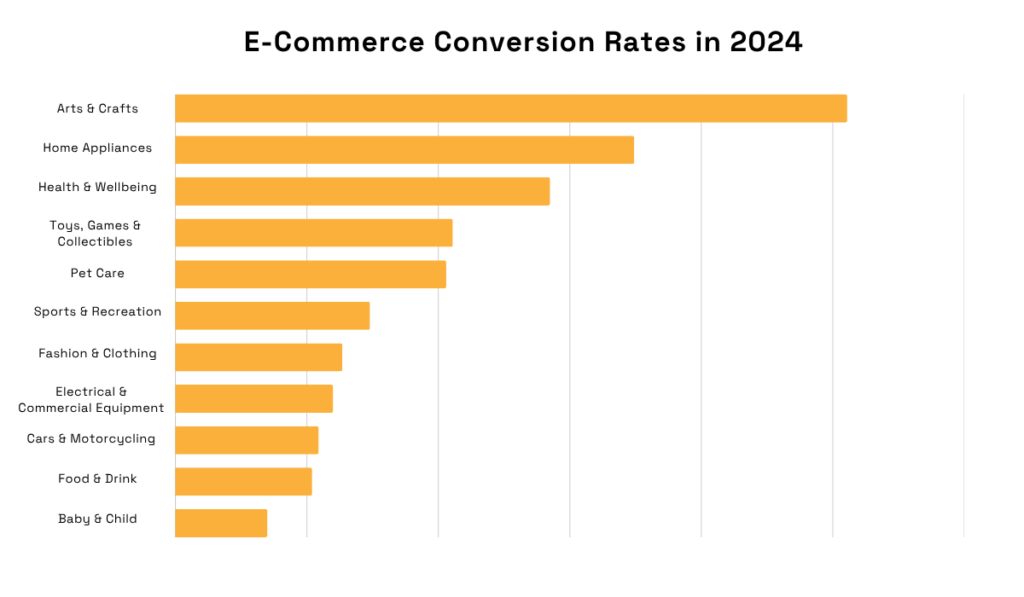
Illustration: Veridion / Data: IRP Commerce
From there, it helps to understand the common strategic options.
Niche positioning means owning a specific, underserved segment with depth rather than breadth.
Value-based positioning means competing on the total benefit delivered relative to price, rather than on price alone.
Premium positioning means staking a claim at the high end of the market. This, however, only works if the product and experience can consistently justify it.
There’s no universally correct choice.
The right positioning strategy depends on your actual strengths, your target segment’s priorities, and the specific gaps your research has uncovered.
What comes out of this step is your unique selling proposition.
That conveys exactly who this service or product benefits, why it’s better than anything else on the market, and why the customer should opt for you instead of the competition.
Your USP becomes the foundation on which everything else is built: messaging, product priorities, pricing, and how you monitor whether the strategy is working over time.
E-commerce market intelligence isn’t a one-time project. Return to this process whenever the market shifts or your questions outpace your current understanding.
Define your objective. Study the competition. Listen to customers, spot the opportunities, and finally, find your position.
Each step builds on the last, and each cycle through the process leaves you with a sharper, more accurate picture of the market than you had before.
The businesses that win in e-commerce aren’t necessarily the biggest or the best-funded.
They’re the ones who know their market better than anyone else. And now, you have the tools to be one of them.