



Blog
Assessing the Operational Disruption Risk for a 3PL Provider
By: Auras Tanase -
22 March 2026


We love our data, and now that you're here, you're one step closer to loving it too.
A wide sample of data, so you can explore what is possible with our data
Choose ->
built with procurement in mind. Focused on manufacturers, products and more
Choose ->
built with insurance in mind. Focused on classifications, business activity tags and more
Choose ->
built with sustainability in mind. Focused on sustainability commitments, and environmental and social governance insights.
Choose ->
built with strategic insights in mind. Focused on market trends, competitor analysis, and industry-specific data
Choose ->

Keep up to date with our technology, what our clients are doing and get interesting monthly market insights.

Key Takeaways:
Your warehouse is ready. Orders are queued.
Then your logistics provider faces a disruption, and suddenly everything goes sideways.
Outsourcing logistics offers clear advantages, but it also concentrates risk outside your control.
To help you mitigate it, this guide will walk you through how to assess your 3PLs’ operational disruption risk systematically.
Let’s dive in.
Most companies can’t afford to continuously assess all 3PLs in their network.
That’s why it’s important to first establish the scope of your assessment.
You can do that by clearly defining which 3PL services are critical to company operations.
These will be the services and providers to focus on.
Critical functions could include the following:
For example, last-mile delivery to customers’ doorsteps might be essential to your operations and thus be in the scope of this assessment.
Administrative functions, on the other hand, might not be.
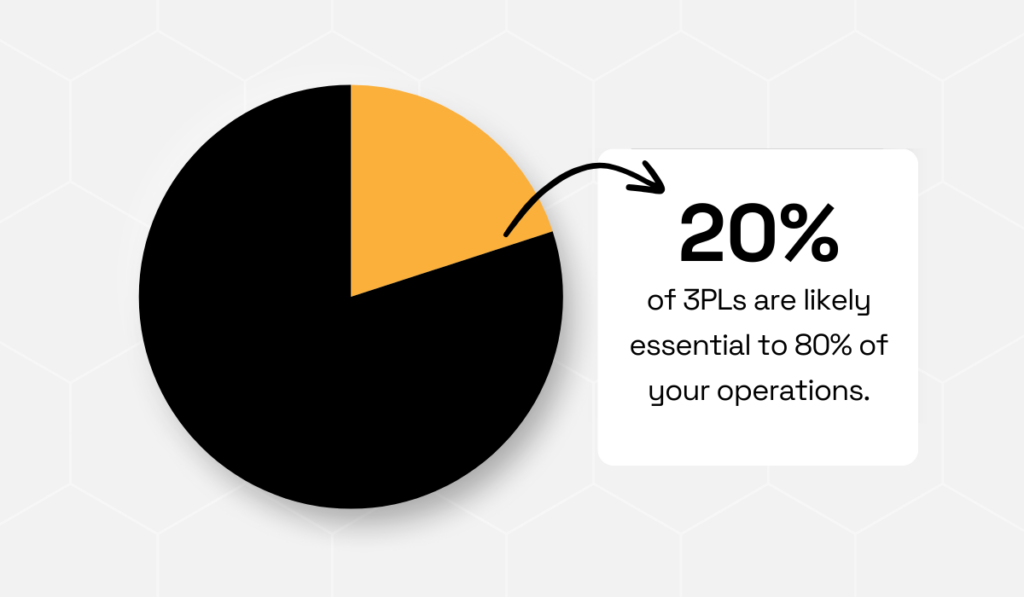
There’s no one-size-fits-all answer, so using the Pareto principle might be helpful.
Since roughly 20% of your 3PLs are responsible for 80% of your operational continuity, you might want to focus on those exclusively.
Source: Veridion
To determine which 3PLs represent those 20%, specify the products, customers, and geographies that depend on each.
Consider asking yourself the following questions:
Answering these questions will help you assess which 3PLs matter most.
Of course, it’s usually those responsible for high-priority or time-sensitive products, serving many customers, and severely impacting specific geographical regions.
Knowing the role of each provider is key to appropriately allocating resources.
Since you probably don’t have unlimited time or assets, you should prioritize those that are most essential.
That way, your efforts will be proportional to business exposure instead of diluted across non-critical services.
Next, map your critical 3PLs’ operational footprint by identifying all locations vital to your operations.
This should include everything from your 3PLs’ warehouses and cross-docks to sorting hubs, ports, and key transportation corridors.
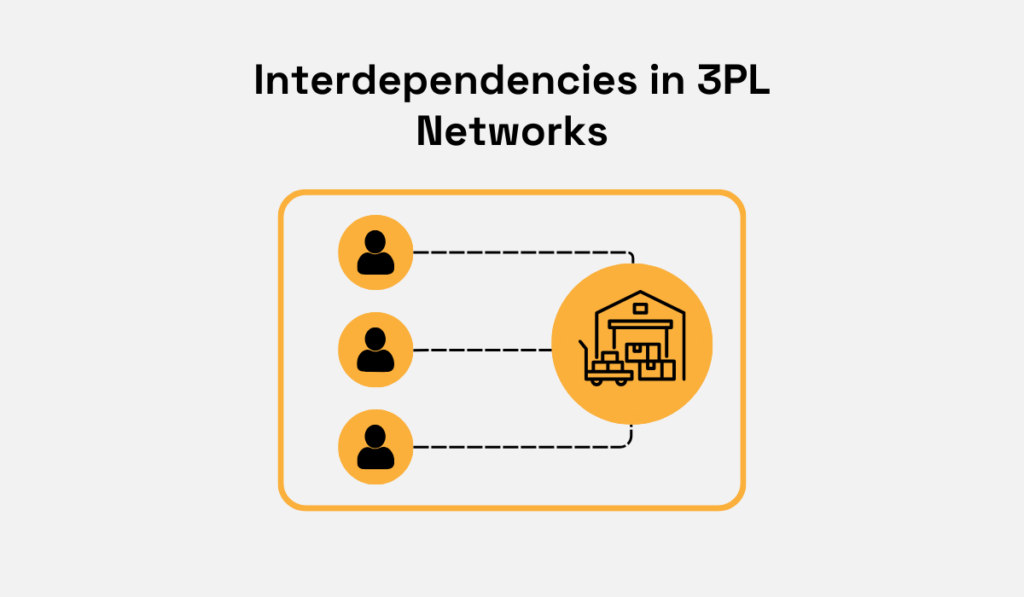
The purpose of this analysis is to reveal hidden concentration risks.
These occur when several services or providers all depend on the same facility.
Source: Veridion
The problem with concentrated 3PL networks is that they’re vulnerable to local disruptions, especially extreme weather or infrastructure failures.
In geographically clustered networks, a single event can simultaneously affect multiple providers.
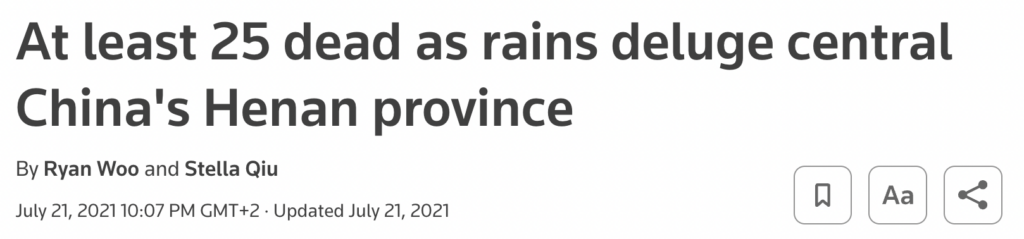
This was starkly illustrated in 2021, when unprecedented floods hit China’s Henan Province.
Source: Reuters
Zhengzhou, Henan’s capital, is a key transportation hub serving as a major intersection for railways, highways, and aviation.
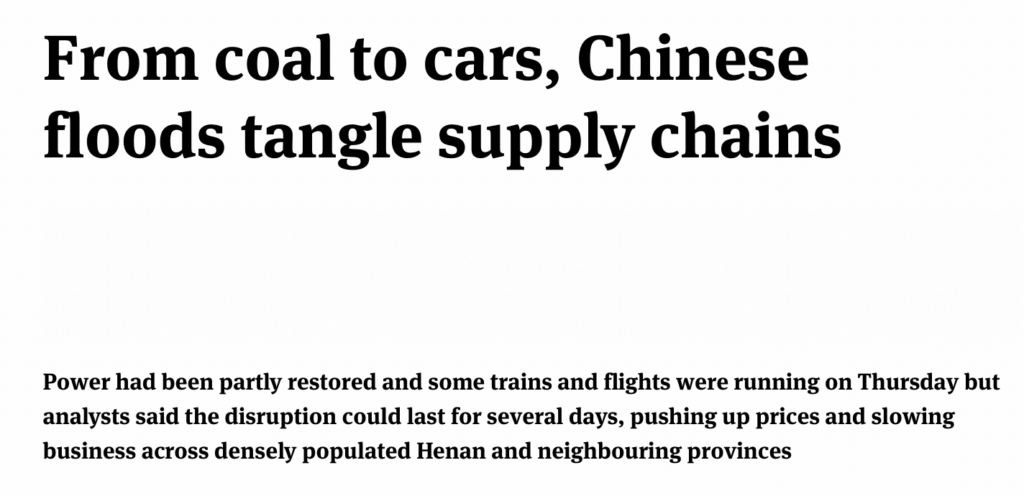
When the 2021 floods hit, logistics across the city ground to a halt, impacting companies from SAIC Motor to firms reliant on coal transport and freight services.
Source: The Business Standards
You can prevent similar, concentration-driven disruptions by regularly collecting and analyzing your 3PLs’ data, with a focus on location intelligence.
A third-party data provider, such as Veridion, can help.
Veridion enriches your existing 3PL data with verified operational footprints, ownership structures, and activity signals.
This helps uncover hidden concentration risks and dependencies that 3PL self-reports might miss.
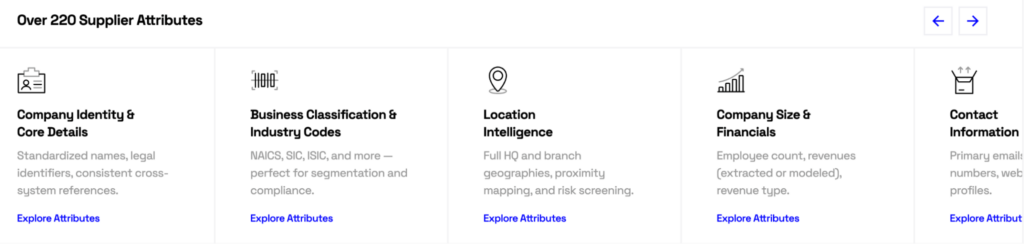
Source: Veridion
As seen above, Veridion tracks 220+ company attributes, allowing organizations to assess exposure to various risks with exceptional precision.
For instance, this external intelligence will help you quickly identify co-located facilities, overlapping service dependencies, and potential single points of failure.
With the scope and footprint mapped, you can move on to the next step: evaluating your dependency on each 3PL’s services.
This will help you determine how easily you could switch or recover if that 3PL failed, or if you were simply disappointed with the service.
Ethan Lemoine, fractional logistics leader, explains that the latter scenario is extremely common.
He highlights the many issues that could arise in 3PL partnerships, arguing they indicate it’s time to leave the provider:
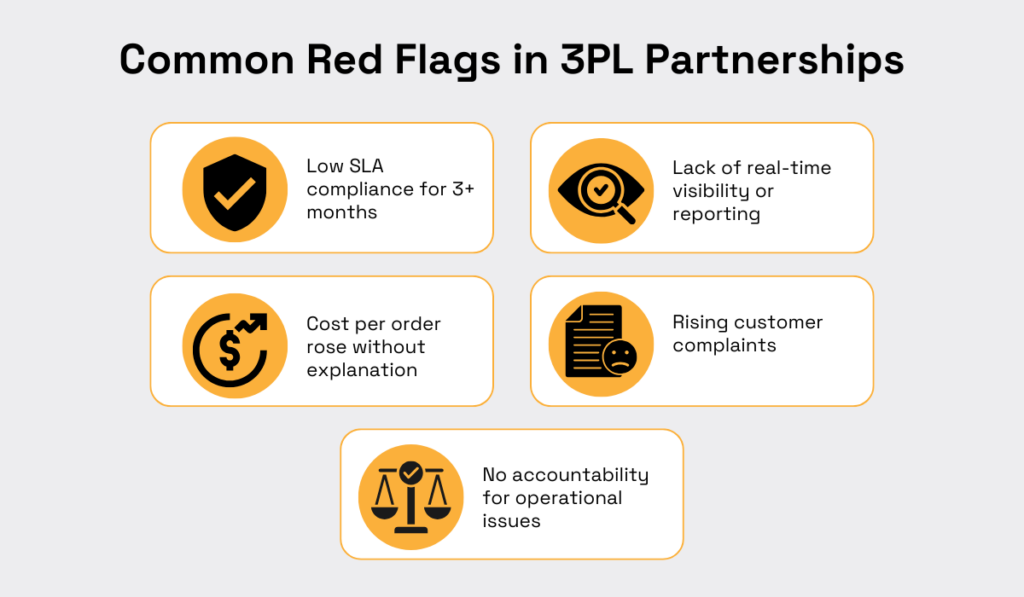
Illustration: Veridion / Data: LinkedIn
However, as Lemoine also points out, many companies delay ending the relationship even when the red flags are all too obvious, and end up spending months trying to patch it instead.
This hesitation often stems from perceived dependency.
In other words, companies might believe they cannot afford to lose a 3PL, even if the partnership isn’t working.
Whether this dependency is real or simply assumed, the result is the same: companies delay decisions and prolong their risk exposure.
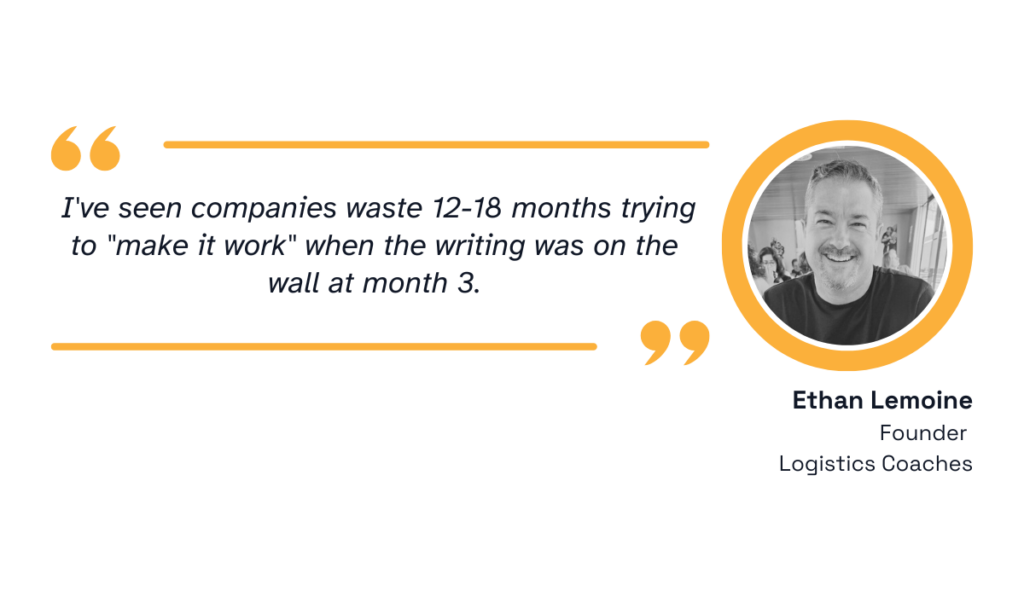
Illustration: Veridion / Quote: LinkedIn
Assessing your current dependency helps ensure you don’t face the same scenario.
Start by honestly evaluating the factors that may deter you from ending the partnership, such as:
An objective analysis will help you distinguish between inconvenience and existential operational risk.
For example, losing a secondary inventory site might slow you down, which is inconvenient.
But it doesn’t pose an existential risk like losing the only node that delivers to a specific region would.
Knowing the difference matters.
The external infrastructure your 3PL relies on can significantly amplify risk.
In 2021, the Suez Canal fiasco made this painfully clear.
A massive container ship ran aground and blocked one of the world’s busiest trade routes for several days.
The impact on 3PLs using Asia-Europe routes was severe, with experts putting the financial toll at $400 million an hour.

Source: LMA Consulting Group
While this particular infrastructure risk was tough to predict, many others can be identified by carefully assessing the potential for various threats.
This can include congestion, aging infrastructure, labor disputes, or geopolitical issues.
The first thing to do is identify the infrastructure your 3PLs rely on.
This could include:
Next, assess the condition or risk for each.
For instance, you could research reports of congestion, planned maintenance or upgrade delays, as well as weather and geopolitical risk.
This analysis should help you determine which critical dependencies require alternatives.
So, the next step is identifying backup routes for major chokepoints.
For example, you might need to plan highway or coastal ship alternatives for rail shippers at risk, or find an alternative airport if the main one shuts down due to upcoming strikes.
Another risk to consider is the workforce challenges your 3PLs may be facing.
The problem is, logistics skills are notoriously hard to hire, so the sector frequently faces staff shortages.
ManpowerGroup’s 2025 survey found that 74% of logistics companies struggle to find talent.
Logistics skills were also ranked the second hardest to find across sectors, surpassed only by IT and data expertise.
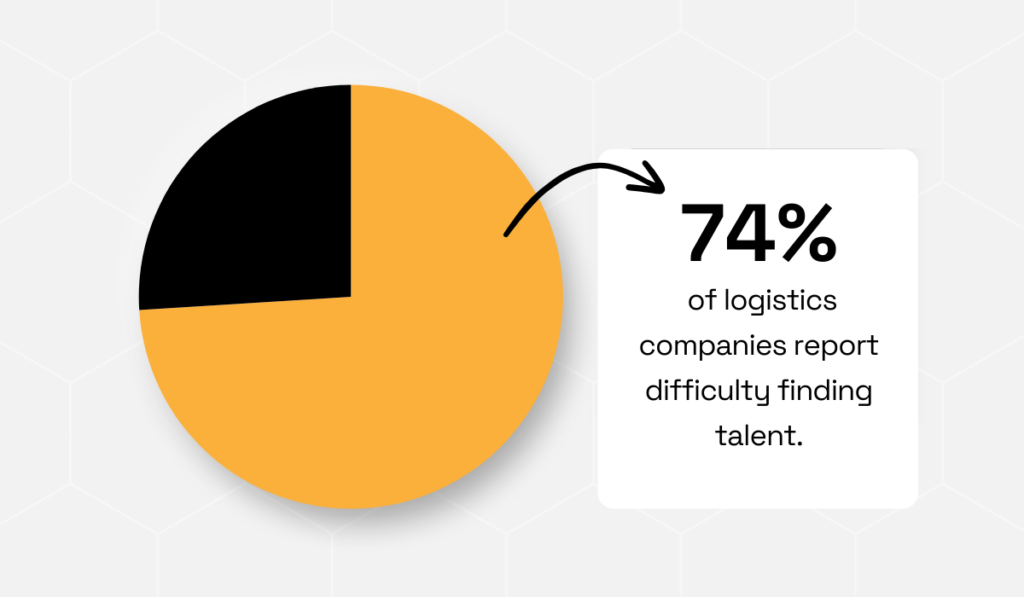
Illustration: Veridion / Data: The ManpowerGroup
But the logistics industry is also fraught with additional workforce risks.
As this factsheet points out, demand for low-cost, flexible logistics has transformed the sector, and not necessarily for the better.
For instance, it resulted in increased reliance on temporary workers and unstable working conditions.
None of these effects are exactly favorable.
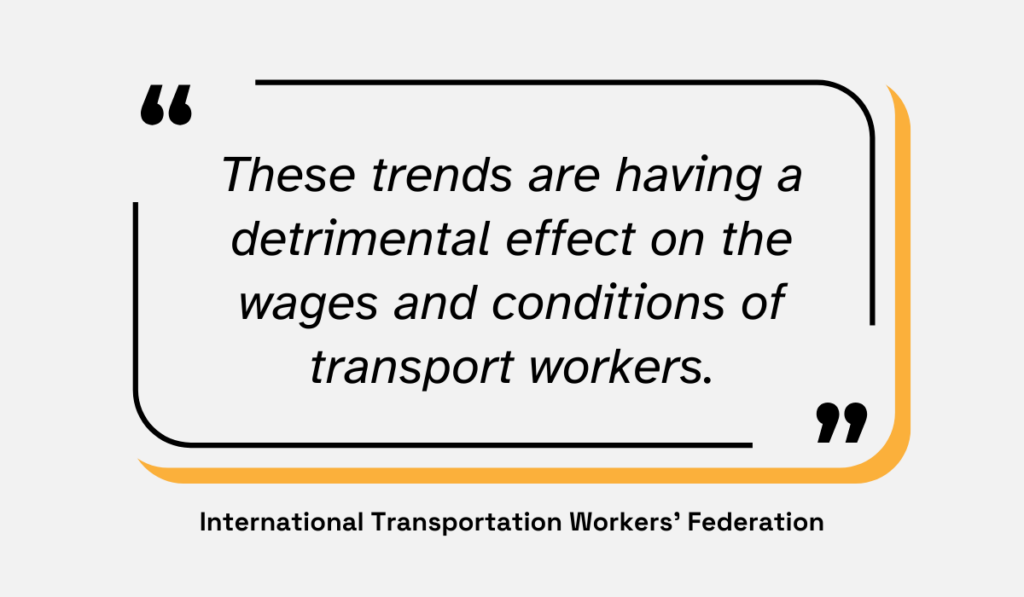
Illustration: Veridion / Quote: International Transportation Workers’ Federation
They aren’t just potentially harmful to workers, but to 3PLs as well.
Unstable employment arrangements and difficult working conditions put many providers at risk of increased turnover, strikes, and operational disruption.
To make matters worse, these challenges can crop up anywhere in the logistics chain.
They don’t need to originate from your 3PL directly to affect your operations.
For instance, in 2025, global logistics was severely disrupted by a four-day strike by customs workers at Mexico’s port.
The disruption didn’t stem from the 3PLs themselves, but it did come from the infrastructure they relied on.
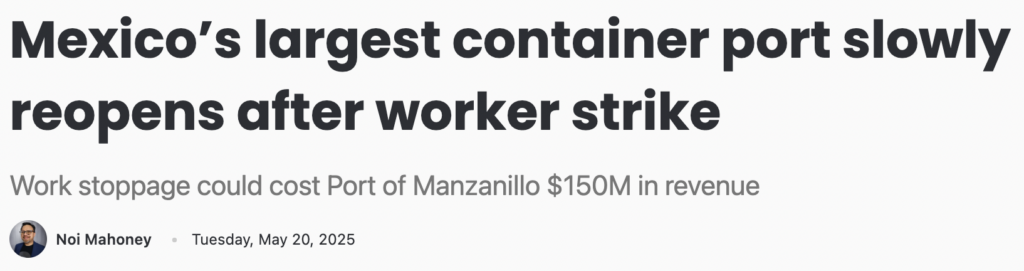
Source: FreightWaves
With that in mind, it’s wise to assess workforce risks across your entire logistics chain.
You can start by examining your 3PLs’ labor models.
Pay special attention to common sources of disruption, such as:
After this initial assessment, broaden your view to the labor behind their infrastructure. This should help prepare you for scenarios like the one at Port of Manzanillo.
Again, you might not be able to predict all risks, but even a high-level check should help highlight the weak points.
You can then develop contingency plans or ask your 3PLs to make changes you deem necessary.
Now that you’ve considered the risks, it’s time to look at how your 3PLs have historically responded to those that have materialized.
Analyzing their past crisis behavior will help you predict future responses with a fair degree of accuracy.
For example, did the 3PL completely fail under pressure, or did it turn the situation into an opportunity?
As Björn Hartong, Global Head of Supply Chain and Marine Solutions at Zurich Resilience Solutions, notes, challenges can actually provide a chance to build more holistic, long-term resilience.
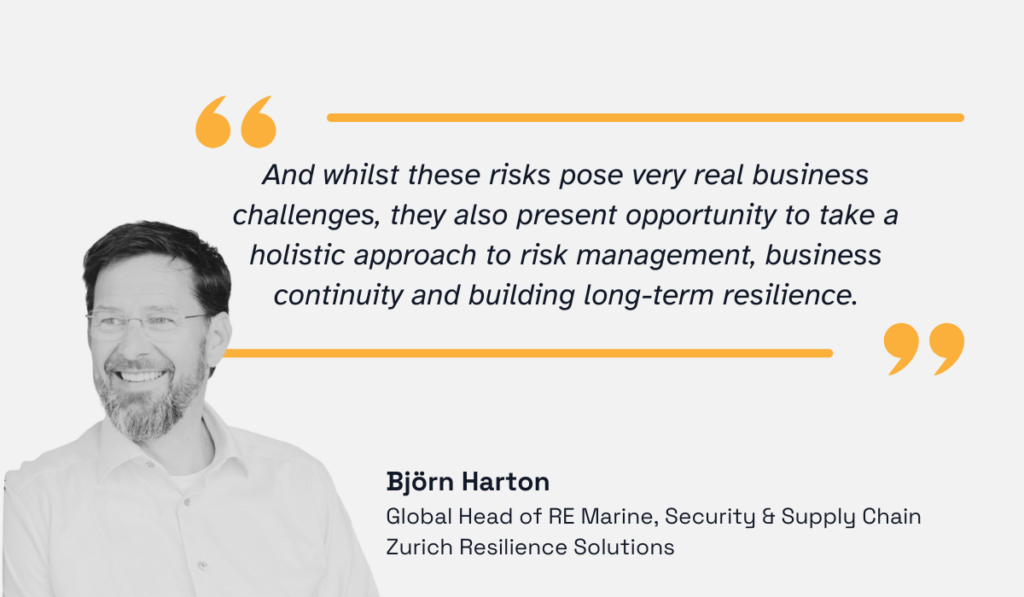
Illustration: Veridion / Quote: The BCI
To assess a 3PL’s incident response history, review the past disruptions that have affected them.
Here are some events to watch out for:
Of course, what you’re actually assessing is not whether these events occurred, but how the 3PL responded to them.
The former is beyond your 3PL’s control, while the latter is not.
Focus especially on the 3PL’s recovery time, transparency, and communication effectiveness.
FedEx can teach us what these should look like.
In 2017, the company faced a crisis when a so-called NotPetya cyberattack paralyzed its IT systems and caused multi-regional delays.
While the situation was extremely difficult and chaotic, the company managed to use it to its advantage as much as possible.
What they demonstrated was top-class crisis management.
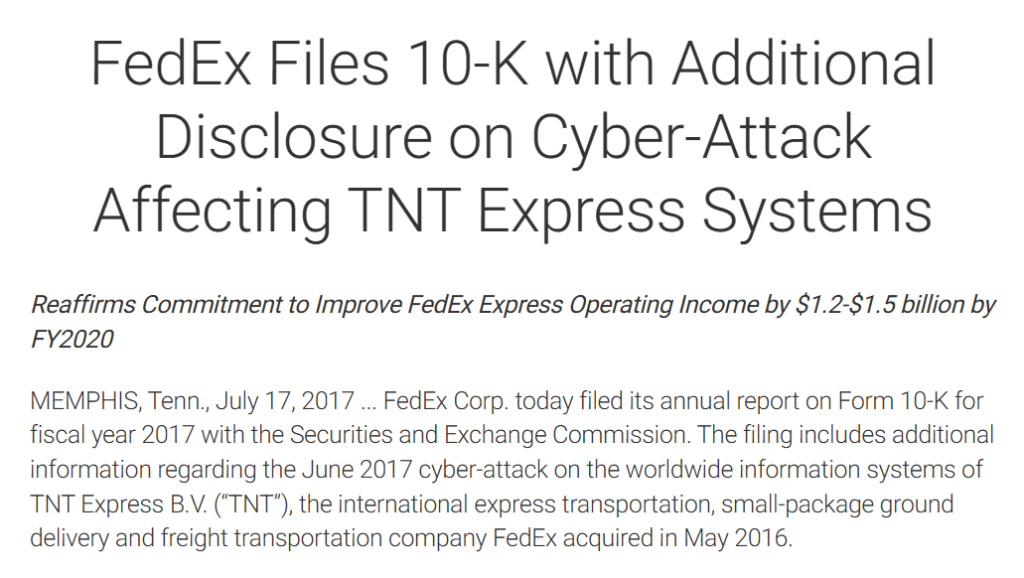
Source: FedEx
In its press release, FedEx openly discussed the impact of the cyberattack and acknowledged that resolution details were still uncertain.
For instance, they noted:
“We cannot yet estimate how long it will take to restore the systems that were impacted, and it is reasonably possible that TNT will be unable to fully restore all of the affected systems and recover all of the critical business data that was encrypted by the virus.”
Additionally, the company highlights that contingency plans were implemented immediately after the attack, shifting to manual processes where needed.
Later, the company also took steps to rebuild its technical infrastructure for resilience.
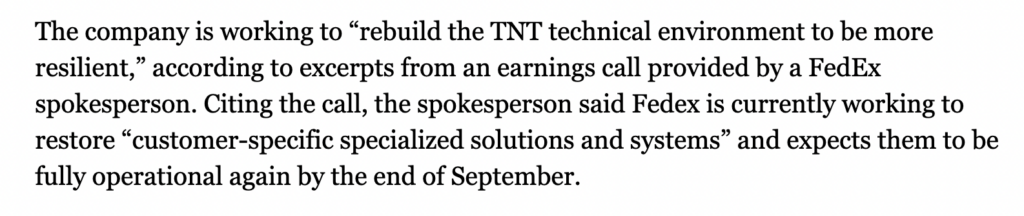
Source: CyberScoop
Incidents like this can never be fully prevented.
So, the next-best outcome is having a provider that responds with transparency and decisive action.
If your 3PLs show the opposite behavior, it may be time to reconsider your relationship.
So far, we have analyzed 3PLs’ risk exposure and incident response.
Now, it’s time to assess whether they’ll be able to survive the risks when, not if, they materialize.
Inevitably, that means looking at their finances: the bedrock for surviving a shock, investing in recovery, and maintaining service levels during crises.
As Peter Davis, VP and General Manager of Fulfillment and Chemical at WSI, notes, 3PLs’ financial stability is critical even outside periods of disruption.
The business is capital-intensive, Davis emphasizes, so sustained profitability is necessary even in normal operating conditions.
Otherwise, you’re just waiting for a crisis to happen.
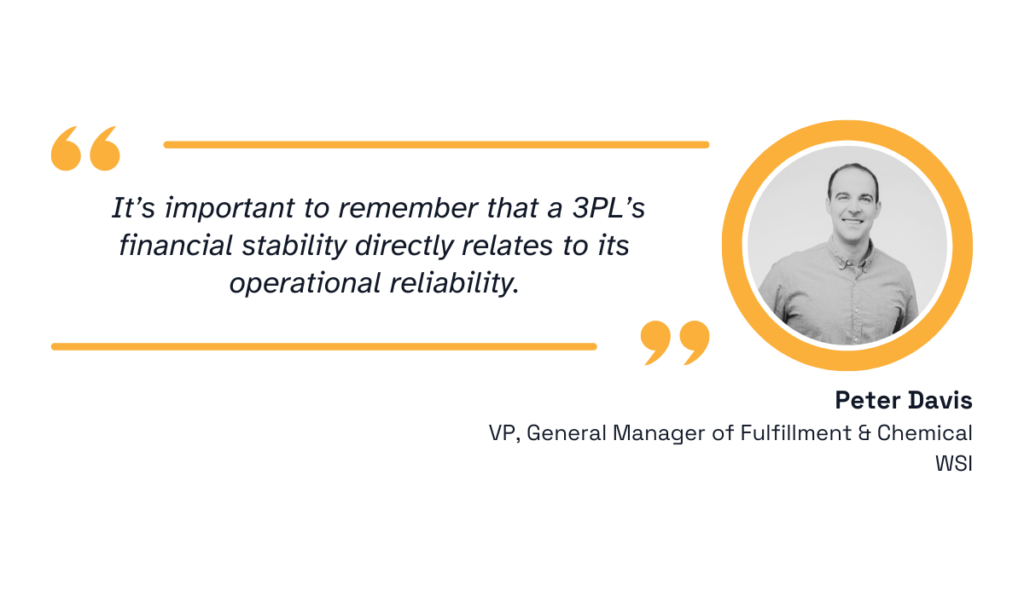
Illustration: Veridion / Quote: Inbound Logistics
In times of disruptions, however, financial stability becomes even more important.
Capital is often the key to weathering downtime.
For instance, financially stable providers will be able to pay overtime, rent extra trucks, or invest in repairs if needed.
Financially strained ones, on the other hand, may falter.
So, at this stage, you want to evaluate your 3PLs’ balance sheets.
Key metrics include:
If revenue is shrinking or debt is rising, 3PLs might lack the cushion needed for disaster recovery.
For even better insights, pair this analysis with a look at your 3PLs’ insurance coverage.
Review it for property damage, business interruption, liability, and cyber risks, and verify that your own losses would be compensated if needed.
If that’s not the case, you might want to insist on more customer-focused coverage.
We’ve walked through the full process for assessing your 3PLs’ operational disruption risk.
By following these steps, you’ll achieve a comprehensive, accurate assessment and, more importantly, identify actionable insights you can implement immediately.
All that’s left is to put this process into practice.
Start by defining the scope of your assessment and prioritizing the providers that matter most.
With it, you’ll have gained the clarity you need to strengthen your resilience.