



Blog
AI for B2B Data Enrichment: Definition, Importance, and Challenges
By: Auras Tanase -
24 January 2026


We love our data, and now that you're here, you're one step closer to loving it too.
A wide sample of data, so you can explore what is possible with our data
Choose ->
built with procurement in mind. Focused on manufacturers, products and more
Choose ->
built with insurance in mind. Focused on classifications, business activity tags and more
Choose ->
built with sustainability in mind. Focused on sustainability commitments, and environmental and social governance insights.
Choose ->
built with strategic insights in mind. Focused on market trends, competitor analysis, and industry-specific data
Choose ->

Keep up to date with our technology, what our clients are doing and get interesting monthly market insights.

Key Takeaways:
The question How to find data that’ll help us make important business decisions? turned into How to make relevant use of all the data we’ve collected? in less than a decade.
The meteoric advancement of artificial intelligence has made it possible to find a solution for this issue.
Enter data enrichment with AI.
In this article, we’ll take an in-depth look at how AI can improve your existing data in a way that brings efficient workflows and success into your business.
AI B2B data enrichment uses artificial intelligence and machine learning to make existing business data better.
It fills in the gaps made by incomplete, inconsistent, or outdated data.
It pulls information from lots of sources, such as company websites, filings, product catalogs, ESG reports, and social media, and brings it together in a way that makes sense.
It also keeps profiles updated over time, so you aren’t working with outdated data.
This matters because enriched data leads to better business outcomes.
For example, according to McKinsey, teams that blend personalized experiences with generative AI are 1.7x more likely to grow market share than those that don’t.
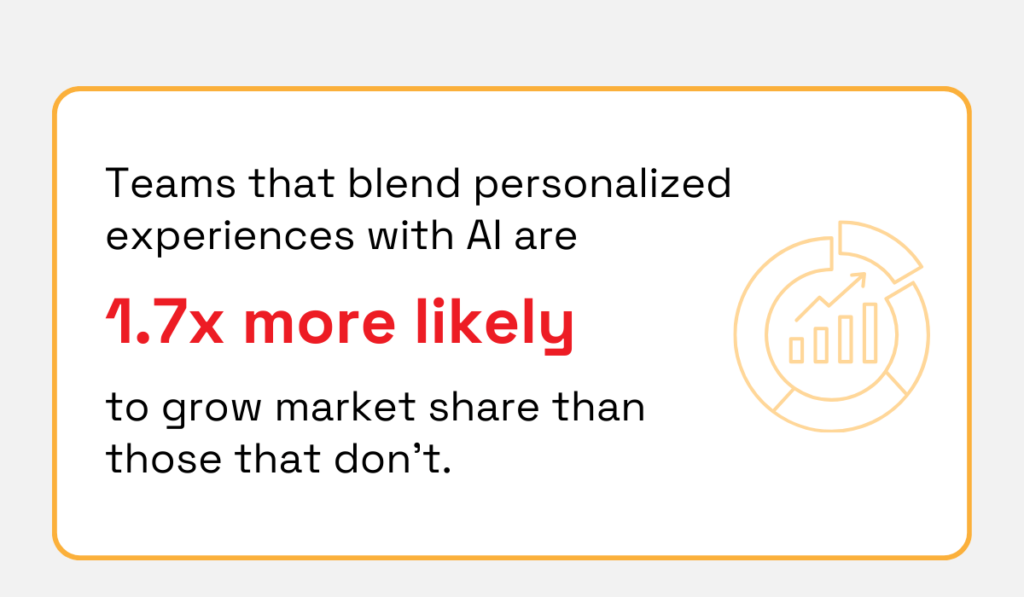
Illustration: Veridion / Data: McKinsey
AI is such a game-changer because it can, among other things, spot patterns humans might miss.
It can link related companies, detect new executive changes, or refresh location, revenue, and product information without human input.
That saves time, speeds up the decision-making, and therefore helps in getting better business results.
But AI can only work its “magic” if it’s fed good, quality data. More on that later.
For now, let’s dive into specific aspects of AI that make it such a valuable addition to data enrichment.
AI helps prevent losses caused by poor data quality by improving the accuracy, completeness, and freshness of B2B data.
After all, poor data is expensive. On average, it costs organizations $12.9 million per year, according to Gartner.
In large organizations, data quality issues are rarely obvious at first.
They show up as duplicate records, mismatched company names, missing locations, or outdated ownership information.
Over time, these small errors stack up and quietly undermine crucial aspects of a company’s workflow.
AI addresses these problems at the source. It verifies company identities, matches records across fragmented datasets, and continuously updates fast-changing business attributes.
This is where our own B2B data enrichment platform, Veridion, plays a key role.
It delivers high-frequency, verified company data enriched with firmographics, revenue estimates, operational footprints, and ownership structures.
Our AI connects the dots, especially when company information is incomplete or scattered across the internet.
That’s the main feature of Veridion’s Match & Enrich API.
With it, you can feed in partial or inconsistent records and receive clean, standardized, and fully enriched company profiles at scale.
The AI will resolve duplicates, fill in missing fields, and align everything to a single, trusted company identity—with minimal manual effort.
Below, you can see how it works.
Source: Veridion on YouTube
The result is better data, fewer blind spots, and lower risk.
By using AI to continuously improve data quality, you reduce costly errors and create a stronger foundation for every market intelligence use case in the future.
Manual enrichment is expensive in ways that aren’t always obvious.
Teams spend time researching companies, cleaning spreadsheets, verifying details, and fixing errors that slip through.
And human mistakes can add up quickly.
Organizations spend an average of $15–25 to correct a single data entry error, and that’s just the direct cost.
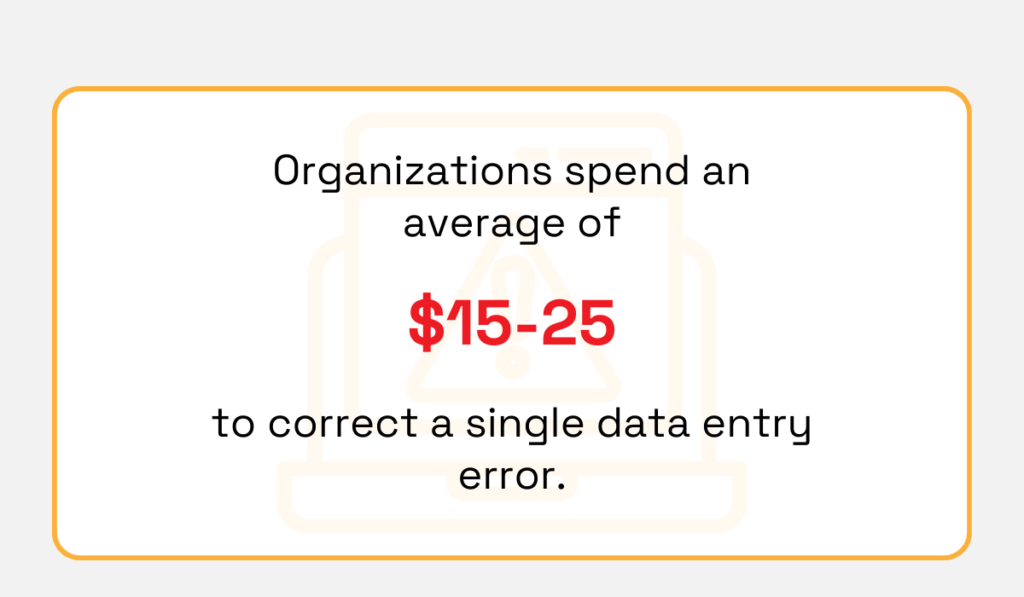
Illustration: Veridion / Data: Vao
Indirect costs, such as delayed payments, compliance issues, or operational slowdowns, can multiply that figure by 10x or more.
Over time, poor data quality quietly drains budgets and slows decision-making.
AI changes this by automating enrichment from start to finish. It removes repetitive work and minimizes human error across large datasets.
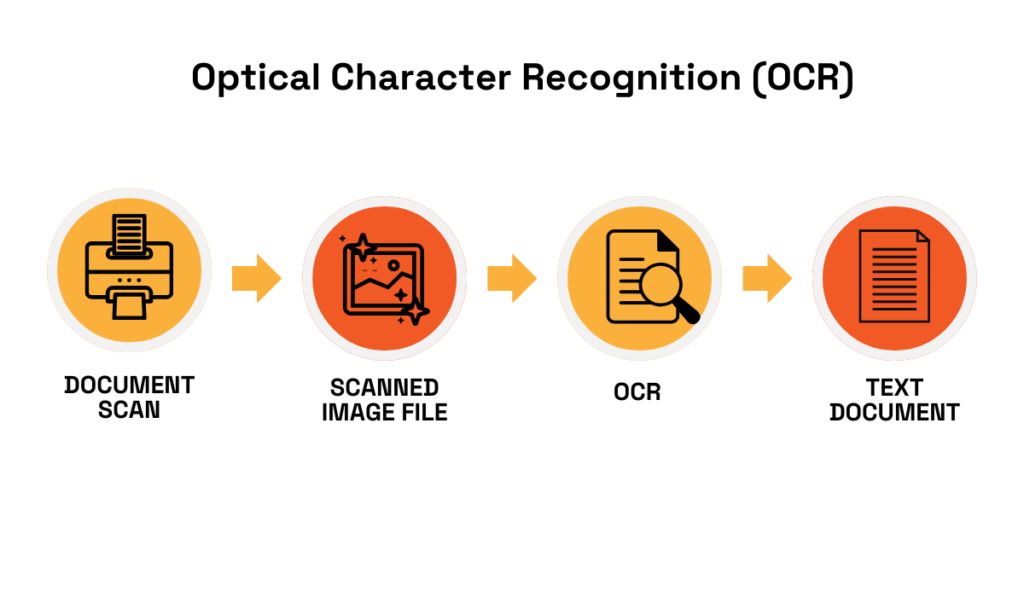
This is especially effective when AI is combined with existing technologies like OCR (Optical Character Recognition).
OCR tools extract unstructured data from documents, filings, and reports.
But sometimes the results lack context, the OCR tool can’t interpret complex tables, or it’s hard to integrate the data with other tools in a company’s workflow.
Source: Veridion
Traditionally, cleaning and validating this data is delegated to humans.
Humans can do this on a small scale, but if they’re dealing with large datasets, they’re more prone to errors that may become a money drain.
AI, on the other hand, can perform these tasks faster and more reliably.
Not only can it cross-check the extracted data against multiple sources to catch inconsistencies, but it can also add additional and relevant context and automate data integration with existing workflows.
Also, unlike humans, AI can learn from data patterns and use that knowledge to improve a company’s dataset.
For market intelligence teams, this means fewer hours spent cleaning records and more time spent analyzing markets.
By combining AI data enrichment with existing technologies, AI helps you avoid errors that are expensive to fix later.
Also, with cleaner, more reliable data, you’re better positioned to reduce risk and scale intelligence efforts without scaling costs.
In large enterprises, slow decisions are rarely caused by a lack of data. They’re caused by uncertainty.
Teams hesitate because company records are incomplete, supply chains aren’t fully mapped, or customer segments need extra validation.
But speed matters, especially at the top of the organization, which relies on quick decision-making in order to stay competitive.
Data enriched with AI bridges this gap, and that’s already confirmed in real-life situations.
According to IBM’s CEO Decision-making In The Age of AI study, 43% of CEOs already use generative AI to inform strategic decisions.
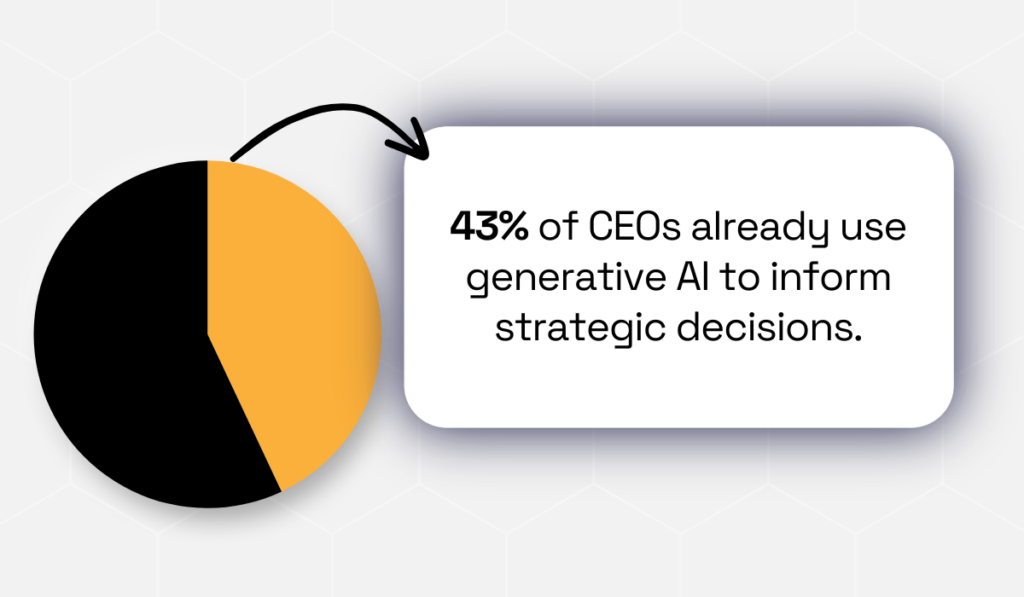
Illustration: Veridion / Data: IBM
The same survey showed two interesting things: they trust their data, and their financial results are better than those of respondents who don’t use AI.
This makes sense because enriched data gives leaders a stronger starting point for decision-making.
Instead of asking teams to validate suppliers, confirm ownership structures, or re-segment customers, AI delivers that data in seconds.
This makes it easier for marketing teams to notice risks, opportunities, and trends faster, while executives can focus on making the best decision, without second-guessing the data.
A case study about a franchisee for the French retailer Carrefour further illustrates this.
Instead of relying on their on-site but slow data warehouse solution for decision-making, they sped up their processes with a combination of advanced analytics and data model development with built-in governance capabilities.
Still, more than three out of four respondents in the aforementioned IBM survey say the most important decisions can’t be made on data alone, but must be blended with human input.
This balance is critical. As Gonzalo Gortázar, CEO of CaixaBank, a Spanish multinational financial services company, puts it:
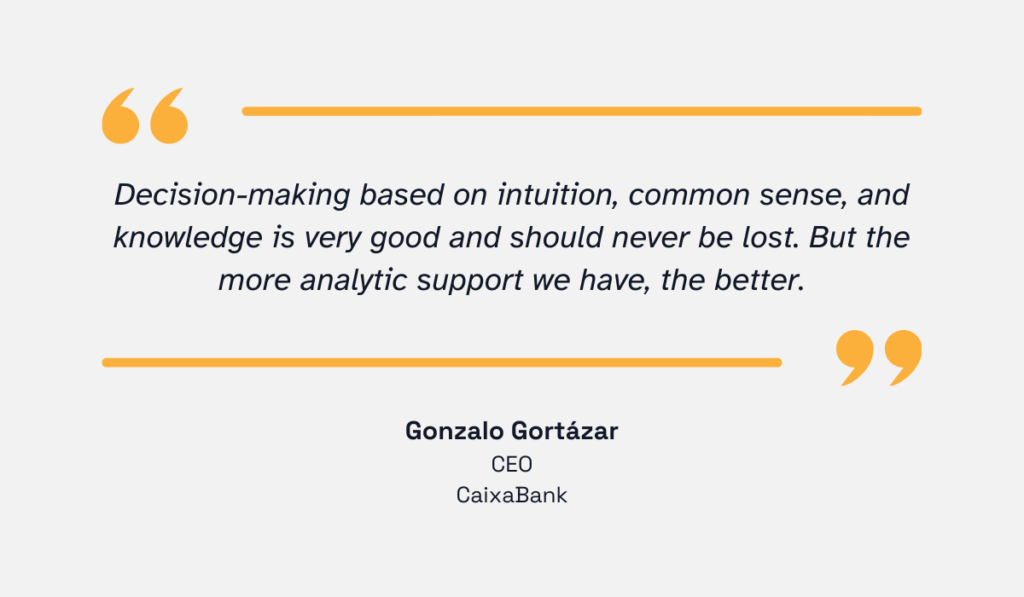
Illustration: Veridion / Quote: IBM
AI-enriched data supports that approach by ensuring human intuition is informed by reliable facts.
When your data is already enriched and trusted, decisions don’t stall.
AI helps you move faster, while still leaving room for human judgment, creating a decision-making process that’s both efficient and grounded.
AI is not magical. Despite its unprecedented power, it comes with its own set of vulnerabilities and challenges.
Let’s take a look at some of them below.
Matching the same company across multiple systems is one of the hardest challenges in AI-driven data enrichment, especially when data lives in silos.
In large organizations, company data is rarely stored in one place.
You might have records spread across CRMs, ERPs, or even external data providers, all using different formats and identifiers.
This is a problem because, even with AI, enrichment only works as well as the data it starts with.
The issue is playfully illustrated by this quote from Broadridge’s Stephanie Clarke.
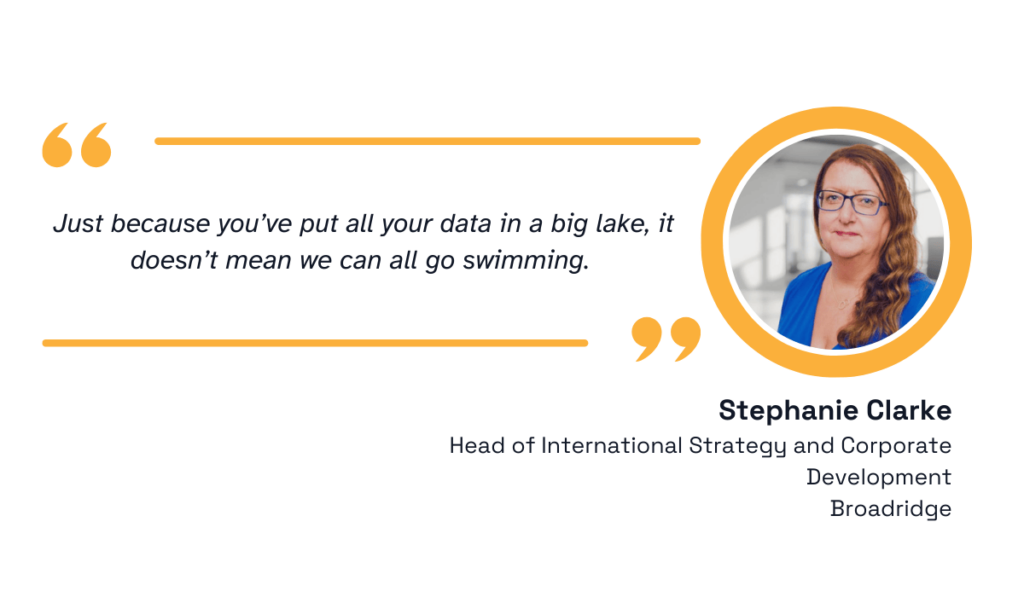
Illustration: Veridion / Quote: Broadridge
So, before “swimming”, it’s important to see whether the data is reliable.
If company names are inconsistent, addresses are missing, or records haven’t been updated in years, it becomes much harder to confidently say that two entries represent the same business.
Without a solid, unified view of your data, AI models are forced to work with partial or outdated signals.
The consequences show up fast. You get duplicate companies, incorrect matches, or false positives that quietly distort analytics and reporting.
In practice, these issues surface in subtle but costly ways.
A single supplier might appear as three different companies across systems because of spelling variations or outdated legal names.
A customer record might be matched to the wrong parent company, messing up account hierarchies and revenue analysis.
Without clean inputs and reliable identifiers, even advanced AI models can make the wrong call.
This is why record matching is one of the foundations of healthy data enrichment.
Without strong identity resolution across siloed systems, AI enrichment may amplify existing data problems.
Regulations like GDPR and CCPA impose clear rules around how data can be collected, enriched, stored, and transferred.
These apply each time an AI system processes personal or sensitive business data, making compliance complex, yet non-negotiable.
No wonder 28% of businesses are sceptical about using AI in their business, precisely because of these regulatory constraints and policy restrictions.
After all, the financial stakes alone are high.
Companies face penalties of up to €20 million under GDPR or $7,988 per intentional violation under CCPA.
The risk is even higher in highly regulated industries such as finance, insurance, and the public sector, where explainability, auditability, and strict data governance are mandatory.
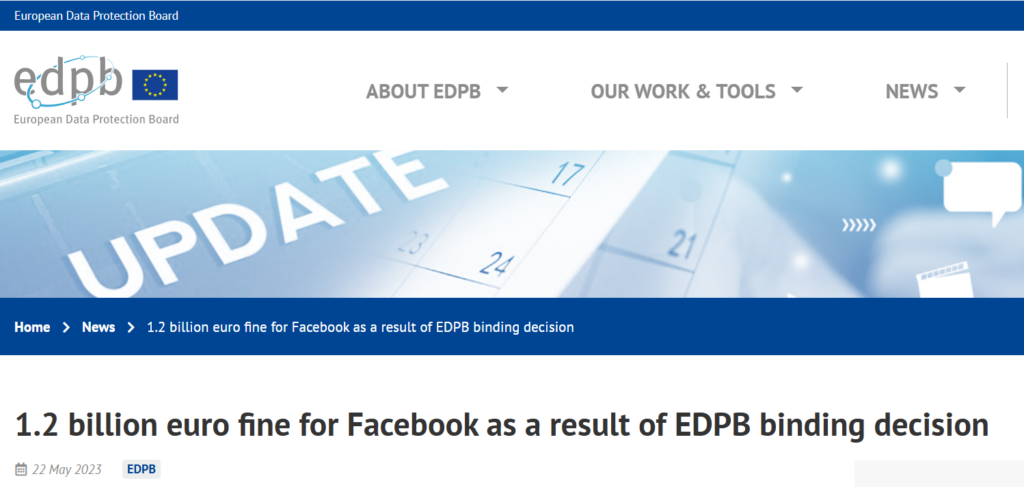
For example, in 2023, Meta received the largest GDPR fine ever—€1.2 billion—for unlawful data transfers, after regulators concluded that adequate safeguards and guarantees were not in place to protect users’ data.
Source: European Data Protection Board
This is why compliance is a core business requirement.
Now, let’s see how compliance challenges present in AI data enrichment.
Market intelligence teams may enrich customer or supplier data without full visibility into data lineage, consent, or residency requirements.
AI models can combine multiple datasets quickly, but if enrichment logic isn’t explainable or auditable, organizations struggle to justify how decisions were made.
That’s why many enterprises invest heavily in both documentation and compliance upfront. In fact, GDPR compliance fees can reach up to $1,02,500, depending on the company’s size and complexity.
But it pays off.
Companies save millions of dollars by avoiding fines and legal fees.
Also, your organization won’t just protect itself from legal risk. You’ll also protect your vendors’ and customers’ trust, and ensure AI-driven insights can actually be used with confidence.
Businesses change all the time.
New locations open, executives change companies, companies merge or shut down, and supply chains are restructured.
If the data doesn’t keep up, decisions are based on outdated information.
For example, market intelligence teams may target companies that no longer fit their ideal profile.
Supply chain analyses may rely on outdated ownership or location data.
Risk assessments can miss early warning signs simply because the data hasn’t been refreshed.
When you translate these situations into numbers, it’s hard to ignore the scale of this issue.
According to IndustrySelect, nearly three-quarters of B2B contact data can become outdated within a single year.
Moreover, the same study shows that 70.8% of business contracts experienced at least one major change within 12 months.
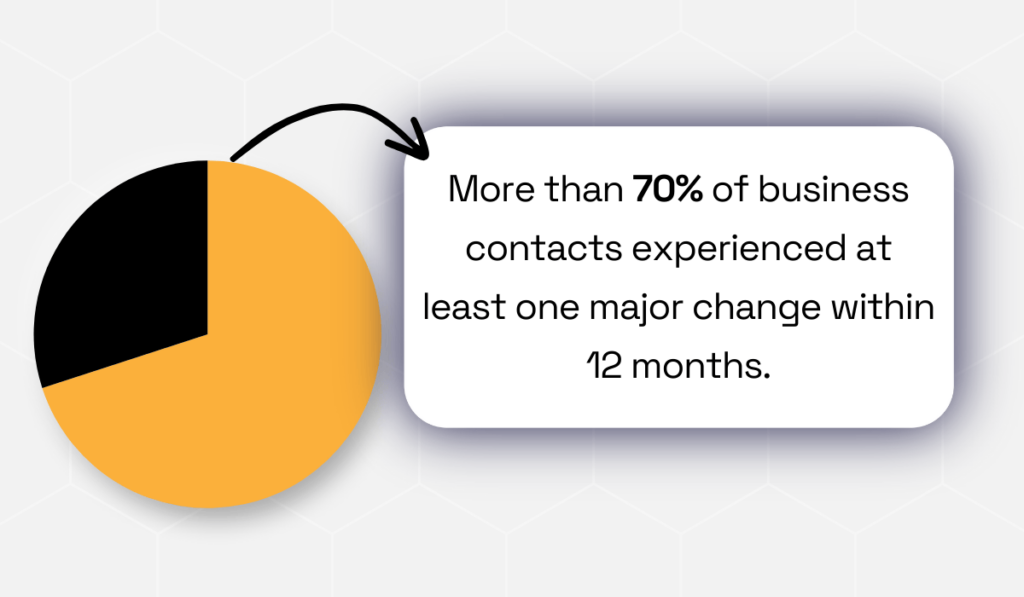
Illustration: Veridion / Data: Industry Select
The bottom line is: B2B data changes all the time. Those who don’t keep track face severe risks.
In fact, research has already shown that poor data quality costs organizations at least $12.9 million a year on average.
To prevent this, AI-driven enrichment systems must continuously re-crawl, re-score, and re-validate data across sources.
To achieve this, you will need dependable update pipelines and substantial computing resources.
It’s an expensive sport, but it’s the only way to keep company profiles aligned with reality as businesses evolve.
Maintaining data relevance is an ongoing process, not a one-time task.
Without continuous enrichment, even high-quality data decays fast, undermining trust and decision-making.
That’s why your AI enrichment must be designed for constant change.
These days, AI spells the difference between high-quality and high-risk data.
By incorporating AI into your data enrichment workflow, you can turn messy datasets into a foundation for smarter decisions, faster actions, and stronger business outcomes.
Start with AI-powered enrichment today, and let your data be the backbone of your business’s success.