



Blog
5 Business Data Challenges to Consider
By: Stefan Gergely -
26 March 2026


We love our data, and now that you're here, you're one step closer to loving it too.
A wide sample of data, so you can explore what is possible with our data
Choose ->
built with procurement in mind. Focused on manufacturers, products and more
Choose ->
built with insurance in mind. Focused on classifications, business activity tags and more
Choose ->
built with sustainability in mind. Focused on sustainability commitments, and environmental and social governance insights.
Choose ->
built with strategic insights in mind. Focused on market trends, competitor analysis, and industry-specific data
Choose ->

Keep up to date with our technology, what our clients are doing and get interesting monthly market insights.

Key Takeaways:
The most expensive mistakes often start with flawed business data.
In large enterprises, procurement runs on information. Supplier profiles, financial records, compliance documents, and performance metrics all influence the decisions you make every day.
But when that data is fragmented, outdated, unverified, or poorly governed, even the most experienced teams operate with uncertainty.
The impact isn’t minor.
Inaccurate business data can distort supplier evaluations, delay due diligence, expose your organization to compliance risk, and weaken strategic sourcing initiatives.
And because enterprise procurement operates at scale, small data gaps quickly become enterprise-wide vulnerabilities.
This article explains the five critical business data challenges you need to consider and, more importantly, what you can do to address them before they undermine your procurement strategy.
Your organization probably pulls vendor and partner data from dozens of different places, including ERP systems, public business registries, credit agencies, and self-reported questionnaires.
This itself isn’t a problem. The real issue occurs when these records live in silos, causing data fragmentation.
And according to McKinsey, that’s exactly the case for 80% of organizations.
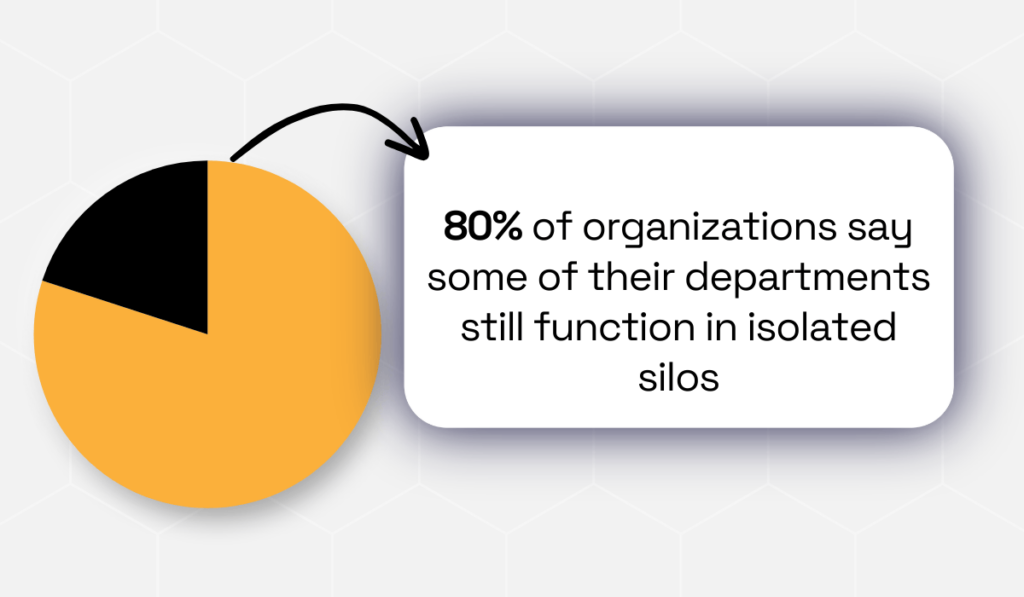
Illustration: Veridion / Data: McKinsey
This fragmentation can seriously hamper your due diligence and risk assessments.
Let’s take JPMorgan Chase & Co. as a case study.
Imagine running one of the biggest banks in the world and not having a clear, complete view of your own trading data.
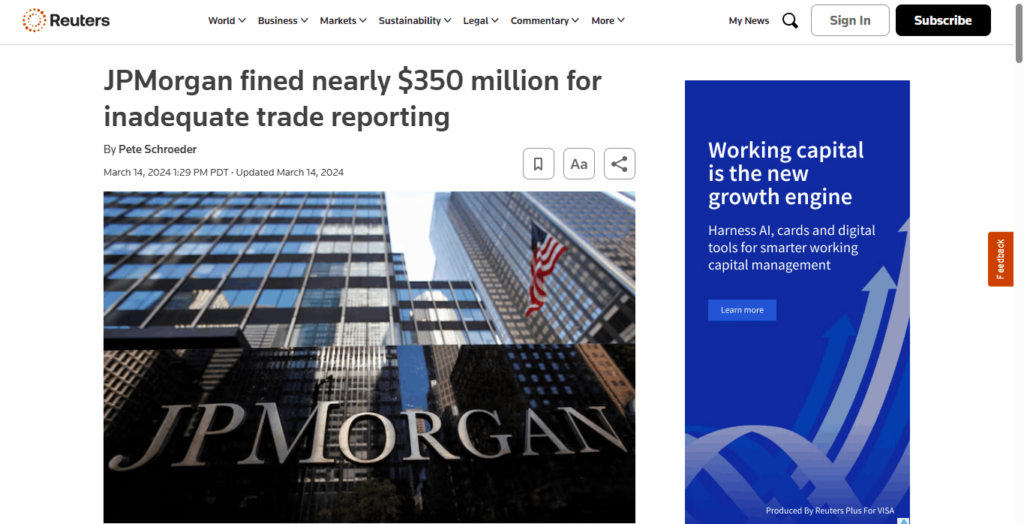
That’s what happened to JPMorgan. Over several years, the bank failed to properly monitor billions of trades happening across more than 30 global trading platforms.
The problem wasn’t that trades were happening in secret.
The problem was that the data tied to those trades was incomplete and scattered across different systems, making effective oversight difficult.
Because the information feeding their monitoring systems wasn’t fully connected or consistent, regulators said the bank’s surveillance program couldn’t do its job properly.
The result?
A $348 million fine and an order to overhaul their entire trade monitoring process.
Source: Reuters
This is what fragmented data looks like in real life.
When related information lives in separate systems, uses different formats, or doesn’t flow cleanly into one central view, even large, sophisticated organizations can lose visibility.
And when you lose visibility, you lose control, which can quickly become regulatory risk, financial penalties, and reputational damage.
That’s because inconsistent data formats make reconciliation difficult, causing duplicate entries, mismatched records, and gaps in supplier profiles.
For instance, different systems might use different identifiers or naming conventions for the same company. “ABC Corp.” in one system becomes “ABC Corporation” in another.
You might mistakenly treat two entries for the same supplier as separate companies. Or miss critical details buried in a disconnected database.
And the cost of such errors can be high.
Forrester reports that more than one-quarter of global data professionals say poor data costs their organization over $5 million annually, with 7% reporting they lose $25 million or more.
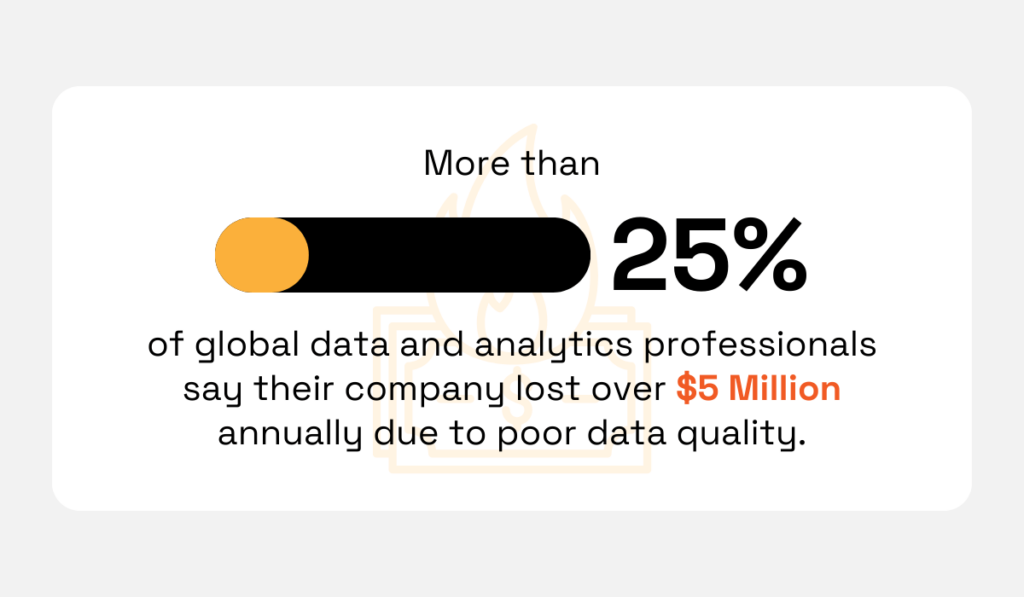
Illustration: Veridion / Data: Forrester
To get ahead of such significant losses, break down the silos by consolidating your data sources.
Create a single, unified repository where all supplier information lives together. Think data warehouse or cloud data lake.
Build automated data pipelines using ETL/ELT tools or APIs that pull information from each source into your central system regularly.
But technology alone won’t solve this.
You also need to standardize how data is recorded across your organization.
Enforce a company-wide data governance policy that defines clear formats and ownership for key fields, like:
Once centralized, your data uses consistent naming and structure so records can be reliably matched.
You can also consider leveraging AI and data quality tools to spot duplicates and anomalies.
Machine learning can flag multiple entries that look like the same supplier but have slight differences, prompting you to merge them.
Over time, these practices build a single source of truth: one trusted business profile per entity.
Instead of hunting through disconnected systems, your team works from a harmonized dataset.
This reduces manual cleanup, prevents costly errors, and gives you the visibility you need to make informed decisions about your vendors and partners.
Even after you’ve consolidated all your data into one place, there’s another problem waiting.
That data can go stale fast.
Suppliers relocate. Leadership teams change. Companies merge. Product lines shift.
Financial status and creditworthiness don’t stay frozen in time either.
If you’re relying on an old snapshot of a company, you’re making decisions based on yesterday’s reality.
For example, you might award a multimillion-dollar contract to a vendor that just lost its key manufacturing license last month.
And you wouldn’t even know unless your data reflected that change.
The figures provided by Fivetran tell a concerning story.
Apparently, 82% of companies make decisions using stale information, and even more say stale data has actually caused incorrect decisions and lost revenue.
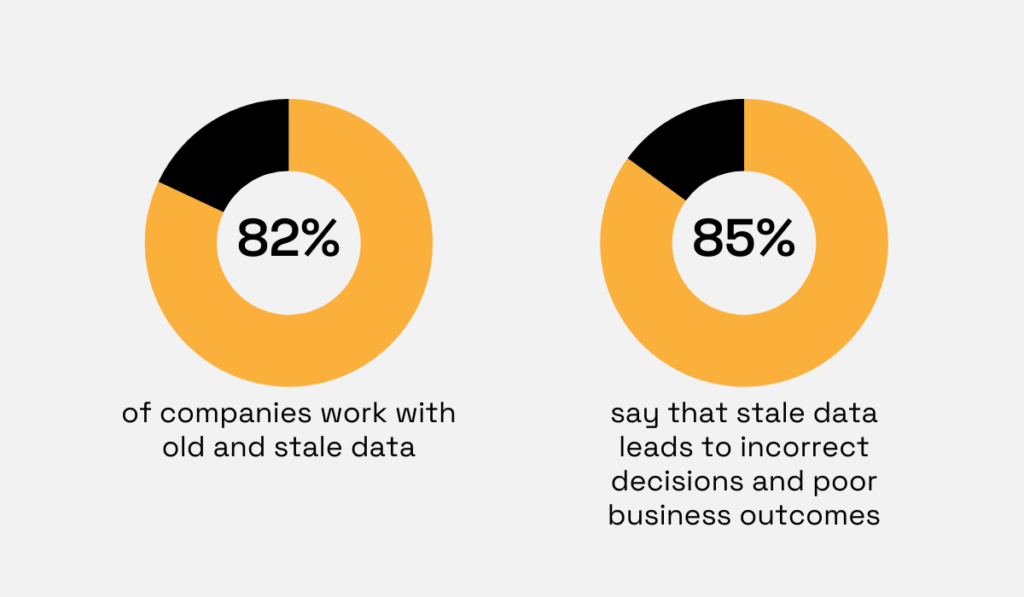
Illustration: Veridion / Data: Fivetran
In other words, nearly every organization recognizes that outdated data leads to misguided strategies.
George Fraser, CEO at Fivetran, a global leader in modern data integration, articulates it better:
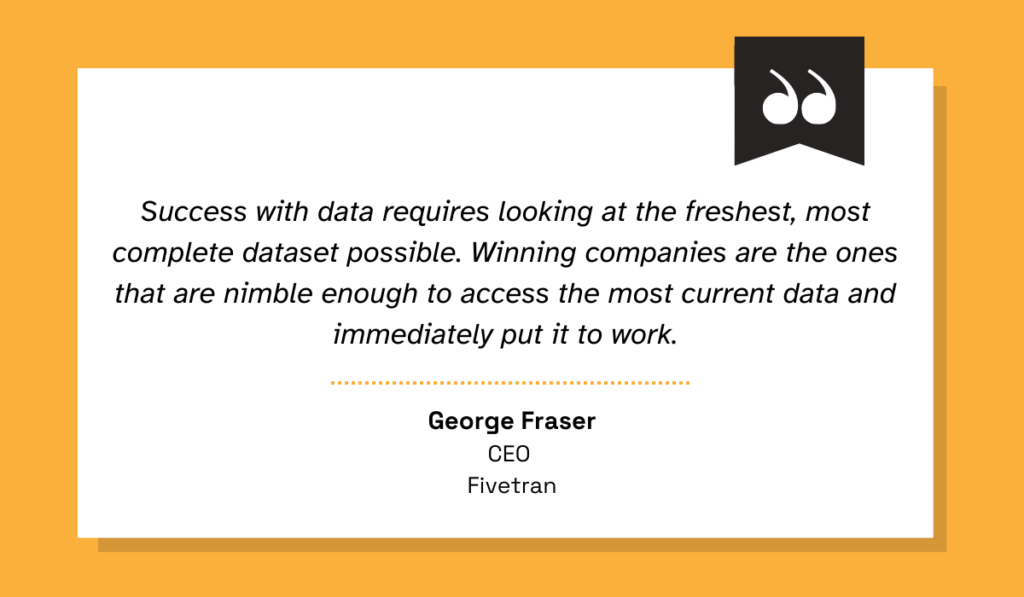
Illustration: Veridion / Quote: Businesswire
So, to keep your insights timely and ensure success, you need continuous updates, not one-time data dumps.
Automate your data refreshes by subscribing to live data feeds and APIs.
Many countries now provide real-time updates to company registries and financial filings.
Integrating with these feeds ensures your supplier records reflect the latest ownership changes or regulatory filings.
News and market databases can alert you to critical events in real time, too. Factory fires, sanctions, and financial distress are a few examples.
Additionally, schedule periodic data validation tasks (daily or weekly) that re-import key fields from authoritative sources. Don’t settle for one-time data collection.
Establish a data stewardship routine where critical fields like credit ratings, compliance certificates, and financial health indicators get refreshed on a set schedule.
Modern data platforms offer incremental loading or change-data-capture techniques that update only what’s changed, minimizing lag.
Companies that make this shift move faster. They avoid costly delays and inefficiencies that come from working with outdated information.
Make currentness a core part of your data strategy by treating supplier data as a living asset that must be constantly renewed.
That way, your decisions are always based on today’s facts.
When you’re onboarding new partners, you typically send them forms, questionnaires, or spreadsheets to fill out.
This self-reported data gives you a starting point. But that’s all it is: a starting point.
This type of information is often incomplete, sometimes overly optimistic, and occasionally misleading.
Suppliers may unintentionally leave out details. They might selectively report their best metrics.
Some exaggerate capabilities. And some might even expose you to significant risks.
For instance, Improvata research reveals that 47% of organizations have experienced a data breach or cyberattack over the past year that involved a third-party accessing their network.
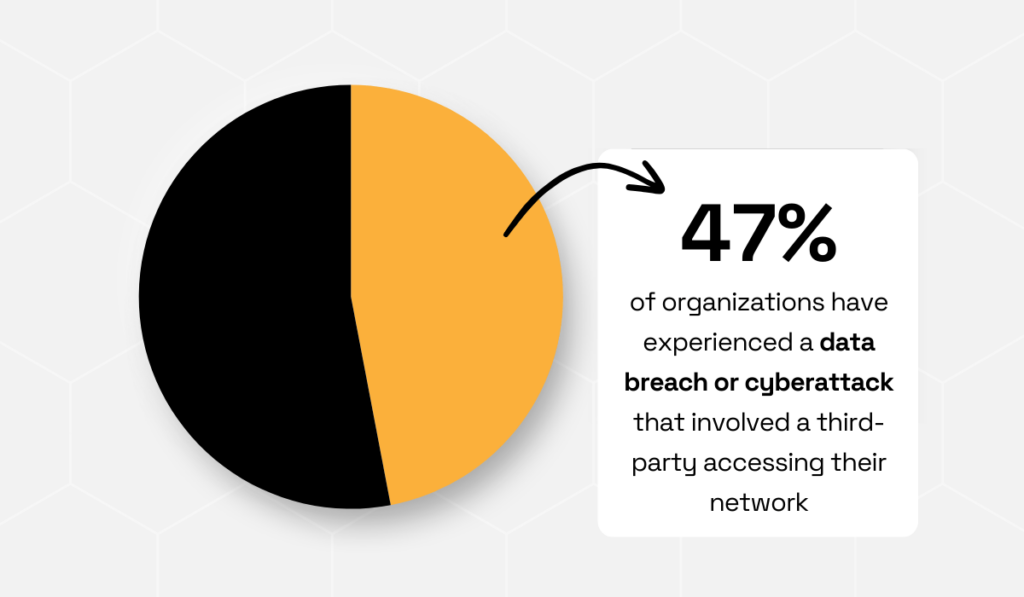
Illustration: Veridion / Data: Imprivata
This shows why claims made by vendors need independent verification, not just acceptance at face value.
Without independent checks, you’re building supplier profiles full of blind spots and bias.
And this can impact your operations in a major way.
According to KPMG, 73% of organizations have experienced at least one significant disruption from a third party.
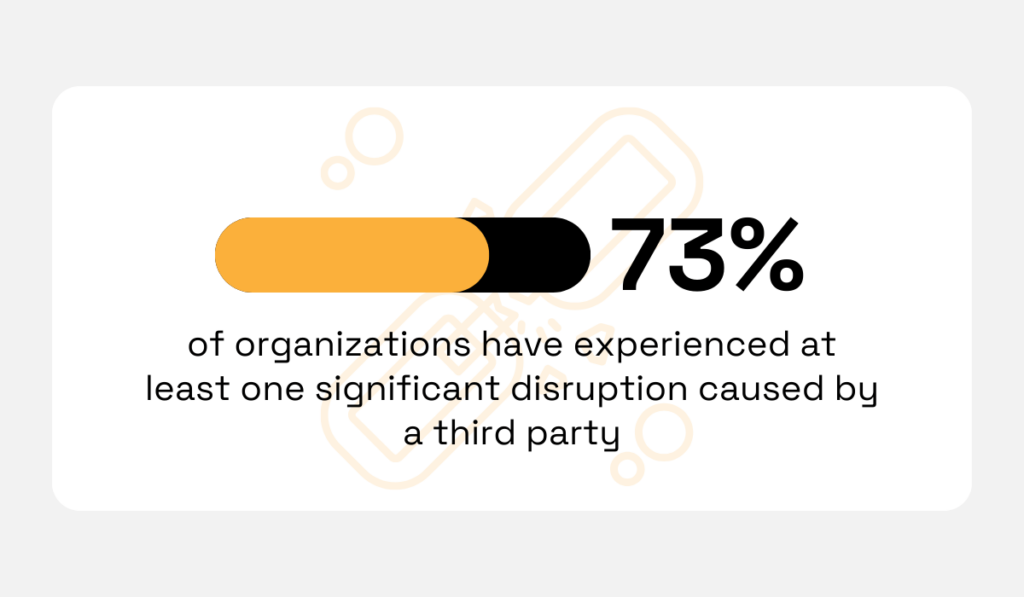
Illustration: Veridion / Data: KPMG
In other words, you can no longer rely on self-reported data alone.
Regulations demand verification, fraud risks demand verification, and your stakeholders demand verification.
Identity-first verification is becoming a compliance necessity.
So, don’t take supplier responses at face value.
Cross-check every self-reported fact with authoritative data sources, such as public registries, credit bureaus, news outlets, and industry databases.
If a supplier claims $50 million in annual revenue, compare that figure to published financial filings or market intelligence.
If their questionnaire shows no legal disputes, a quick search might reveal past lawsuits or regulatory actions.
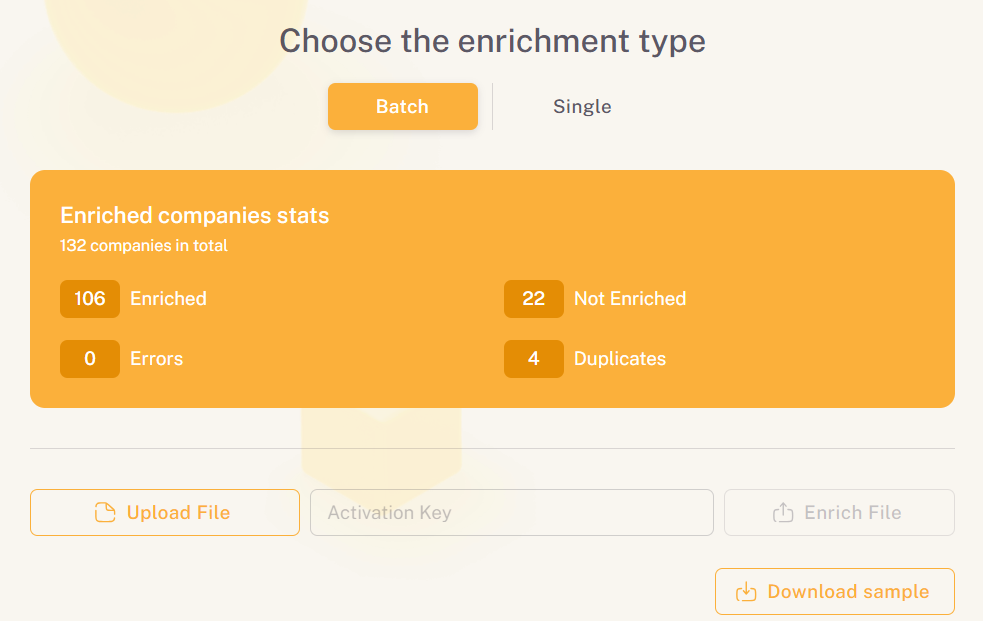
This is where automated data enrichment platforms like Veridion become invaluable.
Powered by AI, Veridion can verify self-reported inputs by pulling corroborating details from external sources in real time.
Source: Veridion
Take sustainability claims, for example. Research shows 68% of ESG metrics are input-based, which can reward ‘tick-box’ answers instead of real performance.
Without external validation, you’re just collecting what suppliers want you to believe, not what’s actually true.
But solutions like Veridion automatically compare vendor-provided information against public business records, regulatory filings, and news feeds.
The system validates and enriches self-reported data with AI-backed external intelligence, delivering more accurate, trustworthy business profiles.
Source: Veridion
By validating supplier questionnaires with reliable external data, you catch hidden risks before they become problems.
Handling business data today means navigating a complex web of privacy and compliance laws.
This gets especially tricky when that data comes from or relates to third parties.
Laws like the EU’s General Data Protection Regulation (GDPR) impose strict rules on how you collect, store, and share personal data, including basic contact information for suppliers.
Similar regulations exist around the world, such as California’s CCPA and other national privacy laws in different countries.
All of them give individuals and businesses rights over their information.
Your procurement team needs to ensure that any vendor data processing, even something as simple as storing a supplier contact’s email address, follows these rules.
The consequences of getting this wrong are severe.
Under GDPR, regulators can fine organizations up to 4% of global annual turnover (or €20 million) for serious breaches.
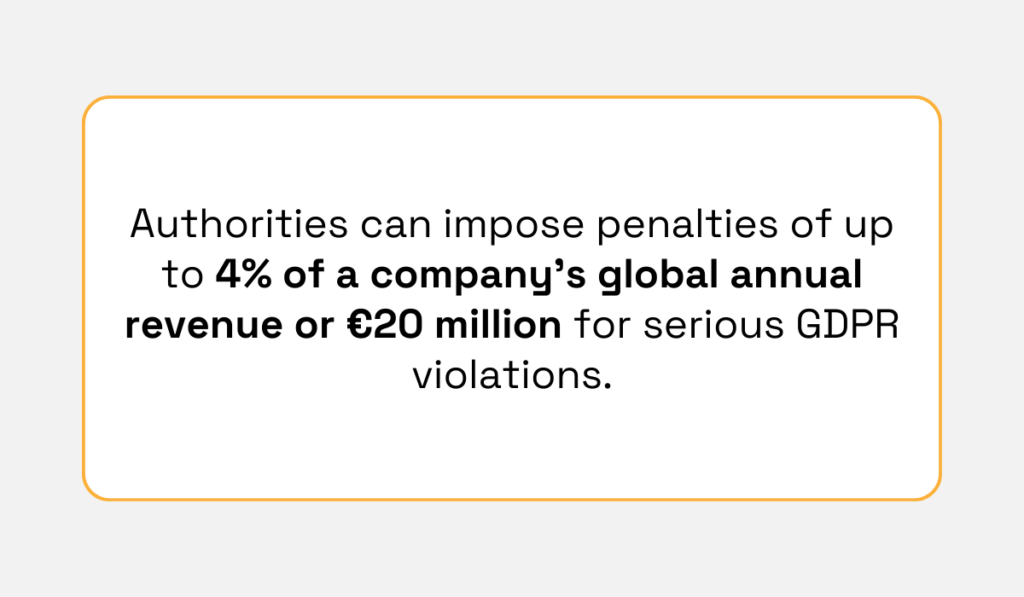
Illustration: Veridion / Data: GDPR
But it’s not just European companies that need to be careful.
For instance, CCPA just increased its maximum fines, from $25 million to $26,625,000.
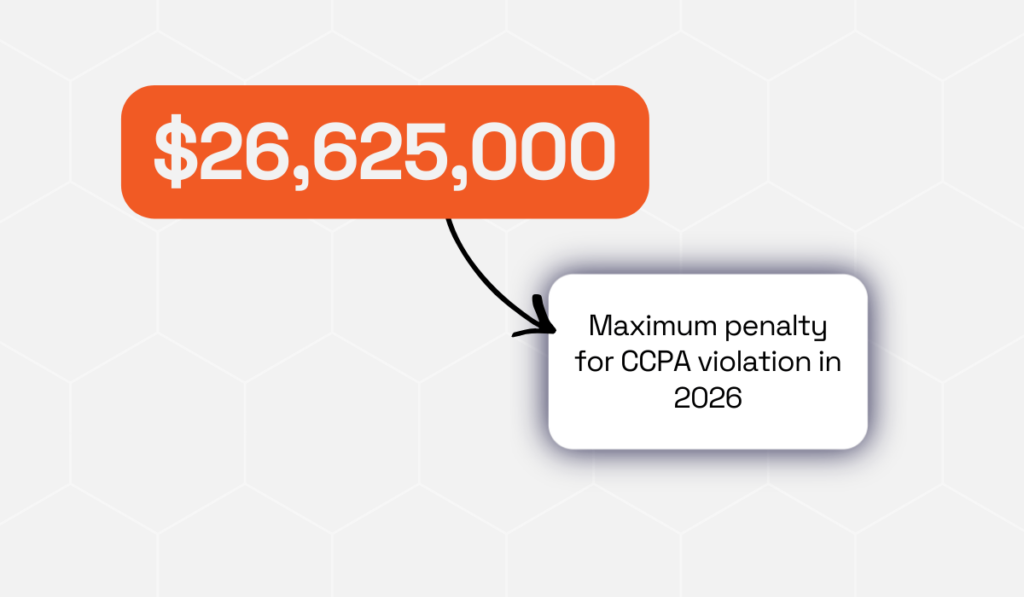
Illustration: Veridion / Data: CCPA
Even what seem like minor oversights, such as lacking a legal basis to process supplier-provided personal data, can become expensive compliance failures.
But it’s not just about the money.
Noncompliance can:
The bottom line? Collecting or using any business data now comes with privacy guardrails you must follow at every step.
But you can resolve this by treating regulatory compliance as a core part of your data workflow.
Start by performing a data privacy impact assessment whenever you onboard suppliers.
Document what personal data you’re collecting:
Ensure you have a lawful basis to hold each piece of information.
Maintain clear vendor contracts and policies that specify exactly how supplier data will be used and protected.
Include data protection clauses in your contracts and ask vendors to confirm their own compliance with relevant laws.
Also, implement data retention policies aligned with regulations.
Only keep personal data as long as you need it and routinely purge outdated records.
Assign a data steward or privacy officer to oversee these rules and ensure accountability.
Keeping data protection top of mind shields your company legally and builds trust with vendors and customers who know you respect privacy and compliance.
Storing large volumes of sensitive supplier data comes with inherent cybersecurity risks, which can be disastrous, particularly in terms of cost.
For instance, IBM’s 2025 report found that the global average data breach costs $4.4 million.
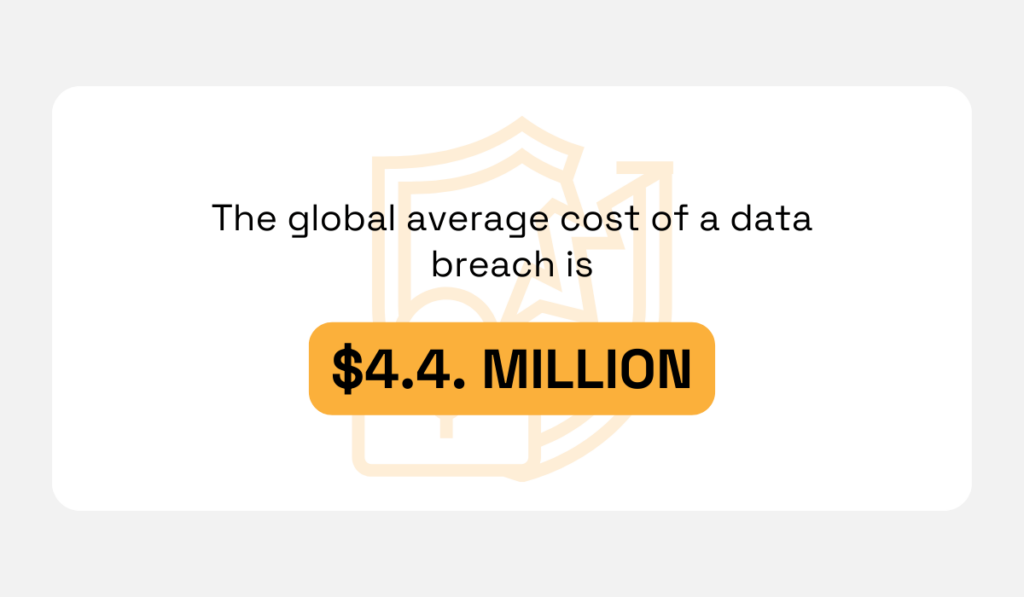
Illustration: Veridion / Data: IBM
But here’s what should really get your attention: breaches involving third-party vendors are becoming more and more common.
Security Scorecard reports that 35.5% of breaches in 2024 were connected to third-party access, a 6.5% increase from 2023.
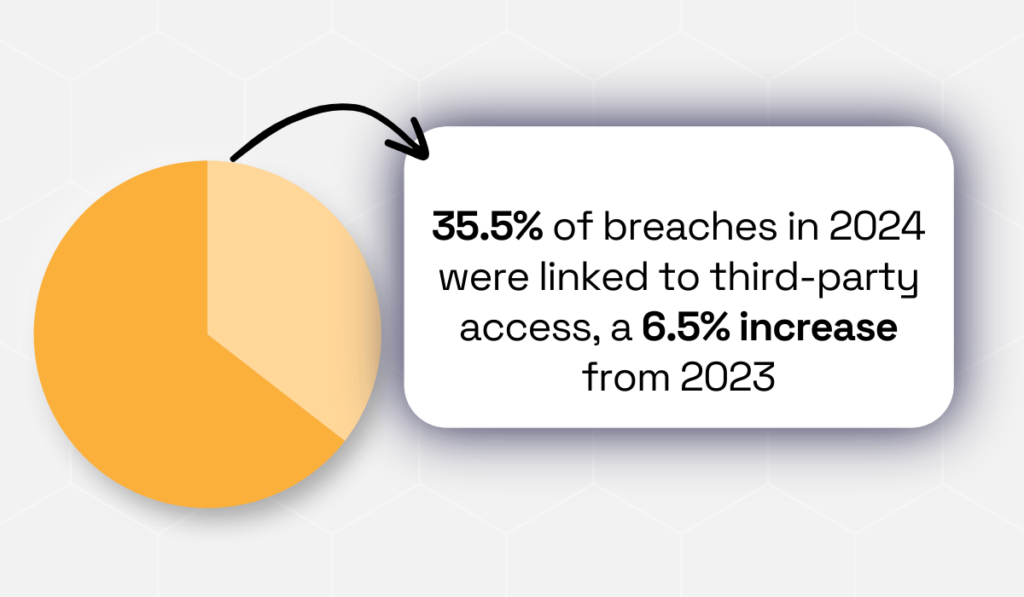
Illustration: Veridion / Data: Security Scorecard
This problem goes deeper than just financial damage, too.
A single security lapse, even at a partner’s system, can inflict multi-million-dollar damages, but it can also lead to regulatory fines, lost business, and even operational disruption.
After all, data breaches are notorious for being difficult to identify and contain.
In fact, IBM shows that data breaches take 241 days to detect and contain, giving attackers months to move laterally through systems and extract valuable data.
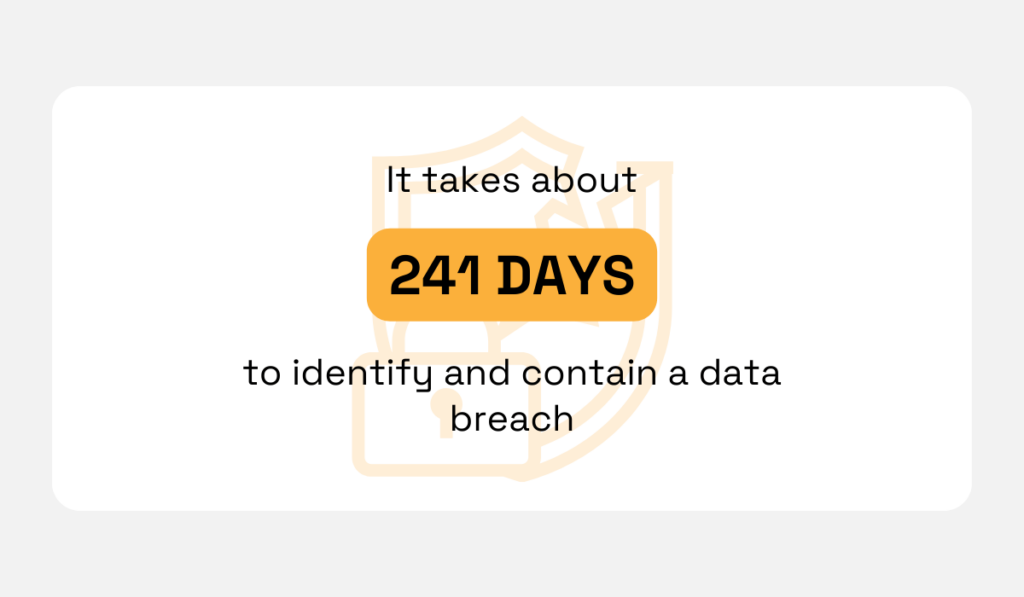
Illustration: Veridion / Data: IBM
In practical terms, stolen supplier contracts or intercepted bank account information could lead to fraud, compliance penalties, or breach of confidentiality.
You can manage this challenge by implementing strong security controls around all business data from day one.
Start with strict access controls.
Follow the principle of least privilege: employees and systems should only access the specific data they need for their role.
Use multi-factor authentication (MFA) and role-based permissions for any portal or database that holds supplier information.
Encrypt sensitive data, both at rest in your databases and in transit over networks.
This ensures that even if data is intercepted, it’s unintelligible to attackers.
Store digital contracts and financial documents in encrypted repositories. Use VPNs or TLS for data transmission.
Secondly, keep your procurement systems on isolated subnets.
Apply firewalls so that a compromise elsewhere in your company or cloud environment doesn’t automatically expose your procurement database.
Regularly patch and update all software to remove known vulnerabilities.
Monitor systems continuously using intrusion-detection tools and audit logs.
This way, you catch suspicious activity early, such as unusual attempts to download large datasets or access from unexpected locations.
Protecting business data defends both your company’s and your partners’ interests.
If fragmented records, stale supplier information, compliance issues, or security concerns sound familiar, you’re facing the same business data realities as many enterprise procurement teams.
But these challenges are manageable.
By unifying your data sources, prioritizing continuous updates, validating supplier disclosures, embedding regulatory safeguards, and strengthening security controls, you can make business data a strategic advantage rather than a liability.
When your data becomes accurate, verified, compliant, and secure, your teams start driving confident, enterprise-level decisions.