



Blog
Business Directory Data Providers Every Company Should Know
By: Auras Tanase -
26 February 2026


We love our data, and now that you're here, you're one step closer to loving it too.
A wide sample of data, so you can explore what is possible with our data
Choose ->
built with procurement in mind. Focused on manufacturers, products and more
Choose ->
built with insurance in mind. Focused on classifications, business activity tags and more
Choose ->
built with sustainability in mind. Focused on sustainability commitments, and environmental and social governance insights.
Choose ->
built with strategic insights in mind. Focused on market trends, competitor analysis, and industry-specific data
Choose ->

Keep up to date with our technology, what our clients are doing and get interesting monthly market insights.

Company success just doesn’t happen without reliable data.
Finding reliable company data used to be a matter of patience and a bit of guesswork.
Today, that approach simply doesn’t scale.
So, whether you’re building procurement workflows, sales engines, compliance checks, or risk models, you need business data that is fresh and structured.
Business directory data providers promise exactly that. However, they don’t all solve the same problems.
That’s why we’ve prepared a thoroughly researched list of the most relevant platforms today, what they do best, and how to decide which is right for you.
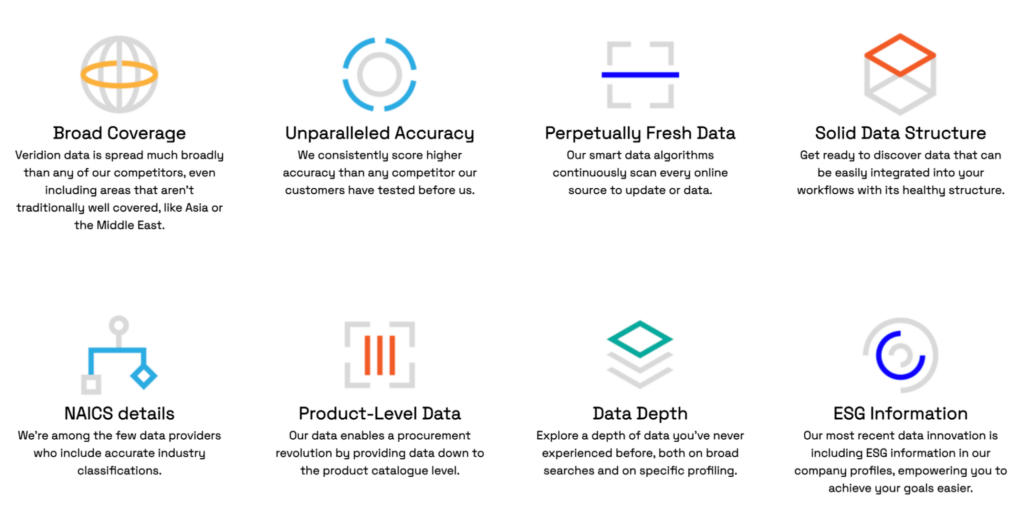
When it comes to modern business directory data, Veridion stands apart from most tools on this list, mostly because it isn’t built as a traditional directory at all.
Rather than offering a UI-first platform for manual lookups, Veridion operates as a Data-as-a-Service provider, delivering global company data through APIs.
Simply put, APIs let Veridion’s data plug directly into your existing systems, so company information is pulled automatically instead of searched for manually.
Veridion’s core focus is, therefore, letting companies automate how they discover, match, and evaluate businesses across procurement, risk, compliance, and analytics workflows.
Source: Veridion
Unlike legacy providers that concentrate on large enterprises or financial reporting, Veridion puts a strong emphasis on broad SMB coverage.
This is a meaningful distinction from other tools.
Many incumbent data providers struggle to maintain accurate, up-to-date information on smaller companies.
If this sounds irrelevant, it shouldn’t.
Why?
Because it is precisely these small companies that tend to make up the vast majority of suppliers, vendors, and counterparties in global supply chains.
Veridion addresses this by continuously scanning the web and transforming unstructured data into structured company profiles.
This means coverage is global, refresh cycles are near real-time, and data depth extends down to product-level signals.
What sets the platform further apart is how you access that data.
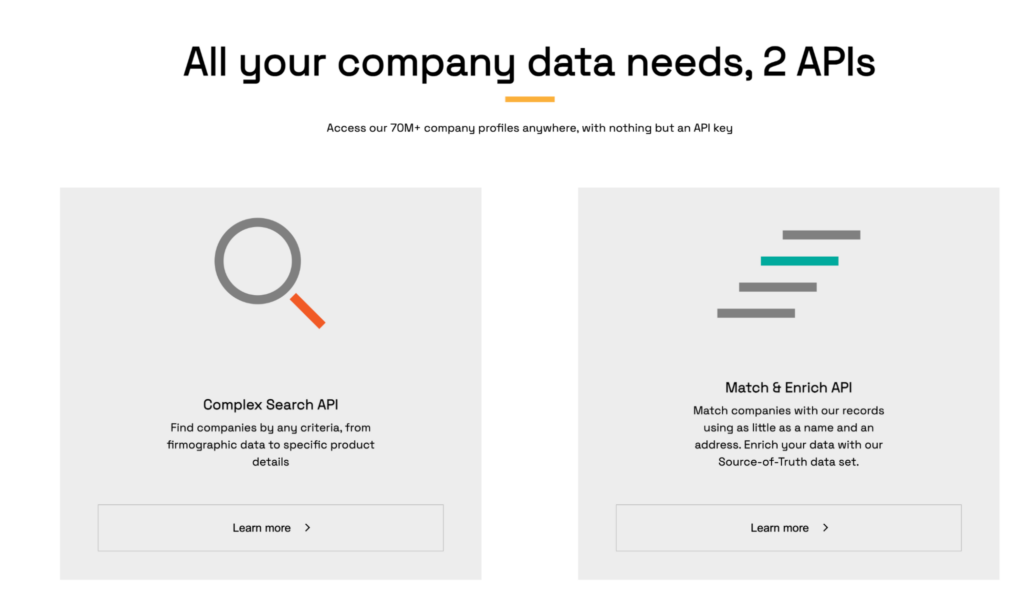
Veridion offers two core APIs, as shown below:
Source: Veridion
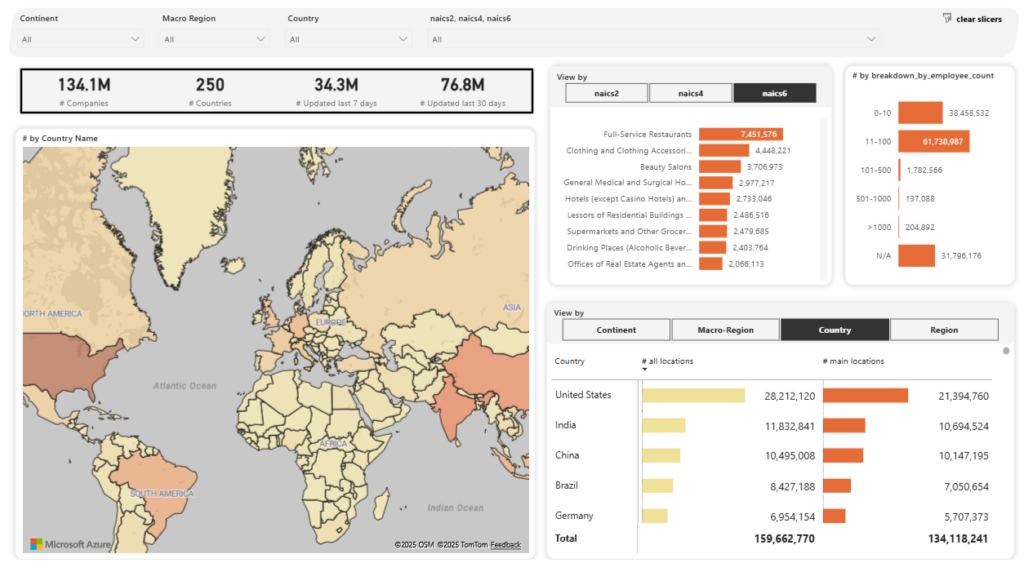
The Search API lets you find companies using highly specific, rule-based logic.
You can search for suppliers offering certain product keywords or technical specifications, or exclude entire categories of providers.
Then, you can layer in conditions like employee count, location, or ESG-related criteria.
This is gold, especially for procurement teams building supplier discovery or pre-screening workflows.
Source: Veridion
The Match & Enrich API works in the opposite direction.
With as few as two data points (say, a company name and its country), you can get a full, enriched company profile.
Think firmographics, operational signals, ESG indicators, and confidence scores—all those details that help you assess data reliability.
Compared to sales-focused platforms like ZoomInfo or Lusha, Veridion deliberately deprioritizes contact data in favor of company intelligence.
And compared to legacy tools like Dun & Bradstreet, it offers fresher data, greater flexibility, and much stronger coverage of smaller, less-visible businesses.
Pricing is usage-based and custom, which reflects Veridion’s role as a foundational data layer. But you can check a sample of our data first or contact us for more information.
Data Axle is another valuable tool offering a more traditional approach to business directory data.
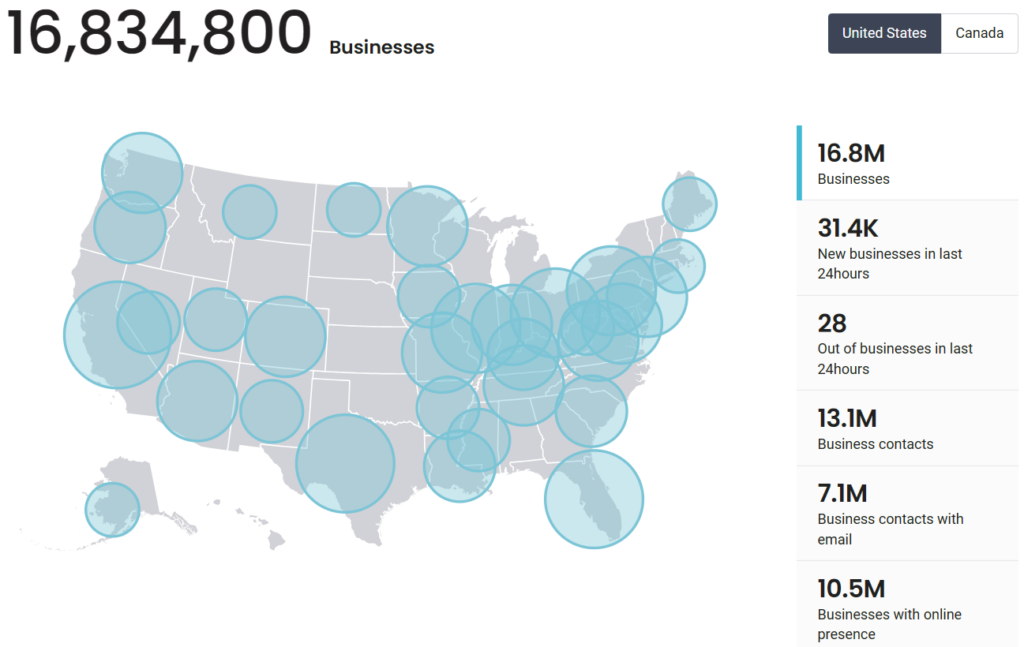
The platform is best known for its extensive U.S. and Canadian business listings, boasting close to 20 million premium verified business profiles across the two countries.
Source: Data Axle
Data Axle is commonly used for marketing, CRM enrichment, and list building.
For organizations operating primarily in North America, the tool provides a familiar and fairly easy-to-adapt data source.
Its datasets include firmographic details, location data, and business classifications, and are often integrated into marketing automation and outreach tools.
This works nicely for teams running regional campaigns or maintaining customer databases.
Data Axle CEO Michael Iaccarino said:
“Our clients count on us for data at scale but also accuracy. We focus on carefully integrating machine learning into our processes. However, we will never cease leveraging human verification. We make over 20 million calls yearly to ensure details and key information are correct.”
Among the most relevant benefits of using Data Axle are the following:
However, global coverage and data freshness is precisely where Data Axle begins to show limitations.
Compared to API-native providers, refresh cycles are slower, and the platform is less suited to real-time risk assessment or automated supplier discovery.
Data Axle also focuses more on directory-style completeness than on deep operational or ESG-level insights.
But perhaps its greatest pain point, as seen in several recent reviews, is its not-so-transparent pricing model, paired with unresponsive customer support.
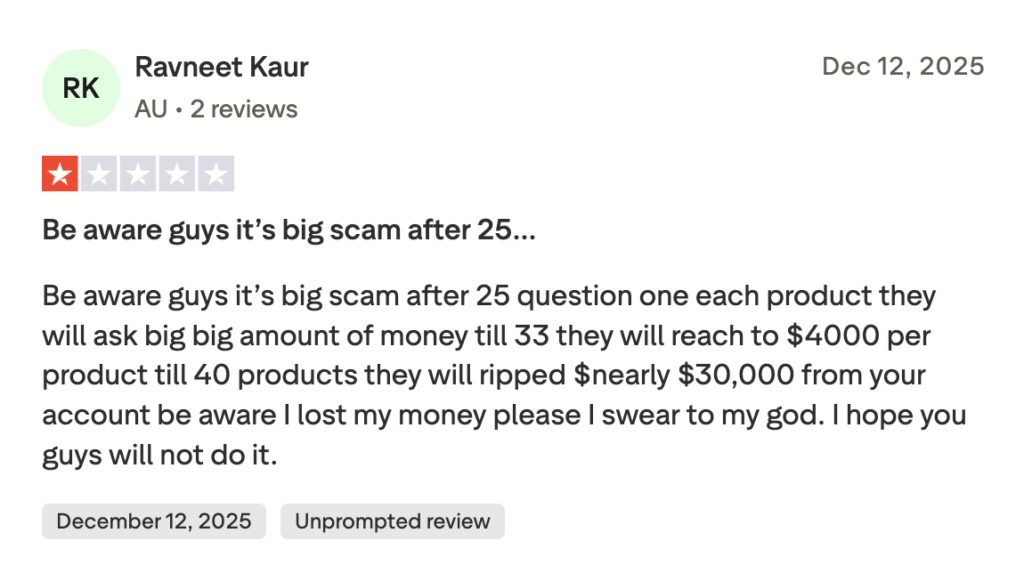
Source: Trustpilot
Data Axle’s pricing is typically subscription-based and customized around your intended goals. So it’s worth clarifying costs and terms before committing.
Overall, Data Axle works well for North America–centric marketing and enrichment use cases.
However, it may lack the global scale and automation flexibility required for enterprise-grade procurement or risk workflows.
ZoomInfo is often the first name that comes up when discussing B2B data, and for good reason.
It is one of the most widely used sales intelligence platforms on the market, as they say on their website, trusted by more than 250 million users.
At its core, ZoomInfo is built for go-to-market teams.
It combines company firmographics with extensive contact data, buyer intent signals, technographics, and CRM integrations.
For sales and revenue operations, a tool like this can dramatically speed up prospecting and pipeline generation.
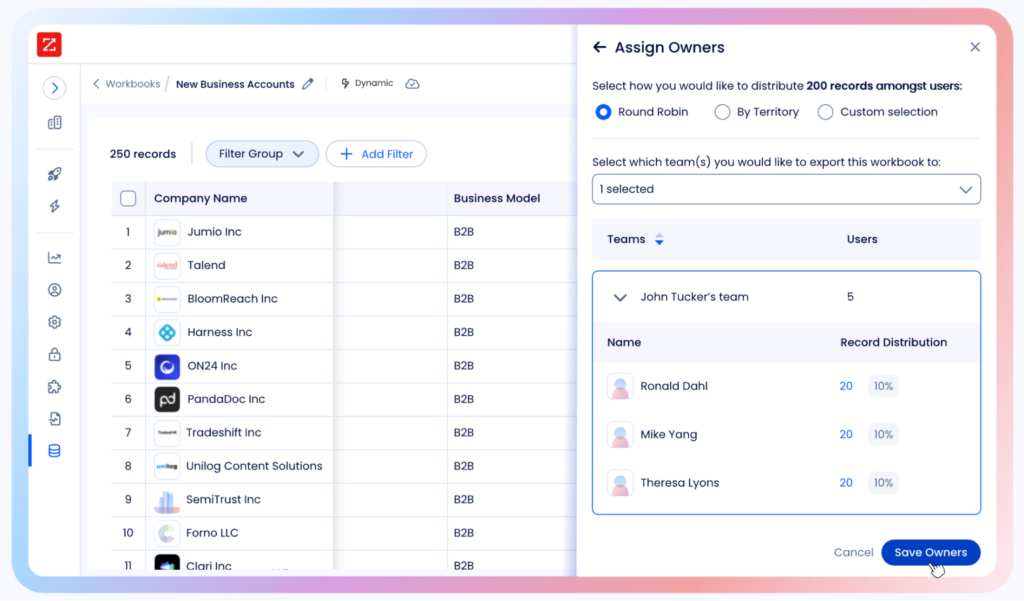
Source: ZoomInfo
Where ZoomInfo really differentiates itself is in how tightly it connects data, workflows, and execution.
Rather than acting as a static database, the platform positions itself as an end-to-end GTM engine.
This means it continuously enriches CRM records and unifies first- and third-party data.
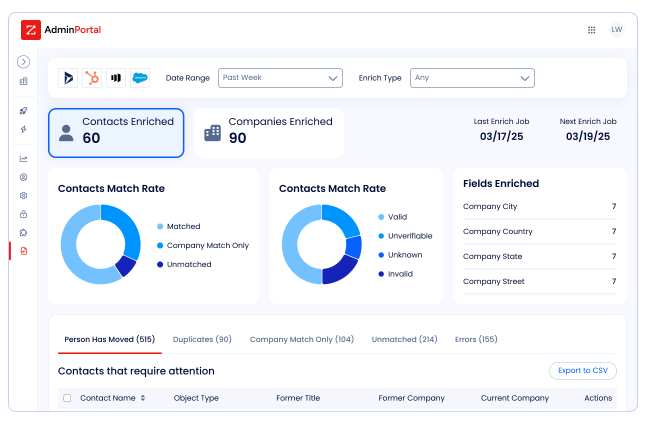
Source: ZoomInfo
It also uses AI to surface in-market buyers, prioritize high-fit accounts, and automate repetitive sales tasks.
This makes ZoomInfo especially strong for teams that care more about timing than broad targeting.
Compared to lighter contact tools like Lusha, ZoomInfo offers far more depth across the full GTM motion.
It also provides broader automation and integrations than compliance-focused alternatives like Cognism (especially at scale).
Interestingly, though, this strength becomes its limitation in a certain context.
Namely, ZoomInfo’s company data exists primarily to support sales use cases.
So, if you’re evaluating suppliers, assessing third-party risk, or building analytics models, the platform’s focus on contacts over companies becomes restrictive.
Compared to Veridion or Dun & Bradstreet, ZoomInfo offers less depth around ownership structures, operational signals, or compliance-related data.
It is also relatively expensive, with seat-based pricing that scales quickly across teams.
ZoomInfo works best as a sales enablement layer, not as a foundational company data source. So a lot of organizations pair it with a dedicated business data provider.
The next noteworthy data tool here is Cognism.
Cognism occupies a similar space to ZoomInfo, but with a sharper focus on GDPR-compliant contact data, especially in European markets.
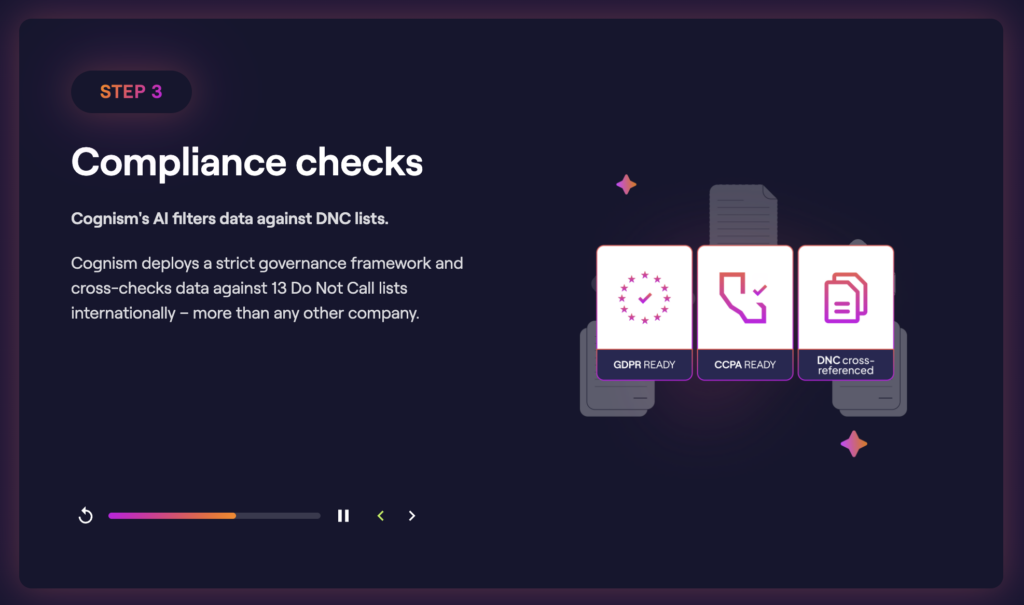
Source: Cognism
Sales teams turn to Cognism for its emphasis on data accuracy and regulatory compliance.
The platform provides verified emails and phone numbers, complete with firmographic context, and integrates smoothly with common CRM tools.
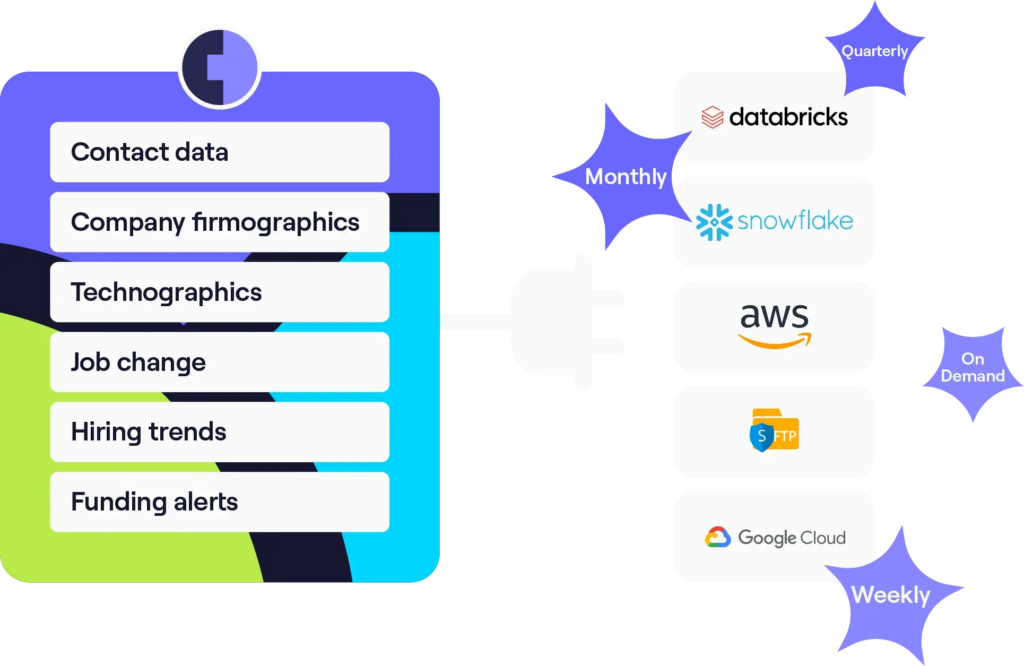
Source: Cognism
Much like ZoomInfo, Cognism is optimized for outbound sales and prospecting.
This means its company data is sufficient for lead qualification but limited for broader analytical or operational use cases.
Procurement, compliance, and risk teams are unlikely to find the depth they need here.
Pricing follows a subscription model, typically per user. They promise no hidden platform fees, meaning you only pay for licenses and any add-ons you might like.
Cognism competes directly with ZoomInfo, not with API-first platforms like Veridion.
So if your priority is compliant European sales outreach, it’s a strong contender. If you need company intelligence at scale, though, you may have to look for another tool.
Dealfront combines company data with buyer intent signals. This is what makes it a great revenue intelligence platform for B2B teams.
The platform tracks online behavior to infer said purchasing intent. This helps marketing and sales teams prioritize accounts that are more likely to convert.
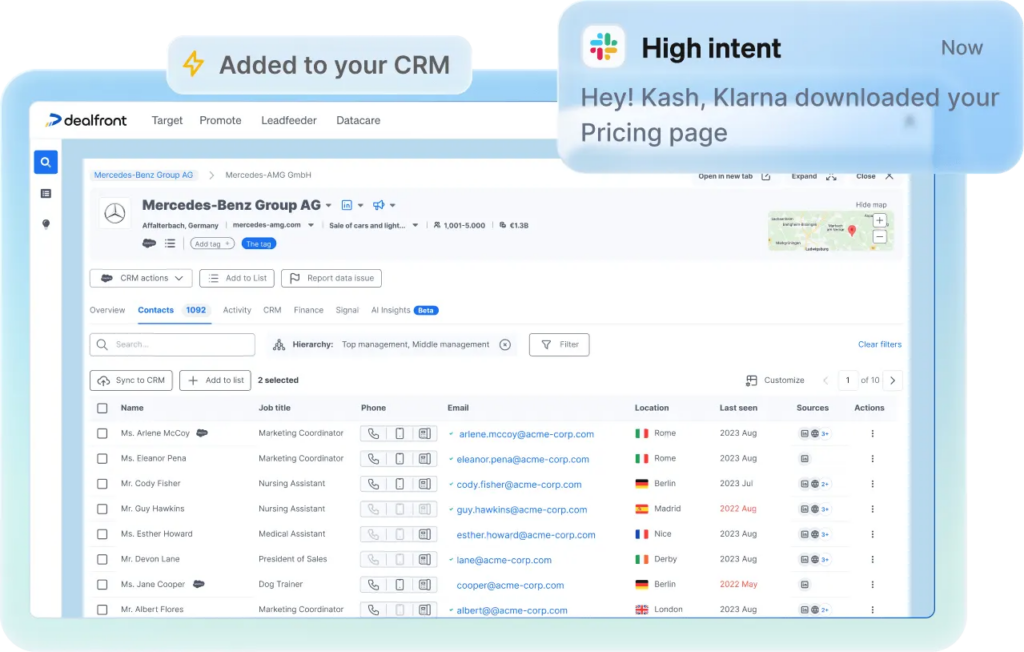
Source: Dealfront
Dealfront offers these key features to identify the accounts you’re most likely to win:
So firmographics and company profiles provide context, while intent data adds timing.
This makes Dealfront particularly attractive for organizations focused on account-based marketing and sales alignment, like the review below confirms:
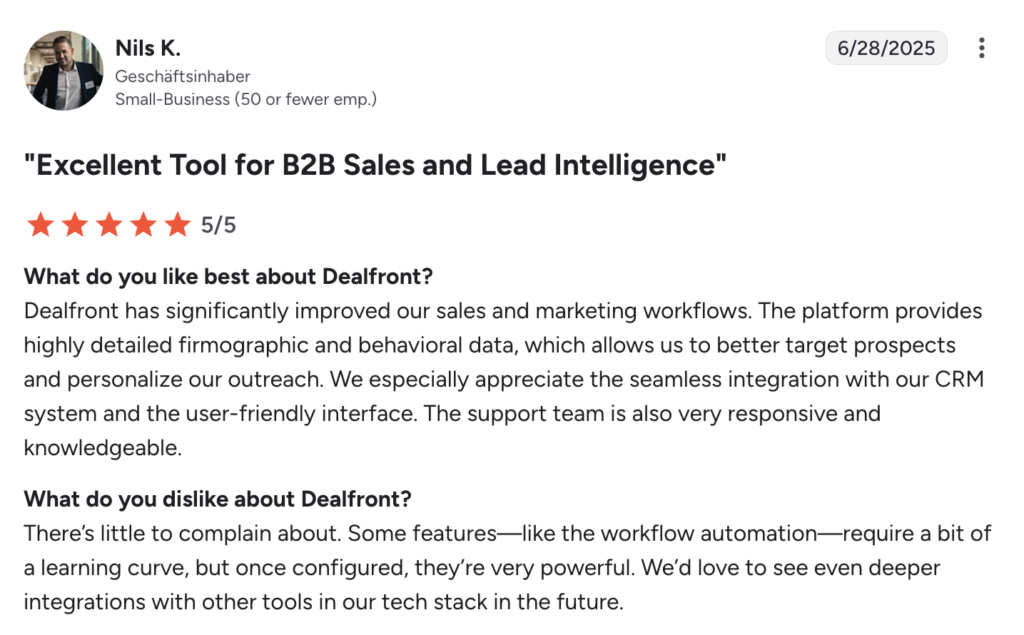
Source: G2
Its downside compared to other tools in this category is that its company data is designed to support revenue workflows rather than serve as a comprehensive business directory.
Compared to Veridion or Dun & Bradstreet, Dealfront offers less granular data and fewer options for deep customization or automation via APIs.
Bottom line: Dealfront is best viewed as a signal layer, not a single source of truth for company data.
Dun & Bradstreet is one of the oldest and most established players in the business data market.
In fact, they’ve been collecting and organizing business data for nearly 200 years, long before AI or even computers.
Back when “data gathering” meant paper records, trade ledgers, and thorough human verification.
Speaking of thorough, its scale is difficult to match: Dun & Bradstreet keeps data on 600M+ global entities, runs 60B+ monthly data quality checks, and maps 65M+ corporate family relationships.
That’s quick proof of why 90% of the Fortune 500 still rely on it for standardized risk and compliance workflows.
One of their stand-out features is the D-U-N-S Number.
Source: Vidyard
D&B’s D-U-N-S Number system is widely used for company identification, credit assessment, and compliance processes.
The platform boasts unparalleled global coverage, financial risk indicators, and standardized reporting that both regulators and large institutions recognize.
And D&B isn’t just legacy-oriented.
Vice President of Data Science Karolina Kierzkowski explained there’s a lot of innovation underway, too:
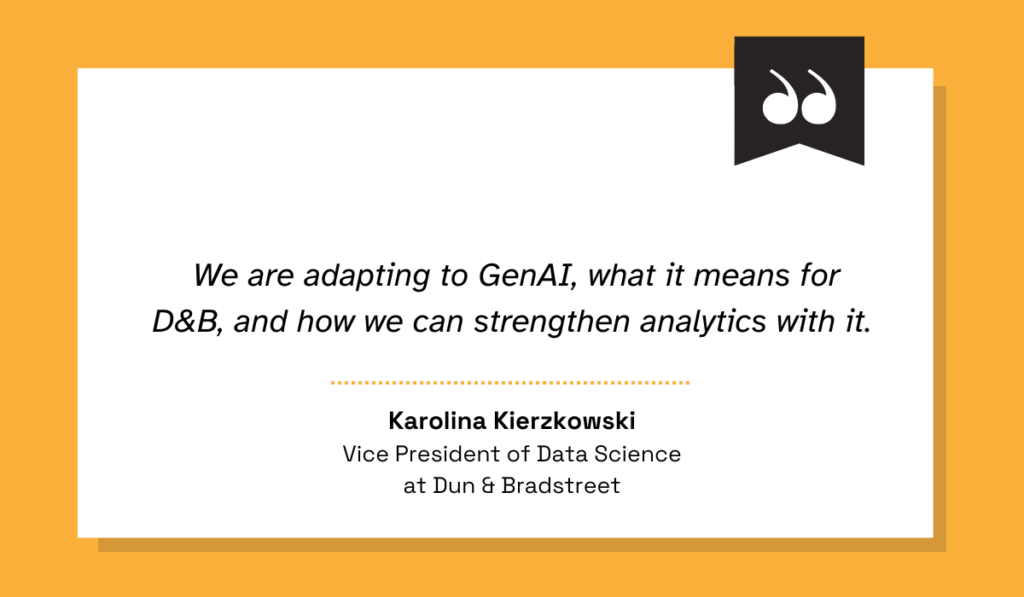
Illustration: Veridion / Quote: Dun & Bradstreet
Plus, they promise that, while pretty much all companies today are incorporating AI into their models, they’re doing so responsibly and sustainably.
That said, D&B’s strengths come with trade-offs.
Data refresh cycles can be slower, SMB coverage is uneven in some regions, and pricing is often prohibitive for teams that need flexibility or experimentation.
Customization and integration also tend to be more rigid compared to API-first providers.
Lots of organizations still rely on D&B, but increasingly as one data source among several. Tools like Veridion can be added to fill gaps in freshness and automation.
Lusha takes a much lighter-weight approach to business data.
It is primarily a contact enrichment tool designed for quick sales prospecting, so think browser extensions and simple CRM integrations.
Why is this great?
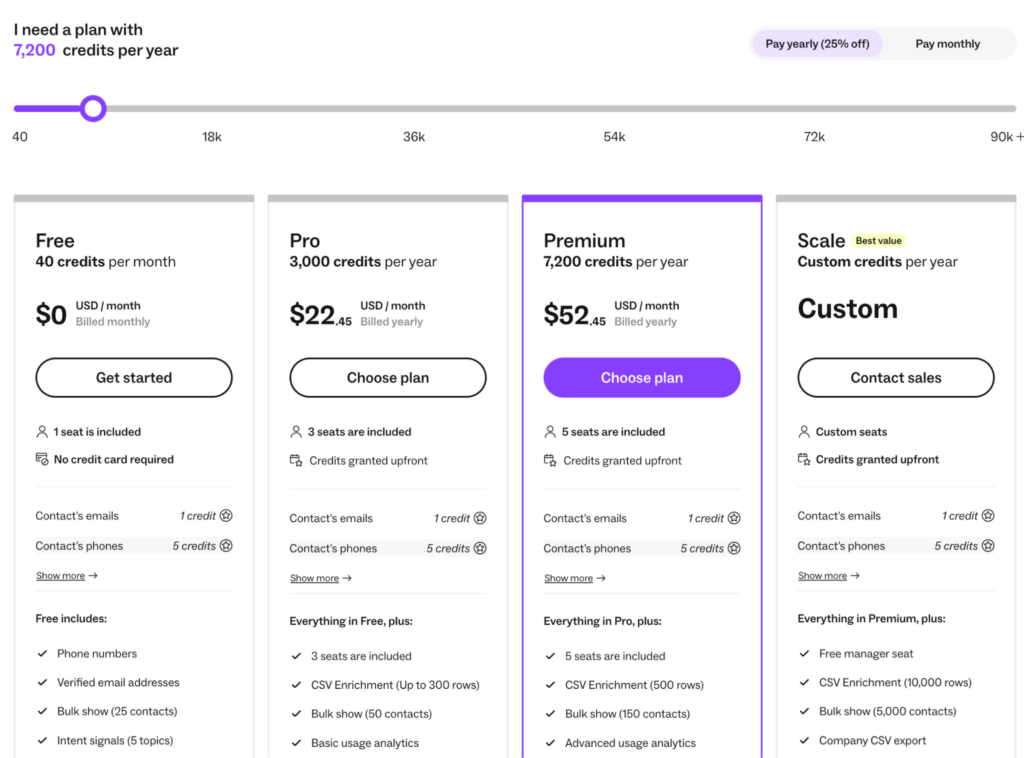
Well, Lusha lets users uncover emails and phone numbers with minimal setup. For small sales teams or individual contributors, this simplicity can be a lifesaver.
This is also reflected in their pricing model: it even includes a freemium model with paid upgrades.
Source: Lusha
However, Lusha offers very limited company intelligence beyond basic firmographics.
It is not designed for analytics or supplier evaluation. And it goes without saying, large-scale automation is off the table.
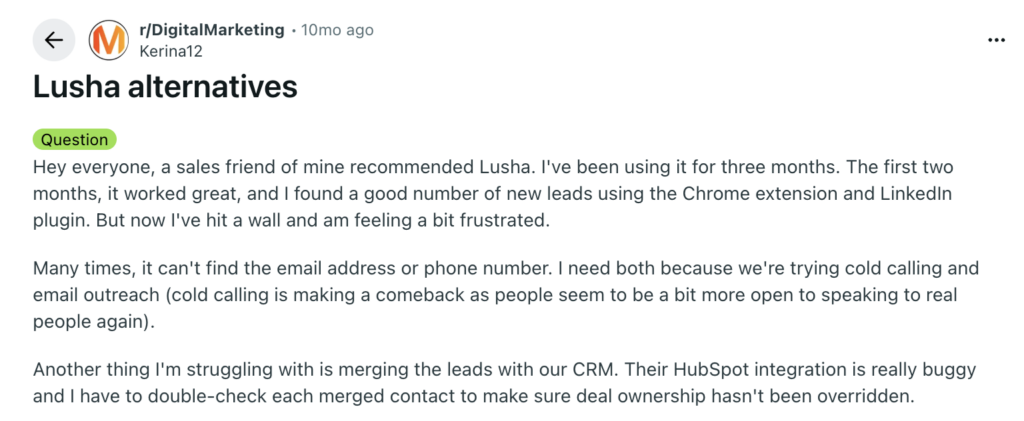
Plus, some users report inconsistent contact coverage over time and unreliable CRM integrations.
Source: Reddit
This basically means extra manual work when syncing leads and managing ownership.
In practice, Lusha works as a tactical add-on (as several reviewers suggest), not a strategic data platform.
We hope you now feel more confident about choosing the right business directory data provider for your team.
One gentle reminder: sales teams benefit from contact intelligence.
Procurement and risk teams need verified, up-to-date company data. Enterprises building automated decision engines should opt for scale, flexibility, and confidence.
If your goal is speed, coverage, and accuracy across global company data, API-first platforms like Veridion are strongest.
But remember your goal, and don’t forget you can always take some free trial offers, and pick-and-mix several tools to get the job done.