Insights / Articles
What Are the Benefits of Data Enrichment?
Want to understand the benefits of data enrichment? This guide will explain how enriched data supports better decisions and analytics.

- Organizations lose millions due to poor data every year.
- 82% of organizations experienced at least one third-party data breach in the past two years.
- Risk assessment begins and ends with the integrity of your underlying data.
If you’re here reading this article, you’ve probably made a strategic decision based on data you later discovered was incomplete.
Or maybe you realized mid-quarter that two departments were working off different versions of the same company record and drawing different conclusions from it.
Large enterprises face this sort of chaos all the time. Unfortunately, even small gaps in data quality can distort risk models, supplier evaluations, and revenue forecasts.
Fragmented or outdated datasets can thus snowball into very costly consequences.
So let’s take a thorough look at the benefits of data enrichment done right.
Improves Data Completeness
Enrichment strengthens your data foundation by filling in missing fields, correcting outdated information, and adding verified attributes to existing records.
Most importantly, good enrichment makes your data more reliable.
Incomplete data, however, is more common than most executives realize.
In enterprise environments, the most common gaps include:
- Missing ownership hierarchies
- Outdated contact information
- Incomplete product classifications
- Unverified geographic data
None of these are to be taken lightly.
Experian’s 2022 Report found that poor data quality is still one of the biggest barriers to business performance, with 85% of organizations citing poor quality data as a top concern.
What’s more, 93% say data quality has become more important over the last 12 months.
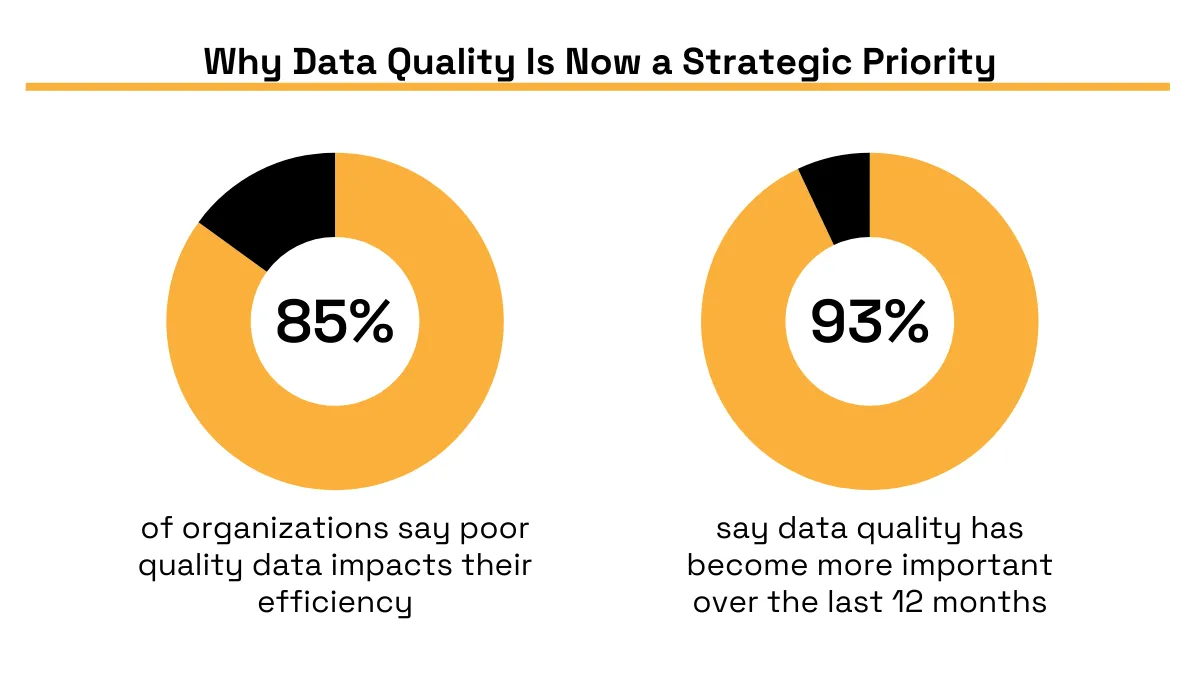
Given the acceleration of AI adoption, regulatory scrutiny, and supply chain volatility since 2022, the importance of data quality has likely increased further.
And it’s easy to see why the data gaps we mentioned impact business performance directly.
Take core fields like ownership structure, industry classification, product offerings, or geographic footprint. If any of these are missing, analytics models are built on partial truths.
And the impact goes well beyond inconvenience or lost time.
According to Forrester’s research on data quality, organizations lose millions due to poor data every year. One in four data practitioners reports losing over $5 million.
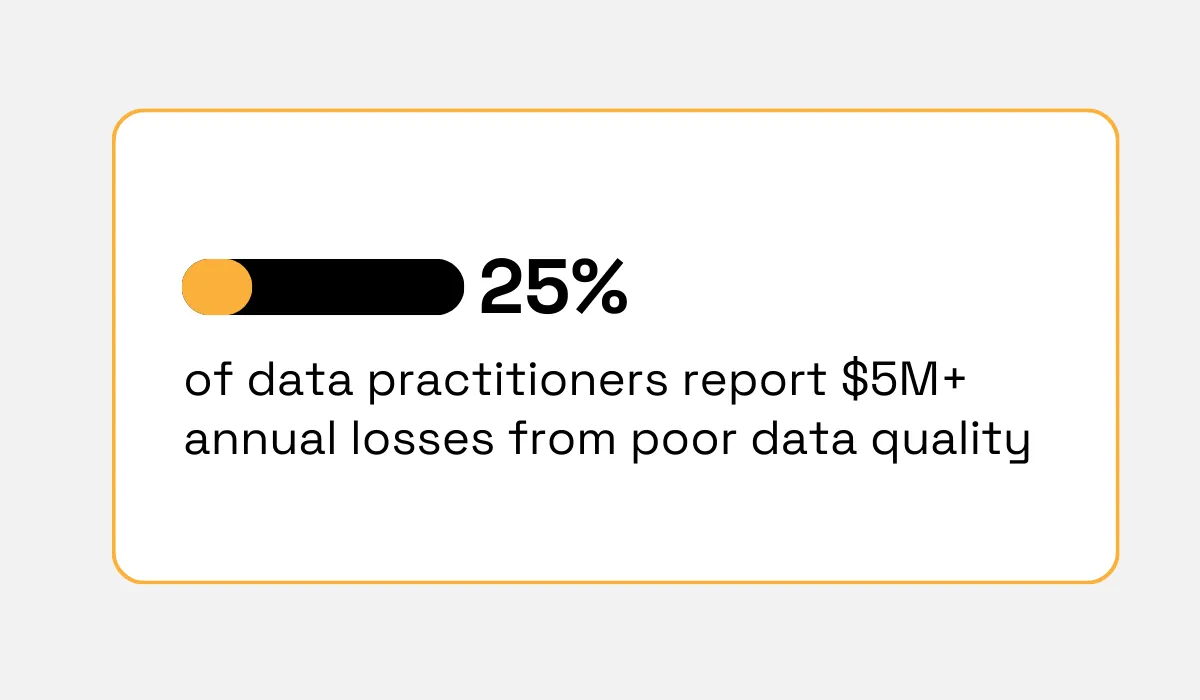
And 7% report losing a whopping $25 million or more.
That’s often because teams make decisions based on flawed or outdated records.
When you rely on internal CRM entries that haven’t been refreshed in years, you risk targeting the wrong accounts, underestimating risk, or duplicating suppliers across systems.
Data enrichment closes these gaps by layering external, verified intelligence onto your existing datasets.
For example, a global procurement team may have supplier names and contract values stored in its ERP system, but lack visibility into subsidiaries, product lines, or recent ownership changes.
By enriching those records with structured company data, the organization gets a complete, unified profile.
The table below shows how data enrichment can improve record completeness:
Data Gap | After Enrichment | Business Impact |
|---|---|---|
Missing firmographic data (only company name + country) | Revenue range, employee count, industry code, founding year added | Enables accurate segmentation, benchmarking, and risk scoring |
Isolated supplier record | Parent company, subsidiaries, ultimate beneficial owner mapped | Improves visibility into corporate exposure and eliminates duplicate vendors |
Generic industry label (e.g., “Manufacturing”) | Specific product/service classifications (e.g., UNSPSC) | Clarifies capabilities and strengthens supplier discovery |
Outdated ownership or location data | Updated acquisitions, relocations, leadership changes | Ensures decisions reflect current operational reality |
Inconsistent data across CRM/ERP systems | Standardized naming, harmonized industry codes, normalized records | Reduces reporting errors and improves cross-system interoperability |
Ultimately, improved completeness means your dashboards, reports, and risk models are up-to-date and, of course, trustworthy.
This, in turn, means safer, smarter decisions.
Strengthens Risk Assessment
Risk assessment begins and ends with the integrity of your underlying data.
When your vendor or counterparty records lack firmographic depth, financial signals, or compliance indicators, your risk scoring models operate in the dark.
Data enrichment strengthens these models by introducing additional layers of intelligence.
These can be anything from corporate linkages and financial health indicators to regulatory exposure and operational dependencies.
Take data breaches, for example.
This report by ProcessUnity shows 82% of organizations experienced at least one third-party data breach in two years. And each incident cost around $7.5 million to fix.
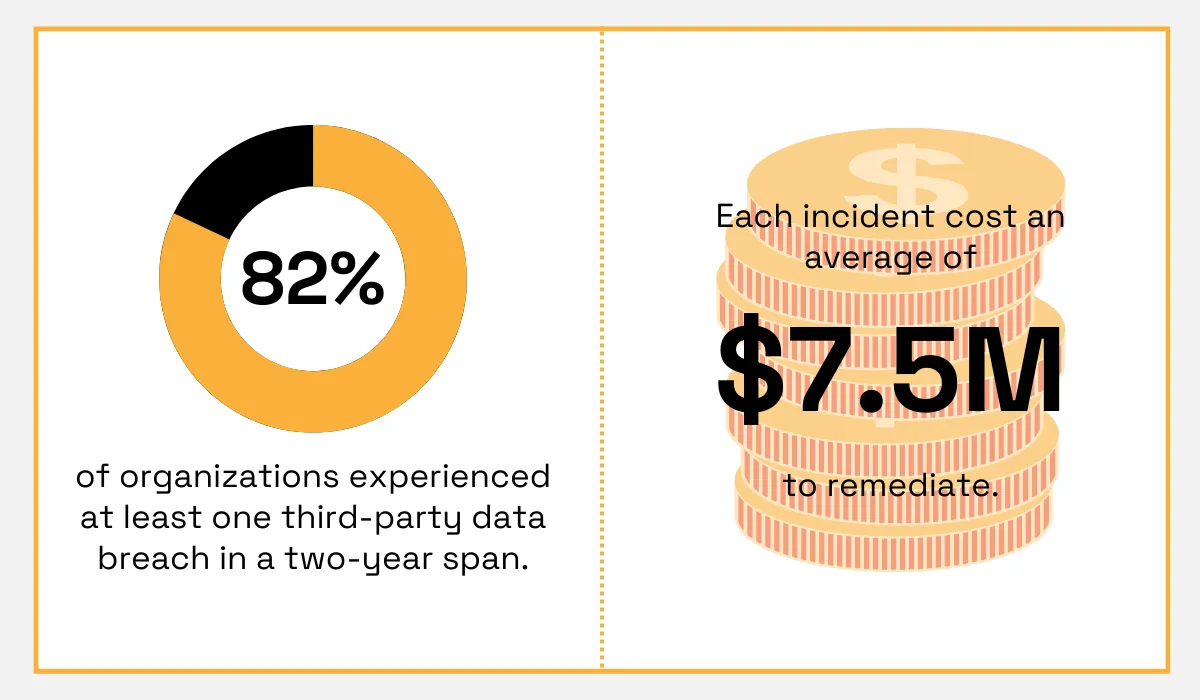
Source: Veridion / Data: ProcessUnity
These incidents tend to emerge from overlooked suppliers, outdated risk profiles, or missing contextual data.
But enrichment enhances third-party risk frameworks by integrating external company intelligence into your internal scoring systems.
Let’s say a supplier suddenly changes ownership or relocates to a higher-risk jurisdiction.
That’s where enriched datasets come in to surface those signals. And they do so much earlier than manual reviews ever can.
Here are four important ways data enrichment enhances risk visibility across supply chain and financial functions:
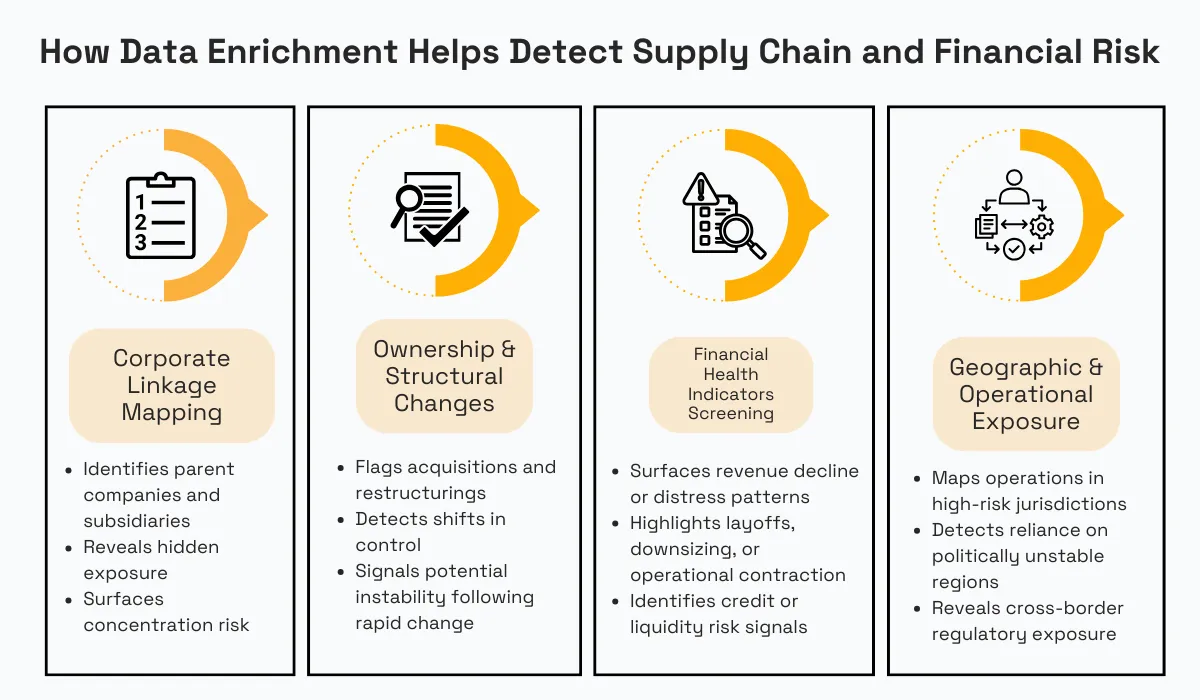
Source: Veridion
If this seems excessive, trust us, it’s not. This level of visibility is increasingly expected in today’s regulatory environment.
Frameworks tied to GDPR, HIPAA, SOX, and evolving ESG standards increasingly ask organizations to demonstrate ongoing due diligence.
With an emphasis on “ongoing,” so it’s not enough to get your ducks in a row once a year or quarter.
Regulators expect continuous monitoring and documented awareness of third-party risks.
Why?
Because of incidents like the Target 2013 data breach, where cybercriminals stole the personal data and payment information of over 40 million customers.
This happened through a third-party HVAC vendor. The resolution was an $18.5 million settlement.
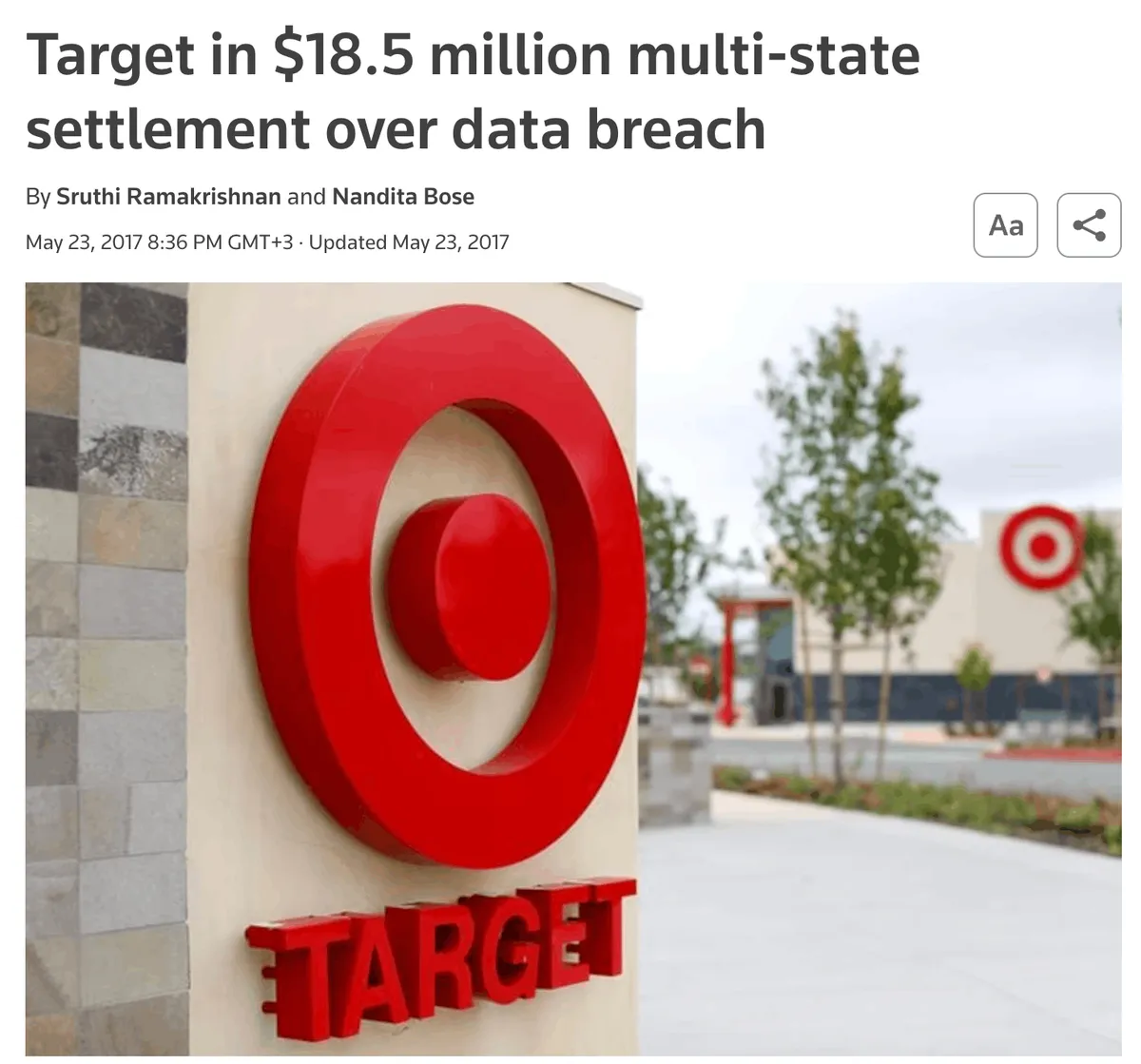
Source: Reuters
Now, security controls did exist. But the wider risk context around vendor access and monitoring proved insufficient.
Enriched, continuously updated vendor intelligence can strengthen precisely this type of oversight because it connects operational data with contextual company-level insights.
By strengthening risk assessment models with external intelligence, you move from reactive remediation to proactive identification.
Improves Supply Chain Visibility
Modern supply chains are deeply interconnected networks. And yet, many enterprises still manage suppliers as isolated entities.
That means they don’t map corporate hierarchies, product-level offerings, or cross-border dependencies.
Data enrichment improves supply chain visibility by connecting these fragmented pieces into a structured, navigable ecosystem.
Research from Inspectorio indicates that resilience has become a top concern for supply chain leaders, which only goes to reflect the volatility of recent years.
Disruptions triggered by geopolitical tensions, pandemics, or supplier insolvency have exposed how limited visibility can magnify operational risk.
Enriched company data helps with this because it adds context to each supplier node.
So, beyond a company name and contract value, you gain insight into:
- Parent entities
- Subsidiaries
- Manufacturing locations
- Product portfolios
- Sector classifications
This lets procurement and risk teams understand concentration risks and systemic dependencies alike.
Take the semiconductor shortage that disrupted automotive production globally after the COVID-19 pandemic.
Many manufacturers discovered too late that multiple tier-one suppliers depended on the same upstream chip producers.
And the crisis was only made worse by the lack of visibility beyond these immediate vendors.
This can be avoided with a strong data enrichment tool.
In fact, AI-driven B2B data enrichment has become central to improving supply chain visibility at scale.
So, let’s talk Veridion.
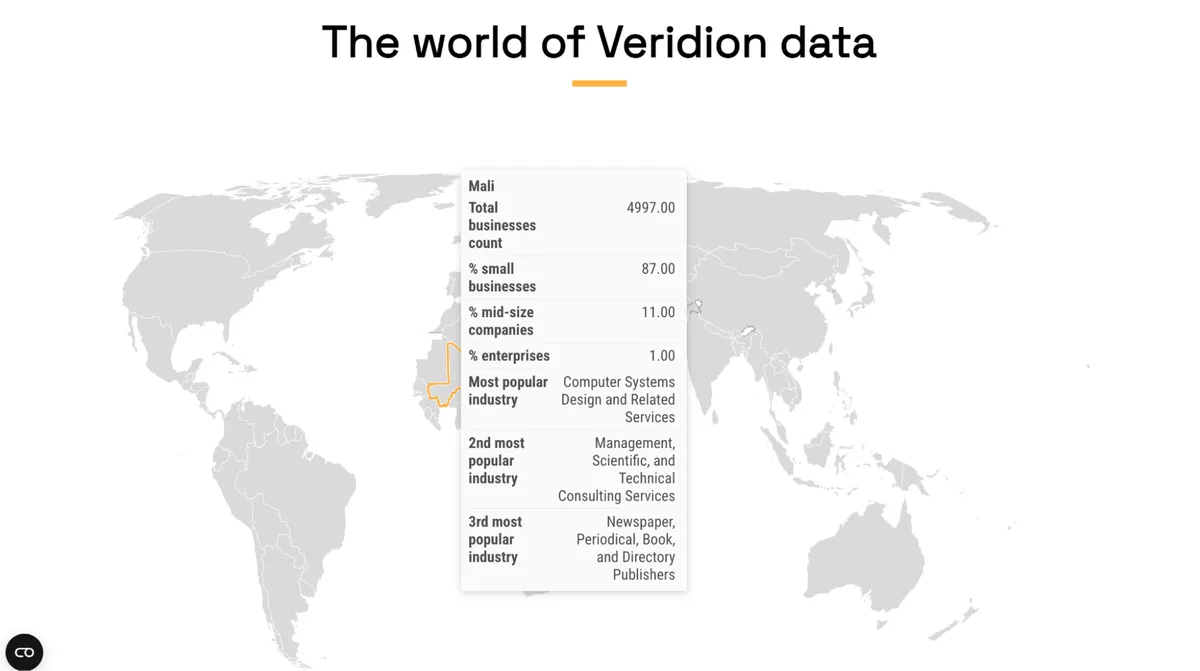
Source: Veridion
While your internal systems capture contracts and spend, Veridion layers in structured external intelligence across 693M suppliers in 250 countries (and counting).
That includes anything from verified corporate hierarchies to product-level data, operational footprints, and geographic presence.
And all this data is refreshed weekly to reflect real-world changes.
Speaking of real-world changes, these matter because supply chains are constantly changing.
Companies acquire subsidiaries, shift manufacturing locations, expand into new markets, or change ownership structures all the time.
Changes like these remain invisible without continuous enrichment.
Here are just a few of the benefits of using a platform like Veridion to enrich data and gain supply chain visibility:
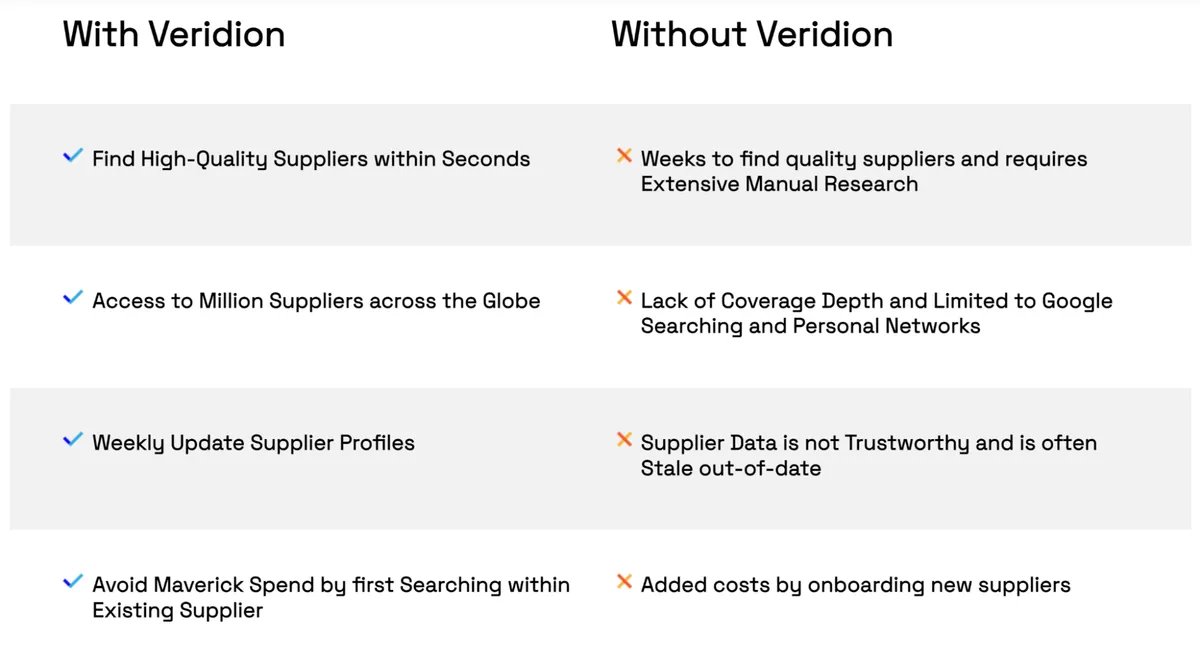
Source: Veridion
Veridion’s structured supplier profiles let you map parent–subsidiary relationships, identify overlapping upstream dependencies, and detect concentration risks otherwise buried in fragmented datasets.
Plus, its product-level intelligence clarifies what each supplier actually provides. So there’s less ambiguity during sourcing and risk assessments.
The result is not just cleaner data, but clearer exposure mapping.
And this visibility extends beyond structure and products.
Veridion also provides near real-time supplier intelligence, which means you can track ownership changes, certification gaps, and emerging ESG controversies across global supply networks.
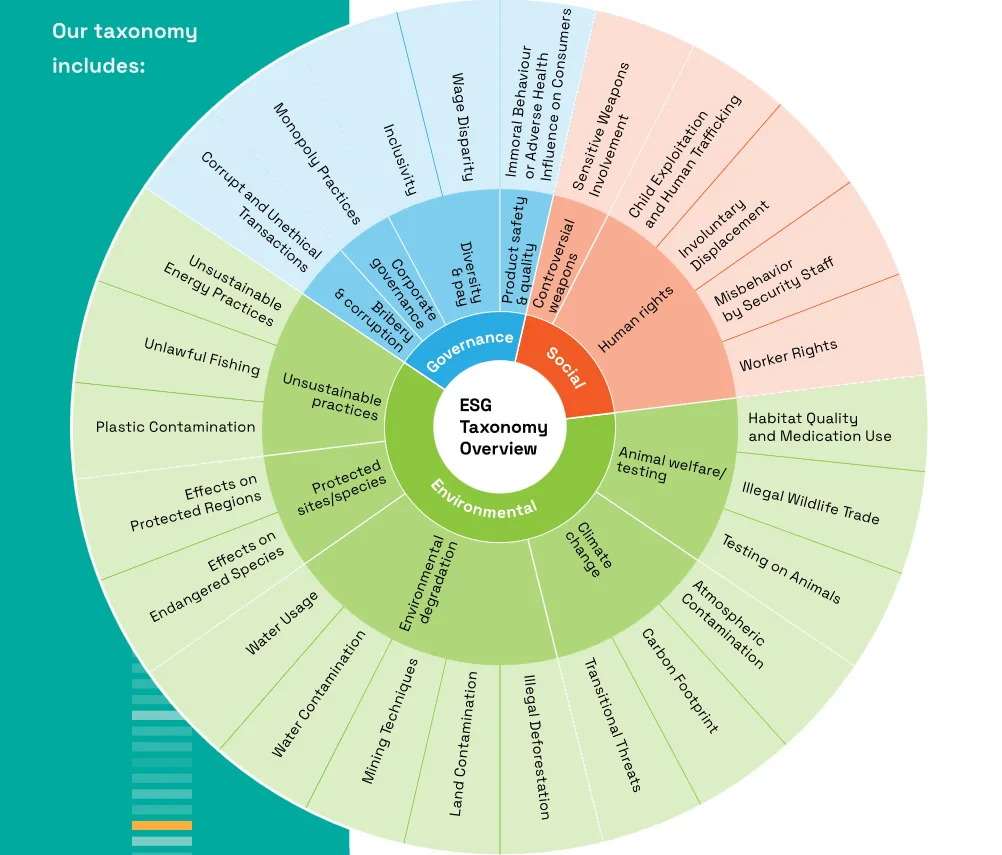
Source: Veridion
This is precious in complex, multi-tier supply chains where risks related to labor practices, environmental impact, or regulatory compliance often stay hidden.
By structuring these signals into searchable, standardized attributes, you find these issues before they escalate into operational or reputational damage.
Why does this matter?
Take the Winter Storm Uri in 2021.

Source: Exiger
The extreme weather event shut down large parts of Texas’ petrochemical and semiconductor production, disrupting supply chains globally.
Many companies only realized retroactively that myriad tier-one suppliers depended on facilities from the same region.
The issue wasn’t just the storm itself but the hidden concentration risk. Organizations that lacked visibility beyond immediate vendors struggled to assess exposure quickly or activate contingency plans.
By surfacing geographic and operational dependencies in advance, enriched data turns resilience into a proactive strategy. This saves millions… and perhaps entire companies.
Enables More Precise Segmentation
Segmentation drives prioritization, personalization, and performance.
However, segmentation models built on limited firmographic data tend to be blunt instruments.
Basic attributes like company size or industry code rarely capture the nuance required for enterprise-level targeting.
As Michael Porter, Harvard Business School professor and strategy expert, famously wrote:
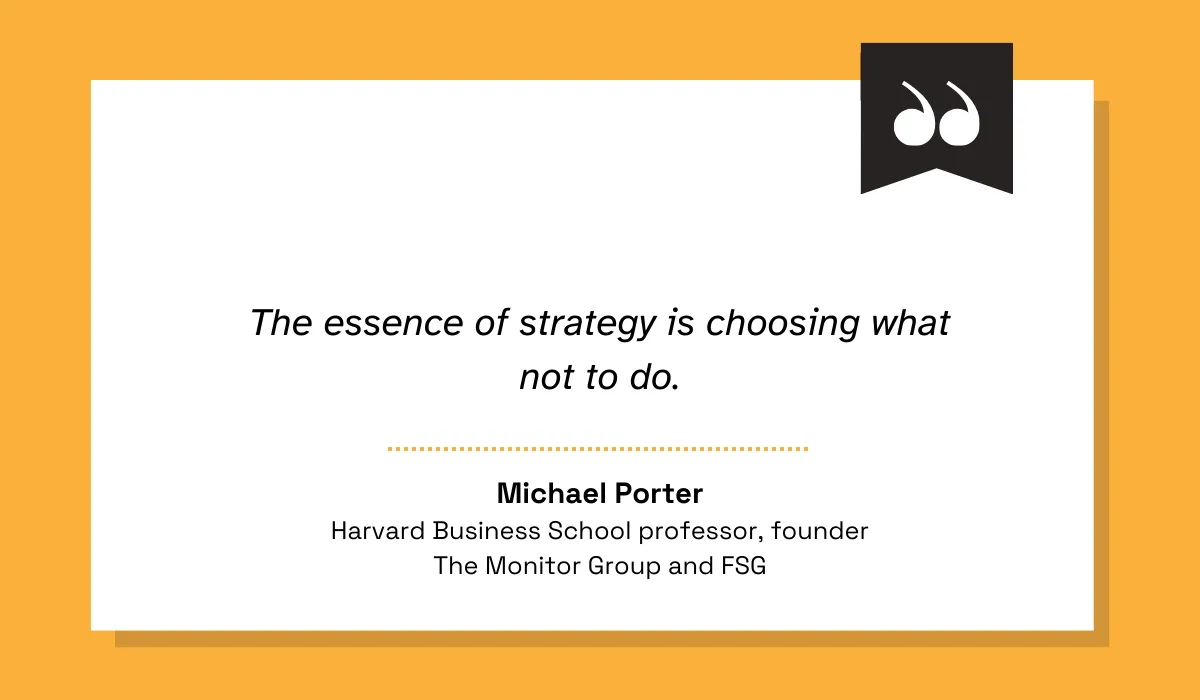
Illustration: Veridion / Quote: Harvard Business Review
In B2B targeting, that choice depends on how clearly you can differentiate between accounts. And differentiation requires context.
Data enrichment enables much more precise segmentation by introducing additional firmographic, technographic, and behavioral dimensions.
These reveal how organizations actually operate.
Precisely’s recent research on data integrity and AI readiness reinforces this point: advanced analytics and AI-driven decision-making depend on high-quality, structured data.
Enriched attributes are exactly what refine the picture.
For example, in a B2B sales context, adding product-level insights, technology stack indicators, and growth signals helps revenue teams prioritize accounts that are strategically aligned.
It’s the same logic in procurement. Enriched supplier attributes, like ESG alignment, regional presence, and product specialization, enable more targeted sourcing strategies.
So instead of casting a wide net based solely on industry codes, teams can segment suppliers by verified capabilities and compliance credentials.
This approach reflects several established best practices in B2B targeting and account prioritization:
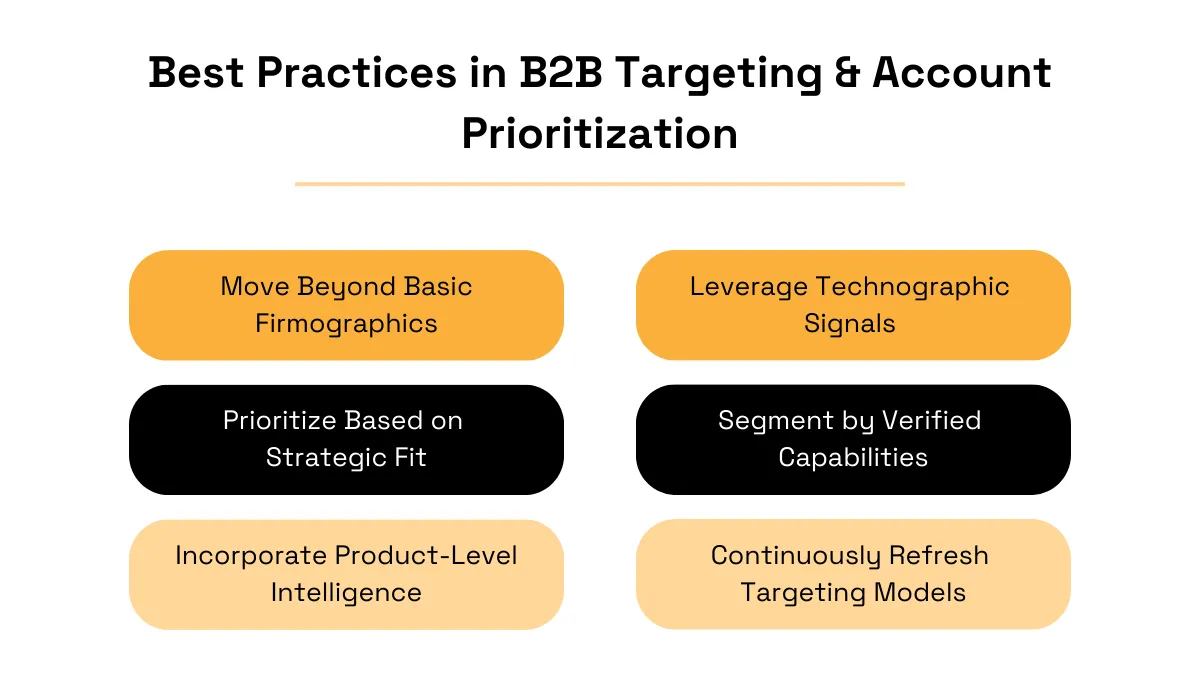
Source: Veridion
A good example here is Vodafone Ireland’s personalization strategy, as reported by Adobe.
By using enriched audience segment data through Adobe Analytics and Adobe Target, the company tailored messaging to distinct customer groups, from business users to pay-as-you-go customers.
The result? More than 422,000 app downloads and 200,000+ monthly active users. Quick proof of how smarter segmentation turns data into real engagement.
More precise segmentation leads to more relevant engagement, better resource allocation, and stronger ROI.
Increases Efficiency
Data inefficiency is expensive. Luckily, it’s also avoidable.
Manual research, data cleansing, and cross-system reconciliation consume giant chunks of time across procurement, compliance, and analytics teams.
When records are incomplete or inconsistent, employees spend hours validating company names, correcting duplicates, or searching for updated information.
And all this chaos snowballs fast when multiple departments keep separate datasets.
Enrichment addresses this by standardizing and updating records at scale.
So instead of relying on ad hoc research or static spreadsheets, you integrate structured external data directly into CRM, ERP, and risk management systems.
When enriched company profiles are synced, say, across procurement and finance systems, duplicate vendors can be identified and consolidated.
This, in turn, reduces payment errors, improves spend analysis, and enhances reporting accuracy.
Interoperability also improves.
Standardized classifications and structured attributes let systems “speak the same language.” So you get a smoother data exchange between departments and platforms like Coupa or Snowflake.
And this efficiency is as much technical as it is strategic.
Andrew Abraham, Global Managing Director for Experian’s Data Quality division, sums it up well:
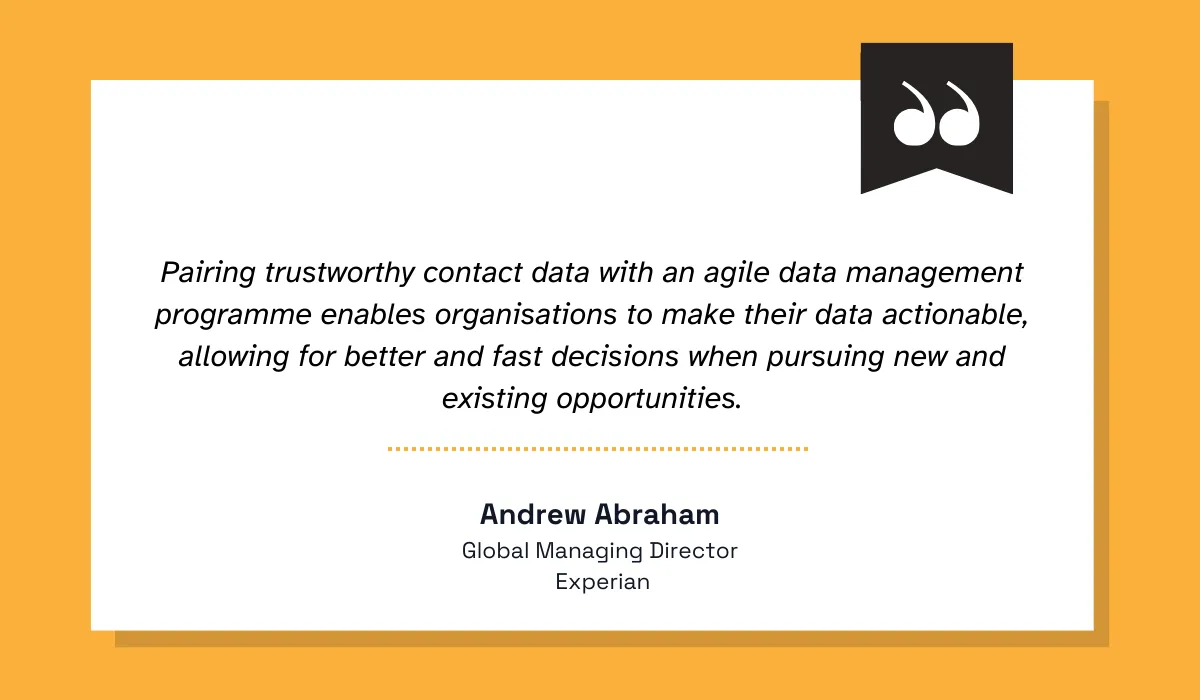
Improving efficiency at scale, however, requires more than automation.
It depends on how well you maintain standardized datasets across departments. The visual below illustrates some of the most vital best practices here:
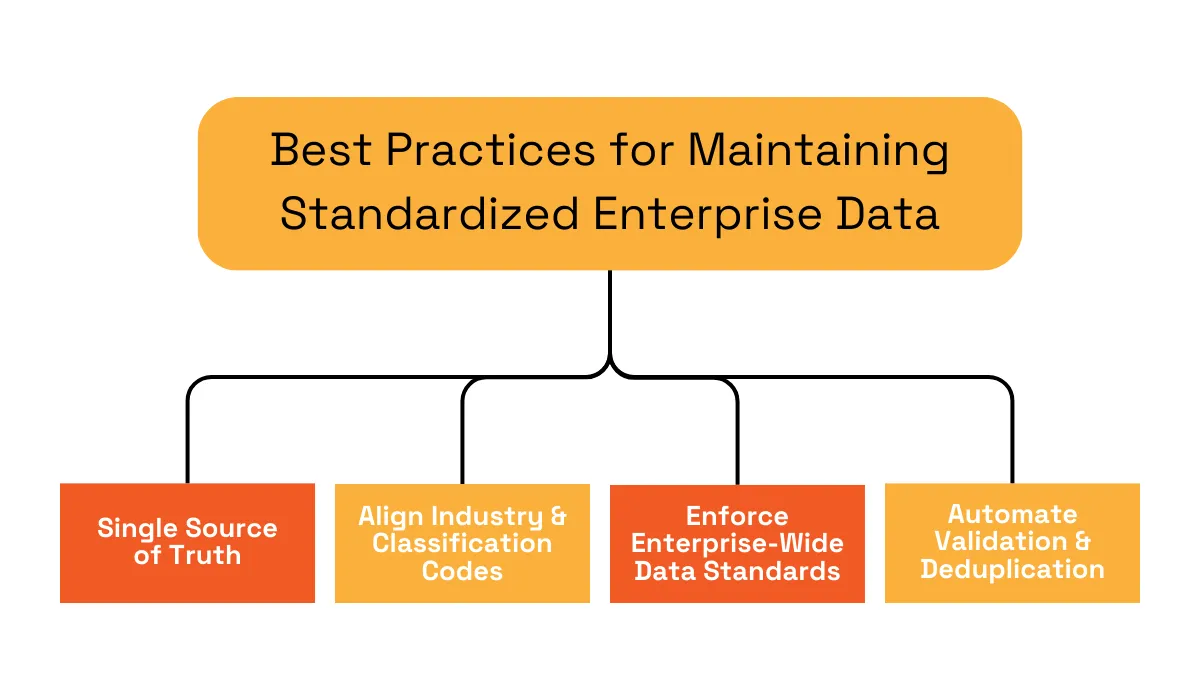
Source: Veridion
With enriched, standardized data in place, teams spend less time fixing records and more time moving the business forward.
In large companies, that kind of improvement saves time, money, and let’s face it, sanity.
Conclusion
Data enrichment sharpens your business edge.
You’ve seen how it transforms fragmented records into strategic intelligence.
Now, you can put it to work: strengthening decisions, reducing blind spots, and moving faster with confidence in every supplier, segment, and strategy you pursue.
When your company intelligence reflects current reality, your strategies do too.
Articles
Discuss how these trends affect your organization.
Our analysts are available for a short call. Bring a specific question and we will ground it in the data.