



Blog
What Is a Data Intelligence Platform?
By: Auras Tanase -
26 December 2025


We love our data, and now that you're here, you're one step closer to loving it too.
A wide sample of data, so you can explore what is possible with our data
Choose ->
built with procurement in mind. Focused on manufacturers, products and more
Choose ->
built with insurance in mind. Focused on classifications, business activity tags and more
Choose ->
built with sustainability in mind. Focused on sustainability commitments, and environmental and social governance insights.
Choose ->
built with strategic insights in mind. Focused on market trends, competitor analysis, and industry-specific data
Choose ->

Keep up to date with our technology, what our clients are doing and get interesting monthly market insights.

Key Takeaways:
The sheer amount of data companies have today can make it difficult to find the right information when it’s needed most.
If this challenge has you searching for a better way to understand and trust your organization’s data, then you’re in the right place.
This article will explain what a data intelligence platform is and how it helps turn messy data into a reliable resource for everyone in your company.
A data intelligence platform is a centralized system designed to help organizations discover, understand, and trust their data.
It acts like a smart catalog for all of a company’s data assets, providing context and meaning.
While there is some overlap with other tools like business intelligence platforms, data intelligence has a distinct purpose.
Take a look at the table below for the main differences.
Business Intelligence | Data Intelligence | |
|---|---|---|
| Focus | Historical reporting and analysis | Real-time insights and prediction |
| Data Sources | Primarily internal databases | Internal + extensive external sources |
| Approach | Answers specific business questions | Discovers patterns and opportunities |
| Output | Dashboards and reports | Actionable intelligence and recommendations |
It’s important to note that data intelligence platforms go beyond traditional data management.
In fact, they add a lot more context and offer more advanced capabilities.
Instead of just storing data, they provide information about the data, like where it came from, who owns it, and how it has changed over time.
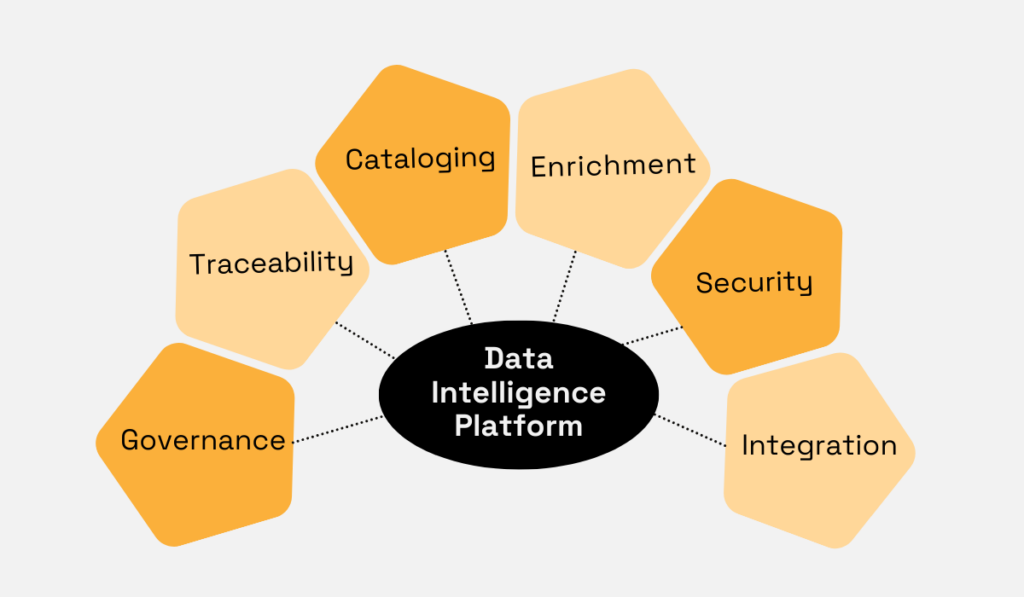
These platforms achieve this through a set of core components, which are illustrated below.
Source: Veridion
We will explore some of these aspects next.
But, in general, these platforms aim to create a single, reliable source of information about an organization’s data, making it easier for everyone to use it with confidence.
There are several key features that separate a good platform from a great one.
Now that we explained what a data intelligence platform is, let’s explore what you should look for when choosing one.
While organizations often collect vast amounts of data, the real challenge is ensuring that the data is high-quality and up-to-date.
For this reason, a strong data intelligence platform should ensure a company’s internal records are continuously supplemented with accurate, timely information from trusted external sources.
After all, as Christian Randieri, Forbes Councils Member and EMEA Director at Kwaai, puts it, just raw data is not enough.
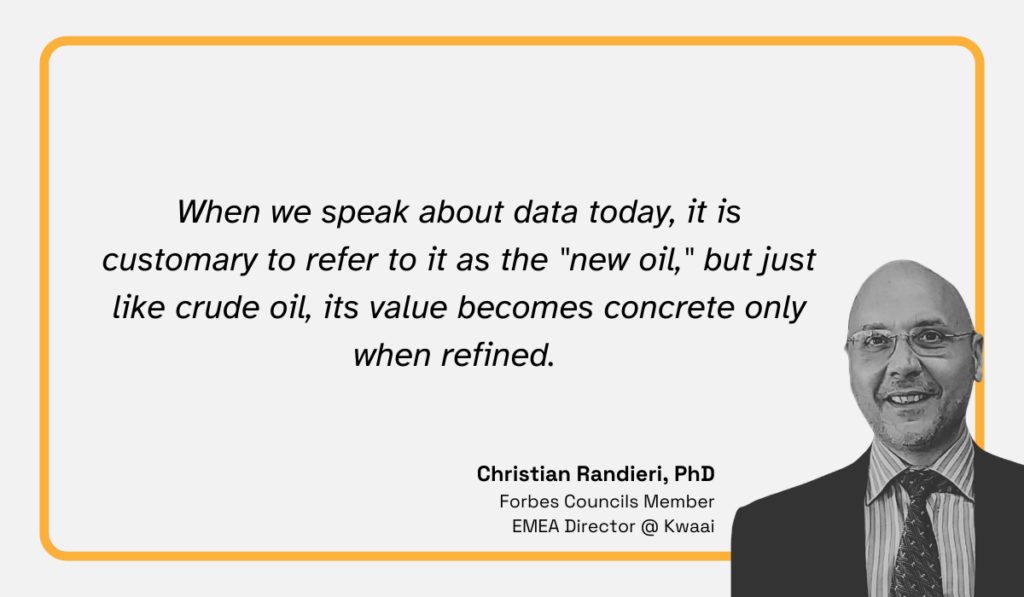
Illustration: Veridion / Quote: Forbes
This process of “refining” raw data includes its enrichment.
Importantly, when this enrichment is automated, it means datasets are continuously refreshed, and critical gaps are filled that internal systems alone cannot cover.
To achieve this, companies can use specialized third-party data providers such as Veridion.
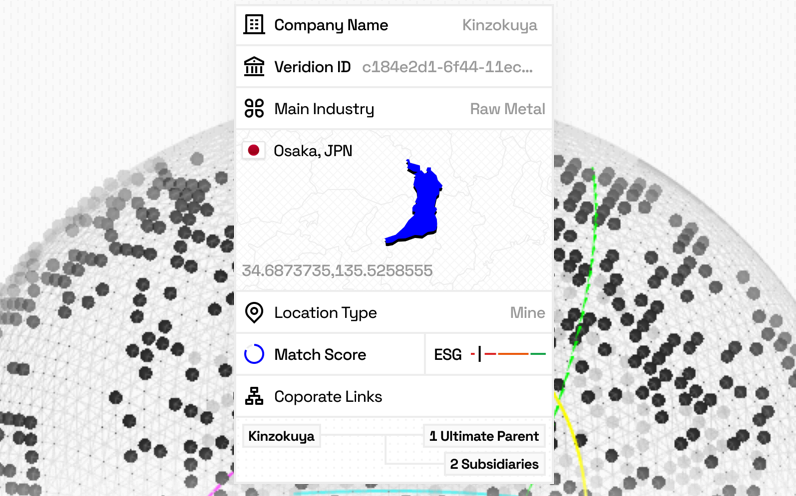
Its proprietary AI and ML algorithms constantly scan the web for fresh information, scraping, structuring, and refining public data to build comprehensive company profiles.
Source: Veridion
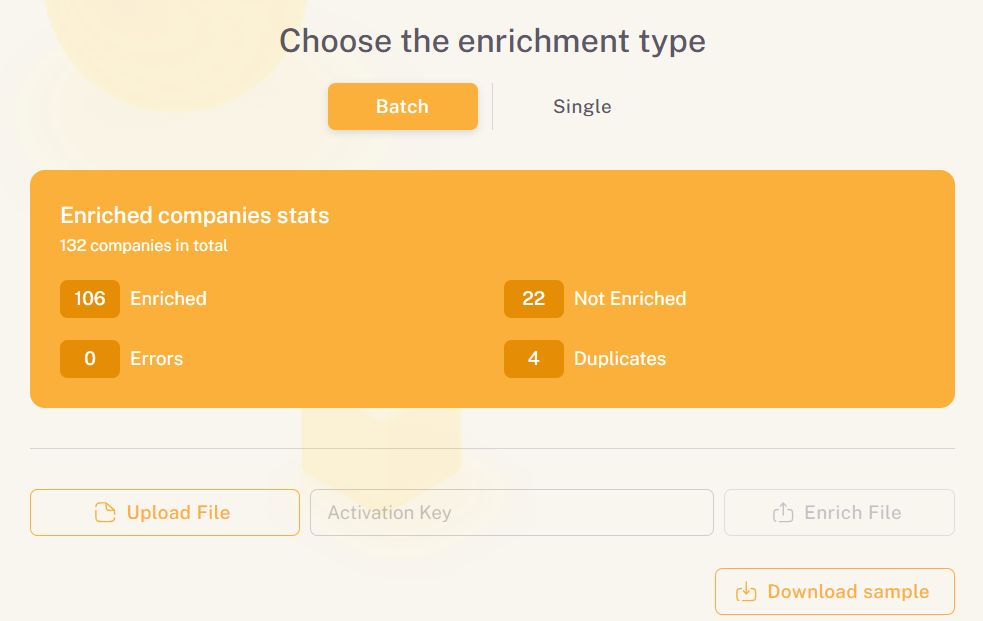
Then, using its Match & Enrich Service, Veridion can take a company’s internal data—whether it’s a large batch of records or a single entry—and match it against its own vast database, appending the latest information.
Source: Veridion
Notably, this includes over 320 distinct attributes, including B2B firmographic, operational, and risk-related data for each vendor, partner, and supplier company profile.
This data is updated every week, and ultimately provides a more complete picture of your records.
This means your sales teams work with accurate contact details, your procurement teams understand supplier capabilities, and your analysts base their recommendations on current market conditions rather than outdated snapshots.
Data naturally forms patterns, and exploring them can lead to valuable business insights.
Historically, this exploration was limited by slow, manual processes that relied on human analysis.
But modern advancements in Artificial Intelligence (AI) and Machine Learning (ML) have been a perfect addition to data intelligence platforms.
In fact, many platforms now leverage these technologies to detect patterns and trends faster and with much more accuracy than any person could.
By using AI and ML to process enormous datasets, a platform can automatically identify data anomalies, classify new information, or even predict potential risks.
Plus, as Databricks elaborates, accessing these powerful insights can be very straightforward.
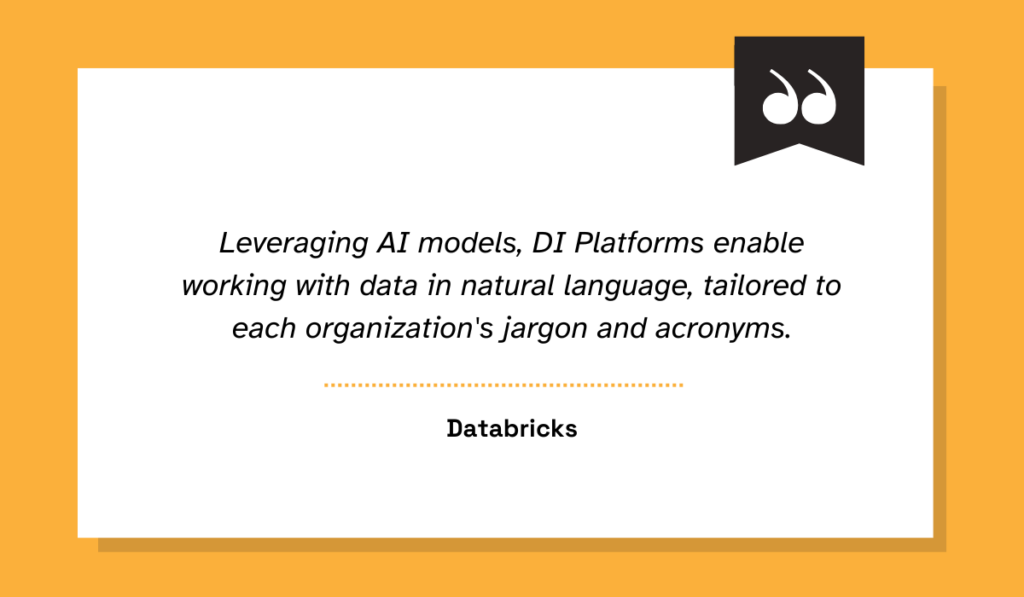
Illustration: Veridion / Quote: Databricks
With the integration of conversational AI, finding information no longer requires teams to learn technical commands.
Instead, it can be as simple as asking a question, just like talking to a colleague.
For example, some platforms include an AI chat agent, such as the one shown below.
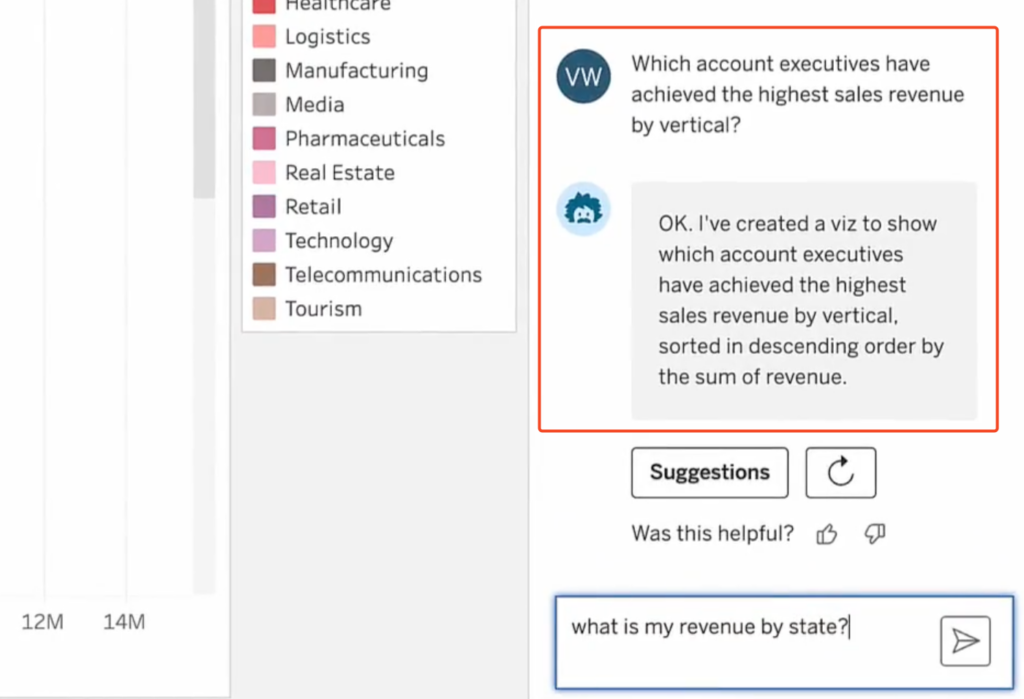
Source: Tableau
This kind of functionality can pull up reports from a simple request, written in natural language.
It can elaborate on what the generated insights mean, and even go one step further by suggesting next steps.
In short, AI and ML make data intelligence platforms more powerful and much easier to use.
The easy accessibility of data that these platforms provide should not come at the expense of security and compliance.
This is where data governance comes in.
Powerful data governance features ensure that information is accurate, compliant, and used appropriately throughout the organization.
For starters, if we consider the four security levels shown below, you would want the most robust controls.
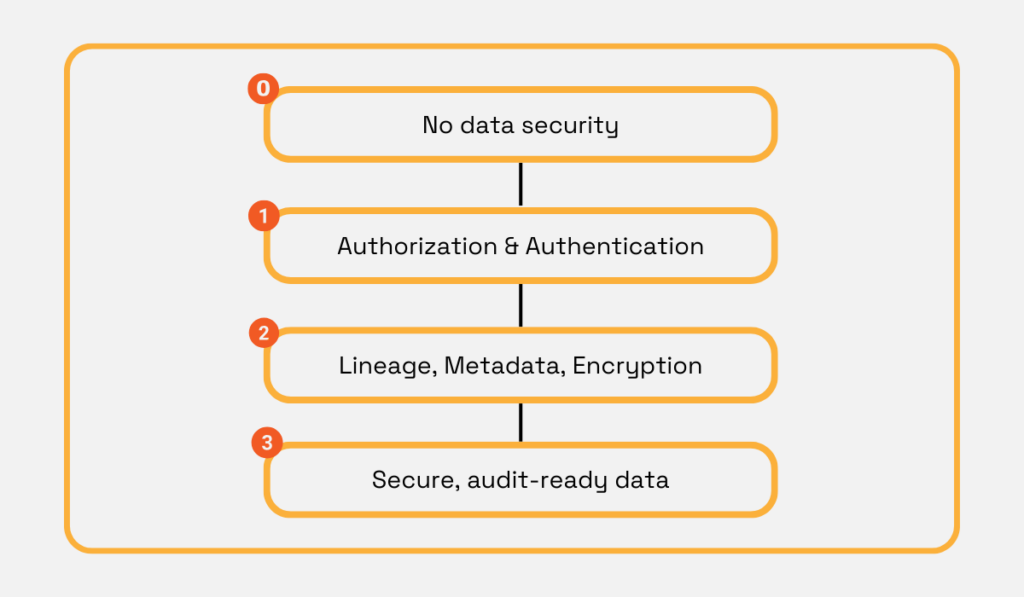
Source: Veridion
Of course, basic authorization and authentication for accessing data are a must, but they are not sufficient.
Strong platforms also use encryption to protect sensitive data from being viewed by unauthorized parties.
Combine that with the data lineage feature that provides a complete history of your data, including where it came from, who has accessed it, and how it has changed over time.
Take a look at an example from Databricks’ lineage feature, shown below.

Source: Databricks
The ultimate goal is to have a fully secure platform that provides audit-ready data.
This means all data activity is so well-documented and transparent that it supports you during audits and helps you stay compliant, which is the highest standard of data trust.
Finally, two essential features to look for in any data intelligence platform are metadata management and cataloging capabilities.
Starting with cataloging, this is essentially a comprehensive inventory system that organizes and indexes all your data assets in one searchable location.
It’s very straightforward in concept, but it’s a powerful way to make information searchable, traceable, and easy to interpret, even for non-technical stakeholders who might not understand database structures or file systems.
For example, platforms like Atlan offer data catalogs that can aid data searches, viewing granular details, and even looking at the data lineage and relationships.
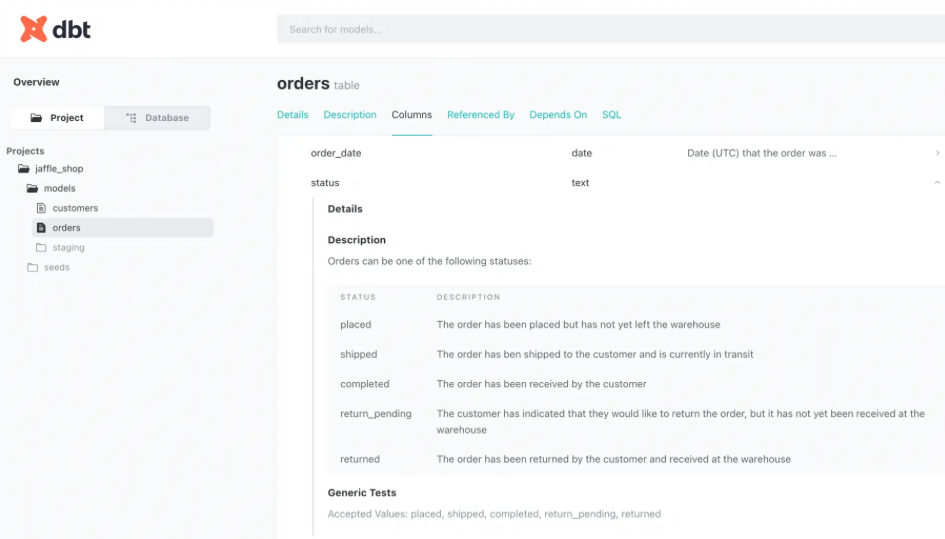
Source: Atlan
This closely relates to metadata, which is descriptive information about your data.
It includes things like creation dates, source systems, update frequency, data owners, and quality scores.
As Jason Rushin, product marketing consultant, explains, modern cataloging and metadata work together seamlessly.
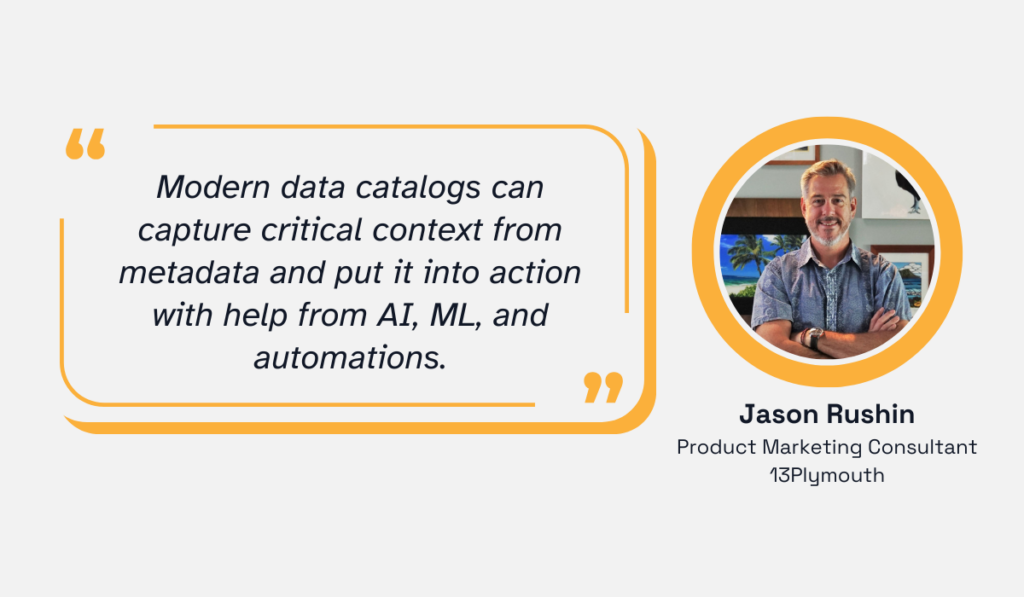
Illustration: Veridion / Quote: Alation
When catalogs capture context from metadata, they create rich, searchable descriptions of each data asset.
This context can then even feed into AI and ML algorithms, helping them understand not just what the data contains, but what it means and how it relates to other information.
Put all these features together, and you get a great synergy between the core functionalities of a data intelligence platform.
The features we’ve discussed so far paint a picture of what these platforms can do technically.
Now, let’s see what they mean for your organization’s day-to-day operations and long-term success.
A fundamental lack of trust in their own data is a challenge for many organizations.
In fact, as research from Precisely shows, the majority of organizations face this issue when they try to use their data for business decisions.
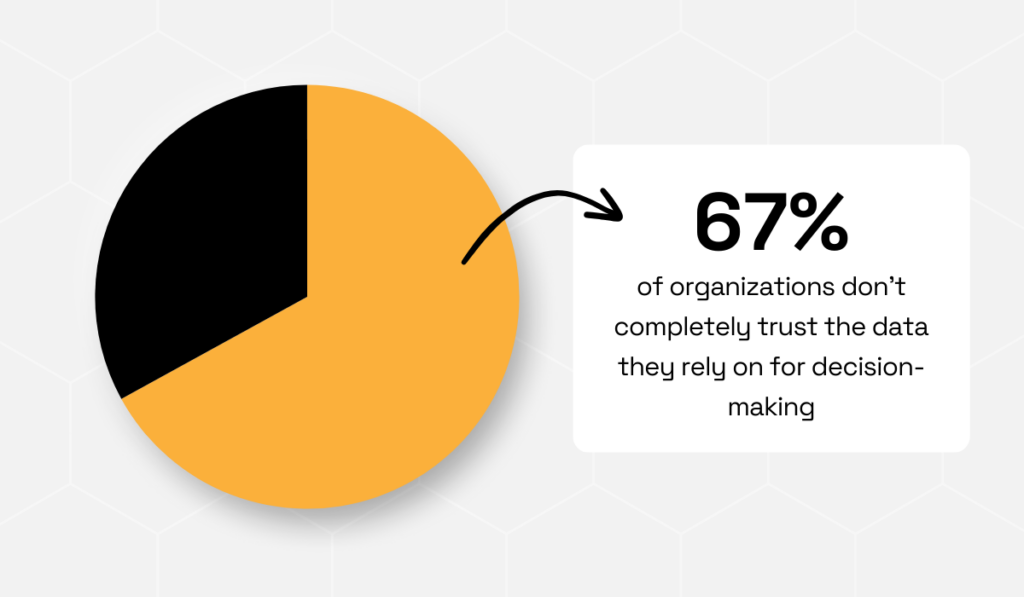
Illustration: Veridion / Data: Precisely
This creates a significant blind spot.
After all, if you’re uncertain about the accuracy of your data, how can you trust the insights on business threats or vulnerabilities?
A data intelligence platform addresses this problem head-on by establishing a single, reliable source of truth.
It provides a unified view of your data with clear visibility into its origin and quality.
When you combine this trusted foundation with AI that can scan for anomalies and risk patterns, you can detect and mitigate risks far more effectively.
This proactive risk mitigation also covers the business as a whole.
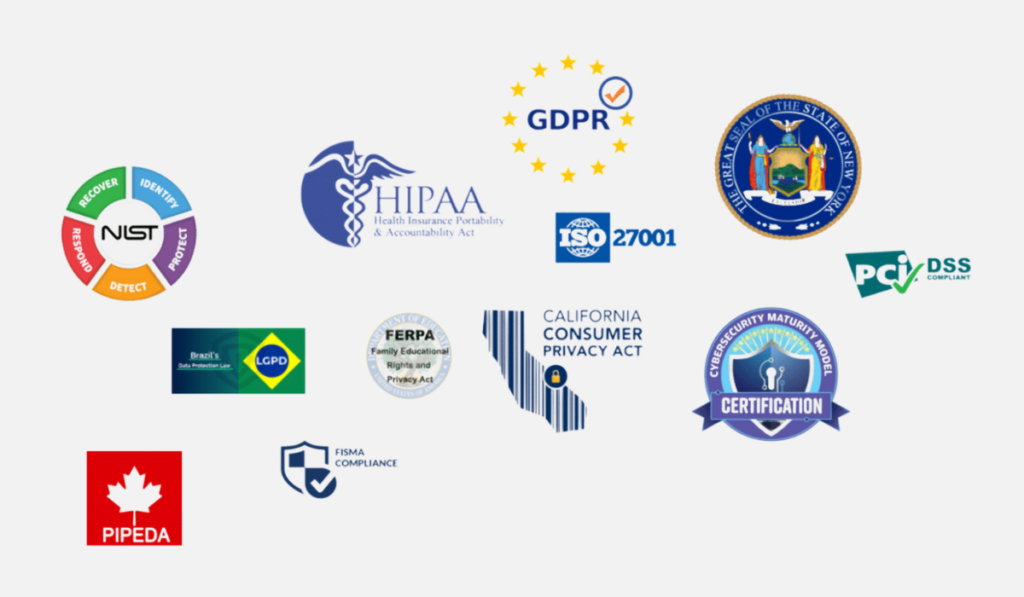
With complex data privacy, security, and compliance regulations and standards, some of which are shown below, organizations need to have strict rules about their data.
Source: Veridion
A data intelligence platform provides much-needed data governance and structure for how data is handled, who can access it, and how it’s protected.
So it’s no wonder that a 2024 Deloitte survey found that Chief Data Officers rank data governance as their third-highest focus.
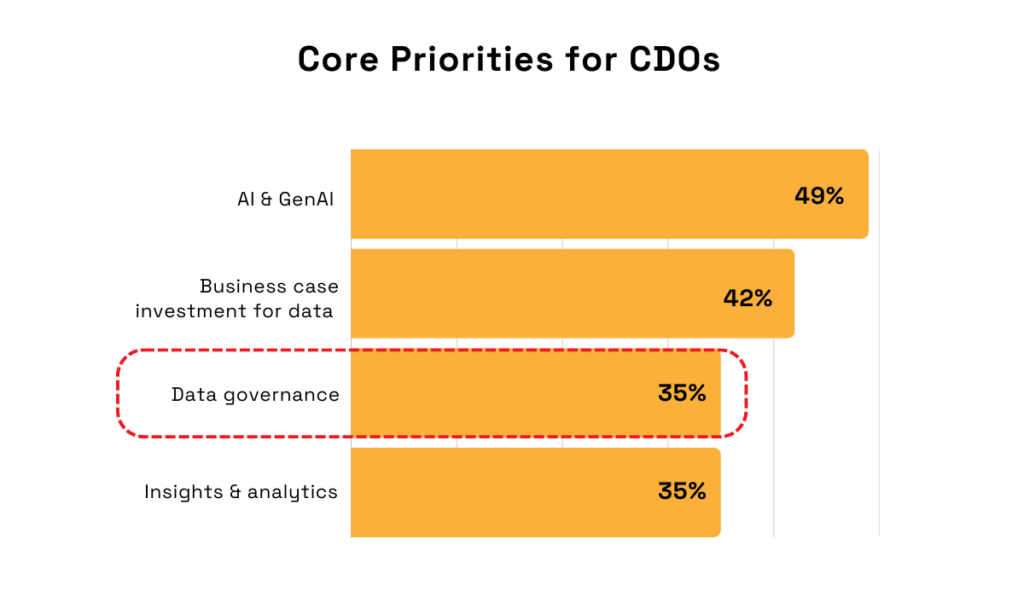
Illustration: Veridion / Data: Deloitte
Overall, these platforms fundamentally change how risk is managed.
Instead of reacting to problems after they occur, organizations can shift to proactive risk prevention, both in terms of detecting risk patterns and safeguarding the business itself.
But data intelligence platforms aren’t just about safeguards and protection.
The data visibility and accessibility they offer also open up powerful opportunities for innovation.
Take a platform like Power BI, a business intelligence solution, with powerful data intelligence capabilities built in.
Features like their what-if forecasts can enable users to test different scenarios, such as the impact of a change in a product’s return policy.
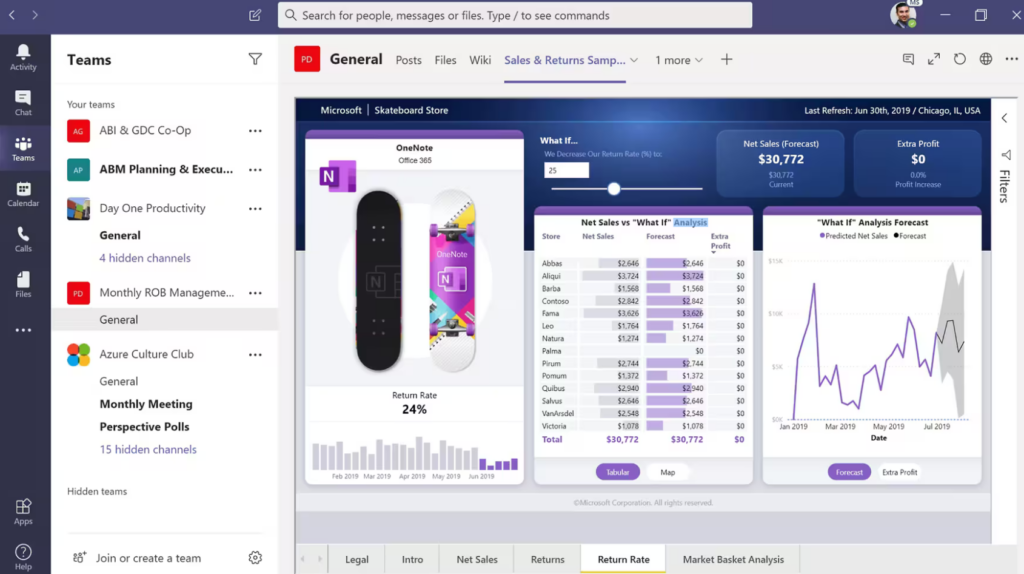
Source: PowerBI
Features like these accelerate innovation by allowing teams to quickly test hypotheses with real data and by making insights immediately shareable across departments.
Both capabilities mean ideas can move from concept to validation much faster than traditional workflows would allow.
But data intelligence solutions have an even broader effect.
In fact, just the innovations and efficiency gains that can occur internally are powerful enough to enable teams to solve problems they previously couldn’t address or even identify.
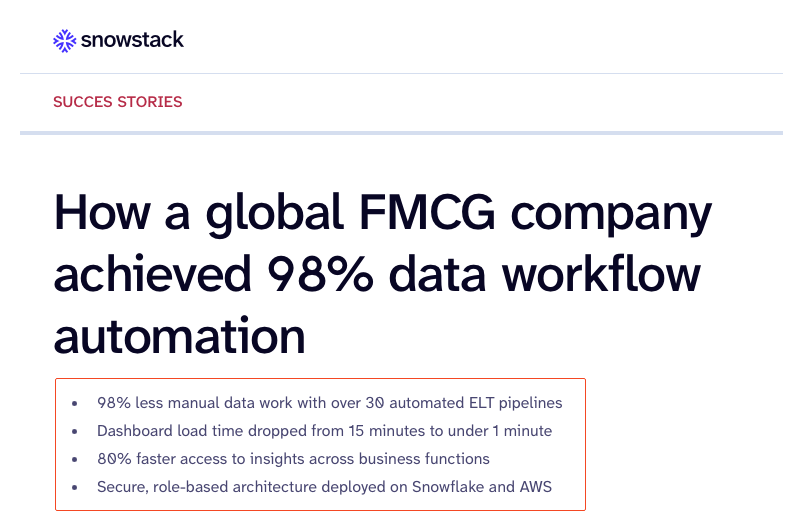
For example, take a look at this case study on an FMCG (Fast-Moving Consumer Goods) company.
Source: Snowstack
By implementing Snowstack’s data intelligence platform, this company essentially removed all the tedious bottlenecks that slow down innovation.
This included reducing almost all manual data work and dramatically improving data access across teams.
We can safely assume that this streamlined approach freed up their analysts and data scientists to focus on actual problem-solving and strategic projects, rather than spending their time hunting down data or reconciling conflicting spreadsheets.
Ultimately, when teams can access clean, reliable data in minutes instead of days, the pace of experimentation and improvement accelerates naturally.
Of course, we can’t forget about the bottom line.
It will come as no surprise that the benefits of data intelligence platforms we just talked about easily translate into measurable cost savings.
Just think about how poor data quality, duplication, and outright inefficiencies create daily waste from simple things like human error or scattered data across disconnected systems.
An organization would need to force teams to spend billable hours fixing these duplicate records and errors, essentially redoing work due to data inefficiencies.
By eliminating these friction points, organizations can redirect resources toward value-creating activities instead of damage control.
The time savings alone often justify the platform investment, but the benefits extend much further.
For example, one data science company gained over half a million euros in annual cost savings from streamlining analytics and data access with Oracle’s platforms.
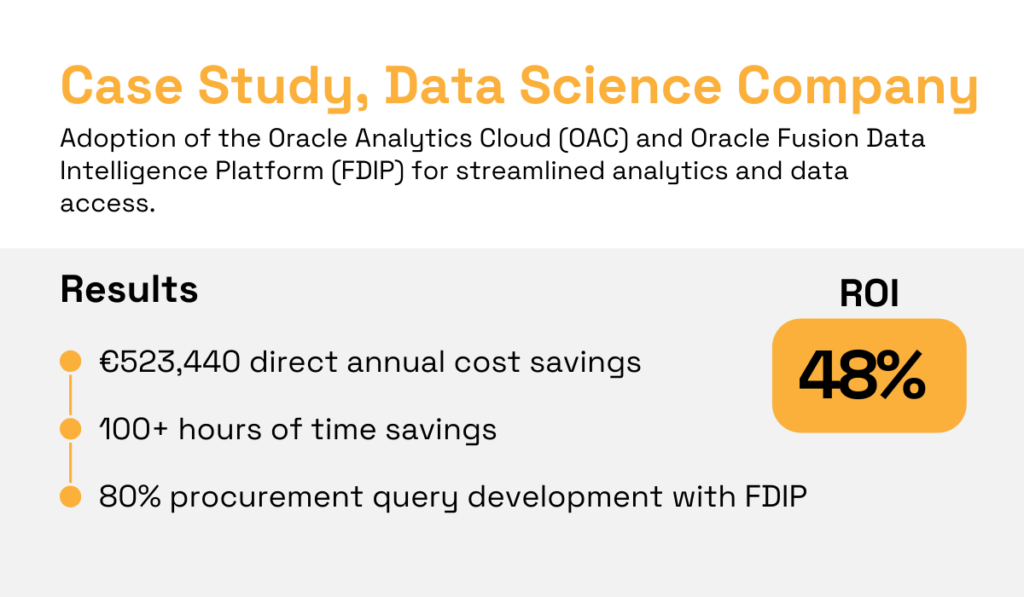
Illustration: Veridion / Source: Oracle
After all, when queries that once took days can be answered in minutes, decision-making speeds up, opportunities are captured faster, and fewer resources are wasted on delays.
The combination of reduced manual work, fewer errors, and faster processes creates a compounding effect.
It allows savings to accumulate across every department that touches data, which in modern organizations means essentially everyone.
That wraps up our look at data intelligence platforms.
In this overview, we’ve covered what these systems are, their main benefits, and what functionalities to look for.
By now, you should have a much clearer understanding of the value these platforms bring to the table.
You can now use this information to help guide your organization toward making smarter, more confident decisions with its data.