



Blog
How Do You Map the Multi-Tier Supply Chain for EV Batteries?
By: Stefan Gergely -
09 March 2026


We love our data, and now that you're here, you're one step closer to loving it too.
A wide sample of data, so you can explore what is possible with our data
Choose ->
built with procurement in mind. Focused on manufacturers, products and more
Choose ->
built with insurance in mind. Focused on classifications, business activity tags and more
Choose ->
built with sustainability in mind. Focused on sustainability commitments, and environmental and social governance insights.
Choose ->
built with strategic insights in mind. Focused on market trends, competitor analysis, and industry-specific data
Choose ->

Keep up to date with our technology, what our clients are doing and get interesting monthly market insights.

Key Takeaways:
What if a single disruption could halt hundreds of EV battery suppliers and bring production to a standstill?
This scenario is quite possible, considering the networks in this industry are extremely complex, often involving hundreds of suppliers.
Visibility and interdependency issues are, thus, common.
On top of that, a highly concentrated production makes even small disruptions risky.
That makes supply chain mapping difficult, but also more crucial than in most sectors.
In this article, we’ll show you how to perform it step-by-step and boost your resilience.
Procurement teams should start mapping their supply chains by setting clear objectives first.
These commonly include:
The exact objectives your team should set will, however, depend on your unique challenges and goals.
You can identify them by asking:
What issues are we currently experiencing that supply chain mapping could help mitigate? What targets could it help us achieve?
To illustrate how to approach this, let’s briefly analyze Volkswagen’s targeted procurement strategy.
Source: EV Magazine
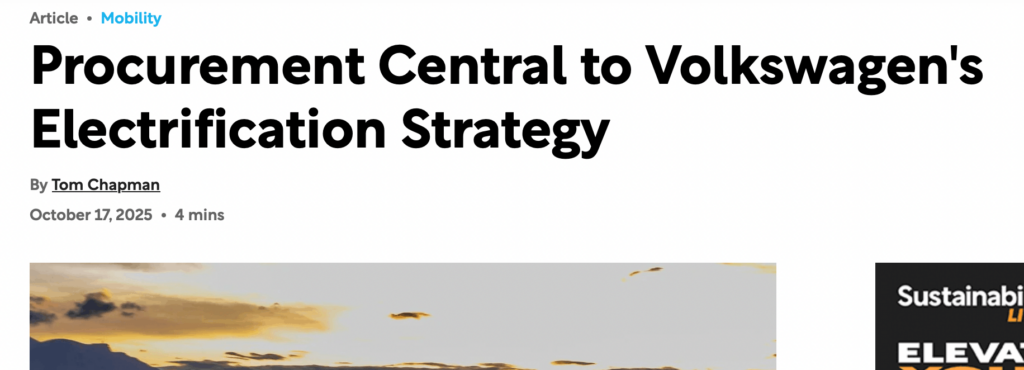
As seen above, VW has reorganized its procurement to better support a broader business shift to electrification.
But, beyond supporting new company initiatives, this improved strategy also addresses key challenges in the automotive industry: semiconductor shortages and geopolitical risks.
This clearly illustrates how teams should approach goal setting.
Instead of committing to a goal just for the sake of it, it’s far better to ground it in real-world challenges and desired outcomes.
VW even had a unifying goal steering these smaller objectives:
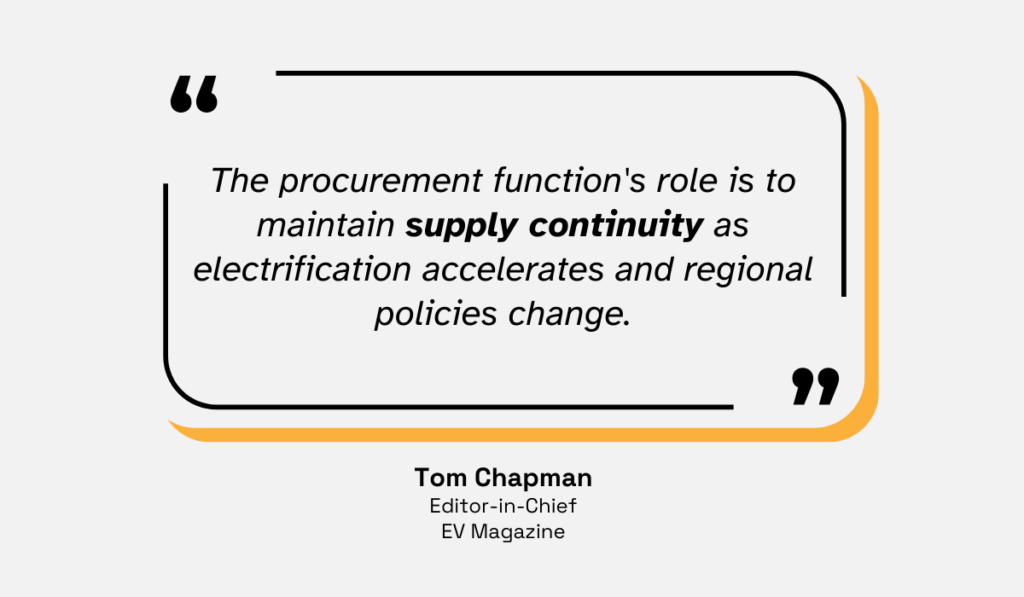
Illustration: Veridion / Quote: EV Magazine
With that said, in the EV battery industry, goal-setting must be aligned with practical resource constraints.
Since battery supply chains are so complex, you should consider what’s actually realistic to map.
In other words, you should decide upfront which technologies, suppliers, regions, and product lines are and aren’t in scope.
Getting this right balances visibility with resource limitations.
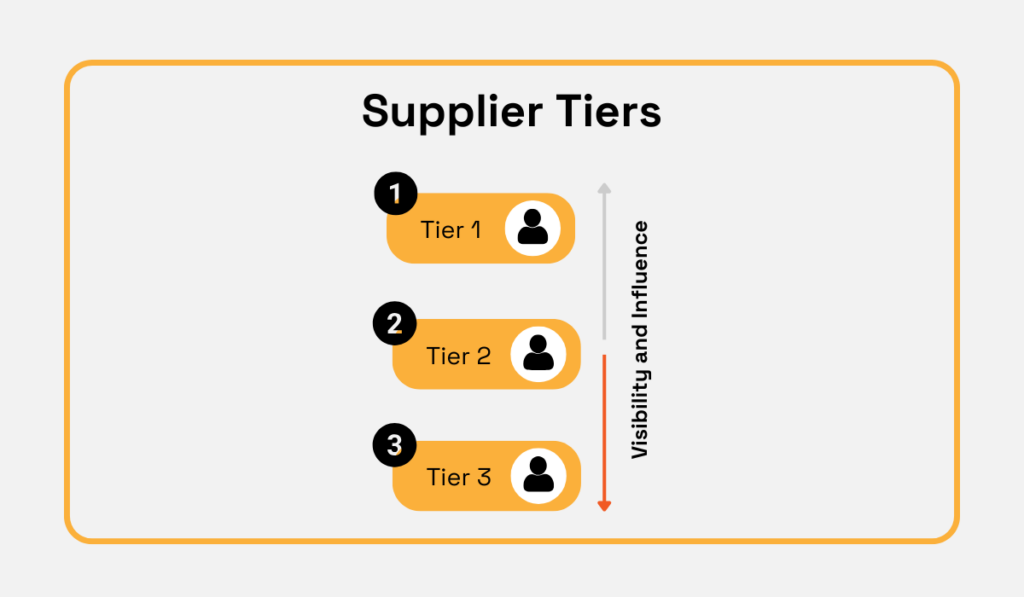
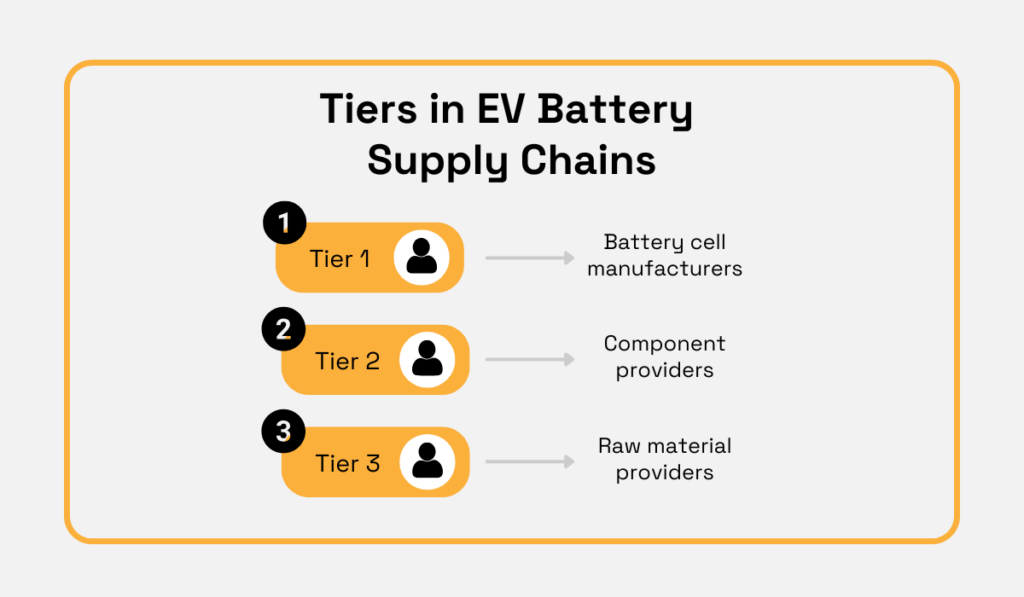
The next step is to map your Tier 1 suppliers, including battery cell manufacturers, module and pack assemblers, and battery system integrators.
This is a prerequisite for understanding what lies further upstream.
In order to later trace indirect suppliers, you need a clear picture of the direct ones first.
Additionally, starting with Tier 1 suppliers also makes sense from a management standpoint.
Because they’re your direct partners, these suppliers are also the easiest to manage.
Mapping them first allows you to start establishing performance metrics, drawing insights, and taking action faster.
Source: Veridion
So, before moving on to the rest of your supply chain, identify and comprehensively document your Tier 1 relationships.
More specifically, aim to collect data on:
All data should, of course, be validated as well.
That includes not just ensuring that it’s factual and up-to-date, but also that it actually gives you the insights you need.
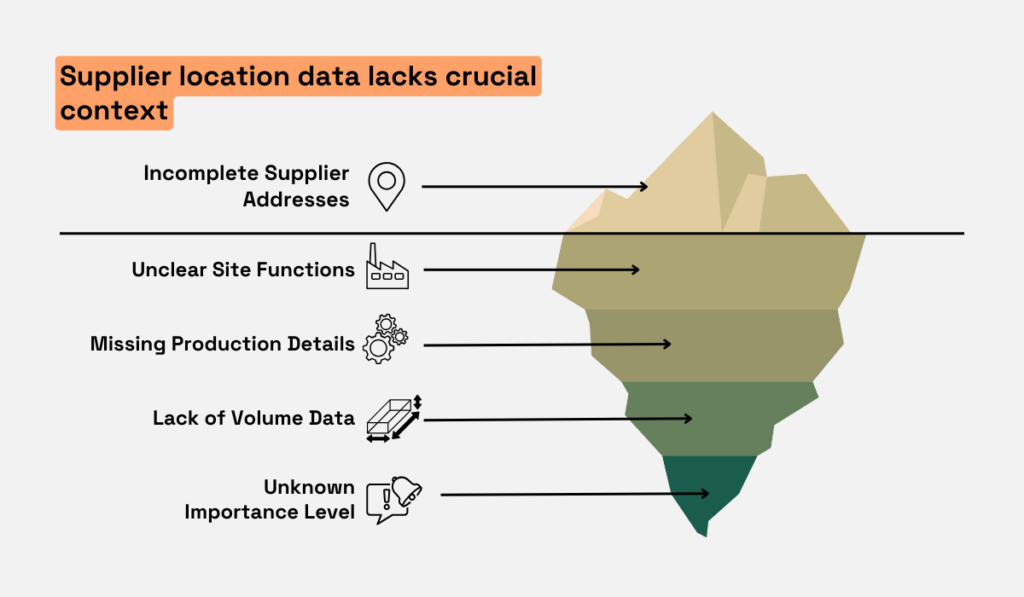
For example, many companies only list suppliers’ corporate headquarters in their records.
This is problematic because disruptions rarely occur at the headquarters and more often happen at factories.
So, for risk management purposes, it would make far more sense to keep a record of suppliers’ factory addresses than their HQs.
This is just one example of how location intelligence that goes beyond simple fact-checking plays a crucial role.
Source: Veridion
So, make sure to take a strategic and context-driven lens to supplier data, too.
As mentioned, identifying Tier 1 suppliers is necessary for mapping out the rest of your supply chain.
So, with that step executed, it’s time to switch from company- to component-level mapping.
This implies figuring out exactly where your Tier 1 suppliers get their components.
To do that successfully, start by breaking down the battery into its core components, including cathodes, anodes, electrolytes, separators, casings, and electronics.
The goal is to create a comprehensive bill of materials (BOM).
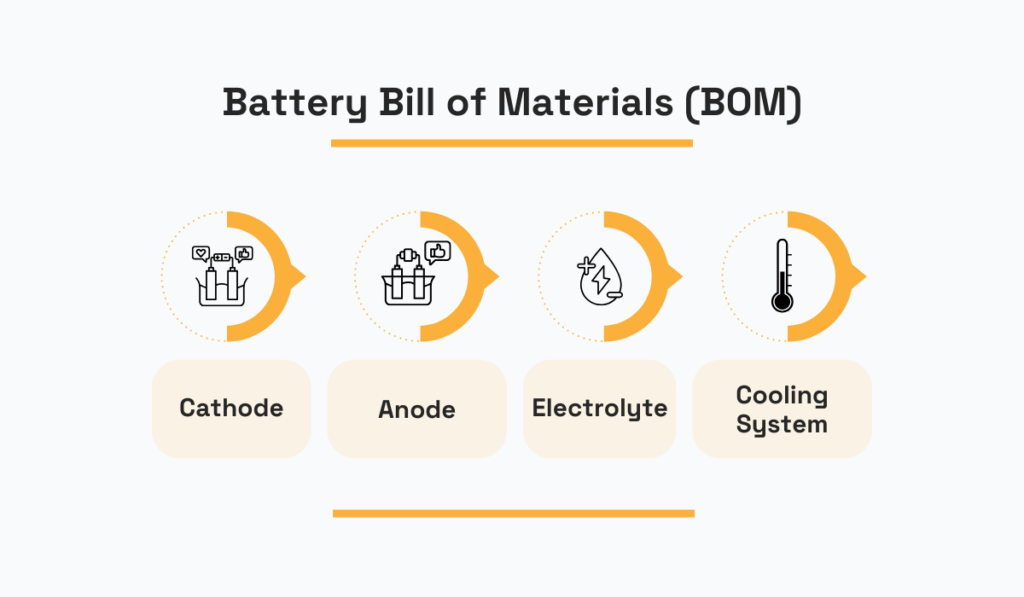
Illustration: Veridion / Data: Research Gate
A bill of materials (BOM) is an extensive list of all materials, components, and instructions that go into producing or repairing a product.
In EV battery supply chains, this starts, but doesn’t end with core components.
To illustrate this, see this simplified, but still helpful, overview of typical supplier relationships in the industry:
Source: Veridion
So, breaking down your BOM is a prerequisite for identifying not just Tier 2 suppliers, but also those further upstream.
In other words, a comprehensive list of core components also helps you better understand the raw materials that go into producing them, as well as the network of suppliers that provide them.
This is critical for the next step in the process.
Extending visibility into Tier 2, Tier 3, and upstream suppliers is crucial.
Otherwise, you risk disruption caused by issues that might have been mitigated had they been identified on time.
Paul Marushka, CEO and President of the enterprise risk and compliance company Sphera, puts it best:
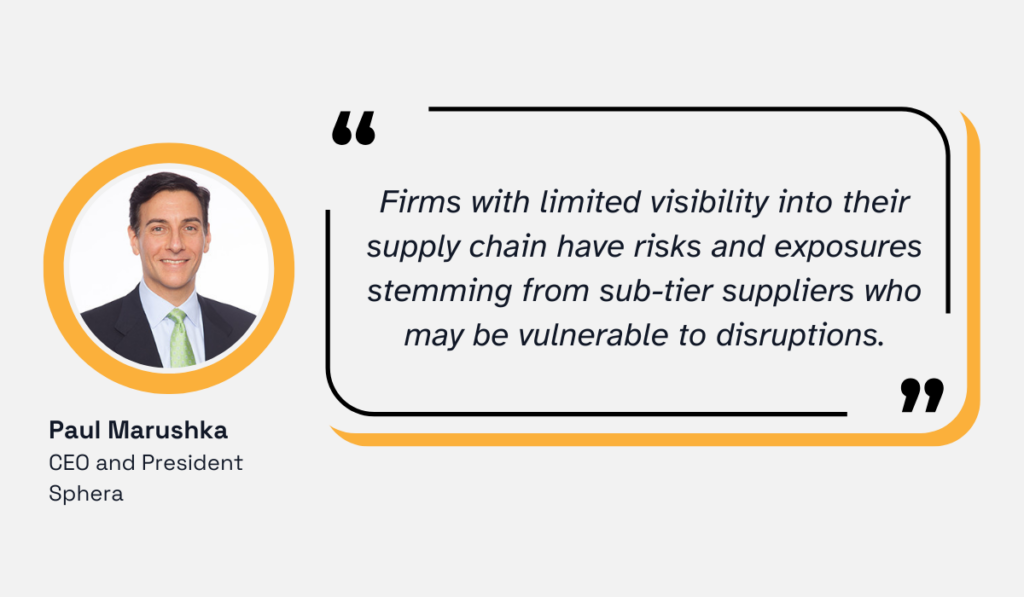
Illustration: Veridion / Quote: Supply Chain Digital
In other words, companies that struggle with supplier visibility are often exposed to risks they aren’t even aware of.
And these risks might be even more pronounced in the EV battery sector.
For instance, the European Bank for Reconstruction and Development notes that over 75% of global battery cells are produced in China.
Additionally, approximately 70% of the world’s cobalt is mined in the Democratic Republic of the Congo.
This points to a highly concentrated production that exposes buyers to amplified risks.
Some of these include price volatility, cascading supply disruptions, and geopolitical challenges.
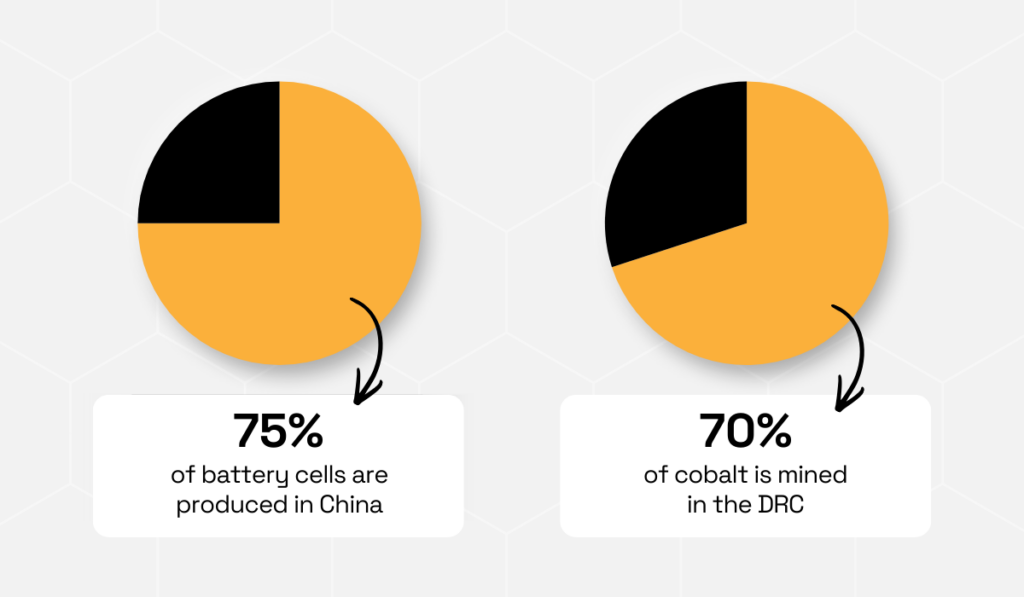
Illustration: Veridion / Data: The EBRD
So, tracing raw materials is just as important as identifying Tier 1 suppliers.
That’s why, in this step, you should list everyone involved in critical material production.
This includes mining, refining, and chemical processing of materials like lithium, nickel, cobalt, manganese, and graphite.
Mapping these upstream suppliers may be tedious, but it’s key to anticipating disruptions and assessing long-term resilience.
On top of that, having a full picture of your supply chain will help you identify the common nodes where multiple suppliers converge.
Let’s explore why that’s so important next.
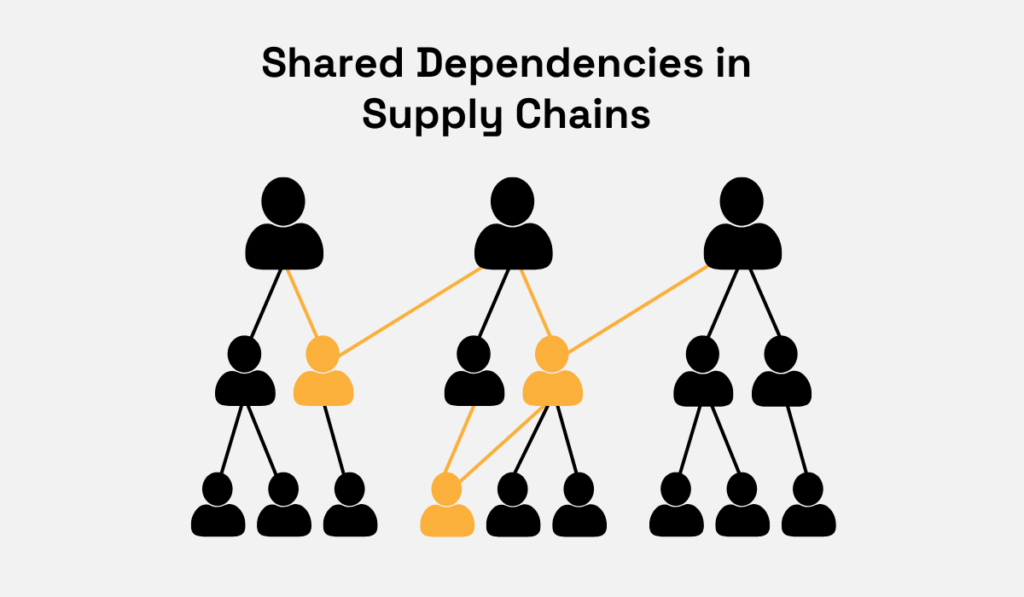
Identifying shared dependencies in your supply chain means understanding where multiple Tier 1 or Tier 2 suppliers rely on the same upstream processors or facilities.
This may reveal hidden concentration risks that could quickly cripple your entire supply chain.
So, this analysis is crucial for properly assessing even individual suppliers.
Without it, you might overlook common dependencies and underestimate the true risk each supplier poses.
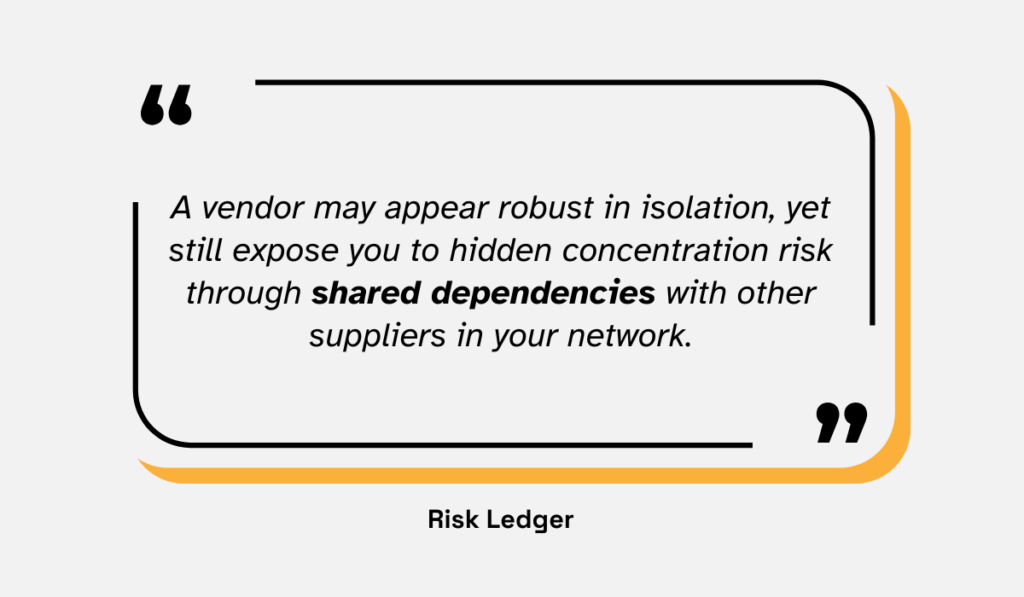
Illustration: Veridion / Quote: Risk Ledger
As noted earlier, the EV battery industry has an exceptionally high production concentration.
That means there are likely many shared dependencies among your suppliers, making early identification key to reducing risk.
The good news is, with all the work you’ve done so far, you already have all the information you need.
With a comprehensive list of suppliers in hand, now it’s just a matter of checking whether the same supplier appears multiple times in your network.
Source: Veridion
But beyond just the most obvious connections, procurement teams should also note subtler geographic and infrastructure overlaps.
This can include shared industrial parks, processing hubs, or logistics corridors.
Again, since battery production tends to be clustered in certain geographical areas, there’s a chance that many of your suppliers share locations or infrastructure.
A single event, like a labor strike or weather disaster, could therefore disable multiple tiers simultaneously.
This is exactly what happened when Shanghai faced COVID‑19 lockdowns in 2022.
Source: Plante & Moran
Strict containment measures brought large parts of the region’s industrial activity to a halt, affecting thousands of large-scale suppliers at once.
These disruptions cascaded through the network, leaving many automotive manufacturers no choice but to suspend production.
This shows why mapping supplier relationships alone is not enough.
Understanding where suppliers operate and which infrastructure they rely on is equally important.
Otherwise, a single local event could suddenly collapse your entire supply chain.
Supplier-reported data often becomes incomplete beyond Tier 1.
For instance, Sphera’s 2025 research reveals that almost 70% of companies struggle with data accuracy and quality from Tier 2-4 suppliers.
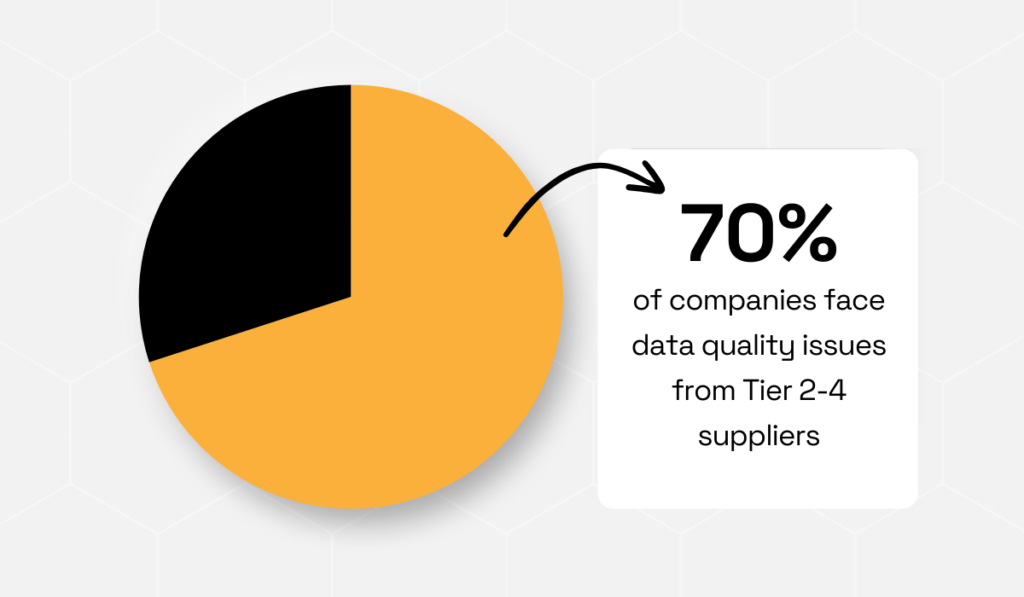
Illustration: Veridion / Data: Sphera
To compensate for this, organizations should consider enriching existing supplier data with external intelligence.
Indeed, the same survey shows that most companies are taking this approach.
Almost all already use or plan to use technology and tools to monitor suppliers beyond Tier 1.
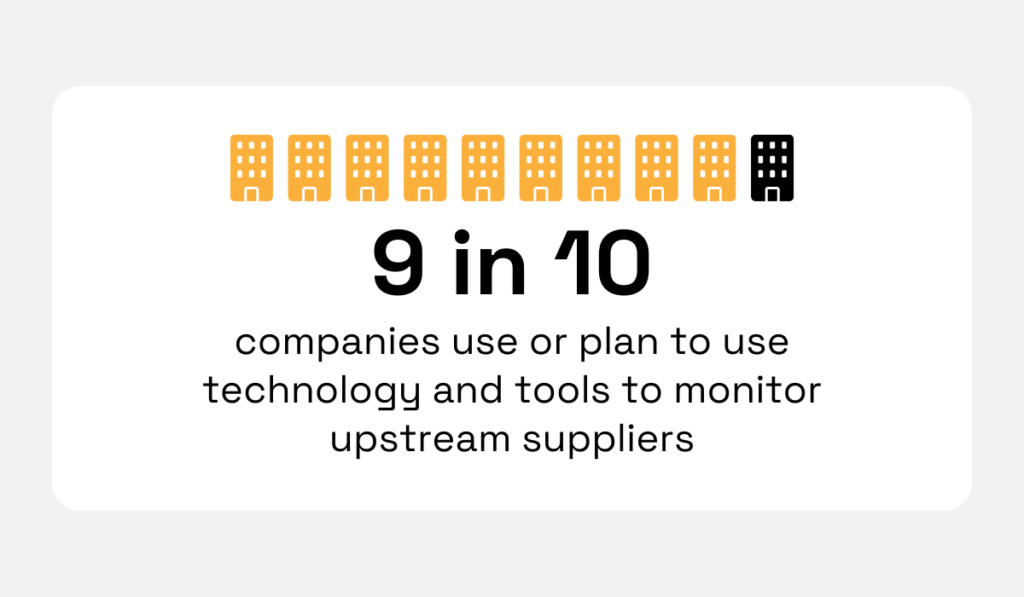
Illustration: Veridion / Data: Sphera
One platform they could use to enrich and validate supplier information is Veridion.
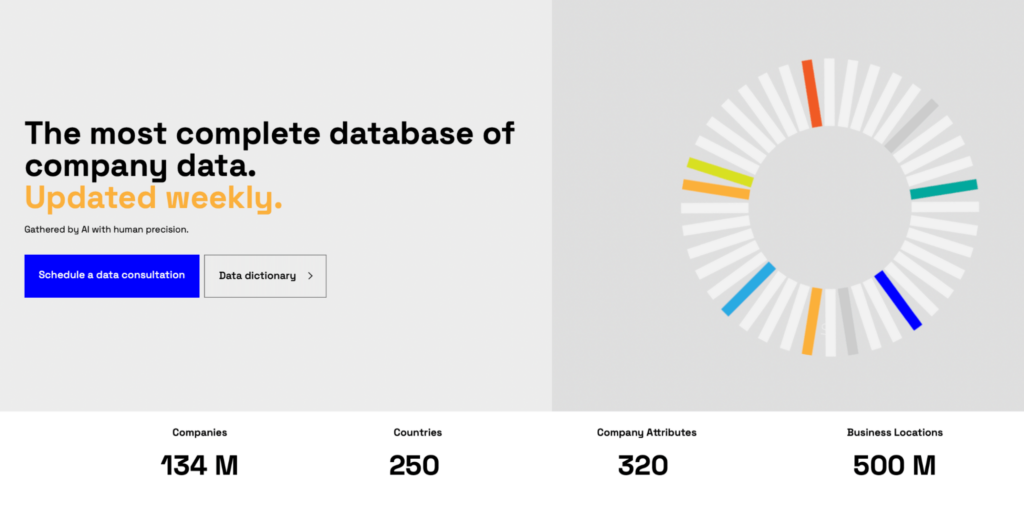
Veridion uses AI, a wide range of web sources, and vetted databases to add and verify data for over 134M companies worldwide.
Additionally, the data is updated automatically every week to ensure maximum freshness and accuracy.
Source: Veridion
But the platform provides far more than basic company information.
Its goal is to not just help you confirm or gather data, but also uncover hidden dependencies and accurately map even the most complex supply chains.
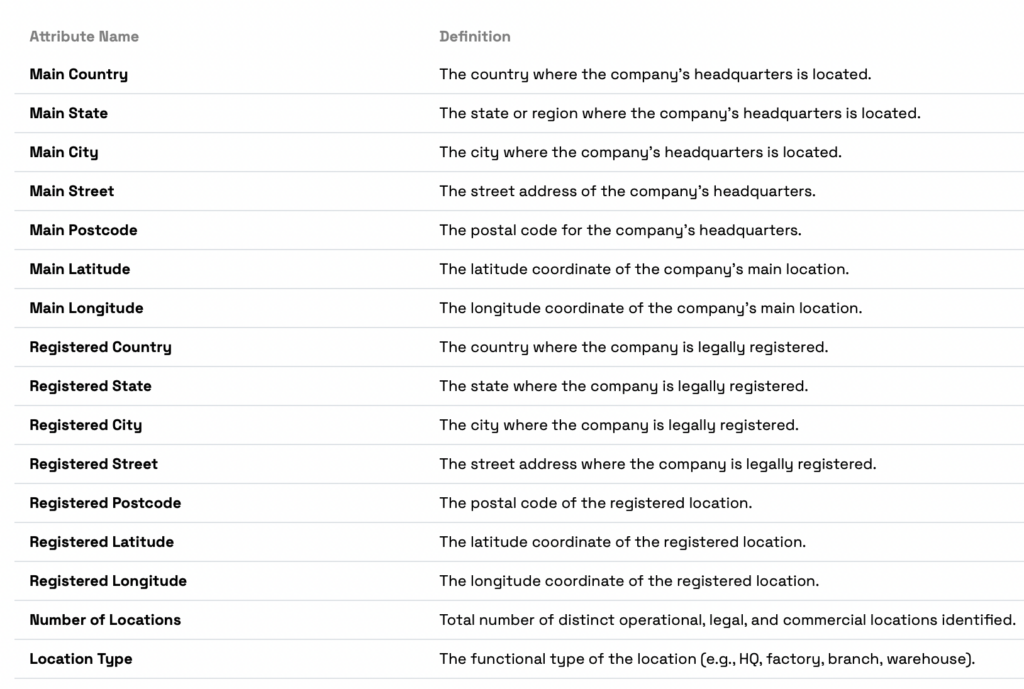
To achieve this, Veridion equips you with comprehensive supplier intelligence, including verified operational locations, ownership structures, and upstream relationships.
Source: Veridion
Reliable data providers like these equip you with deeper insights that enable truly proactive risk management.
And, of course, all of this contributes to one ultimate key benefit: improved resilience.
Finally, we get to the most important part of the entire process: assessing resilience across your supply chain.
Supply chain mapping enables this by allowing you to evaluate ESG, operational, financial, and regulatory risks at each tier.
Here are a few examples of what you could assess in each category:
| ESG risks | Operational risks | Financial risks | Regulatory risks |
|---|---|---|---|
| Do suppliers report on carbon footprint? | Do suppliers have backup facilities? | What is the supplier’s credit rating? | Do suppliers meet import/export rules? |
However, as we already hinted, resilience should also be evaluated at two levels:
The supplier level looks at risks for each supplier individually, while the supply chain network level analyzes how risks propagate across the entire supply chain.
And, as we demonstrated when discussing shared dependencies, certain risks just aren’t visible if you only look at each supplier in isolation.
That’s why it’s crucial to address both dimensions.
Another thing to consider is that the goal isn’t to solely assess suppliers’ current risk exposure.
Instead, the goal is to also identify factors that could indicate future vulnerabilities and points of failure.
As MIT professor David Simchi-Levi explains, supply chain analysis shouldn’t just accurately diagnose the current state, but also predict the future.
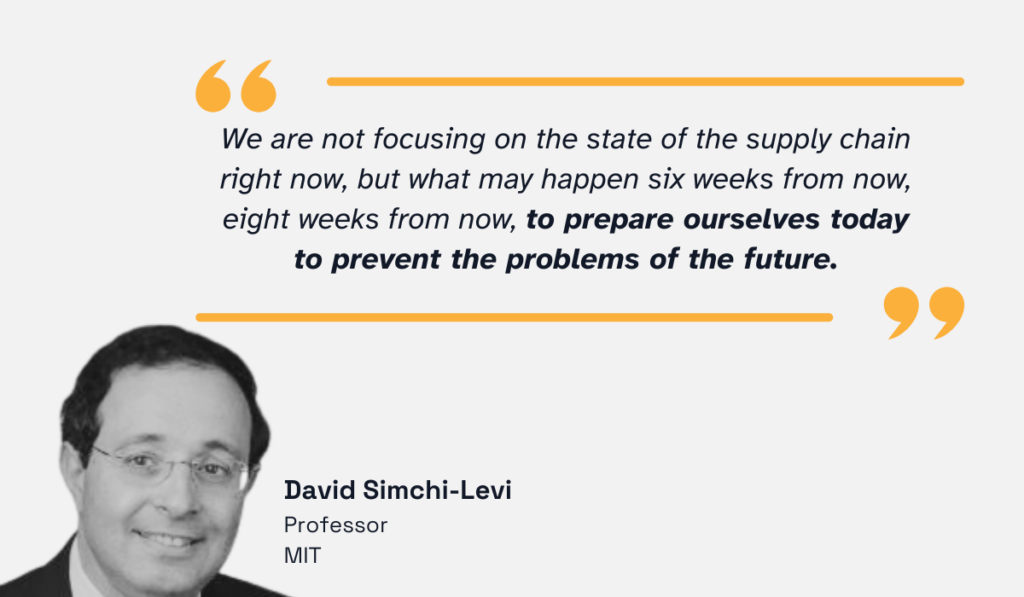
Illustration: Veridion / Quote: MIT News
This approach turns mapping into actionable procurement insight.
For instance, it allows you to prioritize the most vulnerable suppliers and situations likely to escalate.
You can reroute orders, support at-risk suppliers, or secure alternative sources before disruptions occur.
So, to truly reap the benefits of supply chain mapping, make sure to properly assess resilience across both tiers and levels.
This allows you to mitigate risks and maintain continuity, even when your peers are experiencing setbacks.
For the highly complex and interconnected EV battery industry, effective supply chain mapping is non-negotiable.
Understanding your suppliers across tiers is essential for anticipating disruptions and acting before they occur.
The key takeaway is simple: staying ahead requires a full picture of your network.
Following the steps outlined here will help you get it.
Start with the first one today. What objectives will you set?