



Blog
How Veridion’s Intelligence Helps Reduce Vendor Concentration Risk
By: Auras Tanase -
11 April 2026


We love our data, and now that you're here, you're one step closer to loving it too.
A wide sample of data, so you can explore what is possible with our data
Choose ->
built with procurement in mind. Focused on manufacturers, products and more
Choose ->
built with insurance in mind. Focused on classifications, business activity tags and more
Choose ->
built with sustainability in mind. Focused on sustainability commitments, and environmental and social governance insights.
Choose ->
built with strategic insights in mind. Focused on market trends, competitor analysis, and industry-specific data
Choose ->

Keep up to date with our technology, what our clients are doing and get interesting monthly market insights.

Key takeaways:
Vendor concentration risk is one of the most common, yet overlooked, threats in procurement.
Unfortunately, many companies believe their vendor base is diversified, only to discover hidden dependencies that leave them exposed when disruptions hit.
In this article, we will look at how Veridion’s intelligence helps you identify, understand, and reduce that risk across your supplier network.
Vendor concentration risk is at its highest when supplier visibility is low.
In simple terms, if you don’t have a clear picture of who your suppliers depend on and how they’re connected, you’re exposed to risks you can’t even see.
And those risks tend to sit below direct, Tier 1 suppliers.
Unfortunately, according to McKinsey’s 2025 Supply Chain Risk Pulse Survey, only 42% of organizations have risk visibility into Tier 2 or beyond.
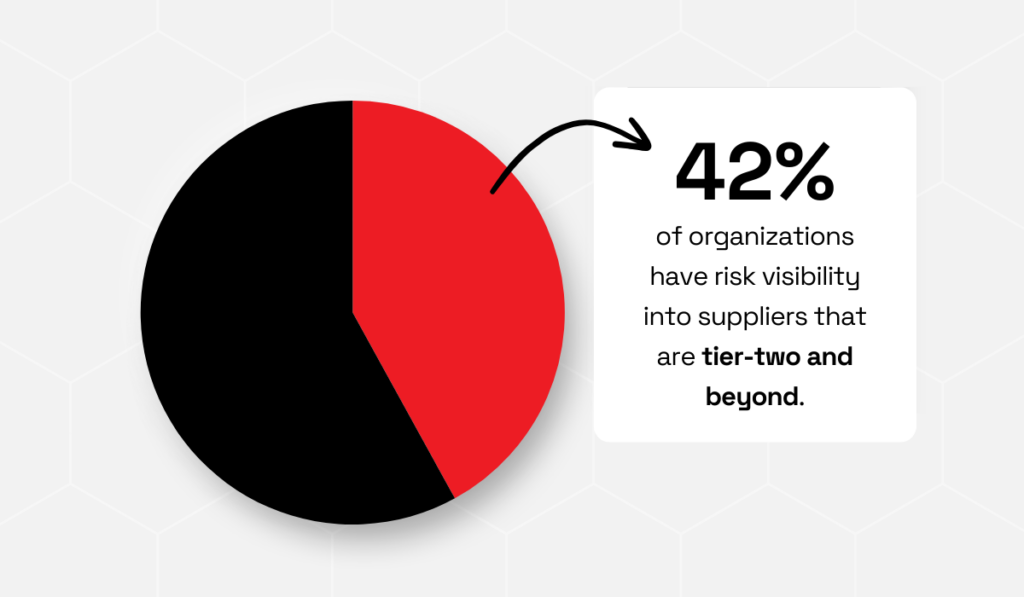
Illustration: Veridion / Data: McKinsey
These sub-tier relationships, including your suppliers’ suppliers and the companies behind them, are where the most dangerous dependencies hide.
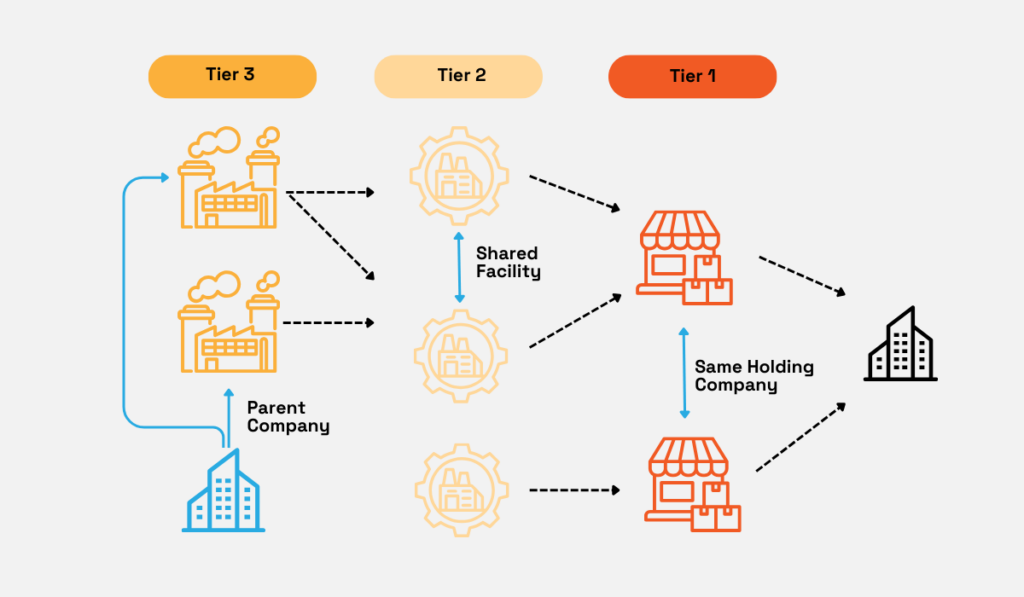
For example, two of your Tier 1 suppliers might source a critical raw material from the same Tier 2 provider.
If that provider goes down, both of your “diversified” supply lines go down with it. These kinds of connections are what make concentration risk so difficult to spot.
Take a look at the image below to get a sense of how some other connections may look.
Source: Veridion
Two vendors that appear completely independent on paper might actually share the same parent company, the same raw material source, or even use the same facility.
Traditional supplier assessments rarely go deep enough to uncover these kinds of relationships.
They tend to evaluate each vendor in isolation, which means systemic, shared dependencies stay hidden.
That’s where Veridion steps in.
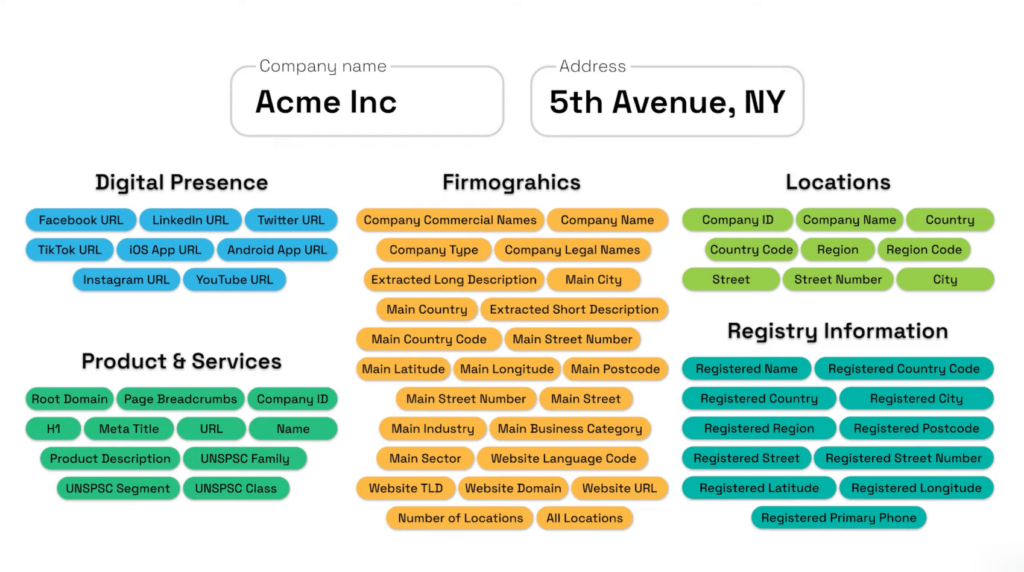
With Veridion’s Match & Enrich API, you can start with just a company name and a location—whether that’s a registration address or an operational one—and get back a rich, detailed profile.
This includes firmographic data, location details, registry information, and more.
Source: Veridion
Here’s how the matching works.
The API resolves your input against Veridion’s database by looking at both legal and operational dimensions. This helps uncover cases where a company is legally registered in one jurisdiction but operates in a completely different one.
Veridion handles this by matching across both layers.
It connects commercial names with legal entities, links operational addresses to registered offices, and validates these connections using multiple data signals like websites, registry IDs, and address matching.
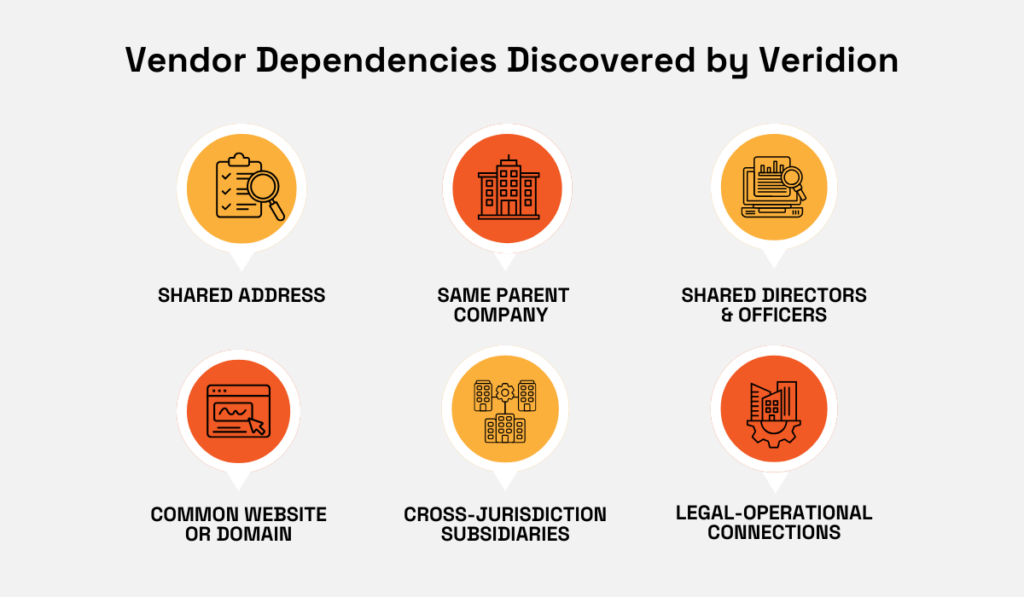
When you enrich your supplier records through Veridion, you start to see these dependencies that were previously invisible.
Source: Veridion
As an example, what you might have thought was diversified risk across five suppliers isn’t as strong, as three of them are subsidiaries of the same holding group.
So to bring it all together, reducing vendor concentration risk starts with seeing what is actually there.
Veridion’s Match & Enrich API gives procurement teams the visibility they need to see past the surface and understand the true structure of their supply base.
Things get more complicated when you factor in where your suppliers are physically located.
Geopolitical tensions, trade restrictions, and natural disasters can affect entire regions at once, so even if you have identified your supplier dependencies and diversified across different companies, you can still be exposed.
Let’s look at a real example.
In July 2021, extreme rainfall caused unprecedented flooding across Germany, Belgium, and the Netherlands.
The event caused billions of euros in damage and major disruptions to supply chains across the region.
If you look at the image below, the red dots represent the directly impacted firms, while the blue and orange dots show their buyers and suppliers, respectively.
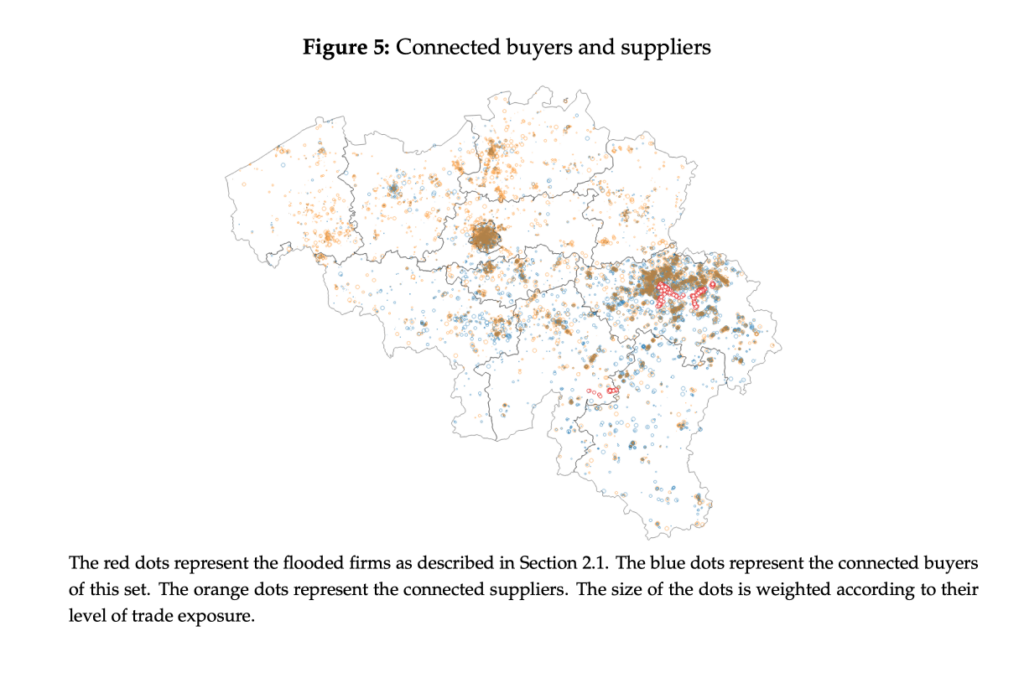
Source: NBB
Here is the key point. These impacted firms may have had no shared corporate dependencies.
They might not have been subsidiaries of the same company or shared raw material sources. The only thing they had in common was their location.
And that is the main issue.
On paper, a company sourcing from several of these firms might see a well-diversified supply chain, until a regional event like this hits and reveals its geographic concentration issues.
To address this, Veridion provides location-level intelligence on supplier facilities, headquarters, and operational sites.
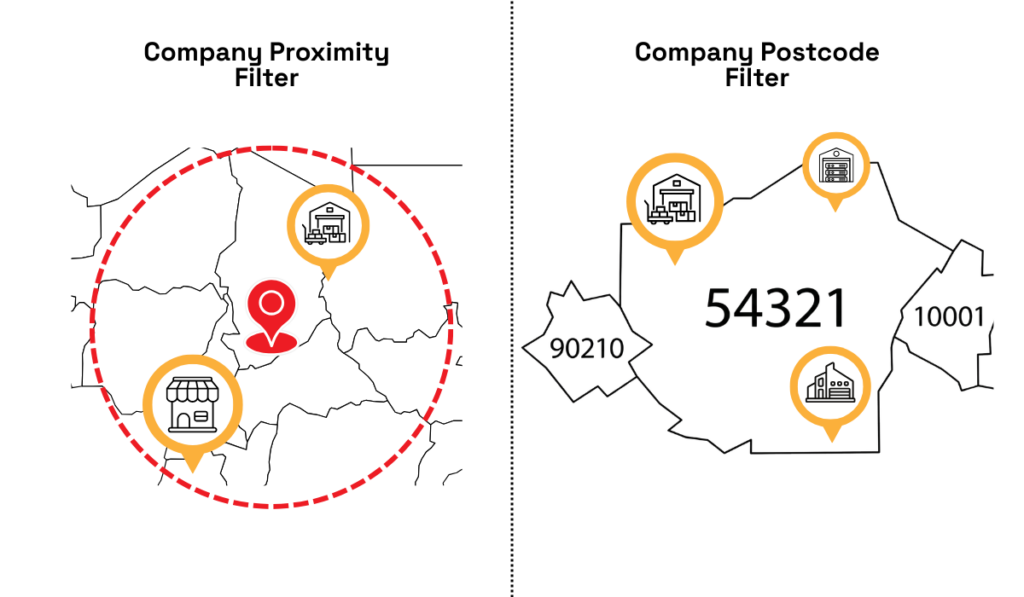
Consider the company proximity filter and the postcode filter.
Source: Veridion
The proximity filter lets you find all companies within a specific radius of a given geographical location, while the postcode filter narrows results down to companies operating in a particular postcode.
For instance, if you want to check how many of your current suppliers have operations within a flood-prone area, or an area with high political tensions, these two filters will show you exactly that.
This capability gives procurement teams the ability to assess geographic concentration before a disruption happens, not after.
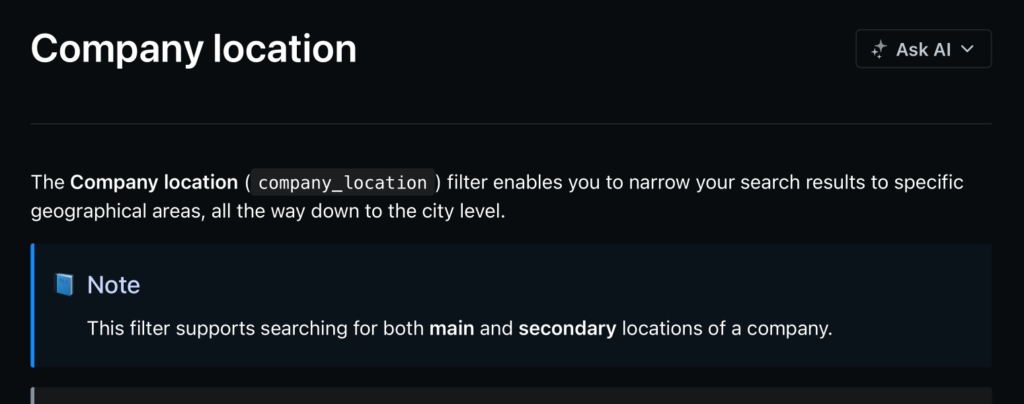
Additionally, this geographic data can be combined with Veridion’s company location filter.
Source: Veridion
Using location data as input, which can be as specific as the city level, Veridion can return all suppliers operating in that area.
What makes this filter especially useful is that it works for both a company’s main location and its secondary locations, which can include regional offices, branch locations, factories, and stores.
So if a supplier’s headquarters is in a safe region but it has a key manufacturing facility in a high-risk zone, you will know about it.
In short, geographic visibility is essential for building a supply chain that withstands regional disruptions, and Veridion gives you the tools to achieve it.
With the capabilities covered so far, you can uncover both direct supplier dependencies and geographic concentration risks.
But identifying these risks is only half the job.
The next step is mitigating them, and that means finding viable alternative suppliers.
For some companies, this goes beyond swapping a few vendors.
Rising costs, trade tensions, and geopolitical instability have pushed organizations to rethink their sourcing strategies entirely.
Some are relocating parts of their supply chain closer to home or diversifying across multiple regions.
In fact, many companies are moving away from regions like China, where many global supply chains have been heavily concentrated.
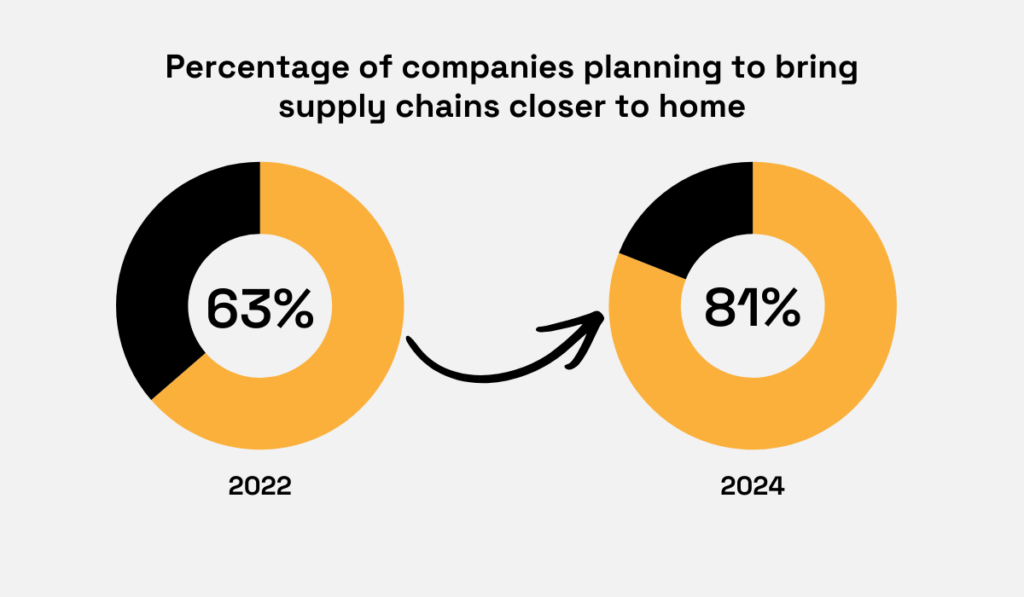
Illustration: Veridion / Data: Bain
These kinds of shifts require procurement teams to find compatible suppliers across different regions, industries, and capability profiles.
To do this process quickly, Veridion’s Supplier Discovery feature is built to support exactly this.
Source: Veridion on YouTube
It works by letting you search Veridion’s database of over 120 million companies across 200+ million locations using highly specific criteria.
You can filter by product type, location, industry, certifications, company size, revenue, and more.
What makes this especially accessible is that these external supplier searches can be done using natural language queries.
You simply describe what you need in plain language, and Veridion’s AI automatically processes the request and constructs the right search parameters behind the scenes.
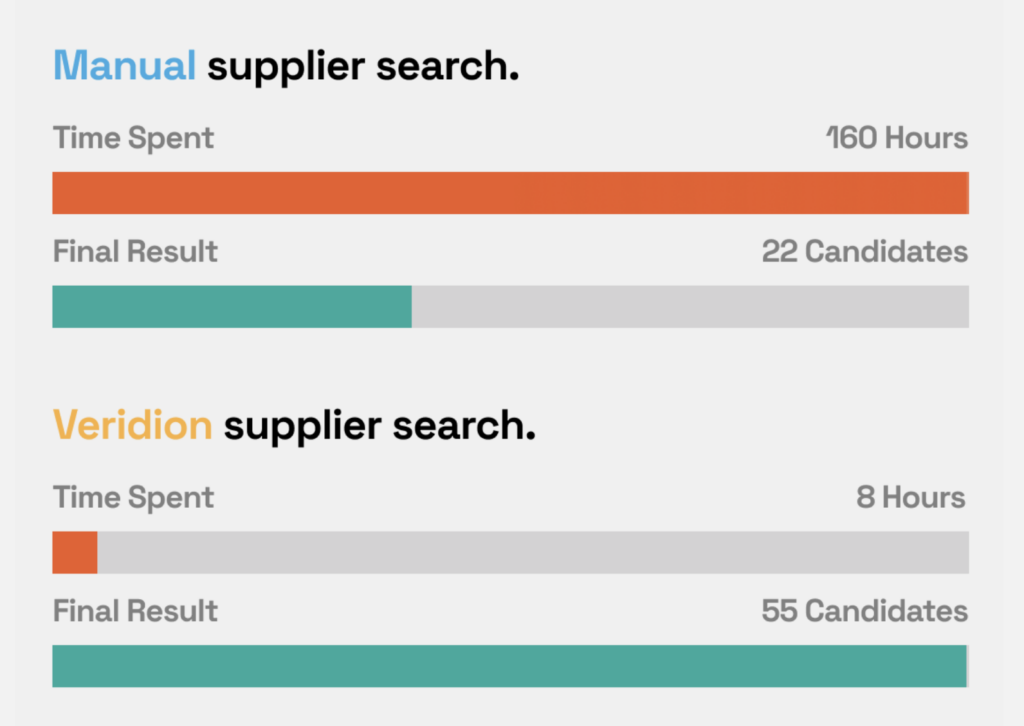
Compared to the traditional approach, where procurement teams spend weeks researching suppliers, this approach delivers faster and far more extensive results.
Source: Veridion
Instead of evaluating a handful of options over several weeks, teams can instantly access a broad list of qualified suppliers that match their exact needs.
This speed is critical when a disruption has already occurred.
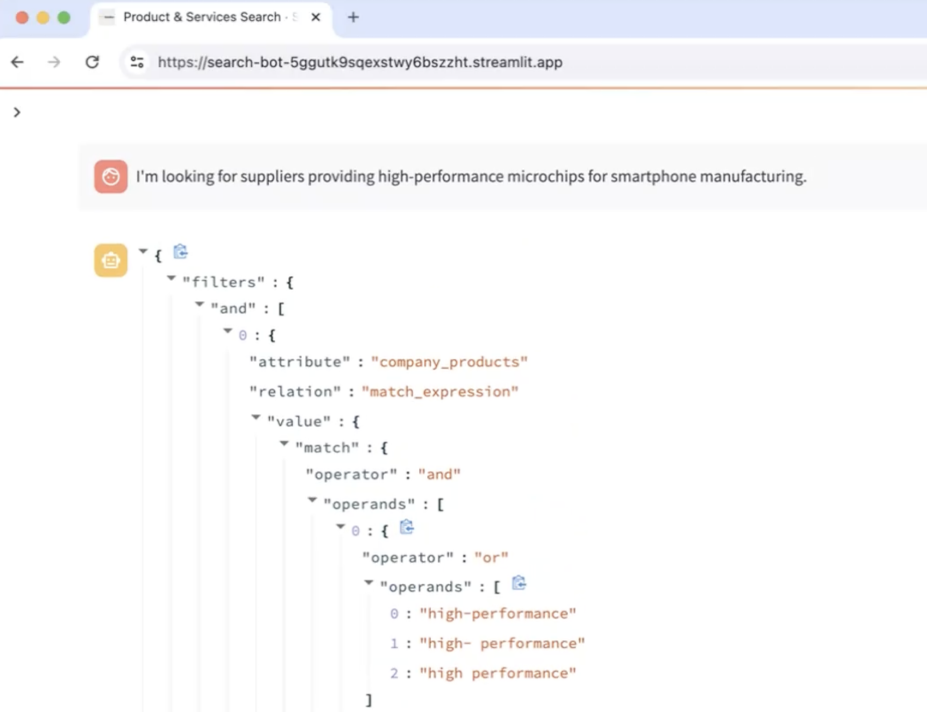
Now, if you need to reduce concentration risk for a specific part or service and want an even more guided experience, Veridion also offers a Product & Services Search Chatbot.
Source: Veridion
This chatbot uses a language model trained by Veridion, combined with the Search API, to let you search for suppliers through a conversational interface.
For example, you could type something like “find manufacturers of automotive brake pads in Eastern Europe with ISO 9001 certification,” and the chatbot will return a targeted list of matching companies.
It’s a practical way to run detailed searches without needing technical knowledge of the API.
To sum up, once you have identified where your vendor concentration risks are, Veridion gives you the tools to act on them, helping you find and evaluate alternative suppliers quickly.
Finally, it is important to recognize that vendor concentration risk is dynamic, not static.
Even after you diversify your suppliers and establish new supply chains, changes can happen that shift your risk exposure in ways you did not expect.
For instance, supplier mergers or ownership changes can quietly undo your diversification efforts.
Two previously independent suppliers might merge into one entity, or a new acquisition might place several of your vendors under the same corporate group.
These changes happen regularly, and they directly affect how concentrated your supply base actually is.
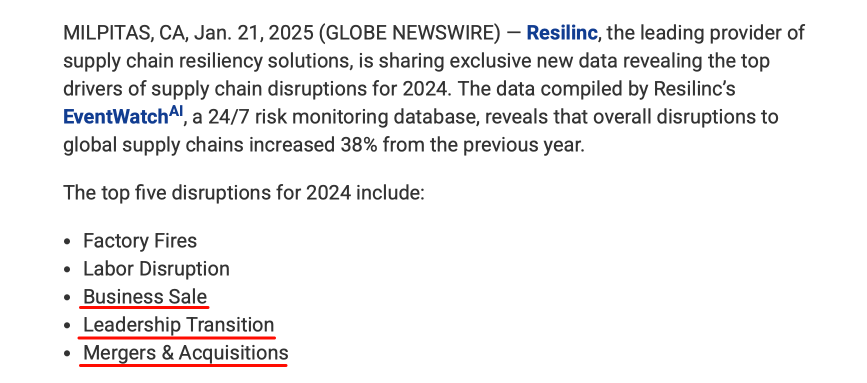
It is no surprise that, according to Resilinc’s 2024 data, three of the top five supply chain disruptions were business sales, leadership transitions, and mergers and acquisitions.
All financial and organizational changes are tied to how companies are structured and owned.
Source: Resilinc
Similarly, supplier facility relocations or expansions can alter your geographic concentration risk over time.
A supplier that previously operated in a low-risk region might open a new manufacturing site in an area prone to natural disasters or political instability.
Or multiple suppliers might expand into the same industrial zone, creating a geographic cluster you were not aware of.
So, even if initial concentration risk assessments are thorough, failing to monitor these ongoing changes can leave you exposed.
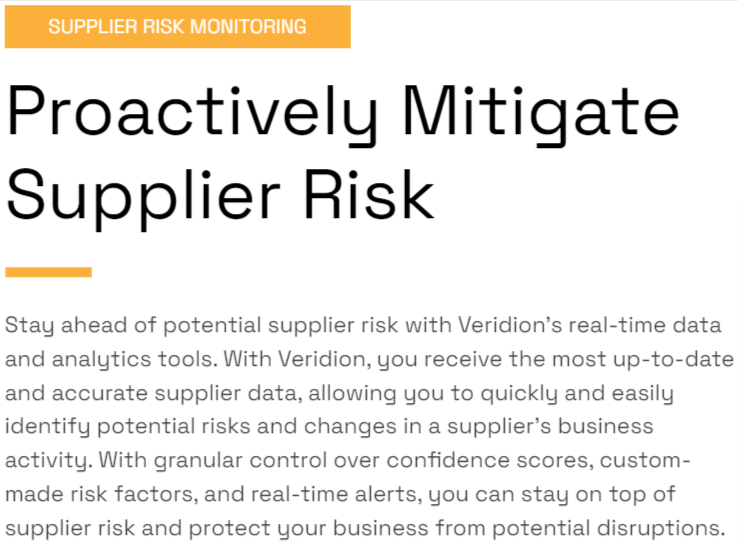
In other words, being proactive matters. And Veridion is built to support exactly that kind of continuous monitoring.
Source: Veridion
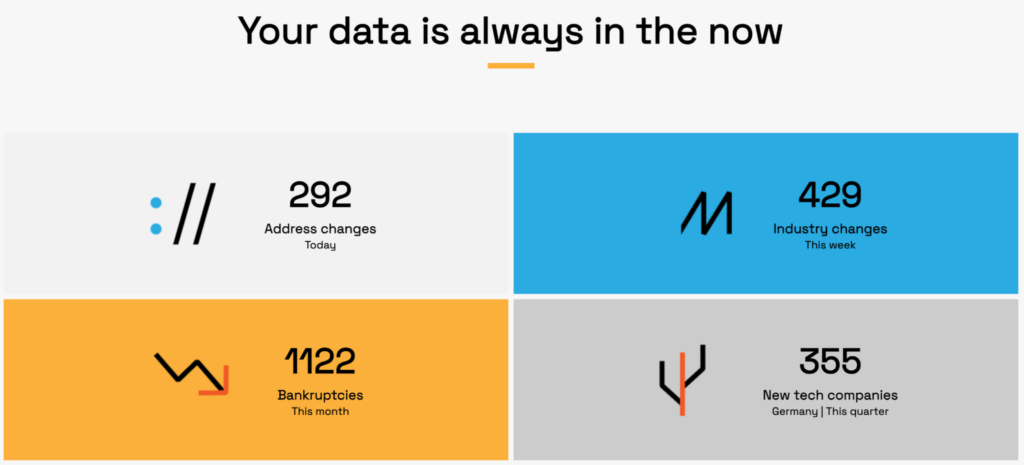
Despite the size of its database, Veridion keeps its data highly accurate through AI-driven processes that continuously scan and verify supplier information from multiple sources across the internet.
In fact, Veridion performs weekly data refreshes, which means your business intelligence always reflects current conditions.
Source: Veridion
This allows you to monitor concentration risk as it evolves, not just at the moment you first assessed it.
As a result, any diversification or risk mitigation efforts can be put into action well before larger problems develop, keeping your operations smooth and your supply chain resilient.
Ultimately, vendor concentration risk does not stay the same over time, so your approach to managing it should not either.
With Veridion’s continuously updated intelligence, procurement teams can stay ahead of changes instead of reacting to them.
That wraps up the key ways Veridion’s intelligence supports vendor concentration risk reduction.
We covered how the platform reveals hidden dependencies and geographic clustering, but also how it helps you find alternative vendors and keep your risk assessments current
The takeaway is simple: you cannot manage concentration risk you cannot see.
Start by gaining visibility into your supply chain, and build from there.