



Blog
The Technographic Data Providers That Stand Out in Today’s B2B Market
By: Auras Tanase -
08 July 2026


We love our data, and now that you're here, you're one step closer to loving it too.
A wide sample of data, so you can explore what is possible with our data
Choose ->
built with procurement in mind. Focused on manufacturers, products and more
Choose ->
built with insurance in mind. Focused on classifications, business activity tags and more
Choose ->
built with sustainability in mind. Focused on sustainability commitments, and environmental and social governance insights.
Choose ->
built with strategic insights in mind. Focused on market trends, competitor analysis, and industry-specific data
Choose ->

Keep up to date with our technology, what our clients are doing and get interesting monthly market insights.

Your prospects leave digital clues long before they speak with your sales team.
The technologies they adopt, replace, or integrate often reveal purchasing priorities, business maturity, and potential opportunities for your product.
That’s why technographic data has become an essential part of modern B2B sales and marketing.
However, today’s vendors offer far more than technology detection alone. Many combine AI, intent signals, company intelligence, and automation into a single platform.
To help you compare your options, we’ve reviewed five leading technographic data providers based on their capabilities, positioning, and the types of teams they serve best.
Veridion, an AI-powered business intelligence platform, is built for enterprises that need complete, end-to-end business data at a global scale.
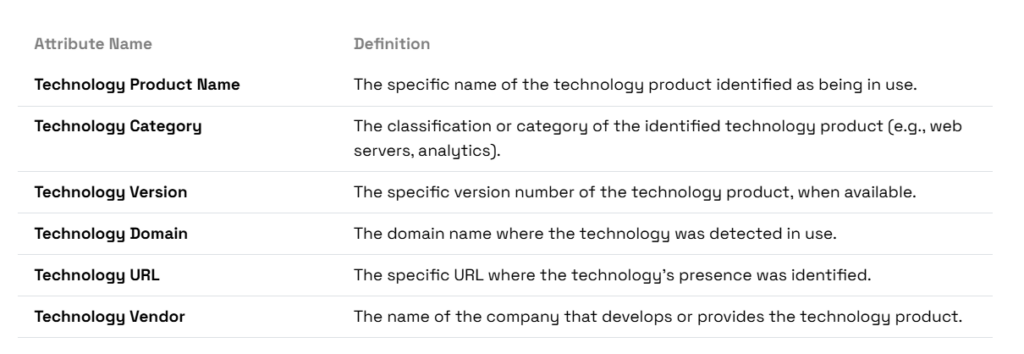
In terms of firmographics in particular, it offers all sorts of useful data points:
Source: Veridion
Now, many B2B technographic data vendors show you the tools or technology a company uses.
But software alone doesn’t tell you whether that company is the right customer, supplier, or competitor to focus on.
To make that decision, you need a complete business profile, including its products, locations, ownership structure, financials, industry classification, and other company attributes.
That’s exactly what Veridion offers.
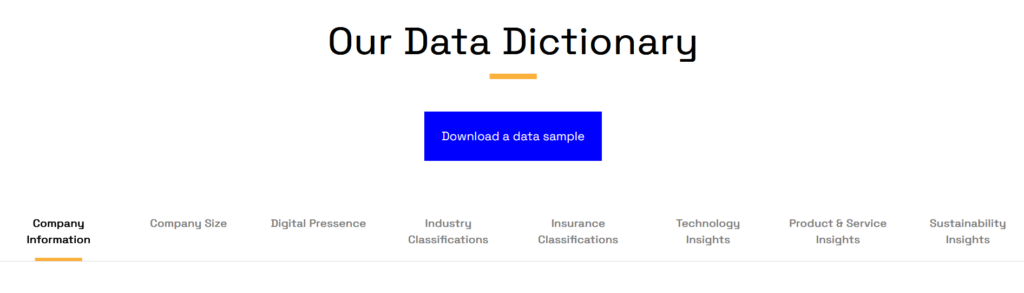
The platform combines technographic data with a much broader company intelligence profile, giving deep context behind every signal.
Each profile contains more than 320 structured attributes, covering 135 million companies across 250+ countries, with records refreshed every week to keep data current.
Source: Veridion
Say you’re looking for manufacturers running SAP ERP as part of a supplier discovery project.
A standalone technographic provider can identify companies using SAP.
But Veridion also shows you their financial performance, ESG metrics, location, and so much more to help you determine if they’re the right supplier.
That additional context saves teams from stitching together multiple enrichment providers just to build a complete company profile.
Alongside technographic data, every company record can include:
And because these signals come from the same standardized profile, procurement, GTM, compliance, and market intelligence teams can work from one consistent source instead of reconciling data from several vendors.
So, what does Veridion’s data enrichment process look like?
It all happens in multiple steps:
| NORMALIZE | Identify duplicates, standardize data, and roll suppliers to parent entities. |
| ENRICH & UPDATE | Enrich and update each supplier with attributes such as contact information, locations, names, products & services, sustainability information, tax ID etc. |
| CLASSIFY | Classify suppliers by industry classifications, geographies, diversity ownership, etc. |
| VALIDATE & MONITOR | Validate supplier records to ensure accuracy and continually monitor for changes. |
Veridion also fits into existing enterprise data stacks without requiring major workflow changes.
Teams can access data through real-time APIs, batch delivery, or custom integrations with CRM, ERP, MDM, SRM, and analytics platforms.
Compared with providers focused solely on technographic enrichment, Veridion gives you the surrounding business intelligence needed to act on that data.
For teams that need technographics as one signal among many, rather than the only signal, Veridion’s depth-first model is difficult to overlook.
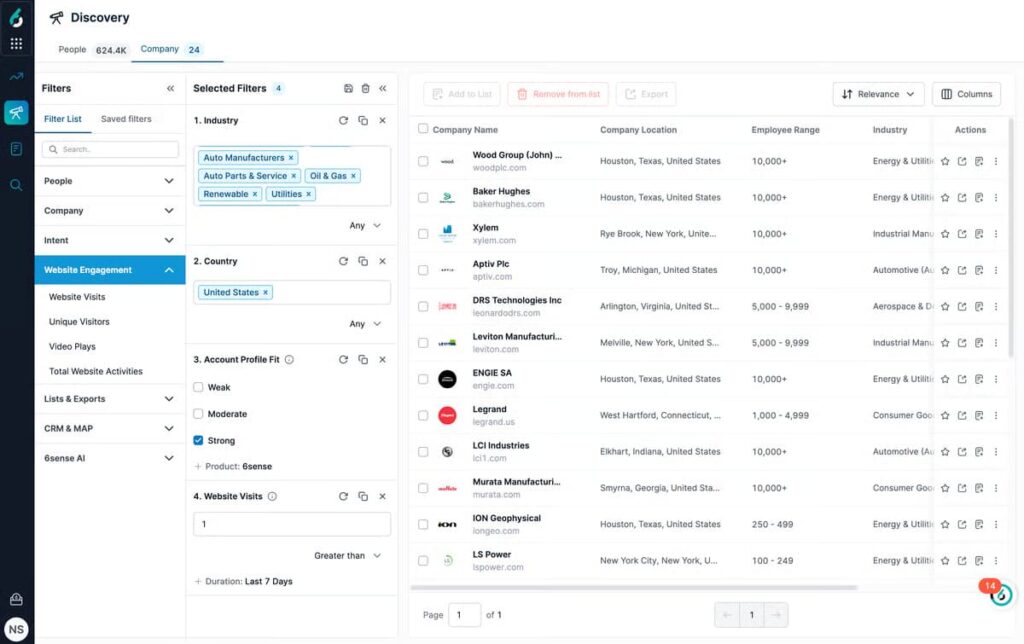
6Sense is built for B2B revenue teams that want to know not only which technologies a company uses, but also whether that company is actively moving toward a purchase.
Source: G2
For instance, a regular data provider could tell you that a prospect uses AWS, Salesforce, or Kubernetes.
That information is useful, no doubt, but it doesn’t tell your sales team whether those companies are researching new vendors or showing signs of buying intent.
6Sense fills that gap by combining technographic data with buyer intent, first-party CRM data, website activity, predictive AI, and engagement signals into a single revenue intelligence platform.
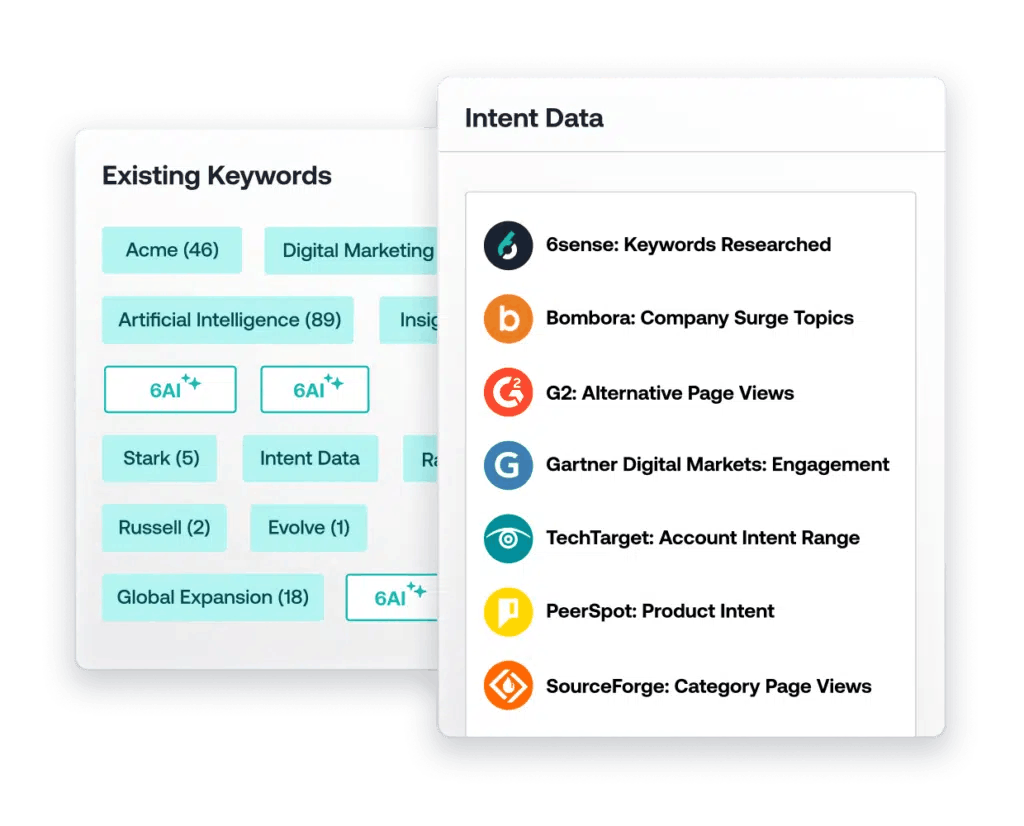
At the heart of the platform is its Signalverse™, which connects more than 13 years of intent data with anonymous website visits, content engagement, funding events, job changes, CRM interactions, and technology adoption signals.
Source: 6Sense
According to 6Sense, the platform tracks more than 15.8 million companies and monitors 34,000+ technologies, making it one of the largest commercial technographic datasets available today.
In 2026, the company introduced AI-Recommended Leads, which automatically surface CRM-ready contacts from engaged accounts.
The platform also launched RevvyAI, a conversational AI assistant that lets reps ask questions like, ‘What should I know before calling this account?’
RevvyAI pulls answers from real buying signals, account history, CRM records, and technographic data, giving teams a practical briefing before every conversation.
This AI-first approach has earned strong industry recognition.
6Sense has been named a Leader in the Gartner Magic Quadrant for Account-Based Marketing Platforms for five consecutive years and received the highest possible score across multiple evaluation criteria in Forrester’s Revenue Marketing Platforms report.

Source: 6Sense
That said, the platform’s contact coverage can become thinner for smaller businesses, leading many teams to pair 6Sense with a dedicated email verification tool.
Compared to Veridion, which balances technographic data with broader company intelligence, 6Sense targets enterprise GTM organizations and carries enterprise-level pricing, making it better suited to mature ABM programs than smaller outbound teams.
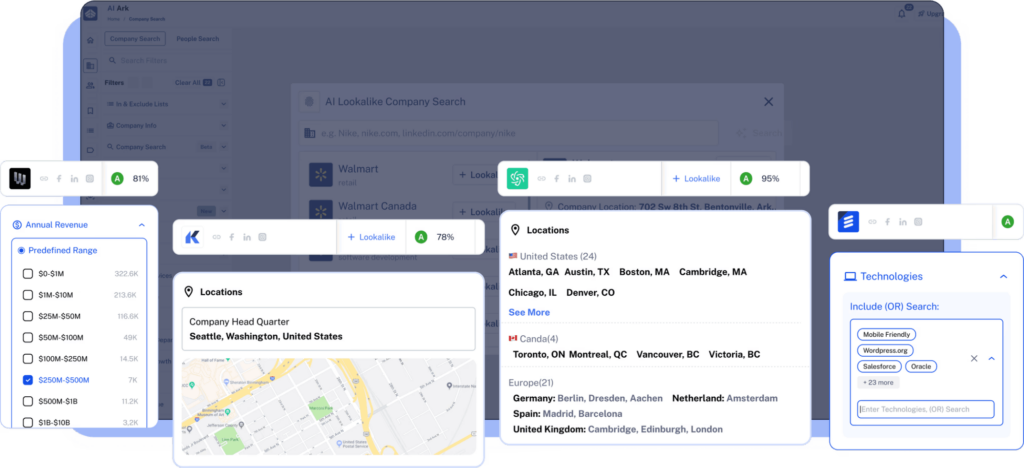
AI Ark is built for revenue teams that already know what a great customer looks like but struggle to find more companies that match that profile.
Source: AI Ark
Its biggest differentiator is Lookalike Search, an AI-powered capability that analyzes your existing customers and identifies businesses with similar characteristics.
You don’t have to spend hours building long searches with dozens of filters or manually defining every aspect of your ideal customer profile.
According to AI Ark, its models achieve 95%+ ICP matching accuracy, helping teams uncover highly relevant accounts with far less manual effort.
That AI-first philosophy runs across the entire platform.
Technographic data is only one part of a much broader intelligence layer that AI Ark offers.
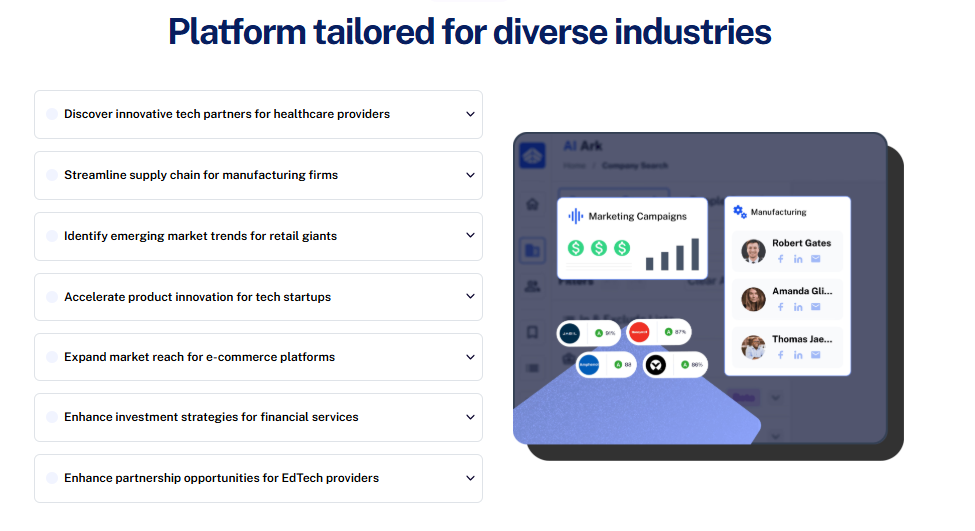
The platform combines technographics with firmographics, customer intent, demographic attributes, engagement patterns, dynamic company signals, and market analytics to build richer company profiles.
Source: AI Ark
For sales and marketing teams, this means you can qualify and prioritize accounts using multiple buying signals from a single platform instead of jumping between several enrichment tools.
The platform currently covers more than 70 million companies and 400 million people, with data refreshed every 30 days (unlike Veridion, where data is refreshed weekly) to reduce the chances of targeting outdated accounts.
On the technographic side, you can search for companies based on technologies they use, including cloud platforms, enterprise software, and infrastructure deployments.
AI Ark also puts significant effort into improving data quality.
It aggregates information from multiple commercial providers, proprietary datasets, and public sources before processing everything through its AI engine.
When conflicting records exist, its Cross-Source Waterfall system automatically prioritizes the most recently updated information.
Every contact also passes through real-time email verification, which the company says helps users discover 30-50% more valid contacts while keeping bounce rates below 1%.
Beyond prospecting, AI Ark supports use cases such as competitor research, recruiting, and investment screening, all powered by the same underlying dataset.
Further, its coverage spans North America, EMEA, and APAC, with GDPR and CCPA compliance built into the platform.
If your biggest challenge is finding companies that closely resemble your best customers, AI Ark offers one of the strongest AI-native approaches available today, combining semantic search, lookalike modeling, and technographic intelligence in a single workflow.
Similarweb built its name on web traffic and competitive data. Its technographic layer grew directly out of that same strength.
Source: SimilarWeb
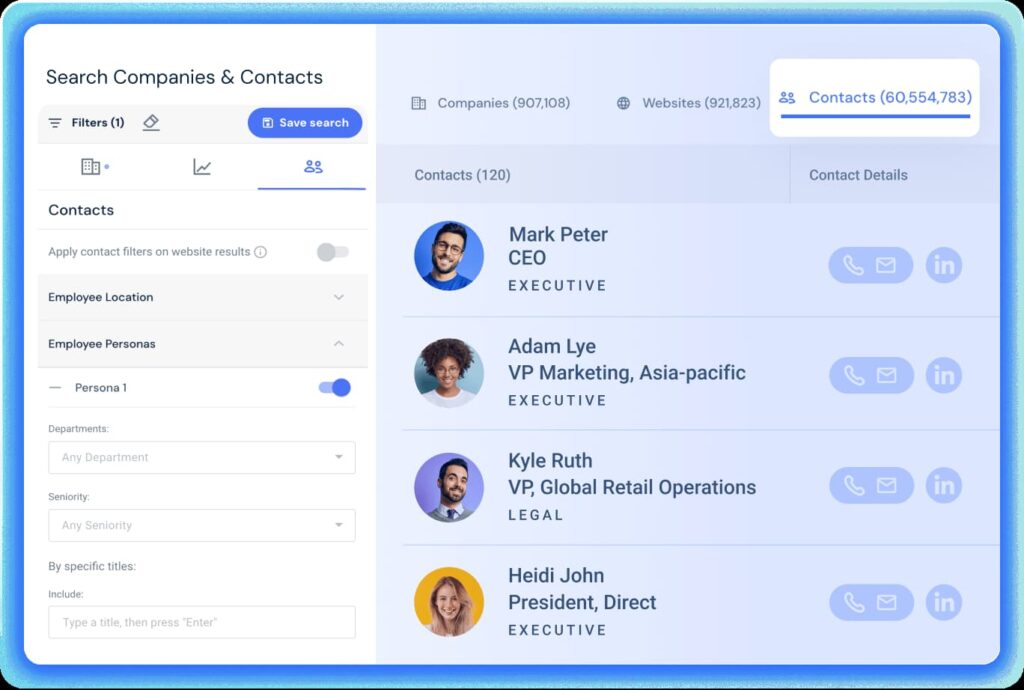
It’s worth noting that Similarweb shows how that company’s digital presence performs alongside its technology stack.
That additional context matters because two companies using Shopify, HubSpot, or Salesforce can look completely different when you compare their traffic growth, audience engagement, market share, and competitive position.
The platform tracks between 5,000 and 8,000+ web-facing technologies across 100+ million websites in more than 190 countries.
One capability that stands out is the install and uninstall date tracking.
You can see exactly when a business adopts or removes a technology, making it easier to
Similarweb also combines technographic data with website traffic analytics, audience insights, competitive benchmarking, and engagement metrics in a single interface (If you need deeper company-level operational, compliance, and risk intelligence alongside technographics, Veridion offers broader business data coverage).
Another strength is flexibility.
The platform offers both per-domain and batch APIs, allowing teams to analyze anything from a handful of accounts to millions of domains.
Enterprise customers can also access daily Data Feeds, while standard datasets refresh weekly.
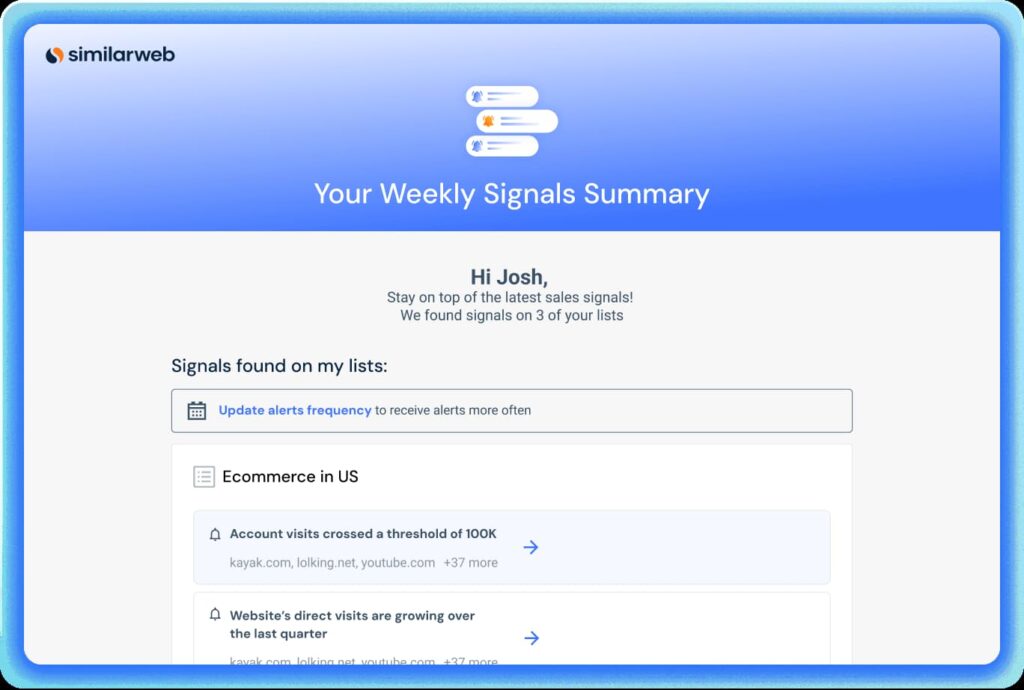
Beyond technographics, Similarweb has expanded into sales intelligence with over 370 million contacts, Bombora-powered intent signals, and AI-powered prospecting features that generate lead lists from natural-language prompts.
Source: SimilarWeb
Similarweb also shines for its coverage of web-facing technologies, digital performance, and competitive benchmarking.
That makes Similarweb an excellent fit for revenue teams, consultants, investors, and market intelligence professionals who want to understand both a company’s technology stack and the digital performance behind it.
If your organization already relies on Similarweb for competitive or traffic analysis, its technographic layer can add meaningful context without requiring another standalone platform.
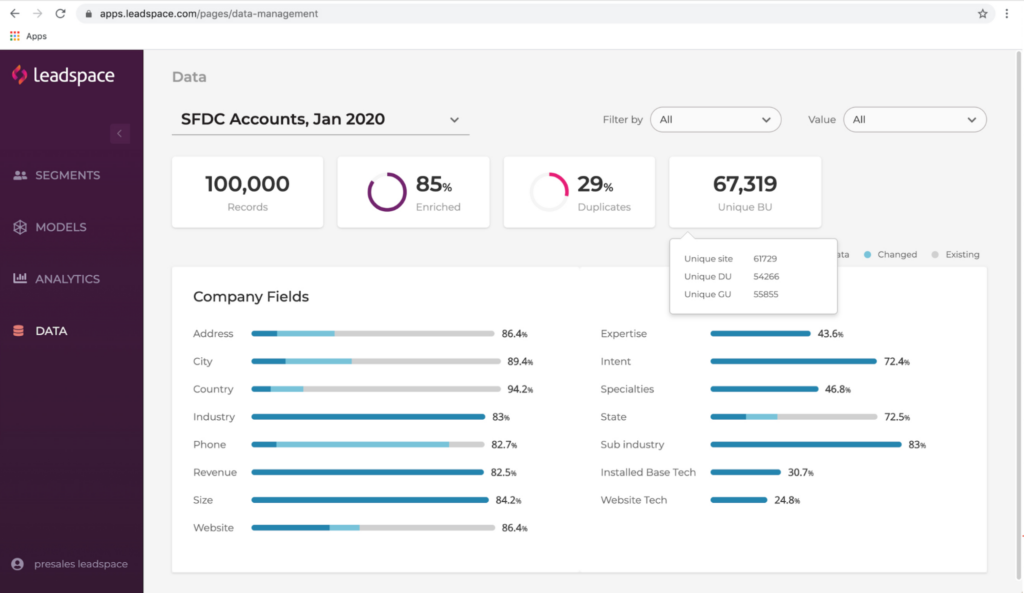
Leadspace is built as a complete GTM data intelligence solution where technographics becomes one layer of a much larger customer profile.
Alongside technology adoption, Leadspace combines firmographic, demographic, intent, and engagement signals to help sales and marketing teams work from a single, continuously updated account record.
Source: G2
Leadspace tracks more than 18,000 installed technologies and 3,000+ web-based technologies across 90+ technology categories, while processing over 2 billion buying signals every week.
The platform also maintains approximately 800 million person profiles, giving revenue teams enough context to understand not only what prospects use today but also how their buying behavior is changing.
For GTM teams, the biggest advantage is how these signals work together.
Imagine you’re launching a competitive displacement campaign.
You don’t just need a list of companies using a rival product.
You also want to know which of those accounts match your ideal customer profile, show active buying intent, fit your territory assignments, and can be pushed directly into your CRM for sales outreach.
Leadspace brings all of those signals into a single workflow.
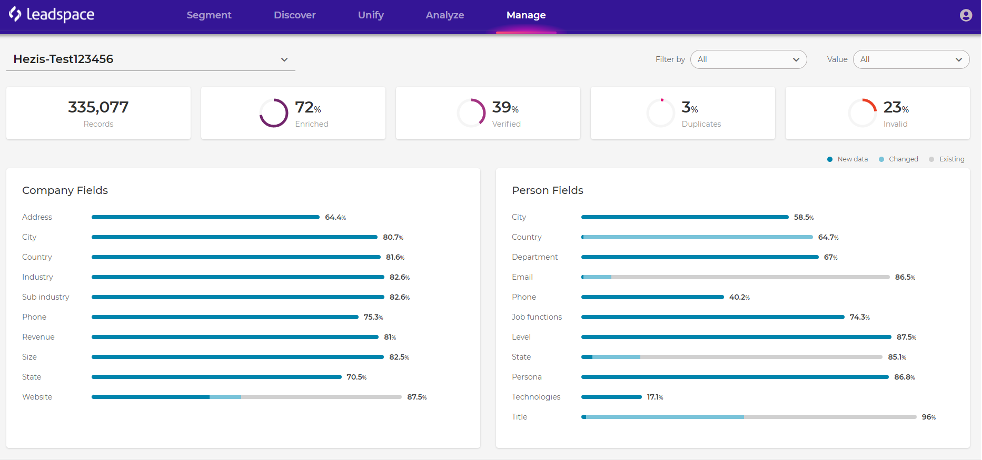
Using Leadspace Studio, teams can build technology-based audiences, create custom segments, and automatically activate them across platforms such as Salesforce, HubSpot, Marketo, Snowflake, and BigQuery.
Source: Leadspace
Since account data is continuously refreshed, sales and marketing teams spend far less time exporting spreadsheets or manually updating CRM records.
The platform also invests heavily in AI-driven identity resolution, connecting fragmented customer records across multiple systems into unified account profiles.
For enterprise RevOps teams managing millions of records, this improves lead routing, account matching, territory planning, and campaign accuracy.
Leadspace claims its matching engine delivers up to 2x higher lead-to-account match rates, helping qualified leads reach the right sales teams faster.
This makes Leadspace a strong fit if you want technographic data to power your entire revenue engine, not just technology lookups.
Teams looking for simple install-base searches may find lighter alternatives sufficient.
But if your goal is to combine technology adoption, buying intent, CRM enrichment, and AI-driven account scoring into one continuously updated GTM workflow, Leadspace offers one of the most comprehensive enterprise platforms in this category.
Technographic data delivers the greatest value when it supports real business decisions, whether that’s identifying competitive opportunities, improving account qualification, or discovering new markets.
As you compare vendors, look beyond feature lists and evaluate how each platform fits into your existing processes.
Data quality, refresh frequency, integrations, and the broader intelligence surrounding the technology stack often have a bigger impact than the number of technologies tracked.
Choosing a platform with the right combination of coverage and context will help your teams act on insights with greater confidence.