



Blog
How Does E-Commerce Market Intelligence Solve Common Sales Challenges?
By: Stefan Gergely -
22 June 2026


We love our data, and now that you're here, you're one step closer to loving it too.
A wide sample of data, so you can explore what is possible with our data
Choose ->
built with procurement in mind. Focused on manufacturers, products and more
Choose ->
built with insurance in mind. Focused on classifications, business activity tags and more
Choose ->
built with sustainability in mind. Focused on sustainability commitments, and environmental and social governance insights.
Choose ->
built with strategic insights in mind. Focused on market trends, competitor analysis, and industry-specific data
Choose ->

Keep up to date with our technology, what our clients are doing and get interesting monthly market insights.

Key Takeaways:
You have the right products and the traffic on your website. So why aren’t your sales numbers adding up?
Many e-commerce businesses move fast, and keeping up takes more than good products.
It takes having visibility into what’s driving the market, the customer, as well as your competition.
Can you confidently say that you have that?
In this guide, we’ll be looking into five main challenges e-commerce teams face, and if you recognize yourself in some of them, worry not.
We also get into how to solve them.
Your product listing is your first and often only pitch.
Which means writing product content that converts your audience is harder than it looks.
If the content doesn’t speak your buyer’s language, they don’t stop scrolling and move on to a competitor whose listing did.
Research by Salesforce shows that 80% of customers now consider the experience a company provides to be as important as its products and services.
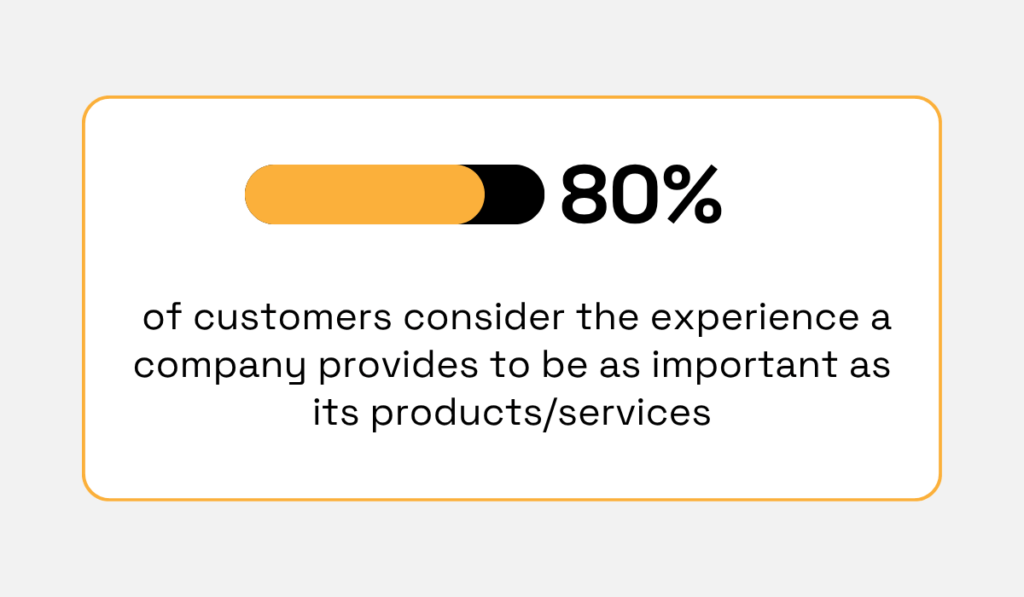
Illustration: Veridion / Data: Salesforce
In e-commerce, that experience starts the moment a customer reads your product page and decides whether what you’re selling is meant for them or not.
So how does market intelligence help with this?
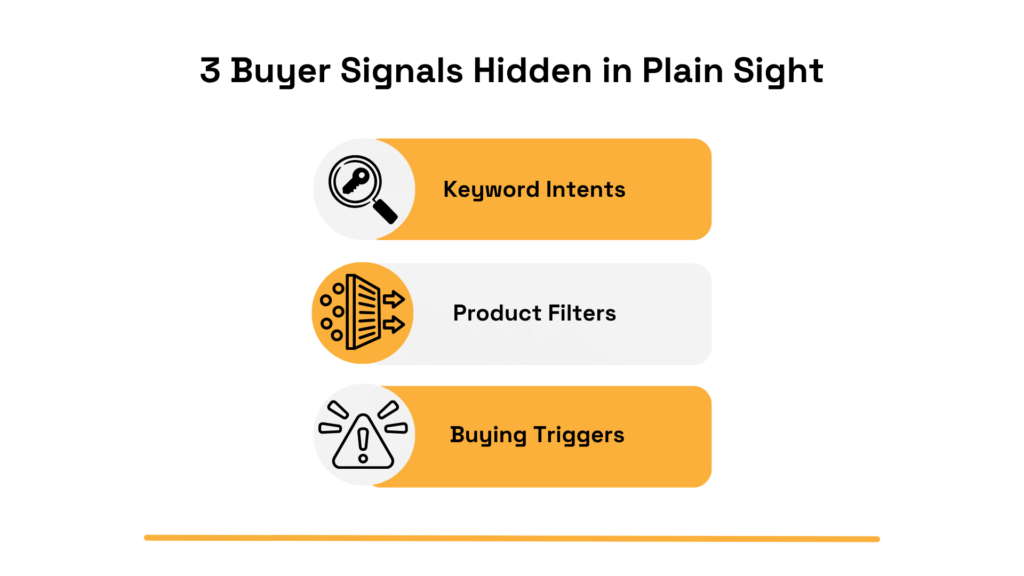
Market intelligence makes sure the buyers stay on your page by focusing on three signals that most product teams don’t have access to on their own.
Source: Veridion
First, it searches for the exact keywords buyers type when searching for products like yours.
So, when you’re writing your product listings, you can use specific long-tail phrases like: “Waterproof Hiking Boots For Wide Feet” rather than “Outdoor Footwear”
Then, it checks for the product filters your buyers use before they reach a listing.
This includes:
To tell you what your customers consider non-negotiable before they read a single word of your description.
Lastly, it checks for buying triggers that push someone from considering to making a purchase.
This purchase behavior data shows which edge your competitors have over you, which social proof signals build trust fastest, and which product features are consistently mentioned in reviews right before/after a sale.
Once your content is bringing in buyers, the next question is: Does your price keep them moving in the right direction, or does it make them click away?
Pricing is very tricky because if you price too high, your buyers leave for a competitor whose price is lower.
But if you go too low, you’ve made a sale that destroys your margin in the process.
So your best option is finding a middle ground, which in itself is so hard to do because a lot of e-commerce businesses set up prices based on gut feeling.
Yet, the gut feeling pricing doesn’t work anymore because 48% of consumers now compare prices more frequently throughout the year just to stretch their budgets.
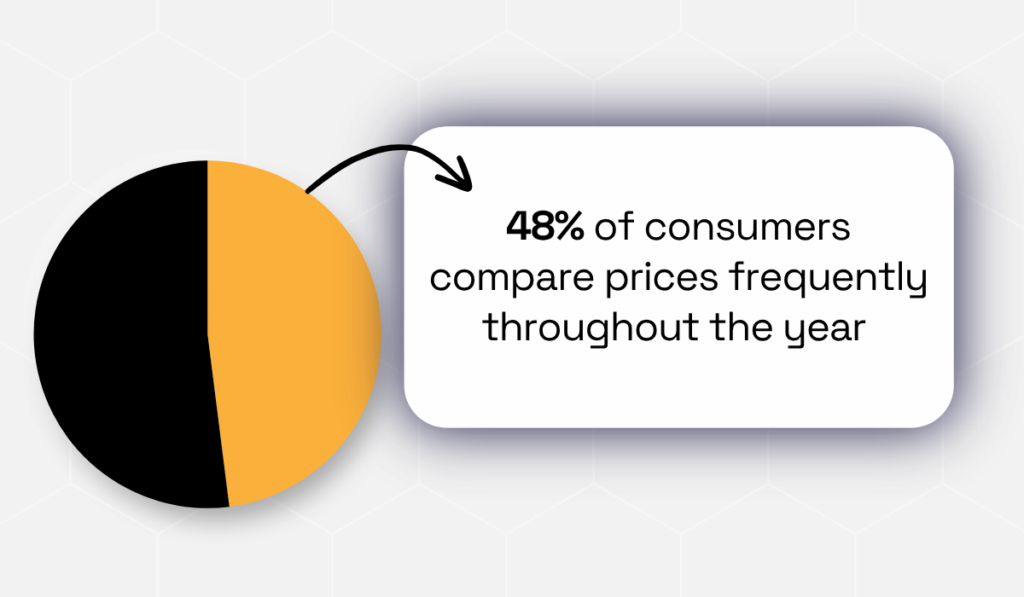
Illustration: Veridion / Data: Ryder
They know what your competitors are charging before they decide if yours is worth it.
Therefore, your price isn’t just a number anymore.
Which is why you need a proper market intelligence tool to track:
That last one is very important because you’re not stuck constantly reacting; it tells you what your specific market will bear and what your buyers are showing you through their own behavior.
A common worry with this, though, is that having this information gives you a limit to how much you can price, but that couldn’t be farther from the truth.
The truth is, knowing exactly what influences your buyers’ decisions and how high they’re willing to pay gives you enough flexibility to have the right price every time.
For example, during the period of spikes or higher demand, you get the data ahead and can create strategies to increase revenue during these periods.
Amazon, one of the biggest e-commerce platforms, built their entire pricing model around this principle.
Through their Automate Pricing tool, Amazon continuously adjusts prices based on predefined rules that are tied to competition and market conditions.
Sellers set a minimum and maximum price threshold, and within those boundaries, the prices move automatically in response to what’s happening in the market.
A seller on Amazon, Bryce Calcutt from LBIntegrity, commented:
“Automated pricing has definitely kept us in the game. I have noticed an uptick in sales on the products we have enrolled.”
Ultimately, you don’t have to choose between staying competitive and protecting your margins. You just need the data to know where the line is.
Predicting future demand, especially with poor data, ends up in one of two ways:
Contrary to popular belief, the latter can be just as problematic as the former.
For example, a research study by Alix Partners showed that two-thirds of customers will leave a site for its competitor if an item they’re looking for is out of stock.
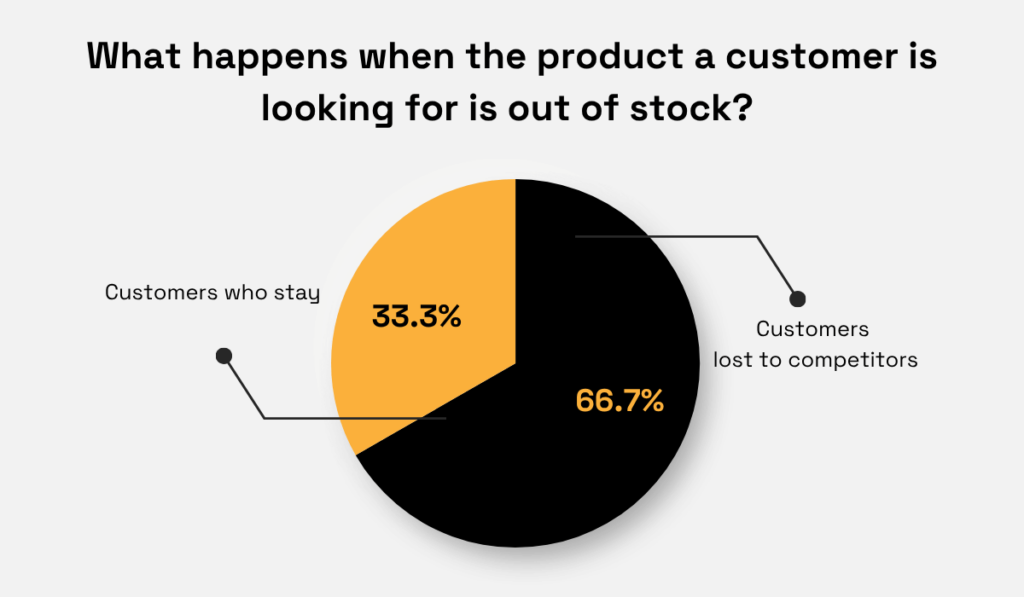
Illustration: Veridon / Data: Alix Partners
This means you’re losing up to 66.7% of your customers just from a poor forecast.
And the reason why these forecasts fail is that they only look inward.
They look at historical sales data, which doesn’t work because it only tells you what happened inside your business.
Market intelligence, instead, tells you what’s happening outside it.
Specifically, it pulls in signals like:
When those signals point to an upcoming surge, you’re prepared and can plan.
Walmart, a retail chain, is a perfect example of a company that leverages market intelligence for this.
Their demand forecasting systems work by analyzing historical sales data alongside regional buying patterns, weather conditions, local events, and competitor activity to predict what specific locations will need what and when.
As Indira Uppuluri, SVP of Supply Chain Technology at Walmart, put it:
“By using this model for demand prediction, we can plan inventory levels across our network more accurately and well in advance.”
For example, during hurricane season, they preemptively stock emergency supplies in affected areas without overstocking elsewhere.
And when demand rises, their systems detect it and adjust replenishment schedules automatically without manual intervention needed.
The result of this is a business that consistently has what buyers are looking for, when they are looking for it.
And once a buyer finds what they need in stock, they are far more likely to return.
Getting a customer to buy once is just the start. The real business is getting them to come back.
One-time buyers are one of the most expensive outcomes in e-commerce because you paid to acquire them, they converted, and then they are gone, leaving you to start the cycle all over again with someone new.
Repeat customers, on the other hand, make this process a lot easier because they:
So, for long-term growth and a steady revenue, they’re the best option.
But the question remains: how do you ensure your customers keep coming back.
Forrester’s 2024 US Customer Experience Index provides an answer.
It found that organizations that genuinely prioritize understanding their customers achieve 49% faster profit growth and 51% better customer retention than those that don’t.
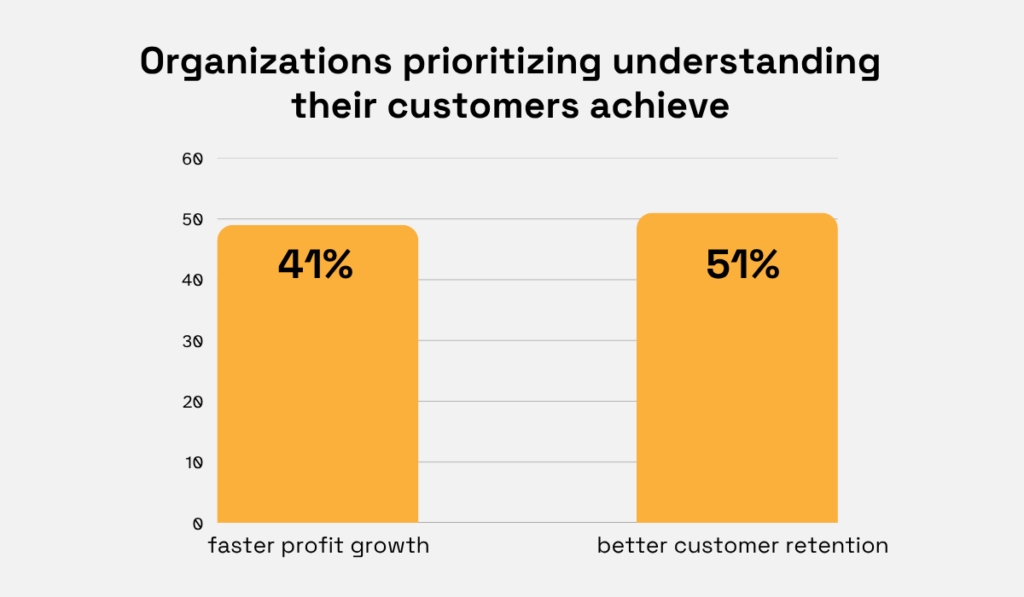
Illustration: Veridion / Data: Forrester
So, to help you keep customers, market intelligence analyzes their purchase behavior patterns, feedback trends, and category-wide signals to show you what brings a buyer back.
It then takes it a step further to show you which products consistently lead to repeat orders, which types of buyers have the highest long-term value, and where customers tend to disengage after their first transaction.
From there, you can make personalised offers based on what each buyer has already shown interest in.
For example, a customer who bought running shoes and then spent time browsing compression socks doesn’t need a discount code for handbags.
They need to see a product like a hydration vest to complete what they have already started.
That way, coming back feels like the next natural step.
Research from Salesforce backs this up, showing that 65% of consumers say they will stay loyal to a company that offers a more personalized experience.
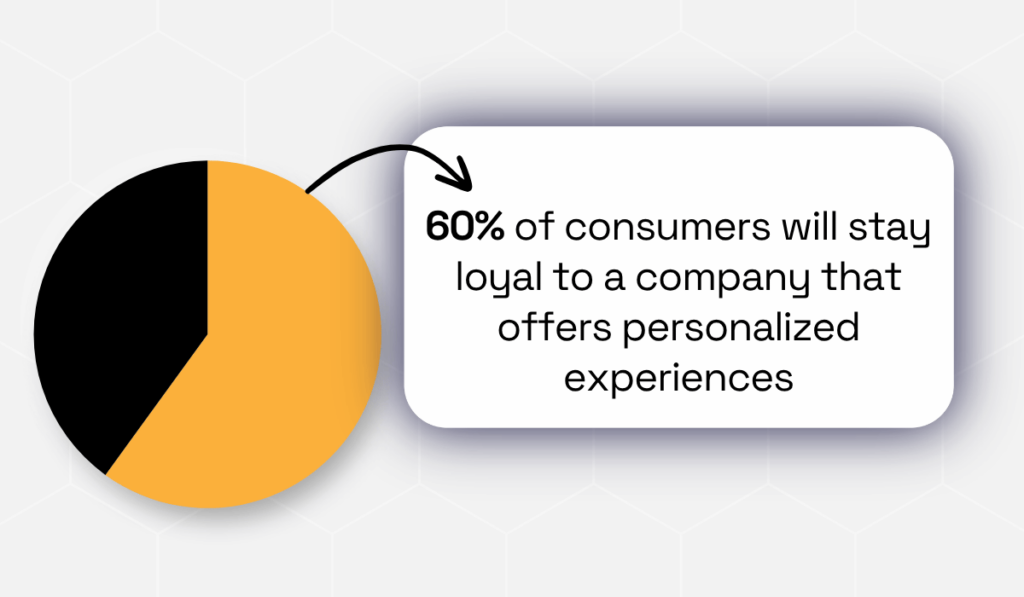
Illustration: Veridion / Data: Salesforce
Loyalty, in other words, is not just about price or product, but if a buyer feels like you understand them well enough to make returning worth their while.
The moment you notice a trend, there’s a high chance it’s already too late.
You need to be able to spot an emerging category, a new competitor capability, or a supply chain movement early enough to have any advantage.
To spot it, traditional market monitoring won’t be enough because it only focuses on sales data, supplies, or categories within your system.
So, you’ll need a data intelligence platform to go the extra mile.
That’s what Veridion helps with.
Instead of waiting for trends to show up in your own numbers, Veridion gives your procurement and market intelligence teams proactive visibility into what’s changing across their entire competitive and supplier landscape.
It tracks changes across over 130 million companies in 250 geographies.
It also monitors changes in company product offerings, new capabilities emerging across supplier networks, new industries forming, and movements in supply chains that signal where the market is heading next.
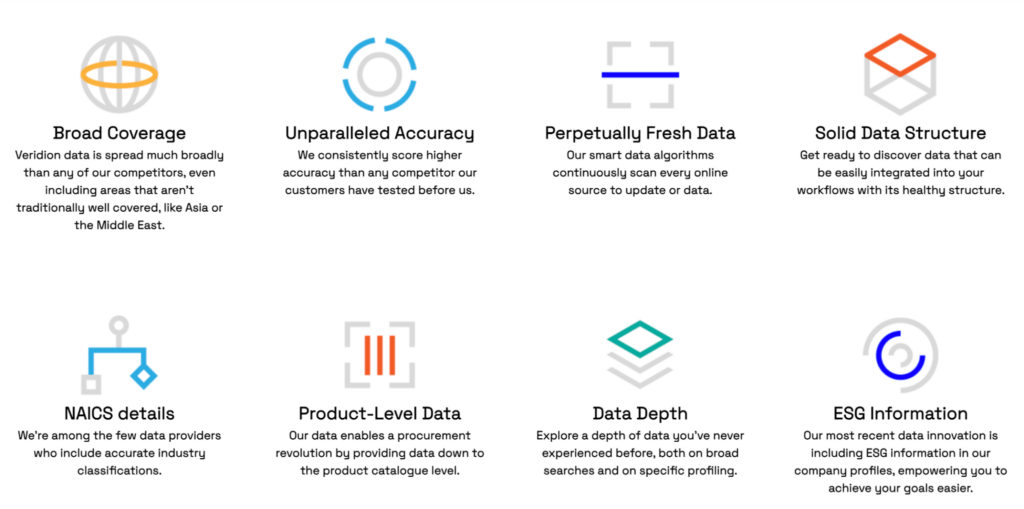
Source: Veridion
All of that data is updated weekly across 220+ structured attributes per company, so the picture you’re working from moves with the market.
With that supply-side visibility, your teams can:
In e-commerce, the best strategic decisions happen before a product ever reaches the market.
Veridion makes that possible by giving you the intelligence to act on what’s coming.
Every challenge covered in this guide has one thing in common.
They’re all harder without the right intelligence behind your decisions.
You don’t need more data to solve them; you just need the right data at the right time to make decisions that move your business forward.
Your competitors are already looking; you should look further.