



Blog
4 Key Master Data Management Implementation Styles
By: Auras Tanase -
07 January 2026


We love our data, and now that you're here, you're one step closer to loving it too.
A wide sample of data, so you can explore what is possible with our data
Choose ->
built with procurement in mind. Focused on manufacturers, products and more
Choose ->
built with insurance in mind. Focused on classifications, business activity tags and more
Choose ->
built with sustainability in mind. Focused on sustainability commitments, and environmental and social governance insights.
Choose ->
built with strategic insights in mind. Focused on market trends, competitor analysis, and industry-specific data
Choose ->

Keep up to date with our technology, what our clients are doing and get interesting monthly market insights.

Key Takeaways:
Master data chaos starts with disconnected systems, inconsistent records, and teams all working from their own version of the truth.
As organizations scale, that fragmentation only widens, which ultimately makes it harder to trust data, streamline operations, or make confident decisions.
This article breaks down the four major master data implementation styles and how each one shapes the flow, accuracy, and governance of enterprise data.
Ready to understand which approach fits your organization’s needs best? Let’s get straight into it.
The registry style takes a duplicate detection approach.
It pulls master data from all your source systems and runs cleansing and matching algorithms to connect related records.
The hub then assigns unique global identifiers to matched records, giving you a 360-degree view of each entity.
This structure directly addresses one of the biggest data problems today: data silos.
According to MuleSoft, they are an issue that most organizations still struggle with.
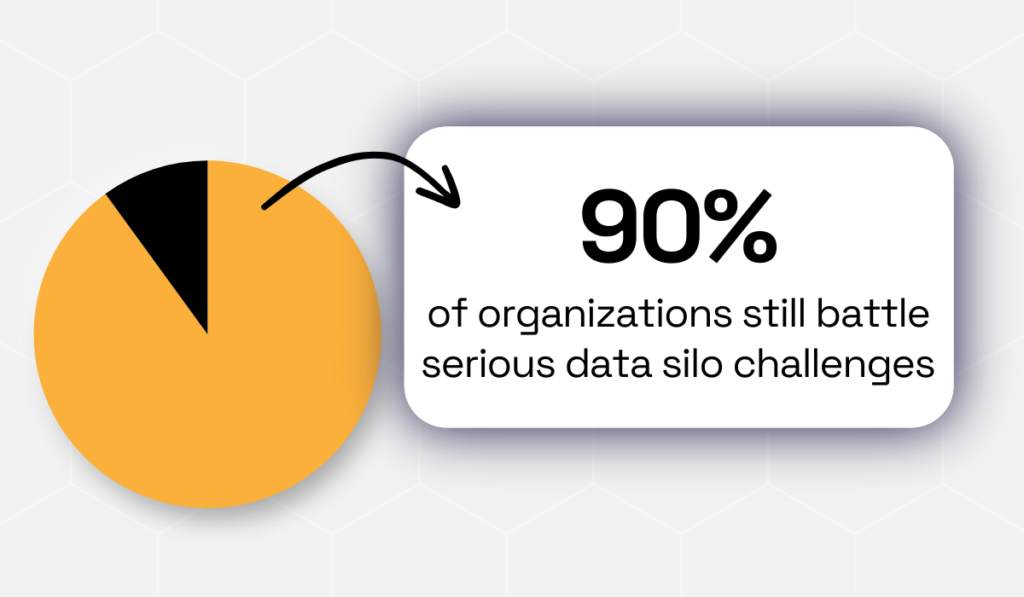
Illustration: Veridion / Data: MuleSoft
When departments operate in isolation, inconsistencies multiply, and reporting becomes unreliable.
In other words, without a unifying layer, each team maintains its own version of customer, vendor, or product records, making it nearly impossible to validate which version is correct.
By linking records without rewriting source data, registry MDM reduces the fragmentation created by these silos and brings order to otherwise scattered data.
The key part is this: the registry style never pushes any updates back to your original systems.
This means that each source system stays in control of its own data quality.
The registry hub only reads and links data, and it does not overwrite, modify, or redistribute anything.
This separation is intentional.
Why?
Because it ensures that the MDM initiative does not introduce disruption or trigger system-level conflicts, especially in environments where operational systems are sensitive or tightly regulated.
What you get is a unified, read-only view of your master data for reporting and analysis.
Since it does not modify your source systems, it minimizes intrusion and lowers integration costs.
Plus, you avoid the complexity of data redistribution and the organizational pushback that often comes with altering long-standing operational workflows.
This makes registry MDM a low-risk, low-cost option when you are dealing with many disparate data sources.
You also avoid compliance headaches of overwriting source data because the original records stay exactly as they are, and you can spot and eliminate duplicates across systems without disrupting ongoing operations.
This is especially useful in highly segmented environments where data exists in dozens of applications, each with its own format and standards.
And with XPLM reporting that 76% of companies struggle with cross-departmental data exchange, the registry master data management style gives you a practical way to establish visibility without reengineering every system.
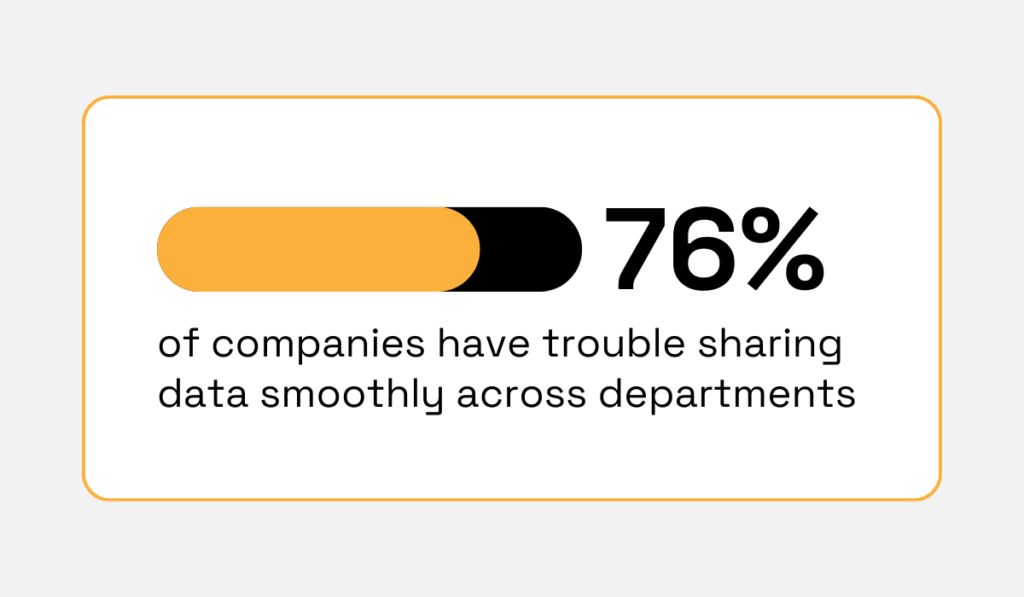
Illustration: Veridion / Data: XPLM
It creates consistency from the outside in: it doesn’t force departments to change how they store or maintain records.
Instead, the hub simply acts as the intelligence layer that recognizes which records relate to the same real-world entity.
The consolidation style elevates your data hygiene by creating a single, authoritative “golden record” in a central hub.
And that single point of truth is the strongest benefit.
It extracts master data from multiple source systems into one central hub. The hub then cleanses, matches, and standardizes those records to produce one unified master copy.
This golden record becomes the authoritative source for reporting, analytics, and governance.
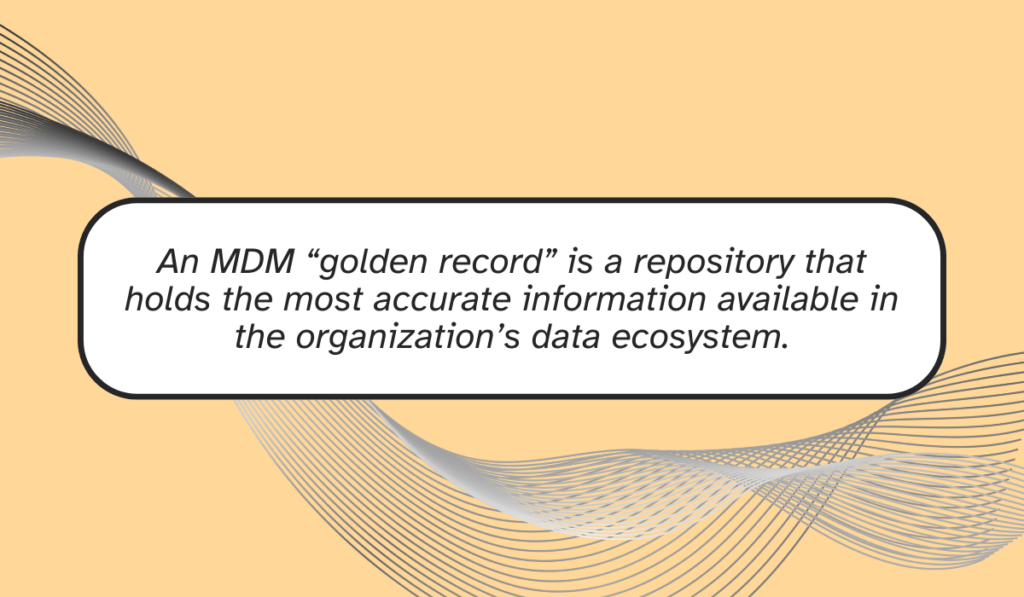
Illustration: Veridion / Quote: McKinsey
Consolidation also directly addresses expensive data quality problems, research shows.
Namely, poor data is a major source of enterprise inefficiency, costing organizations $12.9 million annually.
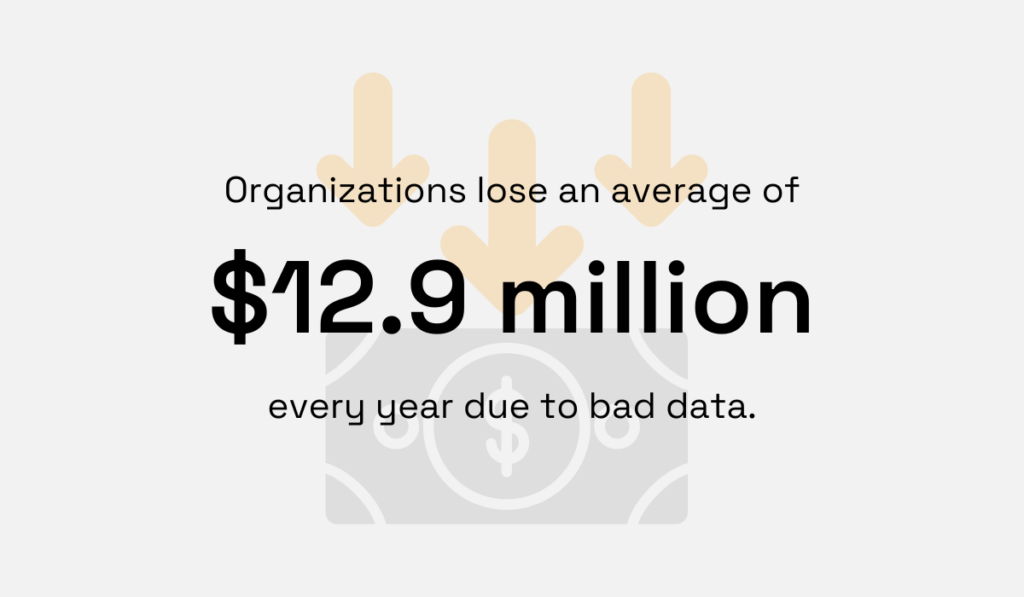
Illustration: Veridion / Data: Gartner
By merging duplicates and standardizing attributes in one place, consolidation reduces operational waste and the time spent reconciling inconsistent records.
The hub can also push updates back to the original source systems to keep everything aligned.
This two-way synchronization ensures that downstream applications eventually see the same cleansed data.
On top of that, consolidation hubs are simpler and less expensive to set up than more complex MDM models.
Because the integration effort focuses on centralizing data for analysis, many organizations use this style to quickly gain consistency for reporting.
The result is a trustworthy data foundation for analytics with quick ROI, faster analytics, low setup costs, and fast implementation.
And the best part is, you can elevate this approach with external data enrichment.
AI-powered platforms like Veridion, with its Match & Enrich API, can help you clean, validate, and enhance consolidated master data, particularly supplier or vendor data.
This ensures the master record stays complete and relevant over time.
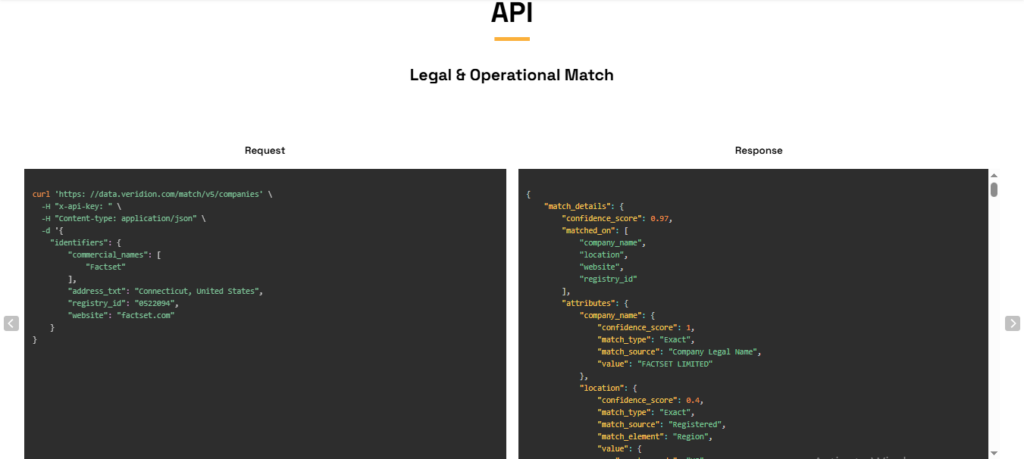
Source: Veridion
Veridion taps into a vast global supplier database of over 134 million companies and can deliver over 220 enriched attributes—everything from financial data and ESG scores to corporate hierarchies and product details—to your master records.
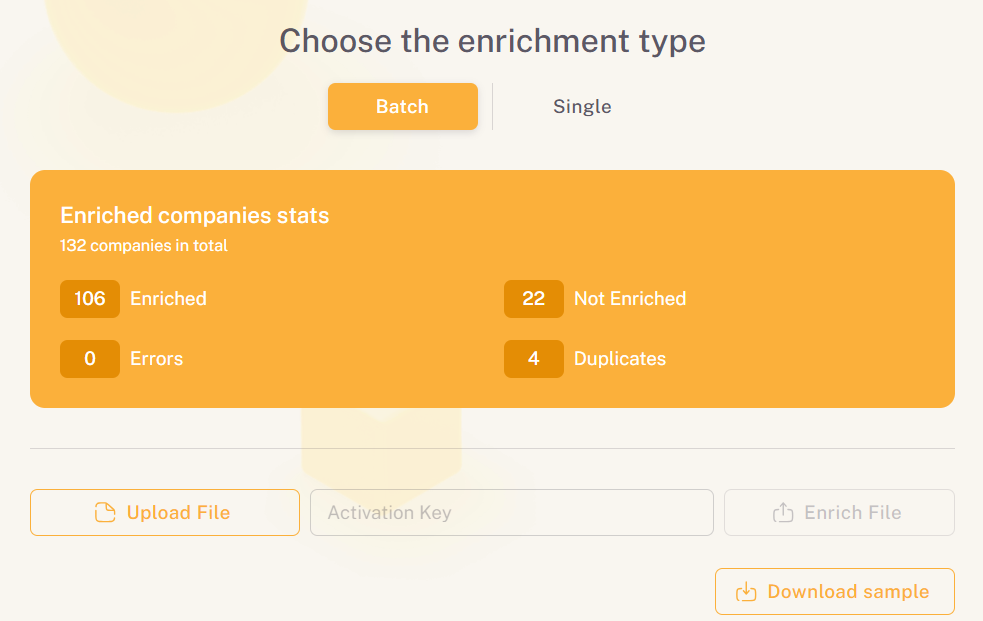
Source: Veridion
Enrichment services like these keep your consolidated master data accurate and up-to-date.
If your priority is to create a trusted, enterprise-grade record quickly and to propagate that trust back into the systems teams use every day, consolidation is the most practical and high-impact option.
The coexistence style builds on consolidation by enabling true two-way data updates.
Like consolidation, you create a central golden record hub that aggregates, matches, and standardizes records from multiple sources.
The key difference is that master data can be authored or changed either in your original systems or in the MDM hub itself.
Those changes then synchronize bi-directionally in real time or near-real time, so the hub and every connected application share the same, current view of the data.
The single strongest advantage?
Real-time alignment without sacrificing local autonomy.
Operational teams keep the flexibility to work in the systems they use daily, while the hub enforces a single version of truth that downstream reporting and analytics can rely on.
That balance is why many organizations choose the coexistence style as their strategic next step after consolidation.
Because updates may originate anywhere, the hub must ingest only high-quality, standardized attributes.
Otherwise, you risk reintroducing incompleteness, inconsistency, and inaccuracy.
McKinsey’s Master Data Management Survey highlights those exact problems as the most common data quality failures organizations face.
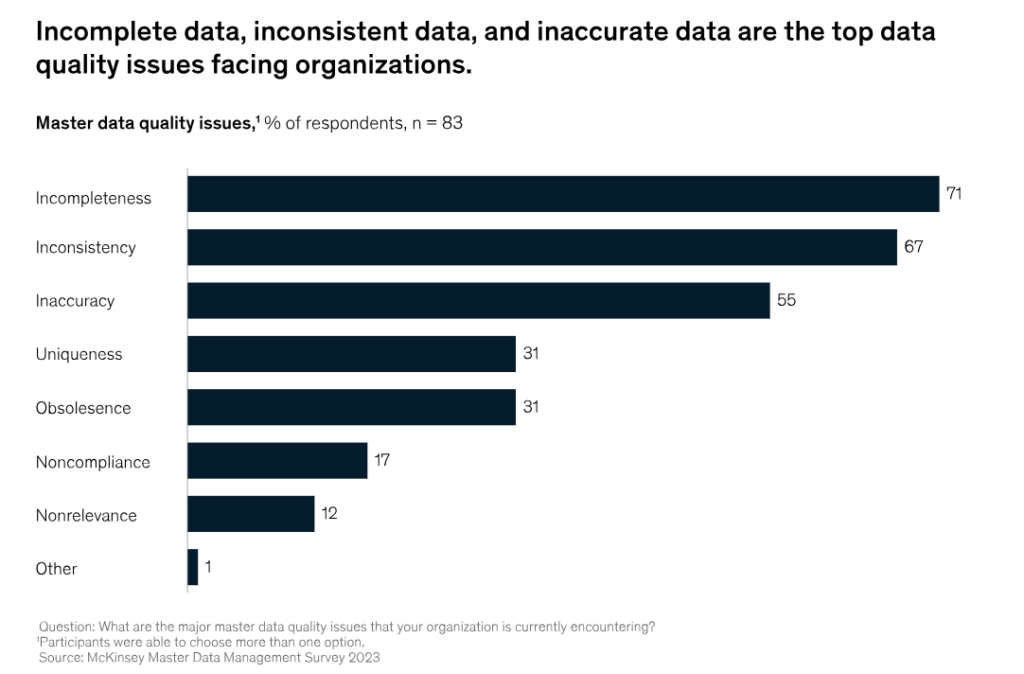
Source: McKinsey
However, the coexistence MDM style directly addresses them by standardizing and synchronizing data changes.
This means the MDM hub and source systems “coexist” with a shared understanding of the data.
Because changes can happen anywhere, it’s essential to cleanse and standardize all records before loading them into the hub, warns Jonathan Block, former VP at SiriusDecisions (now part of Forrester).
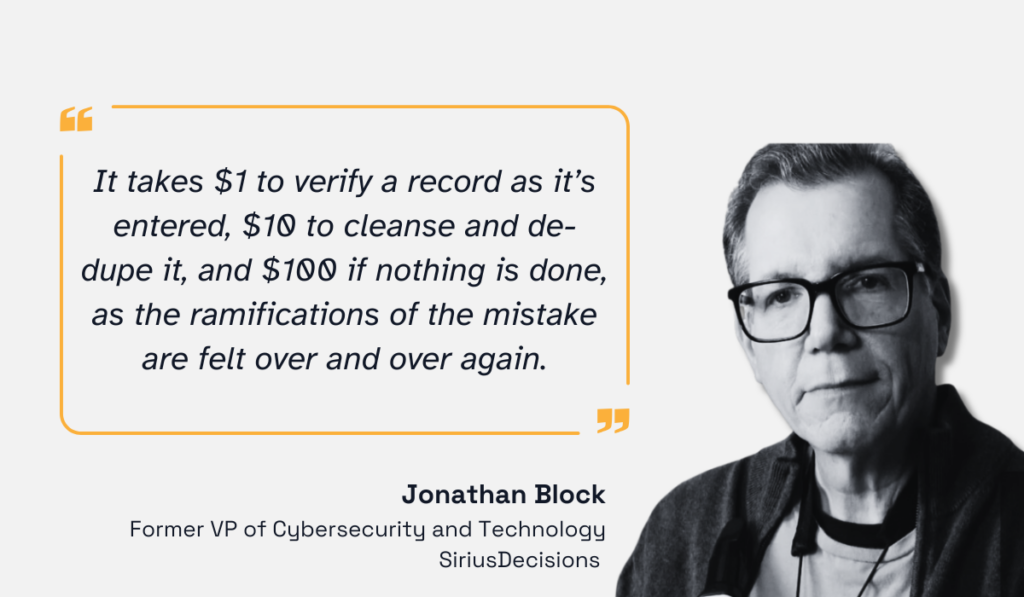
Illustration: Veridion / Data: Reltio
This emphasizes the importance of upfront validation.
In a coexistence model, investing in verification and standardization before records circulate prevents expensive and repetitive cleanup and operational friction downstream.
So, to save costs, make sure you clean your data thoroughly before loading it into the hub.
Simply put: clean once, propagate everywhere.
When done right, coexistence still maintains a single version of truth.
The hub provides the unified reference while your operational teams retain flexibility to work in their own systems.
Any update (whether made in your ERP or the hub) is immediately reflected everywhere. This improves data quality and speeds up decision-making.
The centralized style, also known as the transaction style, represents the highest level of control in MDM.
Here, the MDM hub is the system of record and the only place where master data can be created or changed.
That means every creation, update, and deletion of master data happens inside the hub.
Source systems do not authoritatively change master records.
Instead, they subscribe to the hub and consume its published, validated data.
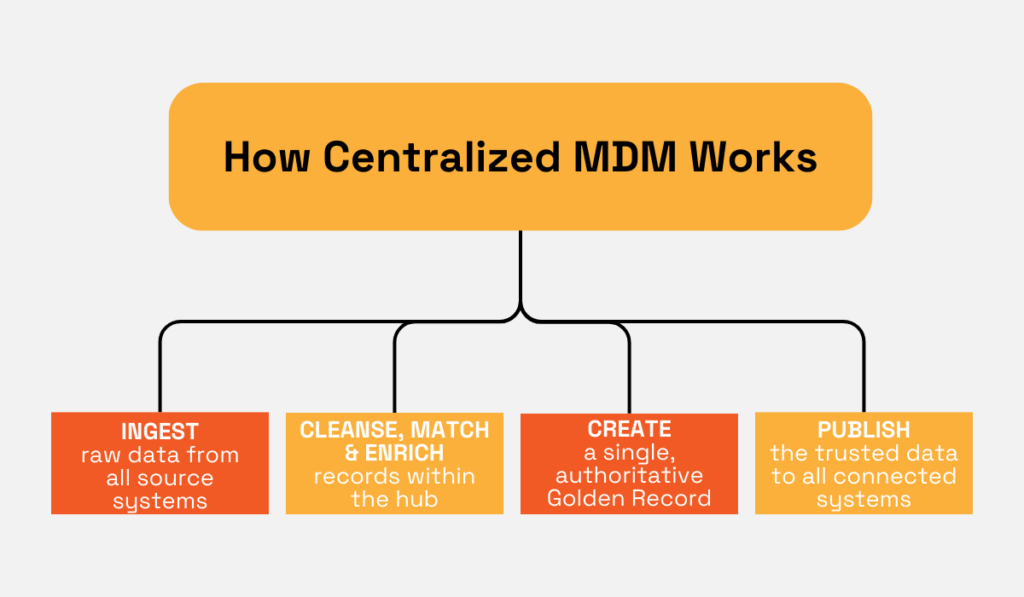
All cleansing, matching, and enrichment of master records happen inside the hub itself.
Raw feeds from ERPs, CRMs, procurement, or third-party sources are ingested, normalized, and resolved against business rules.
The hub matches, applies transformation rules, enriches records with external data, and persists a single authoritative golden record for each entity.
Once the hub finalizes a record, it publishes that trusted master data out to all connected systems so every application operates from the same vetted dataset.
Those systems subscribe to hub updates to stay in sync.
Source: Veridion
In this model, no system except the MDM hub can authoritatively change master data.
The data governance capability in centralized MDM is the strongest and most consequential advantage.
And it’s worth unpacking because governance is the primary reason organizations choose this model.
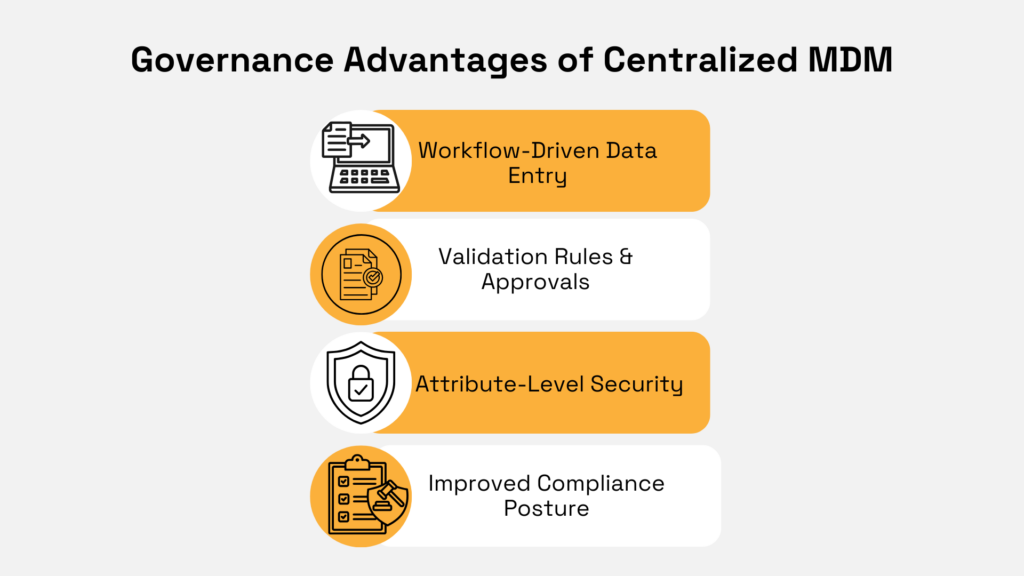
You can enforce workflow-driven data entry where new records or changes must pass through defined approval steps.
Then apply validation rules and set attribute-level security policies, all within the hub.
Source: Veridion
These governance features produce a tangible operational payoff: fully accurate, consistently synchronized master data across the enterprise.
Because downstream systems ultimately rely on the hub, reconciliation costs fall, data-driven processes run faster and with fewer exceptions, and compliance posture improves.
The outcome is a single source of truth you can trust implicitly.
Each implementation style we explored in this article shapes how organizations bring structure, consistency, and reliability to their master data.
Registry and consolidation approaches unify scattered records, and coexistence and centralized styles strengthen governance and enhance data accuracy.
Hence, every model contributes a distinct layer of control.
Together, they create a connected ecosystem where data can move seamlessly, stay consistent across systems, and support smarter decision-making.
So, choose the style that aligns with your operational needs, equip your teams with the right processes and tools, and your master data foundation will become a long-term driver of clarity, efficiency, and enterprise-wide confidence.