



Blog
5 Useful Sources of Small Business Data
By: Auras Tanase -
15 April 2026


We love our data, and now that you're here, you're one step closer to loving it too.
A wide sample of data, so you can explore what is possible with our data
Choose ->
built with procurement in mind. Focused on manufacturers, products and more
Choose ->
built with insurance in mind. Focused on classifications, business activity tags and more
Choose ->
built with sustainability in mind. Focused on sustainability commitments, and environmental and social governance insights.
Choose ->
built with strategic insights in mind. Focused on market trends, competitor analysis, and industry-specific data
Choose ->

Keep up to date with our technology, what our clients are doing and get interesting monthly market insights.

Key takeaways:
Every enterprise that works with small firms needs reliable data on those businesses. After all, small businesses make up a huge part of the economy.
Yet unlike large public corporations, small firms rarely publish annual reports.
So, where do you find info on them?
Luckily, clues are hiding in plain sight. You can learn a lot by scanning a company’s own digital footprint, official filings, credit records, industry lists, and modern data platforms.
Below, we walk through five key sources of small-business data and how to use each one in your research.
Most small businesses maintain at least some online presence.
A recent Your Voice survey confirms this, with findings showing that 9 in 10 small firms use a digital channel and 78% have their own website.
Many also use social media and online listings.
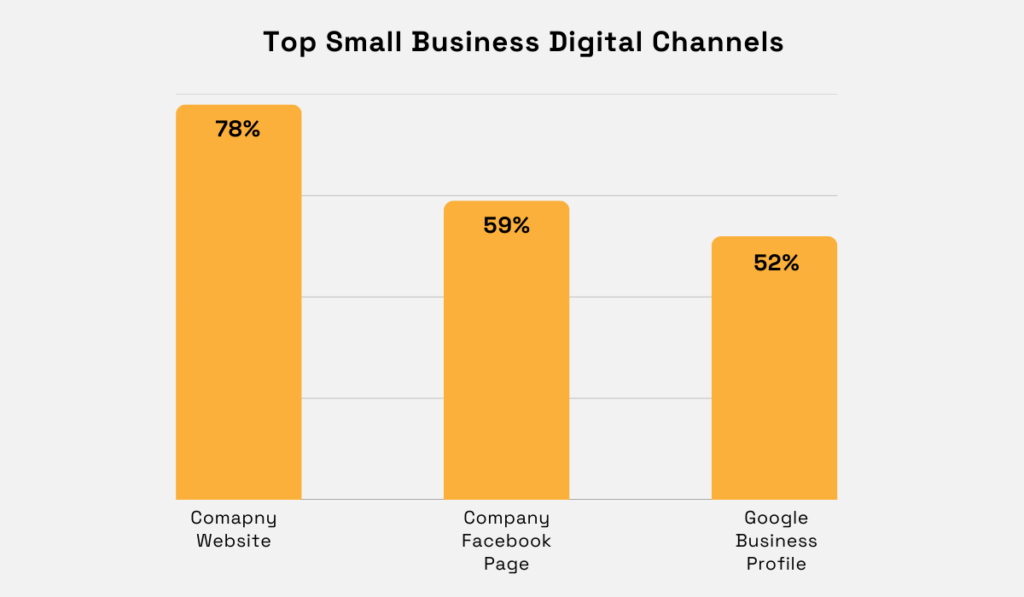
Illustration: Veridion / Data: Your Voice
These sites are a gold mine of detail.
For example, a business website typically lists its service offerings or product categories, shows service areas or store locations, and sometimes highlights partners or certifications.
Google Business and Facebook pages often include addresses, contact info, business hours, and photos.
Social media profiles also offer real-time insights.
A company’s LinkedIn page can show you its leadership team and employee count. Its posts might announce new certifications or expansion into new territories.
These sources help you build a current, detailed profile of a business’s operations and strategic direction.
Using these channels, you can piece together what a company does, where it operates, and even the customers it targets.
To mine relevant data, start by visiting the company’s website or social pages to note its:
Look beyond the homepage. Check the “About Us” section, blogs, and press releases. These pages often reveal specific services offered, geographic coverage, key partnerships, and target customer segments.
For example, a local bakery’s site might list its corporate catering clients, revealing an unexpected B2B revenue stream.
Another simple trick is to check Google Maps: many small retailers or restaurants post their menus, product lists, or event announcements there.
All this public info, from directory listings to Facebook posts, provides a quick sense of the firm’s business activities and geographic reach. It even shows the customers they serve.
For example, a local contractor’s site will list the regions it covers and its specialties; a café’s Facebook page may advertise signature drinks or specials.
Bottom line: scan every official web channel. What products/services do they highlight? What locations or certifications do they display? These clues form the basis for deeper checks.
Public records from government agencies are another rich source for small-business facts.
They maintain extensive datasets on registered businesses through:
In many countries, every registered company must file certain details, and this information is publicly available and considered the “ground truth” of a company’s existence and legal status.
For example, in the U.S., each state’s Secretary of State maintains a free business registry. You can usually search by company name or ID to retrieve its official filings.
In Delaware, for instance, you can see a business’s legal name, entity type (LLC, corporation, etc.), formation date, and registered agent’s address. Many states have similar search tools.
The Small Business Administration (SBA) also serves as a useful aggregator. It packages business information into annual “Small Business Profiles” by state and nationally.
The SBA’s 2025 profiles summarize key metrics: the number of small businesses in each state, industry breakdowns, the number of jobs they account for, and data on small-business loans and exits.
Here’s an example of an SBA profile for Delaware:
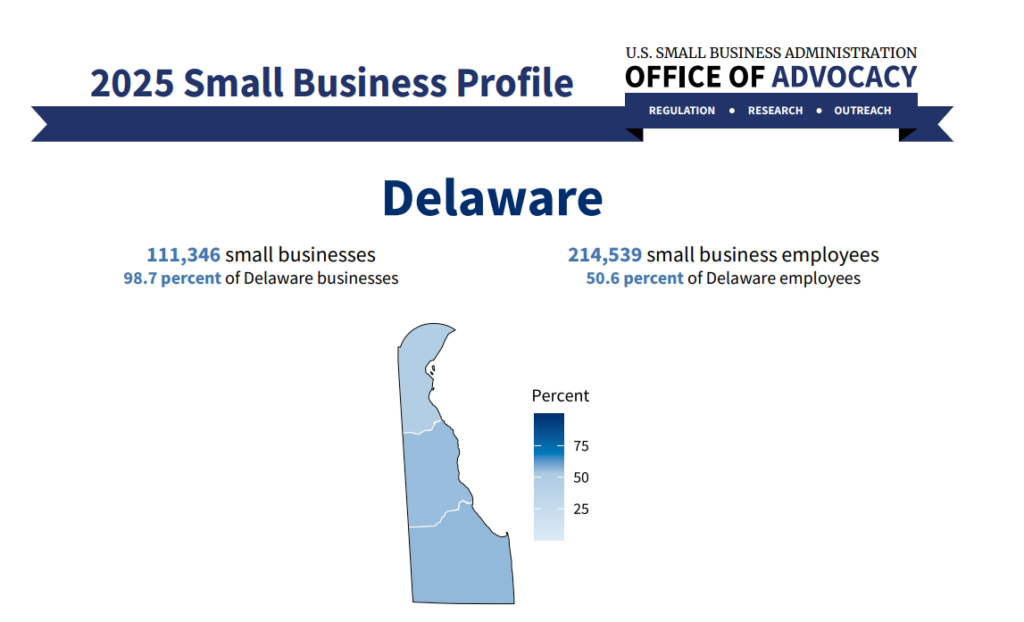
Source: SBA
If you’re more interested in employment data, the Bureau of Labor Statistics (BLS) is a good place to look.
Additionally, the Census Bureau’s Statistics of U.S. Businesses (SUSB) publishes annual tables showing the number of employer firms in each industry and state, along with their employment and payroll totals.
These reports are updated yearly, and help verify high-level figures (for instance, how many SMBs operate in a given region).
You may also be interested in small businesses outside the U.S., for instance, in the UK.
In that case, Companies House can provide details such as:
Similarly, the European Business Register network provides access to official data from 22 European countries.
Location aside, government registries provide a verified snapshot of a company’s official profile and compliance status.
So what’s the best way to use government registries?
Start with the appropriate public registry for a specific firm. This tells you the company’s legal name, location, NAICS or SIC code, filing history, and owners or managers on record.
Then consult government datasets (such as Census SUSB or SBA profiles) for context on how typical that firm is within its state or industry.
In short, public registries let you double-check a firm’s official info.
If a supplier claims to be a registered manufacturer, the state or national registry will confirm it. If they say they’re a certified contractor, you’ll find the licensing record.
All together, government datasets give you a baseline of verified facts about names, addresses, and legal forms that you can trust.
When combined with the company’s website data, these filings let you detect any discrepancies early.
When you need to assess financial stability and creditworthiness, turn to credit bureaus and financial reporting agencies.
These entities track payment histories, credit obligations, and financial health indicators for millions of businesses. This is crucial for judging a partner’s reliability. Think of it as a credit report for a company.
The big credit bureaus aggregate data across the entire payment ecosystem: loans, credit lines, vendor payments, public filings such as liens or judgments, and bankruptcies. They translate this into credit scores or risk ratings.
Additionally, these financial reporting agencies assign scores that measure a company’s payment performance and predict the likelihood that a company will become delinquent or even fail.
The value of this data is clear. Andrew Black, CEO of Experian Australia and New Zealand, a global data and technology company, notes:
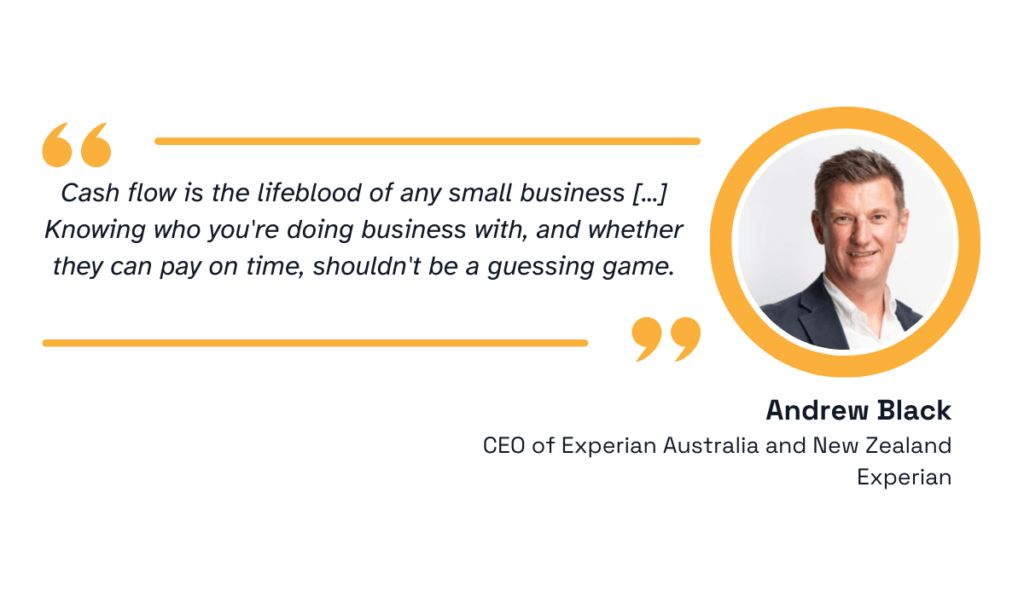
Illustration: Veridion / Quote: CFOTech
This data provides that certainty.
So, where exactly do you find it?
Major business credit bureaus include Dun & Bradstreet, Experian, Creditsafe, and Equifax. Each compiles data from lenders, suppliers, and public records to create distinct business credit scores.
Their databases are enormous.
Experian, for instance, notes that its business credit database covers about 27 million active U.S. companies. Dun & Bradstreet takes it global: its Data Cloud contains data on 350 million businesses worldwide.
Creditsafe similarly claims an international database of 430 million firms, with scores indicating default risk.
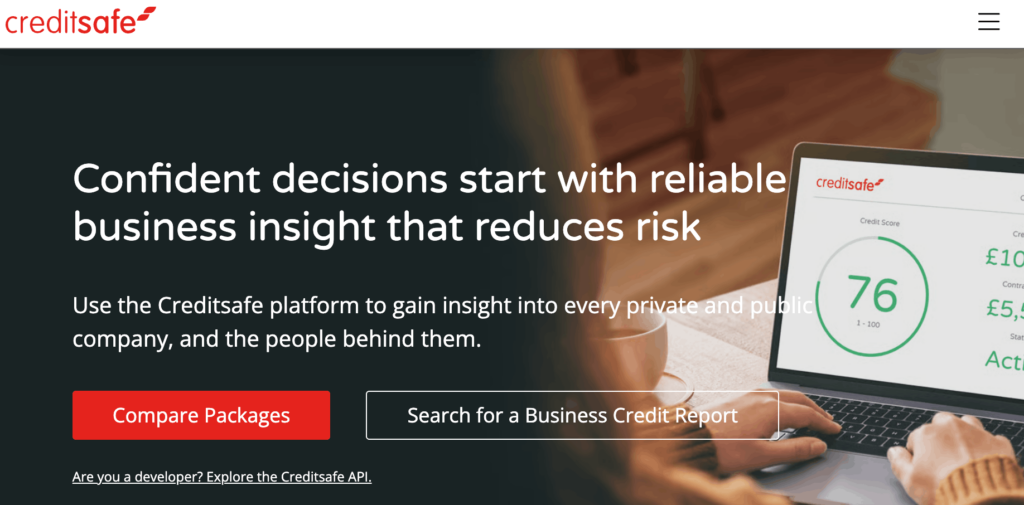
Source: Creditsafe
Use these rich databases to find a business’s credit report. The report will tell you if the company has outstanding liens, slow payments to suppliers, or a history of bankruptcies.
These reports also typically include firmographics (such as revenue bands or employee counts) derived from both public filings and the company’s financial statements.
So what’s the point of all this information?
A low credit score or evidence of past collection actions is a red flag. Conversely, a clean credit report with timely payments suggests stability.
These scores and reports are vital when you need to vet a vendor’s stability or a customer’s creditworthiness.
In summary, credit bureaus provide quantitative risk indicators.
When vetting a small-business supplier or customer, check these sources for payment history and credit scores to gauge financial strength.
The sheer coverage is impressive, making this one of the most reliable ways to uncover hidden issues beyond what the firm voluntarily discloses, giving you actionable insight before you extend terms or sign a contract.
Another avenue is industry groups and professional associations. Many trade associations, certification bodies, and local chambers maintain directories of their member businesses.
For example, chambers of commerce often list member firms on their websites or in publications, sometimes searchable by name.
The U.S. Chamber of Commerce, which represents businesses of all sizes, notes that about 90% of its members are small businesses, and that local chambers employ nearly half of all U.S. workers and generate about 43.5% of U.S. GDP.
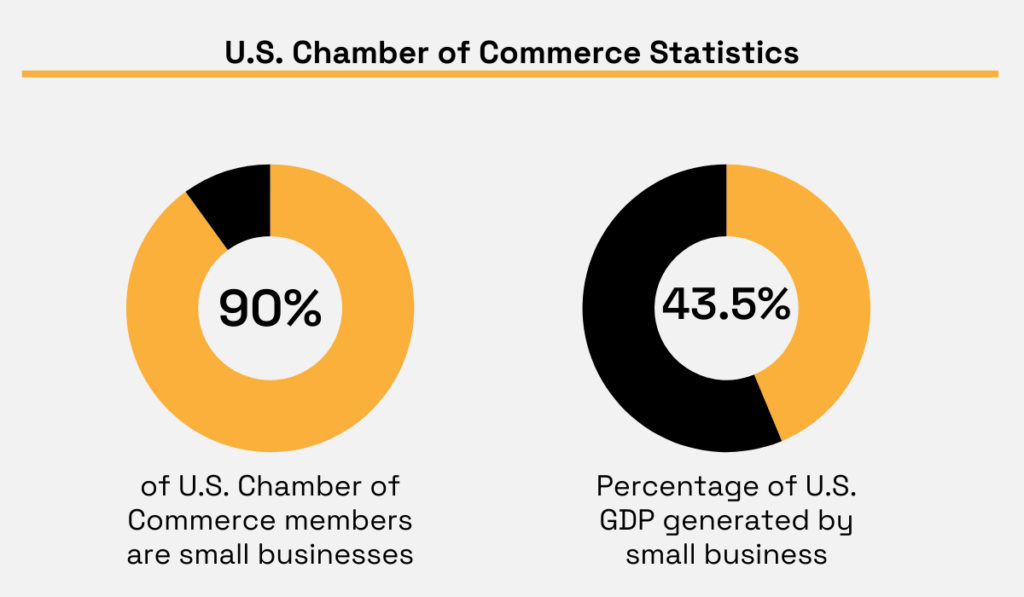
Illustration: Veridion / Data: U.S. Chamber of Commerce
More targeted insights can come from specific trade bodies.
In the UK, for instance, the Association of Convenience Stores represents over 33,500 local shops and conducts research on the convenience sector.
These associations are useful because membership often requires firms to be legitimate and meet certain standards.
If the company you’re researching is a member of a chamber or niche trade group, it may appear in that group’s directory. Membership itself can signal credibility.
Certification directories are equally powerful. For instance, over 1.3 million organizations worldwide hold ISO 9001 quality management system certification.
Many certifying bodies publish searchable lists of the companies they’ve certified. If a small manufacturer or service firm claims “ISO 9001 certified” on its site, you can often verify it against the official list.
Likewise, professional guilds or industry alliances sometimes publish member lists (for example, local builders’ associations, tech industry councils, or franchisor directories).
What makes industry associations important to you?
A company that’s listed by an association can tell you its specialties and compliance level.
It also reveals how engaged the company is in its industry. Are they visible in trade events or award lists? Those are strong signals that the business is active and reputable.
While associations won’t provide financials, membership can confirm basic facts, like sector, location, years of operation, and demonstrate peer recognition.
This kind of industry-level data is especially useful for niche sectors where official stats are scarce.
To use this source, identify relevant associations in the company’s field. Then check whether the company is listed as a member or a certified partner.
For example, if it claims to be “Chamber certified” or “Member of X trade group,” check X’s roster.
Even if the search doesn’t turn up the firm (perhaps it’s just a reporting omission), browsing an association directory can reveal competitors and standard practices in that field.
Taken together, association and certification data give you insight into a company’s professional standing and niche engagements.
Manually aggregating data from all these sources is a monumental task.
But as Anique Kuijpers, Team Lead Data & AI at the JADS MKB Datalab, a Data science and AI company, notes, the work of cleaning, standardizing, and aggregating data is unglamorous but necessary.
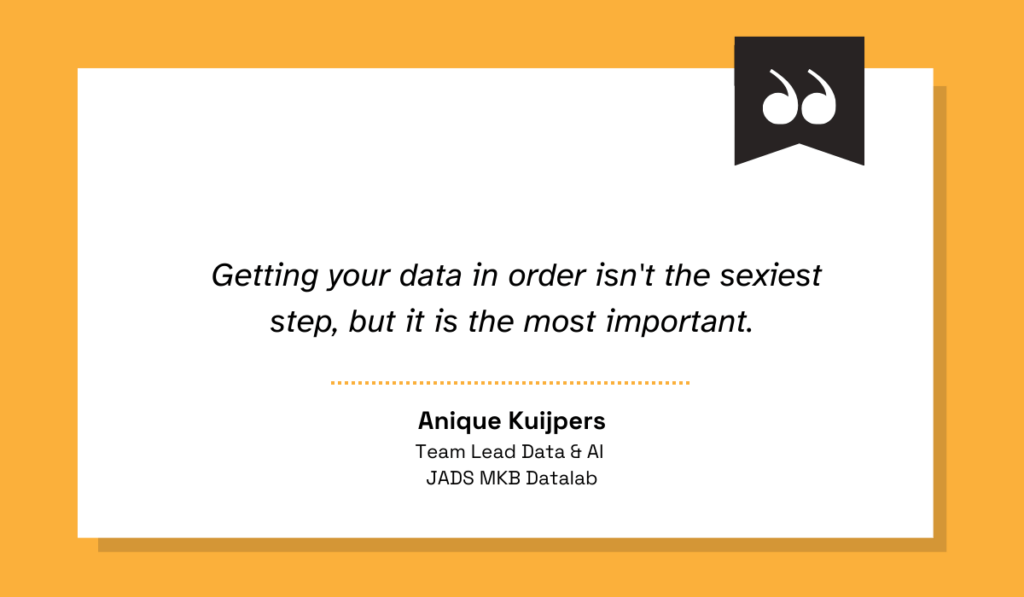
Illustration: Veridion / Quote: BNR
This is where business intelligence platforms become essential.
Why?
Modern business data platforms automate the integration of these sources into a single, comprehensive profile.
Instead of checking each source by hand, you can use platforms that crawl websites, filings, and credit databases to build enriched company records.
This allows you to address fragmented data. You can now:
For enterprise executives, this means you can access a holistic view of millions of small and micro-sized businesses without the manual workload.
By aggregating multiple sources, a platform can fill in gaps. While millions of small businesses have some digital presence, many do not have public accounts.
However, a BI tool can still index their online signals and make it easy to combine the clues from websites, government data, and credit reports into a coherent picture. They even update continuously, so you see changes as they happen.
One such valuable tool is Veridion, which aggregates information on over 130 million companies and updates its database weekly. It pulls data from company websites, social media, government registries, credit reports, and more.
Our database includes:
In practice, this means you can query our platform for a company and immediately see its verified address, industry classification, estimated size, and even flags on risk factors.
Veridion, for example, enriches each profile with product keywords, corporate family trees, and ESG tags derived from digital footprints and filings.
This helps you gain visibility into the vast small-business ecosystem, allowing your team to focus on analysis and strategy rather than data collection.
Another benefit is automation: you can set alerts when a company’s status changes, or bulk-validate data for a whole list of small-business vendors.
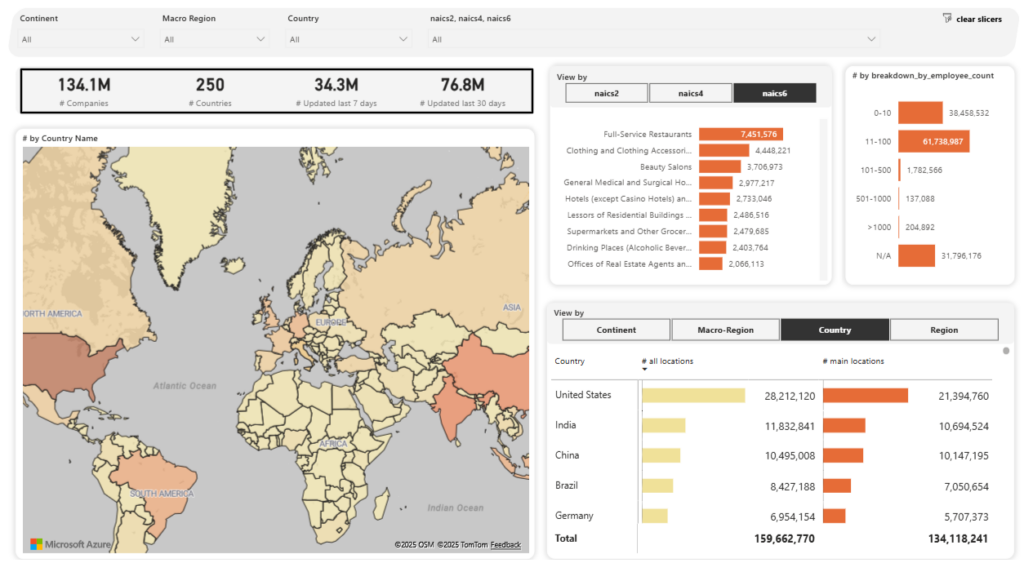
Source: Veridion
In essence, use AI and big data to consolidate all known information about a business. This saves you time and uncovers connections you might miss.
You might also use such a platform to run background checks on new small-business partners or to add missing details (such as NAICS codes or revenue estimates) to a client list.
The result is a more reliable, up-to-date SMB database inside your company.
Reliable small business data is the foundation for smart decisions. You now have a roadmap to find it.
You might start today by looking up a few critical vendors or prospects in each category.
Check their Google Business profile, search them in the relevant Secretary of State site, pull a business credit report, see if they’ve joined a trade group, and load them into a BI tool or database.
Over time, you’ll build a habit and a process. And that clarity pays off: it helps you negotiate better deals, avoid fraud, and spot opportunities others miss.