



Blog
Top 6 E-Commerce Market Intelligence Platforms
By: Auras Tanase -
19 June 2026


We love our data, and now that you're here, you're one step closer to loving it too.
A wide sample of data, so you can explore what is possible with our data
Choose ->
built with procurement in mind. Focused on manufacturers, products and more
Choose ->
built with insurance in mind. Focused on classifications, business activity tags and more
Choose ->
built with sustainability in mind. Focused on sustainability commitments, and environmental and social governance insights.
Choose ->
built with strategic insights in mind. Focused on market trends, competitor analysis, and industry-specific data
Choose ->

Keep up to date with our technology, what our clients are doing and get interesting monthly market insights.

Marketing intelligence today goes far beyond campaign performance.
Brands that win are tracking competitors, reading market signals, and acting on real consumer data and not instinct.
With global ecommerce accelerating past $6.88 trillion in 2026, the gap between brands using intelligence platforms and those still patching together tools is only getting wider.
Here are six platforms worth exploring.
Veridion is an AI-powered business data platform that maps the external market.
It helps businesses know who the players are, what they sell, how they operate, and how they’re shifting.
Rather than tracking your own channel performance, it builds a structured picture of the wider competitive landscape from the open web.
From there, you can search for any company using natural language, filtering by products, materials, certifications, and more.
The platform covers more than 134 million companies across 250 countries, with data validated to over 95% accuracy.
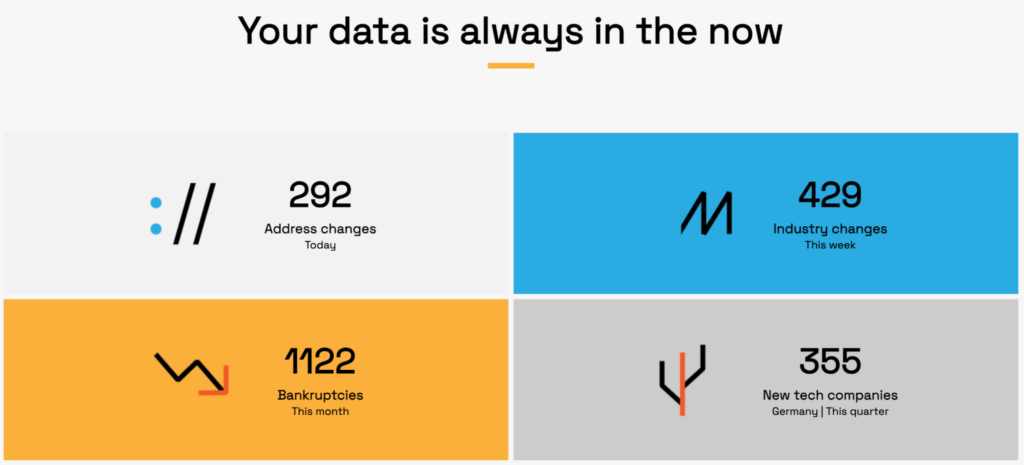
Every company profile refreshes weekly, so the dataset stays current rather than static.
Source: Veridion
Best for: Teams that need B2B market mapping, competitor landscape analysis, or enriching existing company data at scale.
Particularly strong for businesses tracking supplier networks, market entrants, or category-level shifts across industries.
Veridion delivers structured company intelligence across four core capability areas.
| Feature | What it means |
|---|---|
| 134M+ company profiles | Coverage from large multinationals down to small and mid-sized firms, including digitally subtle businesses, refreshed weekly. |
| 320+ attributes per profile | NAICS, SIC, and ISIC classifications, product-level detail mapped to UNSPSC codes, locations, revenue estimates, technographics, and ESG signals. |
| AI-powered entity resolution | Links subsidiaries, brand aliases, and corporate families into clean hierarchies, with traceable datapoints you can audit. |
| Flexible delivery | Search API, Match & Enrich API, batch files, or schema-aligned pipelines that drop into your existing environment. |
With these capabilities, Veridion sits at the top of this list for global B2B data coverage and search depth.
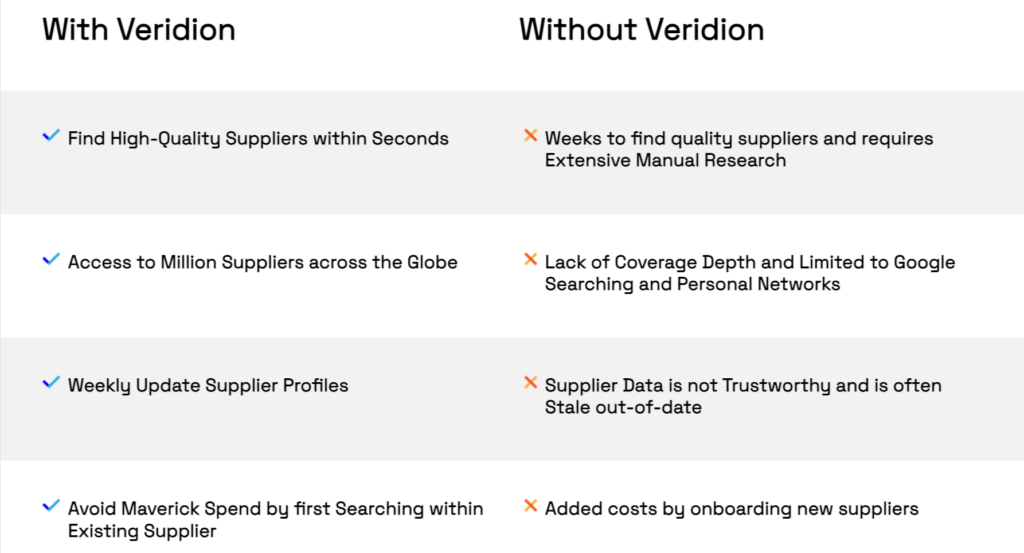
Here are a few things that you can experience with or without Veridion by your side.
Source: Veridion
Veridion comes with certain pros and cons. Here are some of them:
Pricing: Custom enterprise pricing based on coverage scope and delivery method. Veridion does not publish rates, and a data sample is available on request.
Now, while Veridion maps the companies, Brandwatch listens to what people are saying about them. Let’s see how.
Brandwatch is a consumer and social intelligence suite that listens to what people say about brands, products, and categories across social platforms, news, and blogs.
It captures the conversation around companies, allowing users to segment them by complaints, opinions, feedback, etc., for further action.
Source: Brandwatch
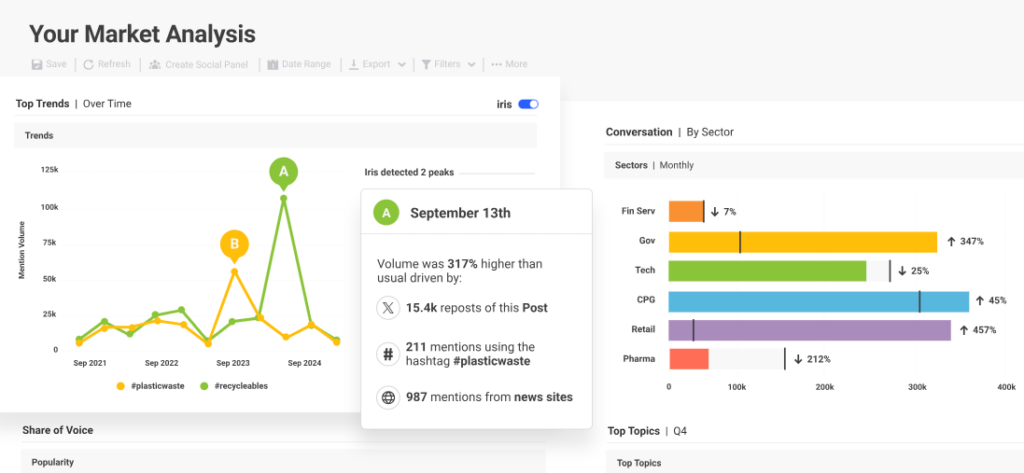
This is how the Brandwatch dashboard turns that data into research. Your team can explore queries, sentiment breakdowns, and trend charts directly with it.
Best for: Insights, brand, and market research teams that want to track sentiment, spot emerging consumer themes, and benchmark share of voice against competitors.
Together, these capabilities make Brandwatch one of the most comprehensive consumer listening platforms available.
| Feature | What it means |
|---|---|
| 1.7 trillion conversations | A consumer research archive reaching back to 2010, drawn from more than 100 million online sources. |
| Broad channel coverage | Social networks, news, blogs, forums, review sites, and TV and broadcast data in one place. |
| Iris AI assistant | Builds Boolean queries, summarizes trends and conversation spikes, and answers plain-language questions about your data. |
| Sentiment analysis | Automatically segments and categorizes conversations by feedback, complaints, opinions, and themes. |
Now, let’s check the pros and cons of Brandwatch.
Pricing: Custom, quoted by company size.
In short, Brandwatch is perfect for capturing what consumers are saying. The next tool on our list, on the other hand, tracks whether that interest is converting on the shelf.
Pacvue is an AI-powered commerce media platform that measures how your products perform and advertise on retail marketplaces.
It combines retail media, commerce management, and measurement in one place.
Pacvue connects to more than 100 retailers and marketplaces across 30 countries, including Amazon, Walmart, Target, and Instacart.
Source: Pacvue
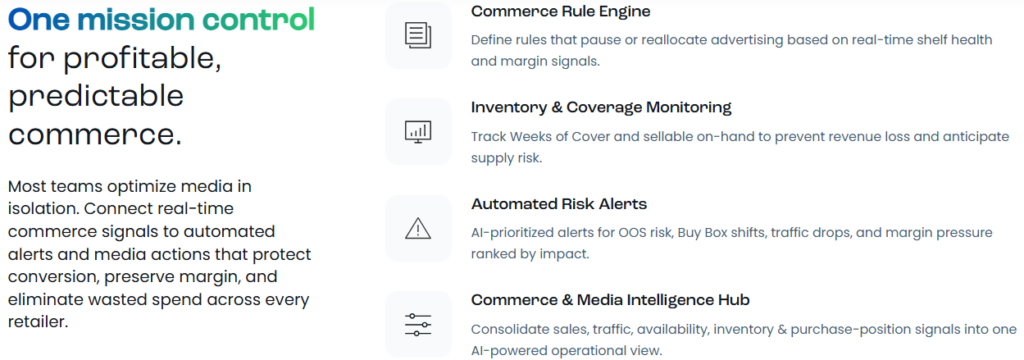
What sets Pacvue apart is the operational layer underneath the campaign interface.
It links inventory and shelf data to media spend, so budgets adjust automatically when stock or margins change.
Best for: Brands, agencies, and large sellers running paid campaigns and managing the digital shelf across multiple online retailers.
| Feature | What it means |
|---|---|
| Campaign automation | Bid management and rules-based optimization for retail media across marketplaces from one interface. |
| Digital shelf analytics | Availability, share of search, pricing, and content quality tracked per retailer. |
| Competitive intelligence | Category and competitor performance inside each retailer. |
| Outcome measurement | Ties media spend to sales outcomes, with AI-driven recommendations. |
Pacvue delivers outcomes for 70,000+ brands.
Here are some pros and cons that are worth a look:
Pricing: Custom. Pacvue does not publish rates, and access starts with a demo.
So, in short, Pacvue focuses on what sells, but if you want to know how your brand is covered across the wider media landscape?
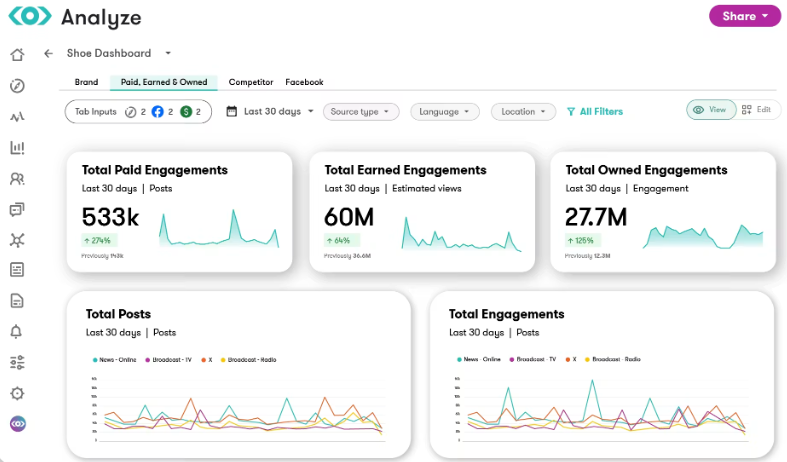
Meltwater monitors news, social platforms, blogs, and forums together, processing 1.3 billion pieces of content a day.
If you want to know how a market, a supplier, or a competitor is being talked about across the press and social web at the same time, this is the one place to see it.
Source: Meltwater
The monitoring view above is the daily workspace. It shows coverage, sentiment, and spikes across every channel in one feed.
Best for: PR, communications, and market research teams that need broad media and social coverage with reporting that spans paid, earned, and owned channels.
| Feature | What it means |
|---|---|
| Unified monitoring | Real-time tracking of news and social media in a single workspace, with sentiment and trend analysis. |
| Explore+ | A combined listening and analytics view that removes the jump between separate apps. |
| Mira AI teammate | Builds media briefs and reports, tracks sentiment, and answers plain-language prompts inside the platform and in Slack. |
| AI answer tracking | Monitors how your brand, products, and competitors show up inside generative AI responses. |
That last feature matters more each quarter, as buyers increasingly meet brands through AI answers first.
Pricing: Custom, across tiers from essentials to enterprise. Meltwater does not publish rates, and contracts run annually.
Every platform so far watches what is happening outside your channels. Now, the next one looks inward.
Google Analytics answers a different question from the rest of this list.
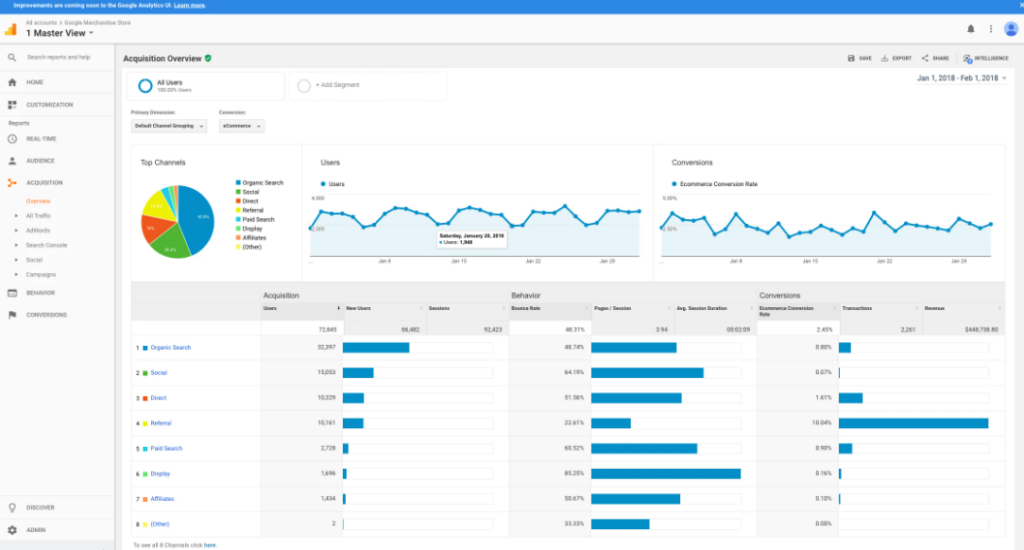
It tracks not what the market is doing, but what visitors do on your own site and app. The current version uses an event-based model to track behavior across web and mobile.
It also pairs neatly with everything above.
Source: G2
The current version, GA4, combines event-based data collection, website and app tracking, AI-powered insights, and enhanced privacy controls.
Best for: Teams that want to understand on-site behavior, e-commerce conversion, and campaign performance on their own digital properties.
These four capabilities define how GA4 moves beyond basic reporting.
| Feature | What it means |
|---|---|
| Event-based tracking | Page views, product views, add-to-carts, and purchases captured as a single event stream across web and app. |
| Funnel and path exploration | Shows where shoppers drop off between landing and checkout. |
| Predictive metrics | Likelihood to purchase or churn, used to build remarketing audiences. |
| Google stack integration | Native connections to Google Ads and BigQuery for deeper analysis. |
You can run this at no cost, which is why most e-commerce stacks use it.
Pricing: GA4 is free. The enterprise tier, Analytics 360, is sold on a custom annual contract through Google’s sales team.
All in all, GA4 tells you what has already happened on your site. But the last platform on this list points to what is starting to happen across the market.
Glimpse is a trend intelligence platform that turns consumer search behavior into actionable signals.
Glimpse tracks trends across every major consumer category from beauty, food, and fashion to retail, technology, and finance.
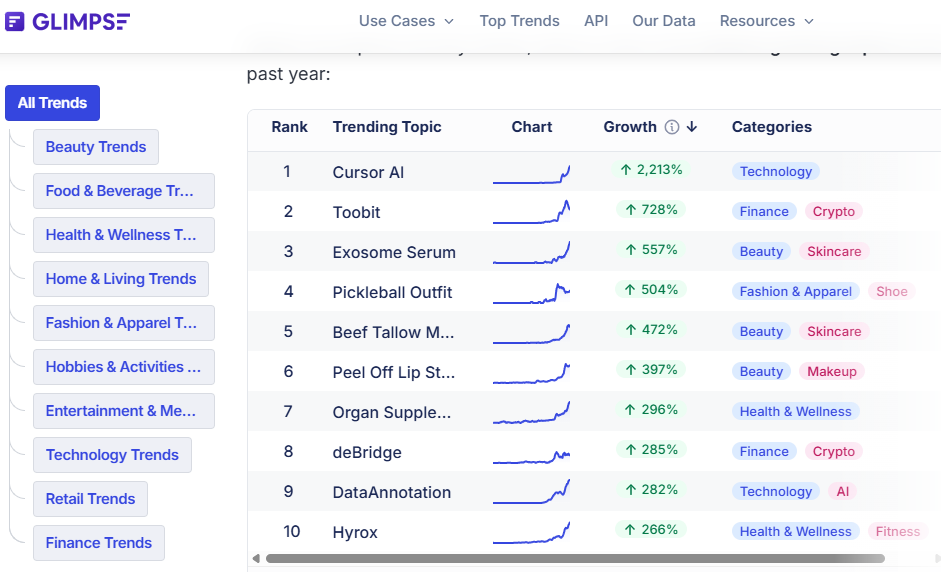
While other platforms on this list measure what has already happened, Glimpse surfaces what is starting to happen.
Source: Glimpse
It turns raw search behavior into absolute volumes, growth rates, and twelve-month forecasts.
Best for: SEO, e-commerce, and market research teams that want to catch emerging product and category demand before it peaks.
It goes beyond the standard Google Trends interface, adding layers of data and forecasting that make signals actionable.
| Feature | What it means |
|---|---|
| Trend discovery | Surfaces the fastest-growing search trends in any category, from beauty and food to technology, updated daily. |
| Absolute search volume | Real search counts instead of the relative 0 to 100 index Google Trends shows. |
| 12-month forecasting | Projects demand up to a year out, with backtested accuracy the company reports at over 95 percent. |
| Tracking and alerts | Monitors your keywords and notifies you when one surges or falls. |
With over 4 billion global users, search data gives a window into consumer intent that no other signal can match.
Let’s see how it goes in practise.
Pricing: Glimpse does not reveal its pricing on the site.
Six platforms, six different signals. The question now is which ones belong in your stack.
No single platform covers all of the e-commerce market intelligence.
Each one reads a different part of the picture.
Veridion structures the company and supplier layer. Brandwatch and Meltwater track the conversation around it. Pacvue measures the retail shelf, Google Analytics tracks your own customers, and Glimpse catches demand as it rises.
Start from the decision you need to make, then match it to the signal that informs it.