Insights / Articles
Where to Find Data on Businesses
Looking for where to find data on businesses? This guide will show key sources for company information, insights, and market intelligence.

- 76.7% of companies find social media important for driving growth.
- The global market size of the BI sector is 37.96 billion USD.
- Companies lose $12.9 million per year by relying on poor-quality data.
How confident are you in the data behind your last major business decision?
For most enterprises, researching potential partners or suppliers means cobbling together business data from a dozen different places, and merely hoping it adds up somehow to paint an accurate and reliable picture.
But often enough, such bets introduce too much volatility. And so, it becomes clear that the true challenge stems not from a lack of effort, but from knowing where to look.
Here are the most reliable methods for finding actionable data on the businesses you work with.
Company Websites
When you want to learn about a business, its website is the logical first stop. And it usually delivers, albeit with a slight caveat.
See, a company’s website will typically contain the clearest articulation of its essence:
- what they do
- what products or services they offer
- what markets they operate in
For a first read on an unfamiliar company, that’s a solid foundation.
So, what’s the caveat?
A website reflects only how the company chooses to present itself. There’s no guarantee that any objectivity is involved.
Everything on a company website has been approved, polished, and published with a specific goal in mind: making the business look attractive to customers, partners, or investors.
You won’t find a candid breakdown of operational struggles, a declining client base, or a product line that quietly underperformed.
What you will find is a curated version of reality; accurate enough, but edited with surgical precision.
Freshness is another real constraint. Websites are often updated reactively rather than routinely. Service expansions, new partnerships, or shifts in strategic direction may not be reflected for months, if at all.
For fast-moving industries, that lag matters.
Geopolitical shifts and events entirely outside your control tend to send cascading ripples through the global economy. If you don’t act fast enough and stay on top of things, they can affect your bottom line.
Howard Dresner himself, who essentially coined BI as a term, states that in such situations, sound decision-making should always come back to data:
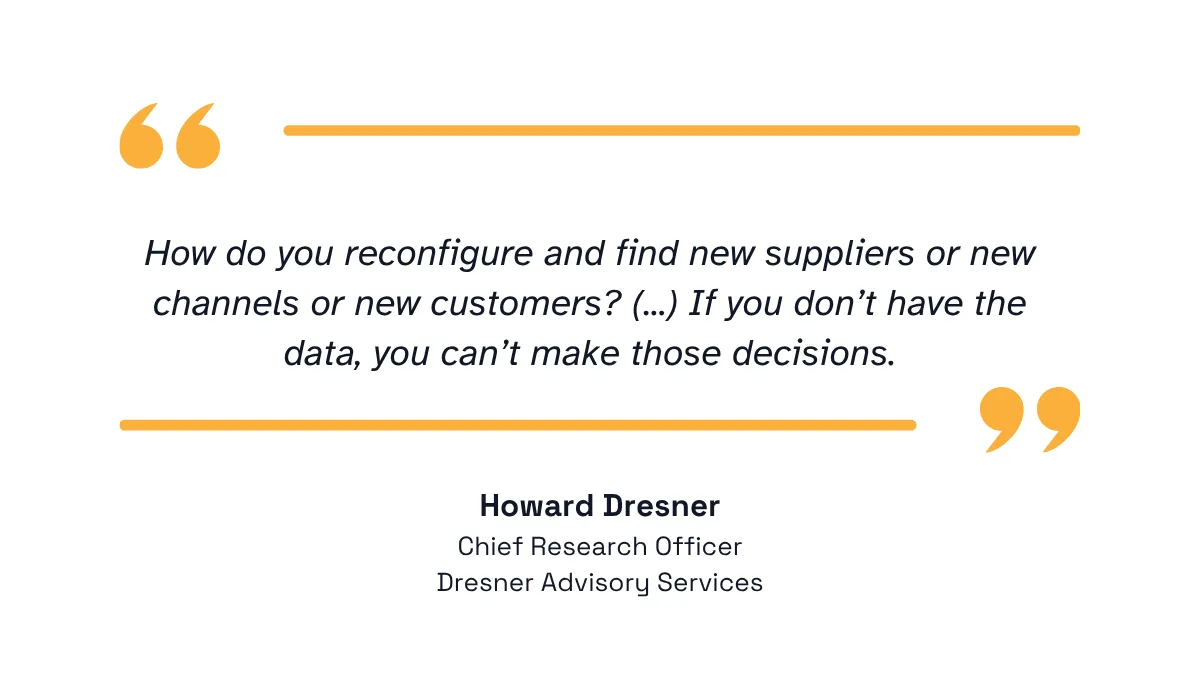
Illustration: Veridion / Quote: DataCamp on YouTube
So, where does this leave you?
Company websites are most valuable as a starting point, not a final source.
They’re reliable for understanding a company’s core offering, getting a read on how they position themselves in the market, and identifying key leadership.
For product intelligence specifically, few sources are more direct.
But you have to recognize that it’s not the be-all, end-all, and that a more thorough investigation is in order. Every time.
Social Media
Platforms like LinkedIn, X, and even Instagram have become standard channels for businesses of all sizes.
The information available there meaningfully extends what a website alone can tell you.
The most obvious advantage is recency. Social media moves fast, and businesses that maintain an active presence tend to post far more frequently than they update their website.
LinkedIn deserves a mention of its own. Beyond company pages, it surfaces employee data, which can serve as a useful proxy for company health and growth direction.
Posts on that platform will often also reflect a more professional nature.
They are usually more targeted at a business audience and aim to garner interest, which could further indicate where the business is headed without the pomp and frills of more casual channels.
By and large, the data you can glean from these sources should be legitimate and bountiful for research purposes.
The omnipresence of social media should incentivize companies to maintain a serious, active presence.
In fact, a survey by Meltwater revealed that 76.7% of companies consider the importance of social media for driving growth will only continue to rise.
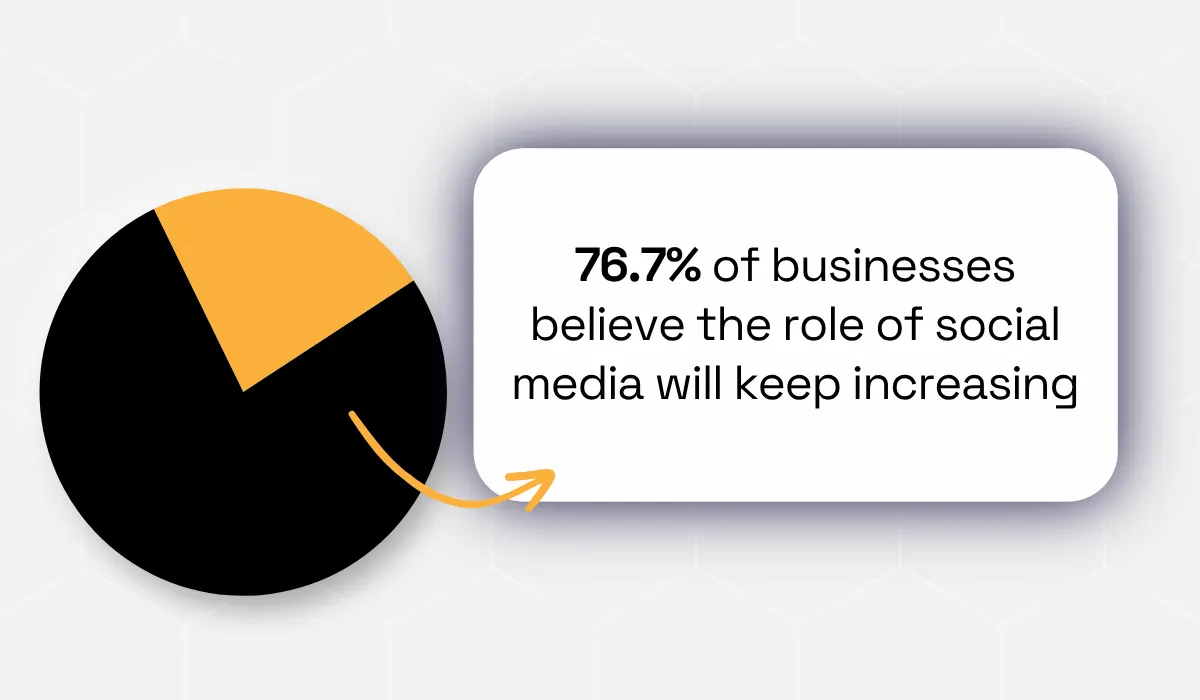
In terms of numbers, LinkedIn simply has no equal in the professional business space.
With over 1.3 billion active users worldwide and impressive, steady year-on-year growth, the wealth of knowledge it offers is beyond comparison.
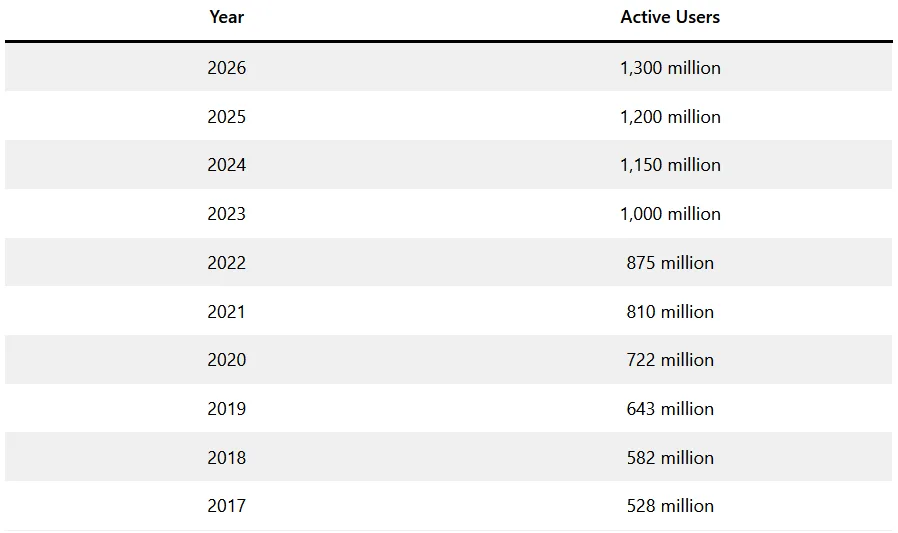
Source: Demandsage
That said, social media comes with real limitations.
First, there’s the noise problem.
More investment means more curation, more noise, and more intentional image management.
The same forces that make social media a richer data source also make it a more carefully controlled one.
Another potential problem concerns activity. Not every business maintains a consistent presence.
Smaller companies, in particular, may have dormant accounts or post very irregularly.
This kind of absence doesn’t necessarily mean the company’s in poor health, but it does mean you’re operating on very limited data.
Which leaves you with just one way forward: you keep looking.
Government Databases
Here’s where we go up a level in terms of usefulness. For verified, legally authoritative information on a business, government databases are hard to beat.
These are records maintained by public bodies, containing:
- registration filings
- licensing documents
- tax classifications
- compliance status
- ownership structures
All of these are tied to legal obligations.
This means the information government databases contain carries a level of credibility that self-reported sources simply can’t match.
The range of what’s available varies by country, but the depth offered isn’t something you can simply pass by.
In the US, for example, you’ve got the following publicly available sources:
SEC EDGAR | financial filings, annual reports, ownership disclosures for registered companies |
US Small Business Administration | data on federally registered small businesses and government contractors |
PACER | federal court records, useful for litigation history |
FOIA.gov | records kept by federal agencies |
And you can safely add to this list sites such as Companies House and GLEIF (records for UK- and internationally registered companies, respectively).
All told, you end up with a wealth of highly practical information. For instance, Companies House alone gathers information on 5 million entities, with 800,000 added every year.
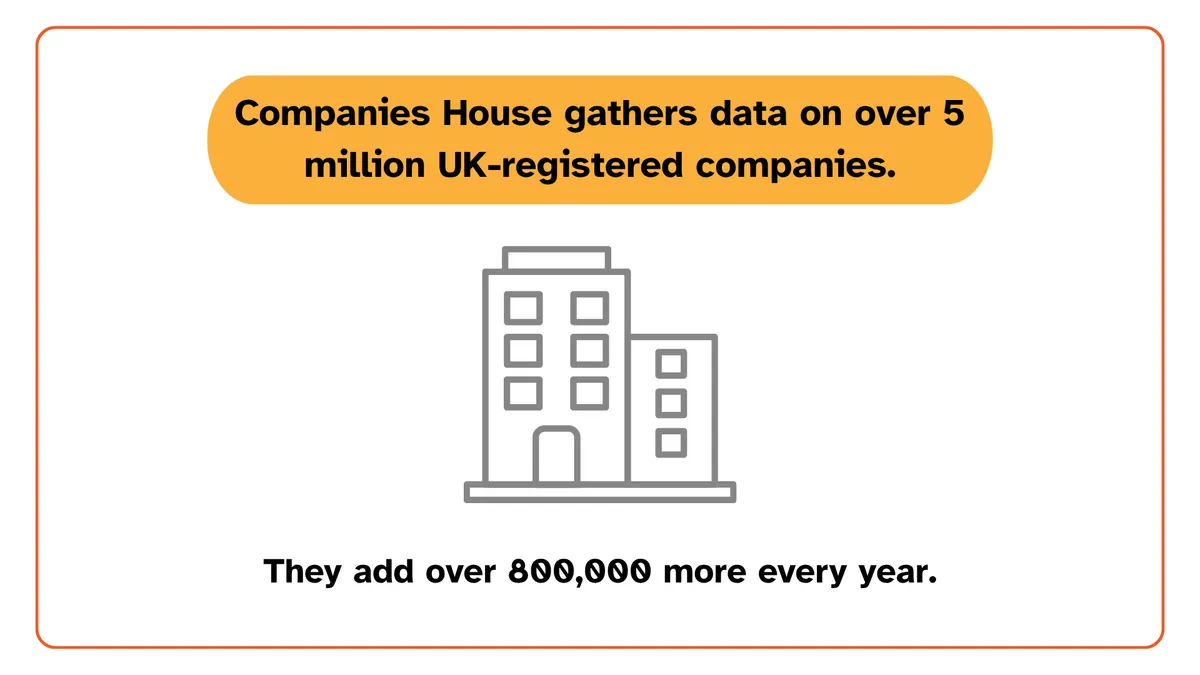
Illustration: Veridion / Data: Companies House
The sources named above can be extremely valuable, particularly for teams working at scale.
The kicker is that most of them operate for free or at very low cost, so they can quickly become indispensable as part of your data mining operations.
The limitation? Once again, we come back to freshness.
Government databases are updated on regulatory schedules, not business schedules.
A company may have pivoted its core offering, expanded into new markets, or undergone significant leadership changes without any of that being reflected in public filings until the next required submission.
Coverage can also be uneven.
Smaller businesses in some jurisdictions face lighter reporting requirements, which means the data available on them is thinner.
If you operate globally, mixing and matching sources adds layers of complexity, as requirements, database structures, and disclosure standards may vary considerably from one country to the next.
Still, for establishing a verified baseline on any company, particularly when legal status, ownership, or compliance history is relevant, government databases belong near the top of your research stack.
Trade Associations
Trade associations offer something most general sources can’t: focused, verified, insider-level data.
Industry bodies, chambers of commerce, and certification organizations maintain member directories that go well beyond basic contact details.
You can find all sorts of data, like information on compliance with sector-specific standards or supply chain participation.
The best part is that because membership often requires meeting defined criteria, the data tends to be more curated and reliable than what you’d find in a broad public directory.
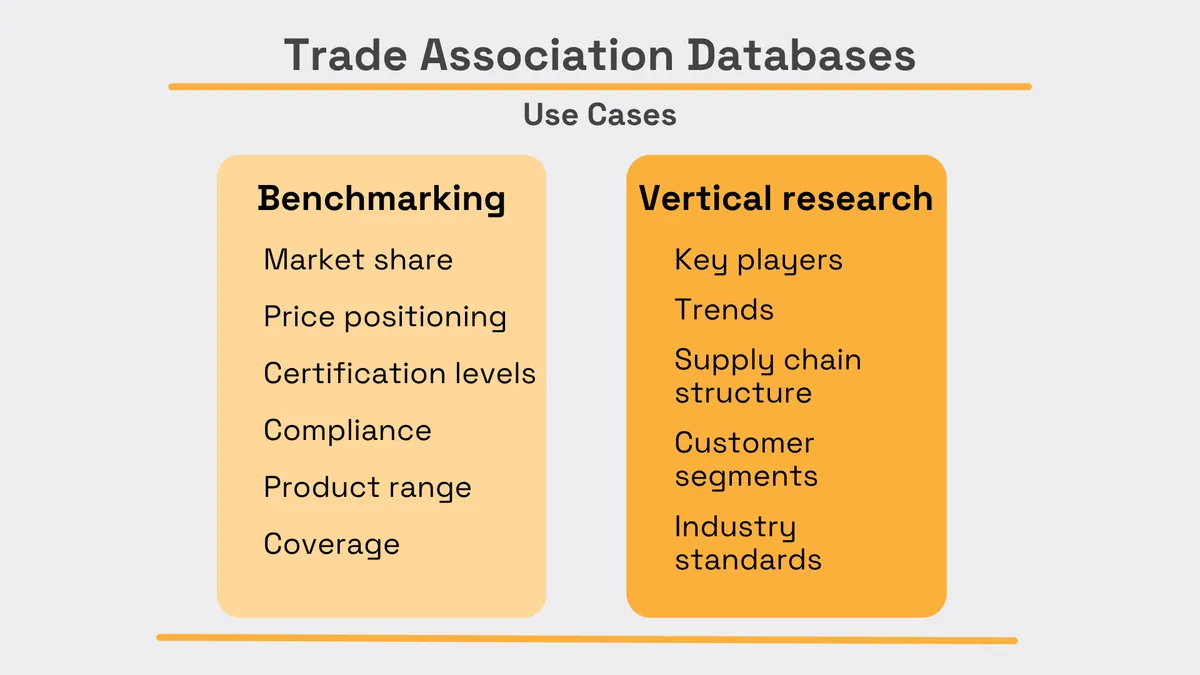
This makes trade associations particularly valuable for two use cases: competitive benchmarking and vertical market research.
Source: Veridion
If you’re trying to identify the key players in a niche sector, a relevant association’s membership list can surface companies that simply wouldn’t appear in a general web search.
For enterprises expanding into a new vertical or gathering market intelligence in a specific industry, such targeted visibility is genuinely hard to replicate elsewhere.
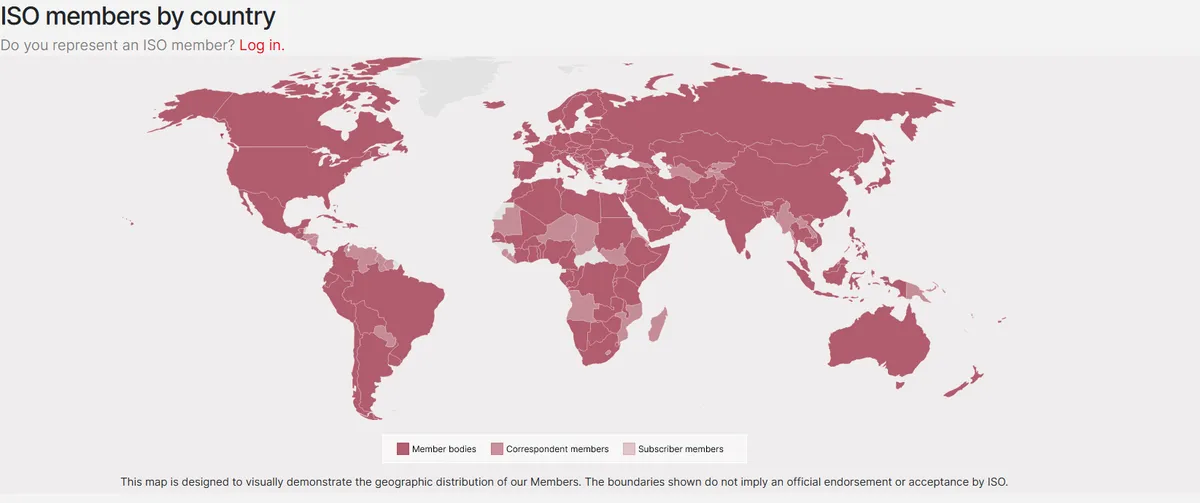
Examples worth knowing about include the US Chamber of Commerce (plus the International Chamber of Commerce for broader coverage), and ISO certification directories for companies where compliance with international standards is a relevant filter.
That said, it can’t be all sunshine and roses.
The main constraint with trade associations boils down to cost, as access to the juiciest data is often gated by membership fees, some of which can be quite substantial.
Thus, if you tunnel vision too much on a specific industry to get the most bang for your buck – in some ways justifiably so (spending adds up, after all) – you also, unfortunately, risk painting yourself into a corner.
That’s because if your research spans multiple verticals and/or you’re trying to get the scoop on a diverse company that operates across sectors, relying too heavily on any single association will give you an incomplete view.
So, the bottom line: do use trade associations, but not without a proper cost analysis.
Also, treat them as a precision tool rather than a primary source, and pair them with broader and cheaper databases for context.
Industry Reports
If you’re after insider data, why not head to specialist research firms that gather, analyze, and regularly publish reports as their primary business model?
Gartner, McKinsey, Forrester, IBISWorld, and Deloitte (just to name a few) offer decades of valuable business intelligence insight in an already digestible, interpreted form.
So, if you’re strapped for time and would rather rely on research-based views of competitive landscapes, market sizing, trend analysis, and strategic benchmarks, they’re worth considering.
Forecasting market dynamics and robust competitor analyses aren’t something a trade association can offer because that’s just not how they run things… and because they can’t, legally speaking.
Antitrust laws force associations to strictly sanitize, aggregate, and delay their industry data.
This leaves executives looking for a sharp, real-time edge to rely on private intelligence firms. And boy, can that edge be helpful.
A Gartner Magic Quadrant, for instance, doesn’t just tell you which vendors exist in a category. It does so much more.
It tells you how they compare, where they’re strong, and where they’re falling short, based on structured evaluation criteria.
That’s a different order of insight from a company website or a matter-of-fact government filing.
The numbers these firms generate speak volumes about their usefulness, too.
As forecasted by Fortune Business Insights, the global market size of the BI sector sits at a staggering valuation of 37.96 billion USD, with predictions estimating the value at 72.21 billion USD by 2034.
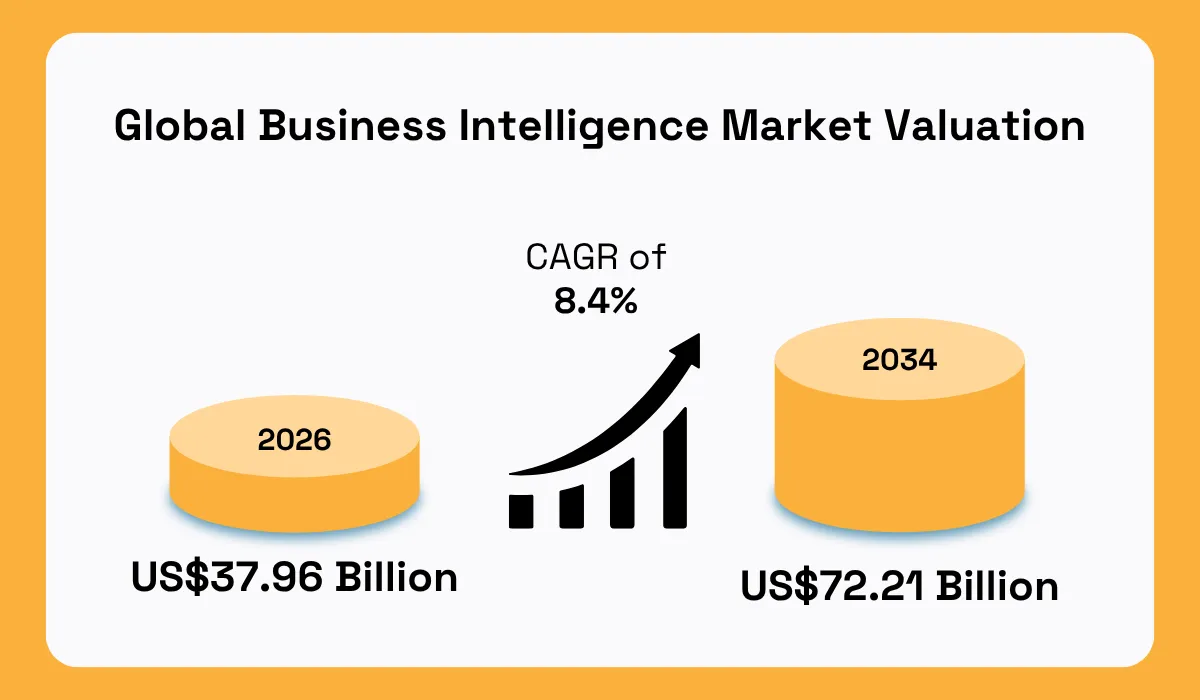
Illustration: Veridion / Data: Fortune Business Insights
As a source of business-critical data, though, the primary barrier is cost.
Premium research costs a premium price, and major analyst firms can run into thousands of dollars per report, especially if you want the full deal and not just whatever trickles into public discourse through news coverage.
Freshness is, yet again, the second issue.
Major reports are often published cyclically.
In fast-moving sectors, such as technology, logistics, or energy, a report that’s 12 to 18 months old may already be describing a landscape that has shifted meaningfully.
And because these reports tend to focus on established players and macro trends, smaller or emerging companies often receive limited coverage.
If you’re researching targets specifically in the mid-market or SMB space, you may want to look elsewhere, too.
Commercial Business Data Providers
Every source covered so far has something in common: using them requires effort on your part.
Not to say that it’s not valuable or fruitful work (it is), but it’s all manual. And at enterprise scale, manual research has a ceiling.
Commercial business data providers exist to remove that ceiling.
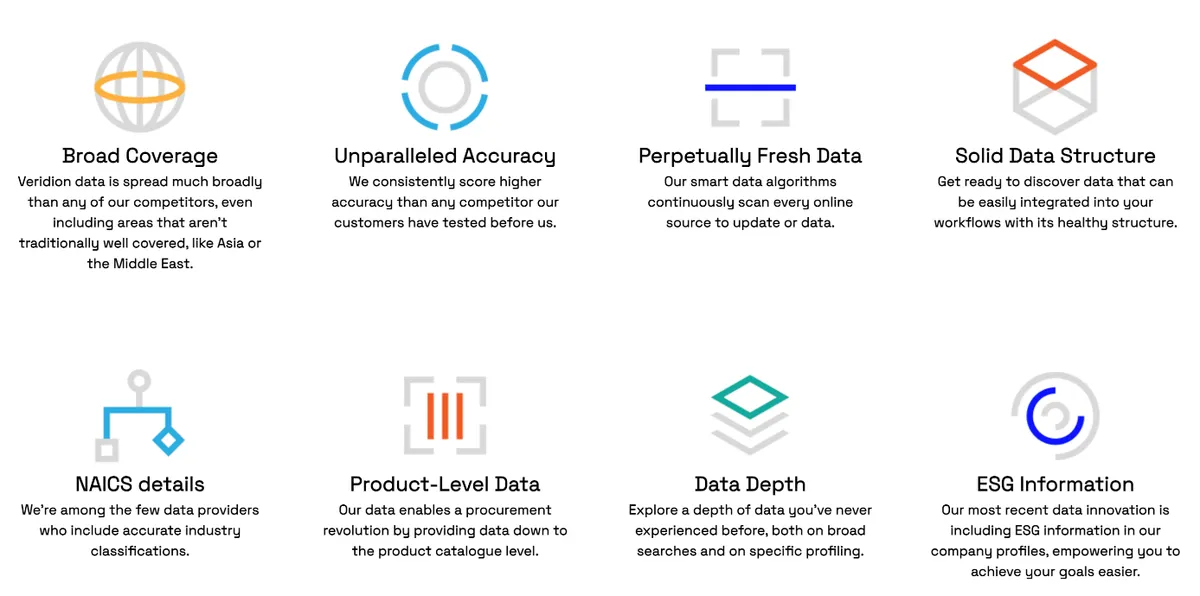
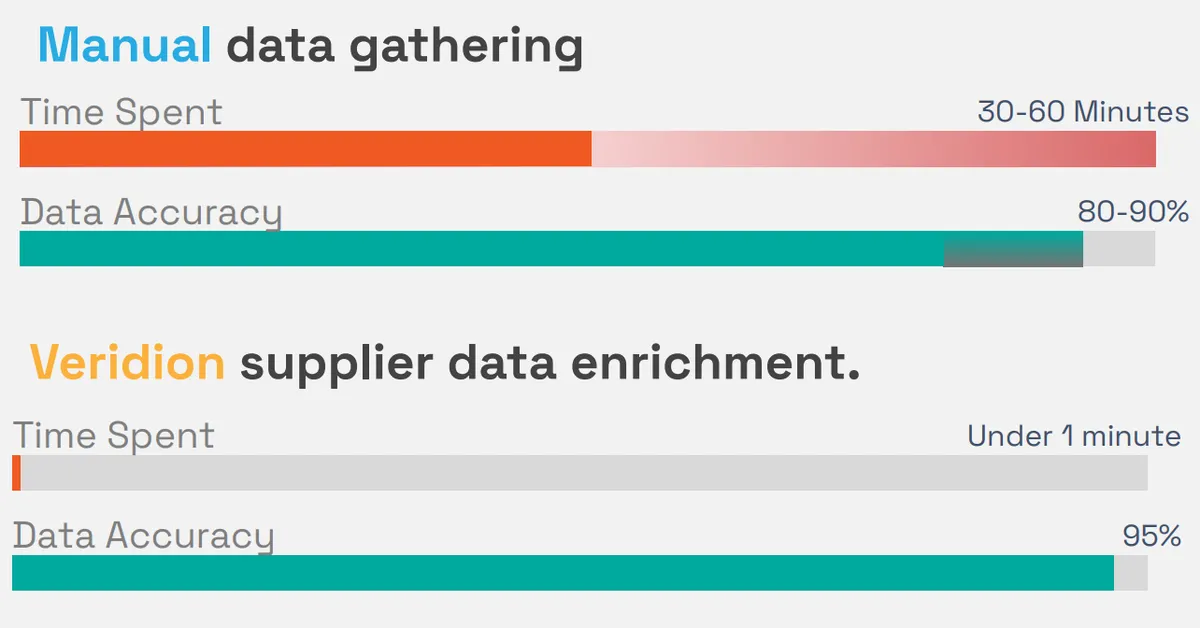
Platforms like Veridion aggregate, structure, and continuously update business intelligence from multiple sources into a single, searchable database.
The scale, scope, and specificity can also be tailored to your needs by zooming in on a specific sector or segment.
Source: Veridion
Commercial business data providers refresh their records automatically and on a rolling basis.
As for the scope, some of it includes:
- Product and service portfolios
- ESG metrics
- Certifications
- Technographic data
- Corporate hierarchies
- Location intelligence
- Modeled revenue and headcount figures
The depth on offer is also considerably more expansive.
Veridion sources its data from over 693M companies across 250 countries.
For small and mid-sized businesses that are otherwise difficult to research, that kind of coverage is particularly hard to replicate through manual methods.
Source: Veridion
The tradeoff is cost.
Commercial data providers operate on subscription or licensing models, and pricing scales with the depth and volume of access required.
For organizations running occasional one-off research, the investment may be hard to justify.
But for teams that rely on business intelligence, the efficiency gains tend to make the case, especially once you consider the huge potential downsides.
See, nothing offsets those budget-related worries as real-life examples of bad data in action.
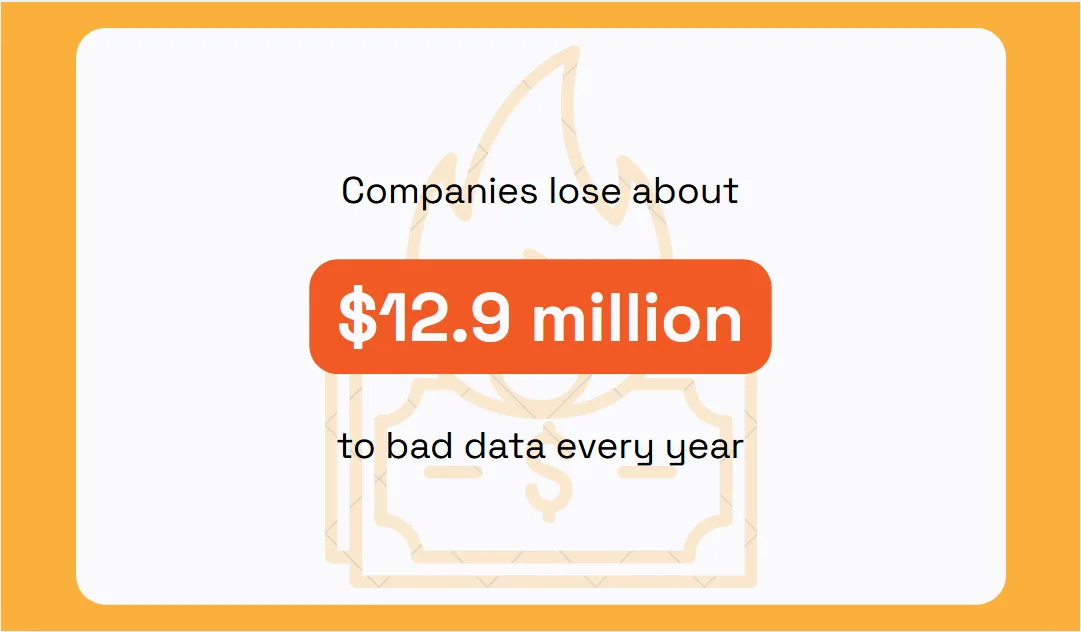
Gartner estimates that companies, on average, lose $12.9 million per year by relying on poor-quality data.
Manually scraping the available sources won’t always produce satisfactory results, as raw data tends to be disorganized, unfiltered, and, simply put, quite hard to actually make use of.
Enriching that data is a whole other matter, one that data providers can take care of for you.
Conclusion
Finding reliable data on businesses isn’t a single-source problem.
The core issues with data aggregation stem from quality and freshness. Without a diligent, scrupulous approach, efforts fall short of results, ultimately limiting the value of your research.
Each method covered here serves a different purpose, and for that reason, you should rarely rely on them individually.
The right approach depends on what you need to know and how quickly you need to know it.
But one principle holds regardless of everything: the more sources you combine, the clearer the picture gets.
The answers are out there. Now, you know where to look and what to keep in mind. Go make the most of it.
Articles
Discuss how these trends affect your organization.
Our analysts are available for a short call. Bring a specific question and we will ground it in the data.