Poor company data can lead to costly chaos across the entire operation.
No wonder so many teams spend precious time cleaning and enriching business records before they can act on them.
Luckily, though, this doesn’t have to be done manually anymore.
Today, data enrichment platforms do the heavy lifting for you, scanning the internet constantly, updating your records, and removing poor data in real-time.
You just need to pick the right tool for your needs and workflows.
To make your evaluation easier, we’ve rounded up five leading providers below. Read on to determine which solution is the best fit for you.
Veridion
When it comes to data enrichment, most providers focus on either contact information or high-level firmographic data.
Veridion takes a different approach.
That’s because it doesn’t act as a traditional sales intelligence platform. Instead, Veridion is an AI-powered business intelligence and company enrichment solution built around comprehensive company data.
The platform provides access to information on 134+ million companies across 250 countries.
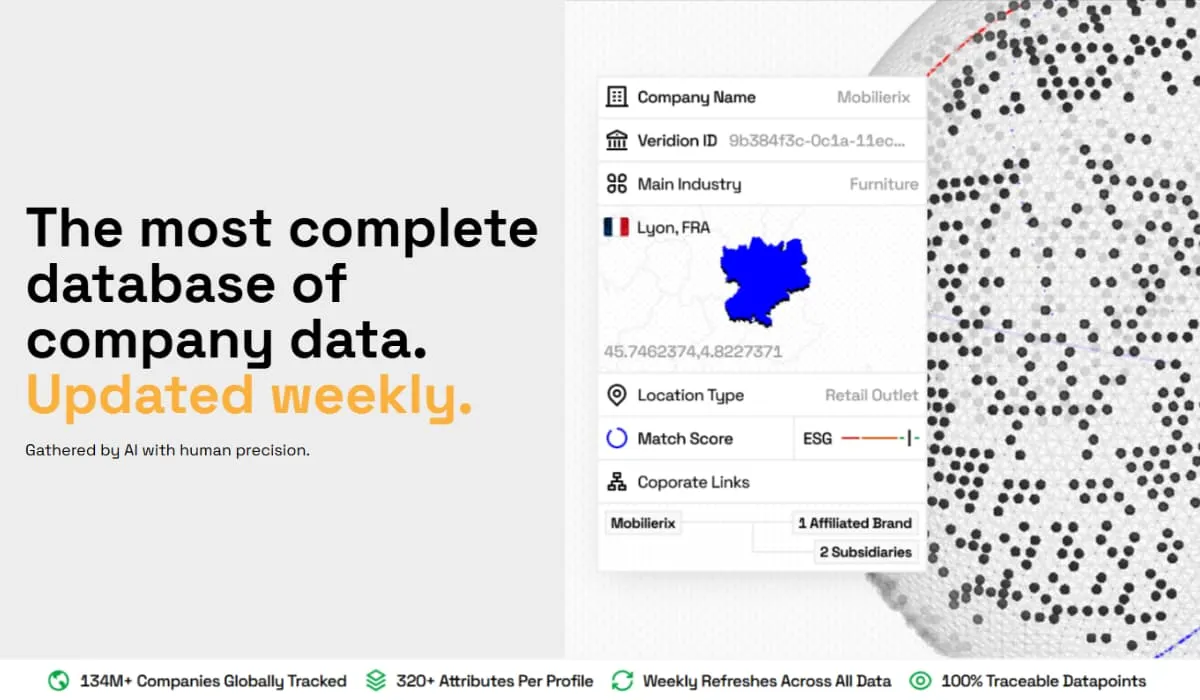
Source: Veridion
That’s why Veridion is trusted by organizations in procurement, risk, insurance, sustainability, and market intelligence alike.
Moreover, many traditional providers concentrate primarily on large public companies and well-established enterprises. Veridion, by contrast, covers more than 90% of SMBs.
This includes many digital-first businesses and companies that remain invisible in conventional databases.
To maintain this level of coverage, we continuously collect and structure information from company websites, legal registries, public records, digital footprints, and other business signals.
Company profiles are thus refreshed weekly and maintained at over 95% accuracy.
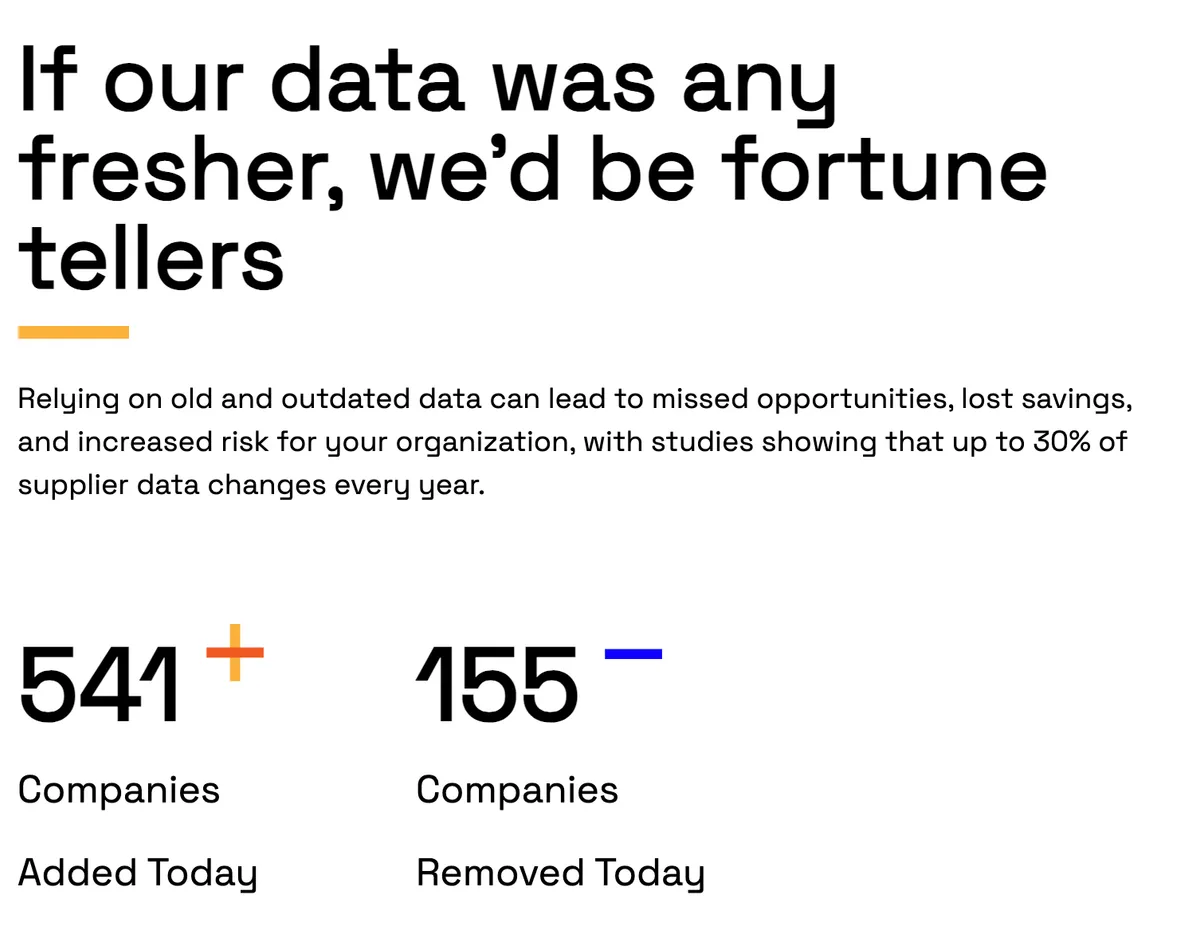
Source: Veridion
Another major strength is data depth.
Each company profile contains more than 320 attributes. That extends well beyond basic company information.
This includes insights into:
- Company identity and firmographics
- Industry classifications
- Product and service portfolios
- Corporate hierarchies
- Location intelligence
- Financial indicators
- ESG metrics
- Technographics
- Compliance-related signals
Of course, data is only valuable if you can actually use it.
That’s why Veridion helps you monitor data quality and match rates while keeping records accurate through advanced matching and deduplication tools.
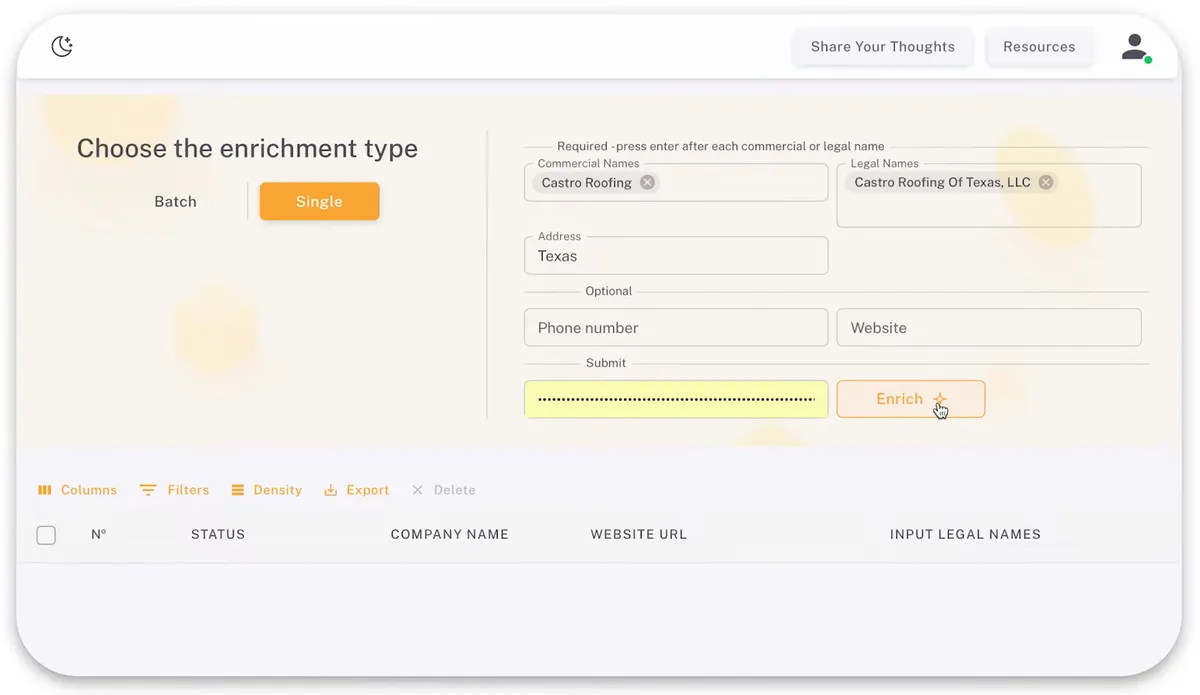
Source: Veridion
Veridion offers multiple delivery options: APIs, batch files, custom integrations, and partner platforms. This lets your organization enrich records directly inside existing procurement, analytics, or risk management workflows.
Our Match & Enrich API is great for data enrichment use cases.
With just a few identifiers, like company name and country, it can return a fully enriched company profile containing firmographic, operational, ESG, and product-level intelligence.
All these capabilities help you keep cleaner and more reliable company data.
Key Features
- Supplier data normalization, deduplication, and parent-company mapping
- Company enrichment with firmographic, product, location, ESG, and compliance-related attributes
- Automated supplier classification by industry, geography, and ownership characteristics
- Continuous validation, monitoring, and weekly data updates
- Match & Enrich API for real-time enrichment workflows
- Flexible deployment through APIs, batch delivery, and custom integrations
There’s something to keep in mind, though.
Unlike many sales-focused enrichment providers, Veridion prioritizes company intelligence over contact data.
So if your main goal is finding decision-makers and direct contact information, some of the other tools on this list may be a better fit.
But if you need procurement intelligence, market analysis, or risk monitoring, Veridion is a solid choice.
Because organizations use Veridion in different ways, pricing is tailored to each use case. You can check a sample of our data first or contact us for more information.
Lusha
Unlike Veridion, which focuses on company intelligence and supplier data, Lusha is built mainly for sales teams.
Its goal is simple: help organizations find and connect with potential buyers faster.
To achieve this, Lusha combines contact enrichment, prospecting tools, and CRM integrations into a single platform.
So you can enrich existing records with verified contact information, uncover new prospects, and automatically update CRM data as records change.
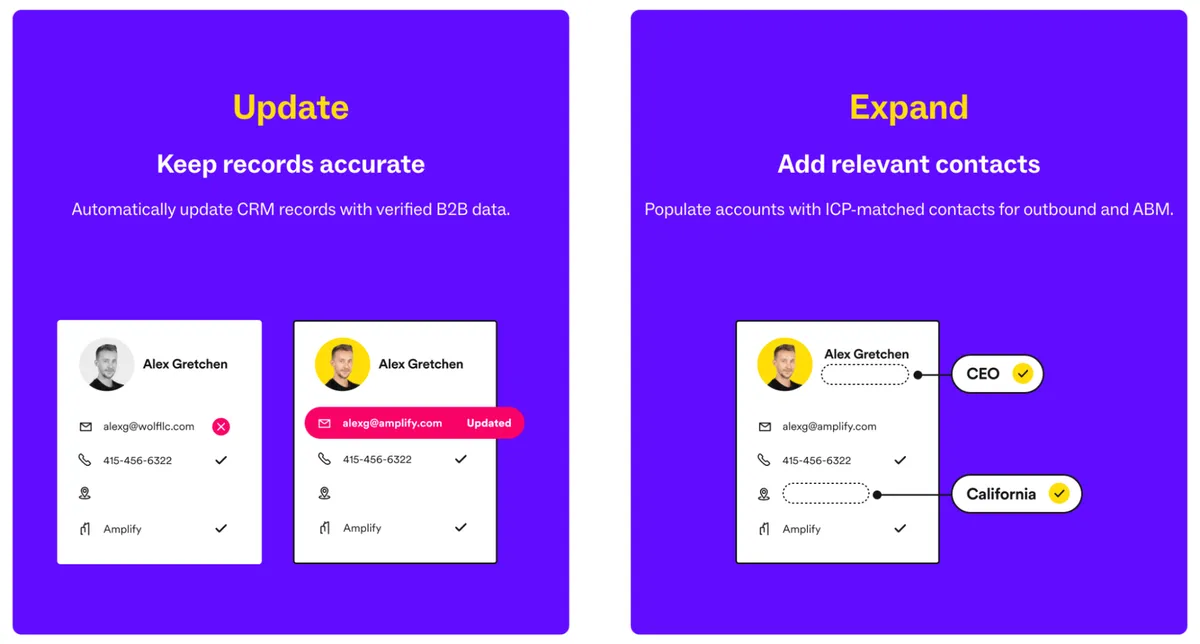
Source: Lusha
One of Lusha’s biggest strengths is accessibility.
Many enterprise data providers require serious implementation efforts or long onboarding processes. Lusha, on the other hand, is pretty easy to adopt.
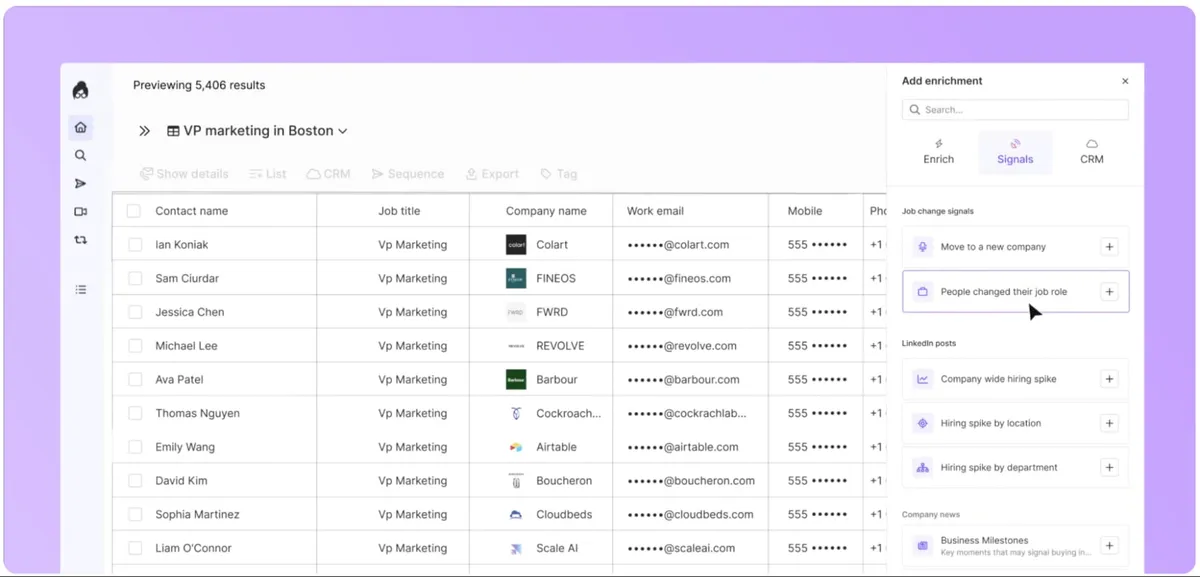
Source: Lusha
Its browser extension lets you pull contact information directly from LinkedIn profiles and company websites.
That reduces manual research time by quite a lot.
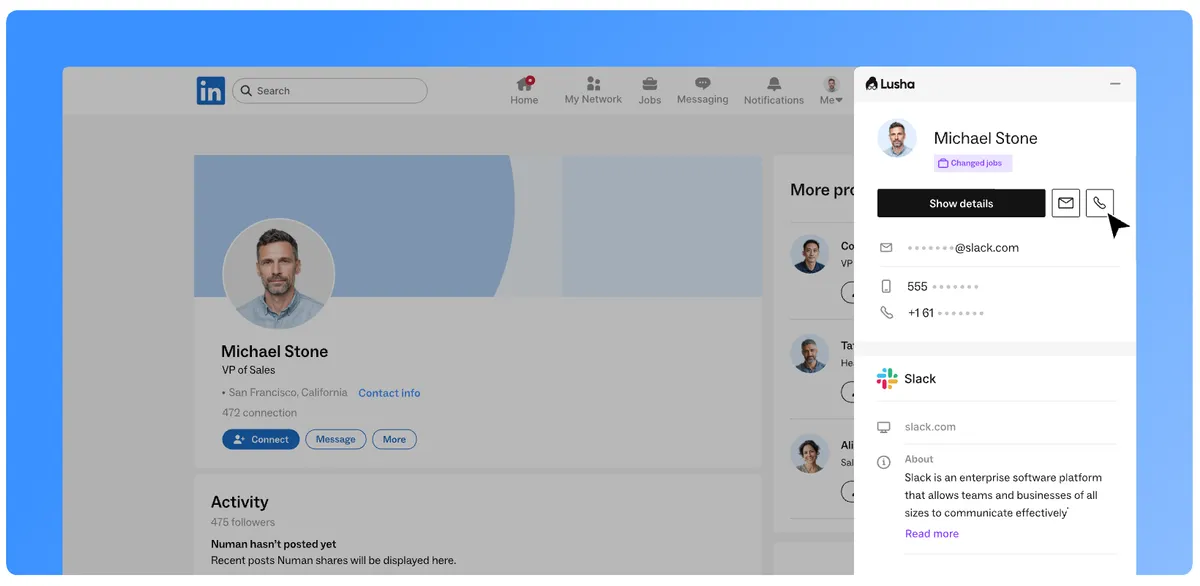
Source: Lusha
The platform also integrates with popular CRMs and sales engagement tools. Meaning your revenue teams can keep their records up to date without relying on manual data entry.
Key Features
- Contact enrichment
- CRM data enrichment
- Email and phone number verification
- Buying intent and prospecting signals
- Browser extension for LinkedIn and web prospecting
- Prospect database
- CRM and sales tool integrations
- API access
- Automated enrichment workflows
Lusha is particularly well-suited to sales, business development, recruiting, and revenue operations teams that depend on accurate contact data.
If your goal is improving outbound prospecting, shortening research time, and maintaining cleaner CRM records, you’ll likely find the platform useful.
However, there are some limitations to consider.
Lusha’s enrichment capabilities focus heavily on people and contact data rather than deep company intelligence.
So the platform does provide company information, but its strength lies in contact data rather than supplier intelligence, product-level visibility, ownership structures, or procurement-focused insights.
Another consideration is Lusha’s credit-based pricing model.
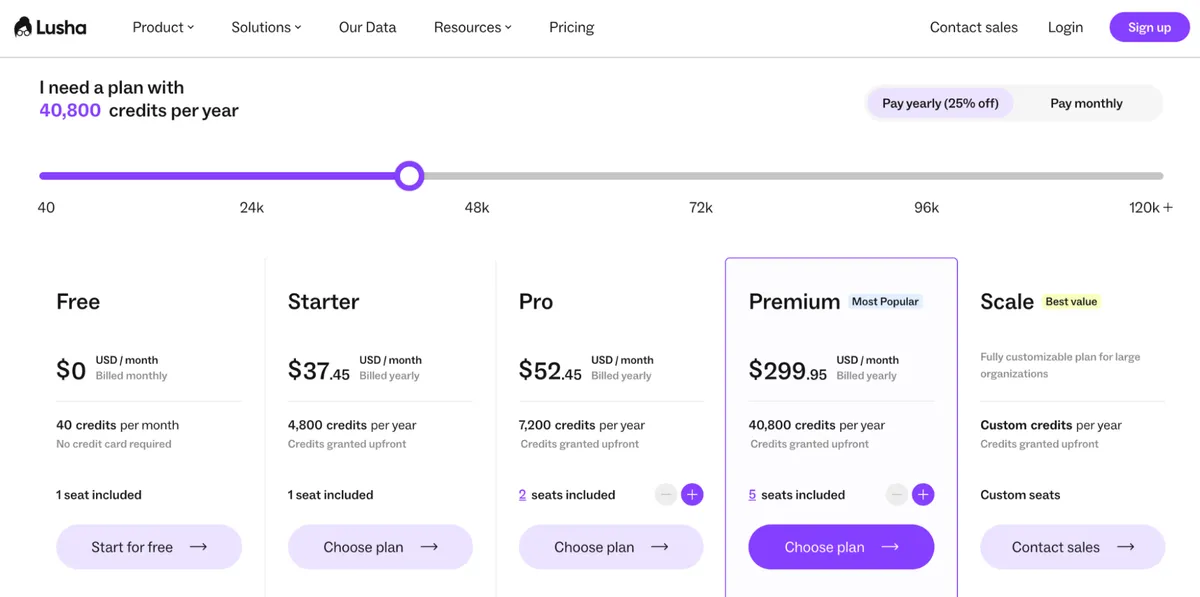
Source: Lusha
Contact reveals, enrichment activities, and prospecting actions consume credits. This can become costly for organizations operating at scale or processing large datasets.
Lusha does offer a free plan with limited monthly credits, plus several paid plans designed for growing teams and enterprise users.
Organizations with more advanced enrichment requirements can also request custom enterprise pricing.
Overall, Lusha is a great option for organizations that need reliable contact enrichment and sales prospecting capabilities.
If your focus is supplier intelligence, procurement, or company-level analysis, though, you may need to look elsewhere.
Demandbase
If Lusha specializes in contact enrichment and Veridion focuses on company intelligence, Demandbase sits somewhere in between.
Rather than prioritizing individual contacts or supplier data, Demandbase is built around understanding buying behavior at the account level.
The platform combines account-based marketing (ABM), sales intelligence, company enrichment, and buying intent data into a single go-to-market solution.
Demandbase is basically designed to help your organization understand which companies are actively researching solutions and are therefore more likely to become customers.
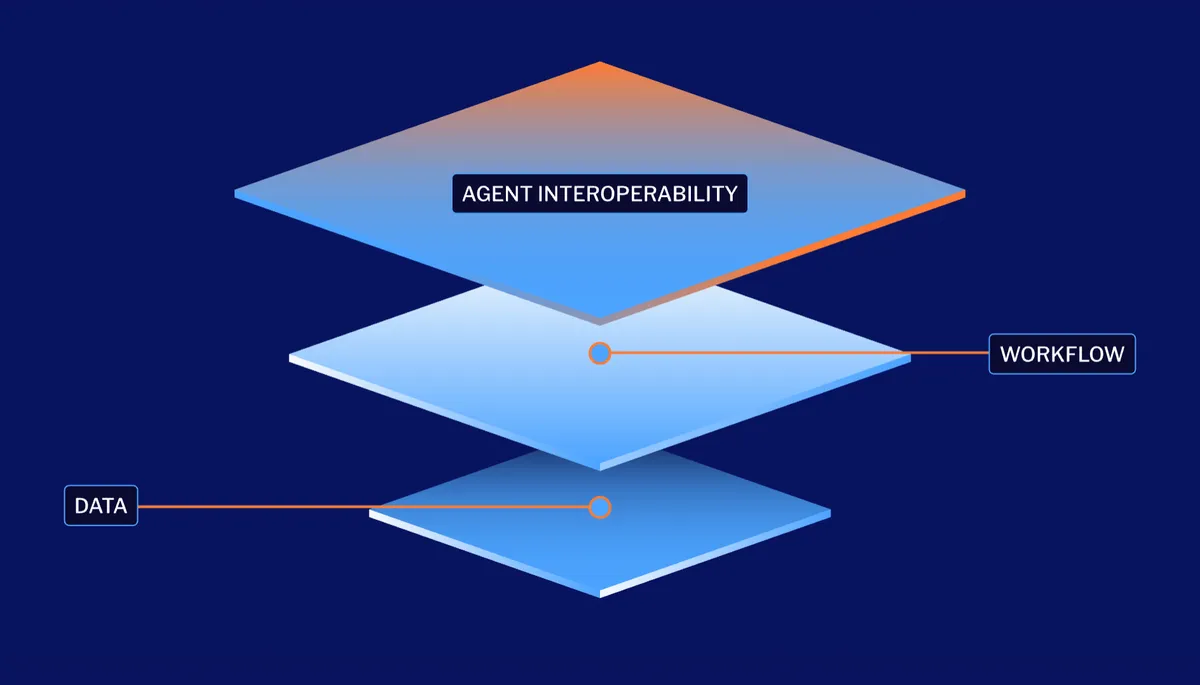
Source: Demandbase
This makes it particularly popular among enterprise B2B organizations running sophisticated account-based marketing programs.
At the heart of the platform is Demandbase’s intent data engine.
The software analyzes signals such as content consumption, website visits, online research activity, and engagement patterns.
The goal: help you identify accounts that may be entering a buying cycle.
And it’s all displayed in a fairly user-friendly dashboard.
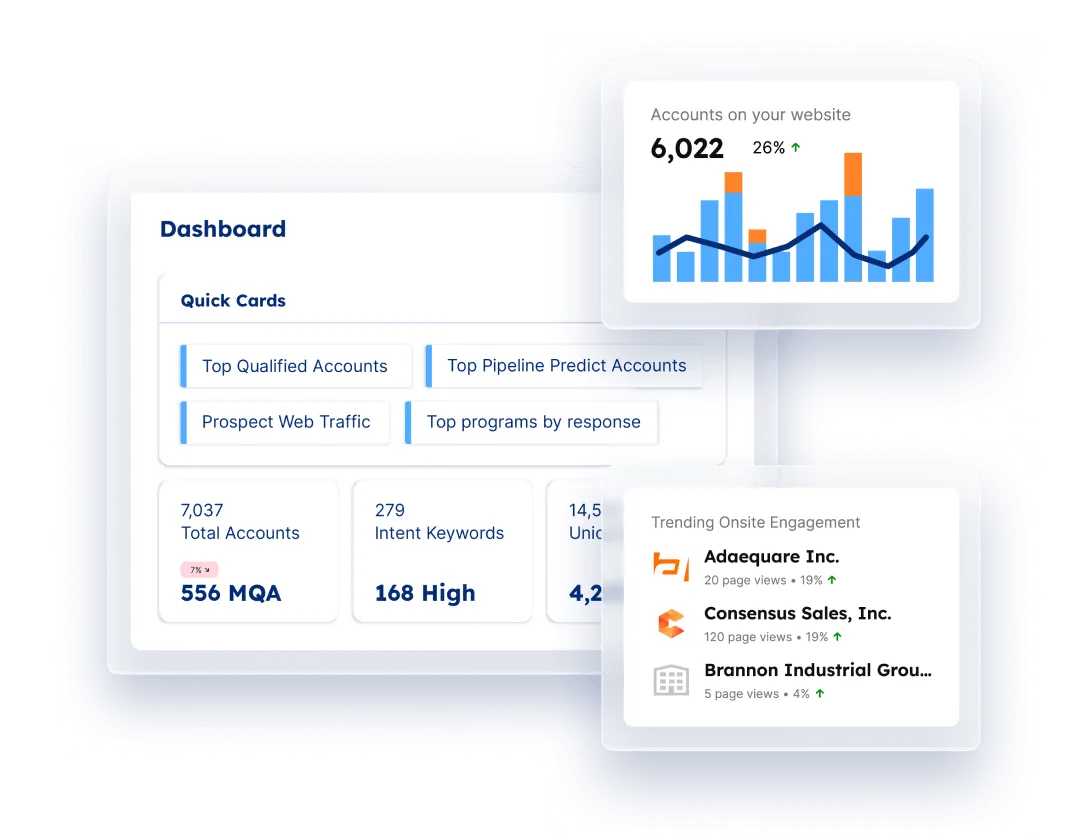
Source: Demandbase
Combined with company enrichment and account intelligence, this gives sales and marketing teams a clearer picture of where to focus their efforts.
Demandbase also aims to bring sales and marketing teams onto the same page.
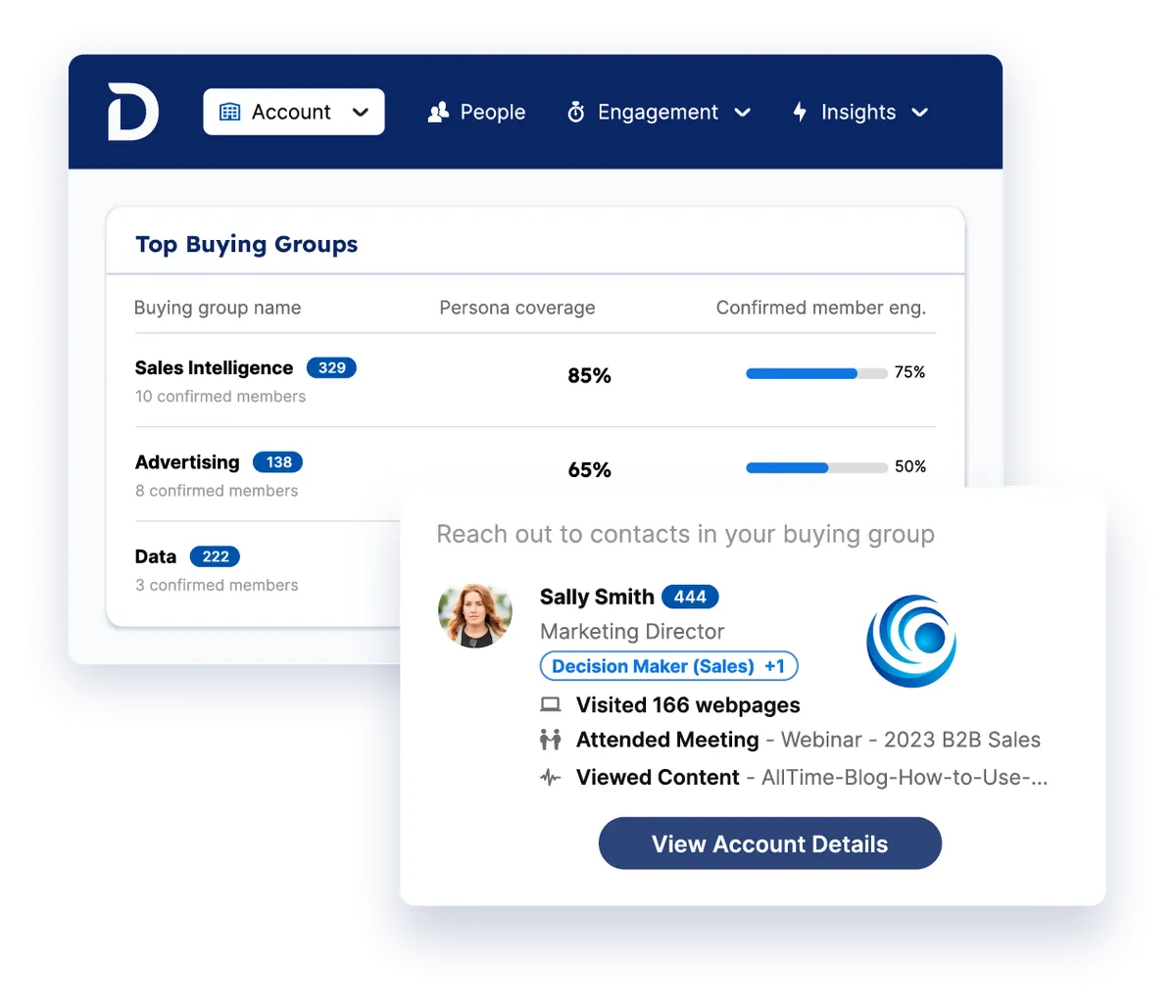
Both teams can access a shared view of target accounts, buying groups, engagement levels, and revenue opportunities.
Key Features
- Account intelligence
- Company enrichment
- Buying intent data
- Buying group identification
- Opportunity prioritization
- AI-powered account scoring
- CRM and marketing platform integrations
- Revenue intelligence and analytics
- Sales intelligence tools
One of Demandbase’s biggest strengths is the depth of its account intelligence.
Organizations can use the platform to identify high-value accounts, prioritize outreach efforts, personalize campaigns, and monitor buying signals across large groups of potential customers.
Source: Demandbase
However, it’s exactly this breadth that creates challenges.
Unlike standalone enrichment providers, Demandbase is a larger ecosystem with multiple modules and capabilities.
So implementation can be more complex, and the learning curve and onboarding may outweigh its benefits.
There’s also a matter of fit.
Demandbase is built primarily for sales, marketing, and revenue operations teams.
If your goal is identifying buying signals, prioritizing accounts, and aligning revenue teams, it’s a strong option.
However, if you’re focused on supplier intelligence, procurement workflows, or market research, you may find that other platforms offer more relevant data and functionality.
Pricing follows a custom enterprise model. It combines platform licensing with user-based pricing, so you should contact them directly for a quote.
Context.dev
Context.dev focuses on a different challenge entirely, compared to our previous contenders.
It’s built to help developers enrich company profiles inside their own applications.
Context.dev is an API-first company enrichment platform that helps organizations enrich company records with:
- Business information
- Digital presence data
- Industry classifications
- Logos
- Social profiles
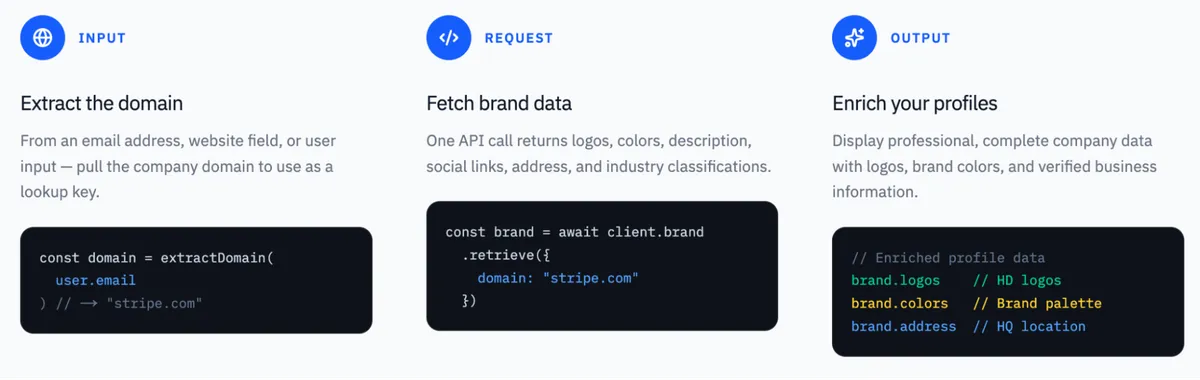
And this developer-first approach is Context.dev’s main differentiator.
Source: Context.dev
Many enrichment providers offer APIs as an additional feature. Context.dev, by contrast, was built around APIs from the start.
So it’s great for teams looking to integrate company enrichment directly into applications, customer platforms, marketplaces, or internal tools.
The table below explains exactly who it’s for and why:
Who It’s For | Challenge | How Context.dev Helps |
|---|---|---|
Fintech apps | Users see cryptic merchant codes instead of recognizable businesses. | Enrich transactions with company names, logos, and business information through a single API. |
Expense management platforms | Vendor names are inconsistent and difficult to reconcile. | Match transaction data to standardized company records, logos, and categories. |
B2B invoicing software | Invoices often feel generic and lack brand identity. | Automatically pull company branding and enrich client profiles. |
Payment processors | Transaction data can be difficult for merchants to interpret. | Transform raw transaction logs into enriched reports with recognizable company information. |
Accounting software | Reconciliation becomes difficult when transaction names don’t match vendor records. | Standardize company records and improve vendor identification. |
Personal finance apps | Users struggle to identify merchants and subscriptions. | Replace cryptic transaction descriptions with recognizable company names and logos. |
The platform automatically enriches company profiles using publicly available business information, reducing manual research.
Key Features
- Company profile enrichment
- Company logo retrieval
- Industry classification
- Social profile enrichment
- Company metadata enrichment
- API-first architecture
- Developer-focused integrations
- AI & LLM content generation
Perhaps its biggest strength is its simplicity and flexibility.

Source: Context.dev
The developer-first approach means you can add company intelligence features to your products without building enrichment pipelines from scratch.
The platform also provides visual assets like logos and brand information for customer-facing applications.
However, Context.dev focuses primarily on company profile enrichment rather than supplier intelligence, procurement, or market analysis.
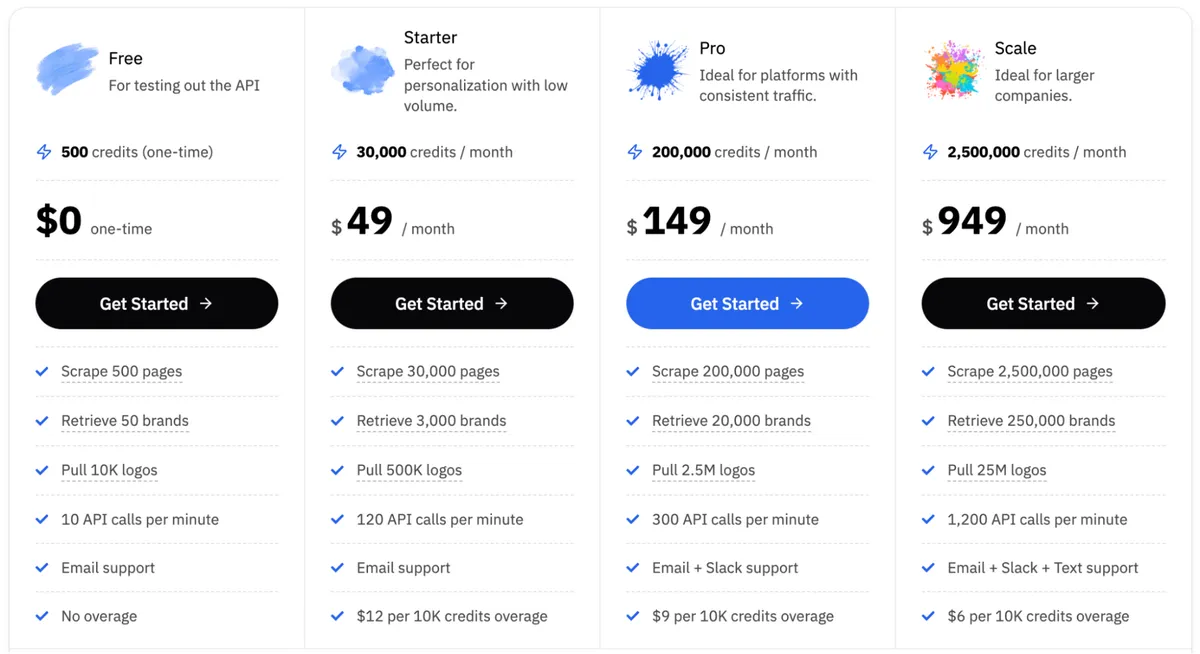
This platform has several pricing plans: a free tier for testing, plus paid tiers based on monthly API credits and usage requirements.
Source: Context.dev
So if you’re building software products that rely on company intelligence, Context.dev is worth considering.
But if you’re focused on supplier discovery, procurement, or data governance, other tools are more relevant.
Experian
The providers we’ve covered so far focus primarily on enrichment, sales intelligence, or supplier data.
Experian takes a broader view.
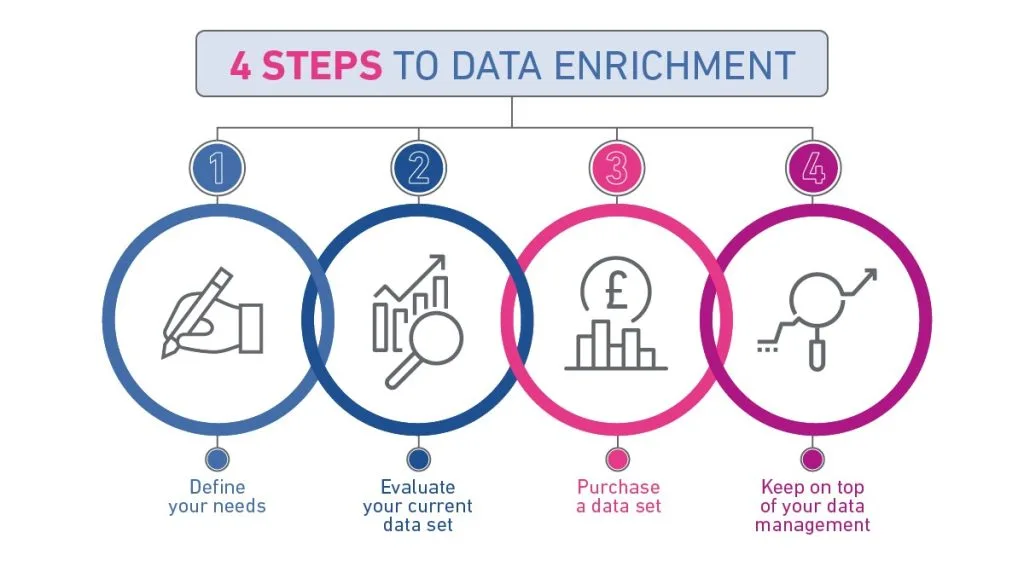
You probably know this platform for its credit services. However, the company also provides a broad suite of data quality and enrichment tools.
Source: Experian
The goal is simple: helping organizations maintain reliable data across their systems.
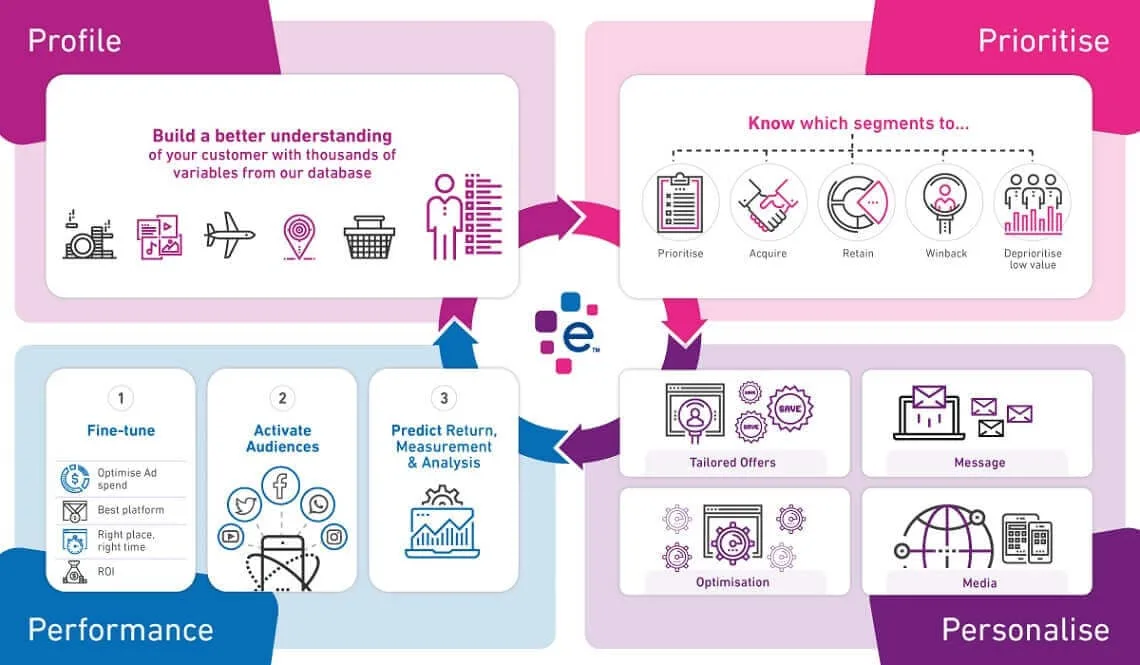
To do that, Experian goes beyond traditional data enrichment. The platform combines enrichment with data cleansing, standardization, validation, and governance capabilities.
Source: Experian
Experian also supports both real-time enrichment APIs and large-scale batch processing. So it works wonders for organizations with different technical requirements and data volumes.
Rather than focusing on supplier discovery or sales prospecting, Experian is most commonly used for master data management, compliance, customer data quality, and broader data governance initiatives.
As a result, the platform is especially popular with large enterprises managing complex datasets across multiple systems.
Key Features
- Business data enrichment
- Data validation
- Data cleansing
- Address verification
- Identity resolution
- Master data management support
- Compliance-focused data quality tools
- Enterprise integrations
One of Experian’s greatest strengths is its focus on data quality.
Organizations can use the platform to identify inaccurate records, standardize information across systems, verify addresses, resolve duplicate entities, and improve overall data consistency.
In huge companies where data often exists across multiple disconnected systems, this is precious.
The platform also benefits from Experian’s global presence and long-standing reputation in the data industry.
So if your company works in a highly regulated sector, Experian’s governance and compliance capabilities can be appealing.
Experian isn’t necessarily the best fit for every use case, though.
Its focus is broader data quality and governance rather than supplier discovery, procurement intelligence, or sales prospecting. It can also take more planning and integration work than some of the other tools we’ve covered.
That said, if your goal is ensuring clean, reliable data across large enterprise systems, Experian is worth considering.
Pricing is customized based on organizational needs, so you’ll need to contact them directly for a quote.
Conclusion
There you have it!
From contact enrichment and intent data to developer-focused APIs and enterprise data governance, each of these platforms serves a different need.
If your focus is company enrichment, supplier discovery, and procurement intelligence, platforms like Veridion are the most solid.
Whichever tool catches your eye, take advantage of free trial offers, and choose the solution that best fits your goals.
Articles
Discuss how these trends affect your organization.
Our analysts are available for a short call. Bring a specific question and we will ground it in the data.