Insights / Articles
How Big Data Is Reshaping Decision-Making in Aerospace
How is aerospace data analytics revolutionizing decision-making? Uncover the transformative power of Big Data in aerospace.

- 65% of travelers value the ability to customize their trip before departure.
- Airbus relies on digital twin technology to improve aircraft design.
- United Airlines saves 220,000 gallons of fuel every year thanks to big data.
What if you knew a customer preferred a window seat before they even booked a ticket? Or if engineers could detect an aircraft component failure weeks before it happened?
Big Data is transforming how airlines operate and how global supply chains around them are managed.
We’ve made the guide below to walk you through all the ways data-driven decision-making is helping aerospace companies.
By the end, you'll know exactly where Big Data can make the biggest difference in your own operations.
Personalizing and Enriching Passengers' Experience
Today's travelers expect much more than simply getting from one destination to another.
They expect a smooth journey. And that usually includes airlines remembering their preferences and anticipating their needs.
Big Data makes that possible.
Modern airlines combine information from booking history, loyalty programs, mobile apps, airport check-ins, onboard purchases, customer service interactions, and even real-time flight updates.
The end result? Comprehensive passenger profiles.
So instead of treating every traveler the same, your airline can tailor pretty much every touchpoint.
That can include:
- Personalized fare offers
- Preferred seat recommendations
- Customized meal suggestions
- Targeted upgrades
- Individualized entertainment recommendations
- Proactive delay notifications
- Airport navigation assistance
But personalization only works when it genuinely makes travel easier.
Research by McKinsey & Company, the global management consulting firm, found that passengers value practical, relevant personalization over endless customization.
In its survey, 70% of travelers said real-time travel assistance, which includes things like alerts for gate changes or delays, was somewhat or very important.
The survey also revealed that 65% valued the ability to customize their trip before departure, like choosing seats or meals.
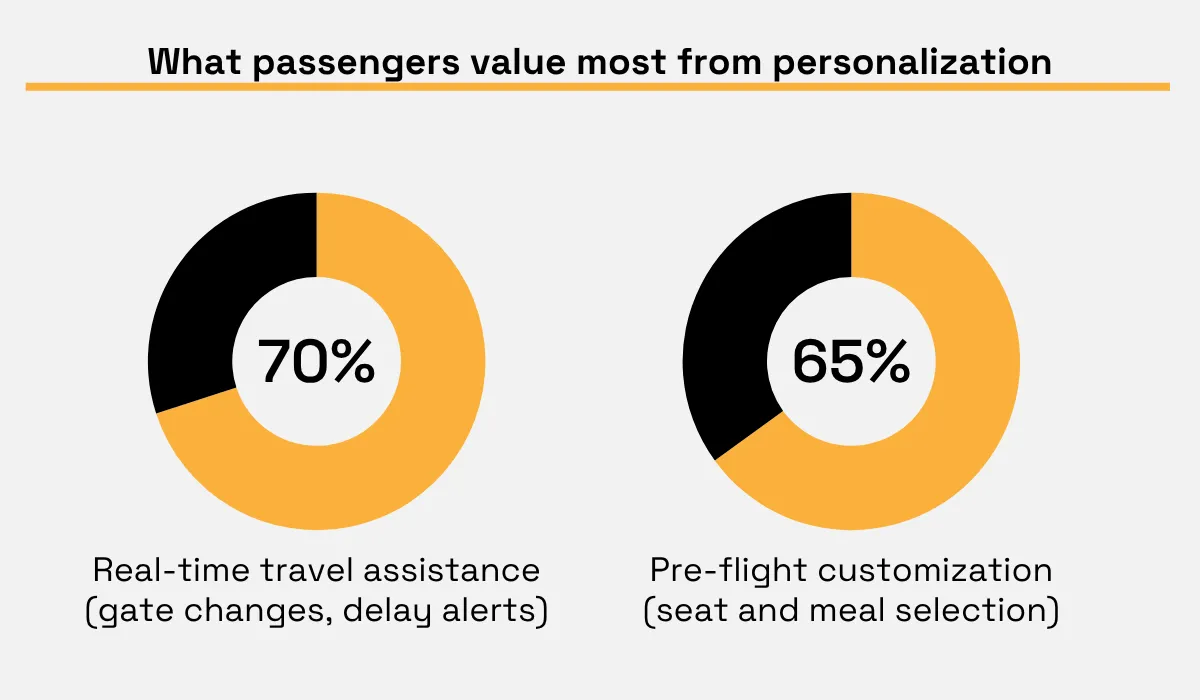
Illustration: Veridion / Data: McKinsey & Company
In other words, travelers aren't looking for more choices. There’s plenty of that in every sector today.
They're looking for fewer headaches. So airlines that use data to deliver timely, useful information instead of overwhelming passengers with options are more likely to earn trust and maintain customer loyalty.
A good example is Delta Air Lines.
The airline uses passenger data to personalize the travel experience in ways that genuinely add value.
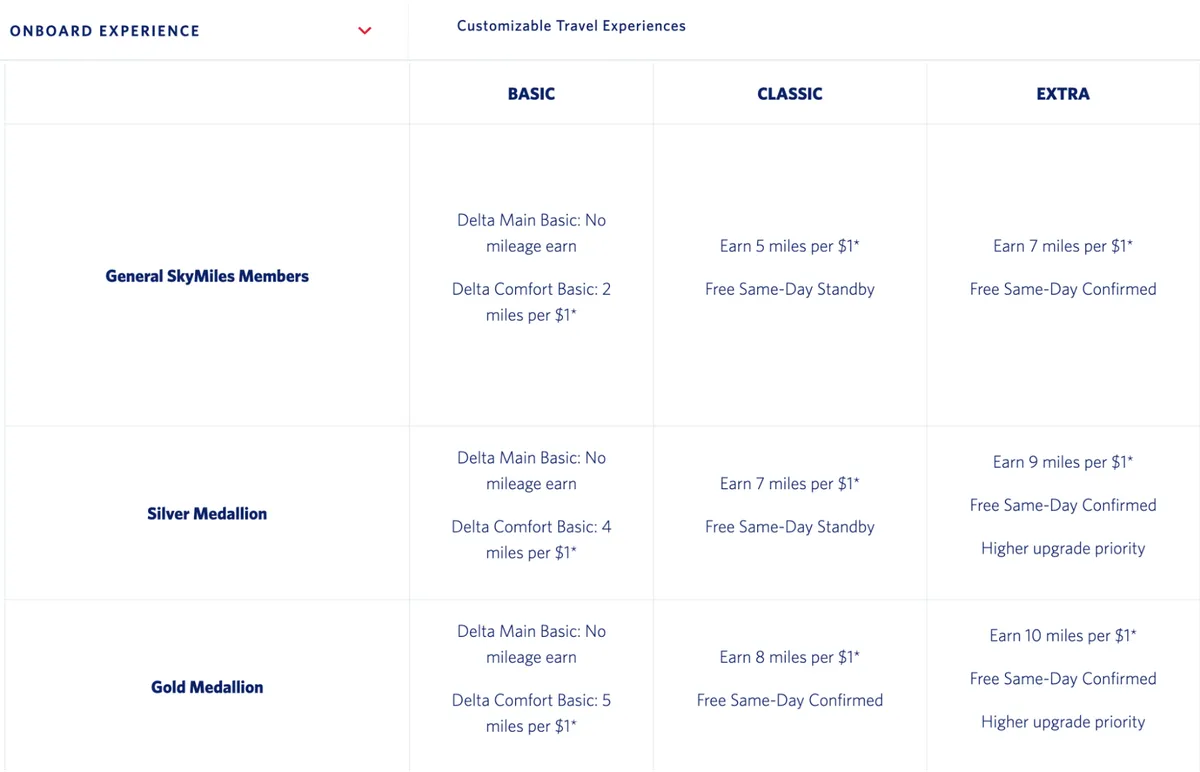
SkyMiles members receive tailored entertainment and exclusive onboard offers through Delta Sync.
Source: Delta
To date, customers have logged more than 100 million Delta Sync Wi-Fi sessions, showing just how widely these personalized features are being used.
However, Delta also illustrates where personalization can go too far.
The airline has expanded AI-powered personalized pricing, using algorithms that can factor in signals such as booking history and purchasing behavior when determining fares.
The move has drawn criticism from lawmakers and consumer advocates. They argue that individualized pricing risks crossing the line from personalization into “predatory” price discrimination.
The lesson is clear: use data to remove friction, not to exploit it.
Travelers appreciate personalization that saves them time and reduces uncertainty, but they'll quickly lose trust if it feels like the technology is working against them.
And for you and your business, passenger personalization also improves operational efficiency.
If an airline knows which passengers typically check bags, purchase onboard Wi-Fi, or require special assistance, it can allocate resources more accurately before departure.
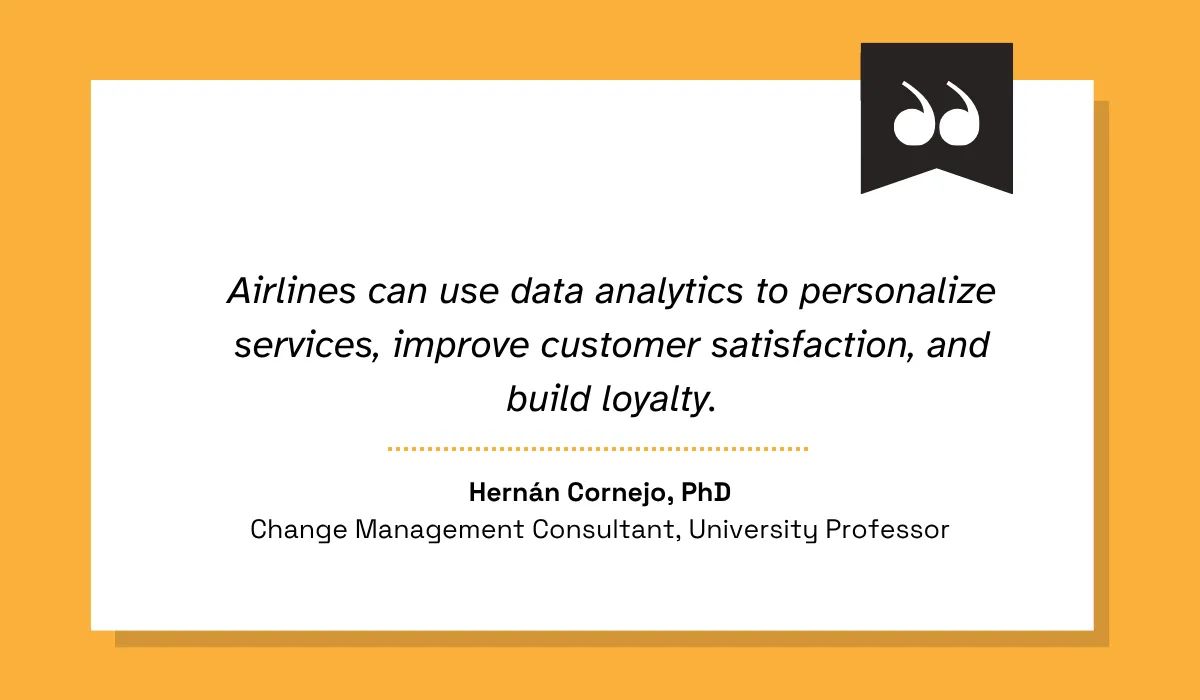
Change Management Consultant Dr. Hernán Cornejo sums it up perfectly:
The result is a better experience for passengers and more efficient operations for airlines.
Facilitating Innovation in Aircraft Design
If aircraft used to be designed by trial and error, now, it’s mostly through data.
Every stage of the aircraft design process turns out valuable intel. Engineers collect data from:
- Computational simulations
- Wind tunnel testing
- Sensor measurements
- Manufacturing data
- Previous flight performance.
Together, these datasets give engineers a clear picture of how an aircraft behaves.
And because the data is collected from the real world (not simulated), it works the same way as manual testing. Engineers basically understand how one particular aircraft works under real-world stress, rather than an ideal scenario.
Then, instead of manually testing each design, engineers feed this data into advanced analytics, artificial intelligence, and simulation software.
The system then evaluates millions of possible design variations virtually. It thus identifies the configurations that work best before ever building a physical prototype.
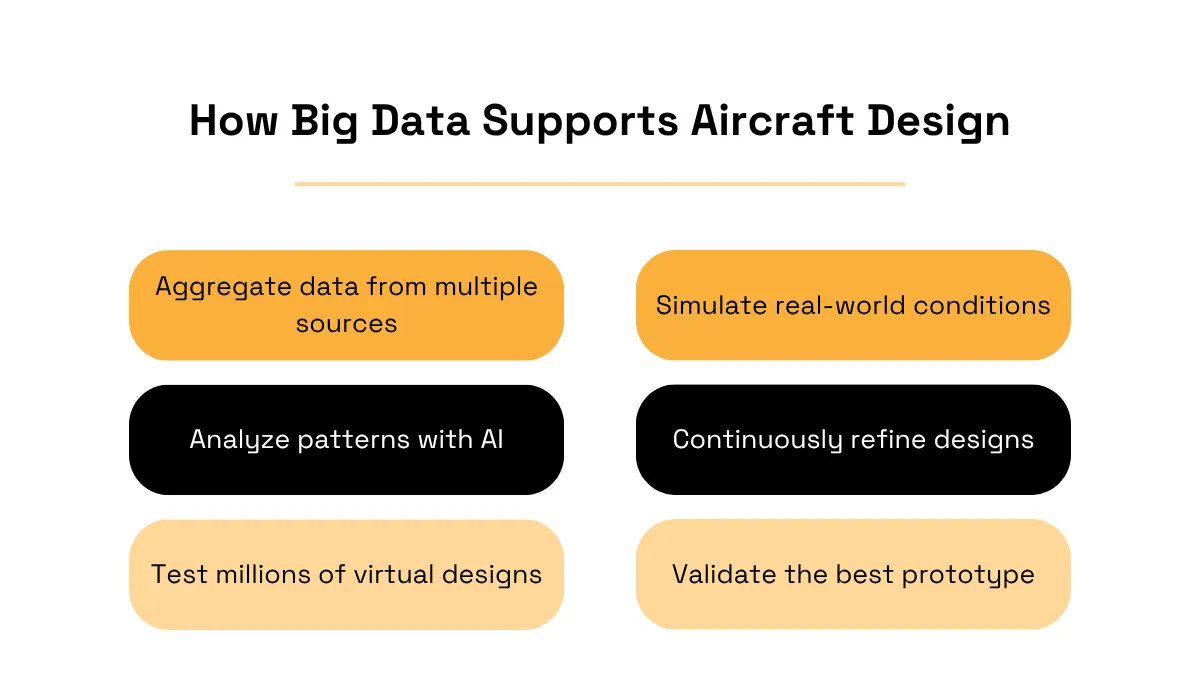
The process typically looks something like this:
- Collect data from simulations, manufacturing, sensors, and operational aircraft
- Analyze it using AI models and engineering software
- Simulate different aircraft designs under thousands of conditions
- Refine the design based on the results
- Build and validate only the most promising prototype.
And the benefits are hard to miss.
The image below shows some of the main benefits of Big Data in aircraft design:
Source: Veridion
One aerospace company leading this transformation is Airbus.
Airbus relies extensively on digital twins. These are virtual replicas of a physical aircraft.
Their main goal: help simulate performance throughout an aircraft's whole lifecycle.

Source: Airbus
A digital twin uses a simple 3D model. Then, it continuously combines design data, production information, and real-time data collected from an aircraft already in service.
Each flight adds more information. Engineers can thus use the digital twin to compare how an aircraft was expected to perform vs. how it’s actually performing.
Today, more than 12,000 aircraft are connected to Airbus' Skywise platform. These digital twins are being updated 24/7.
That’s how Airbus engineers improve maintenance, performance, and future designs.
Indeed, this precious intel doesn’t just inform maintenance. It also feeds directly back into future aircraft development.
Engineers can use digital twins to:
- Identify recurring wear patterns
- Validate design assumptions
- Improve the manufacturing process
- Test new ideas digitally
Airbus itself describes the process: “Building each aircraft twice: first in the digital world, and then in the real one.”
Big Data doesn’t replace engineers. That’s not the point. But it gives them a far better starting point: one built on billions of calculations instead of educated guesses.
Building Maintenance Programs That Actually Prevent Problems
Big Data is replacing fixed maintenance schedules with predictive maintenance that catches problems before they become failures.
Modern aircraft contain thousands of sensors that continuously monitor variables like:
- Engine performance
- Hydraulic systems
- Fuel consumption
- Cabin conditions
- Landing gear
- Structural loads
- Vibration levels
These sensors generate solid volumes of operational data every single flight.
Advanced analytics platforms examine that information in real time, looking for subtle changes that may indicate developing problems.
Instead of waiting for a component to fail or replacing it unnecessarily, maintenance teams receive early warnings. These insights support both condition-based and predictive maintenance strategies.
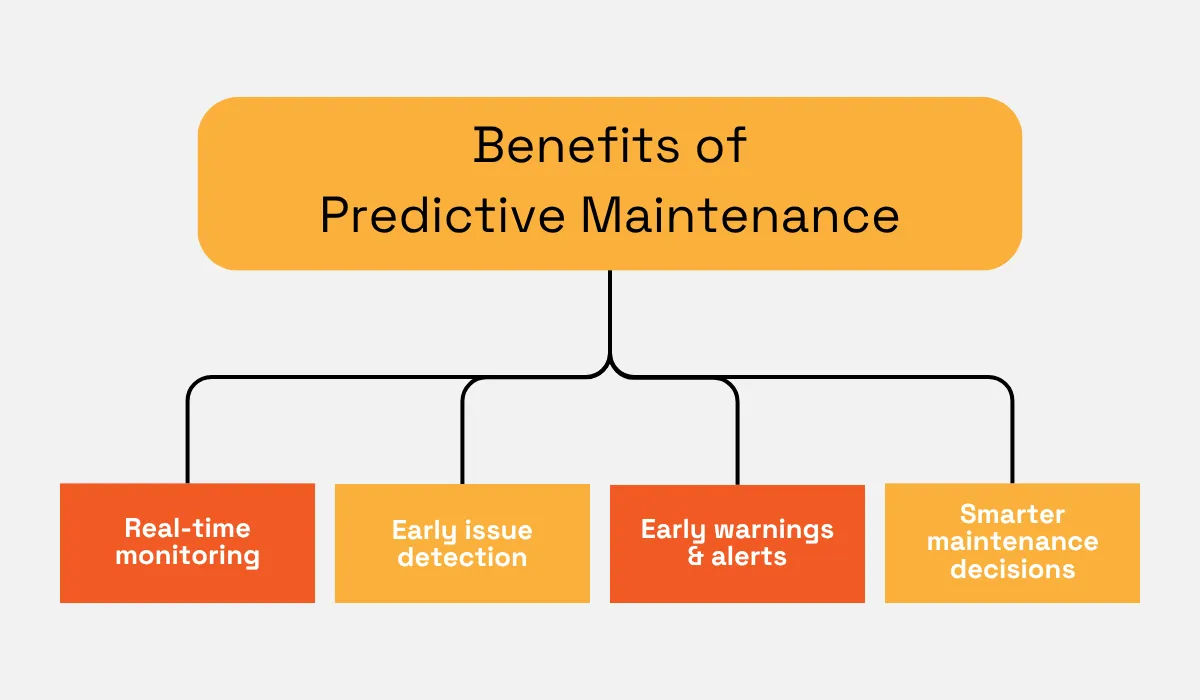
Here are some of the most obvious benefits of using predictive maintenance:
Source: Veridion
In a nutshell, it reduces unexpected failures while maximizing the useful life of expensive components.
The financial impact is significant.
Aircraft on the ground generate no revenue.
Plus, according to this 2026 study, unplanned downtime is estimated to cost the aviation industry a whopping $33 billion annually.
Beyond maintenance costs, grounded aircraft disrupt flight schedules, delay passengers, and disrupt your airline's entire operation.
Every avoided delay thus saves both direct repair costs and the cascading operational expenses that follow.
One company putting predictive maintenance into practice is Rolls-Royce.
Its IntelligentEngine program continuously analyzes engine health using operational data collected during flights.
By identifying early performance anomalies, airlines can thus schedule maintenance before problems become serious enough to ground an aircraft unexpectedly.
Phil Curnock, Rolls-Royce’s Chief Engineer for the Civil Future Programmes, explains the main purpose of this program:
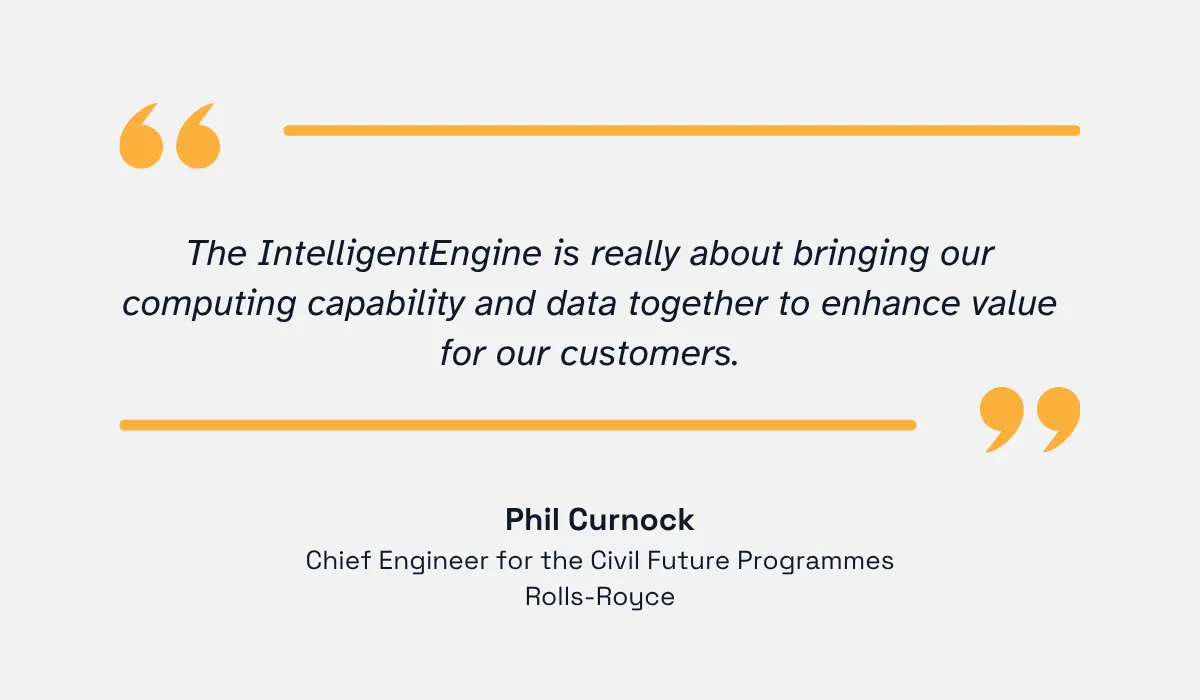
Illustration: Veridion / Source: Rolls-Royce
This is how Big Data greatly helps maintenance programs. In short, it turns maintenance from a reactive process into a proactive one.
Your airline doesn’t have to wait for failures to learn costly lessons. Instead, you can use continuous monitoring and predictive analytics to identify problems early.
That, in turn, means you can schedule repairs at the right time and keep aircraft in service for longer.
The result is lower maintenance costs and fewer unexpected disruptions. Ultimately, that translates into a more resilient and reliable operation.
Improving Fuel Efficiency to Reduce Costs
Big data cuts one of the highest operating costs for aerospace companies: fuel
IATA research shows just how big a chunk of the budget fuel takes up:
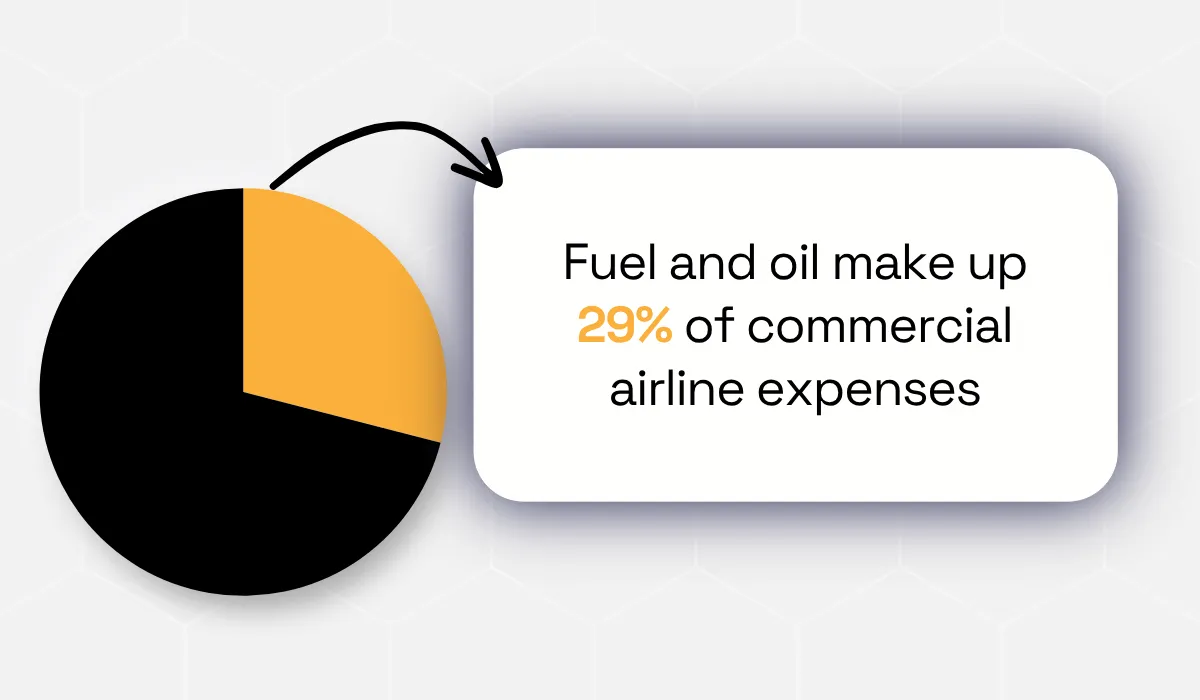
Even small efficiency improvements can save millions of dollars a year, especially when we’re talking about large fleets.
Big Data helps your airline find those savings in ways that were impossible even just a decade ago.
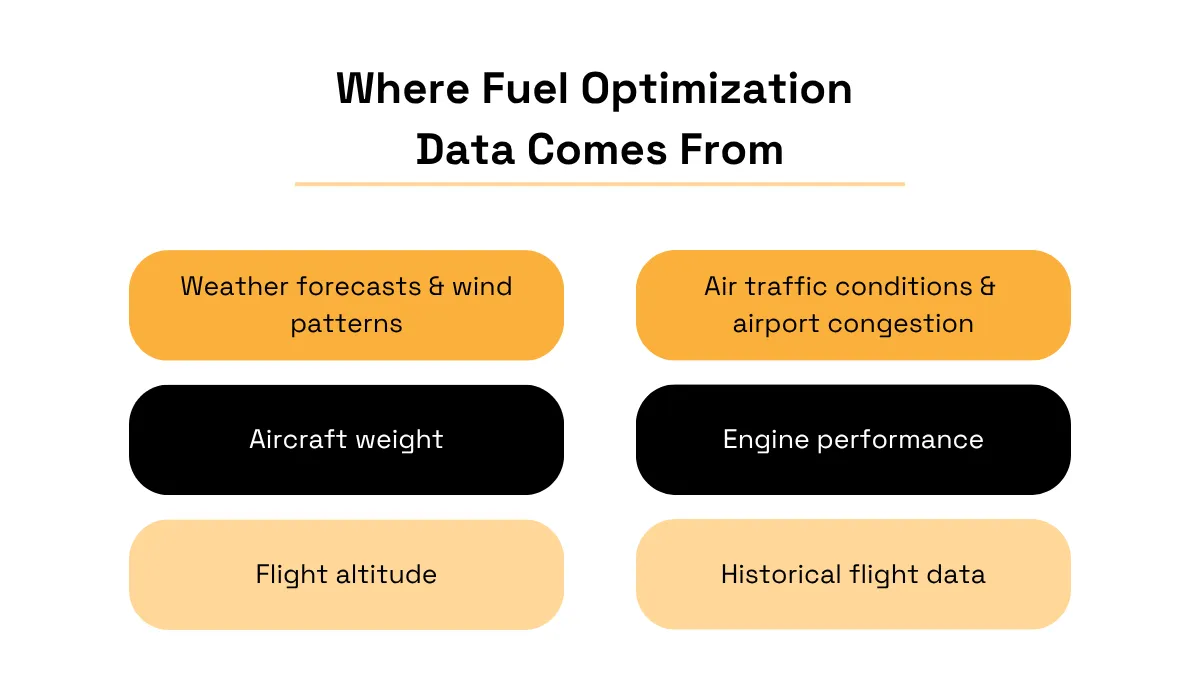
Fuel optimization relies on combining information from multiple sources:
Source: Veridion
Basically, instead of following static flight plans, airlines can continuously optimize operations using real-time information.
For example, analytics may recommend slight altitude adjustments to take advantage of favorable winds. Or identify taxi routes that reduce unnecessary engine use on the ground.
Any of these changes may seem minor on their own. Across thousands of flights each year, though, they save loads.
A good example comes from United Airlines.
Rather than relying on a single solution, the airline combines fleet modernization with dozens of data-driven fuel-saving initiatives.
These include single-engine taxiing, continuous descent approaches, aircraft towing, engine performance monitoring, and weight reduction measures across its fleet.
Even seemingly minor improvements add up.
For example, switching to a lighter in-flight service guide saves 220,000 gallons of fuel and 2,100 metric tons of CO₂ emissions every year. Single-engine taxiing saves another five million gallons of fuel annually.
Flight operations teams also use historical data to improve future scheduling.
By analyzing recurring congestion patterns at specific airports or seasonal weather trends, airlines can develop more efficient flight plans months in advance.
And the benefits extend well past operating costs.
Greater fuel efficiency also supports the aviation industry's long-term sustainability goals by reducing greenhouse gas emissions. That’s an increasingly important priority for regulators, investors, and passengers alike.
Ultimately, fuel optimization isn't about collecting more information; it's about acting on it.
But fuel is only one piece of the puzzle. Behind every efficient flight is an equally efficient supply chain that keeps aircraft flying in the first place.
Navigating Highly Complex Supply Chains With Ease
Modern aircraft contain millions of individual parts sourced from thousands of suppliers spread across dozens of countries.
Managing this sort of network has become one of aerospace's greatest challenges.
A single delayed component can postpone aircraft production or maintenance. That, in turn, creates ripple effects in global operations.
Big Data provides the visibility needed to manage that complexity.
Procurement teams increasingly combine data to identify potential disruptions before they affect operations.
That data includes:
- Supplier data
- Logistics information
- Financial indicators
- Geopolitical developments
- Environmental risks
- Production trends
These insights also help procurement teams keep healthier inventory levels, avoiding both shortages and unnecessary stockpiling.
They also make it easier to forecast risks, diversify sourcing strategies, and build more resilient supply chains.
And we can’t stress how valuable reliable supplier intelligence is.
Aerospace suppliers often operate several tiers below direct contractors. Visibility is notoriously difficult to get. It’s also crucial to have in today’s complex environments.
It’s time to talk Veridion.
Outdated supplier databases weren't built for 2026 supply chains.
Veridion gives your procurement team access to AI-powered supplier intelligence generated by analyzing ~1.4B web pages every week per month.
The comparison below shows how richer, continuously updated data can simplify supplier discovery and help you make faster, smarter sourcing decisions.
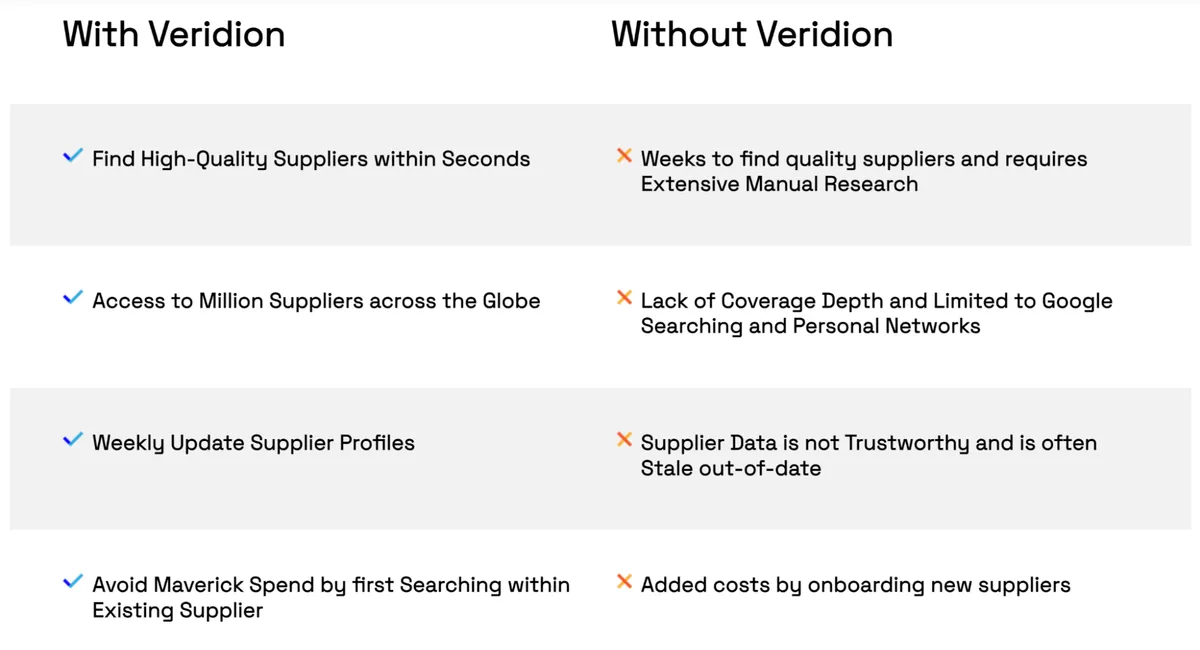
Source: Veridion
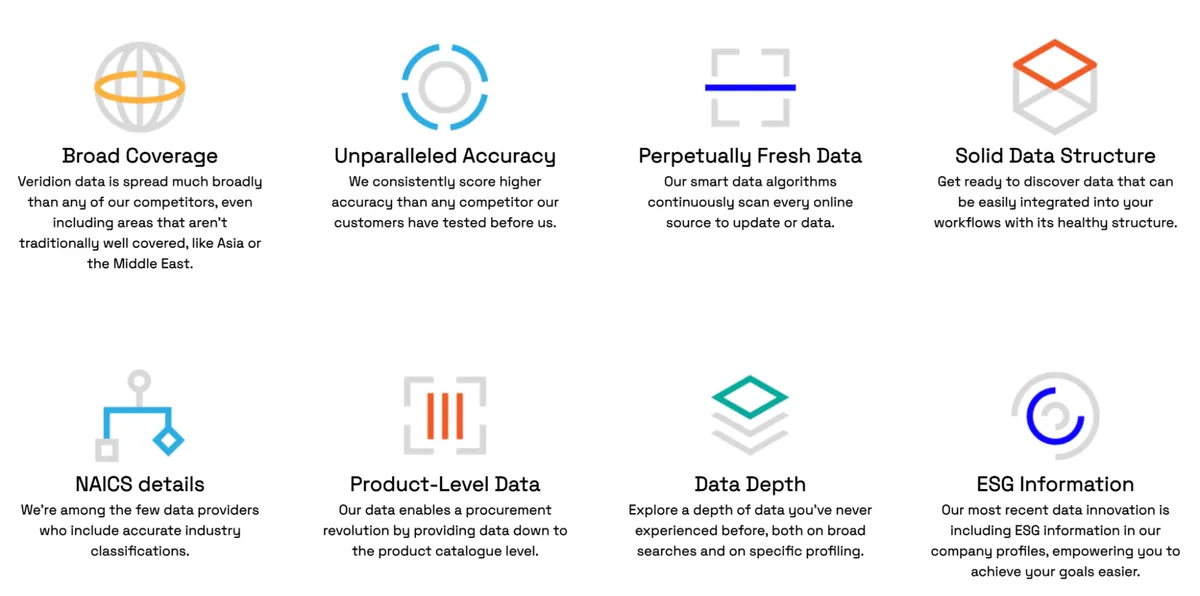
Veridion maintains profiles for over 693M suppliers across 250 countries-
We combine digital footprints, legal records, company information, and detailed product-level data into a single platform.
That includes everything from company ownership and locations to the products and services suppliers actually sell. So your procurement team can evaluate both supplier capabilities and potential risks before making a decision.
Veridion helps procurement teams:
- Discover new suppliers and alternative suppliers before disruptions affect production
- Validate existing vendors
- Monitor changes in ownership or operations
- Identify potential supply risks
- Improve third-party risk management
Another solid asset here is product-level intelligence.
Instead of searching only for companies by industry, you can identify suppliers based on the specific products and services they actually provide.
For aerospace manufacturers searching for highly specialized components, this significantly broadens supplier discovery and, of course, saves you tons of manual research time.
Source: Veridion
Global supply chains are becoming increasingly interconnected.
That also means they’re increasingly vulnerable to geopolitical disruptions, regulatory changes, and natural disasters.
So having accurate, continuously updated supplier intelligence becomes a competitive advantage (rather than a smart little procurement tool).
If you can identify risks early, you’re better positioned to maintain production, control costs, and respond quickly when disruptions occur.
Conclusion
Big Data is transforming aerospace from the ground up.
You've seen how it improves everything from passenger experiences to aircraft design, maintenance, fuel efficiency, and supplier management.
Now, it's your turn to decide where the data can create the biggest impact. The companies that turn insight into action will be the ones leading the next generation of aerospace.
Articles
Discuss how these trends affect your organization.
Our analysts are available for a short call. Bring a specific question and we will ground it in the data.
Insights
Keep reading
More analysis, research, and outcomes grounded in live company intelligence.
5 Trends Shaping the Future of Market Intelligence
Want to future-proof your business strategy? Explore the top trends defining the future of market intelligence.
Best Practices for Leveraging Market Intelligence
Not sure how to apply market intelligence effectively? Learn which practices top businesses rely on and how you can too.
Market Intelligence vs Market Research: What's the Difference?
Not sure whether you need market research or intelligence? Learn the key differences and when to use each.