Insights / Articles
Understanding the Role of Data Analytics in the Aerospace Industry
How is aerospace data analytics revolutionizing the skies? Uncover the critical role of data in aviation innovation, from design to flight operations.

- The global flight data monitoring market will grow to USD 8.72 billion by 2031.
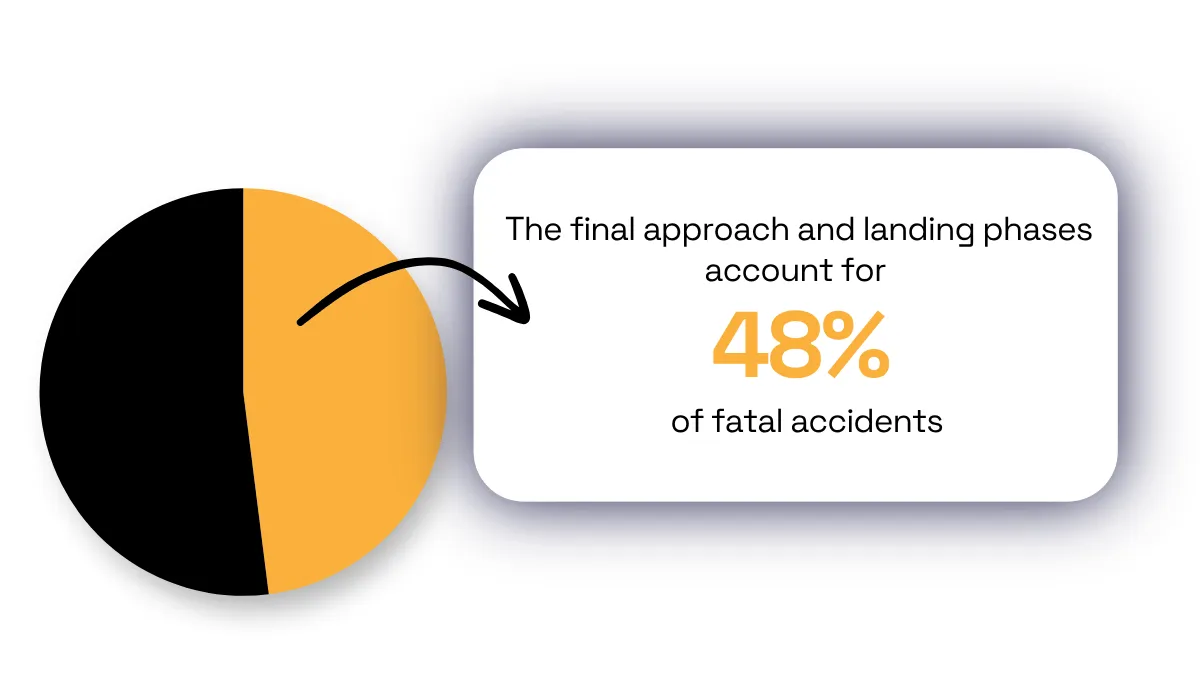
- The final approach and landing phases account for 48% of fatal accidents.
- By improving supply chain visibility, Boeing reduced defects by 60%.
Aerospace organizations rely on information every day to support aircraft safety, manufacturing, and maintenance.
That information is often spread across different systems and organizations. At the same time, aircraft generate more operational data while supply chains continue to grow more complex.
Bringing all of that information together has become one of the industry's biggest challenges.
This is where aerospace data analytics comes in. It helps you connect information, identify patterns, and understand what the data is telling you.
In this guide, you'll learn what aerospace data analytics is and how organizations use it to improve aircraft performance and maintenance.
You'll also learn how organizations overcome fragmented data and use external business intelligence to identify supplier risks before they affect production or aircraft operations.
Aerospace Data Analytics Explained
Aircraft produce more data than ever before.
Every flight records information about onboard systems, weather conditions, fuel consumption, and the maintenance performed after landing.
Darren Macer, Boeing’s Senior Technical Fellow, emphasizes this:
“We strive to enhance aircraft systems and components to provide more sensor data, enabling analysis that supports increasingly accurate and valuable insights on the aircraft's operational performance.”
Yet those records cannot explain aircraft performance on their own.
A higher engine temperature, increased fuel consumption, or repeated maintenance on the same component tells you that something has changed.
However, it does not explain whether the change reflects normal operating conditions or whether it points to a developing mechanical problem.
That challenge continues to grow as aircraft technology develops and more data points become available. Airbus' eXtra Performance Wing demonstrator shows why.
Engineers fitted the wing with sensors that measure how it bends during normal flight, allowing them to study wing performance using data collected in real operating conditions.
Every connected system creates another stream of information for airlines to analyze. As a result, airlines are investing more in technologies capable of processing the growing volume of data.
In fact, Mordor Intelligence expects the global flight data monitoring market to grow from USD 6.23 billion in 2026 to USD 8.72 billion by 2031. The forecast reflects the growing demand for software that helps airlines understand flight data rather than simply store it.
That software works by comparing information that would otherwise remain in separate systems.
It brings together sensor readings, maintenance records, flight conditions, and flight operations. Engineers can then compare those records to see how one event relates to another.
For example, they can compare engine performance with weather conditions, maintenance history, and previous flights to understand why the aircraft behaved differently. Looking at those records together explains far more than any single data point ever could.
Take an engine that begins running hotter than usual.
The temperature reading confirms something changed, but it cannot explain why. Aerospace data analytics compares that reading with:
- Previous flights
- Maintenance history
- Weather conditions
- Other operating data
It may show the aircraft has simply been flying longer routes in higher outside temperatures, making the increase expected.
It may also show the engine has been running slightly hotter over several weeks despite similar operating conditions.
That comparison helps engineers decide whether the engine is operating normally or whether it should be inspected before the problem develops into an in-service failure.
The same process helps different teams answer different operational questions.
Maintenance teams use it to identify components that should be repaired before they fail. Flight operations use it to understand how routes, weather, and aircraft performance influence fuel consumption. Fleet managers use it to compare how aircraft perform across different routes and operating environments.
Although each team applies the information differently, they all rely on the same process of comparing data from multiple sources before taking action.
In simple terms, aerospace data analytics explains what aircraft data means. It helps you understand aircraft performance, plan maintenance more effectively, and operate your fleets more efficiently.
Data Analytics Challenges Aerospace Teams Often Face
Applying aerospace data analytics successfully is not always straightforward. You work with complex data, operate under strict safety requirements, and rely on information from multiple organizations.
Let’s get into the details of each.
Extremely Complex and Heterogeneous Data
Aerospace organizations collect information throughout an aircraft's lifecycle. Yet that information comes in many different forms, making it difficult to analyze as a whole.
Some data comes directly from aircraft sensors during flight. Other information comes from inspection photographs, maintenance records, or pilot reports written after landing.
Each source describes the aircraft differently. Sensor readings are numerical measurements, inspection reports contain images, and pilot reports are written in plain language.
If you want to analyze those records together, you first have to connect information stored in completely different formats.
Most aerospace data falls into three categories:
- Time-series sensor data
- Graphical data
- Natural-language data
A 2026 review of predictive maintenance in aviation found that each category requires different methods for data collection, storage, and analysis.
Because AI models cannot interpret each type of data the same way, the review identifies data heterogeneity as one of the biggest technical challenges in aerospace analytics.
Lufthansa Technik faced this problem while developing its AVIATAR Reliability Suite.
Pilots and maintenance technicians often described the same aircraft fault using different abbreviations, spellings, languages, or component names. Some reports also contained incorrect ATA chapter assignments.
As a result, engineers could not reliably analyze maintenance trends across an entire fleet.
To solve the problem, Lufthansa Technik used Natural Language Processing (NLP) to standardize maintenance write-ups and assign consistent engineering classifications.
Once engineers standardized those reports, they could analyze maintenance records alongside aircraft telemetry instead of treating them as separate sources of information.
Maintenance reports are only one example.
The same challenge exists across every type of aerospace data. A sensor can show that an engine is vibrating more than usual, but it cannot explain whether a recent repair, a damaged component, or unusual operating conditions caused the change.
Engineers answer those questions by combining sensor readings with maintenance records, inspection images, and engineering documents.
However, bringing different types of data together is only one challenge. Aerospace teams must also work in an industry where even small analytical errors can have serious consequences.
Zero Tolerance for Error
The aerospace industry operates with almost no margin for analytical error because even small mistakes can affect safety-critical operations.
The consequences of getting these operations wrong extend far beyond delays or financial losses.
This became painfully clear after an Army helicopter collided with an American Airlines regional jet near Ronald Reagan Washington National Airport in 2025.

Source: CNBC
Investigators attributed the accident to multiple operational and systemic failures rather than data analytics itself.
Even so, the collision reinforced how little room for error aviation leaves and why the industry invests in technologies that help crews identify hazards earlier.
That is why aerospace companies validate analytical systems extensively before airlines rely on them.
Honeywell's Surface Alerts (SURF-A) system shows what that validation process looks like in practice.
It continuously analyzes aircraft position, movement, and predicted flight paths to identify potential runway conflicts before they become emergencies.
During demonstration flights, Honeywell recreated real runway-incursion scenarios, including the 2023 near-collision in Austin, Texas.
The company estimates the system could have warned the FedEx crew about traffic on the runway 28 seconds earlier.
Those extra seconds matter because crews often have very little time to react during landing.
Boeing's Statistical Summary of Commercial Jet Airplane Accidents shows that while the final approach and landing phases account for only about 4% of flight time, they account for 48% of fatal accidents.
Honeywell therefore wasn't just measuring whether SURF-A detected another aircraft.
Engineers also evaluated whether the alert appeared early enough for pilots to respond before the situation became unrecoverable.
Runway safety is only one application.
Aerospace teams apply the same level of validation to analytical models used for flight operations and other safety-critical tasks.
Before airlines rely on those models, engineers verify that they perform consistently under real operating conditions.
They use simulation, engineering validation, certification activities, and human review because even small analytical errors can have serious consequences.
Data Silos Across Organizations
Modern aircraft are built by hundreds of organizations, yet no single one has a complete view of the information about that aircraft.
Each of these stakeholders keep their own quality reports, inspection data, and maintenance history:
- Manufacturers
- Suppliers
- MRO providers
- Airlines
- Logistics partners
As a result, information about the same aircraft remains spread across separate systems instead of forming one complete picture.
SITA's 2025 Air Transport IT Insights report found that 83% of airlines prioritize data-driven decision-making, yet 49% identify data integration and consistency as one of their biggest technology barriers.
The report concludes that airlines get the most value from operational data when it moves across systems instead of remaining isolated inside individual organizations.
The relationship between Boeing and Spirit AeroSystems shows why that visibility matters.
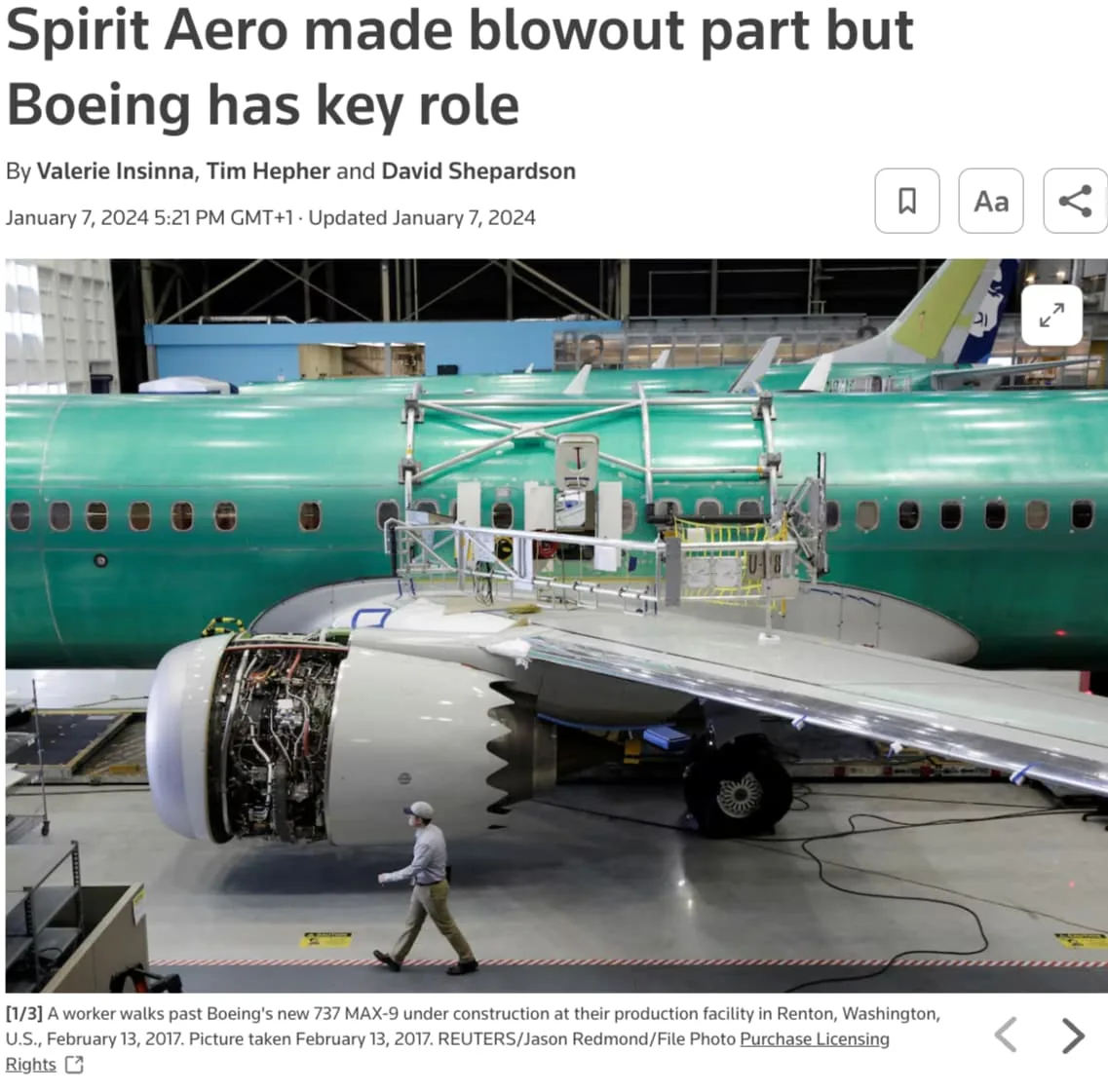
Spirit AeroSystems assembled the fuselage before shipping it to Boeing for final assembly. Boeing later removed the door plug to complete repair work before reinstalling it.
When the door plug separated during Alaska Airlines Flight 1282, investigators had to determine whether the installation process failed at Spirit or Boeing.
Source: Reuters
They found that the door plug failure resulted from missing retention bolts that had not been reinstalled during manufacturing.
The investigation highlighted how difficult it becomes to trace manufacturing problems when work passes between multiple organizations.
A missing record or incomplete hand-off makes it much harder to identify where a quality issue began and how it moved through the production process.
The consequences extended far beyond a single aircraft.
The FAA increased oversight of Boeing's 737 MAX production, slowing manufacturing and renewing the industry's focus on supplier quality management.
Boeing also responded by increasing oversight and improving visibility across its supply chain. Since introducing those changes, defects from Spirit AeroSystems have fallen by about 60%.
The company also says it now spends 40% fewer hours resolving supply chain issues after improving quality coordination with suppliers.
The same principle applies across aerospace analytics.
Connecting data inside one organization is only part of the challenge. Engineers also need information from suppliers, manufacturers, airlines, and maintenance providers.
Bringing those records together helps them trace quality issues earlier and resolve them before they affect aircraft production or operations.
Bringing External Data into Aerospace Decisions
Most aerospace analytics relies on data generated inside your organization.
Aircraft sensors show how an aircraft is performing. Maintenance records track inspections and repairs. Manufacturing data shows how production is progressing.
Yet many of the risks that affect your operation begin somewhere else.
A supplier may lose production capacity. Another may change ownership or experience financial difficulties. Those problems can disrupt production long before they appear in your own data.
Roland Berger's Aerospace Supply Chain Report shows how common this challenge has become. Nearly two-thirds (64%) of aerospace companies reported supply-chain disruptions.
Many of the events behind those disruptions happen across the supplier network rather than inside your own organization.
That’s why you need a way to see beyond your own organization. This is where external business intelligence becomes valuable.
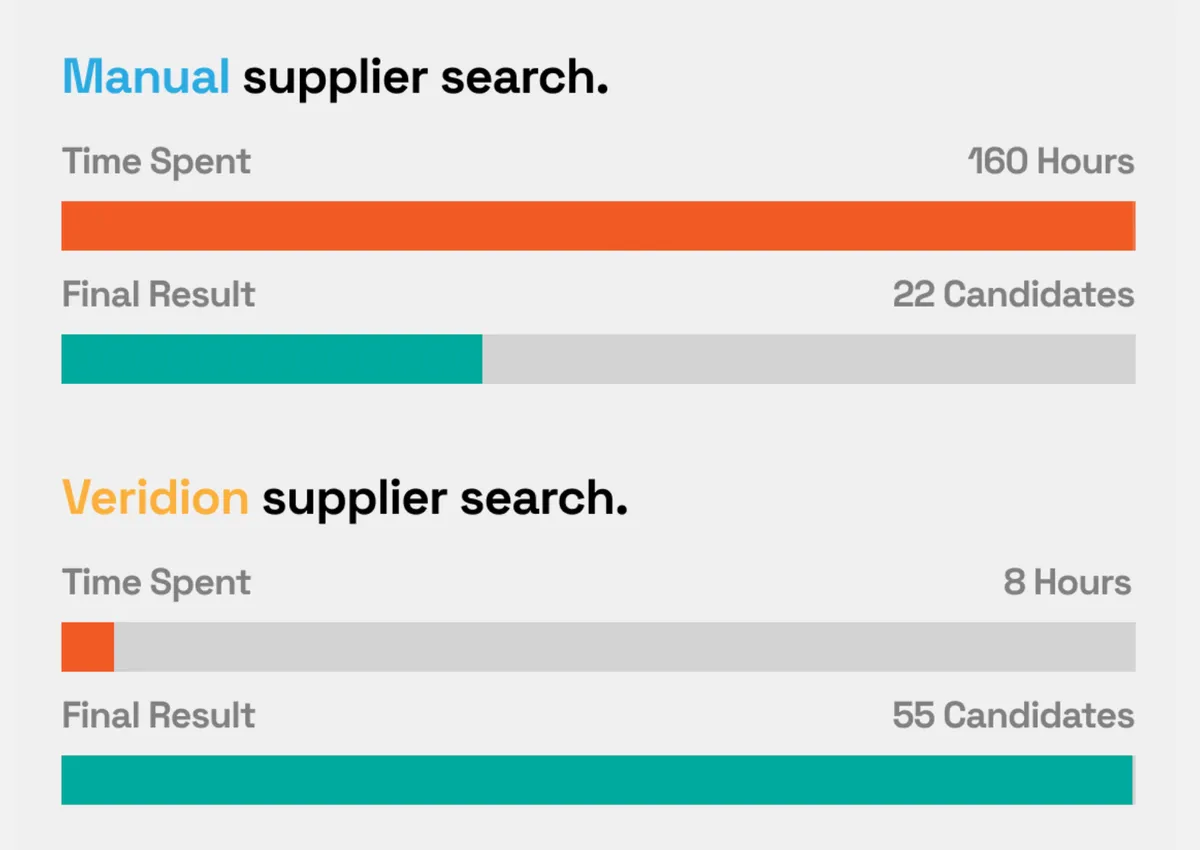
Platforms such as Veridion help you build that external view. Its Match & Enrich API enriches supplier records that already exist in your ERP or supplier database.
It returns verified company information, corporate ownership, facility locations, certifications, industry classifications, and other business attributes. That gives you a cleaner supplier record without relying on manual research.
Source: Veridion
The Search API solves a different problem.
Instead of enriching suppliers you already know, it helps you discover new manufacturers based on products, manufacturing capabilities, certifications, industries, and locations. That makes it easier to identify qualified alternatives before a disruption reaches production.
Together, those capabilities give you a clearer view of your direct supplier network.
Even then, your visibility can’t stop with direct suppliers. Many aerospace risks begin several tiers upstream.
Your suppliers also depend on semiconductor manufacturers and critical-mineral processors. Disruptions at those businesses eventually flow through the supply chain, even though they occur well outside your internal operations.
The International Energy Agency’s Global Critical Minerals Outlook Report warns that industries such as aerospace face growing exposure to concentrated supply chains and geopolitical risks affecting critical minerals.
It also identifies supply diversification as an increasing priority because disruptions in upstream markets can spread through manufacturing long before they reach aircraft production.
Aerospace organizations therefore combine operational analytics with external data.
Operational data tells you what is happening inside your organization. External data explains what’s happening across the supplier network that supports it.
Together, they give you the context needed to identify risks before they interrupt production or affect aircraft operations.
Conclusion
Aerospace organizations already collect information from aircraft, manufacturing, maintenance, and suppliers. The challenge is connecting those records before important details are lost across different systems and organizations.
Aerospace data analytics helps you connect that information. It helps you understand aircraft performance and investigate quality issues.
External business intelligence extends that visibility beyond your organization. It helps you verify suppliers and monitor business changes that could affect production.
Combining the two gives you a more complete view of your operations and supplier network.
That helps you identify quality issues sooner, strengthen supplier oversight, and respond to disruptions before they affect aircraft production or flight operations.
Articles
Discuss how these trends affect your organization.
Our analysts are available for a short call. Bring a specific question and we will ground it in the data.
Insights
Keep reading
More analysis, research, and outcomes grounded in live company intelligence.
How to Build a Strong Market Intelligence Strategy
Learn how to build a strong market intelligence strategy that helps you track trends, understand competitors, and make smarter decisions.
How to Gather Market Intelligence In 5 Steps
In this guide, we're breaking down the five key steps you need to take to gather market intelligence that drives real action.
9 Essential Sources of Market Intelligence
Want to boost your market knowledge? These 9 market intelligence sources will show you where to look and how to apply the insights.