Insights / Articles
Using Alternative Firmographics for Faster SMB Credit Risk Assessment
Struggling with slow SMB credit risk assessment? Uncover how alternative firmographics can revolutionize your process and speed up decisions.

- It takes 60-90 minutes of manual effort for underwriters to just collect data.
- The average cost of a fake claim reaches £84,000 per incident.
- Fewer than half of thin-file or underserved small business applications are approved.
When assessing risk, underwriters need mountains of data about a business in order to reach a fair decision.
But when they deal with small businesses, that can be even trickier.
These organizations often don’t have enough data about their financial or credit history. This slows down the underwriting process and frustrates everyone involved.
However, incorporating alternative business data can save time.
Read on to find out how it can help you speed up credit risk assessment while enhancing accuracy.
What Counts as an Alternative Firmographic
Unlike basic firmographics, which describe static information about a business like industry, headcount, or location, alternative firmographics go deeper, and they give a much more rounded picture of an SMB.
They include data points such as:
- ESG signals
- Technographic data (technologies a company uses)
- Online activity (website, social media, reviews)
- Geospatial data (GPS data, travel logs, satellite imagery)
- Public records
It can be collected through methods like public record databases, web scraping, or APIs.
Together with basic firmographics, this type of data is much more valuable for an underwriter who has to make a thorough risk assessment of a company.
The more specific the data, the better the outcome for both lenders and insurers.
Where Alternative Firmographics Fit in the Underwriting Workflow
The underwriting process is thorough and painstaking.
That’s why it can take time to assess the risk profile of an SMB.
But alternative firmographics can speed up the process without impacting the quality of the data.
Let’s take a look at some examples of how alternative firmographics can improve the workflow of your underwriters.
Automatically Pre-Filling Applications
Filling in the same fields over and over on traditional applications is a big time-drain for applicants.
Not to mention how frustrating it can be if they need to fill out the form again because of a typo in their address or one wrong number.
This type of data can auto-fill an application from just a company name and address.
So applicants or brokers don’t need to manually enter information the data already confirms.
Let’s see how that works in practice.
When an applicant types in an application their business name or address, the form will automatically populate other fields with verified data.
Therefore, they’re immediately presented with a full company profile that would otherwise take days to assemble.
This presents a staggering productivity boost.
Especially when you consider how manual tasks, including filling in applications, eat into a typical underwriter workday.
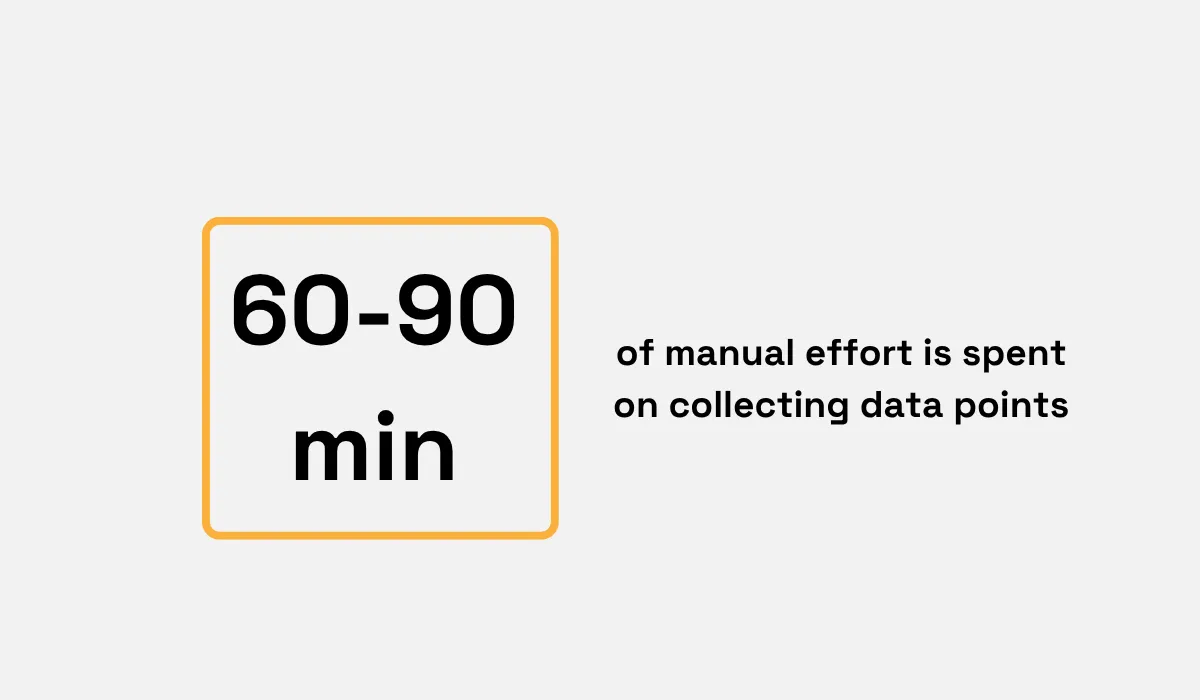
For example, our own research showed that it takes 60-90 minutes of manual effort for underwriters to just collect data points like annual revenue data, loss control measures, or environmental compliance records.
Source: Veridion
But time isn’t the only issue.
What’s even worse is that manual collection and assessment of large volumes of data can lead to bottlenecks like data errors or inconsistencies or, in some cases, loss of leads.
That’s why leveraging alternative firmographics during the application process is one of the best ways to save time and keep the quality intact.
Validating Self-Reported Data
However, mistakes may slip through.
This is especially the case when an applicant provides internal data like revenue or headcount, or even basic data like business address.
Sadly, false data isn’t an exception.
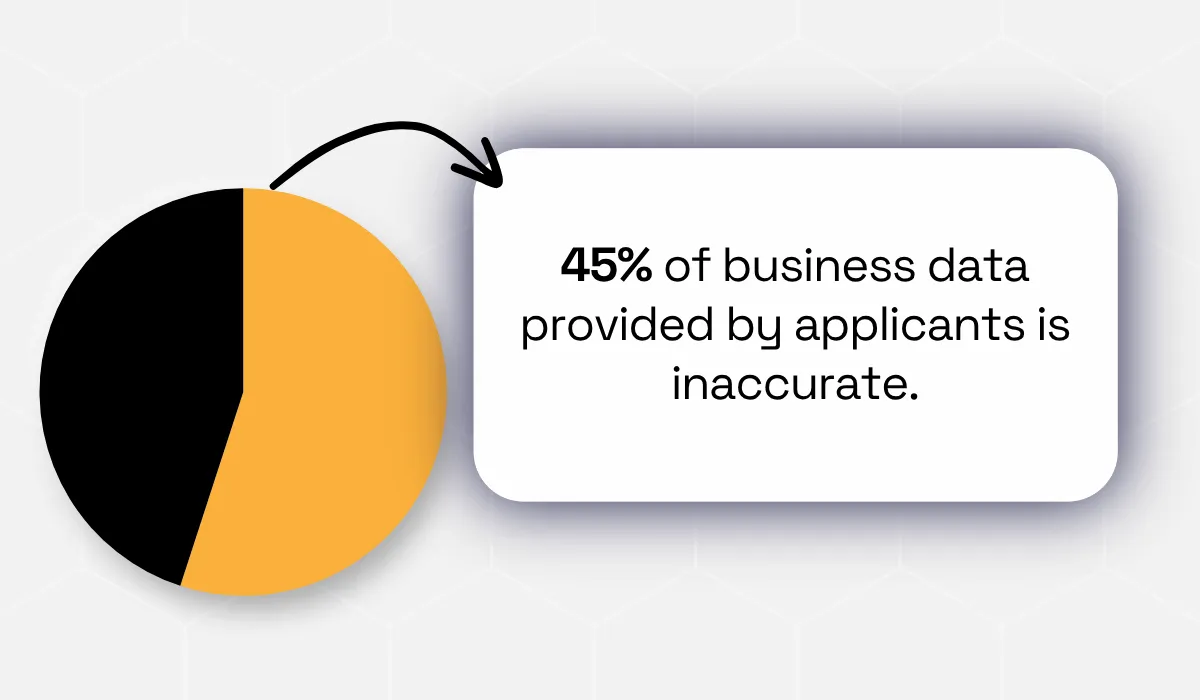
Research by Weanalyze shows that 45% of business data provided by applicants is inaccurate.
That means there’s a high chance underwriters could reach bad coverage decisions and endanger both the insurer and insurance carrier.
So it’s important for an underwriter to always stay on the lookout and cross-check against data collected from independent sources.
This is where alternative business data comes in.
With it, underwriters can notice and deal with inconsistencies before they turn into mispriced risk or even fraud.
When left unchecked, these discrepancies can lead to serious damage.
A 2025 report from Adyen showed that the average cost of a fake claim reaches £84,000 per incident.
When translated to everyday life, damage looks like this.
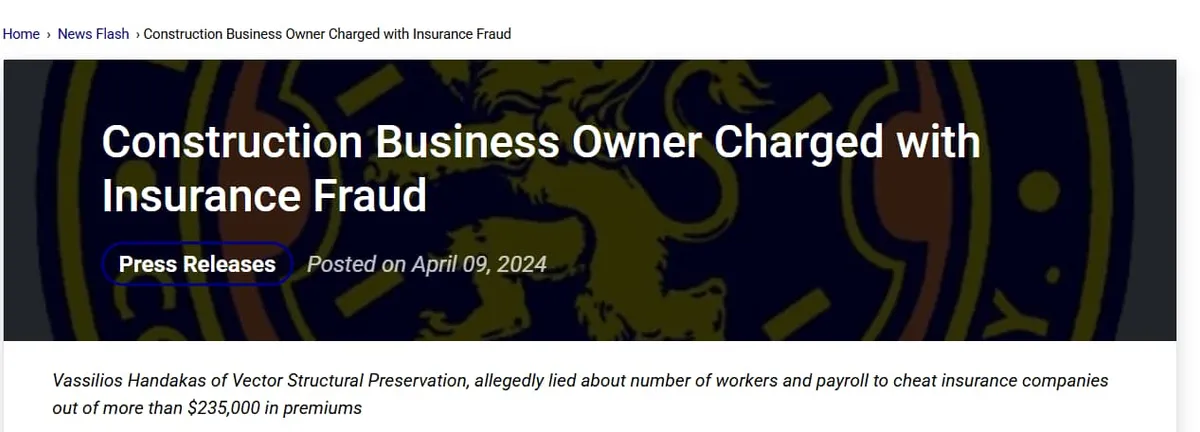
For example, a business owner in Nassau County, New York, was charged in 2024 for underreporting the number of his employees in the application to his insurance company.
Source: Nassau County District Attorney
According to the Nassau County District Attorney, the owner reported two employees with an annual payroll of $50,000 per year.
But the numbers in records filed with the state indicated that the company had 13 employees during that time frame and a payroll of $625,466.
The underreporting of the employees and payroll resulted in an underpayment of insurance premiums of $197,623.
That is a lot of lost money.
Had the insurance company caught wind of these discrepancies before quoting the client, the outcome would have been totally different.
Filling Gaps for Thin-File SMBs
But how to do a quality risk assessment when there isn’t much to lean on?
Because of their size or short time on the market, a lot of SMBs can’t provide insurers with enough data. Those businesses are also known as “thin-file” businesses.
This lack of information is one of the reasons their credit applications get declined.
According to a 2026 study by Mastercard, a majority of lenders (58%) report that fewer than half of thin-file or underserved small business applications are approved.
So it’s no wonder when businesses like these get insurance that isn’t aligned with their real needs, as shown in McKinsey’s 2025 report.
A business’ credit risk score is important for underwriters when calculating insurance risk because it shows a company’s financial health.
For example, if a company is late on its payments, that may also mean it’ll be late in paying premiums.
But just having a poor credit profile or none doesn’t mean a business can’t be insured.
A restaurant may have no commercial credit score, but an underwriter can still assess their financial stability with alternative and accurate data like public records, bank statements or even location data.
Also, since an SMB owner’s personal finances are often connected to the company’s financial health, underwriters can look for relevant signals in the owner’s credit profile.
For example, is their repayment history consistent? Do they have low or high delinquency rates?
So, when they combine different data signals, underwriters can build a fuller and segmented risk profile than they could with just thin credit information.
Thanks to this blend of traditional and alternative data, insurance companies don’t need to be afraid of whether they’ve underpriced or overpriced the risk.
Speeding Up Quote-to-Bind Without Added Risk
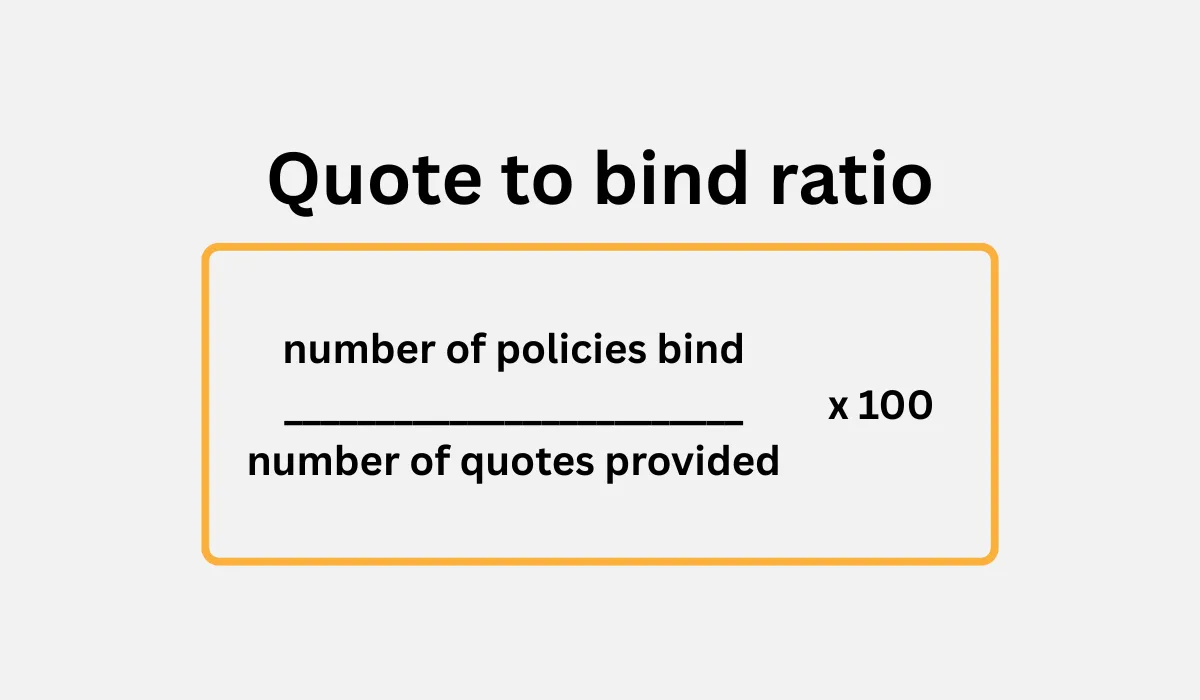
The quote-to-bind ratio is one of the most important KPIs in commercial insurance.
It measures how quickly an insurer goes from receiving a quote to issuing a policy or final credit decision.
Source: Veridion
Put simply, it’s a direct signal whether a company is bringing in new customers.
Faster turnaround improves customer satisfaction, increases broker productivity, and reduces the likelihood that applicants accept competing offers.
In general, the higher the ratio, the better.
But it's hard to pinpoint a specific desirable percentage since various factors come into play, such as:
- market conditions
- product complexity
- pricing
However, cutting down on time needed to get from a quote to a bound policy has become a priority in these times.
Clients are comparing more insurance companies, so they expect fast feedback.
Not to mention all the technological advances involving AI and automation that make competitors even more competitive.
Luckily, quote-to-bind can be sped up with alternative firmographics, especially via API tools that deliver a large range of data signals without manual effort.
When you integrate an API tool with internal ones, you get accurate, real-time insight.
The result is not only an increase in your quote-to-bind ratio but also fewer breakdowns and errors.
How does that look in practice?
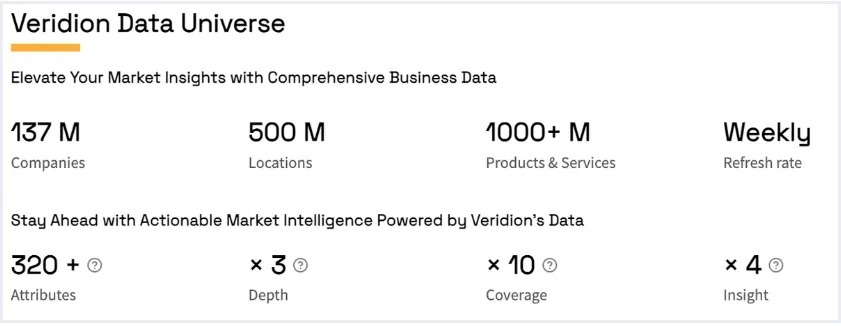
Consider Veridion’s Match & Enrich API.
Source: Veridion
It pulls data from our database containing 186M operating companies.
Think trade registries and filings, news, social media, satellite images and other external sources.
To get a business profile, all you need is a name and address.
The profile contains over 461 attributes per company so it can support automated pre-fill and validation without slowing underwriters down.
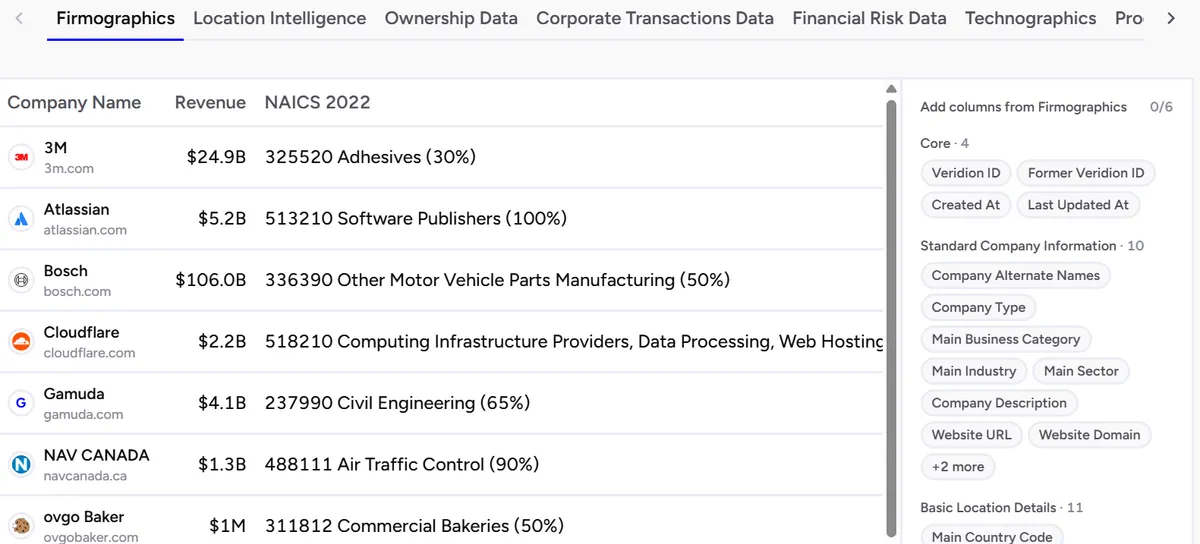
Source: Veridion
Also, Veridion relies on robust data validation processes, which means users don’t need to manually check each source individually.
And the best part – the data is refreshed on a weekly basis so underwriters can make the most accurate and fair decisions.
A win-win solution for both companies and their clients.
Conclusion
Underwriting shouldn't depend solely on static SMB business data that’s hard and slow to verify.
Only when combined with up-to-date alternative data can insurers gain insight into how a business works on a day-to-day basis.
Add automation into the mix, and you get a faster and more accurate workflow.
And with a more efficient workflow come faster quotes, more accurate pricing, and better decisions for both insurers and their customers.
Articles
Discuss how these trends affect your organization.
Our analysts are available for a short call. Bring a specific question and we will ground it in the data.
Insights
Keep reading
More analysis, research, and outcomes grounded in live company intelligence.
Market Intelligence: Use Cases Across Departments
Want to make better decisions across departments? Learn how market intelligence use cases apply to your entire organization.
5 Trends Shaping the Future of Market Intelligence
Want to future-proof your business strategy? Explore the top trends defining the future of market intelligence.
Best Practices for Leveraging Market Intelligence
Not sure how to apply market intelligence effectively? Learn which practices top businesses rely on and how you can too.