Insights / Articles
Automating KYB for Micro-Businesses: Overcoming Official Registry Gaps
In this article, you will learn how automated KYB for micro-businesses can help overcome official registry gaps and improve business verification.

- 83% of small businesses have a website.
- 99% of organizations can't fully trust the company records they're verifying against.
- Combining registry records with digital footprint helps verify businesses more reliably.
- Continuous monitoring helps reduce the risk of outdated business information.
Verifying a Fortune 500 company is usually straightforward.
Verifying a one-person business with thin credit history, limited registry records, and several public-facing business names is not.
Yet, these businesses are increasingly part of global supply chains, lending portfolios, and commercial partnerships.
So how is a micro-business verified when official registries don't tell the whole story?
This article explains why registry-first verification breaks down for micro-businesses, how digital footprint verification fills those gaps, and why combining both approaches creates a more reliable and scalable KYB process.
Why Official Registries Fail Micro-Businesses
A publicly traded company files a KYB with a long history of:
- State verification
- Credit files
- Commercial data presence
- Registration records
This is not the case for micro-businesses and sole proprietors.
They often have little or no credit history, limited official records, and inconsistent business identities across public sources.
The traditional KYB registries were built around the first type of company, which works well when the business in question has decades of filings to draw from.
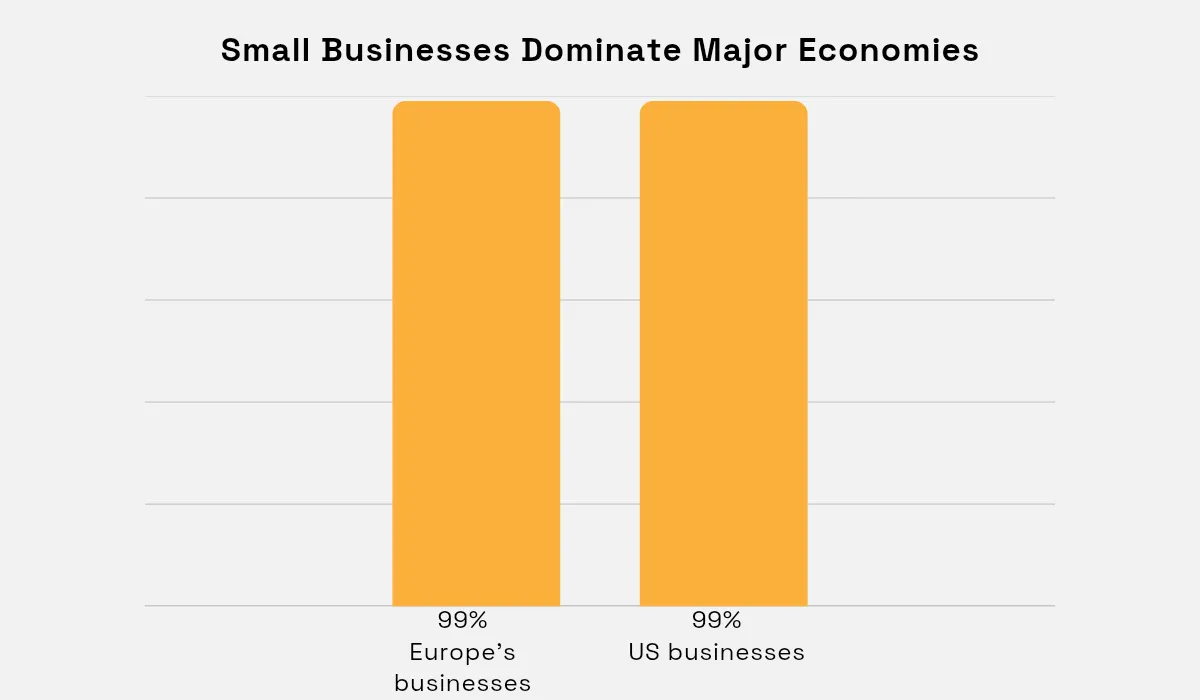
But when you look at who actually makes up the business economy, you find that micro and small enterprises make up 99% of Europe's business market and 99% of the US market.
For many small business owners, formal registration also brings additional tax obligations, compliance requirements, and administrative work.
Weighing that against the benefits, the calculation doesn't tip in favor of registering at all, especially in lower- and middle-income economies, where informal firms can account for the majority of employment.
And even when they do get registered, the registry rarely answers the question a compliance team actually needs answered.
Some registries confirm that a company exists, its legal form, and who's listed as a representative, but have nothing to say on who owns it.
Others are split across dozens of regional or state-level systems with no single, centralized source to query, so confirming one entity means moving through several different registries with different rules.
And in many jurisdictions, none of these records update in real time. What you're checking against is often weeks or months out of date the moment you look at it.
Different jurisdictions produce these problems in different ways, but the outcome is the same everywhere.
What Digital Footprint Verification Adds to the Process
Knowing a business exists is where a standard registry search ends.
It doesn't know if there's anyone behind it, running it, selling anything, or serving a single customer.
For a well-established company, that's rarely a problem; there's enough other records to fill in the picture.
For a micro-business with a thin or missing registry footprint, it's the whole problem.
And it's why these digital footprint verifications have become a standard complement of modern KYB:
Confirming Real-World Business Activity
If a thin registry doesn't tell you if a business is operating or not, their digital presence will.
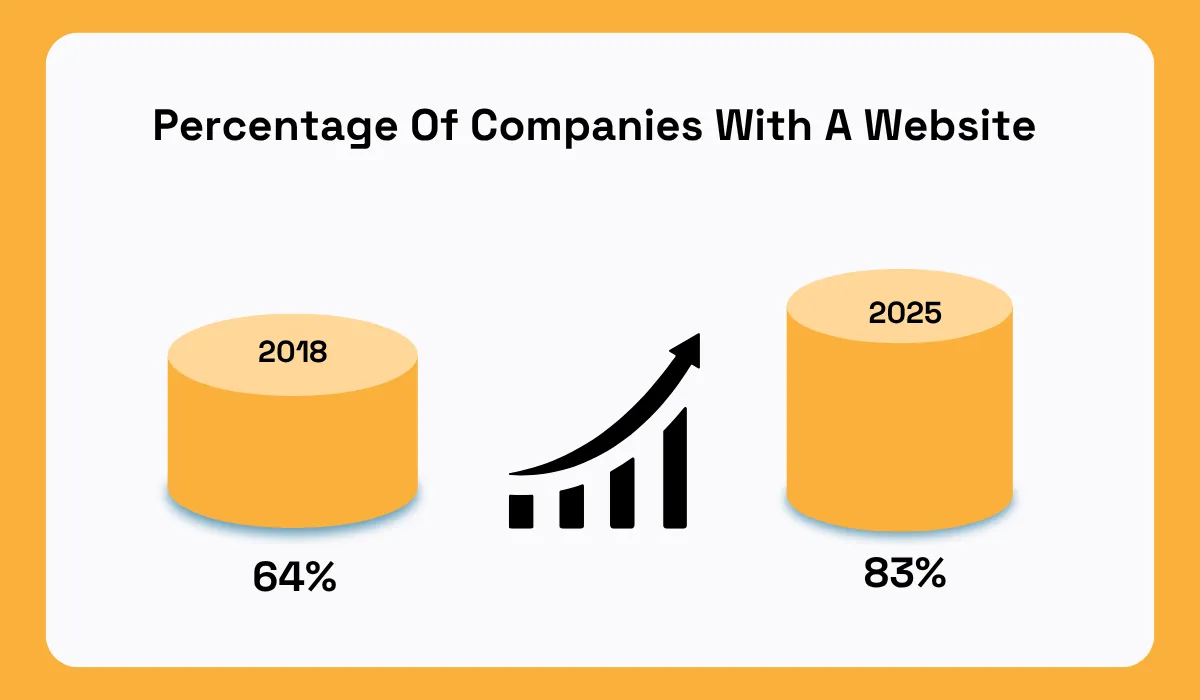
According to research by Clutch, 83% of small businesses have a website as of 2025, up from 64% in 2018.
And a website isn't all they have.
Many also have a handful of reviews on various social media platforms to immediately show you if they're active or not.
A maintained social media presence is harder to fake than a single document, since it requires ongoing activity.
For a very small or solo business, this is the clearest evidence available that it's real.
Middesk's work with Affiniti, a financial operating system built for small businesses, shows what this looks like in practice.
Affiniti struggled to onboard businesses that legacy verification tools couldn't find, largely because those businesses had a thin footprint in traditional registries.
Once digital footprint verification was built into onboarding, Affiniti cut roughly 1,250 hours of manual review a year while onboarding zero flagged bad actors.
This fully explains how important the digital footprint is in business verification.
Matching Fragmented Business Names
A legal name is rarely the only name a micro-business uses.
Customers may know it by its storefront sign, social media handle, or website.
While payment processors, banks, and government registries each record it differently.
All of those variations can look like separate businesses when they're actually the same one.
This problem is especially common among micro-businesses and sole proprietors.
Many operate under trade names or informal business names without maintaining a consistent paper trail linking them back to a single legal entity.
Even where "doing business as" (DBA) registrations exist, they don't always solve the problem.
Depending on the jurisdiction, a DBA may be registered at the state, county, or municipal level, each with different filing requirements and renewal schedules.
If a registration expires, the business could continue operating under the same public-facing name, even though the official record no longer connects the two.
An IT services provider operating under several different names across public records can appear as:
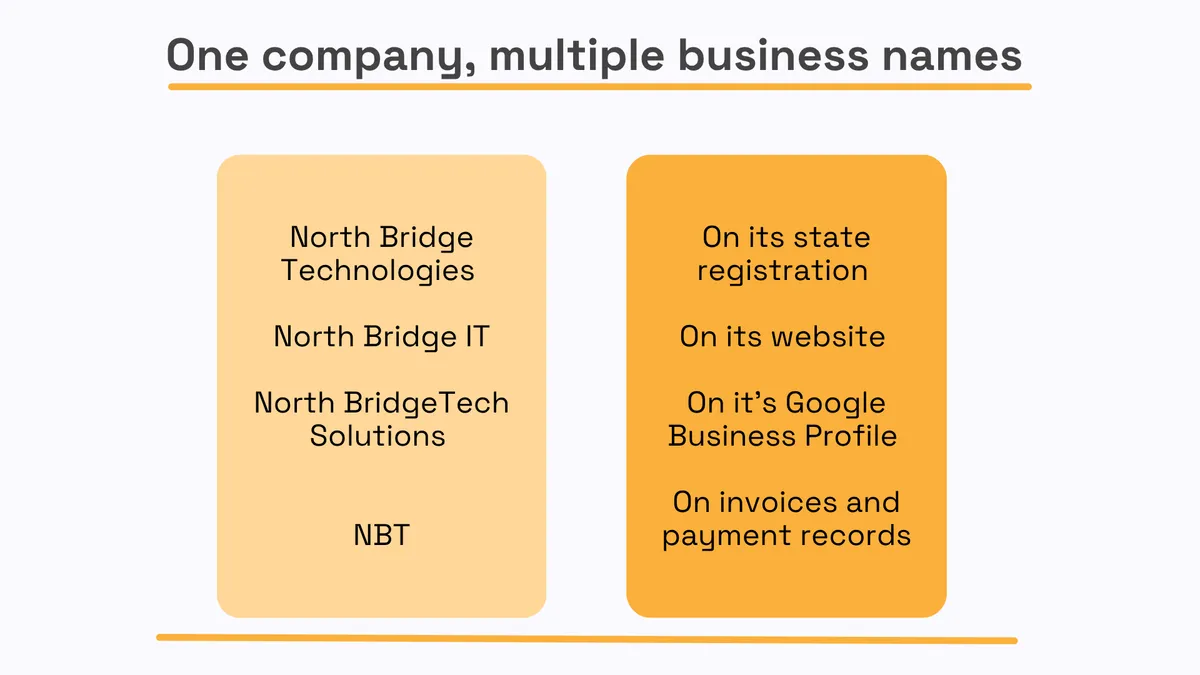
Source: Veridion
Without additional context, each variation appears to represent a different company.
Digital footprint verification helps connect these records by looking beyond the business name.
It compares other identifying information, such as the business address, phone number, website, company description, email domains, etc
When several of these consistently point to the same organization, it's easier to connect fragmented identities into one verified business profile.
Flagging Signals Registries Miss
A registry check and a digital footprint check answer two different questions.
One confirms a business is legally real.
The other checks if it's operating the way it claimed.
Registries confirming legal existence alone don't protect organizations, especially from cases of fraud or emerging risk.
Digital footprint verification fills that gap by examining publicly available evidence of how a business operates.
It compares signals such as websites, business directories, customer reviews, media coverage, contact information, and online activity to determine if they consistently support the same business profile.
A business with a:
- Maintained website
- Clear online presence
- Active customer engagement
- Consistent contact information across directories
presents a very different risk profile from one with outdated contact details or little evidence of ongoing operations.
When those signals reinforce one another, they increase confidence that the business is genuine. When they conflict, they provide a reason for closer investigation.
Wirecard is a perfect example of why looking beyond official records matters.
For years, the company remained a regulated, publicly listed business with valid corporate registrations.
Yet investigations by journalists uncovered inconsistencies that official filings did not reveal.
By examining publicly available information, questioning reported business relationships, and comparing the company's public claims with evidence from external sources, journalists exposed warning signs that eventually led to the discovery of a €1.9 billion accounting fraud.
Wirecard's registry filings confirmed the company existed, but they said nothing about whether its reported business activity was real or not.
Digital footprint complements registries by adding operational context they (registering) cannot provide.
When used together, registry records establish legal identity while digital footprint verification validates operational credibility, giving you stronger evidence when verifying businesses whose official records alone provide only part of the picture.
Making KYB Work at Scale
Registry records and digital footprint data each answer different questions about a business.
Neither can be used independently; each leaves gaps that can affect verification, particularly when dealing with micro-businesses that have limited official records or fragmented online identities.
The most effective KYB programs combine both, then continuously re-evaluate them as new information becomes available.
This layered approach gives you a more complete view of the businesses they verify while reducing the risk of making decisions based on incomplete or outdated information.
Combining Registry and Footprint Data
A major challenge in modern KYB is determining whether information from different sources describes the same business.
Official registries aren't immune to this problem either. Companies House, the UK's own registrar, removed false, misleading, and inaccurate information affecting 106,300 companies between April 2024 and March 2025 alone
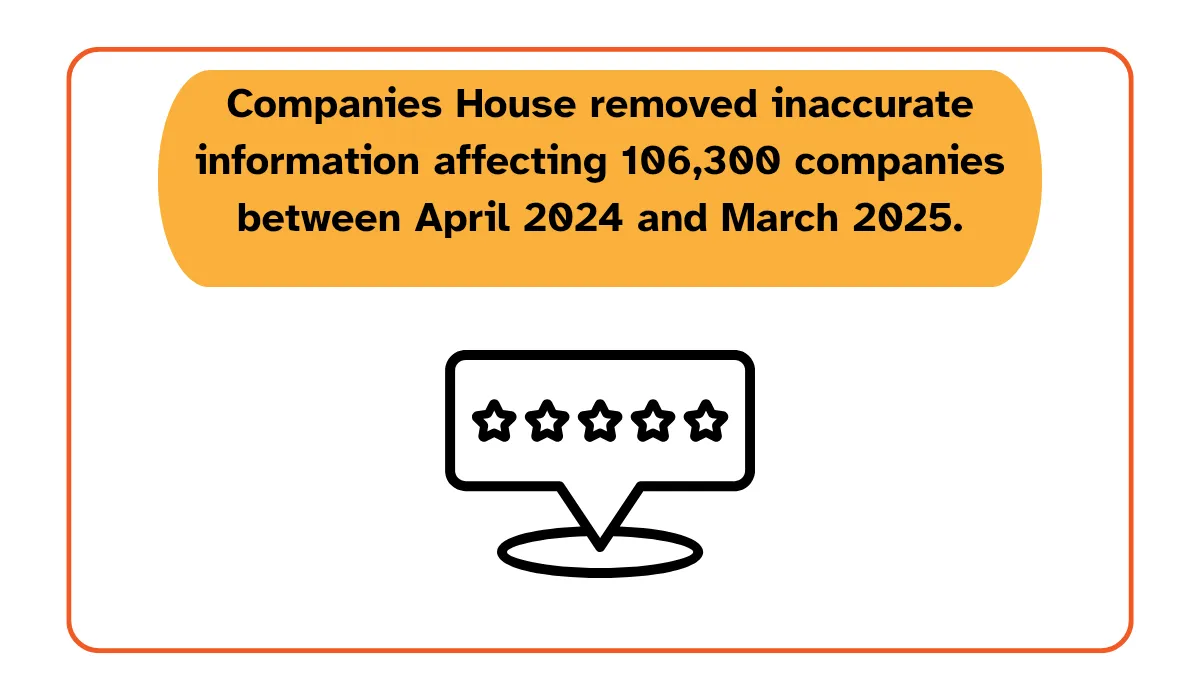
Illustration: Veridion / Data: Company House
A company can be listed as "Active" in a KYB filing, while remaining dormant and carrying out no trading activity.
In other words, the registry confirms the company's legal status, but it doesn't necessarily indicate whether the business is actively operating.
Rather than accepting a single source at face value, combine them with footprint data and increasingly compare official records with publicly available supporting evidence such as:
- Functioning website
- Customer engagement
- Recent directory updates
- Consistent contact information
to identify inconsistencies.
That evidence either reinforces the information found in the registry or provides a reason to investigate before approving the business.
The same principle applies to newly established micro-businesses with only a thin registry history.
Although official records may be limited, consistent information across the company's website, business directories, and public contact details provides additional evidence that the business is genuinely operating while its registry history continues to develop.
Monitoring Continuously After Onboarding
Completing KYB during onboarding doesn't mean the information you verified will still be accurate months later.
Businesses continue to change long after they have been verified.
Over time, ownership can change, licenses can expire, and sanctions exposure can emerge.
When verification happens only once, those changes remain unnoticed for a long time.
This is why perpetual KYB has become an increasingly common approach to business verification.
Perpetual KYB continuously monitors businesses throughout the entire relationship, helping compliance teams identify material changes as they occur.
Depending on your organization's risk framework, continuous monitoring may track changes in:
- Beneficial ownership
- Sanctions or politically exposed person (PEP) status
- Business licenses
- Adverse media
- Dissolution records
or other publicly available signals that could alter a company's risk profile.
By tracking these events as they happen, organizations can reassess risk using current information rather than relying on data collected months or even years earlier.
Regulators are increasingly taking the same view.
The European Union's Anti-Money Laundering Regulation (AMLR), adopted in 2024, requires obligated entities to maintain up-to-date beneficial ownership information and perform ongoing monitoring throughout the business relationship rather than limiting verification to onboarding.
The expectation is clear: business verification should reflect a company's current status, not just the information available when the relationship began.
Continuous monitoring becomes even more important when verifying micro-businesses.
Unlike larger corporations, micro-businesses often leave a much smaller public trail when meaningful changes occur.
A change in ownership, operating status, trading activity, or business identity may not immediately appear in official registries, and in some cases only become visible through changes in publicly available information.
If verification isn't revisited until the next periodic review, organizations risk making decisions based on an outdated view of the business.
Continuous monitoring allows compliance teams to reassess businesses as meaningful changes occur, helping maintain a more accurate view of risk throughout the relationship.
Scaling Verification Across Jurisdictions
Verifying a micro-business becomes even more difficult when it operates across borders.
Every country maintains company information differently.
Some countries, such as the United Kingdom and Singapore, maintain centralized business registries that provide relatively consistent access to company information.
Others, including the United States and Canada, rely on state or provincial registries, requiring organizations to search multiple authorities to verify businesses operating across different jurisdictions.
These differences create additional complexity for organizations verifying businesses internationally.
According to the World Bank's Business Ready (B-READY) 2024 report, incorporating a business with foreign ownership takes an average of 7.47 days longer than incorporating one with domestic ownership across the economies it assessed.
The regulatory and administrative requirements become more complex once business verification crosses national borders.
And, it extends beyond incorporation.
Every jurisdiction has its own rules governing company registration, ownership disclosure, and data availability.
A verification process that works well in one country could provide only limited information in another, making it difficult to apply a consistent KYB standard across global operations.
The need for a consistent way to identify businesses across jurisdictions is not new.
Following the 2008 financial crisis, regulators introduced the Legal Entity Identifier (LEI) as a global standard to help identify legal entities consistently across jurisdictions.
While the LEI has significantly improved cross-border identification for many regulated organizations, adoption remains concentrated among larger entities, leaving many smaller and micro-businesses outside its coverage.
This is why many organizations complement official registries with a continuously updated business intelligence layer that applies the same verification approach regardless of where a business operates.
Instead of adapting verification processes to hundreds of different registry structures, compliance teams can work from a standardized view of publicly available company information while still using official registries to confirm legal status where appropriate.
Veridion is one platform built around this approach.
Its company intelligence platform continuously collects, validates, and refreshes publicly available business information across the entire business world.
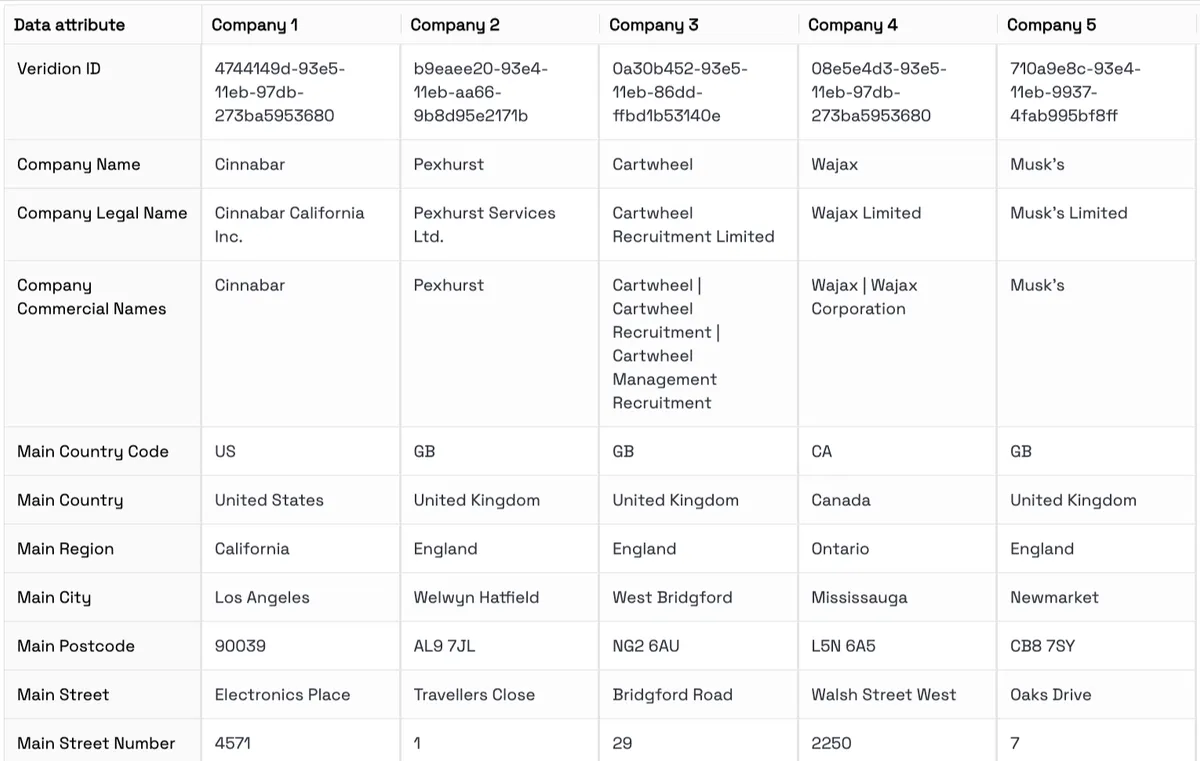
Source: Veridion
This gives compliance teams a more consistent view of businesses across jurisdictions while complementing official registries where they are incomplete or slow to update, without requiring changes to existing KYB workflows.
Conclusion
Official registries remain the cornerstone of Know Your Business (KYB) verification, but they were never designed to answer every question, particularly when verifying micro-businesses with limited or fragmented records.
As business ecosystems become more diverse and interconnected, effective KYB will increasingly depend on bringing together multiple sources of trusted business intelligence rather than relying on any single record alone.
Organizations that combine registry data with digital footprint verification and continuous monitoring will be better equipped to verify businesses accurately, manage evolving risks, and make more confident compliance decisions.
Articles
Discuss how these trends affect your organization.
Our analysts are available for a short call. Bring a specific question and we will ground it in the data.
Insights
Keep reading
More analysis, research, and outcomes grounded in live company intelligence.
What is Third Party Risk Management (TPRM)
How to protect your business from vendor-related risks? This guide on third party risk management will walk you through the essentials.
9 Essential Sources of Market Intelligence
Want to boost your market knowledge? These 9 market intelligence sources will show you where to look and how to apply the insights.
5 Trends Shaping the Future of Market Intelligence
Want to future-proof your business strategy? Explore the top trends defining the future of market intelligence.