Insights / Articles
Beyond the Address: How to Classify HQ vs. Manufacturing Facilities Globally
Confused by commercial location classification? Understand the difference between HQ and manufacturing facilities globally.

- Most B2B data records a company, not where it actually operates.
- Facility types matter as much as location.
- Classifying and tracking locations at scale requires weekly data refreshes.
Data quality issues cost companies an estimated 31% of their revenue.
That’s a staggering statistic that you shouldn’t discount.
While an address tells you where a company is located, it won’t always reveal where it conducts its operations, and that’s usually the information you’re after.
If struggling to find concrete information on manufacturers sounds like a common nuisance to you, you should probably keep reading.
Today, we break down the reasons why this occurs, and what you can do about it.
Why an Address Alone Doesn’t Tell You Much
Knowing where a company has a presence is only half the job.
What actually goes on at that address matters just as much. Most data stops well short of answering that, leaving you exposed as you try to assemble the puzzle yourself.
Say you’re assessing risk and gathering information on supplier locations. An address alone can’t answer any burning questions regarding operations, like whether a location is a plant running three shifts or a regional sales office with five people.
The same goes for other scenarios, like scoping out a market for expansion.
When you can’t come up with concrete answers to these very real questions, you have a data problem on your hands.
Let’s look into why this happens to better understand it.
Corporate Identity Isn’t the Same as Operating Reality
Traditional B2B data enrichment is good at one thing. Telling you what a company is, on paper.
Headquarters, maybe a member or two of their board of execs, their revenue band, and industry code. Not much to go on.
Usually, the sources you consult can’t tell you where the company operates in reality, and that’s when the gaps start to show.
A firmographic profile can be flawless and still miss all the details about plant floors, regional branches, shipping hubs, and all the other elements that make up their internal supply chain
Why is that?
Usually, corporate data flows straight from the parent brand, so every location inherits the same basic information. This is a glaring issue with franchises, where a location can operate hundreds or thousands of miles away from its registered HQ address.
The point is, anything that happens locally is almost entirely disconnected from what you can find on the company. Think a simple 15-minute search will yield who runs the local branch, the territory they cover, or, even better, whether that location is even still trading?
The reality is: most likely, no.
Dealer networks hit the same wall, just from a different angle.
Dealers operate under the manufacturer’s name but run as independent businesses. Headquarters-level data has no way of knowing that – and since dealers are not required to provide it, why would they go out of their way to publish that information in data registries?
That’s the essence of the problem, but it goes much further. Think about what happens when you’re analyzing the profitability of doing business with a company that has fifty facilities across a dozen countries.
McKinsey’s own 2025 supply chain survey found that most companies only really understand their risk exposure one layer deep – the suppliers they deal with directly.
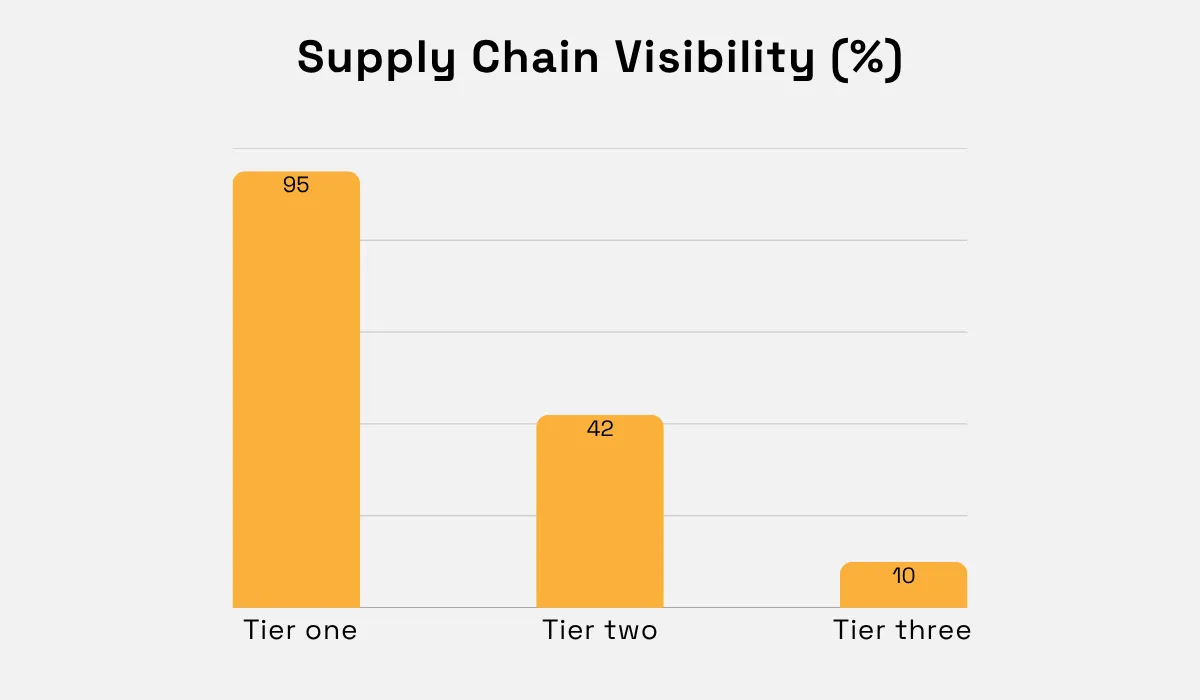
If that’s true even for vendors a company has direct contracts with, the picture gets far thinner once you’re past headquarters and looking at a company’s own internal footprint.
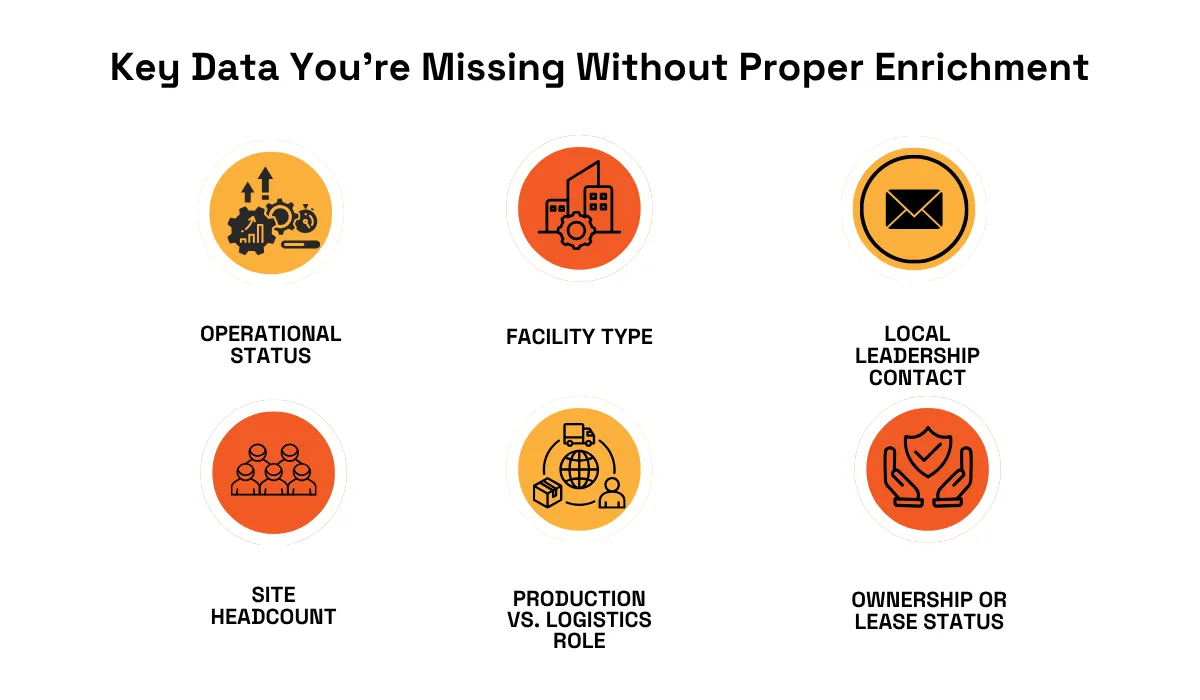
Here’s just a handful of data points you’re likely to miss on account of this visibility problem:
Source: Veridion
None of it shows up if headquarters is the only location anyone thought to record.
Facility Types Look Similar from the Outside
Say you’ve got the address of a regional facility. Now what is it, exactly?
From the street, a lot of industrial buildings look interchangeable. Big footprint, loading docks, a stretch of concrete out front for trucks.
This generic kind of industrial zoning could mean almost anything happens inside.
But a manufacturing plant, a warehouse, and a distribution center are built for completely different jobs. The real estate industry itself draws a sharper line between them than the term “industrial building” suggests.
“Industrial space” is generally used for manufacturing, production, fabrication, and assembly.
A distribution center – which stores, packs, and ships goods – falls under the broader category of warehouse space.
So: all warehouses count as industrial space. Not all industrial space is a warehouse.
Warehouses | Mostly empty space with high ceilings and a handful of loading doors |
|---|---|
Distribution centers | Similar shell, different purpose. Less about storage, more about moving product through as fast as possible |
Manufacturing buildings | They may look inconspicuous from the outside, but underneath, they carry serious infrastructure, like heavy electrical capacity, specialized ventilation, or even gas or chemical lines running through the walls |
Cold storage | Sub-zero temperatures crack ordinary concrete slabs over time, so they need reinforced foundations |
Data centers | Often, floor space won’t be dedicated to anything physical at all. Just server rows, backup power, and two separate fiber lines in case one goes down |
With just an address, you essentially have to resort to pure guesswork to figure out what actually goes on inside, as well as any relevant specifics.
This isn’t just a semantic distinction, either. Get it wrong, and it can carry a real price tag.
For example, according to a guide published on IB Interview Questions, facilities and capital expenditures are a standard line item in M&A due diligence for exactly this reason. Buyers need to know whether a target’s physical footprint is what it’s claimed to be before they close.
When your intel is incorrect, deferred capital needs that should’ve been priced into the deal can show up afterward instead. In industrial businesses specifically, that kind of gap can represent $5–20 million or more in costs nobody accounted for going in.
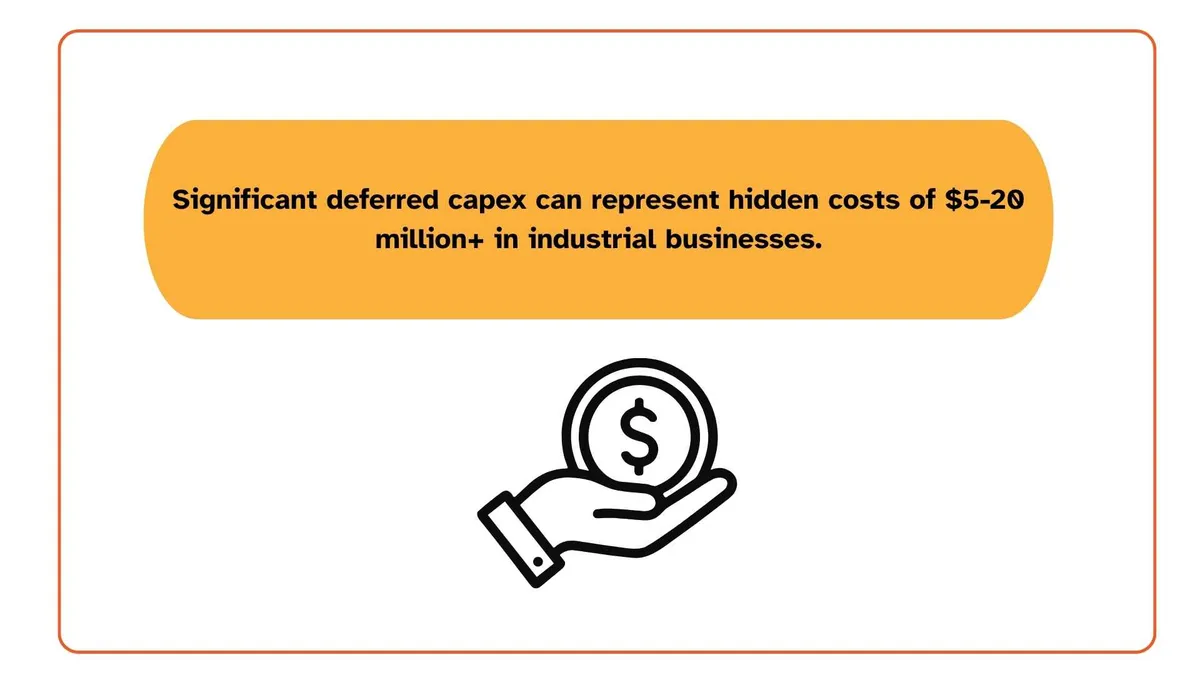
Illustration: Veridion / Data: IB Interview Questions
Mix-ups that end with you mistaking the type of building you’re investigating lead to conclusions that are likely wrong. At some point, that will inevitably lead to mounting costs.
Companies Rarely Publish This Themselves
Here’s the annoying part. Most companies don’t make any of what you need easy to find.
The main office shows up everywhere, like their social media or their own “Contact Us” page. They simply don’t talk about their regional offices or manufacturing sites.
Research shows that data quality gaps like this one cost companies an estimated 31% of their revenue, which is a brutal number for something that often comes down to nobody publishing an address on the right page.
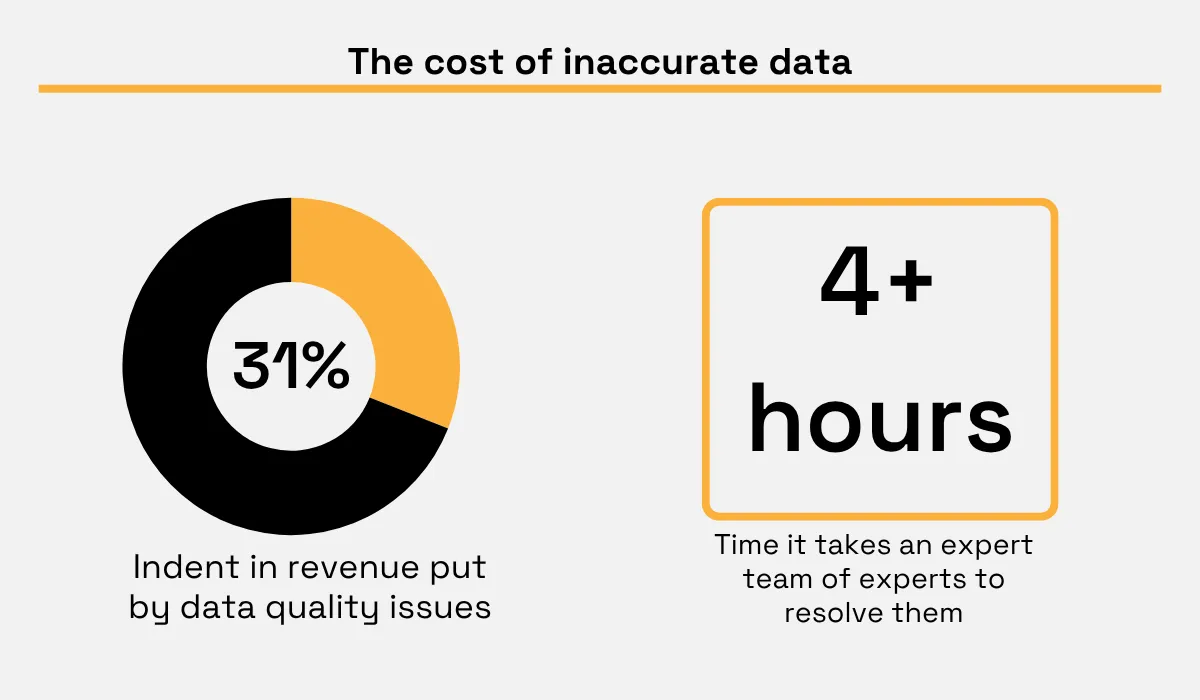
Illustration: Veridion / Data: Geopostcode
For a long time, finding and attributing the hard-to-uncover information meant manual work.
Someone had to actually go combing through obscure subpages, cross-referencing job postings, or even just calling the company and asking.
That doesn’t scale past a handful of companies. Which is exactly why most datasets gave up trying, and just kept the one address everybody already had.
How Facility Type Gets Determined at Scale
While a person with a browser and some patience can roll up their sleeves and painstakingly figure out that a given address is a manufacturing plant and not a warehouse, subjecting a team member to that kind of task for one company will work. For thousands, not so much.
Doing this accurately at scale means pulling the right signals from wherever a company actually talks about its own locations, giving each facility an identity that survives every rebrand and reformatted address, and refreshing all of it often.
Here’s roughly what that should look like.
Extracting Signals From Company Web Presence
Start with the obvious move: find where a company actually talks about its locations. That puts us back at their “About us” page (or similar).
Pulling the addresses off that page is the easy part. The harder part is figuring out what each address actually is.
This is where context does the work. A page mentioning “production,” “manufacturing,” or “assembly line” is probably describing a plant. One that talks about “fulfillment” or "shipping" is probably a distribution point. R&D language points somewhere else entirely.
But don’t take any of that as gospel. None of this is foolproof; there is no legal basis that companies have to abide by, meaning they simply word things inconsistently, translate badly, or just don’t bother explaining what a location does at all.
Whatever you can glean from the surrounding language can at least point you in the right direction.
But that’s not where your problems end. You still need to figure out which address is the actual headquarters.
Sounds simple until you hit a company that was founded in one country, moved its operations to another, and has a holding company registered somewhere else entirely.
LinkedIn might say one thing.
The “contact us” page might say another.
So how do you get over this? Educated guesses and context clues.
The strongest signal is usually the one that shows up first and most consistently: on the contact page, in the privacy policy, across the site as a whole. Not a perfect method, but a workable one.
However much value you can extract by doing this will pay dividends. That’s because later steps downstream may rely on stringent input quality.
Say you’re devising your sales attack plan and are dealing with territory assignment. Prospects get routed to whichever regional team maps to where its HQ sits. If a dubious HQ address is your only lead, you can easily end up drawing a misaligned map.
According to the Sales Management Association, 58% of companies believe their sales territory design is ineffective, with accurate data inputs cited as one of three key markers that predict this.
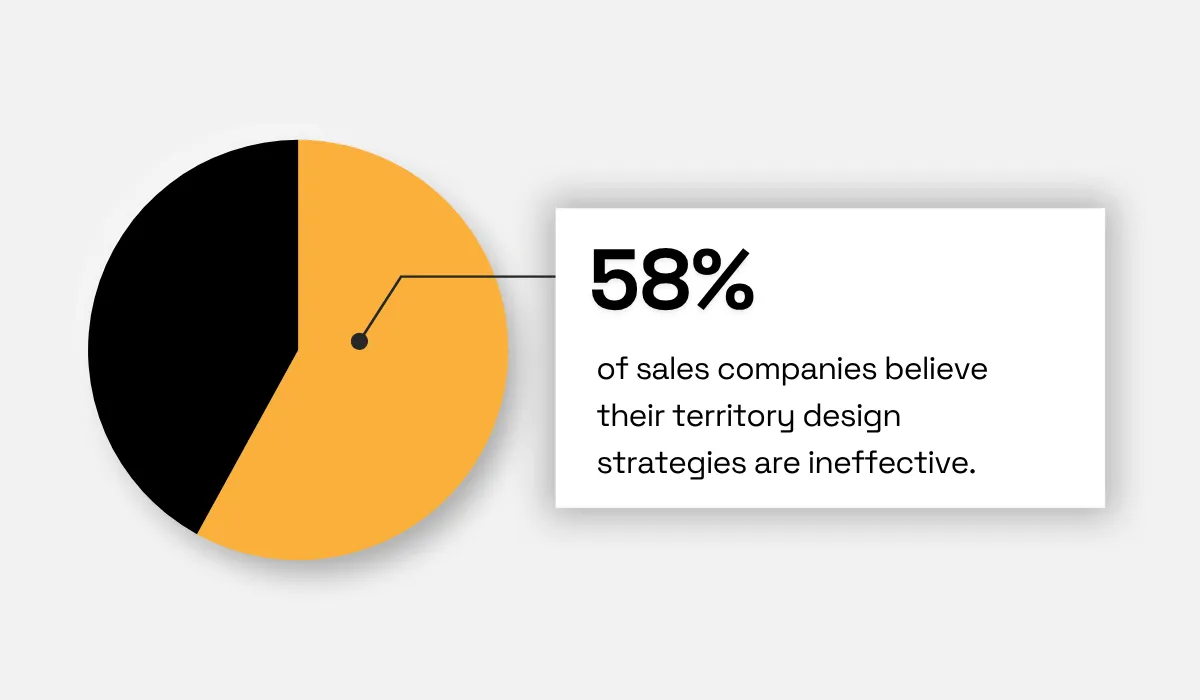
Illustration: Veridion / Data: Sales Management Association
That outcome, at least in part, is the result of bad location data feeding what on paper is a perfectly fine process.
Assigning a Persistent, Unique ID Per Location
Say you’ve correctly classified every facility. Great.
Now keep track of them over time.
Not so easy, is it?
Keeping score of all the changing addresses, acquisitions, and inventory movements across warehouse relocations won’t be easy if your only identifier for your target’s location remains a static address.
The level of depth your methods of identification explore can vary:
- Company-level identifiers tell you which business you’re looking at and not much beyond it.
- Location-level identifiers tell you about the physical site.
Both should be completely separate from one another.
Give every physical location its own persistent ID, separate from whatever ID the parent company has.
Think of it like a golden record, except for a location instead of a customer. One authoritative version, cross-referenced everywhere it shows up, regardless of how many times the underlying address gets reformatted.
Location master data management (or location MDM) exists to solve precisely this, treating each site as its own record, with its own ID, so that everything downstream of it references the same location.
IBM, in its own explanation of master data management, names location data explicitly as one of the core categories this discipline exists to govern (alongside customer and product data), precisely because fragmentation in any one of those categories creates the same duplication problem.
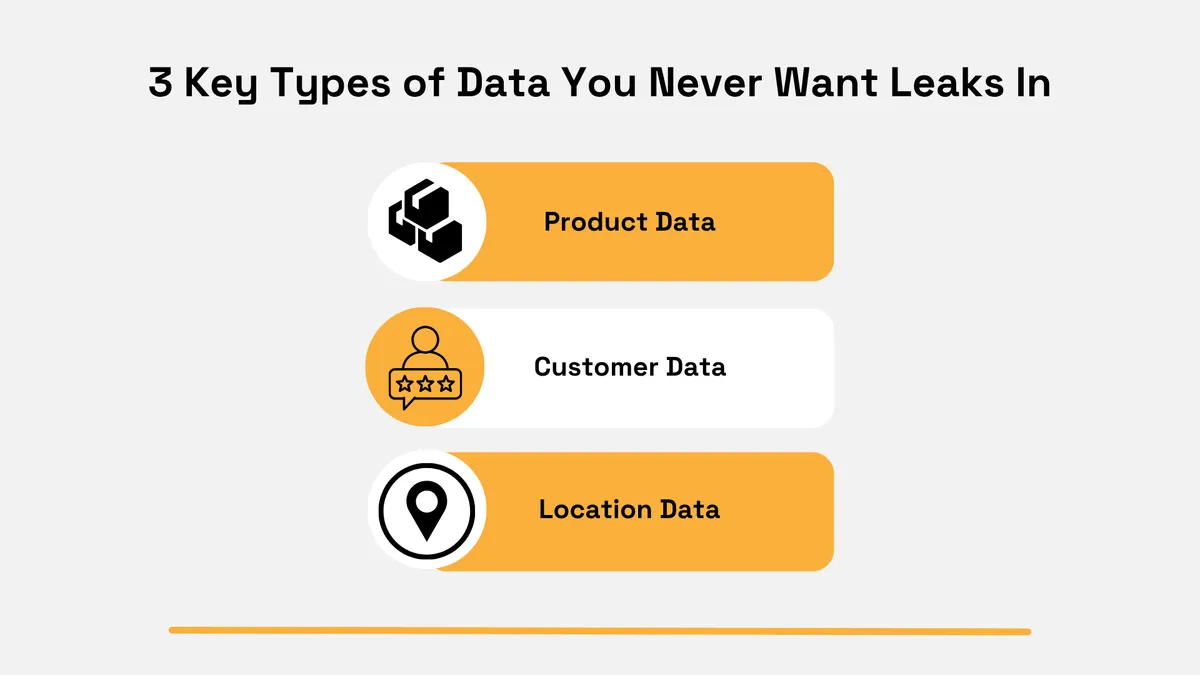
And industry experts agree. Aron Spohr, CTO of the delivery company Flaschenpost, put it plainly:
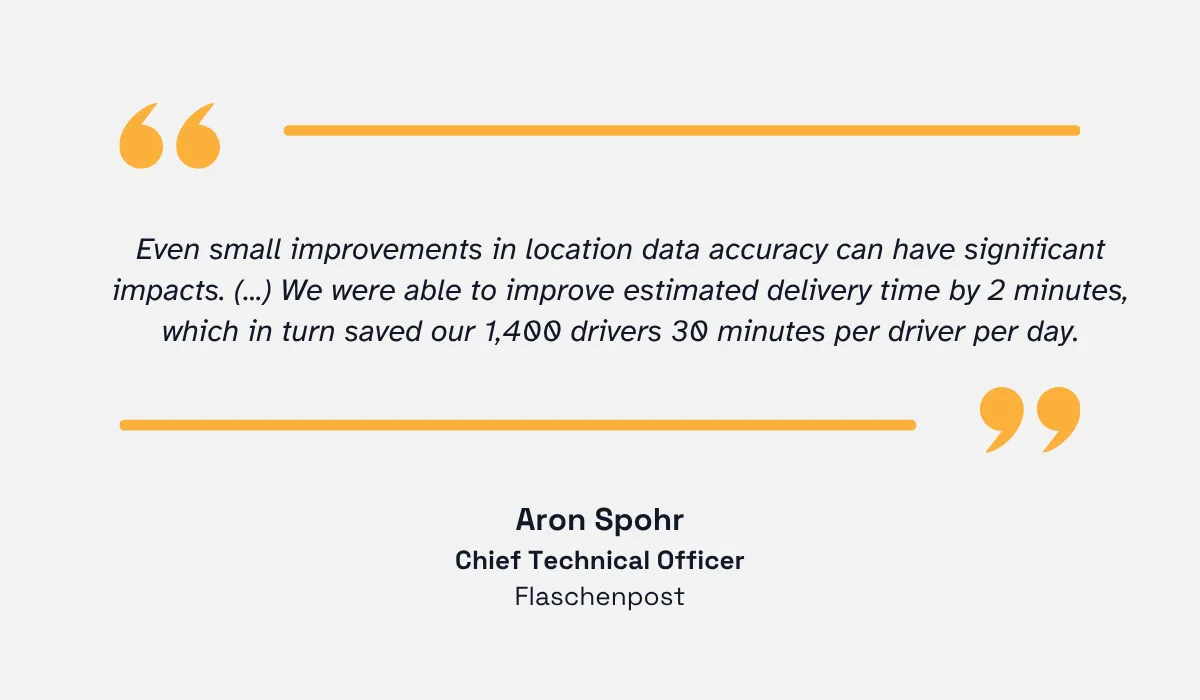
Even though Spohr’s use case differs, the idea’s the same: basing your methodology on consistent mapping makes your life a lot easier.
Picture an insurer whose underwriting team and claims team each geocode locations differently.
A property gets flagged during underwriting, then a claim comes in against what looks like a different, unrelated address. Except it’s not different at all, just the same building, recorded two different ways.
That’s a benefit you can only reap if you implement a proactive approach to identifying and plugging leaky data.
Mapping Global Operational Footprints with Structured Data
Repeating the above process continuously across every location will net you an actual picture of where a company operates, not just where its logo happens to be registered.
That’s the difference between a one-time mapping exercise and something you can actually build decisions on. Facilities come and go, warehouses become logistics hubs, and all that happens without a single update to a page you’ve kept an eye on.
To reiterate, irregular snapshots that don’t reflect real-world conditions can’t and shouldn’t be what you predicate your market intelligence on.
Veridion addresses this knowledge gap comprehensively by mapping a company’s headquarters and branch-level geographies down to the city level.
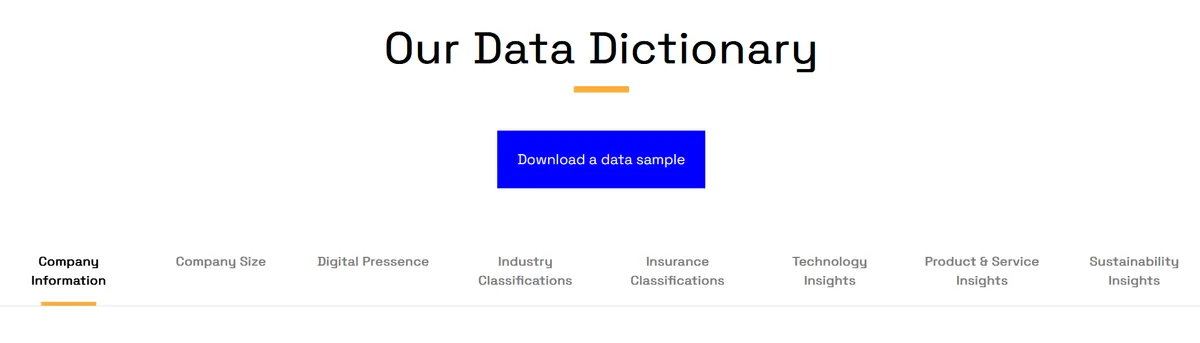
Source: Veridion
We also classify what type of location each one actually is – manufacturing site, warehouse, regional office – as part of a structured company profile.
Crucially, that profile gets refreshed weekly. Nobody has to scrape the Internet manually for market analysis or risk assessment, and the data never goes stale.
Conclusion
An address is a starting point, not your definitive answer.
Getting past information gaps requires more than a simple lookup. What you need is a process, one that identifies what each location actually does, keeps track of it as things change, and links it back to a coherent picture of how a company operates in the real world.
Once that process is in place, the gap between where a company is registered and where it operates stops being a blind spot.
Everything downstream, like your risk assessments, market maps, and due diligence, will get sharper as a result.
Articles
Discuss how these trends affect your organization.
Our analysts are available for a short call. Bring a specific question and we will ground it in the data.
Insights
Keep reading
More analysis, research, and outcomes grounded in live company intelligence.
The Full Guide to Supplier Risk Assessment
In this extensive guide, we're diving into the purpose, importance, and challenges of conducting a supplier risk assessment.
How Veridion’s Intelligence Helps Reduce Vendor Concentration Risk
Discover how Veridion helps organizations reduce vendor concentration risk and strengthen sourcing resilience.
Supplier Location Intelligence: Why It Matters
Discover how supplier location intelligence can reduce risks, cut costs, and enhance procurement strategy. Learn why it matters.