Insights / Articles
How Commercial Underwriters Use Automated Entity Resolution to Verify SMBs Instantly
Tired of slow SMB verification? See how commercial underwriters leverage automated entity resolution for instant, accurate verification.

- A single small business can surface under a legal name, several DBAs, and a parent company.
- Name and ownership mismatches trigger denied claims, slow manual checks, and incomplete risk pictures.
- Automated entity resolution links every variation into one verified profile, delivered in real time.
One small business can show up in your system as five different companies. Same shop, five names, and only one of them points to the actual business.
Small firms rarely have one clean identity. A legal name, one or two trade names, and a parent company scatter it across your records. Picking the wrong version can mean you misprice the risk or lose a claim dispute.
Automated entity resolution clears that up. It links every name variation and maps out ownership, then returns one verified profile in seconds.
The mismatch starts earlier than most underwriters realize. It begins in the records themselves, long before any policy exists.
Why One SMB Can Look Like Five Different Companies
Three databases can show the same corner bakery in three different ways. Each version is accurate, and none of them alone tells the whole story.
One record has the legal entity from the incorporation papers. Another has the storefront name customers know. A third ties the shop to a parent company two states away.
The gap is normal for small firms, and it only widens over time. Every new brand, location, or filing adds one more version of the same company.
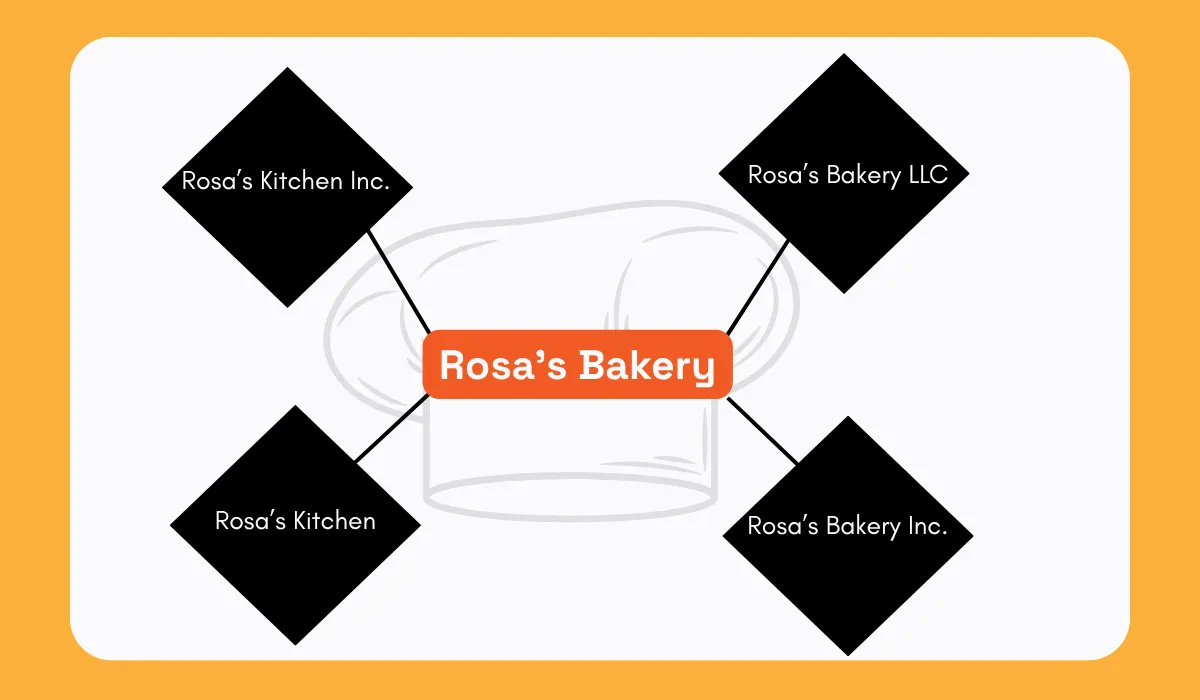
Most of the mismatch comes from a trade name. A company registers an alias and keeps its legal identity intact. The alias is the name it is doing business as (DBA).
Source: Veridion
One legal entity can run under several trade names at once. A parent company can sit above all of them, sharing an address or a founder. Add minor spelling and punctuation differences on top, and one bakery reads as five separate companies.
Public records do not agree with each other either. A state registry, a tax file, and a credit bureau each hold a different version. The underwriter has to decide which version is the real business.
Consider one bakery through an underwriter's eyes. The tax record calls it Rosa's Kitchen Inc, while the sign outside says Rosa's Bakery.
The lease names a third version, Rosa's Foods LLC. Add a parent company above that, plus one filing with a typo, and you've got five records for one shop.
Every one of those versions can carry its own data. One shows a lien, another comes back clean, and the third has nothing at all. You need to know which one is standing in front of you.
The confusion reaches underwriters the moment an application lands. The name on the submission may not match the name on a claim years later. Small mismatches that look harmless can decide whether the policy pays.
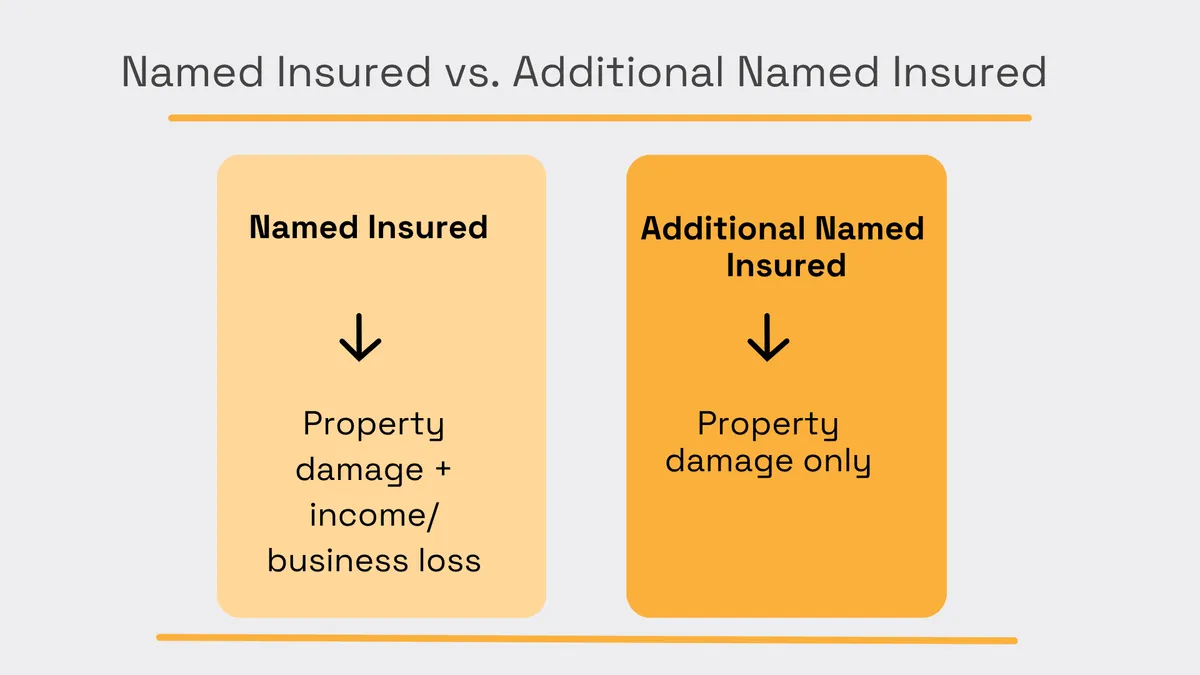
One particular 2025 federal appeal shows how expensive that distinction can be. BCC Partners hired a contractor to build an apartment complex in Missouri. The contractor's policy named the contractor as "Named Insured" and BCC only as "Additional Named Insured."
Source: Veridion
When a retaining wall failed during construction, the project stalled, and BCC lost rental income. The insurer, Travelers, paid for the property damage but denied the rental income claim. BCC later valued that claim at $1.4 million.
The case went to the 8th Circuit Court of Appeals in 2025. The court sided with Travelers, ruling that only the Named Insured was covered for that type of loss.
The court found that an Additional Named Insured had a claim on the building alone.
For an underwriter, the real lesson comes before the claim. The named insured sets the limits of what a policy will pay for. Getting that name right at binding decides which entity you end up covering.
One miss on that single field carries a real price tag.
What Fragmented Identity Costs Underwriters
Getting a company's identity wrong is more than a paperwork problem. It can decide whether a claim gets paid, how fast a quote goes out, and whether the risk is priced correctly.
Match the wrong company once, and every figure you calculate afterwards belongs to someone else. The three costs below all start with that one error.
Missed or Duplicate Coverage
When a policy has the wrong company name on it, a real claim can get denied. Say the paperwork lists the legal name while the business trades under a DBA. The insurer can refuse to pay.
The reverse happens just as often. A policy can list the trade name customers see and miss the legal entity behind it.
A Georgia restaurant group ran several Atlanta restaurants under the trade name Noodle. Its business owner's policy named Noodle, Inc. No such company existed.
The same group had already updated its workers’ compensation policy to show the real owner, Shou & Shou, Inc. The business owner's policy was never updated. When a customer was injured by spilled soup, the group denied the claim.
Shou & Shou settled for $1 million and assigned its rights under the policy. The Eleventh Circuit agreed in 2023 that the policy should be rewritten to name the real owner. The ruling came three years after the coverage suit was filed.
For an insurer, the lesson is direct. The policy has to name the real legal owner, or a valid claim can fall apart.
The exact wording on the declarations page decides who can collect a payout. "Additional named insured" carries no uniformly agreed meaning across the industry. Its scope depends on the policy in front of you rather than on the label.
Careful agents list every known business name on the policy upfront. More names on the page mean fewer aliases slip through and fewer gaps in cover. The method still fails on unknown aliases, like a hidden subsidiary or a forgotten DBA.
General liability works the same way. Anyone outside the declarations page must be added by endorsement, a written policy change. An operating company left off that list will find its claims uncovered.
Workers' compensation is stricter still. A workers' comp policy covers only the entity listed on it, and a trade name alone will not do. Each legal entity carries its own Federal Employer Identification Number.
Coverage only protects employees of the business named on the policy. It doesn't matter if payroll is mixed across companies or if two businesses share an address.
None of that extends coverage to a company that isn't listed by name. Getting that name exactly right is what separates a paid claim from a denied one.
Duplication is the reverse problem. The same firm lands on two separate policies under two spellings, and the account pays twice. Two insurers then argue over one claim, each certain the other holds the risk.
Catching these errors early means checking everything by hand.
Slower Manual Reconciliation
Without automated matching, verification turns into detective work.
Before assessing risk, an analyst cross-references names, addresses, and ownership across several sources. Those sources include state registries, tax records, watchlists, and open web pages.
Each source spells the business a little differently, so the analyst reconciles them by hand.
A missing "Inc." or "LLC" sends the trail in the wrong direction. So does an old address still sitting on file. Figuring out whether two records describe the same company can eat up hours.
A single applicant may need checks against secretary-of-state filings, credit files, and sanctions lists. Tracing ownership adds another layer, since parent companies and subsidiaries often operate under completely different names.
The work is slow, repetitive, and easy to get wrong.
Manual results also vary from desk to desk. One analyst links two records that another keeps apart. The same applicant can get two different answers on the same day.
Manual checks can also miss a name that has been deliberately altered to bury a past loss. On a busy day, that kind of small change slides by without comment.
McKinsey has measured the size of that drag. In large commercial lines, 30-to-40 percent of an underwriter's time goes to administrative tasks.
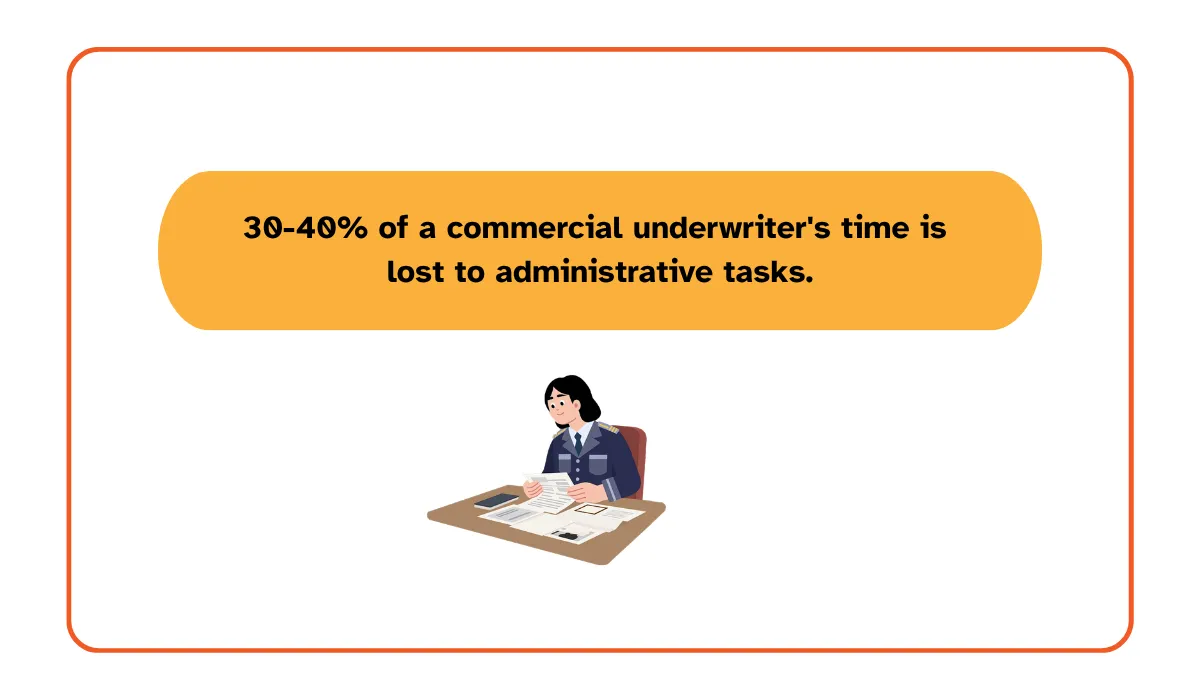
Those tasks include rekeying data and running checks that software could handle. The cost then comes back around, since verification runs again at renewal and again at premium audit.
Every hour spent untangling a messy company record is an hour the team could have billed to other work.
Slow verification also frustrates the applicant, who expects a quote in minutes. In competitive lines, a slow quote often loses the account.
Beyond slowing things down, scattered identity also hides the real risk.
Inconsistent Risk Pictures
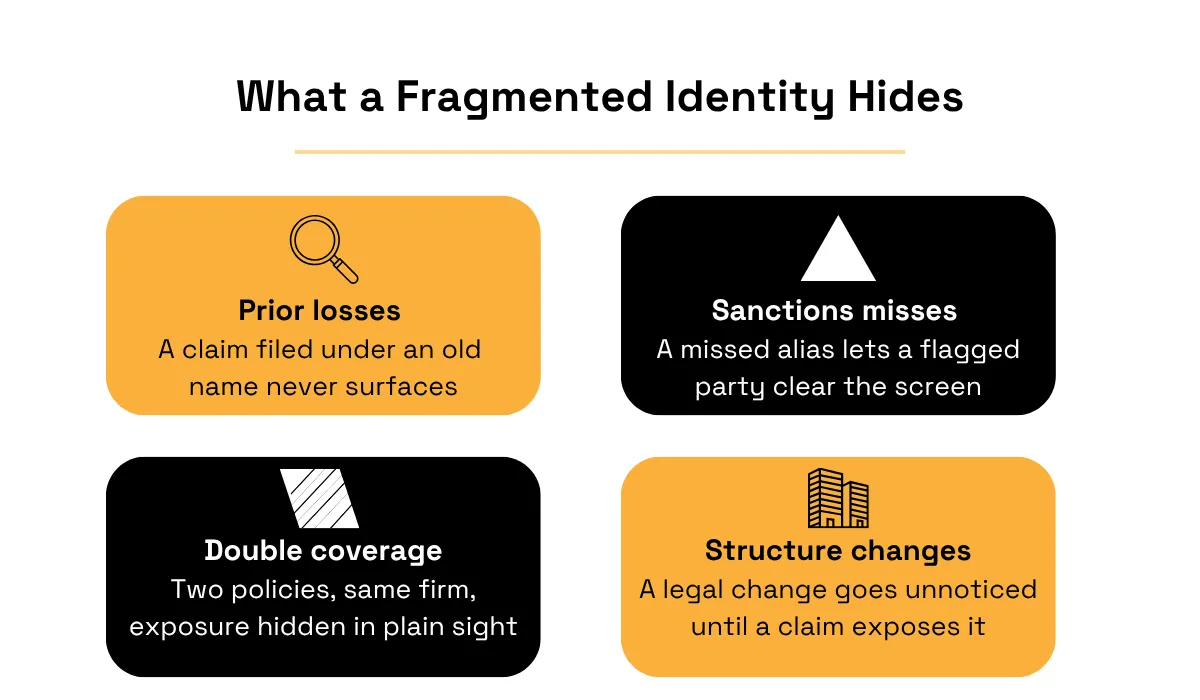
The damage here is less immediately obvious than a slow quote. When a firm's history sits under several names, claims and liens drop out of view.
A prior loss filed under an old entity name may never surface. Judgments, tax liens, and regulatory actions can hide under a former trade name. You inherit that history the moment you bind the policy.
One firm can hold policies across several lines of business at once. Property, liability, and workers' comp may each call it a different name. A single identity ties those views into one risk story.
Good underwriting depends on seeing the applicant in full; this is the whole point of solid underwriting data analytics. A partial picture leads to overcharging a good risk or underpricing a bad one.
Source: Veridion
The problem hits small businesses hardest. Large enterprises file standardized reports and carry stable identifiers, so their records line up. Public filings and credit files offer the same steady support for their history.
New small firms are even harder to pin down. A young company often has few official filings but a big online presence. Most information about it lives on the web, beyond the reach of traditional records.
Sanctions and watchlist screening depend on getting the entity right. A check only works against the exact name you give it. Miss an alias, and a flagged party clears the screen untouched.
The blind spots add up across a whole book of business. Two policies may cover the same firm under different names, hiding your true exposure. A clear identity lets you see that build-up before one event hits two policies at once.
Small firms make that build-up harder to spot. They often change legal structure, and the change gets overlooked until a claim exposes the gap.
The fix starts with getting the identity right from the first submission. A clean identity record gives underwriters the facts they need to price and cover the risk correctly.
How Automated Entity Resolution Fixes Fragmentation
Entity resolution does what a manual name search can't. It gathers every record that might describe a business and connects the ones that truly match.
Entity resolution software works from current records, not assumptions. It compares thousands of names at once and updates as new data arrives. The three capabilities below each do work that manual review struggles to finish.
A plain search hands you a long list and asks you to sift through it. Entity resolution does that sifting for you and links the records that truly match. You get one verified profile to build on, so your time goes to pricing the risk.
Matching Across Name Variations
Good models can tell that Rosa's Bakery, Rosa's Baking Co, and Rosa's Kitchen Inc. are the same business. Automated matching sees past abbreviations, punctuation, dropped suffixes, and typos. It even catches near-misses like "Olie's" and "Oliver's" that a tired reviewer would separate.
Some of those variations are predictable:
- Legal suffixes shift between Inc, LLC, and Corp across different forms.
- An ampersand stands in where another record spells out "and".
- The same address gets typed three different ways.
Raw text matching is not enough on its own. Strict rules miss real variants, and loose ones pull in unrelated firms that share a name. Two unrelated shops named Sunrise should not collapse into one record.
A false match carries its own price. A wrong link saddles you with a stranger’s claims history. The model guards against that by scoring each match for confidence, so weak links get a second look.
Manual matching also fails on volume. A single book holds thousands of applicants, each with its own tangle of names and aliases. A model checks them all at once, and it never gets tired.
The hard cases teach the model over time. Odd suffixes, foreign characters, and shared addresses all sharpen the rules. Each resolved edge case makes the next match cleaner.
Good resolution weighs more than the name alone. The system scores the match across several fields, such as address, registration number, and web footprint. It clears strong matches on its own and sends weak ones to an underwriter for review.
Matching the name is only half the picture. Ownership is the other half.
Mapping Subsidiary Structures
Businesses often sit inside larger corporate structures, well beyond what a single name can show. Underwriting needs the full hierarchy behind an applicant. A subsidiary can share risk with its parent and with its sister companies.
Ownership shapes how risk adds up across a group. Several small entities under one parent can pile up exposure you never priced for. The connection changes both the risk and the premium.
The hierarchy also guides limits and terms. A shop inside a risky group may need tighter conditions. A standalone firm with the same name may not.
Miss that link, and a "small shop" you insure may in fact belong to a large conglomerate. The real exposure then sits well above what the application showed. The premium never catches up.
Brand names add another twist to ownership. One legal entity can sell under many brands, each with its own web presence. Underwriting has to tie every brand back to the entity that carries the risk.
Mapping ownership is not the same as removing duplicates. A subsidiary is related to its parent, yet legally distinct. The model must connect the two without collapsing them into one.
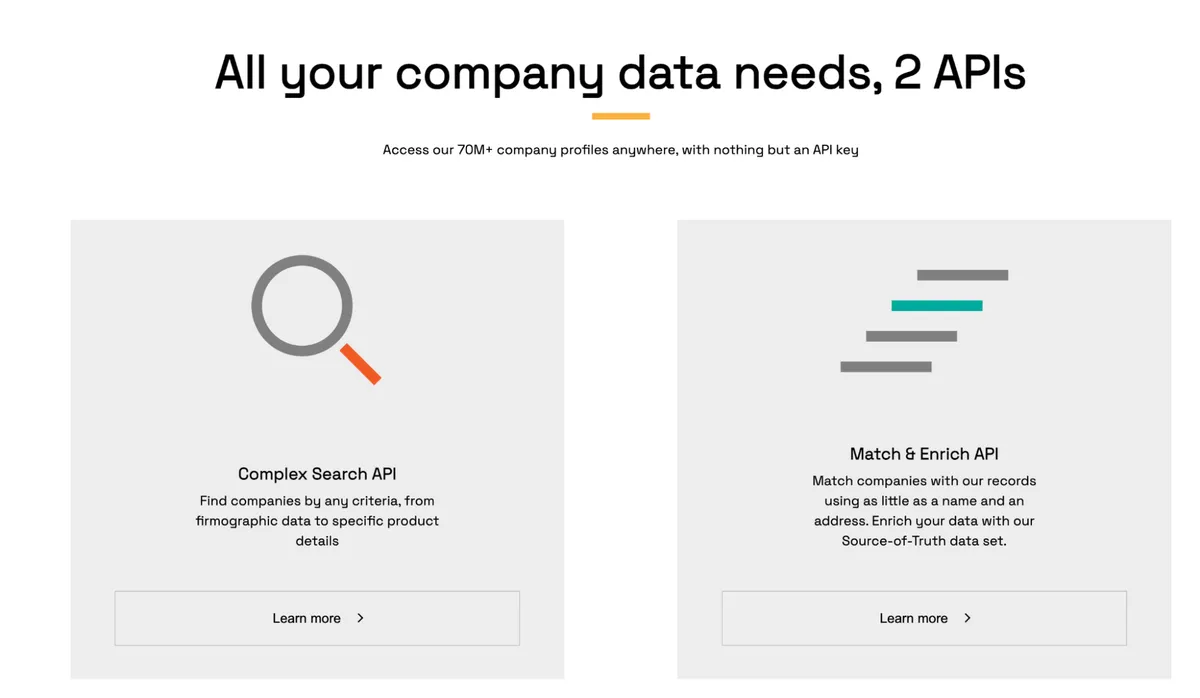
Veridion builds this layer directly. The Match & Enrich API checks subsidiaries and brand aliases against a constantly updated base of 186M operating companies.
Source: Veridion
It returns a clean corporate hierarchy for each one, with an ownership link back to the ultimate parent. Each field carries its own confidence score, so an underwriter can see exactly how firm the match is.
Matching and mapping both feed into one thing: a single verified profile.
Delivering One Verified Profile Instantly
The result is one verified profile, ready as soon as the application comes in. It pulls company details, locations, and activity into one place.
The record then feeds straight-through underwriting, where routine policies bind without manual review. Verified data pre-fills the submission, and automated rules check it against risk criteria. Clean cases move ahead on their own.
Straight-through underwriting only works if the data is trustworthy. A verified identity gives the system something solid to act on. Without it, every case lands back on a human.
An underwriter steps in only when the profile flags something unusual. The system checks each applicant against its ownership data, and an undisclosed parent shows up there. A signal like that, or a thin record, routes the case to a person.
Every underwriter then works from the same verified record. Decisions grow more consistent across the team. Two desks reach the same answer on the same firm.
The value does not stop once the policy is bound. Fresh data can flag a new location, a name change, or a new parent mid-term. You catch a shift in exposure while you can still act on it.
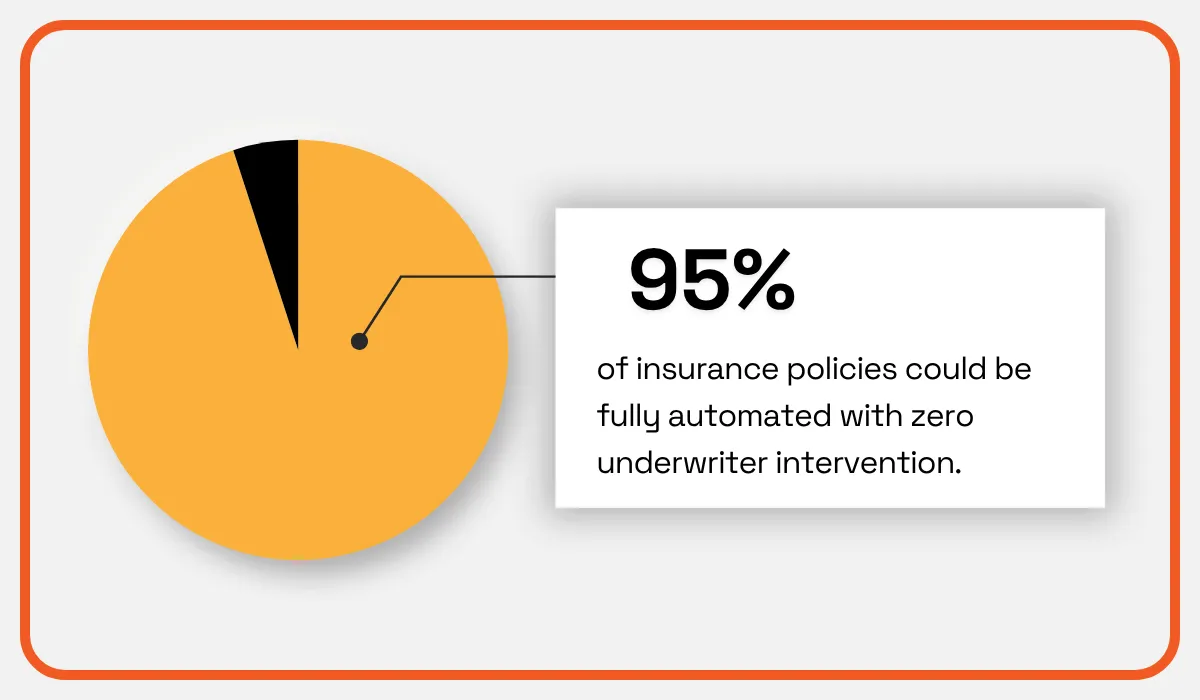
McKinsey estimates that up to 95 percent of policies could pass through with no underwriter involvement. Verification that once took days can resolve in seconds.
Automation also raises how much work a team can take on. The same team processes more submissions once identity is handled up front. Capacity grows without a single new hire.
Quotes then keep pace with the application instead of the paperwork behind it. A faster, surer answer wins more business and keeps good applicants from walking away.
Speed like that changes what an underwriting team can promise.
Conclusion
Company names will keep changing. New subsidiaries, trade names, and spellings on fresh forms are a permanent feature of the market.
What can change is how much that matters to you.
When entity resolution links every name back to one real business, a messy name stops being a problem you have to solve. It becomes information you already have.
The real edge comes from seeing the true business at once, not from sorting names faster.
Underwriters who see the business clearly from the first submission move faster. They also work with better information than everyone else.
Articles
Discuss how these trends affect your organization.
Our analysts are available for a short call. Bring a specific question and we will ground it in the data.
Insights
Keep reading
More analysis, research, and outcomes grounded in live company intelligence.
Underwriting Data Analytics: A Guide
Learn what underwriting data analytics is, how it’s being used, and the best practices to keep in mind when implementing it.
5 Trends Shaping the Future of Market Intelligence
Want to future-proof your business strategy? Explore the top trends defining the future of market intelligence.
How to Build a Strong Market Intelligence Strategy
Learn how to build a strong market intelligence strategy that helps you track trends, understand competitors, and make smarter decisions.