Insights / Articles
What is Decision-Grade Data? Fueling B2B Algorithmic Decisions Without Compromise
Tired of inaccurate B2B algorithmic decisions? Unlock Decision-Grade Data for flawless automation. Learn how to fuel your strategies.

- Decision-grade data must be accurate, consistent, current, and governed.
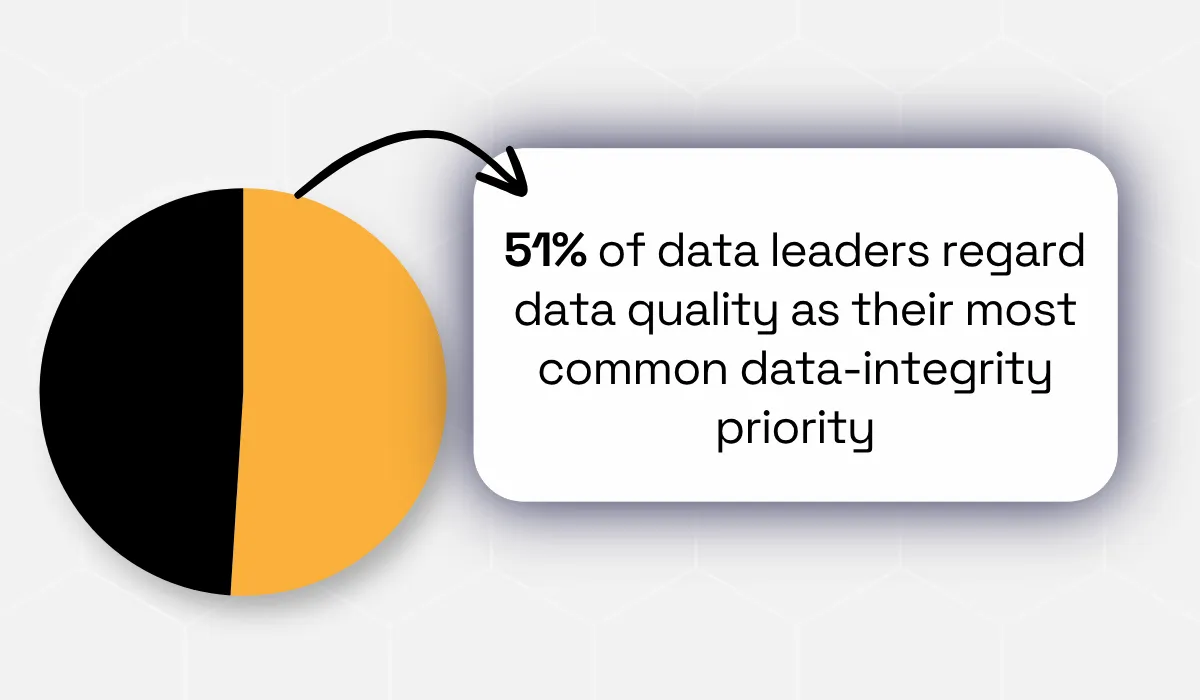
- 51% of data leaders prioritize data quality.
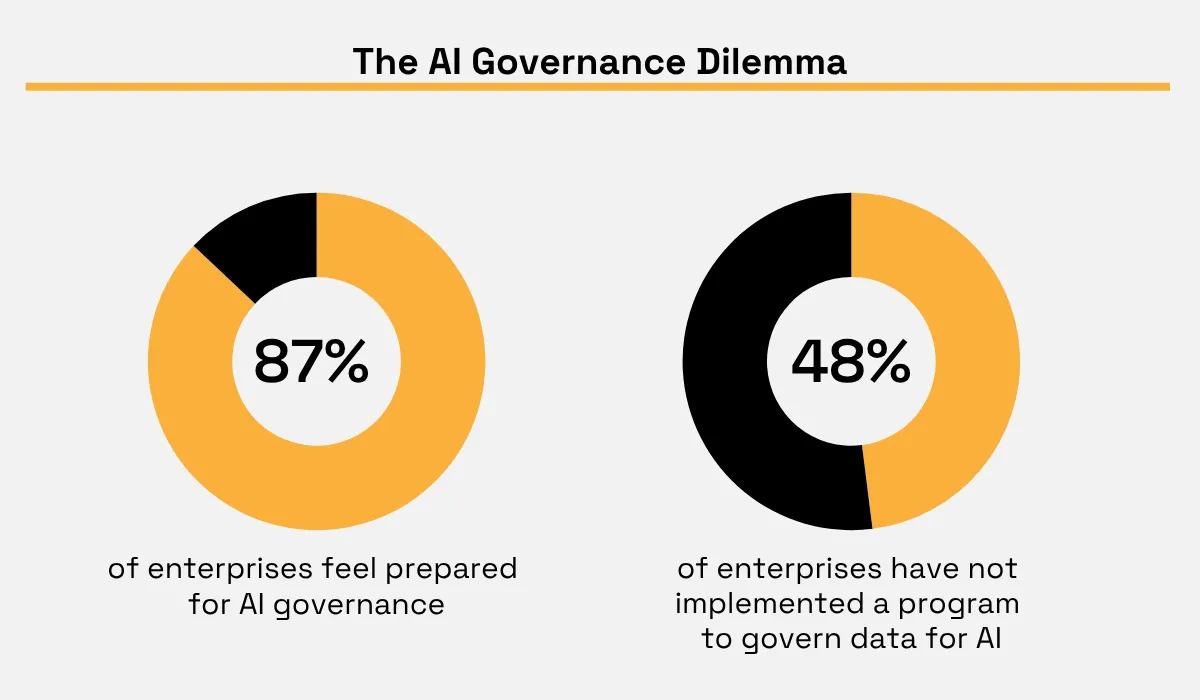
- 48% of enterprises haven’t implemented a governance program for the data used by AI.
Think about a global procurement team letting an AI model approve suppliers and redirect spend across tens of categories…in seconds.
For many large enterprises, this is already happening.
The problem is that the data behind these decisions may be incomplete or poorly matched because there’s no human double-checking it.
At that scale, one bad data point can lead to many wrong decisions.
Decision-grade data helps minimize that. This article explains what it is, why it matters and how it supports reliable algorithmic decisions.
What Is Decision-Grade Data?
Decision-grade data is information that is accurate, complete, consistent, and well-governed enough for a machine to act on without human oversight.
It gets fed into AI models and intelligent automation workflows, which then, for example, enable them to immediately approve a supplier, adjust a price, or flag a risk.
This automation means that decision-grade data must be a higher standard than data used in dashboards or reports, where a person still has the chance to question an unusual figure or recheck an error.
Now, what decides whether data is decision-grade or not?
It’s weighed against four dimensions, which the IBM Data Quality Report also discusses.
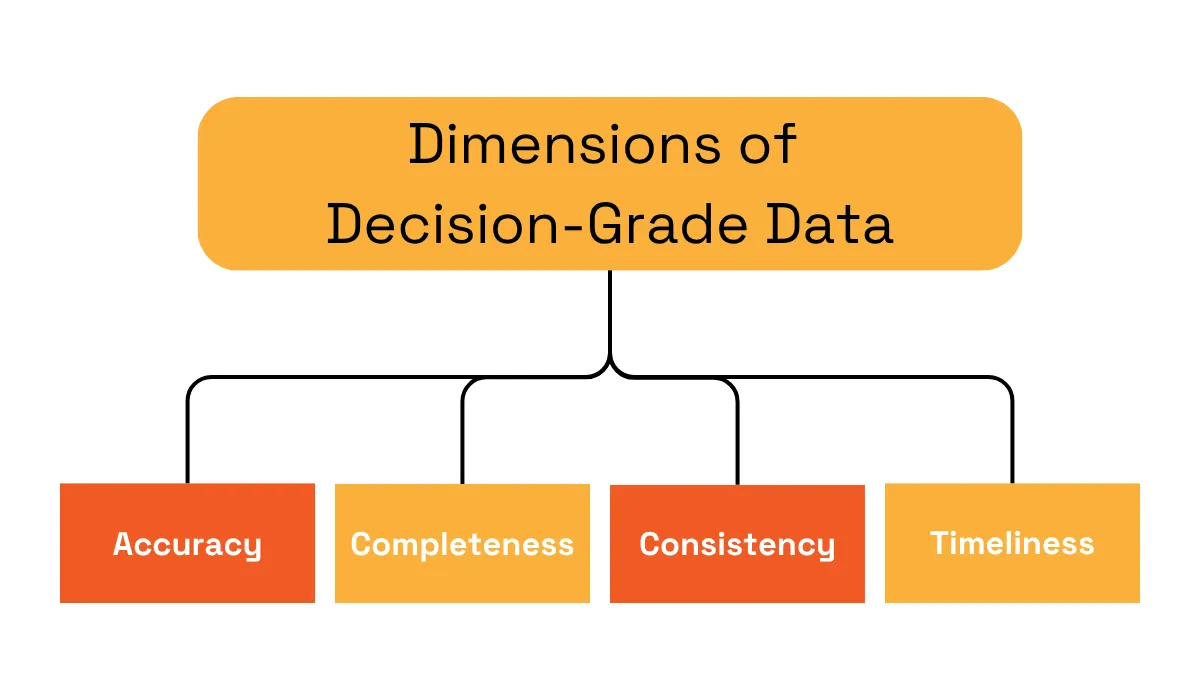
Accuracy refers to how correctly data reflects a real-world entity or condition.
For example, if a supplier can produce 50,000 units per month but its recorded production capacity is 500,000, the data is inaccurate and may cause an algorithm to allocate orders the supplier cannot fulfill.
Completeness refers to the presence of all information required to make a particular decision.
For example, if a supplier record must include ownership, certification status, and production capacity, any record with one of these fields missing is incomplete.
This is one of the core benefits of data enrichment: filling critical information gaps before the data enters an automated workflow.
Consistency refers to whether the same information is represented uniformly across different systems and datasets.
For example, if one system records a supplier’s annual revenue in US dollars while another stores the same figure in euros without identifying the currency, the data is inconsistent.
Timeliness refers to whether the data is current enough for the decision being made.
For example, if a supplier lost a required certification last week but the procurement system still shows its status from six months ago, the data is outdated and may lead an AI model to approve a non-compliant supplier.
Taken together, these dimensions turn raw information into trusted data. It’s the foundation on which reliable AI depends, as said by Manish Sood, CEO of Reltio.
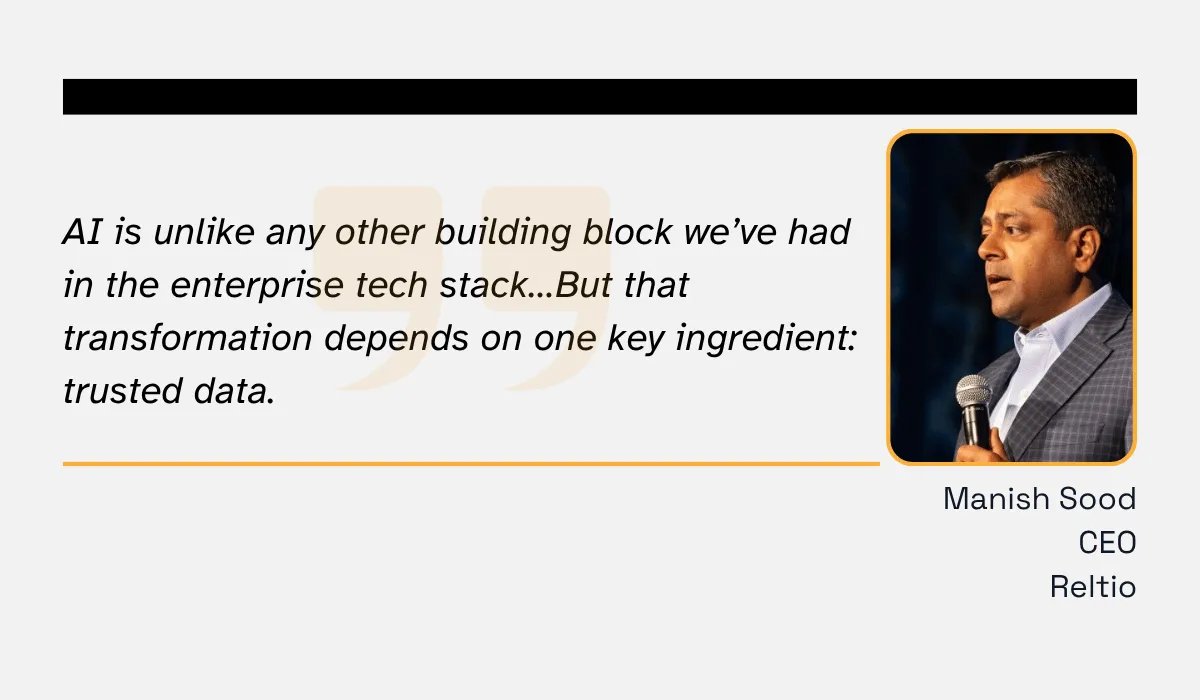
Illustration: Veridion / Quote: Business Insider
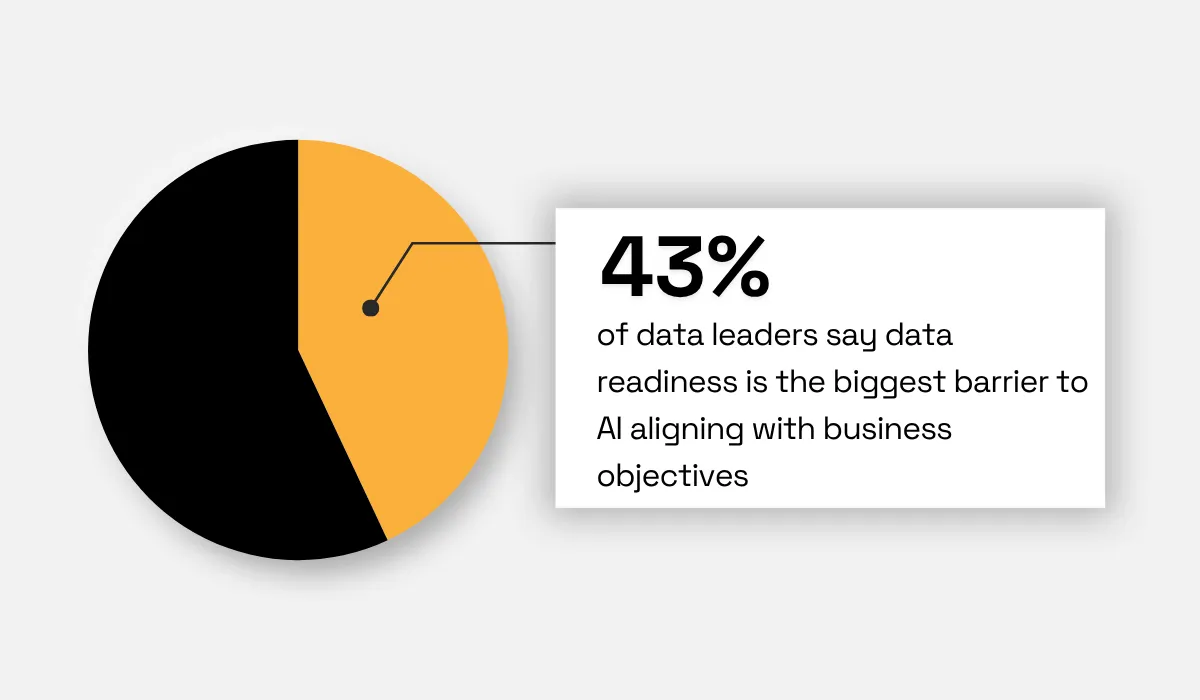
Reaching that standard, however, remains difficult for many enterprises. Data integrity company Precisely performed a study on 504 respondent industries from the U.S., UK, Germany and France.
They found that 43% of the data leaders among them identified data readiness as the biggest barrier to aligning AI with business objectives.
And when the readiness gap is ignored, the consequences don’t remain confined to the data layer: they can directly affect the business outcomes.
SafeRent Solutions, a rental management company, has a tenant-scoring system that shows what can happen when data is technically correct but not decision-grade. In 2024, a US federal judge approved a settlement of more than $2.2 million after the applicant alleged that the algorithm unfairly disadvantaged her.

Source: AP News
The system rejected her application after relying heavily on credit information without properly accounting for housing vouchers, which directly affected her ability to pay rent.
The suit said that credit data may have described her borrowing history, but it didn’t provide the full context needed for an automated housing decision.
Ultimately, the test of decision-grade data is whether a machine can act on it safely without a human stepping in. It must be accurate, complete, consistent and current enough to support automated decisions without creating hidden risks.
So, Why Exactly Do You Need Decision-Grade Data?
AI can process more information and make decisions faster than any human team. But that advantage disappears when employees still need to verify every input.
Decision-grade data removes that bottleneck. It gives automated systems information they can use with greater confidence, leading to fewer errors, faster decisions, stronger regulatory defensibility, and the ability to scale decision volume without scaling headcount.
There are four main benefits of integrating decision-grade data into your workflow.
Fewer Costly Automated Errors
Automated systems make fewer wrong calls when their input data is decision-grade. How?
- The validation rules can catch impossible values.
- Normalized data can standardize supplier records.
- Continuous monitoring can identify changes before stale information hampers performance.
This is why data quality has become such a high enterprise priority.
Precisely’s analyst report of 2026 found that 51% of data and analytics leaders rank data quality as their most common data-integrity priority.
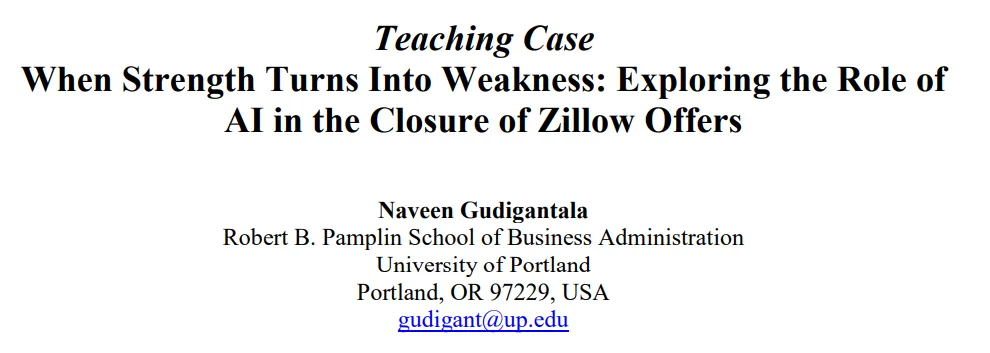
But the inability to adhere to such data is catastrophic. Zillow proved it. Its Zillow Offers business used machine learning to estimate home prices and guide property purchases.
According to the Journal of Information Systems Education, the models relied on incomplete datasets that didn’t capture important variables. As a result, it bought more homes than it could sell, which contributed to a $421 million quarterly loss in 2021.
It’s not just the private sector that’s at risk: just look at the UK's Department for Work and Pensions (DWP). In 2024, reporting showed that an automated fraud-and-error system had wrongly flagged more than 200,000 housing-benefit claims over three years. Around two-thirds of those claims were legitimate.
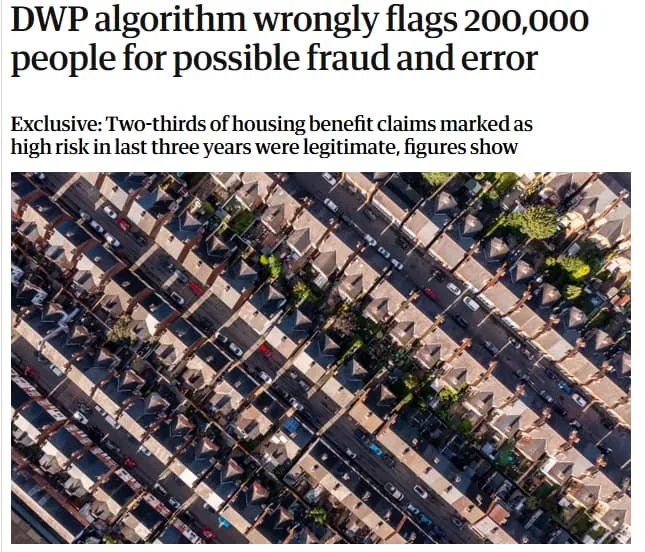
Source: The Guardian
This resulted in unnecessary investigations and about £4.4 million in official checks that recovered no money. Big Brother Watch, a privacy campaign group, said after the incident:
“This is another example of DWP focusing on the prospect of algorithm-led fraud detection that seriously underperforms. Its overreliance on new technologies puts the rights of people who are often already disadvantaged, marginalised and vulnerable in the backseat.”
Both examples make the same point: automation does not correct flawed data. It amplifies it.
Your enterprise, therefore, needs to nip data defects in the bud through validation, data governance and deduplication. Decision-grade data for AI cannot eliminate every wrong call, but it can stop avoidable data flaws from becoming repeated, expensive outcomes across your business.
Faster, More Confident Decisions
Decision-grade data speeds up automated decision making by removing the manual verification step between an algorithm’s output and the final action.
A model may calculate a risk score in seconds, confirm the component’s price, or review the compliance data in seconds. But that processing speed creates little value if employees still need to compare records across systems and fill in missing details.
This is where most automated workflows slow down.
Each exception adds another handoff, pushes the case into a review queue, and increases turnaround time.
These delays can affect thousands of credit applications, insurance claims, and supplier approvals.
Decision-grade data removes much of this friction by making inputs accurate, complete, and traceable before they enter the workflow.
Routine, high-confidence cases can then move through straight-through processing, while only incomplete or unusual cases are escalated for human review.
Omega Healthcare shows what it looks like in practice.
The company processes large volumes of healthcare billing and insurance transactions, where employees traditionally had to extract and verify information from documents manually.
After deploying AI-powered document processing, it automated extractions across more than 100 million transactions.
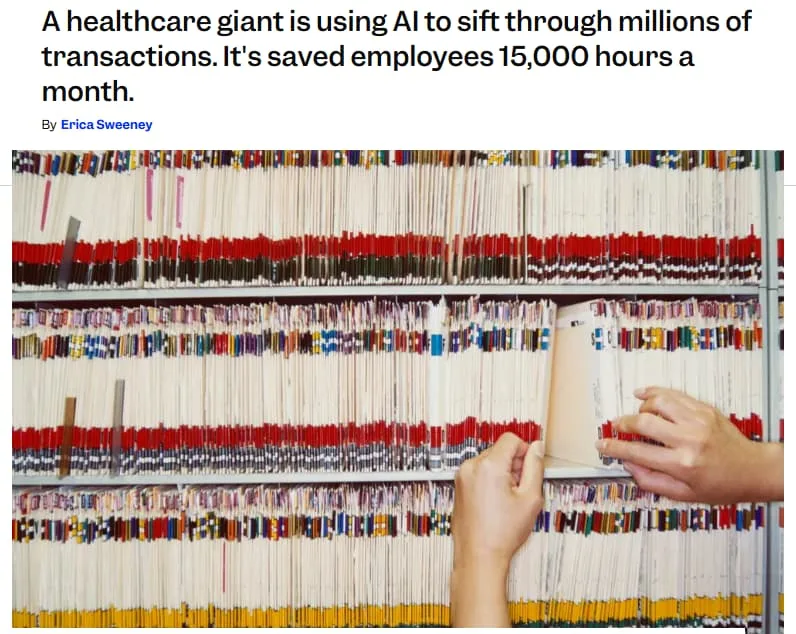
Source: Business Insider
The company reported 99.5% process accuracy, cut document-processing turnaround time by 50%, and saved more than 15,000 employee hours each month.
The gain did not come from reading documents faster alone. It came from reducing the need to verify and re-enter extracted data.
What does such an example prove? That decision-grade data turns automation from a fast calculation into a fast business decision. It cuts through the red tape of repeated verification, allowing routine and high-confidence cases to move forward without manual checks.
Stronger Regulatory Defensibility
When an automated decision affects a customer, supplier, or business partner, the enterprise must also be able to defend that outcome with evidence.
That means being able to show which data informed the decision, where it came from, and whether it was accurate and complete at the time.
Decision-grade data creates that audit trait, making high-impact decisions in credit, insurance, and procurement easier to explain and defend.
Regulatory defensibility depends on two capabilities: explainability and traceability.
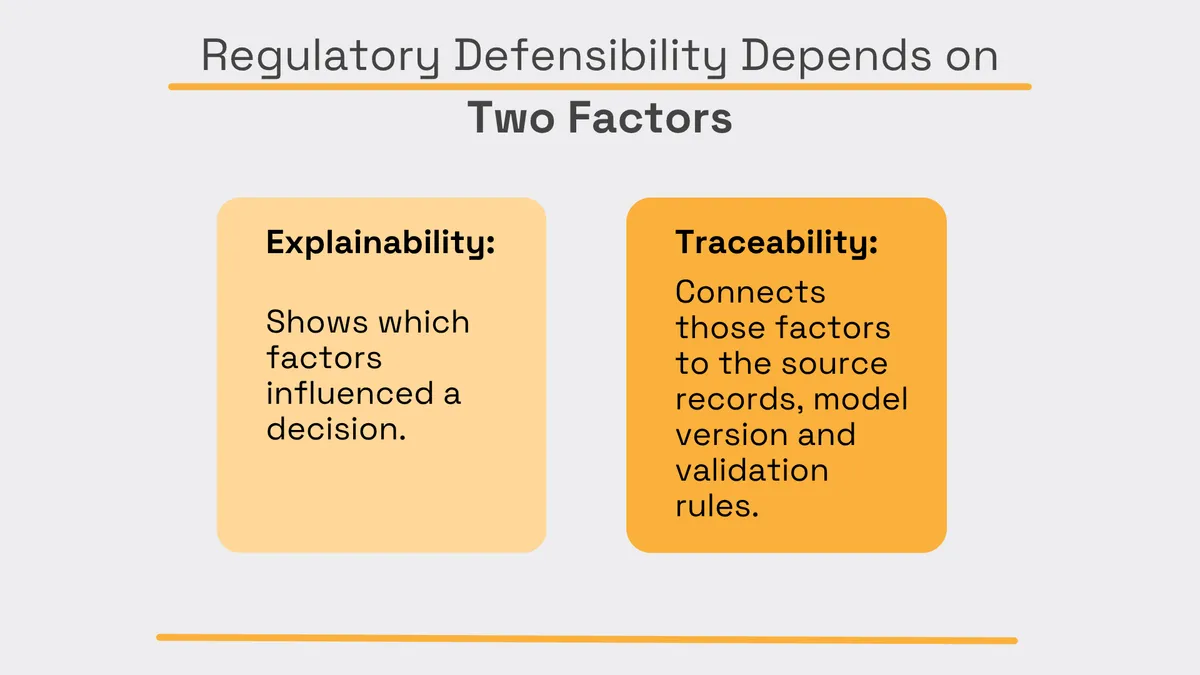
Source: Veridion
Explainability shows why the automated system reached a particular outcome by identifying the data points and rules.
For example, if an insurer rejects a claim, it should be able to show whether the decision was driven by missing documentation or conflicting incident data — not simply state that the model produced a low score.
Traceability shows how the data moved from its original source to the final decision.
It records where the information came from, when it was collected, which model version used it and who had access.
For example, a procurement team should be able to trace a supplier rejection back to the exact sanctions record and timestamp that triggered it.
Without this lineage, an enterprise may know what the algorithm decided but still be unable to prove that the underlying data was current or lawfully used.
That gap becomes serious in regulated decisions, where you are expected to explain the basis of an outcome.
This expectation is already visible in financial regulation.
The US Consumer Financial Protection Bureau (CFPB) has stated that creditors using complex algorithms must still provide applicants with specific, accurate reasons for adverse decisions. This is what they said:
“Creditors must be able to specifically explain their reasons for denial. There is no special exemption for artificial intelligence.”
In other words, using a black-box model doesn’t remove the obligation to explain the outcome.
Yet many organizations still lack the required governance foundation.
Precisely and Drexel University found that 48% of surveyed enterprises had not implemented a program to govern the data used for AI.
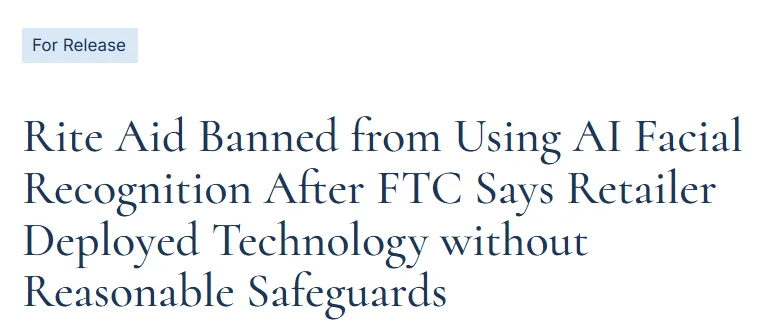
Real-life examples like Rite Aid prove this gap exists. From 2012 to 2020, the retailer used facial recognition across hundreds of stores to identify suspected shoplifters.
According to the Federal Trade Commission (FTC), Rite Aid built its watchlist using low-quality images and failed to test the system’s accuracy.
Source: Federal Trade Commission
The result was thousands of false matches, and employees (while acting on these false alerts) followed customers, searched them and, in some cases, contacted the police and accused them of shoplifting.
FTC, therefore, issued an order in 2023 banning the retailer from using facial recognition for five years and requiring stranger safeguards for future biometric systems.
The case connects the data directly to the regulatory outcome: poor-quality images entered the system, unreliable matches followed, and Rite Aid lacked the audit and monitoring controls needed to identify or defend those decisions.
Decision-grade data will thus keep your enterprise from being caught flat-footed by giving it reliable inputs, documented lineage and accountable data governance.
Scaling Decisions Without Scaling Headcount
As business activity grows, so does the review workload. More supplier applications, customer accounts and transactions mean more documents to check, records to match and unusual cases to investigate.
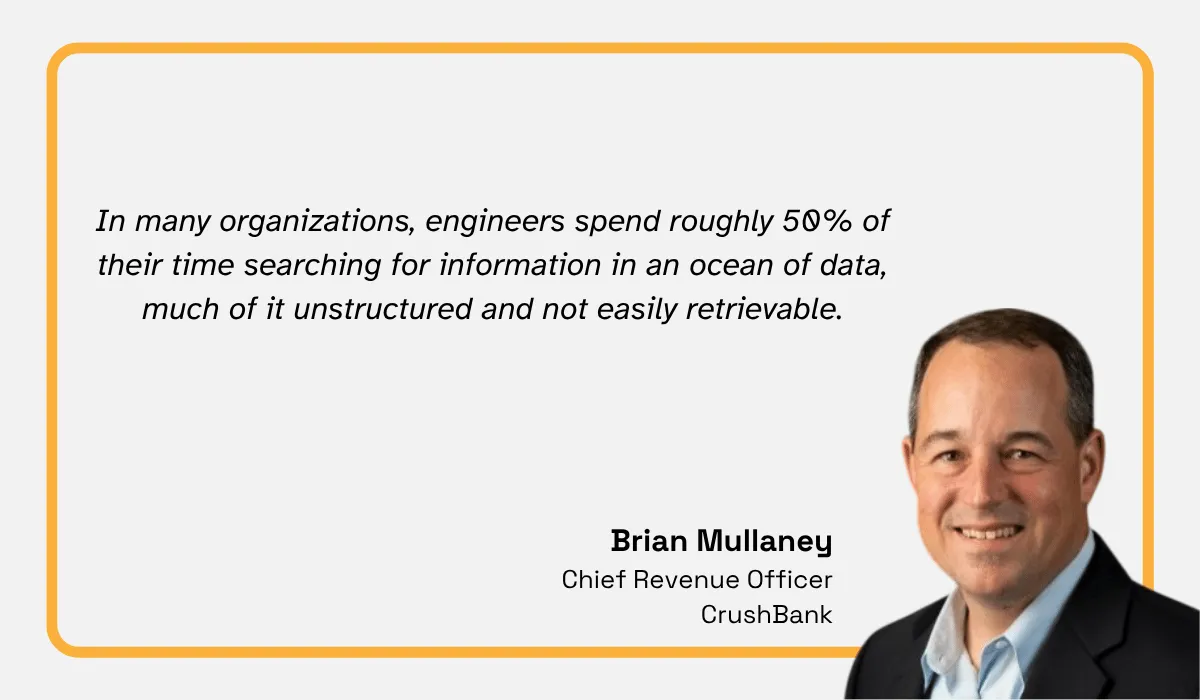
With increasing amounts of data, it can seem like you have two choices. You can hire more reviewers, but that increases the headcount cost, or you can accept slower decisions as your existing staff work through their caseloads. But the cost of these manual verifications is substantial.
As Brian Mullaney, Chief Revenue Officer at CrushBank, explains:
However, decision-grade data offers a better, third option.
It allows automated systems to handle routine cases on their own and send only unusual decisions to a person. This is what makes higher decision volume possible without increasing headcount at the same rate.
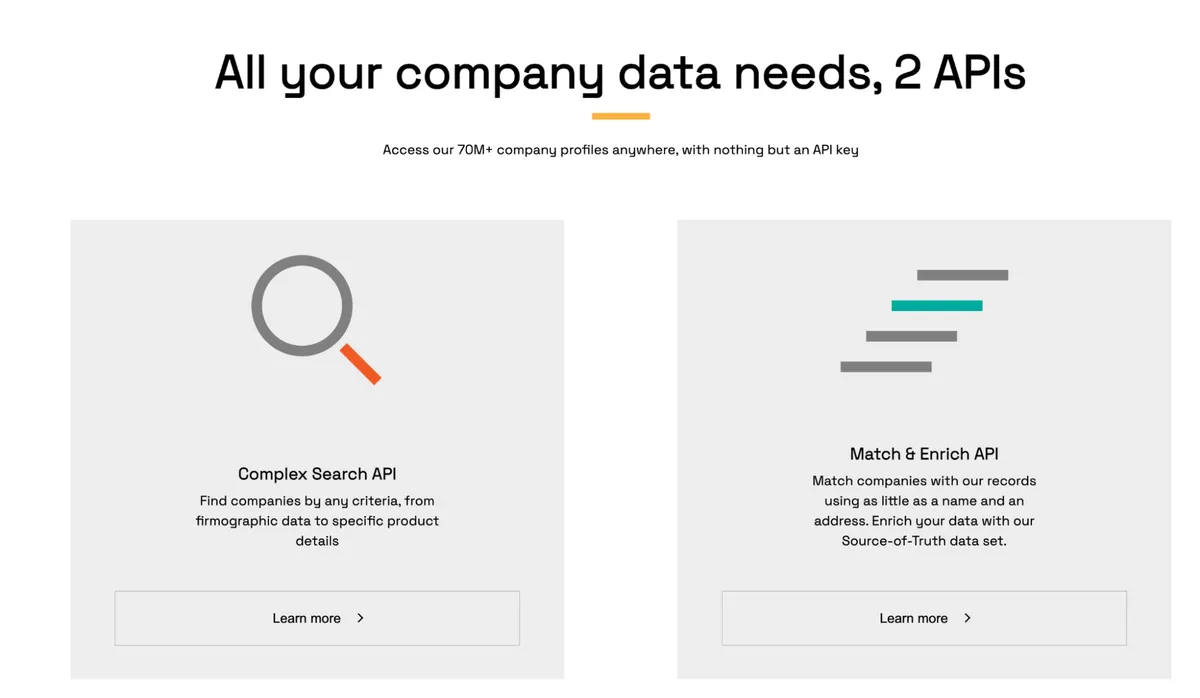
Veridion, an AI-powered enrichment platform, supports this at the B2B data layer.
It structures more than 461 attributes within 693M company profiles.
Source: Veridion
And refreshes information weekly across more than 693M businesses.
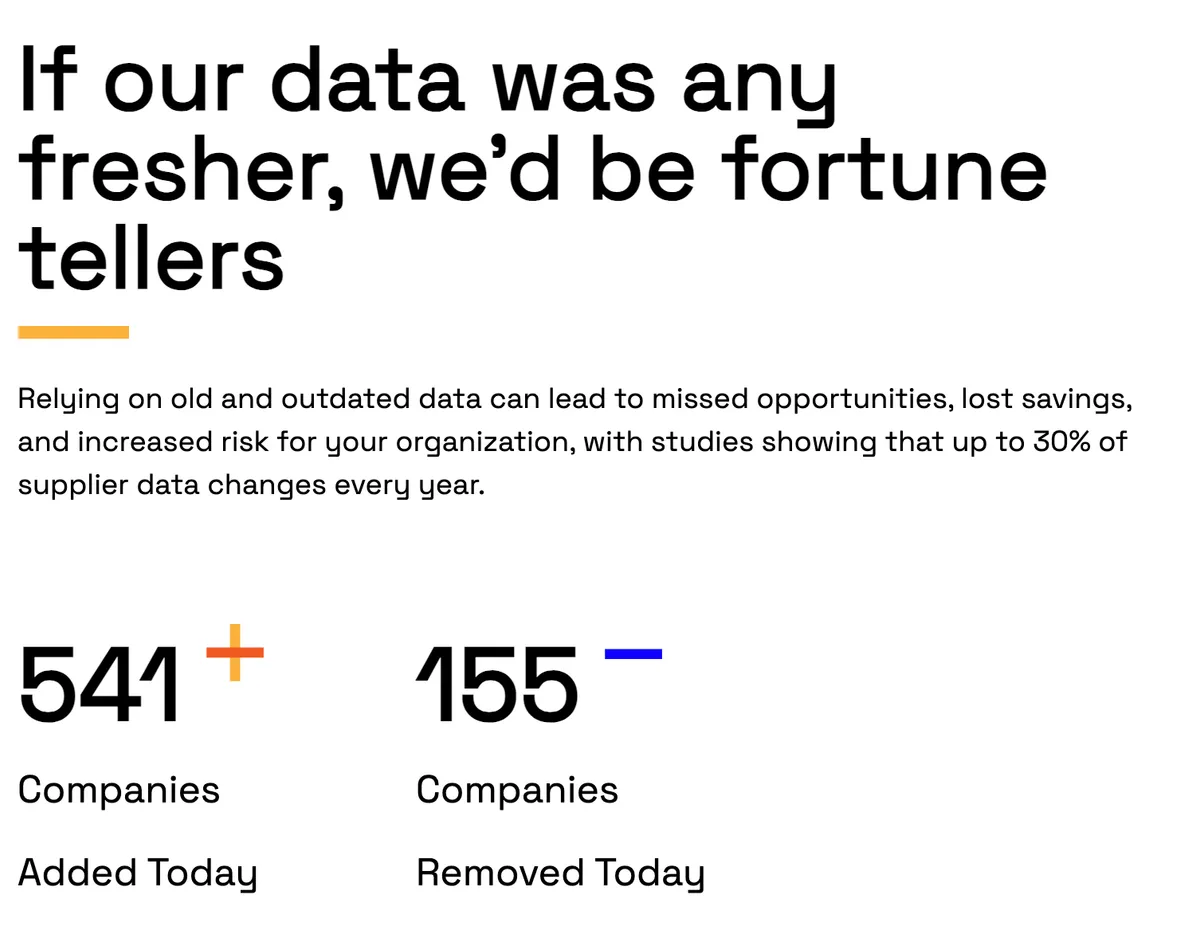
Source: Veridion
Through its data enrichment APIs, your procurement or onboarding systems can receive normalized company information directly within your existing workflow.
This pipeline turns raw information into structured attributes, matches them to the correct entities and validates them before adding them to the company graph.
This improved data can thus support your higher decision volume without creating a parallel manual-research operation.
Hitachi, a Japanese multinational conglomerate, shows what this can look like in practice. It built a private AI onboarding assistant using approved information from corporate websites, PDFs and employee handbooks.
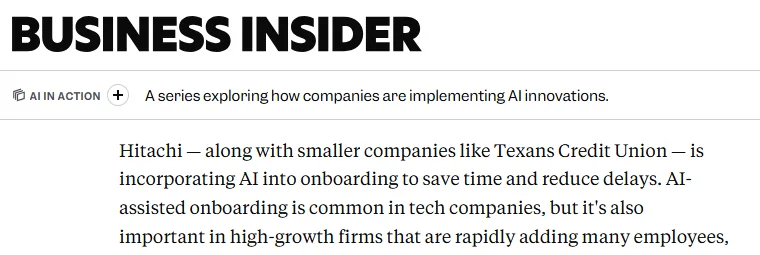
Source: Business Insider
After testing it against KPIs and SLAs, it scaled the system across the organization.
The result was a four-day reduction in onboarding time and a drop in HR involvement from 20 hours to 12 hours per employee.
This is the operational value of decision-grade data.
Decision-grade data breaks the link between higher decision volume and higher reviewer headcount.
By keeping inputs structured and current, your enterprise can let automation carry the routine workload and reserve specialists for complex cases, instead of throwing more people at the problem every time demand rises.
Conclusion
Decision-grade data, done right, is one of the strongest foundations an enterprise can build for AI.
But it requires discipline across the full data lifecycle: accurate inputs, complete records, current information, and governance built in from the start.
Organizations that get it right make faster decisions, reduce automated errors, and scale operations without scaling review teams at the same pace.
But when unreliable data is fed into automated systems, it becomes a business risk.
Remember, as more decisions move from people to machines, the winners will be those who make their data decision-grade first.
Articles
Discuss how these trends affect your organization.
Our analysts are available for a short call. Bring a specific question and we will ground it in the data.
Insights
Keep reading
More analysis, research, and outcomes grounded in live company intelligence.
6 Best Data Enrichment APIs
Looking for the best data enrichment APIs? This article will introduce six powerful tools to enhance and validate your data.
What Are the Benefits of Data Enrichment?
Want to understand the benefits of data enrichment? This guide will explain how enriched data supports better decisions and analytics.
How Successful Companies Use Market Intelligence for Business Growth
Discover how successful companies use market intelligence to unlock new growth opportunities. Learn more in our latest guide.