Insights / Articles
How to Build a Vendor Shortlist in Half the Time
Tired of endless vendor selection? Streamline your vendor shortlist process and make smarter choices faster. Get your guide.

- It takes 40+ hours over 3 months just to land on a shortlist of a few dozen suppliers.
- AI-powered search fixes this by turning discovery into a funnel.
- For optimal results, narrow down search results by filtering through foundational criteria.
You’ve got a sourcing need, a deadline, and a blank shortlist.
Somewhere out there is the right vendor. You just have to find them first.
For most procurement teams, that search still means directories, cold outreach, and industry lists. Long, often tedious days that go by before you even get to any fruitful evaluation.
What if it didn’t have to work this way? You’re in luck, because today, we’ve got a faster method to build a stronger shortlist.
Why Vendor Discovery Eats Up So Much Time
Manual vendor discovery is one of the slowest parts of sourcing.
Let’s lead with some numbers here.
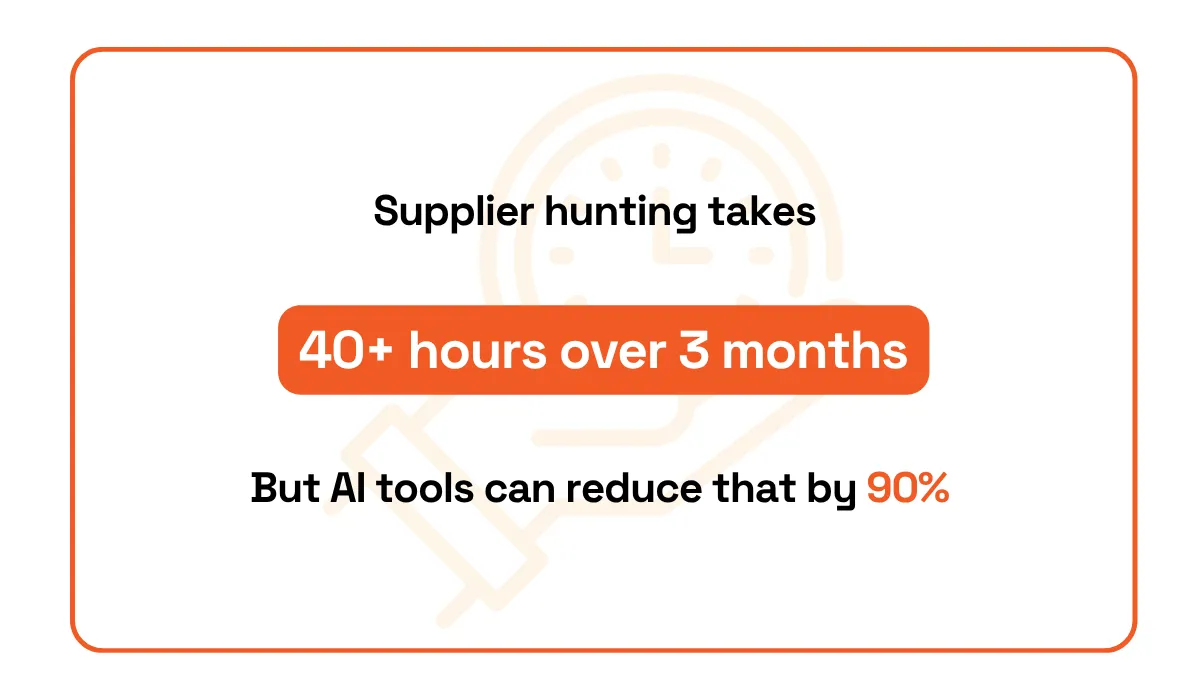
McKinsey has found that hunting for new suppliers is typically a three-month process.
Out of the thousands of possible options, a sourcing professional will typically log over 40 hours of work just to land on a shortlist of a few dozen candidates.
More importantly, though, AI can cut that time down by 90%.
But it’s not just McKinsey. One of our internal case studies put a sharper number on the gap.
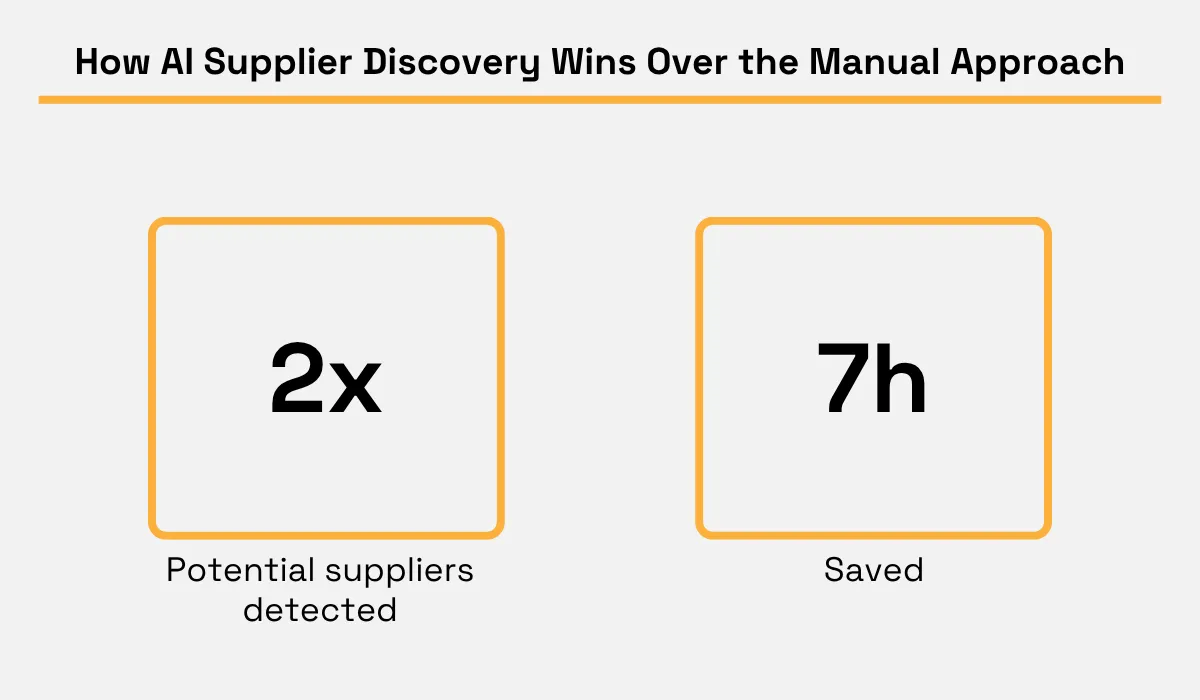
Traditional supplier search took 7.3 hours to identify a suitable candidate per supplier event. An AI-powered data engine did it in 0.14 hours.
It also surfaced more than double the potential suppliers along the way.
Source: Veridion
Again, all of this is just step 1, setting the stage, gathering intel.
It practically begs the question: why? Why does traditional sourcing take so long, and what could be done to prevent this?
It comes down to fragmentation.
Supplier information lives scattered across:
- directories
- company websites
- trade publications
- referrals
…and not in one, neatly packaged, accessible place.
Without a refined process or advanced tools, every one of those sources gets checked by hand, then cross-referenced against whatever actually matters: product fit, certifications, location, risk, so on and so forth.
You can tell that the manhours you have to devote to this stage can ramp up at immense speeds.
And this fragmentation doesn’t stay contained to discovery, either.
A vendor found through a slow, scattered process tends to carry that same messiness forward, leading to incomplete records, unverified certifications, and risk flags that slipped under the radar.
A comprehensive fix can’t be achieved just by “increasing productivity.” What you need is a bottom-up change to eliminate friction at the process level.
Building Your Shortlist Step by Step
Resourceful specialists have already picked up on the trail of AI effectiveness supercharging their work, as we showcased above.
The Hackett Group confirms this: 43% of procurement organizations are now actively pursuing AI deployment, nearly double what they reported the year before.
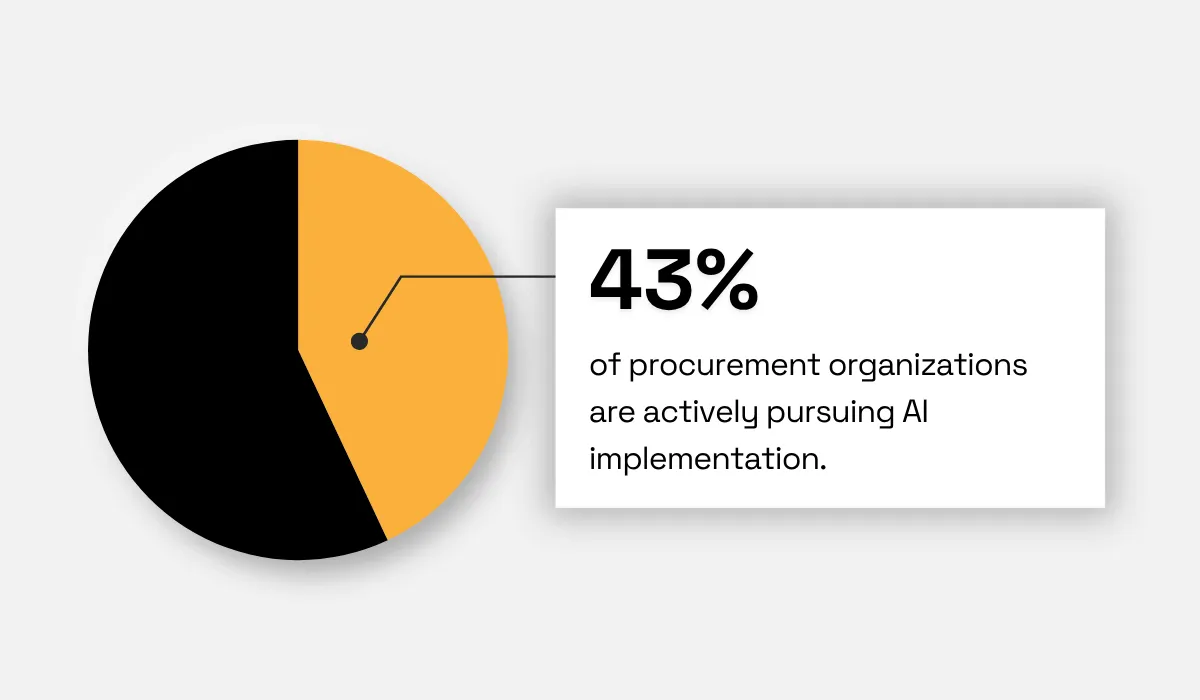
Illustration: Veridion / Data: The Hackett Group
If there ever was a case for implementing AI tools for broader, unquestionable benefit, this would be it.
AI-powered search and smart filtering can replace the manual tedium of a directory-by-directory approach.
Instead, you cast a wide net instantly, then filter it down in a few fast passes.
Here’s how that plays out, step by step.
Start With a Natural Language Query
Traditional vendor search means building Boolean strings, or guessing at whatever keywords a supplier’s website happens to use.
But modern creators of supplier discovery tools, aware of the growing pressure and dissatisfaction from team members doing the actual legwork, tend to skip that entirely.
You describe what you need in plain language.
For example, say you’re looking for “non-GMO, USDA-certified corn syrup manufacturers.” Type that in, and the system translates that into structured search criteria behind the scenes.
The benefit is clear: since most procurement specialists aren’t query-building experts, that eases their workload by a substantial margin – hence less time spent searching, more time for analysis, filtering, and closing deals.
Under the hood, the system parses your query for critical properties, like:
- product category
- certifications
- location
- scale
- pricing
…and maps it onto a taxonomy the AI algorithm already understands, relieving you of the burden of learning its intricacies yourself.
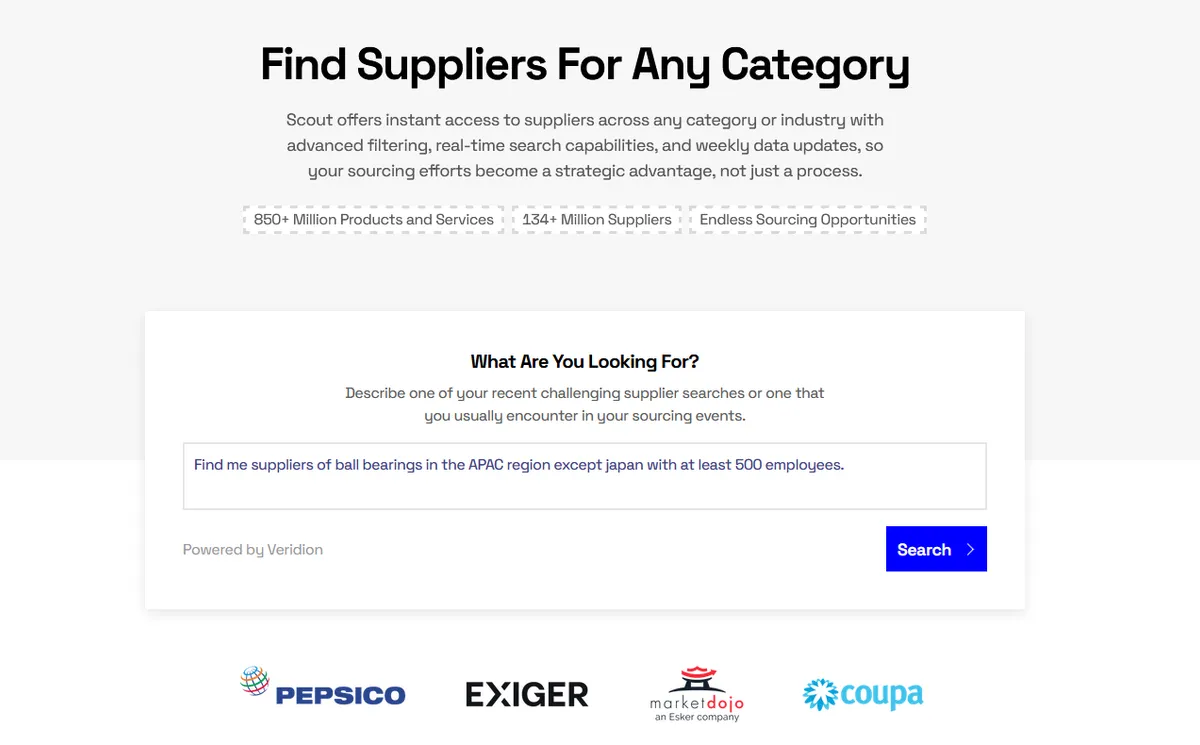
Veridion’s Scout tool works this way.
Describe your sourcing need in plain language, and it searches across a database of 693M suppliers to look for matches without having to construct manual filters yourself.
Source: Veridion
PepsiCo is one of the companies using this approach today.
It leans on natural-language supplier search to support its sustainable sourcing initiatives, while still keeping an eye on cost and supplier performance.
Narrow by Product and Location
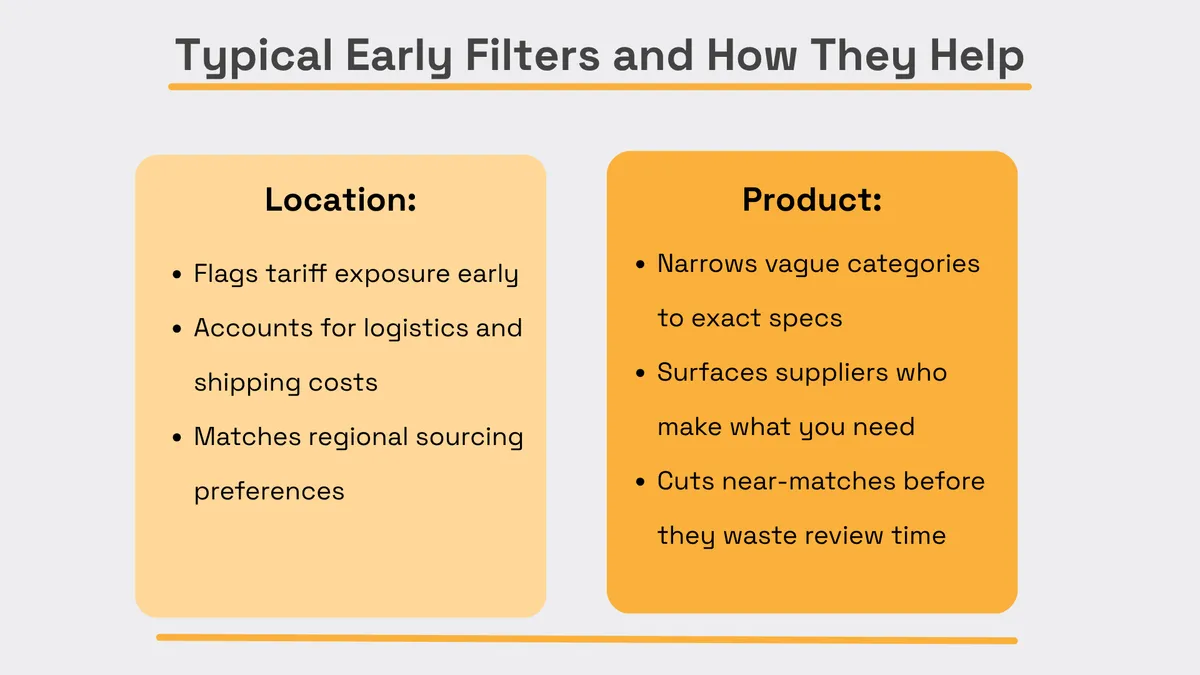
Once your initial pool of matches comes back, the first filter most teams apply is product and location. It’s the fastest way to cut a broad list down to something workable.
But to preserve procedural efficiency, here’s where you have to actually start putting more careful thought into what you’re filtering for.
Otherwise, the holes in your sieve will let too many not-quite-relevant results through.
Why? Because while they fall under the same general umbrella, “packaging suppliers” returns a very different list than “recyclable corrugated packaging for food-grade products.”
Such categorical differences decide whether the rest of your shortlist is even worth reviewing.
Next up is location filtering, which functions in a very similar manner, albeit for a different reason.
Here, you’re not looking to find the most appropriate vendor based on the product they can offer, but you’re entering a more strategic layer.
Logistics costs, tariffs, regional sourcing preferences – these will shape what ultimately makes a candidate realistic or not, no matter how well their actual product scores on paper.
Source: Veridion
Together, these two filters do most of the heavy lifting.
A pool of a few thousand loosely-matched companies can drop to a few dozen realistic candidates in a single pass. No certifications or risk data involved yet.
Audi’s experience sourcing electric industrial towing vehicles shows what specificity buys you. In their case, the requirement was narrow: components that couldn’t be less powerful than their diesel counterparts, in a niche market with few obvious suppliers.
Using an AI-driven search platform, the motor company screened around 180 times more suppliers than a manual search would have covered.
The result? They were able to move from initial searches to drafting supplier proposals in just seven weeks.
Filter by Certifications and Risk Scores
You’ve narrowed down the initial search and probably cut out a solid number of redundancies and ill-fitting results.
But it’s not time to call it a job well-done just yet. When secondary filters get skipped, that’s where shortlists quietly fall apart later on.
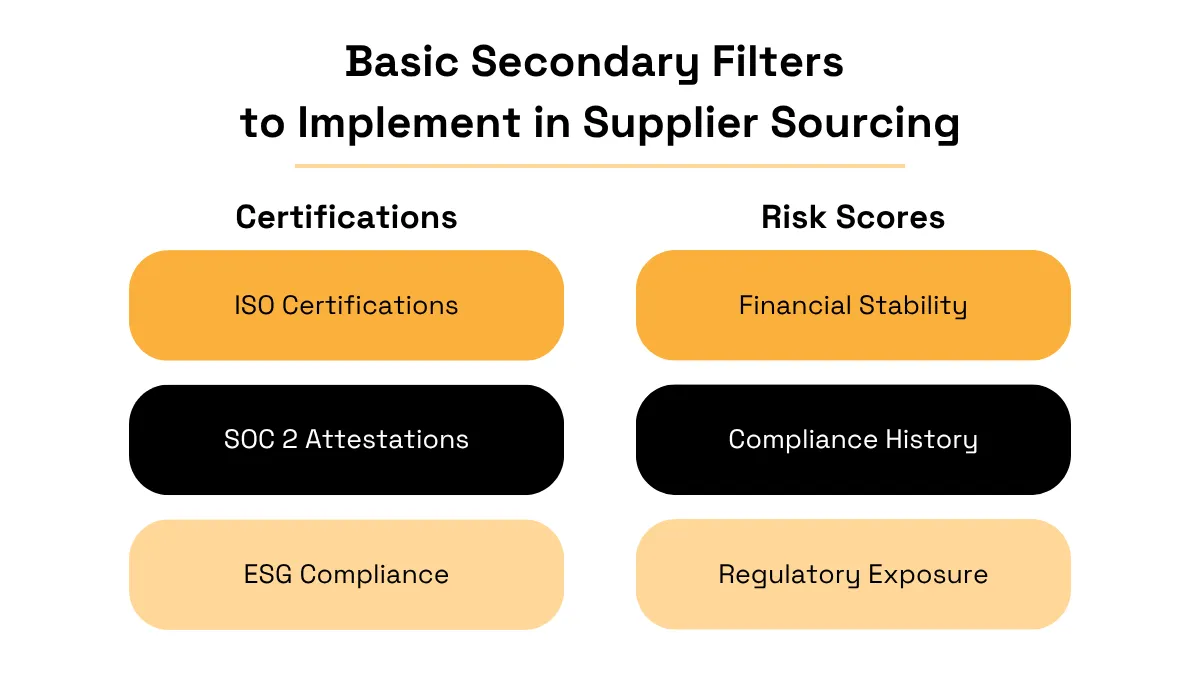
Certifications are the criteria most likely to disqualify a vendor.
They’re also the ones most commonly checked too late, after time has already been sunk into a relationship that was doomed from the start.
Here’s an example of what to filter for:
Source: Veridion
Filter by these factors at discovery instead, and the math changes.
According to Graphite Connect’s 2026 State of Supplier Data report, 55% of procurement leaders name increased risk exposure as the single biggest consequence of bad supplier data.
Catch a compliance gap in the first pass, and it’s just a filtered-out candidate. Miss it, and it’s a live risk sitting inside your supply chain.
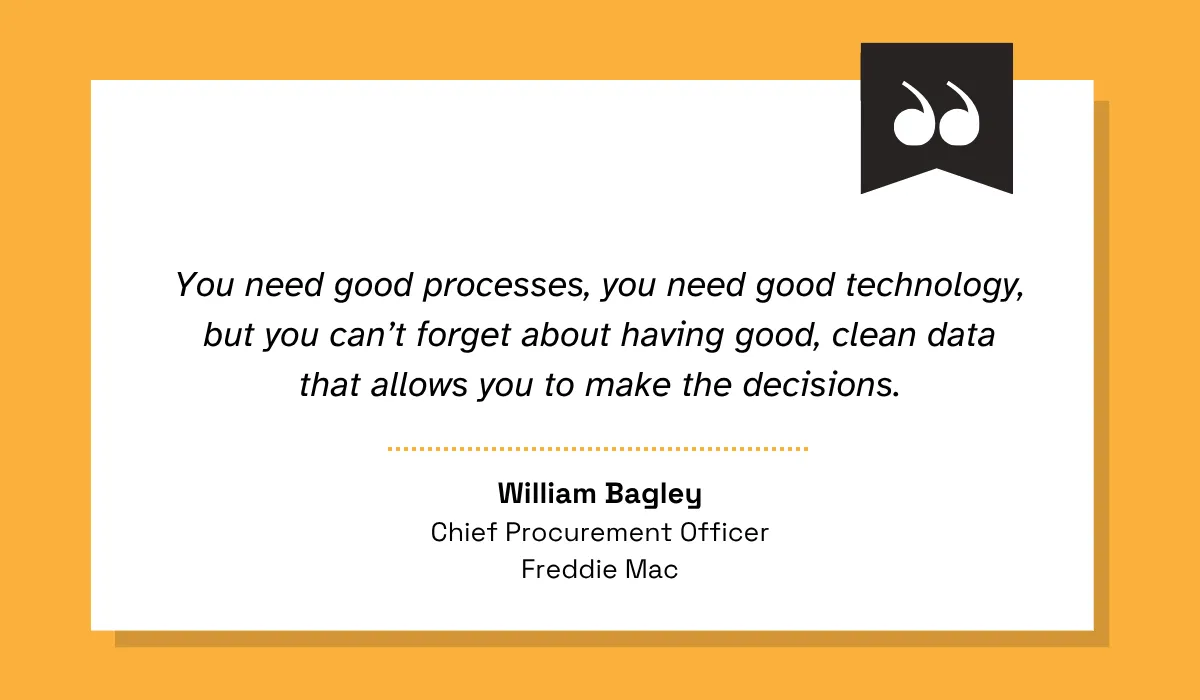
Clean, verified vendor data isn’t a nice-to-have anymore. It’s a prerequisite, and executives most certainly agree.
As quoted in TealBook’s resource on unreliable data, William Bagley, CPO at Freddie Mac (a second-market mortgage buyer), says:
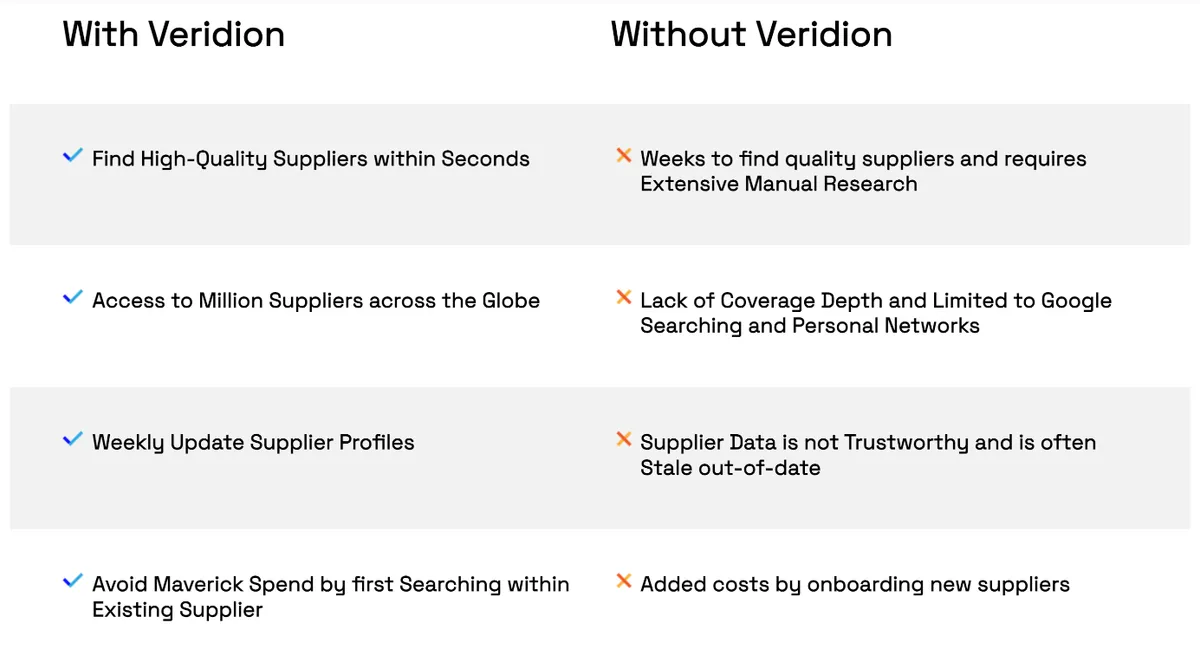
Veridion's supplier profiles fold certifications, compliance data, and ESG insights into the same view as product and location data, pulling from continuously updated records across 693M companies.
Source: Veridion
That data can flow directly into the systems you already use, whether that’s an API, a batch export, or a native connection to your warehouse, so it slots into your existing stack instead of becoming another tool to manage.
As a result, your teams can work much faster and with better quality data, rather than trying to chase phantom, outdated leads.
Review and Refine the Results
An initial filtered shortlist rarely comes back perfect on the first try. That’s fine.
Treat discovery as a quick iterate-and-refine loop, not a single search you either accept or abandon. Several cycles later, you’ll find yourself sitting pretty with a noticeably stronger final list.
When that fails, try to investigate leaks in your process. Potential holes to look out for include:
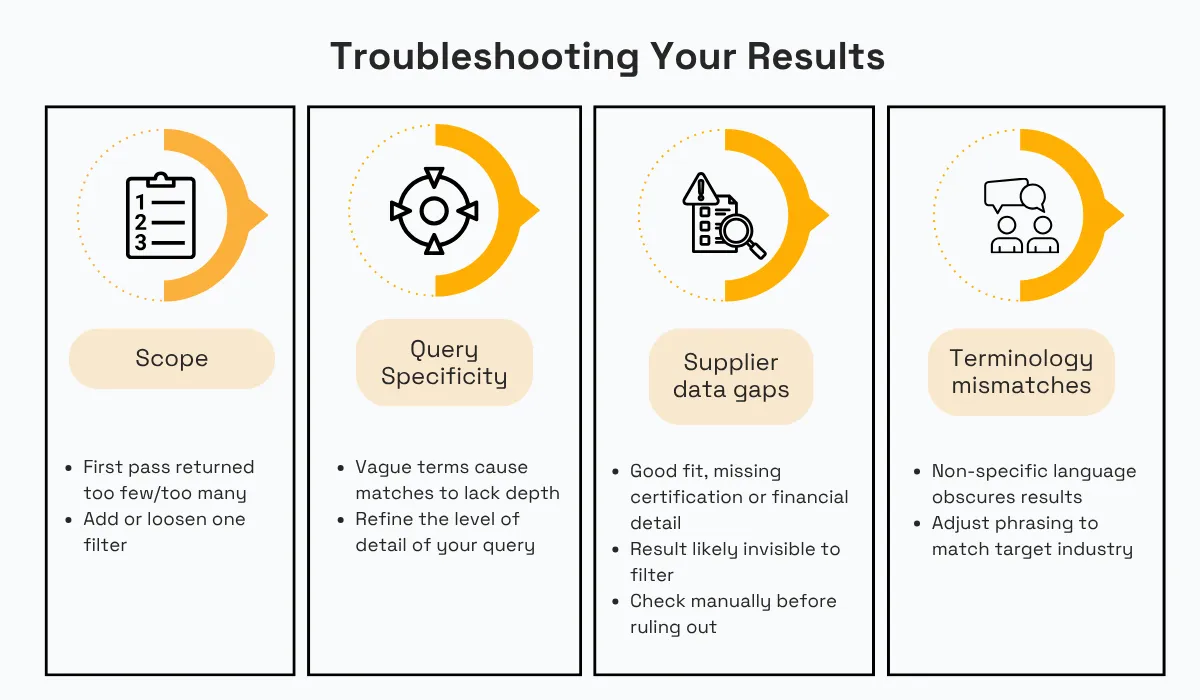
Source: Veridion
Whatever your case may be, the fix is usually small and problem-specific.
It might involve swapping a certain certification for its close equivalent, widening location radius or dropping a revenue cutoff that turned out too restrictive, causing a promising supplier to fall just short of the specified requirement.
You’ll likely spend a lot of time on this step, but a well-built, tried-and-tested shortlist-building process gradually becomes more refined and will produce better and better results with repeat queries.
Take Heidelberger Druckmaschinen for a real-world example of the process in action.
They needed a rare cast-metal part – the kind of niche component that doesn’t show up in a standard supplier database.
An AI-powered search cast the wide net first. It came back with 2,616 potential suppliers.
Too many to call one by one, and not the point anyway.
So, the team refined. They validated the list, then ran an RFI process to test who could actually deliver. Ten weeks later, that pool of thousands had become three serious proposals, with half the suppliers contacted responding. That’s the loop working as intended.
The end result: four times the suppliers considered versus a manual search, and a 25% cut in cost.
Conclusion
Compiling a reliable, sensible vendor shortlist doesn’t have to cost you weeks full of frustration.
Opt for the approach we proposed above. Describe what you need in plain language, then start narrowing by product and location.
You’ll naturally filter out disqualifying risks and unsatisfactory prospects before investing any real time.
Do that, and the hours you’d have spent compiling a list become hours spent actually evaluating the vendors who made it.
That’s the part of the job that was always worth your time.
Articles
Discuss how these trends affect your organization.
Our analysts are available for a short call. Bring a specific question and we will ground it in the data.
Insights
Keep reading
More analysis, research, and outcomes grounded in live company intelligence.
Vendor Selection: Step by Step Process
Explore a proven approach to vendor selection that balances cost considerations with quality, reliability, and risk management.
5 Best Practices for Vendor Selection
Learn how to identify the right vendors, minimize risks, and build relationships that strengthen your business.
8 Types of Vendor Risks You Need to Manage
Discover 8 types of vendor risks every business should manage to protect operations, reputation, and compliance.