Insights / Articles
How to Find Local B2B Suppliers in India Using AI Taxonomies
Tired of endless searches for B2B suppliers in India? Discover how to find local suppliers using AI taxonomies. Get the competitive edge you need.

- Successfully sourcing suppliers in India means building a full system comprising taxonomy, regional awareness, scoring, outreach, and monitoring.
- Using AI to score suppliers against your priorities and drafting and negotiating outreach within set parameters can create savings.
- Sourcing doesn’t end at the deal: the same system needs to keep watching to prevent drift, like certification lapses or ownership changes.
India’s manufacturing base spans thousands of cities and industries. A search like “find Indian textile suppliers” barely scratches the surface of what’s actually out there.
You need something more precise. That’s where AI taxonomies come in: structured frameworks that translate vague requirements into searchable dimensions AI can act on.
Here’s how to sharpen your supplier discovery process using this approach and find the right India-based partners faster.
1. Build an AI Supplier Taxonomy
Most sourcing searches start too broad, return thousands of results, and leave you nowhere closer to a partnership with a vetted company.
Simple searches like this don’t give you the essential details you need to find the right supplier for your business, such as:
- Can they handle your material spec?
- Do they hold the right certifications?
- Can they meet your production volume?
That’s where an AI taxonomy comes in.
In plain terms, an AI taxonomy is a structured classification system that defines a set of categories and attributes. It tells the AI model exactly how to interpret each request you present in a manufacturing context, improving its understanding of the subject matter and increasing output quality.
By giving your AI tool a structured industry vocabulary, you greatly enhance human decision-making and help your teams navigate the process faster.
Once that structure exists, the fidelity of an AI-infused search allows you to zero in on the supplier’s key performance data.
McKinsey’s research on generative AI in procurement found that a detailed, taxonomy-aligned prompt, like a request for high-pressure injection molding suppliers in Southeast Asia with ISO 9002 certification, can return three times as many usable matches as a traditional keyword search.
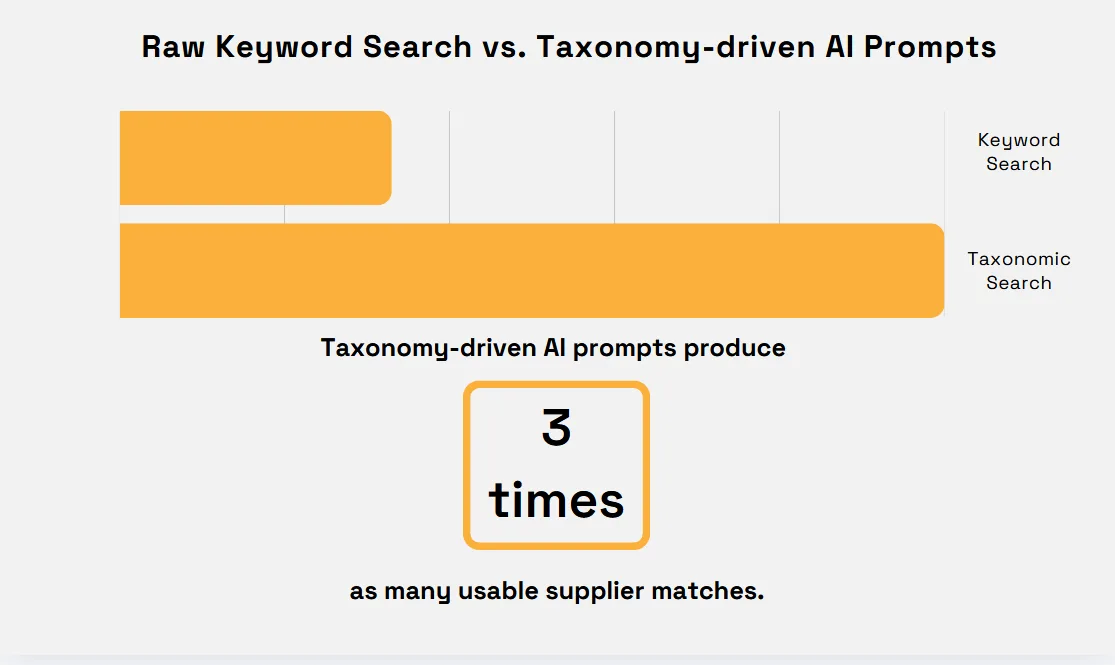
A taxonomy is what makes a prompt like that legible to the AI in the first place. Without one, “high-pressure injection molding” is just a string of words, rather than specific criteria the system can filter against.
AI-driven supplier sourcing helps you narrow down thousands of possible matches by gradually and granularly filtering by industry sector, then manufacturing capability, then material or certification, and other qualifiers that you decide are important.
As a result, you end up with a shortlist that’s not built on guesswork, but rather on a tailored set of criteria.
Semantic search platforms already show this shift in practice, and are increasingly able to automate supplier searches while simultaneously better responding to changing business needs. For example, Erre Quadro’s AI-driven sourcing tool utilizes natural language processing to read requests and yield better-matching suppliers.
Take a request like “flexible packaging supplier.” A keyword search treats “flexible” as one word, but that word could mean two different things: a flexible film material, or a supplier offering, say, small custom batch runs.
A taxonomy keeps those two separate by first checking fixed attributes and mapping your request to those attributes. It never relies on plain text only.
Put simply, a taxonomy-driven search reads your intent, much like a human would. That’s the practical difference.
2. Map India’s Manufacturing Clusters
Though it is just one country on the world map, India’s regional diversity is enormous – and that goes far beyond culture. Its manufacturing ecosystems vary from state to state, too.
Different states and cities have developed expertise in varying subsectors of the manufacturing industry, shaped by decades of raw material access, skilled labor, and supplier networks.
That very same regional diversity should make its way into your search methodology.
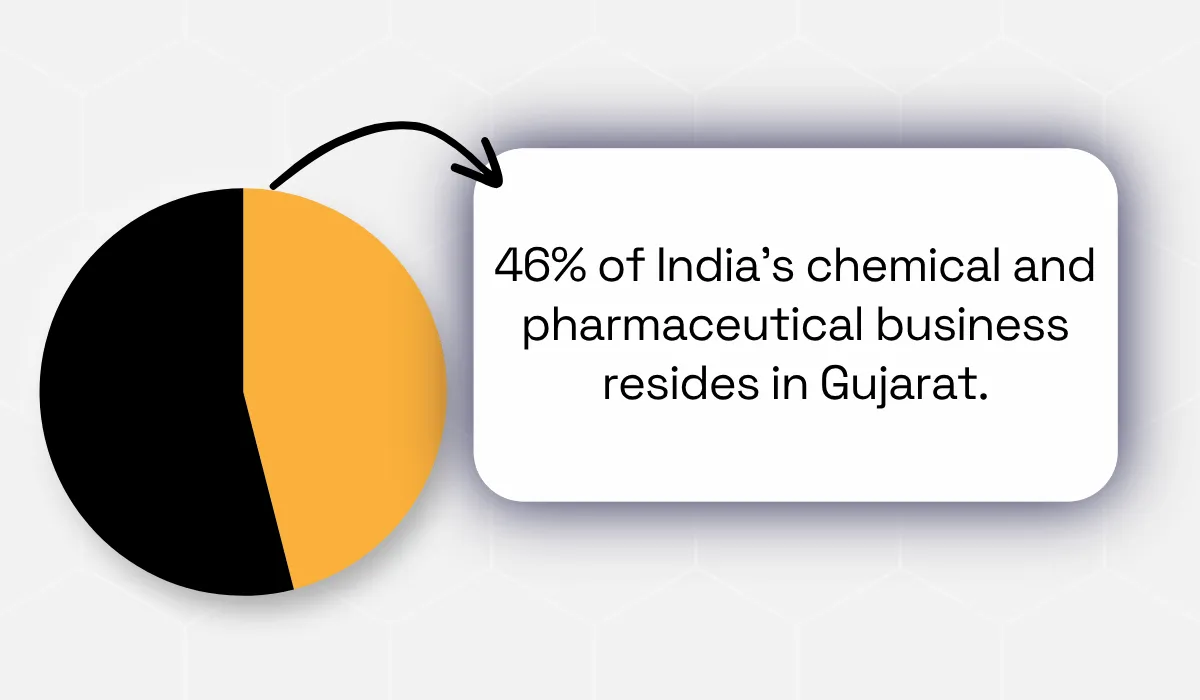
For a cursory overview, let’s start with Gujarat. This state anchors India’s chemicals and pharmaceuticals production. The India Brand Equity Foundation (IBEF), the trade promotion body backed by India’s Ministry of Commerce, reports that the state contributes close to half of the country’s chemical exports and hosts thousands of pharmaceutical manufacturing units on top of a strong textiles and engineering goods base.
In the state of Maharashtra and cities like Mumbai, Pune, Nashik, and Aurangabad, industries like automotives, machinery, electronics, and pharmaceuticals have incredibly well-established presences that stand out at the country level.
Tamil Nadu, centered around the cities of Chennai, Coimbatore, and Hosur, is India’s automotive stronghold. Regional news agency India Briefing reported that the state accounted for roughly 40 percent of the country’s electric vehicle production in 2023, on top of a long-standing base in electronics and industrial equipment.
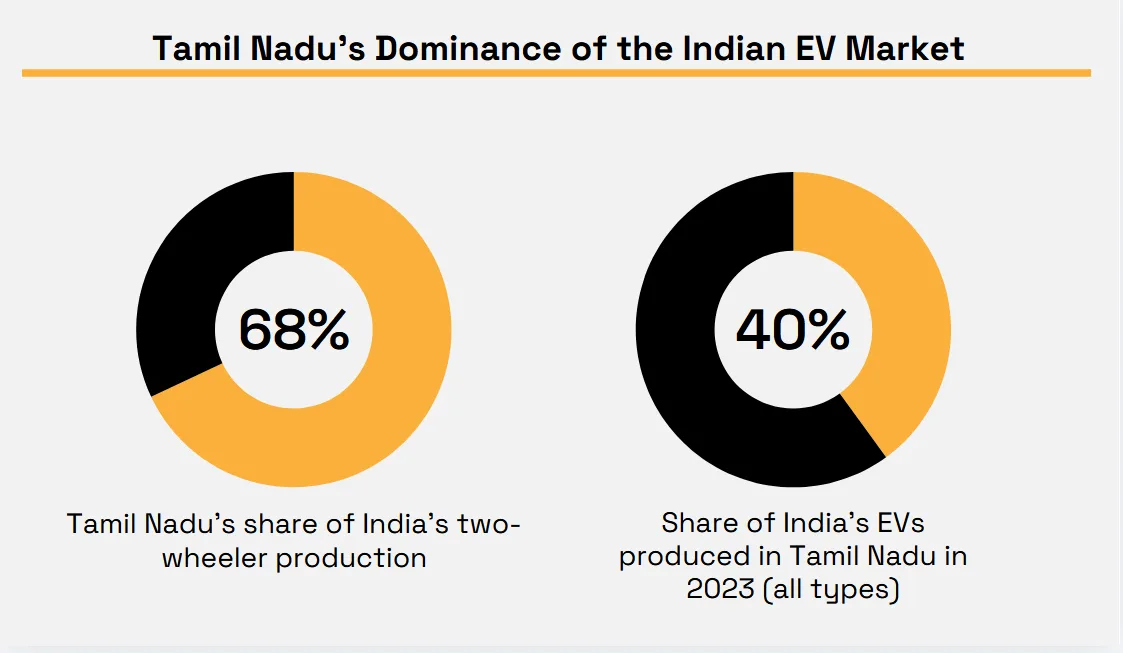
Illustration: Veridion / Data: India Briefing
Karnataka is a different story. Over decades, Bengaluru (the state capital) has cultivated a robust aerospace and electronics cluster, thanks to state-backed R&D infrastructure.
Invest Karnataka, the state government’s own investment portal, puts the region’s share of India’s aerospace exports at roughly 65 percent, with global names like Airbus and Boeing present with regional offices.
Delhi NCR covers electronics, consumer goods, and engineering products at scale.
Punjab has built out machinery, textiles, and agricultural equipment manufacturing on the back of its farming economy.
This glancing overview offers a mere glimpse into India’s complex regional economy, and it’s what a taxonomy needs for your searches to produce reliable results.
Embedding location as a key supplier attribute helps you identify whether a manufacturer matches your requirements in terms of logistics, production capabilities, and – perhaps most importantly – regional expertise.
3. Extract Supplier Intelligence with AI
By now you should be well aware of the enormous size of India’s supplier ecosystem.
This presents you with opportunities as well as challenges.
Yes: at the outset, you will have scores of potential matches. No: you can’t just plug in a list of hits pulled from a directory and expect that the data you found to be up-to-date and usable.
The sheer volume of companies immediately overwhelms your manual supplier sourcing capabilities because verifying bases this large is a herculean task.
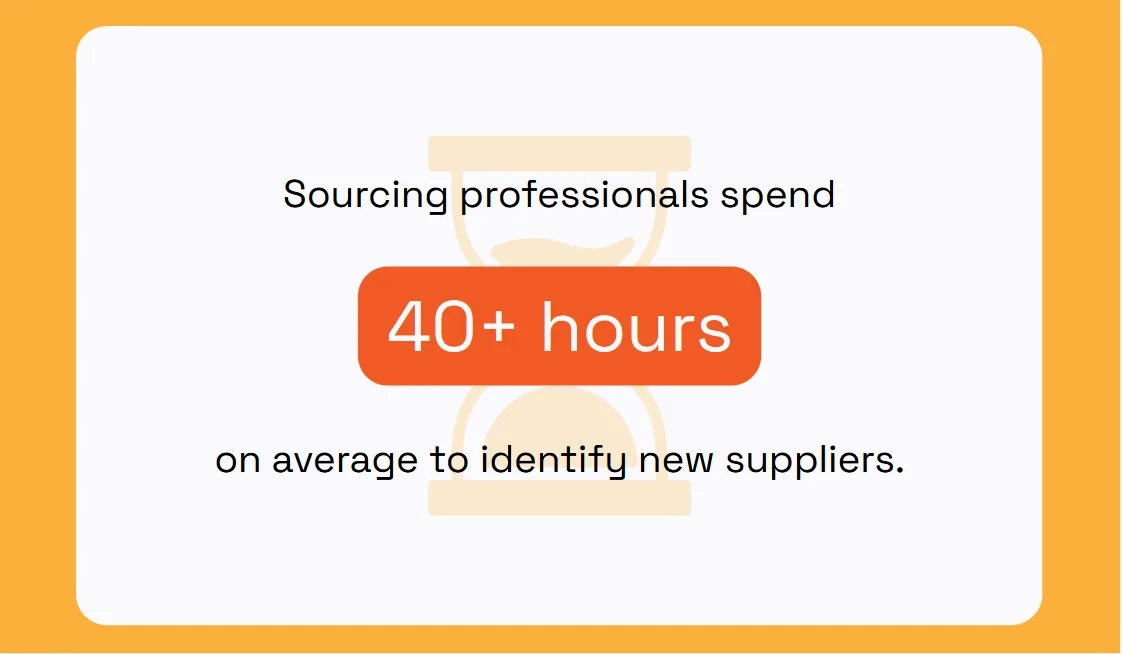
McKinsey found that a typical supplier search takes around three months and over 40 hours of a sourcing professional’s time, and even then, only a few dozen suppliers get considered out of a population running into the thousands.
Immediately, that’s a huge commitment, and India adds its own wrinkle on top of that.
As explained by ClearTax, a fintech and online tax-filing platform in India, the country’s Micro, Small & Medium Enterprises (MSME) registration data is self-reported, with no requirement for suppliers to update their information after registering, so a listing can look current while describing a business that no longer matches it.
Inherently, that makes the available information unreliable.
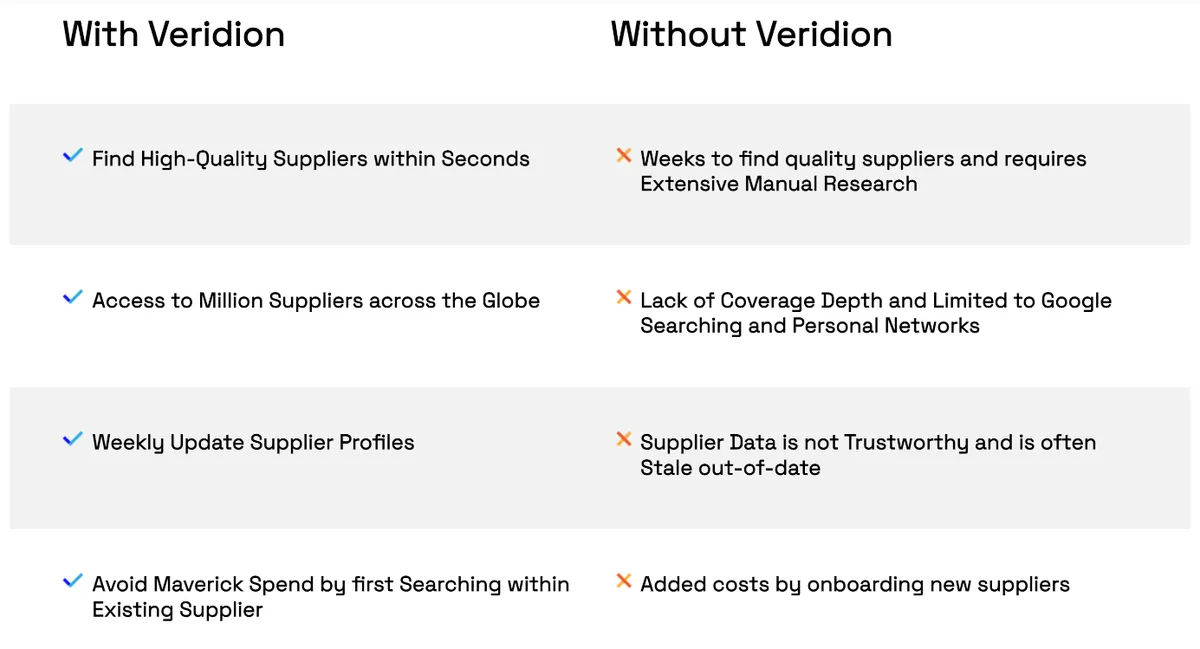
This is where AI platforms like Veridion come in, pulling from live, continuously refreshed data rather than a static list someone filled out once.
Source: Veridion
A supplier that was legitimate and well-matched six months ago might not be either today, and a system that only checks once misses exactly the kind of drift that causes problems later.
Therefore, a reliable system will grant you access to reliable information quickly to save you time, as well as update that data set regularly to always pull the freshest record available.
4. Create AI Supplier Scoring
This is one of the key steps in supplier sourcing. Not every entity that clears your taxonomy and cluster filters is actually the right fit.
To determine that and filter more granularly, you need a scoring model.
AI scoring takes your shortlist and ranks it against the priorities you define, introducing a hierarchy to help you assess whether a potential lead is an all-hands-on-deck situation or just a mere fallback in case a better fit falls through.
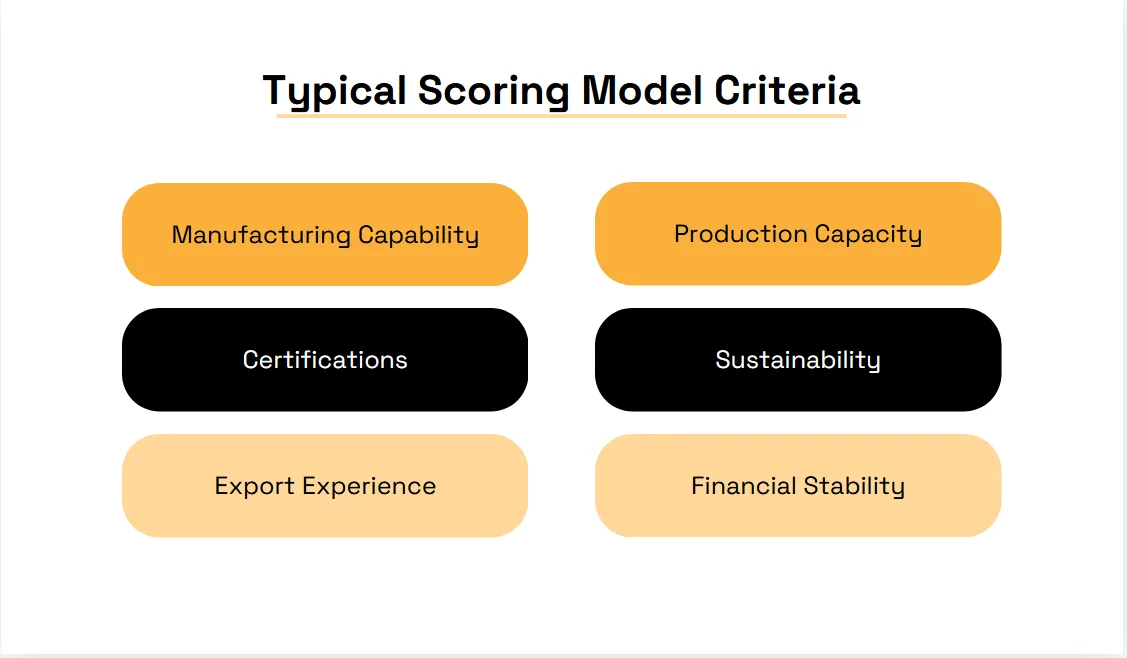
A typical model works by weighting several criteria at once.
Source: Veridion
All of these will be weighted differently, depending on the model that you use. Those weights themselves should also be adjusted – contextually and intelligently.
In an Indian sourcing context, certifications play a particularly significant role. The Bureau of Indian Standards runs a compulsory certification scheme for a wide range of product categories on grounds of public safety, environmental protection, and fair trade, and manufacturers in those categories legally cannot sell without it.
A model treats a certification like this as a hard filter. As such, suppliers missing mandatory BIS approval get disqualified and never reach your shortlist, eliminating the possibility of human error (someone glossing over a key misalignment) and avoiding trouble downstream.
Take sustainability (or overall supplier ESG assessment), for instance. Sustainability rating agency EcoVadis built an AI Assistant into its platform specifically to compare supplier scorecards and benchmark sustainability performance across a buyer’s network, surfacing which suppliers need improvement and where.
That kind of comparison used to mean cross-referencing scorecards by hand, one at a time. Now, it’s a single prompt that yields comprehensive overviews, across every critical attribute.
With improvements to AI platforms, you can cut down on the time required for supplier analysis by several orders of magnitude, and devote those hours and efforts to more pressing matters.
5. Initiate Autonomous Outreach
Once your shortlist is scored and ranked, someone has to draft a request, find the right contact, and send it individually to every supplier on the list.
And if you’re thinking AI can take that step over too, you’d be right.
Once you approve a shortlist, it can draft an RFI or RFQ, personalize it per supplier, and send it without you touching a keyboard.
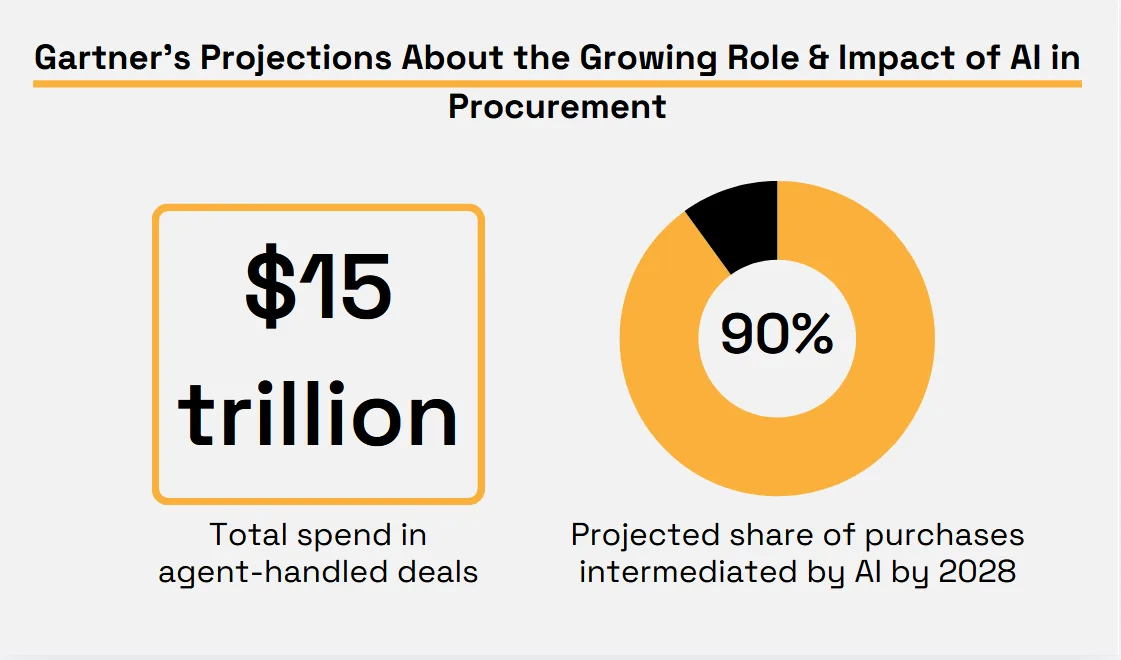
Gartner projects that within three years, AI agents will handle 90 percent of all B2B purchases, moving more than $15 trillion in spend through automated exchanges that increasingly negotiate and contract with minimal human involvement.
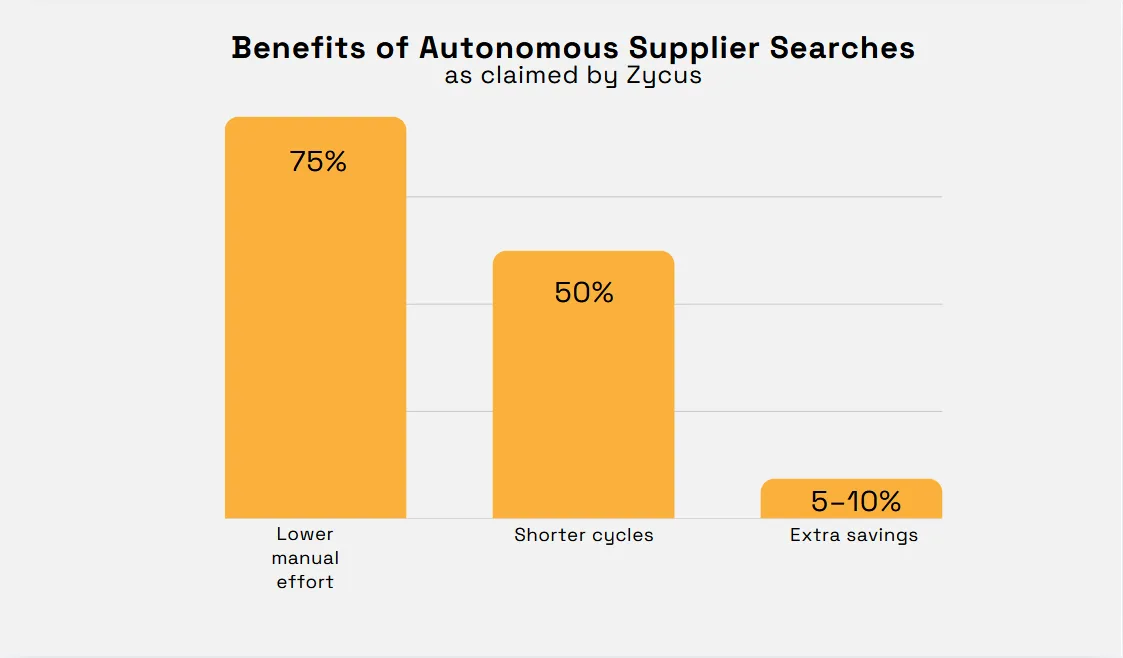
Furthermore, Zycus, a company spearheading the implementation of agentic AI in procurement, notes that organizations deploying autonomous sourcing boast impressive numbers, spread across cost savings, cycle acceleration, and more.
That’s the direction things are moving, but the practical version looks narrower and more supervised.
In reality, the agent drafts the RFQ/RFI document from a category template, sends it to the shortlisted suppliers, evaluates what comes back against technical and commercial criteria, then runs multiple rounds of negotiation, including generating its own counter-offers, all within limits set by a human in advance.
As mentioned, humans are still very much in the loop. But instead of manually typing out e-mails, reading responses, and coming up with the counters themselves, the process relies on human input to set limits and criteria for things like acceptable price ranges and walk-away terms.
More strategic elements still need a human as well. Understanding the nuance behind a negotiation that hinges on a long-term partnership, custom tooling, or an unusual compliance requirement isn’t AI’s forte. Your autonomous outreach should account for that.
The realistic split looks like this: let AI handle the volume, the RFIs, the RFQs, the follow-ups and reminders, and save your team’s attention for resolving fringe cases and outcome-altering judgments.
6. Build an AI Supplier Monitoring System
In a way, we’ve arrived at the finish line, but you could easily say that the real race starts now.
India’s supplier landscape moves fast, and securing a deal isn’t a one-and-done arrangement. Constant monitoring is required to adjust feasibility based on changing factors.
For example, a company that ticked all your boxes and was a strong fit six months ago might have expanded into a new facility, lost a certification, or changed hands entirely.
Unless someone (or something) is actively looking, you won’t pick up on those shifts in real time. Some form of constant supplier management will be key.
McKinsey’s 2025 supply chain risk pulse survey found that visibility into tier-two suppliers actually improved by 22 percent, reversing several years of decline, though that shift was driven specifically by tariff-compliance pressure rather than a broader push for transparency.
Even with that jump, only 42 percent of companies have visibility beyond their tier-one suppliers, against 95 percent who have visibility into tier-one risk.
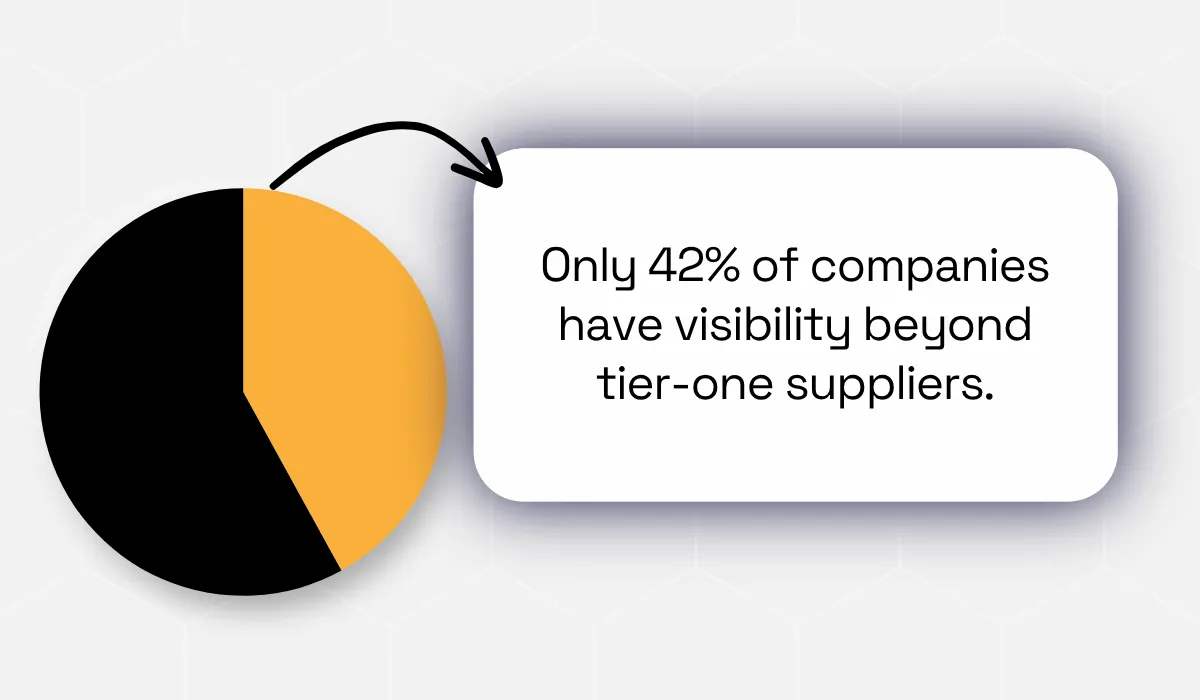
For continuous improvement, you really want to improve on this statistic and expand your visibility.
And here’s where AI once again comes in to help.
It can vigilantly watch over the market for you and disperse early-warning signals pulled from sources your teams wouldn’t have the capacity to check in real time, like local business news or registries that note certification changes.
Other signals, like new manufacturers entering the market, factory expansions, or potential supply chain risks, can flag matters before you experience disruption.
In isolation, these signals don’t amount to much. Track them together over time, though, and you’ll create a robust supplier system that preemptively warns you about issues and proactively helps you solve them.
Conclusion
Finding the right supplier in India is challenging because of regional complexity that’s easy to underestimate.
Addressing those challenges requires a tailored taxonomy, disambiguating geographic signals, and intelligence over guesswork.
Leverage AI to assist you with the individual steps, and you’ll end up with a living, evolving supplier sourcing system that stays current and useful at any time, rather than leads you astray.
Articles
Discuss how these trends affect your organization.
Our analysts are available for a short call. Bring a specific question and we will ground it in the data.
Insights
Keep reading
More analysis, research, and outcomes grounded in live company intelligence.
How to Find the Right Suppliers for Your Business
Want to find reliable suppliers for your business? This guide will show you how to identify, evaluate, and choose the right ones.
Supplier Sourcing Software Solutions to Know About
Discover top supplier sourcing software solutions that streamline procurement and enhance supplier diversity.
Supplier Sourcing: What CPOs Need to Know
Supplier sourcing is not just about finding the cheapest suppliers. It’s about building long-term partnerships that move you forward.