Insights / Articles
How to Gather Healthcare Market Intelligence That Supports Better Decisions
Struggling to make informed healthcare decisions? Get actionable healthcare market intelligence to guide your strategy and drive better outcomes.

- The healthcare data storage market is projected to grow to USD 21.70 billion by 2034.
- 47% of healthcare data goes underutilized in clinical and business decision-making.
- Only 8% of health system leaders described their analytics capabilities as mature.
Before you decide to enter a new market, launch a healthcare product, or partner with another organization, you'll spend time sorting through reports and market signals.
The real challenge is figuring out which information is worth relying on.
Healthcare data comes from many different sources, and each one tells you something different about the market.
That's why you need a clear way to collect, verify, and communicate what you find.
In this guide, you'll learn how to gather healthcare market intelligence that helps you make informed business decisions.
Define a Clear Objective
A clear objective determines the questions you'll ask and the information you'll need to answer them.
If you're preparing for a pharmaceutical launch, you'll investigate different issues than if you're evaluating an acquisition or expanding into a new market.
That sounds simple. However, it's one of the easiest steps to overlook. You now have access to more data than ever before.
According to Fortune Business Insights, the healthcare data storage market is projected to grow from USD 9.20 billion in 2026 to USD 21.70 billion by 2034, reflecting the growing volume of healthcare data.
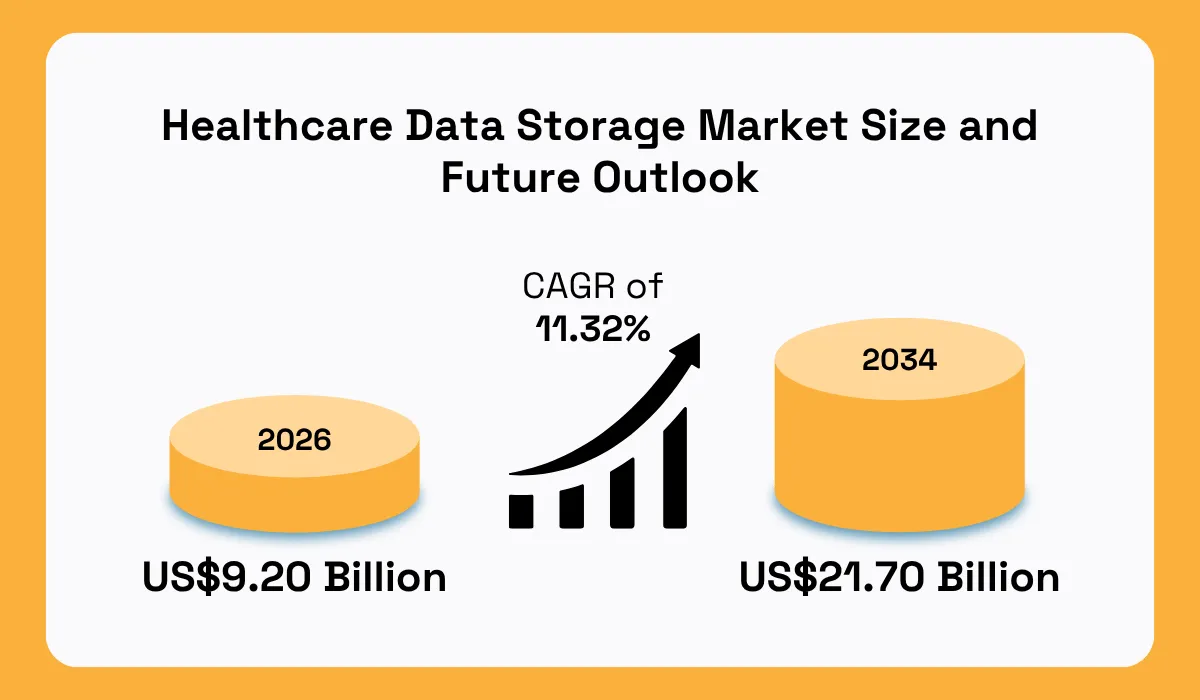
Illustration: Veridion / Data: Fortune Business Insights
When so many sources are available, it's easy to collect more information than you'll actually use. You spend more time sorting through data and less time focusing on the question you're trying to answer.
The effect becomes clearer when you look at how healthcare organizations use the data they already collect.
A 2024 HIMSS and Arcadia survey found that 47% of healthcare data goes underutilized in clinical and business decision-making.
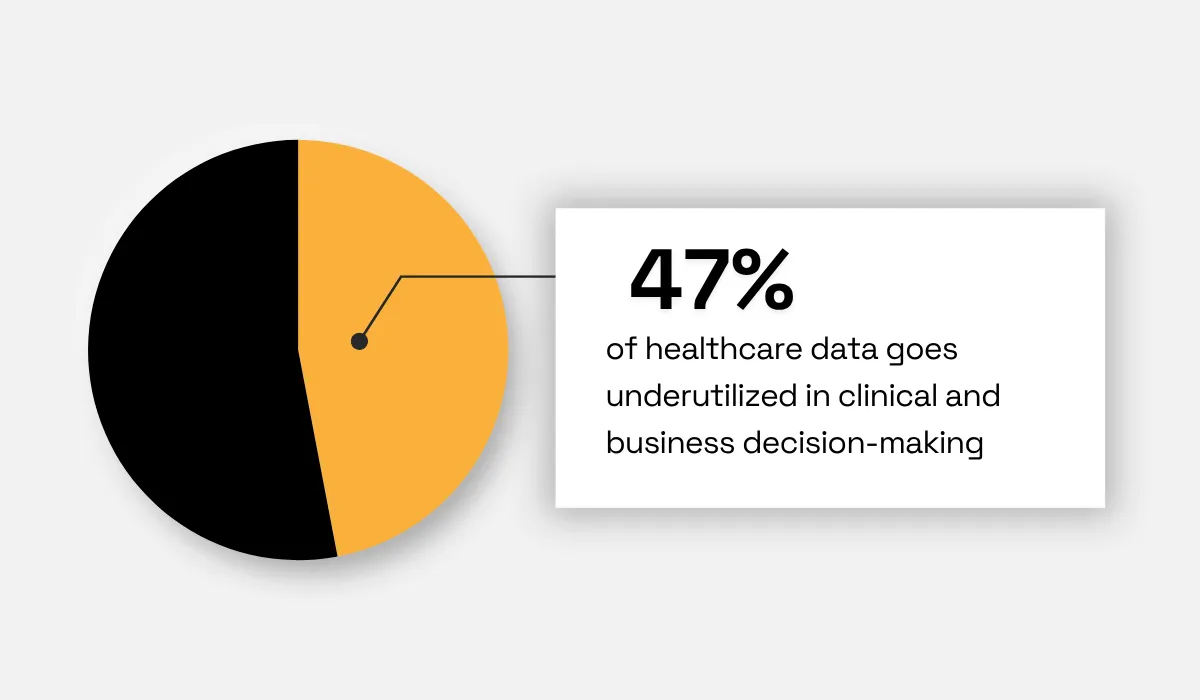
If nearly half of the data you collect never informs a decision, collecting more information isn't always the answer. A clear objective helps you identify the information you'll actually use.
One way to create that focus is with a SMART objective.
It defines what you're trying to achieve, how success will be measured, who will use the findings, and when the work needs to be completed.
Once those boundaries are in place, it becomes much easier to decide which data supports the objective and which can wait for another project.
Oak Street Health shows how that works in practice.
As the company expanded its value-based primary care network, it wasn't looking for every market with a large Medicare population. It wanted to identify communities where Medicare patients had limited access to primary care.
That objective narrowed the data that mattered.
So rather than reviewing every demographic trend or provider market, Oak Street focused on communities with high concentrations of Medicare beneficiaries and limited access to primary care.
As a result, many of its centers were intentionally opened in Medically Underserved Areas (MUA) and Health Professional Shortage Areas (HPSA) because those locations aligned with that objective.
By defining the objective first, the company could focus its market intelligence on the information most likely to support its expansion strategy.
This shows that a clear objective helps you identify the data most likely to influence the outcome you're trying to achieve.
Understand the Regulatory Environment
Every healthcare market operates within a regulatory framework. So before you gather market intelligence, identify the regulations that apply to your objective.
If you're launching a pharmaceutical product, start with FDA approval requirements, market exclusivity rules, and payer reimbursement policies.
If you're evaluating a provider partnership, look at state licensing requirements, physician referral laws, and data-sharing agreements.
If you're bringing a digital health product to market, you'll also need to understand HIPAA, the FTC's consumer protection rules, and Software as a Medical Device (SaMD) requirements.
This process creates a regulatory map before you begin gathering market intelligence.
It helps you identify the agencies involved, the rules they enforce, and the requirements that could influence your objective.
Regulatory Body | Governs | Why it matters for market intelligence |
|---|---|---|
HIPAA / OCR | Patient privacy and PHI | Determines what healthcare data can legally be collected, shared, and monetized. |
FTC / DOJ | Antitrust and consumer protection | Shapes M&A viability, digital health data sharing, and cross-market partnerships. |
CMS | Medicare/Medicaid reimbursement | Influences market access, provider adoption, pricing limits, and commercial viability. |
FDA | Drug, device, and software approvals | Determines when products can enter the market and under what clinical conditions. |
GoodRx shows why understanding those regulations matters.
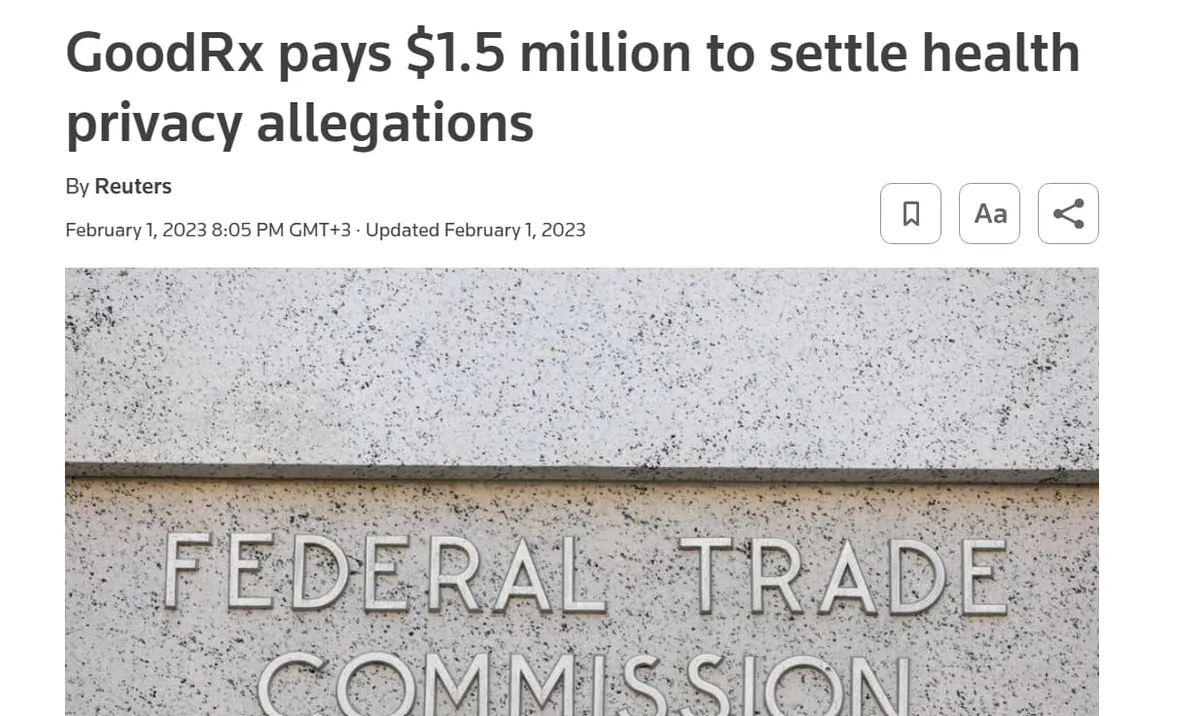
In 2023, the U.S. Federal Trade Commission fined GoodRx $1.5 million after finding that the company had shared sensitive consumer health information with advertising platforms.
GoodRx believed its data-sharing practices fell outside HIPAA because it wasn't a traditional healthcare provider.
Regulators instead enforced the FTC's Health Breach Notification Rule and required the company to change how it handled consumer health data.
If you misunderstand the rules governing a market, you can base your strategy on information that regulators later prevent you from collecting, sharing, or using.
Source: Reuters
You should also treat regulatory mapping as an ongoing process. Healthcare regulations change regularly, so keep monitoring the agencies and policies that affect your objective.
Even a small policy update can change who can access a product or how providers deliver care. Dexcom provides a good example.
The company monitored upcoming CMS reimbursement changes before Medicare expanded eligibility for continuous glucose monitors in 2023.
Because it anticipated the policy shift, Dexcom aligned the rollout of its G7 Continuous Glucose Monitoring System with the new reimbursement landscape and expanded pharmacy distribution as coverage increased.
As a result, the company reported more than $4 billion in revenue during 2024.
Understanding the regulatory environment helps you build market intelligence around the market as it exists today.
Identify the Best Data Sources
No single data source can provide all the information you need to achieve your objective.
If you're preparing for an oncology drug launch, you may need to identify patients who qualify for the treatment, the physicians caring for those patients, and how the treatment is used in clinical practice.
As you work through that list, you'll probably find that the information comes from different places.
That means you'll need to match each piece of information to the source that can provide it.
Take claims data as an example.
It can show which treatments patients receive and which physicians prescribe them. However, it cannot show the biomarkers or genomic information that determine whether many patients qualify for targeted cancer therapies.
That information is usually found in electronic health records and clinical datasets instead.
COTA Healthcare and Komodo Health show how combining multiple data sources can help you answer a single objective.
Pharmaceutical companies often relied on claims data to understand treatment patterns, but they still couldn't identify the patients who carried the genetic mutations required for precision medicine.
So by linking COTA's clinical and genomic data with Komodo's Healthcare Map, commercial teams can now answer both parts of the objective using connected data instead of working with separate datasets.
Arif Nathoo, MD, CEO of Komodo Health, summarized the value of combining data sources this way:
“Each dataset allows a user to answer a specific set of questions, but combined datasets can reveal so much more nuance. For example, by combining deep genomics data with EMR and claims data, you can generate real-world evidence that answers questions across a product’s life cycle.“
The same process applies regardless of your objective. Start by identifying the information you need, then find the sources that can provide it.
If you're evaluating hospitals for a partnership, healthcare datasets can tell you about patient volumes, services, and quality measures. If you also need to understand ownership, facility locations, or recent expansions, you'll need company information as well.
The information you need should always determine the source you use. However, before you rely on any source, check if that information is still current.
Information that was accurate a few months ago may no longer reflect the market you're evaluating.
Researchers from the University of Colorado and HiLabs found how quickly that can happen. After examining provider directory information for more than 449,000 U.S. physicians across five major health insurers, they found inconsistencies in 81% of provider directory entries.
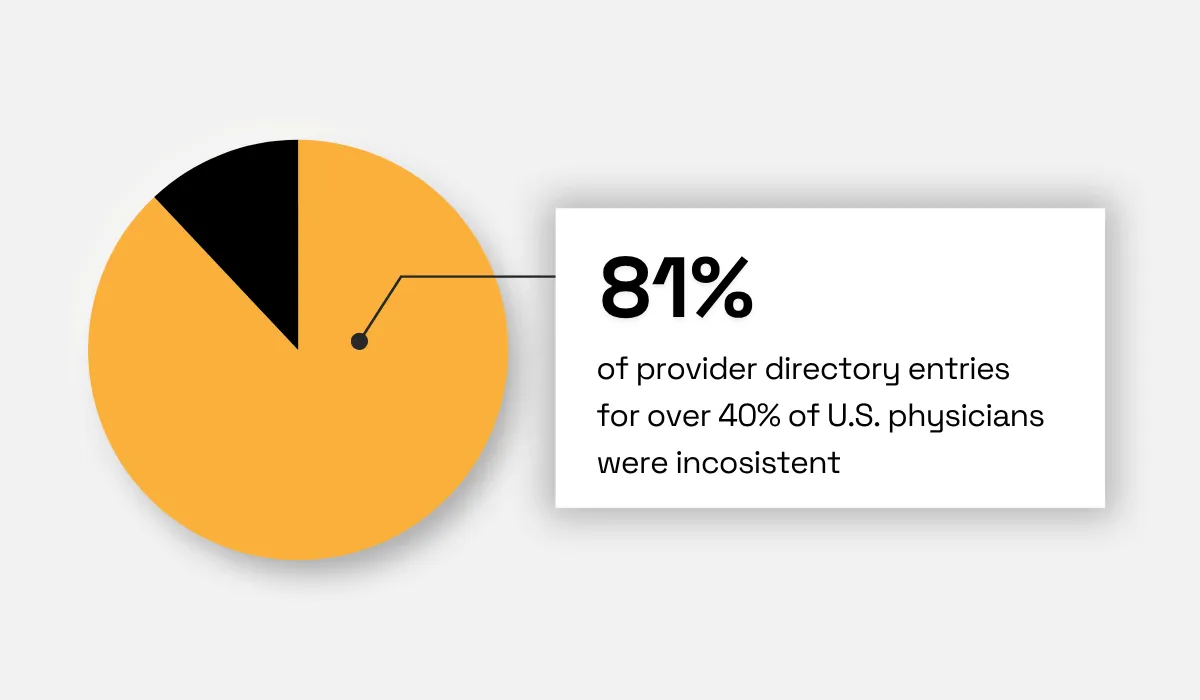
Illustration: Veridion / Data: Jama Network
If your objective depends on understanding providers, hospitals, suppliers, or manufacturers, you need company information that changes as those organizations change.
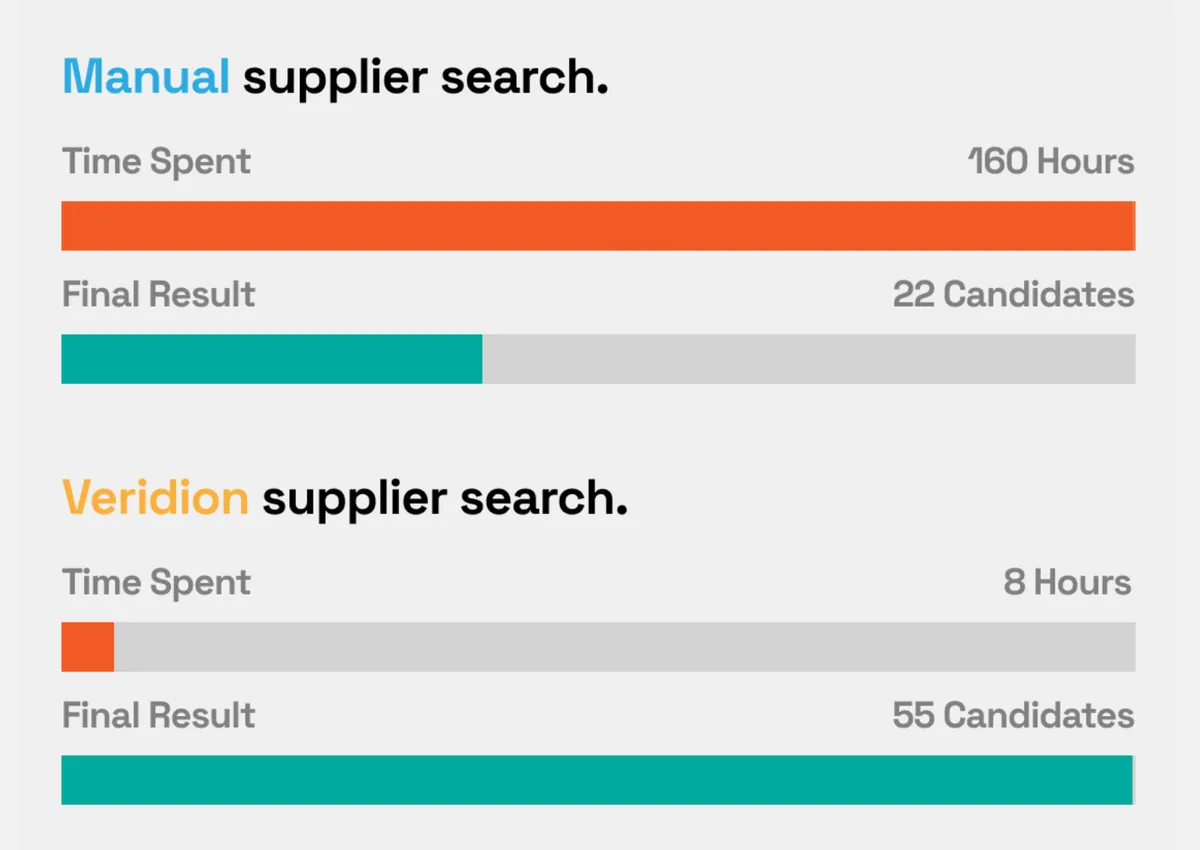
Veridion, an AI-powered business intelligence platform, helps you answer those questions without having to verify every company manually.
You can search for healthcare organizations that match specific criteria, enrich your existing records with current company information, and monitor changes.
Source: Veridion
Its company profiles are refreshed weekly and include information such as ownership data, business locations, industry classifications, and operational footprint.
This gives you a more accurate view of the organizations behind the healthcare market and reduces the time spent validating company information.
The best data sources are the ones that provide the information your objective requires. Once you've identified that information, you can combine the sources that help you build a complete picture.
Cross-Check Your Data
Cross-checking your data helps you confirm that the information you're using is accurate, complete, and current.
As you work toward your objective, you'll probably gather information from several sources, including electronic health records, claims databases, provider directories, and regulatory filings.
Each source is created for a different purpose, so each has its own limitations.
That's why you shouldn't rely on a single source for information that could influence your objective.
A study published in JAMIA Open shows why that's important.
The researchers found that electronic health records only captured care delivered within a particular health system.
Because patients often received care elsewhere, relying on those records alone would have left important gaps.
To check that they had a complete picture, the researchers compared the records with Medicare claims data, which captured care across different providers and care settings.
Using both sources gave them a more complete view of each patient's healthcare journey than either source could provide alone.
Completeness isn't the only thing you need to verify. You should also check whether important information is still current.
Healthcare organizations change constantly. Providers retire, relocate, stop accepting certain health plans, or leave a network altogether.
If your data hasn't been updated, your analysis can quickly drift away from the market you're trying to understand.
A 2025 review by the Office of Inspector General found that 72% of inactive behavioral health providers listed in selected Medicare Advantage and Medicaid managed care directories should not have been listed as network providers.
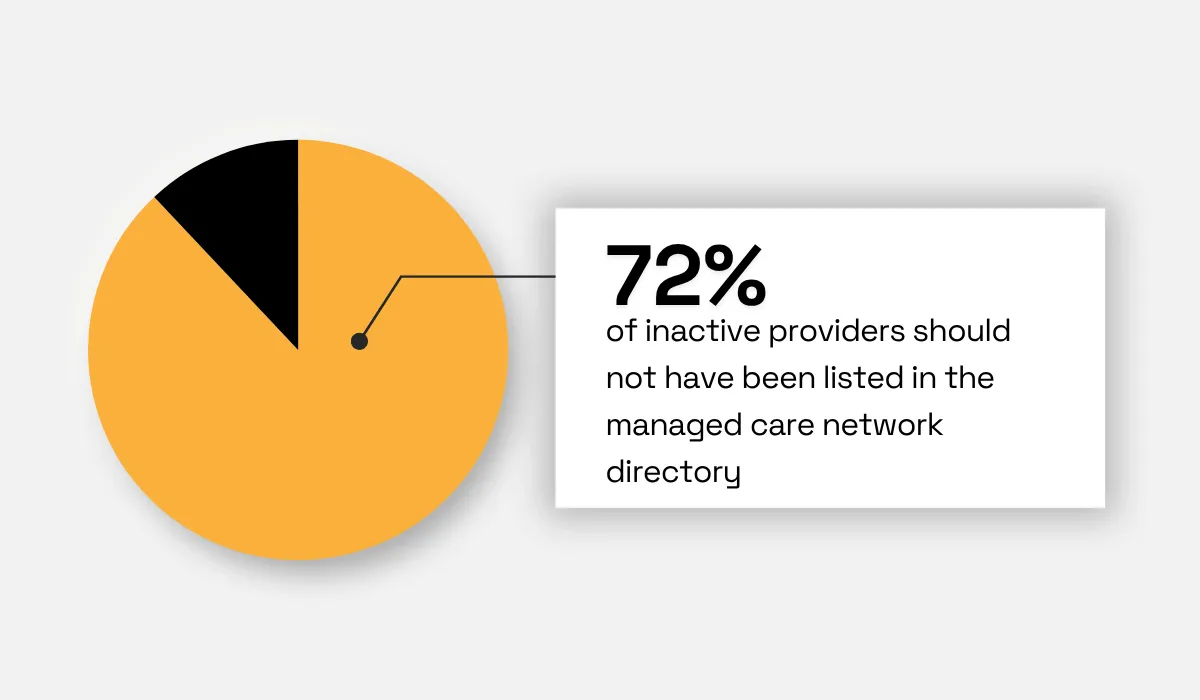
Illustration: Veridion / Data: HHS Office of Inspector General
In fact, many no longer worked at the listed location or were no longer treating patients covered by the plan.
The report recommended using additional data to monitor provider networks and improve directory accuracy.
So before you use information that could influence your objective, ask whether another trusted source can confirm it or fill in information that's missing.
Taking that extra step helps you make decisions based on information you can trust.
Present Insights in a Business-Friendly Format
The people reading your report don't need to see every step of your research. Instead, they need enough information to decide what to do next.
So present your findings in a way that answers the question behind your objective before you explain how you reached that conclusion.
Many healthcare organizations are working to improve how they share information.
In a survey of hospital and health system leaders, 80% said creating and sharing high-quality data was one of their top strategic priorities.
Yet only 8% described their analytics capabilities as very mature, while 63% still relied on basic tools such as Excel.
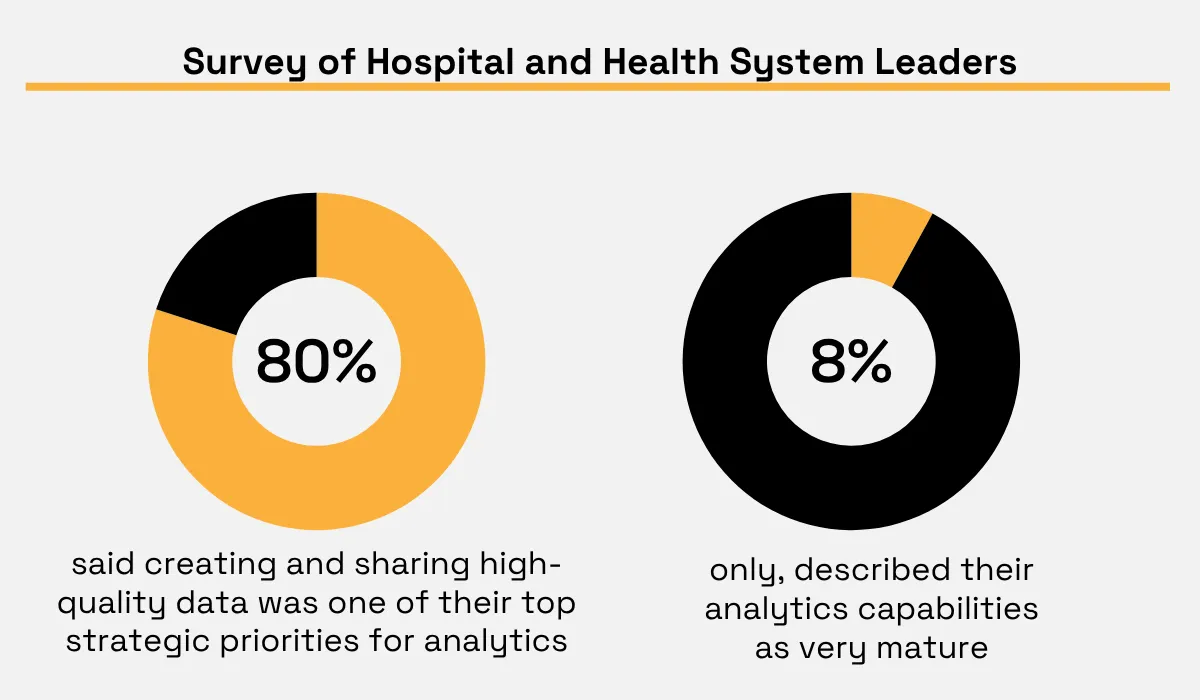
Illustration: Veridion / Data: Intersystems
The survey also found that members of the C-suite were among the most frequent users of analytics outside dedicated analytics teams.
That means the people reading your report are often responsible for deciding where to invest, who to partner with, or which markets to enter.
Make it easy for them to see what you found and why it matters.
Mediklug applied the same idea to its inventory planning process.
The company already had detailed clinic-level consumption data from its electronic medical record system.
However, procurement teams still struggled to match inventory with customer demand because they had to work through large amounts of operational data before deciding what to purchase.
Mediklug addressed that problem by introducing a business intelligence dashboard based on demand-driven supply chain principles.
The dashboard organized the same operational data around demand patterns, inventory gaps, and purchasing priorities.
As a result, procurement teams could quickly identify which medicines needed attention instead of working through raw operational data first. Users found the dashboard practical and effective for supporting day-to-day inventory planning.
You can use the same approach when presenting healthcare market intelligence.
Organize your findings around the decision your audience needs to make, then provide the supporting information behind it.
That helps stakeholders understand your findings more quickly and move on to discussing what to do next.
Conclusion
Healthcare market intelligence can help you identify new opportunities, evaluate potential partners, understand competitors, and assess whether a market is worth pursuing.
Getting there starts with a clear objective.
Once you know what you're trying to answer, it becomes much easier to identify the right information, verify what matters most, and present your findings in a way that supports the decision.
The result is market intelligence that helps you make informed business decisions.
Articles
Discuss how these trends affect your organization.
Our analysts are available for a short call. Bring a specific question and we will ground it in the data.
Insights
Keep reading
More analysis, research, and outcomes grounded in live company intelligence.
How to Gather Market Intelligence In 5 Steps
In this guide, we're breaking down the five key steps you need to take to gather market intelligence that drives real action.
How to Build a Strong Market Intelligence Strategy
Learn how to build a strong market intelligence strategy that helps you track trends, understand competitors, and make smarter decisions.
5 Trends Shaping the Future of Market Intelligence
Want to future-proof your business strategy? Explore the top trends defining the future of market intelligence.