Insights / Articles
Promises vs. Actions: Tracking Real-Time ESG News to Expose Corporate Greenwashing
We will explore how real-time ESG news for greenwashing will help track corporate behavior and identify inconsistencies in sustainability commitments.

- ESG assurance still falls short of verifying whether sustainability claims accurately reflect a company's actual practices, leaving room for selective or misleading reporting.
- Only 31% of companies publishing sustainability information obtain external verification of those disclosures, meaning most ESG claims still rely primarily on self-reporting.
- ESG controversies often surface through independent reporting months before they appear in annual disclosures, making static reports a poor early-warning system.
A sustainability report can win design awards and still misrepresent the business behind it.
If you're vetting that business as a supplier or backing it as an investor, that misrepresented report misleads you.
It becomes a liability baked into your compliance filings and risk assessments, one that comes out at the worst possible time, when a regulator, journalist, or watchdog exposes it first.
That risk persists because the checking mechanism only reaches the accounting figures, and the reporting cycle only runs once a year, which leaves a significant amount that can happen between one disclosure and the next without anyone noticing.
In this article, we will look at why static annual reports struggle to catch greenwashing, and what tracking real-world signals against a company’s public claims looks like in practice.
Why Static Annual Reports Miss Real Greenwashing
An airtight ESG report isn't proof of good corporate behaviour.
It has a structural limitation: it cannot prove that a company's actions continue to match its sustainability claims after publication.
Greenwashing is often seen between report cycles through new controversies, selective disclosure, and actions contradicting those earlier sustainability claims.
That's because ESG reports are produced at a single point in time, and the assurance a report receives typically focuses on the scope of the engagement rather than independently verifying every sustainability claim or what happens after publication.
These limitations stem from three core reasons, detailed in the following sections.
Reports Are Written to Persuade, Not Just Disclose
Annual and sustainability reports aren't published simply to record what happened.
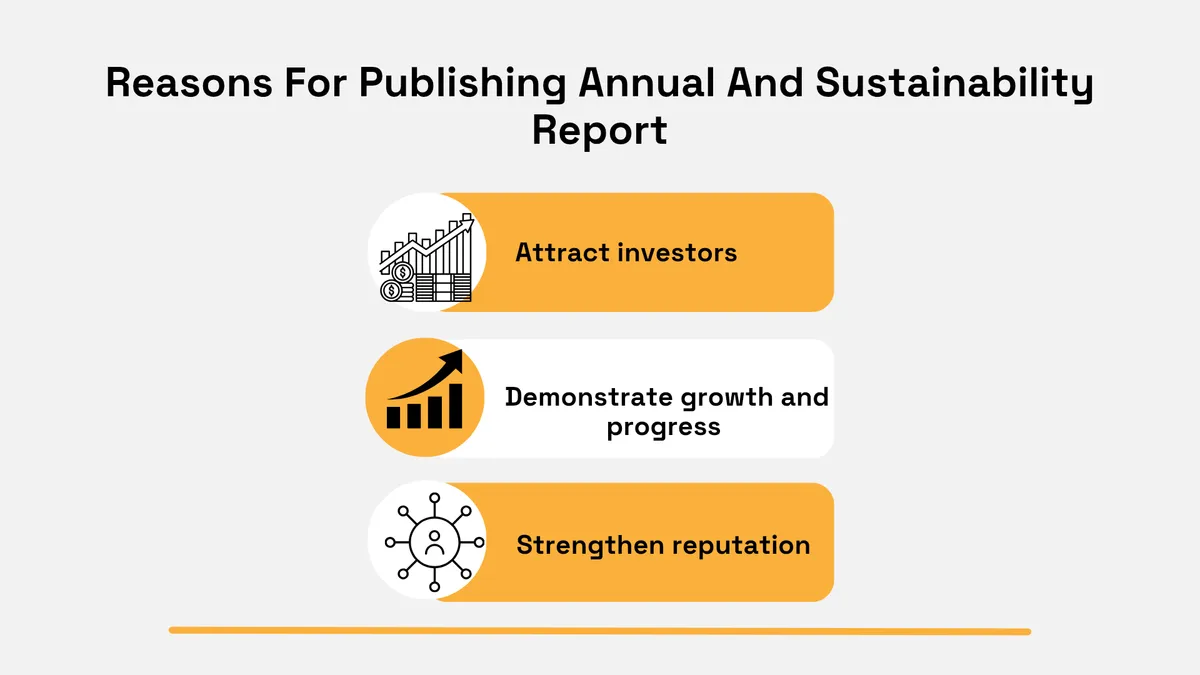
That's part of the reason, but they're also written to attract investors, demonstrate growth, and strengthen reputation.
Source: Veridion
That makes them just as much about building public confidence as they are about disclosing performance.
That doesn't mean the information they contain leads to greenwashing.
More often, the greenwashing is in how they tell their story.
Their report could highlight sustainability initiatives without backing them up with comparable KPIs, or it could cover every possible ESG topic at a high level instead of focusing on the issues most material to the business.
The individual statements may be accurate, but the overall image can create an impression that doesn't reflect the company's overall ESG performance.
Wintershall Dea, a German oil and gas exploration and production company, found out first-hand.
Environmental Action Germany filed a criminal complaint alleging the company’s 2022 management report misrepresented or omitted legally required environmental and climate disclosures.
The report had already cleared standard review before Frankfurt prosecutors opened a formal investigation in April 2024.
Wintershall Dea is far from the only company to face scrutiny over how sustainability information is presented.
It does, however, show how quickly a carefully constructed ESG narrative can fall under pressure once outside evidence tells a different story.
A Year Is Too Long a Gap to Catch Anything
ESG controversies do not wait for the next reporting cycle; they can pop up at any point during the year.
Despite this, many sustainability disclosures are still only happening annually, leaving months where a company's public commitments can diverge from what's happening without any official update.
A survey by Boston Consulting Group found that adverse media coverage tied to emissions reporting is the top ESG risk organisations track, with 33% of respondents ranking it as a leading concern.
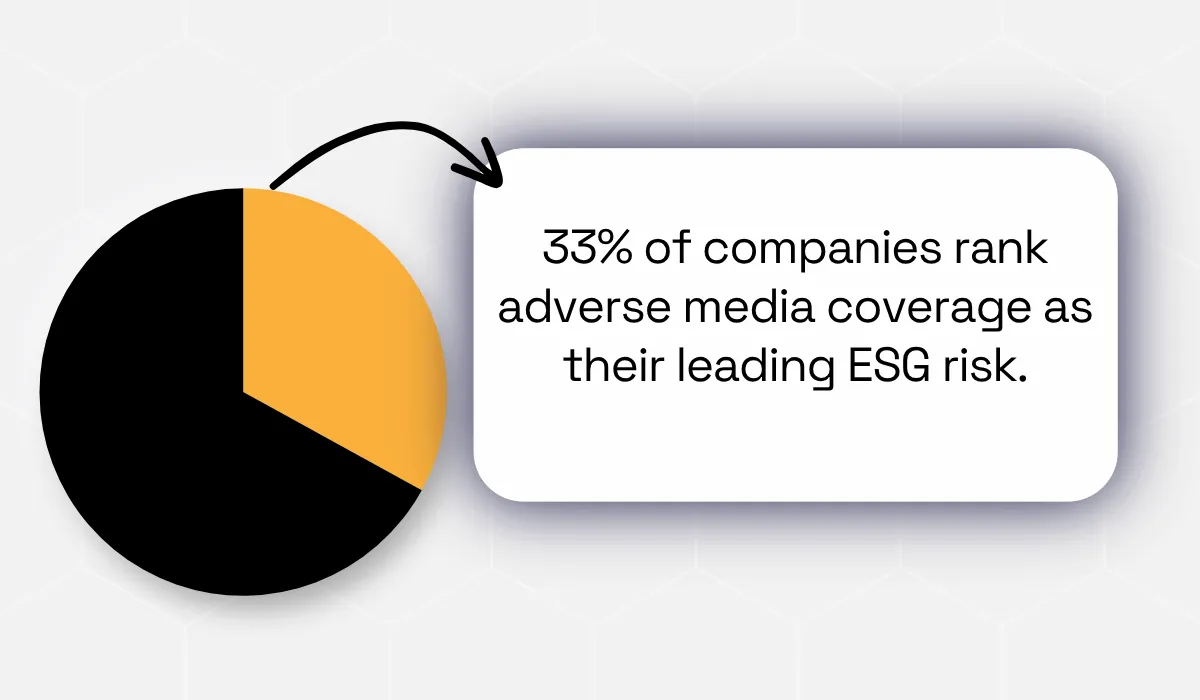
Illustration: Veridion / Data: Boston Consulting Group
Despite recognising how quickly reputational issues can escalate, firms surveyed had not implemented a holistic framework to monitor and respond to those risks as they develop.
Enviva, the world’s largest wood pellet producer, waited too long to address controversies surrounding their sourcing and experienced how bad it can get.
In December 2022, environmental news outlet Mongabay published a whistleblower investigation alleging that the world's largest wood pellet producer's sourcing and sustainability practices contradicted its public environmental claims.
The investigation put those allegations into the public domain more than a year before the company's disclosures reflected this growing crisis.
Over the following months, Enviva reported third-quarter losses, replaced its CEO, and ultimately filed for bankruptcy in March 2024, roughly 15 months after Mongabay's investigation first appeared.
The significance of this is that independent reporting brought potential ESG issues to light long before official company reporting reflected them.
When a report reflects a controversy, the controversy is already old news.
Monitoring needs a clock of its own, independent of the one the company sets.
Selective Transparency Hides in Plain Sight
Not every greenwashing case involves a false statement.
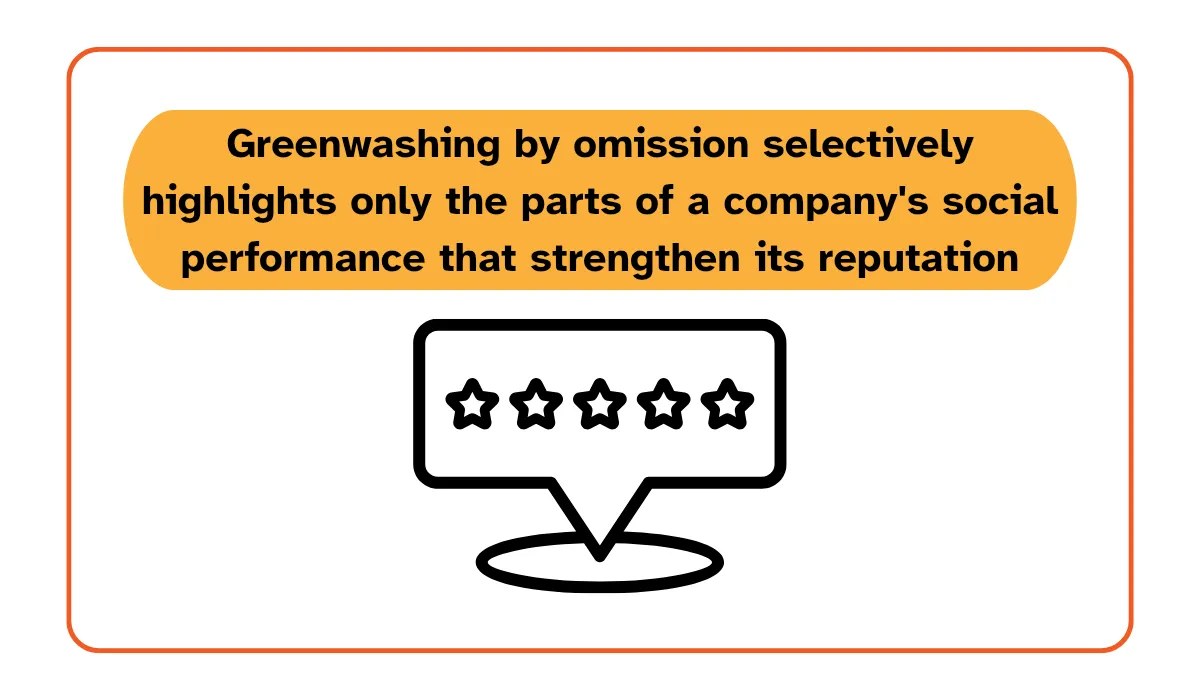
One of the hardest forms of greenwashing to identify is selective transparency, where a company highlights the parts of its environmental or social performance that strengthen its reputation while leaving out information that would change how those claims are interpreted.
When this is done, nothing they say is necessarily inaccurate, but the readers are only seeing part of the picture.
Source: Veridion
That makes omission much harder to detect than an outright false statement.
A false claim can easily be checked against available evidence.
An omission leaves nothing obvious to verify, and unless those disclosures are compared with independent reporting, regulatory actions, or other public information, the absence often goes unnoticed.
A perfect example of this happened with Lloyds Bank.
In December 2024, the UK's Advertising Standards Authority ruled that one of the bank's LinkedIn advertisements created the impression that renewable energy formed a significant proportion of its financing activities, while omitting material information about its continued financing of carbon-intensive businesses.
Regulators had already identified the same selective disclosure pattern when they banned HSBC advertisements in 2022.
Neither case centred on fabricated environmental claims.
However, material information had been left out, leaving audiences with a more favourable impression than the full picture supported.
Assessing ESG performance by reviewing annual disclosures alone is difficult. It only becomes visible when a company's public claims are tested against information coming from outside the company itself.
Some of the hardest cases to catch involve a company telling the truth about one part of its business while staying quiet about another part that complicates the story.
How Real-Time ESG Monitoring Mitigates Greenwashing Risks
Once you stop reading what a company says about itself and start tracking what is independently observable about it, greenwashing gets a lot harder to sustain.
That is the underlying idea behind real-time ESG monitoring.
You don't need to wait for a company’s own disclosure and hope it is complete; this approach tracks the two following components to determine if an ESG position holds up.
Weighs Real-World Actions Over Self-Reported Claims
Public commitments are valuable context, but they are only one part of an ESG assessment.
They explain what a company intends to do, not necessarily what it has done.
Real-world actions, by contrast, leave independently observable evidence through:
- Regulatory actions
- Third-party reporting
- Public announcements
- Other external sources
These can be verified without relying on the company's own narrative.
According to the OECD, only 31% of companies publishing sustainability information had obtained external verification or assurance over those disclosures.
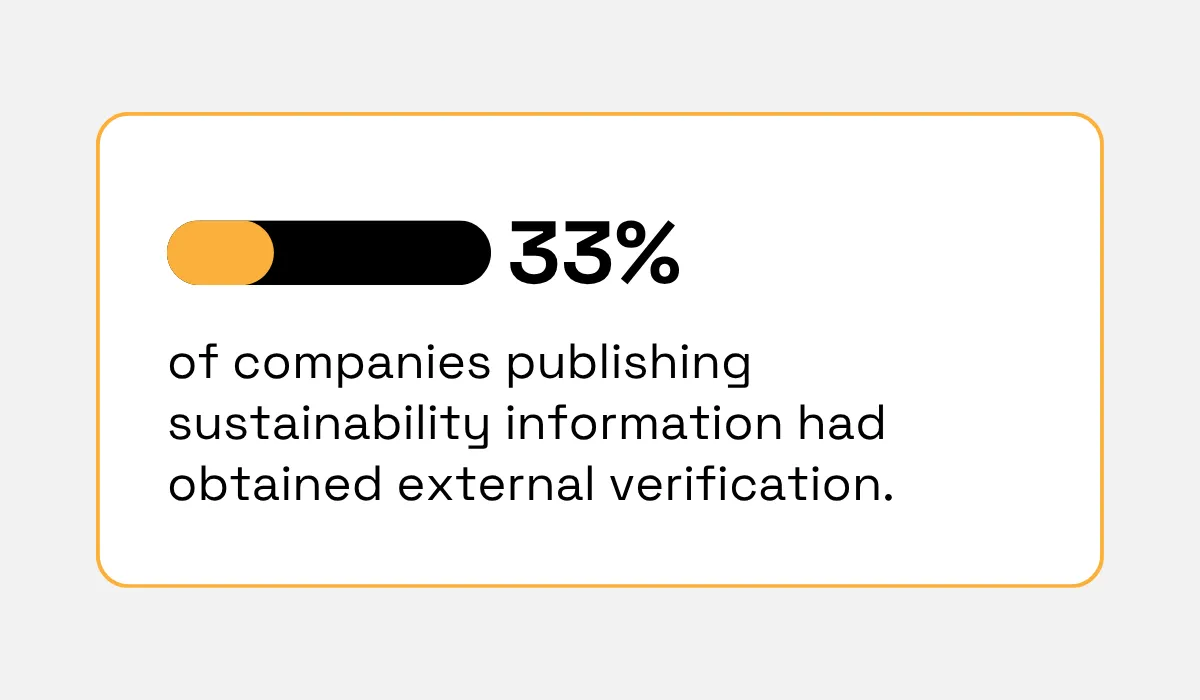
For most organizations, sustainability commitments still rely primarily on self-reported information rather than independent verification.
Veridion's ESG methodology is built for independent verification.
Instead of combining commitments and observed actions into a single assessment, it evaluates commitments and observed actions separately and gives greater weight to independently verifiable evidence.
Public commitments are extracted verbatim from a company's digital footprint, together with the source snippet and URL, preserving the exact language.
A separate News module then continuously tracks independently reported ESG developments and controversies to ensure that observable actions influence the assessment independently of the commitments a company has published.
Keeping those two sources separate also makes the assessment easier to audit.
You can see exactly what a company claimed, where that claim originated, and what subsequent actions support or contradict it.
Refreshes Weekly So Controversies Surface in Days, Not Months
Catching a controversy while it is still unfolding requires the underlying data to move faster than a yearly cycle ever could.
If your data does not refresh until the next reporting cycle, you are making decisions based on a version of the business that no longer exists.
That explains why 85% of institutional investors surveyed by EY in 2024 believe greenwashing is becoming a bigger problem, despite sustainability reporting becoming increasingly common.
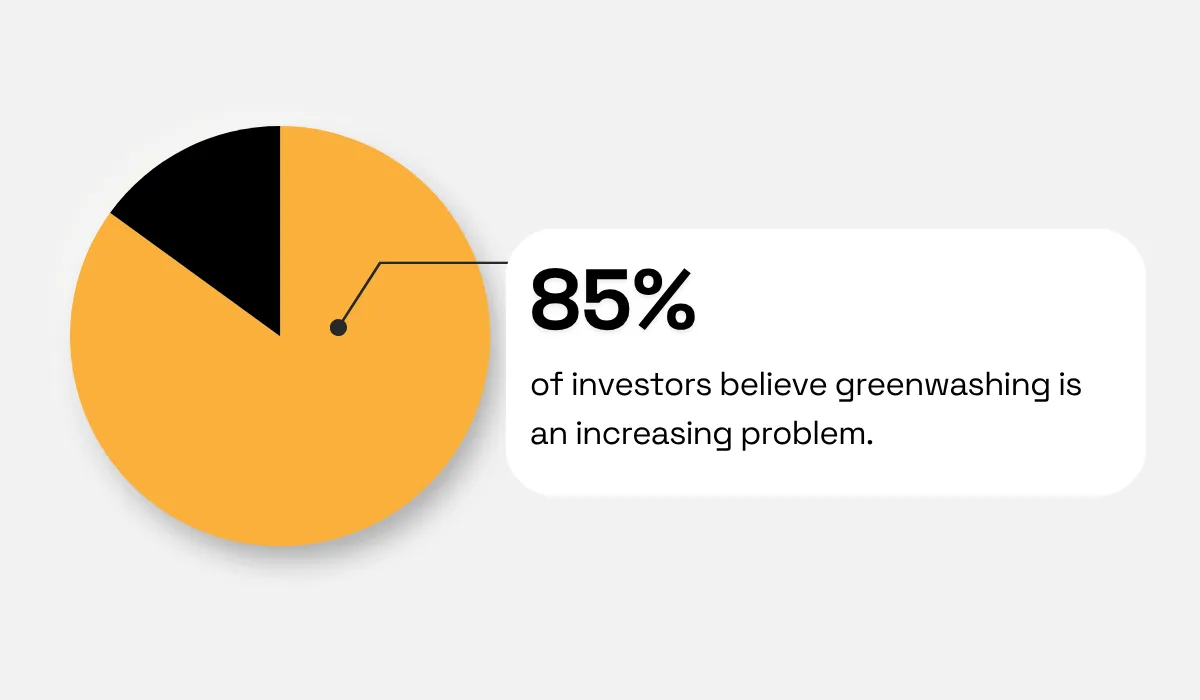
More reporting has not necessarily produced greater transparency because disclosures still capture only selected moments in time, while a company's ESG profile continues to evolve between reporting periods.
A better fix is actively collecting data often enough for new developments to become visible while they are still relevant.
This is the principle behind Veridion's News module.
It refreshes ESG-related news every week, attaching every article to a company profile together with its source URL, the relevant ESG pillar, the underlying theme, sentiment, and a confidence score.
Those details help analysts judge if a news event is likely to be material.
Instead of manually reviewing every article, you can quickly distinguish an isolated mention from a development that may warrant further investigation, while always having access to the source for verification.
A weekly refresh also shortens the time between an event occurring and it becoming visible to the people responsible for monitoring ESG risk.
Keeping ESG data current does not prevent controversies from happening.
It does, however, reduce the time between what happens in the real world and what decision-makers know about it, making it much harder for important developments to remain hidden until the next reporting cycle.
Conclusion
An annual report shows what a company wants you to see. The real test is what is happening independently of that report, and if the two still match by the time anyone checks.
Static annual disclosure was never built for that test, and the audit inside it was never designed to try.
Matching the two means weighing real-world actions with the same rigor applied to self-reported commitments, and refreshing the picture often enough for a controversy to surface in days rather than months.
Put that in place, and greenwashing starts being something you see coming.
Articles
Discuss how these trends affect your organization.
Our analysts are available for a short call. Bring a specific question and we will ground it in the data.
Insights
Keep reading
More analysis, research, and outcomes grounded in live company intelligence.
5 Types of Market Intelligence You Need to Know About
Explore five different types of market intelligence that can shape your competitive edge. Find out which ones your team should prioritize.
6 Mistakes to Avoid when Gathering Market Intelligence
Think your market intelligence is on point? Check out these five frequent mistakes and how to avoid them before it’s too late.
What Is the Difference Between Business and Market Intelligence?
Not sure whether you need business intelligence or market intelligence? This article compares them and shows when to choose each.