Insights / Articles
How to Identify Emerging Market Risks Before They Become Headlines
Tired of market surprises? Learn how to identify emerging market risks before they hit the news and protect your investments.

- Weekly-refreshed data proactively catches emerging risk patterns.
- LLM-based extraction hits 95% accuracy or higher on complex filings.
- Graph-based models and multi-agent AI systems connect weak signals into risk narratives before events surface publicly.
Every major corporate crisis started as a signal. Be it Change Healthcare, a healthcare technology company’s ransomware attack, Silicon Valley Bank's collapse, or the Red
Sea shipping disruptions.
Each one hit as a headline.
But the risk behind it had been building for months, sometimes years.
The organizations that came out ahead were reading those signals early. Not from more data, but from different places in the data they already had.
Five practices set those companies apart from everyone else.
Where Emerging Risks Actually Surface
Risks surface first in the small details. It can be a supplier's minor filing, a competitor's price change, a regulator quietly opening a docket, or a geopolitical shift.
Each signal is beneficial if you know where to look, but each looks obvious only after the crisis breaks.
Look Beyond Financial Statements
Traditional risk assessment leans heavily on financial data, including credit ratings, quarterly filings, or agency reports. These are lagging indicators.
They reflect problems that have already taken hold. By the time they show up on your dashboard, the risk is no longer emerging. It has already happened.
Leading indicators show a shift before it reaches the numbers.
Sentiment across earnings calls, hiring patterns, regulatory chatter, patent filings, geopolitical exposures, cyber posture, and supplier concentration all move before the financials do.
None of these show up in a P&L until it's too late to act on them. Catching them earlier means rethinking where risk data comes from in the first place.
A Deloitte report on dynamic risk assessment lays out two ways ERM teams can pull this off.
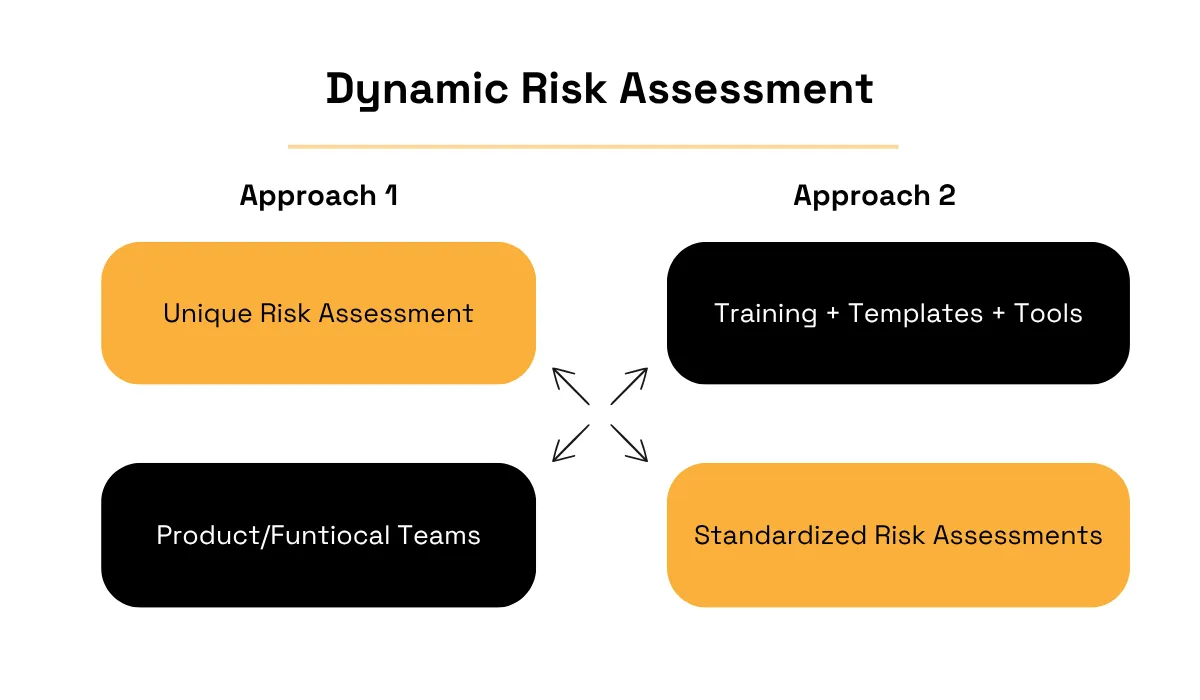
Illustration: Veridion / Data: 2026 EY Global Risk Transformation Study
First, the ERM team takes compliance data as it already exists across business and functional areas. Then, folds it into the enterprise-wide risk assessment without asking those teams to change how they work.
Second, ERM sets a single risk taxonomy first, then requires every business and functional area to run their compliance risk assessments against it.
Deloitte's own read is that most organizations land somewhere in between.
A middle path connects shared risk indicators to one system, without rebuilding everything from the top.
Compliance risk assessments are already tied to specific business controls and policies.
If that data shows a risk is well managed, the enterprise doesn't need to spend more money fixing it. That alone can lower the cost of enterprise risk management.
Compliance data explains what's happening. But some signals only show up outside them.
Track What Competitors and Peers Are Doing
Shifts in how peer companies behave often signal emerging risk before the market names it.
A competitor sometimes changes pricing off-cycle, exits a region, or restructures a business unit. It’s because they have seen something in their own data.
Competitive intelligence (CI) covers this work, and it has grown into a formal discipline fast.
Modern CI programs track competitor product changes, hiring trends, marketing shifts, executive moves, and customer sentiment across peer companies, almost in real time.
Crayon's 2024 State of Competitive Intelligence Report, based on over 700 CI professionals, found that 65% of sales opportunities at the average software company are competitive.
79% of surveyed companies now arm their sales teams with competitive intel.
Competitive intelligence has become operational at enterprise scale.
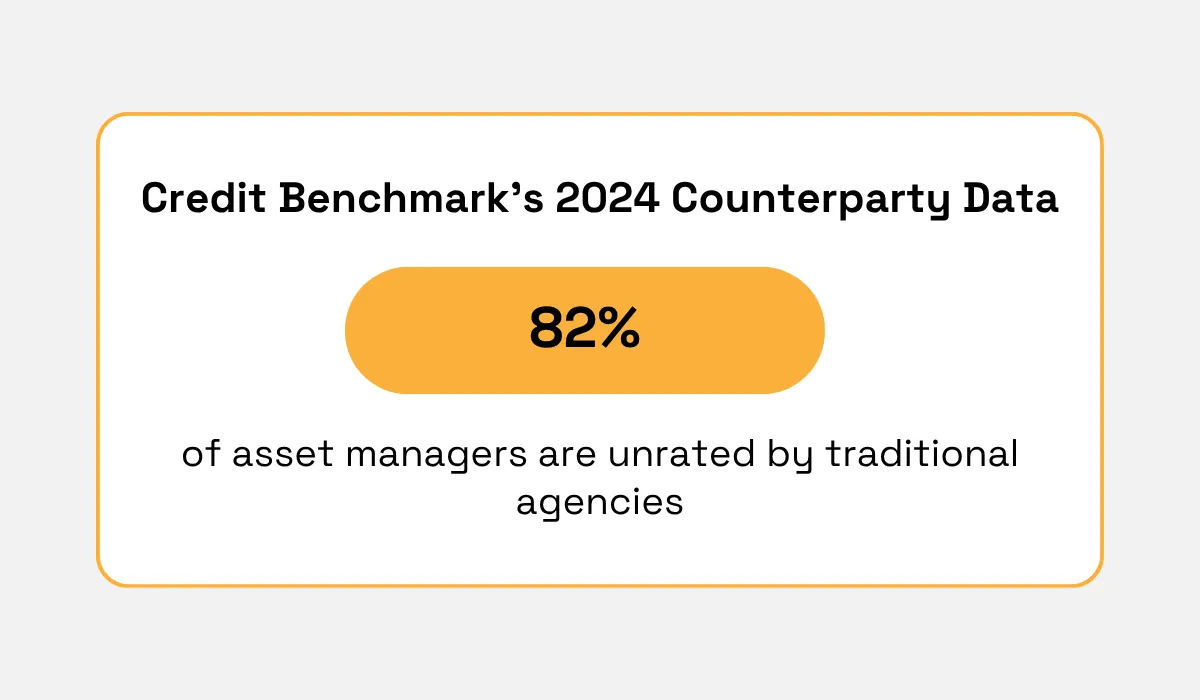
Illustration: Veridion / Data: EMAN Research, March 2025
The signal-to-headline pattern shows up here too.
When three enterprise SaaS companies simultaneously freeze hiring in the same quarter, it is not about those companies. It is about the buyer market they are all reading.
When you track peer behavior across a whole sector, it becomes a leading indicator of demand shifts, often months before analysts publish forecasts.
The tech layoff wave of 2022 and 2023 followed this pattern almost exactly.
By the time the press covered the cuts as a single story, job postings, executive pay filings, and earnings calls had shown it for two full quarters.
Anyone tracking peer hiring signals as a key risk indicator saw the shift well before it made headlines.
Tracking peers means moving off static competitor decks and into continuous monitoring. Filings, press releases, product pages, and hiring signals all become inputs to a live feed.
Enterprises are deploying market intelligence across departments because the same infrastructure serves both sales enablement and sector-level risk detection.
The mistake to avoid is treating CI as a marketing function only.
When your risk register includes peer behavior as a leading indicator, you own the earliest read on demand shifts, pricing pressure, and regulatory posture.
That is a risk asset, and it belongs alongside your financial and operational monitoring rather than in a separate silo.
Peer behavior is still visible from the outside. The next layer of risk hides inside relationships you already have.
Watch Your Extended Business Relationships
Risk does not only originate with your own company.
It builds up quietly in your suppliers, customers, and partners. It then propagates through the contracts and dependencies you already have in place.
Second- and third-tier relationships are the most common blind spot in enterprise risk monitoring.
They sit outside your own controls, outside the questions on a standard due diligence form, and outside the internal audits your team runs on direct vendors.
But your exposure still runs through them.
The 2024 Prevalent Third-Party Risk Management Study found that 61% of companies had a third-party data breach or security incident in the past year.
That's a 49% jump from the year before, and about three times the 2021 rate.
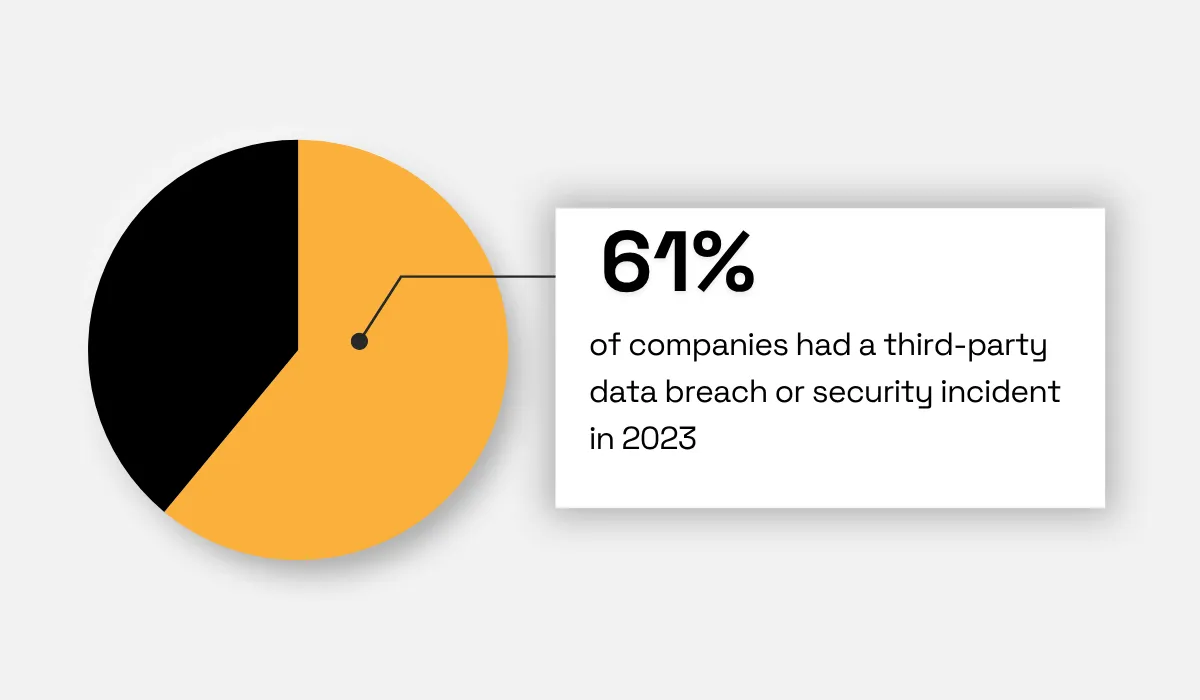
Illustration: Veridion / Data: Prevalent 2024 TPRM Study
Kevin Hickey, CEO of Prevalent, put the stakes plainly when the study was released:
"What stands out in our report isn't only the number of breaches, which is the highest we've tracked, but also the scale. There has never been a more urgent time to take third-party security more seriously."
Financial exposure is climbing in parallel.
Deloitte's 2025 survey on AI's impact on TPRM found that nearly half of respondents believe potential damages from a major third-party incident could exceed US$50 million.
That is the loss you are pricing when you skip monitoring a Tier-2 supplier.
The operational fix requires more than more questionnaires. It calls for continuous visibility into how your extended enterprise is behaving.
The mechanics of third-party risk management and the challenges that surface at scale matter before scoping any TPRM program.
AI-driven approaches to supplier monitoring have moved into production over the past 18 months.
A useful walkthrough of how AI is being applied to supplier risk management specifically makes the shift concrete.
The 2024 CDK Global ransomware attack is a textbook cascade case.
When the software vendor serving roughly 15,000 US auto dealerships was hit, dealerships across the country lost the ability to process sales, service records, and financing for weeks.
Auto retailers with continuous vendor-risk monitoring had at least surfaced CDK as a concentration risk before the incident.
Those without it discovered the dependency the day their sales floors went dark.
CDK is just one story. The next question is what catches the stories that data alone can't.
Combine Data With Human Judgment
Data signals scale in a way humans can't match.
But they miss things humans catch right away. Office politics, organizational context, and the difference between a real shift being a few.
This is the case for a human-in-the-loop model. AI handles the pattern recognition at scale. Human analysts handle the judgment calls like prioritization, context, and the final decision.
The 2026 Stanford Digital Economy Lab's Enterprise AI Playbook, authored by Ivan Pereira, Andrew Graylin, and Erik Brynjolfsson, studied 51 successful enterprise AI deployments and found a consistent pattern:
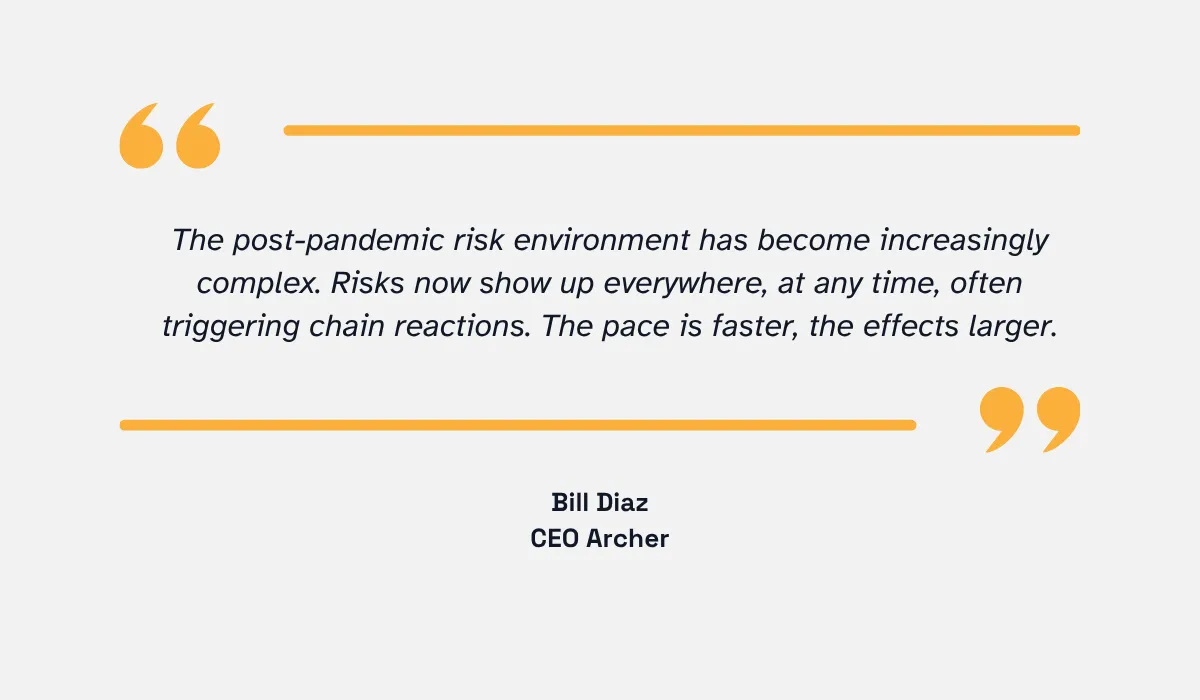
Illustration: Veridion / Data: 2026 Stanford Digital Economy Lab's Enterprise AI Playbook
The regulatory environment reinforces the same design.
The US Federal Reserve's model risk management framework explicitly requires human oversight in model development, testing, and monitoring.
That structure now serves as a compliance requirement in financial services. Also, it is spreading to adjacent industries as risk models grow more autonomous.
Fraud detection at large banks is the clearest example of this. AI models flag suspicious transactions at a rate no human team could review manually.
Trained investigators then evaluate the top-priority alerts using context that the model cannot access. It includes the customer's history, the counterparty relationship, etc.
The best programs run the loop in near real time, with alerts moving from model to analyst within minutes.
In practice, the automated signals and human review is where risk assessment either succeeds or fails.
A common structure looks like this.
Automated systems flag anomalies against a baseline and an analyst reviews the top-priority alerts within a defined window.
The analyst either escalates, dismisses, or requests more data.
The handoff itself demands discipline. Left ambiguous, the alerts pile up in queues no one owns, and the whole capability decays.
Tuning is where most programs stumble. If it’s too tight, analysts drown in false positives. When it’s too loose, the model becomes decorative, catching only the disasters that were already obvious.
Getting the balance right takes trial and error, honest feedback between analysts and whoever owns the model.
Leaders need to back analysts up when they reject alerts, without punishing them for it.
However, none of this works if the underlying data shows up once a quarter.
So, what needs to be done?
Build Continuous Monitoring, Not Periodic Reviews
The practices above only work under one condition. The data behind them has to be continuous and not batched.
Quarterly and yearly reviews leave long gaps. In the twelve weeks between reviews, risks change, but your assessment doesn't.
Risk assessment is often described as dynamic when it keeps pulling in new data to spot and reprioritize threats as they grow. The keyword is continuously.
Everything else follows from that.
In practice, this means moving off spreadsheets and one-time checks, onto systems that update your view of suppliers, competitors, and peers on their own.
The question stops being when your last review happened. It becomes what changed since yesterday.
This is the gap Veridion was built to close. The service tracks real-time signals across more than 693M companies, refreshing profiles weekly instead of relying on periodic updates.
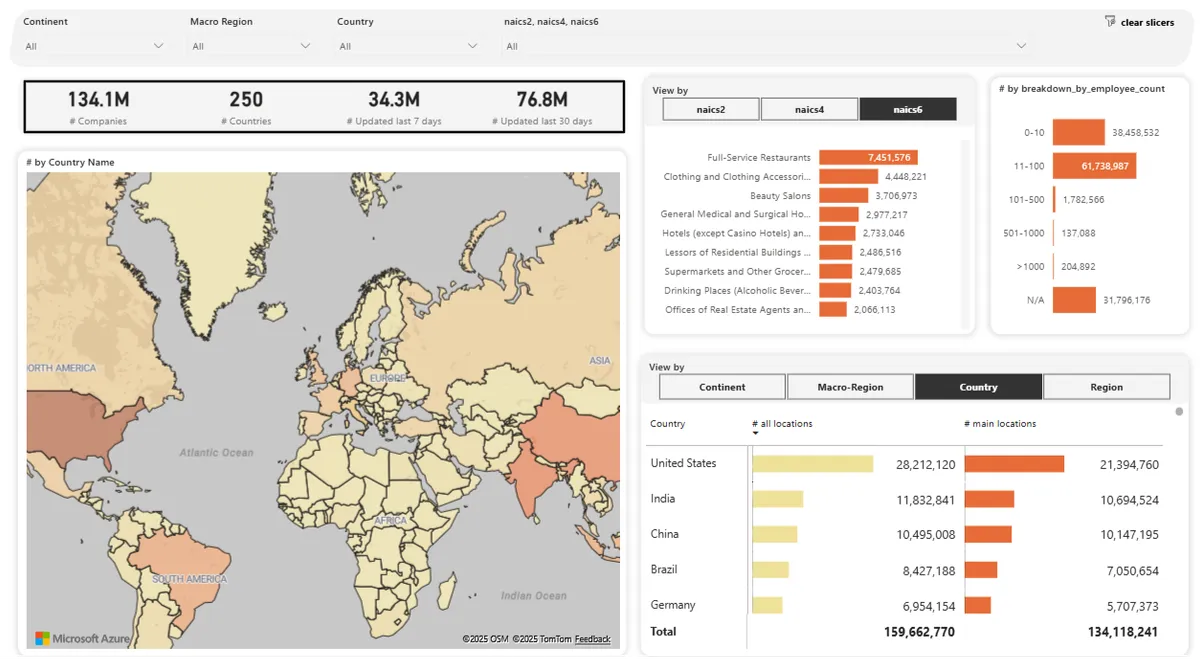
Source: Veridion
That refresh cadence turns your risk view from a snapshot into a living picture.
If a Tier-2 supplier changes address or opens a new subsidiary in a sanctioned jurisdiction, the system reflects that.
Your team catches it while it is still small enough to influence.
Under quarterly review cycles, a supplier problem that emerged in week two does not reach the risk register until week thirteen. Under continuous monitoring, the same problem surfaces in the same week.
Continuous monitoring only matters if someone acts on it. Real-time signals feeding into a quarterly review process become worse than useless. They create a false sense of security.
The cadence of your monitoring has to match the cadence of your response. Otherwise, the gap between them becomes the place where the risk lives.
The organizations that have made this shift call it an operating-model change. Their risk team meets on a different rhythm and data flows into decisions in real time.
When a risk starts to move, you see it. Upon accelerating, you have time to act.
And by the time it hits the news, you've already made the decisions your competitors are only starting to consider.
Conclusion
Emerging risks don't respect quarterly review cycles. They show up on their own timeline, scattered across sources most companies overlook.
The organizations catching them early built this into how they operate.
Leading indicators, peer intelligence, extended-relationship visibility, and human judgment, all running on continuous data instead of periodic reviews.
When the next big story breaks, they'll already know. Competitors will just be finding out.
Articles
Discuss how these trends affect your organization.
Our analysts are available for a short call. Bring a specific question and we will ground it in the data.
Insights
Keep reading
More analysis, research, and outcomes grounded in live company intelligence.
Market Intelligence: Use Cases Across Departments
Want to make better decisions across departments? Learn how market intelligence use cases apply to your entire organization.
What is Third Party Risk Management (TPRM)
How to protect your business from vendor-related risks? This guide on third party risk management will walk you through the essentials.
Top Main Challenges of TPRM
Want to understand the main challenges of TPRM? We will walk you through common pitfalls and show you how to solve them.