Insights / Articles
M&A Target Radar: Spotting Acquisition and Partnership Signals in Real Time
Are you missing crucial market signals for strategic planning? M&A Target Radar helps you spot acquisition and partnership opportunities in real time.

- Traditional M&A sourcing databases refresh on scheduled cycles, making recent activity reach M&A teams late.
- Most private companies don't disclose financials, so proxy signals need to be used to estimate scale and growth.
- Target lists need continuous refreshing, as the signals that make a company worth approaching can change within weeks.
A company can raise a round, hire its first CRO, and start weighing an exit within a single quarter.
If your target list was built on stale data, it may miss these changes, and the company may already be in an acquisition process by the time a team notices.
This article covers the specific signals that indicate a company is ready for M&A or partnership discussions, and some best practices for turning those signals into updated lists.
Why Static Target Lists Go Stale Fast
A target list is a snapshot of a market at one moment, and the companies on it keep moving after you export it.
However, since most traditional M&A sourcing databases update on a fixed cycle, those changes only reach you when the next refresh lands.
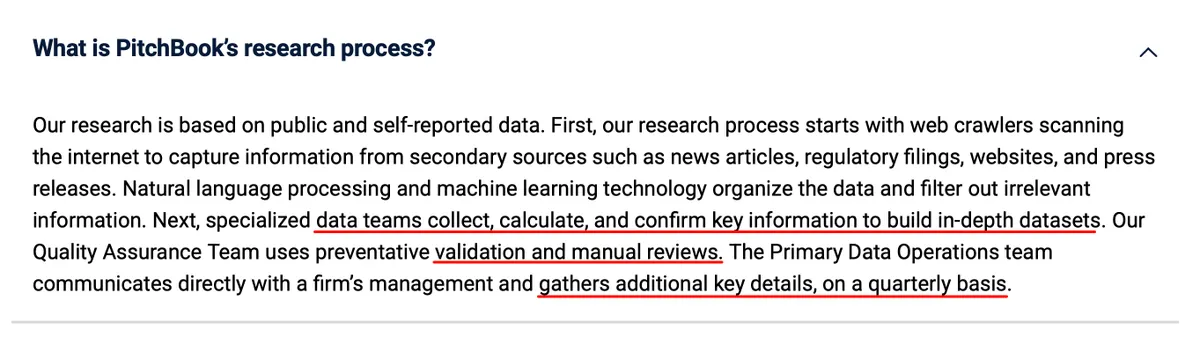
For instance, PitchBook's own research process documentation shows what this looks like in practice.
Source: PitchBook
While this platform is newer than most legacy databases, profiles still depend on scheduled outreach and manual verification.
In other words, a change can sit for a full quarter before it reaches the people screening for targets.
The problem is that M&A itself is more dynamic.
Acquisition criteria shift, and so do the companies being measured against them.
In fact, Deloitte's 2026 M&A Trends Survey asked 1,500 corporate and private equity leaders how much their targeting had changed recently, with the results shown below.
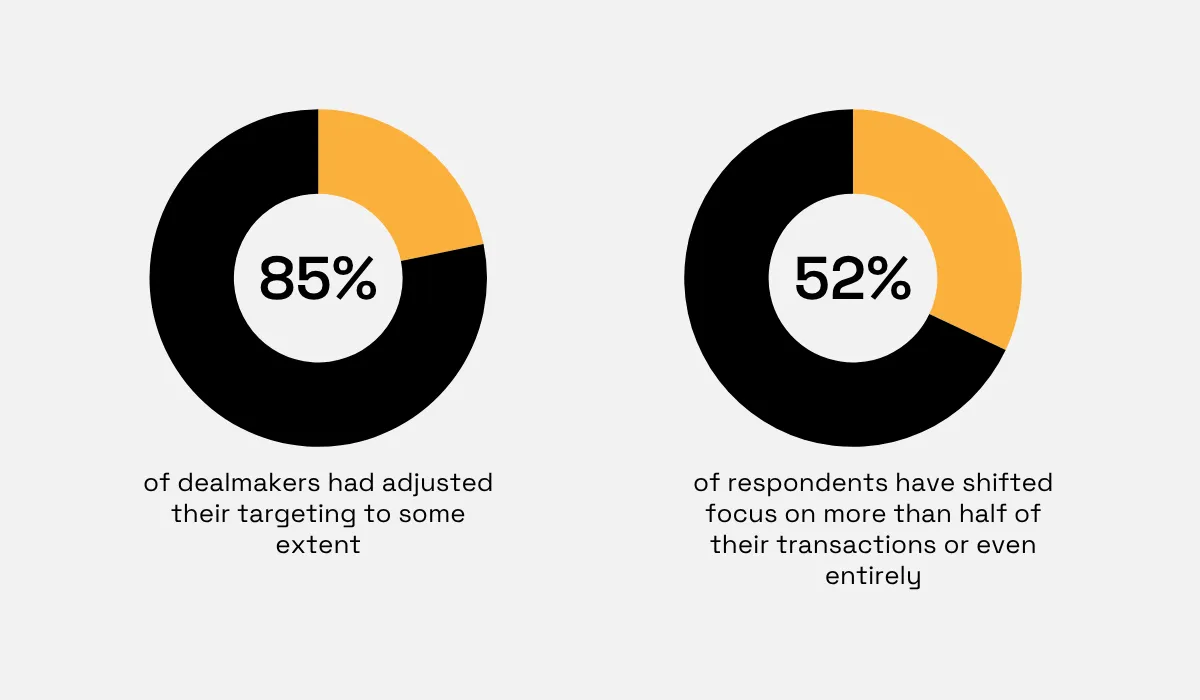
With this shifting focus, an old list can have two problems at once: the companies on it have changed, and so has the strategy you built it around.
This gets worse in certain parts of the market like early-stage companies.
They produce few of the events that trigger a database entry, so they stay outside coverage until they raise institutional capital.
The same goes for niche verticals, since these companies generate little press and little search traffic.
Fortunately, data enrichment services built on continuously updated sources help close that gap.
Stout, a global advisory firm, used this kind of data to scope middle-market sectors.
Take a look at their case study shown next.
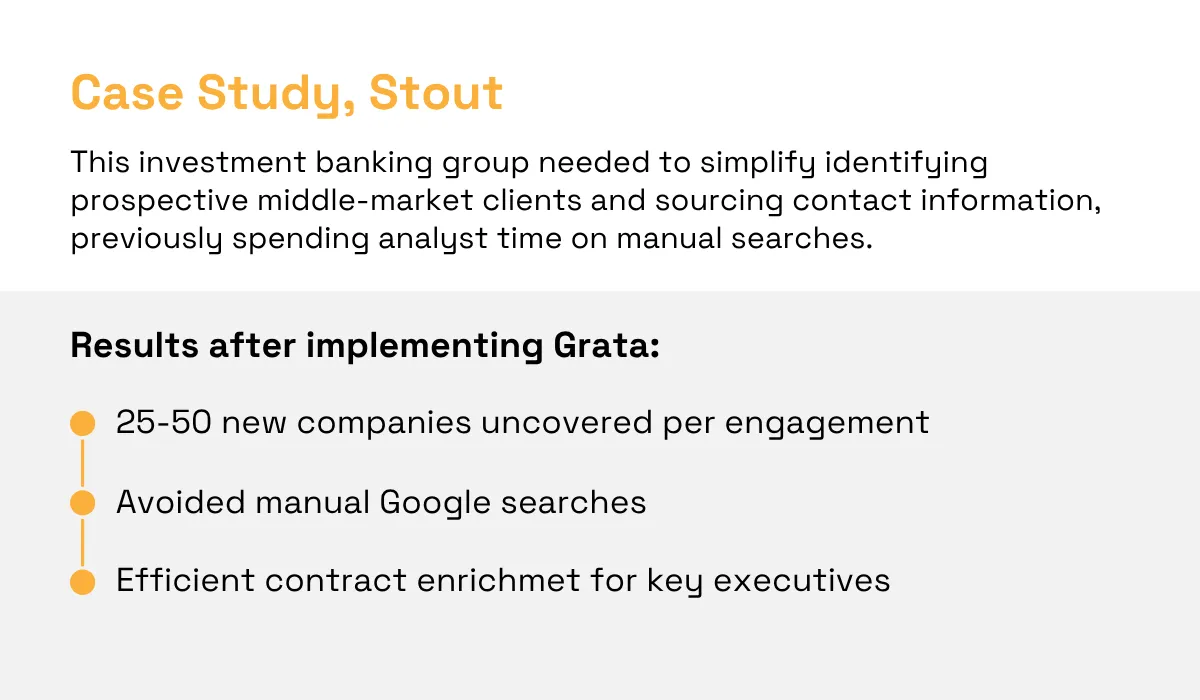
With a static database, reaching the same level of results means having analysts run manual news searches company by company.
Real-time, continuously refreshed data removes that step and still gets you the information, only faster.
So the real gain here is time, spent on decisions rather than on gathering the data first.
Signals That Reveal Acquisition-Ready Targets
Company data and financials often arrive late, and they cover only a small share of the private market.
That's why corporate development teams increasingly read a company's operating behavior instead, since it shows changes earlier.
Three signal types are important here, which we’ll cover next.
Growth-Stage Momentum Signals
A company entering a scaling phase starts behaving differently before any announcements are made.
Hiring picks up, funding arrives faster, and the company starts building teams it didn't need a year ago.
None of these changes shows up in a filing, since private companies aren't required to produce one.
Ryan Schwab, VP of Deal Origination at MergersandAcquisitions.net, sums up the underlying condition in this statement.

Schwab's point is that lack of information is the normal state of the private market rather than a temporary reporting gap.
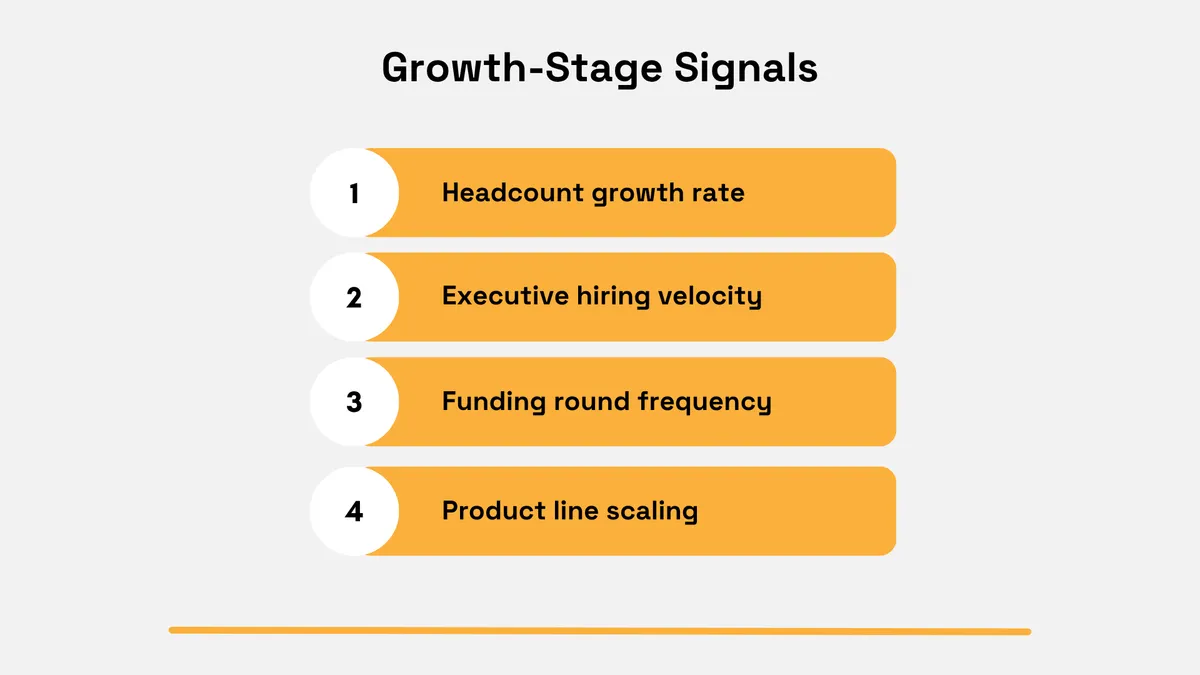
For corp dev teams, that leaves certain momentum signals as the earliest usable evidence that a company is scaling.
Luckily, several of these signals are visible from outside the company.
Source: Veridion
What all of these have in common is that they track organizational commitment rather than stated intent, which is why they tend to appear months ahead of any public announcement.
Hiring is probably the clearest example.
A company hiring its first CRO or regional GM is investing in sales and growth, and that shows up in job postings well before it shows up in revenue.
Funding tells a similar story, with a useful signal being how often a company raises, not how much.
For example, Cyera raised four rounds in about eighteen months, raising the valuation of the company significantly.
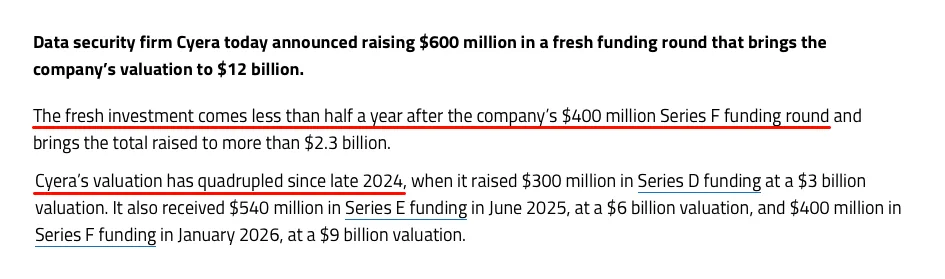
Source: SecurityWeek
In this case, every round reset the price, so an acquirer working from a valuation two rounds old was looking at a company that no longer existed at that number.
None of these signals will directly tell you what a company earns, but they will point to key updates, which is usually the moment worth paying attention to.
Revenue Proxy Signals
Momentum tells you a company is growing, but a screening process still needs a sense of revenue.
For niche or private targets that data rarely comes from the company itself.
Nevin Raj, co-founder and COO of Grata, wrote about this exact problem for ACG Insights.
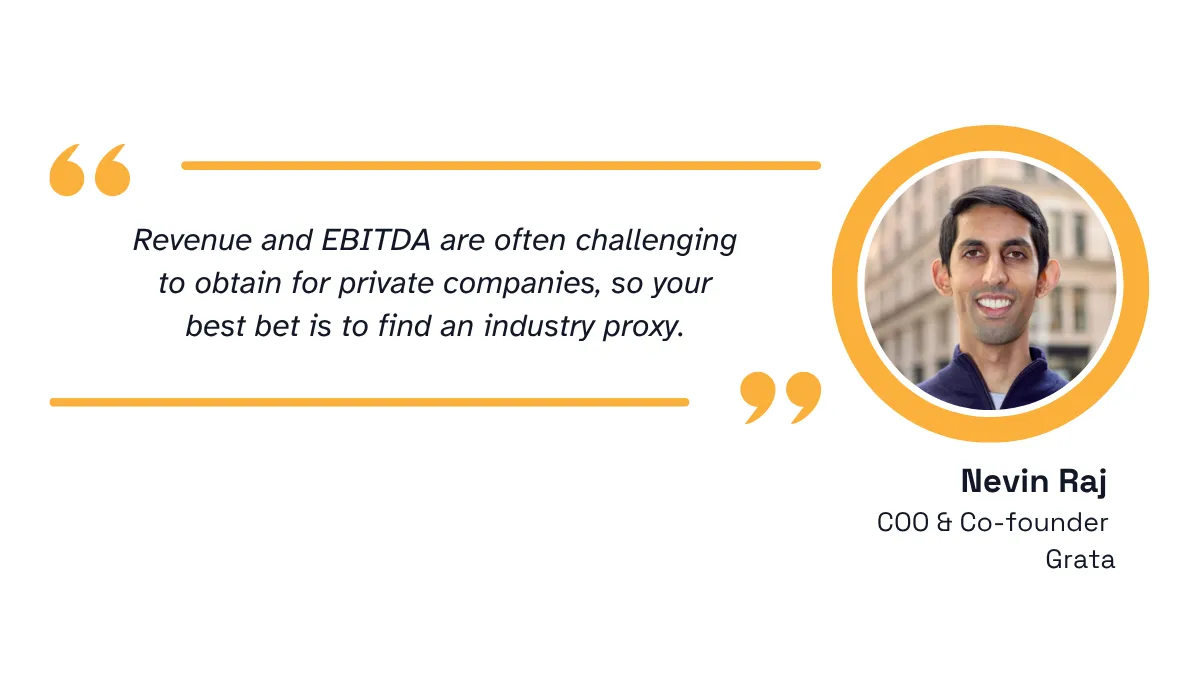
Illustration: Veridion / Quote: ACG Insights
As Raj explains, revenue and EBITDA usually sit behind a data room, and most targets don't open one until a process is underway.
So instead of waiting for numbers, corp dev teams model scale from what a company does in public.
The usual revenue proxy signals include some of the following:
- Headcount and revenue per employee
- Job postings by function and seniority
- Web and app footprint
- Public contract awards and tender wins
One thing worth highlighting is that these proxies don't have to produce an exact figure.
They mainly need to be consistent across a market, because screening compares companies against each other rather than against a fixed threshold.
Which inputs matter depends on the business.
Consider Perplexity, which reached a $20 billion valuation in September 2025 without disclosing margins or audited financials.
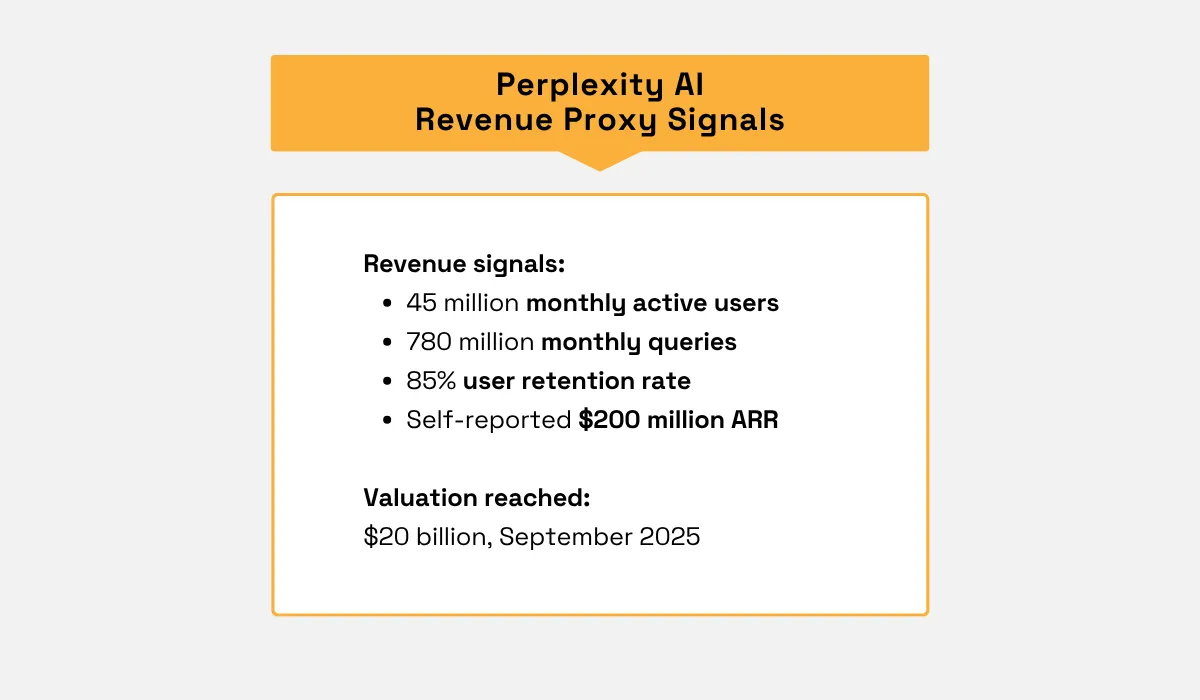
Illustration: Veridion / Source: HustleFund
Brian Nichols, co-founder of angel investment community Angel Squad, writes that some key signals predicted this growth.
Usage metrics like active users and retention rate did most of the work behind that estimate.
For a different type of business, those wouldn't be the right numbers to watch, which is exactly why picking the right proxy for the sector takes judgment.
Get that match right, and a rough estimate is enough to separate the targets worth a closer look from the ones that aren't.
Technology Adoption Signals
By now, every company runs on software, so a useful question is which technology a target has committed to.
Buyers care about this because they're increasingly acquiring capability, not just size, and AI has made that even more true.
Bain's 2026 Global M&A Report found that AI now plays a role in a large share of technology deals, shown below.

A company's tech stack can tell you a couple of different things.
One is how ready the company is to be absorbed into another business.
A target that just moved off an old, outdated system has already done that hard work, which means it's easier to bring in and integrate.
The other is what the company can actually do.
The tools a team relies on day to day often point straight to what they're good at.
IBM's acquisition of HashiCorp is a good example of buying for capability.
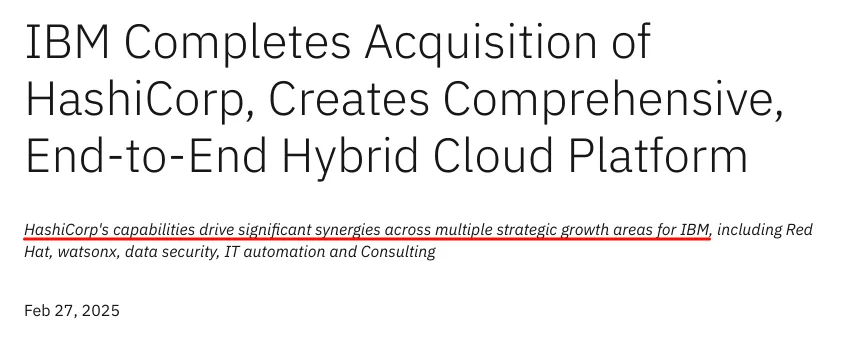
Source: IBM
Many companies running multi-cloud setups were already using HashiCorp's Terraform to manage them, so it had become the standard tool for the job.
IBM was buying a position that customers had already picked for themselves, and one that lined up well with what it already had through Red Hat.
Positions like these can become visible in public technographic data years before the deal closes, which is why these signals are key.
Turning Signals Into a Target List: Best Practices
On their own, signals produce a number of options for M&A or partnership targets rather than a shortlist.
Two practices decide whether your options can be made into a target list your deal team will work with, which we’ll talk about next.
Define Your Hunt Zone
Before you can filter signals, a strategy has to become something concrete.
A broad goal like buying into adjacent software gives a screening process nothing to rule out.
Corporate development has a name for the narrowed-down version of that, and Umbrex's corporate development primer defines it as a “hunt zone”.
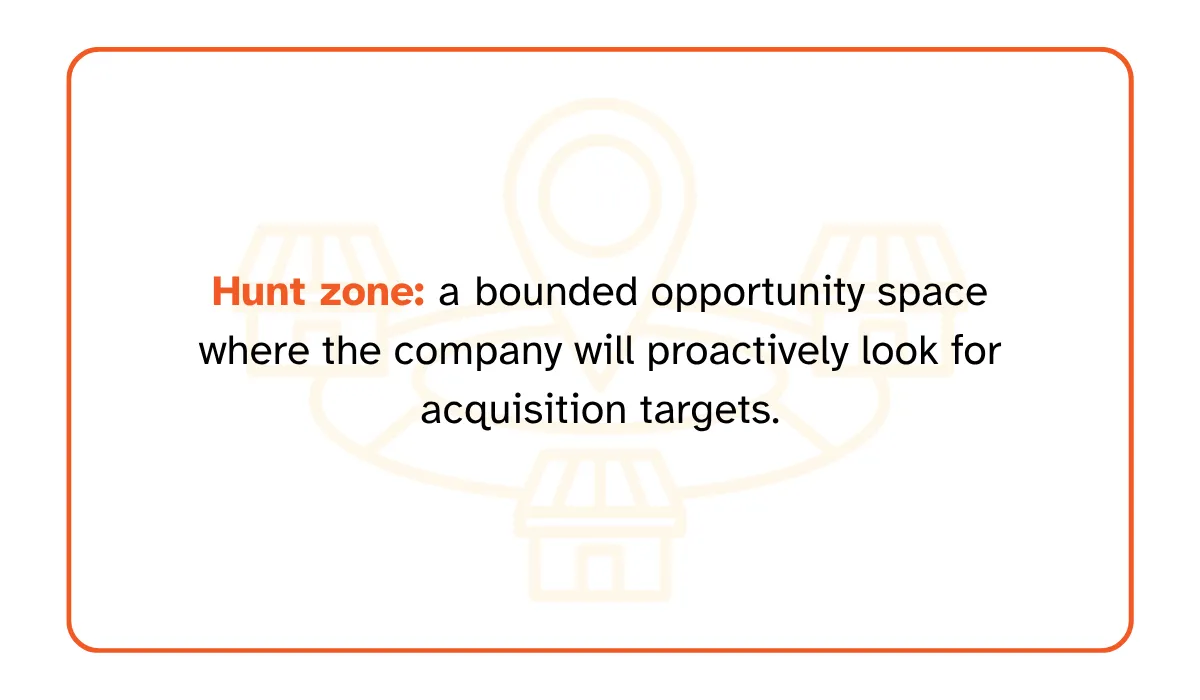
The value of a hunt zone is that it sits between corporate strategy and the target list.
It turns a direction into criteria a screening process can apply, and settles in advance which opportunities are out of scope.
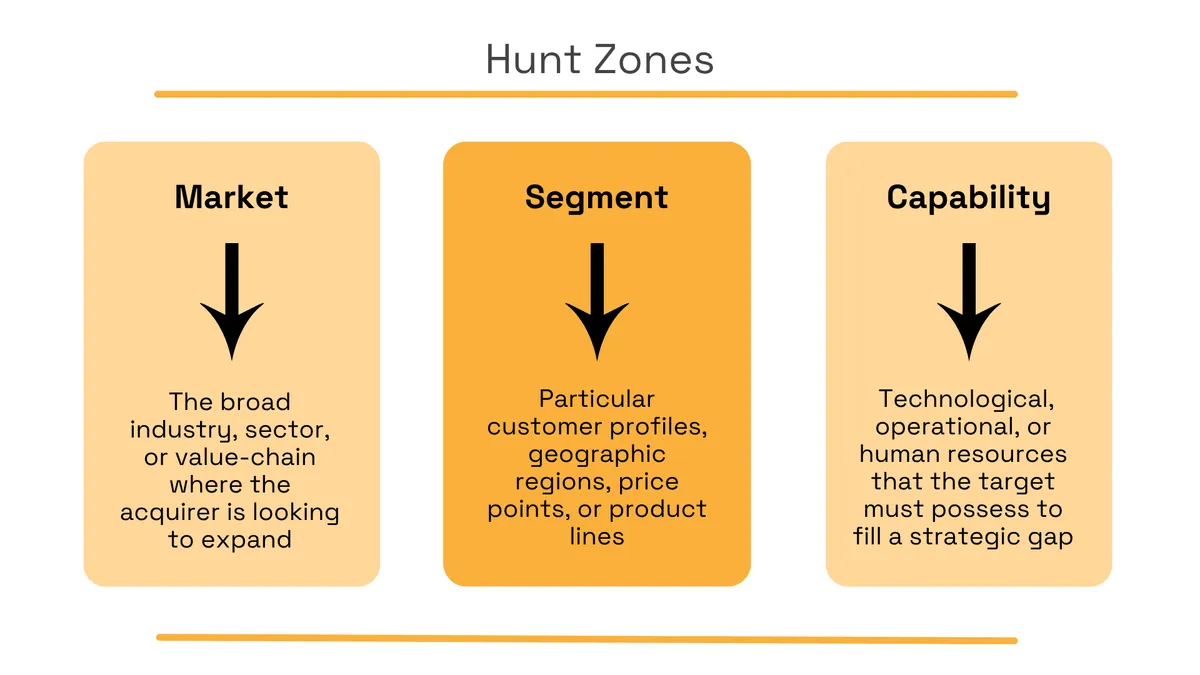
As for how the zone gets defined, it comes down to three boundaries, shown below.
Source: Veridion
Say a logistics software company wants to move into warehouse operations.
The market is warehouse management software, and the segment might be mid-sized operators in Western Europe running their own facilities.
That combination already cuts the field down from thousands of companies to a list a small team can work through.
Capability is what narrows a list further, which are the technical or operational strengths a target needs to have for the deal to be worth doing.
Going back to the example, if the gap is inventory forecasting, then a company with solid warehouse software but nothing on the forecasting side won't close it, no matter how well it fits the market and segment.
Once these zones are set, the signals covered earlier become far more useful, since you're watching a defined group of companies rather than the whole market.
Refresh the List Continuously
Every signal we've covered changes constantly.
Headcount moves monthly, funding lands without warning, and technology decisions can get made inside a single quarter.
This means a target list is accurate on the day you build it and slightly less accurate every day after.
Maintaining it by hand is where the cost shows up, as Maneesh Bhandari, co-founder and CEO of GrowthPal, points out.
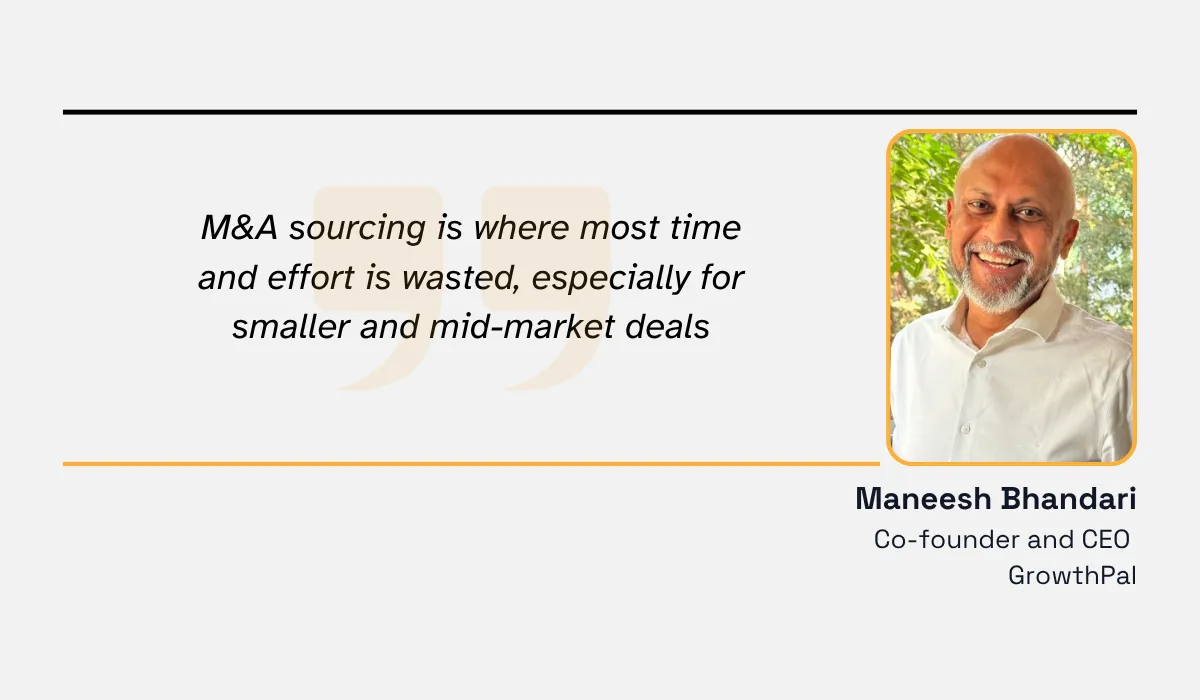
Illustration: Veridion / Quote: GlobeNewswire
As Bhandari suggests, manual research uses up resources and only produces a static list that starts decaying as soon as the work is finished.
This is especially the case with fast-growing companies, where information changes quickly.
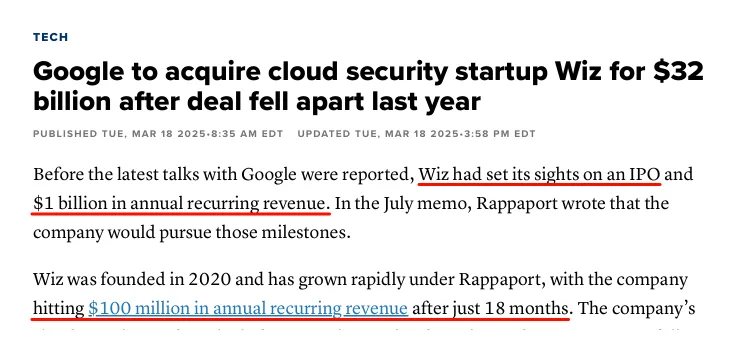
Take Wiz, which Google first approached in mid-2024 at around $23 billion before eventually signing at $32 billion.
Source: CNBC
The jump makes sense once you look at what Wiz was doing in between.
The company had reached $100 million in annual recurring revenue within about eighteen months of launching, and by the time Google came back it was targeting $1 billion and preparing for an IPO.
Situations like these happen constantly at a smaller scale, only without headlines to catch them.
And if you're relying on quarterly updates, you'll usually find out too late.
This is where Veridion comes in.
It structures 461 attributes per company profile across 186M operating companies, covering growth-stage indicators, revenue proxies, and technographic signals in one source.
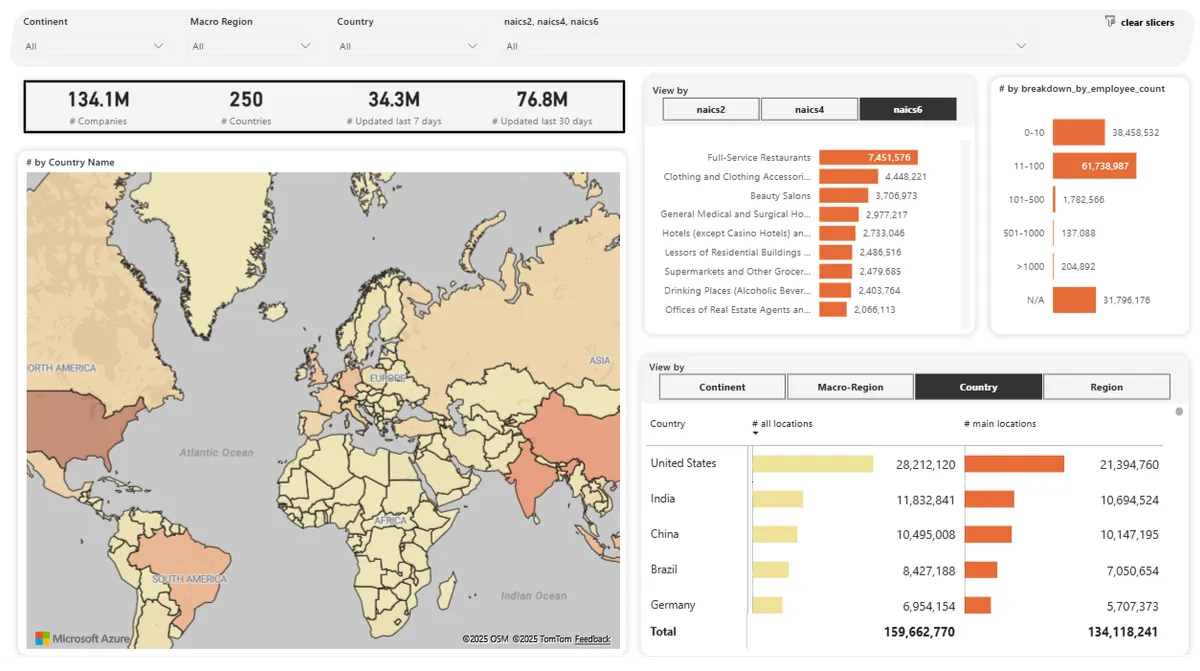
Source: Veridion
For corp dev teams, that means a continuously current foundation for sourcing instead of a quarterly database export.
The company graph behind it also works differently from a scheduled refresh.
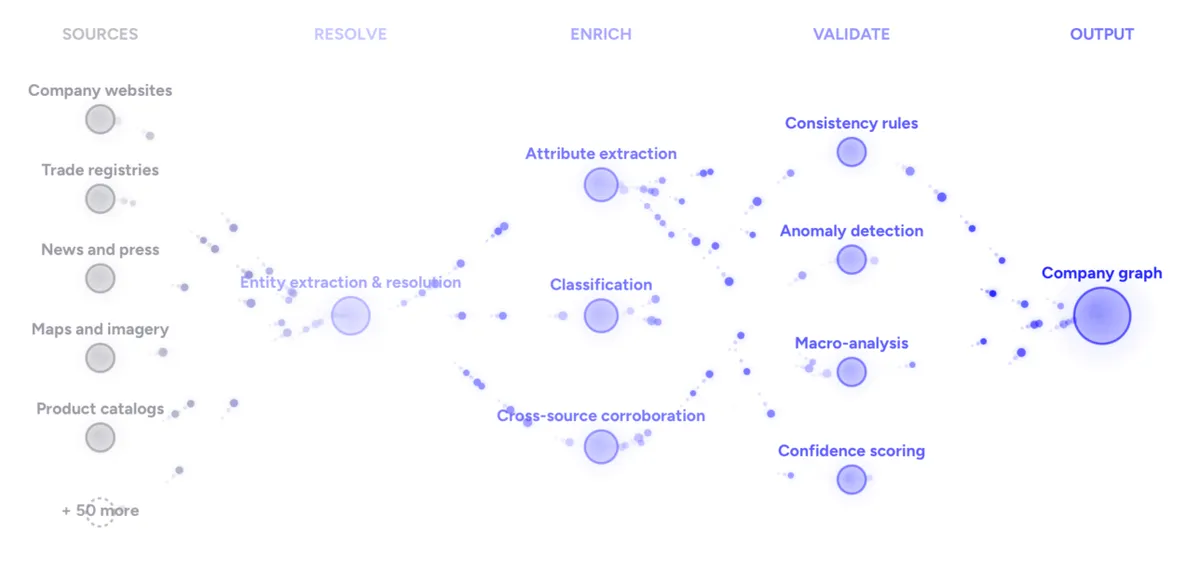
Source: Veridion
Core profiles update continuously, event-driven changes land within hours, and every attribute ships with its own confidence score, source URL, and last verified timestamp.
That combination is what keeps a target list matched to the market as it is right now.
Conclusion
As we’ve seen, acquisition signals show up long before filings do, and hopefully you now have a clearer sense of which ones to watch.
The bigger point is that target sourcing works as an ongoing process rather than a one-off project.
So, start by defining your hunt zone, then decide which signals are worth watching inside it.
Articles
Discuss how these trends affect your organization.
Our analysts are available for a short call. Bring a specific question and we will ground it in the data.
Insights
Keep reading
More analysis, research, and outcomes grounded in live company intelligence.
6 Data Enrichment Tools You Need to Know About
Explore six standout tools that transform data enrichment capabilities and can help guide your decision-making and go-to-market strategy.
9 Essential Sources of Market Intelligence
Want to boost your market knowledge? These 9 market intelligence sources will show you where to look and how to apply the insights.
5 Types of Market Intelligence You Need to Know About
Explore five different types of market intelligence that can shape your competitive edge. Find out which ones your team should prioritize.