Insights / Articles
Automated Business Status Tracking: How Modern Data Analytics Speed Up Underwriting Triage
Tired of slow underwriting? See how modern data analytics and underwriting triage tools speed up commercial loan risk assessment.

- 700,000 businesses closed in one quarter, making continuous status tracking essential.
- Alternative data increased credit score coverage from 81% to 96%.
- Underwriters spend up to 40% of their time on administrative tasks.
- Structured business data powers faster triage, stronger AI, and better underwriting decisions.
Commercial insurers receive hundreds, sometimes thousands, of submissions every day.
Yet underwriters often spend hours verifying basic business information before they can evaluate risk.
The problem isn't a lack of data. It's knowing whether that data is still accurate.
Automated business status tracking changes that.
By continuously monitoring businesses and updating key information as it changes, insurers can identify higher-risk applications earlier, reduce unnecessary manual work, and speed up underwriting triage without sacrificing decision quality.
And that's becoming a competitive advantage across the insurance industry.
Why Automated Status Tracking Matters for Underwriting
Business status is no longer a static data point that can be verified once and forgotten.
It changes as companies grow, contract, restructure, or face financial pressure.
And these changes affect risk, but they don't always show up when underwriters need them.
That's why data analytics and automated business status tracking matter, because they provide visibility into those changes and add context that can influence underwriting decisions.
Catching Status Changes Early
Most underwriters rely on commercial registries and credit bureaus to confirm a business's active status.
But those sources have a well‑documented lag, sometimes weeks or months behind real‑world operations.
A company that looked financially healthy six months ago may have closed a major facility, changed ownership, suspended operations, or stopped trading altogether.
So, it’s likely that many underwriters make decisions using data that’s no longer current.
And that can impact everything, from claims to risk modeling and even portfolio profitability.
Consider the scale of the gap: during Q2 2020 alone, the U.S. Census Bureau recorded over 700,000 establishment closures, affecting nearly 3 million jobs.
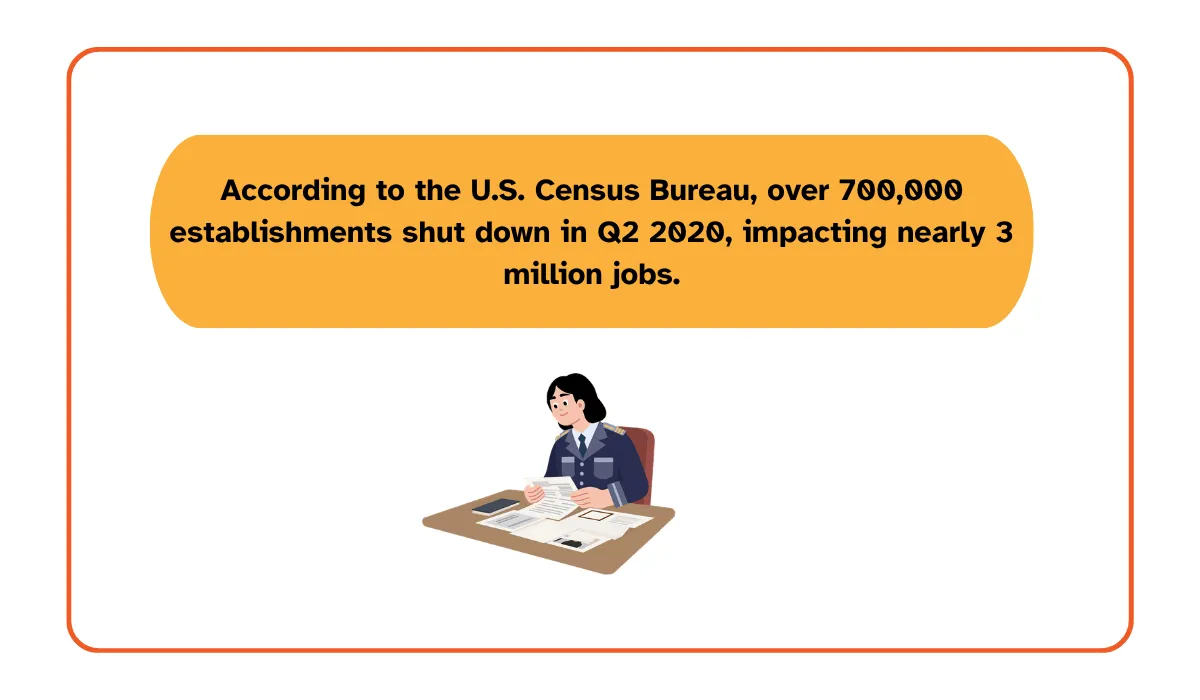
Illustration: Veridion / Data: Federal Reserve
Many were temporary, and by 2021 reopenings surged just as quickly.
That volatility wasn't a one‑off.
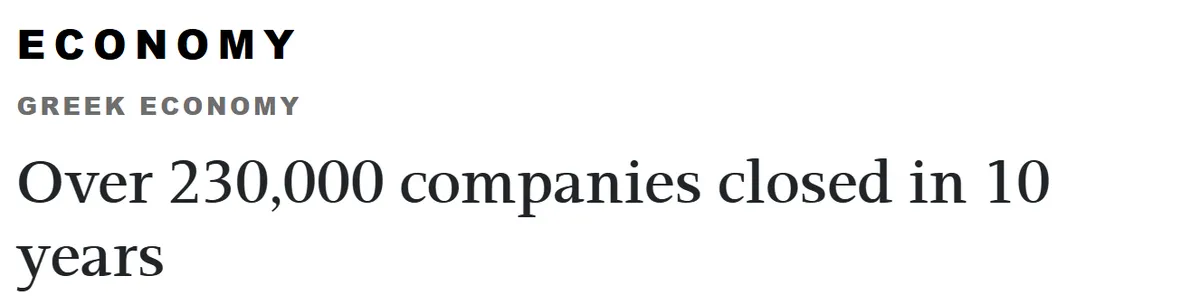
Per data from Greece's General Commercial Register (GEMI), more than 233,000 businesses closed between 2014 and 2023.
Yet over the same period, 449,000 new businesses opened.
Source: Ekathimerini
In 2024, across the UK, 317,000 new businesses opened while 280,000 closed.
For an underwriter, this churn creates a practical problem: a business flagged as "inactive" in a quarterly dataset might be fully operational again.
Another could still be legally registered while having permanently shut down its operations.
Black swan events like COVID-19 are extreme, but they highlight the challenge precisely.
Business statuses don’t remain constant, and each change can influence how an insurer evaluates risk.
And despite this knowledge, many underwriting teams review only when an application arrives or during periodic assessments.
Automated business status tracking changes exactly that by continuously monitoring verified signals instead of relying on one-time checks.
For instance, if an insured company decides to move its entire operations from pharma to pure chemicals, its risk profile will stand completely changed.
Having that information available at the right time will allow underwriters to track business status with the latest context rather than relying on outdated records.
It will also make every underwriting decision considerably easier to justify.
And, when combined with AI and data analytics, the same up-to-date business data can:
- Improve submission triage
- Support faster processing
- Strengthen fraud detection
- Prioritise high-risk cases earlier
Strengthening Credit Risk Models
Consider this scenario: a commercial company files for bankruptcy.
How long will it take for an underwriter to find out?
In many cases, the answer is months.
If an underwriter is basing risk credit models on such outdated information, the consequences can be catastrophic.
McKinsey’s Insurance 2030 report proposes a solution to such underwriting issues.
The report highlights that insurance is shifting away from a 'detect and repair' model that only identified problems after a loss occurred.
The future lies in a 'predict and prevent' approach.
Consider the partnership between Cytora and Red Flag Alert (RFA), which integrates live company credit and compliance data directly into the risk processing pipeline.
Source: Fintech Global
By combining Cytora’s GenAI-powered extraction of submission data with RFA’s real-time creditworthiness checks, insurers gain a transparent, end-to-end view of risk (in line with McKinsey’s report).
When a new submission is processed, the platform automatically enriches it with live alerts, such as changes in credit status or compliance flags.
So companies with strong financial health proceed through Straight-Through Processing (STP), while those flagged for concerns are routed for specialist review (Human-in-the-Loop (HITL).
This is a strong example of how human expertise combined with advanced technologies like AI is reshaping the way insurers build credit risk models.
Richard West, CEO at Red Flag Alert, states directly why static data checks no longer work:
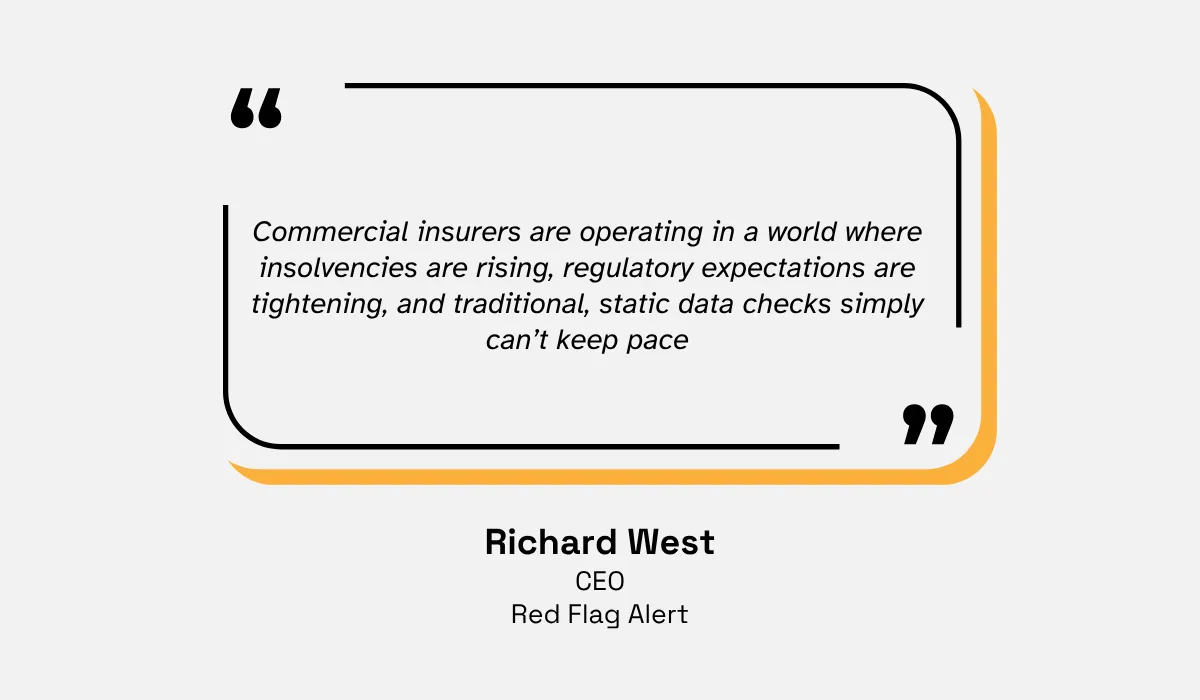
Illustration: Veridion / Quote: Fintech Global
Now, some insurers are taking their credit models to the next level by relying on alternative data to accurately understand a company’s current standing.
For example, many cyber insurers leverage security ratings to evaluate a company’s cyber risk exposure.
These ratings help quantify risk in a way that traditional applications cannot.
More importantly, they augment missing or incomplete information found on policy forms.
This gives both the insurer and the insured a shared, objective view of the risk.
The same principle applies beyond credit data alone.
Underwriting models become more reliable when they combine multiple up-to-date signals to understand a business's standing, such as:
- Live business status
- Ownership updates
- Compliance records
- Operational changes
- Alternative risk indicators
Rather than replacing an underwriter’s expertise, these continuously refreshed data points provide stronger evidence for decision-making.
They also help reduce uncertainty in borderline cases where incomplete or outdated information could otherwise lead to unnecessary delays or inconsistent outcomes.
Reducing Manual Triage Steps
According to the Capgemini Research Institute, only 27% of insurers currently have the technology needed to support predictive analytics in underwriting.
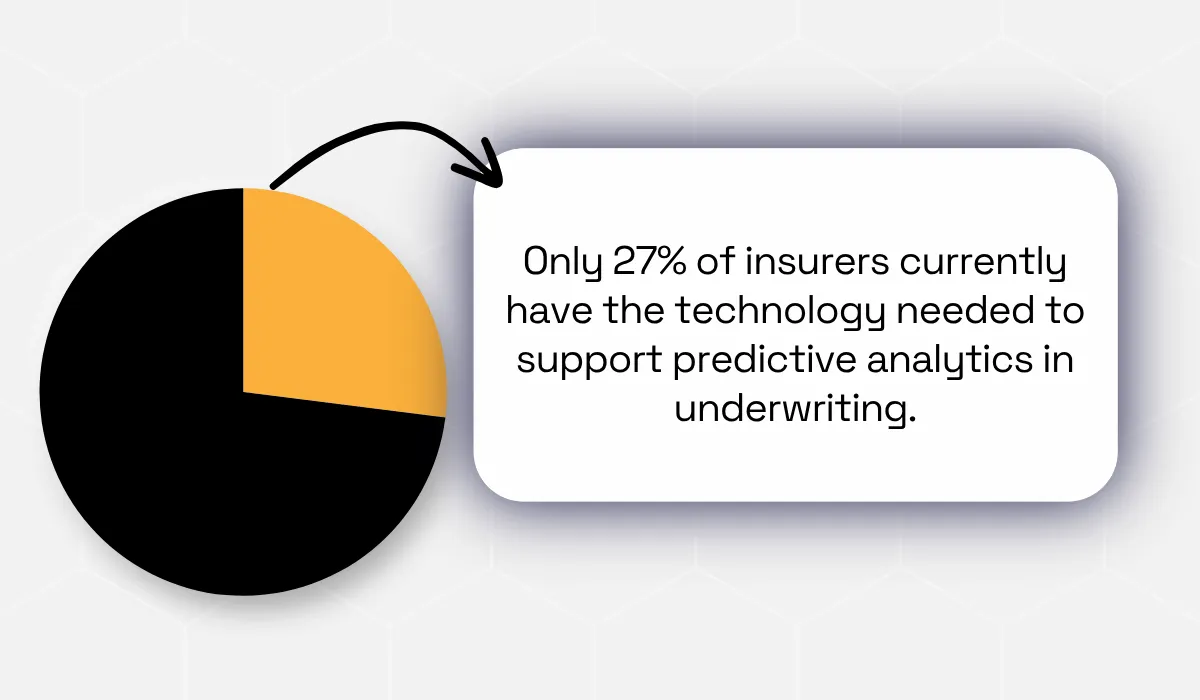
That 73% gap is the opportunity: by bringing automated workflows and tracking, insurers can speed up underwriting triage and give underwriters more time to evaluate risk and confirm whether a business is still operating as expected.
And yet, despite the monumental advancement of technology, many insurers' underwriting is still a manual process.
According to Hyperexponential, an underwriting platform for commercial P&C insurers, underwriters spend nearly three hours every day on data entry before they even begin evaluating risk.
The problem runs even deeper.
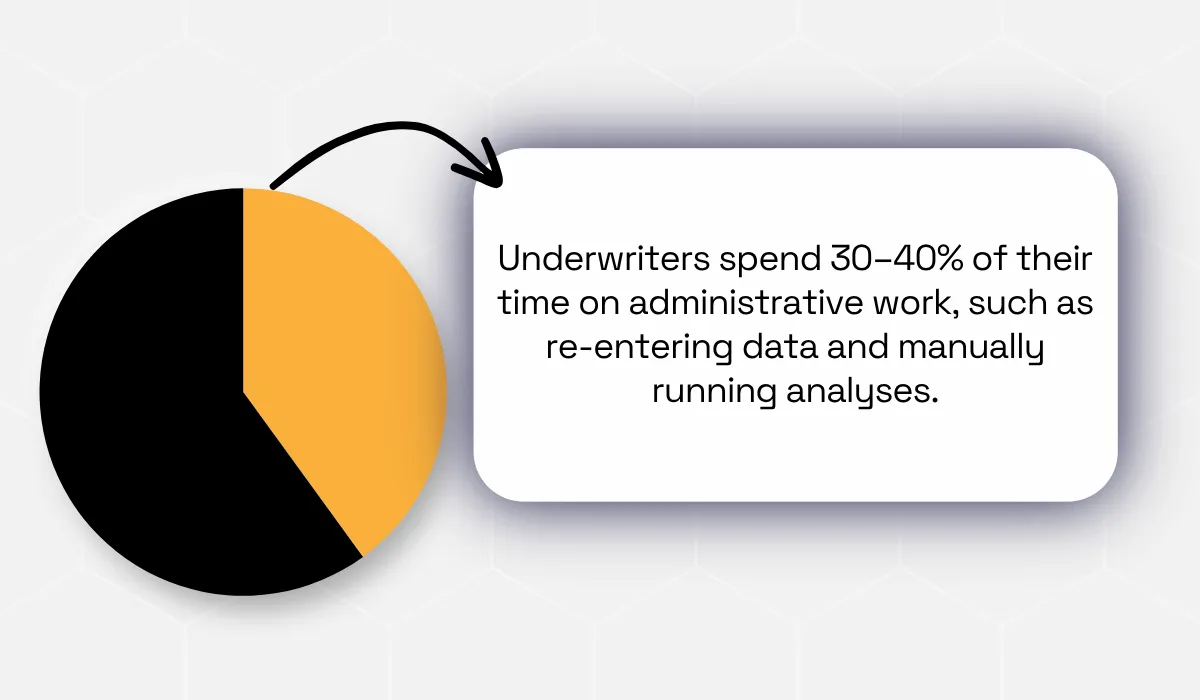
Based on McKinsey's observations, 30% to 40% of underwriting time is spent on administrative work such as rekeying data or manually running analyses!
Nigel Walsh, Global Head of Insurance at cloud computing company ServiceNow, explains why this keeps happening:
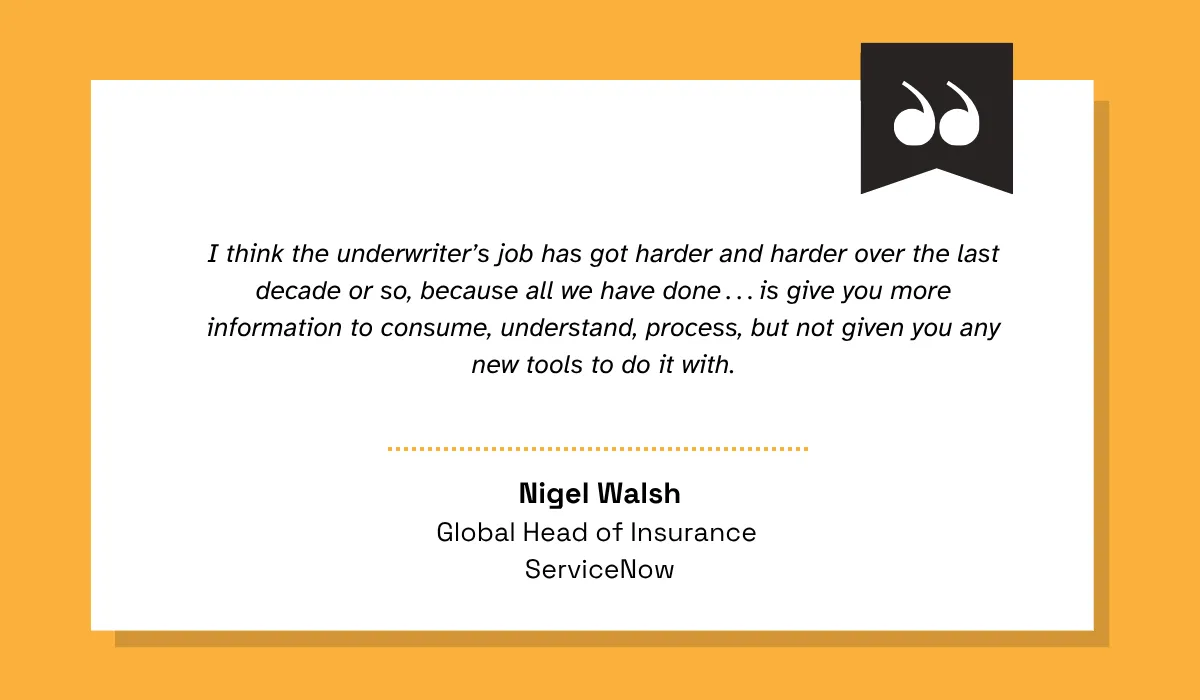
Illustration: Veridion / Quote: Financial Times
The solution to what Nigel speaks about and outdated manual underwriting workflow issues is automation.
And manual business status verification is one of the first tasks automation can modify.
Not to mention, it can greatly improve consistency across underwriting teams by applying the same validation standards to every submission.
So, rather than manually checking business registries, company websites, or public records, underwriters receive a submission where the status of every business, whether it’s a $100 million company or a startup, has already been verified.
Several insurers are already seeing measurable improvements.
Arrowhead Programs, a specialty insurance program provider, streamlined underwriting by automating submission triage and document handling.
Tom Kussurelis, President of Arrowhead Programs, describes the impact of automation on underwriting workflows:
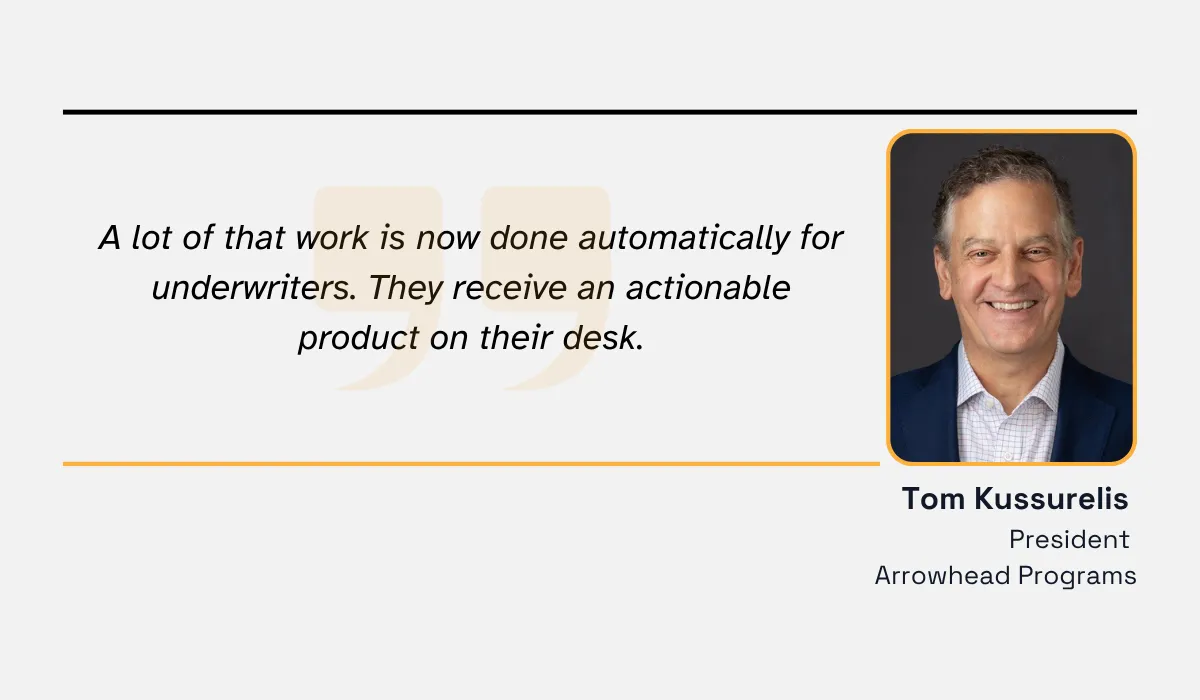
Illustration: Veridion / Quote: Insurance Business Mag
The approach reflects a practical shift in how underwriting work is organized.
Rather than changing the underwriter's role, Arrowhead redesigned the workflow around it.
Administrative work gradually moved into automated systems, leaving underwriters with clearer information and more time to assess risk quality.
It's clear: manual underwriting tasks, whether verifying documents or checking business status, no longer justify the hours they consume
These repetitive tasks are increasingly being handled through automation, allowing underwriters to focus on evaluating risk.
And the result?
Faster triage, higher productivity, and more time spent making better underwriting decisions.
Structured Data Powering Modern Scoring Models
Identifying status changes, strengthening risk assessment, and reducing manual triage all depend on one thing: current, structured business data.
Without it, even the most advanced underwriting model starts with incomplete information.
The challenge is that business data often lives in different systems, arrives in different formats, and becomes outdated long before a claim is filed or a policy is renewed.
And the impact extends far beyond underwriting.
For example, an insurer may receive a First Notification of Loss (FNOL) from a business that has changed ownership, relocated operations, or no longer conducts the activities listed in its original policy.
Claims teams must then spend valuable time validating business information before they can assess the loss.
The same issue can affect multiple insurance workflows, including:
- Fraud detection
- Policy servicing
- Renewals
- Portfolio monitoring
- Claims validation
This is where AI and automation are making a difference, and the impact is already visible across the industry.
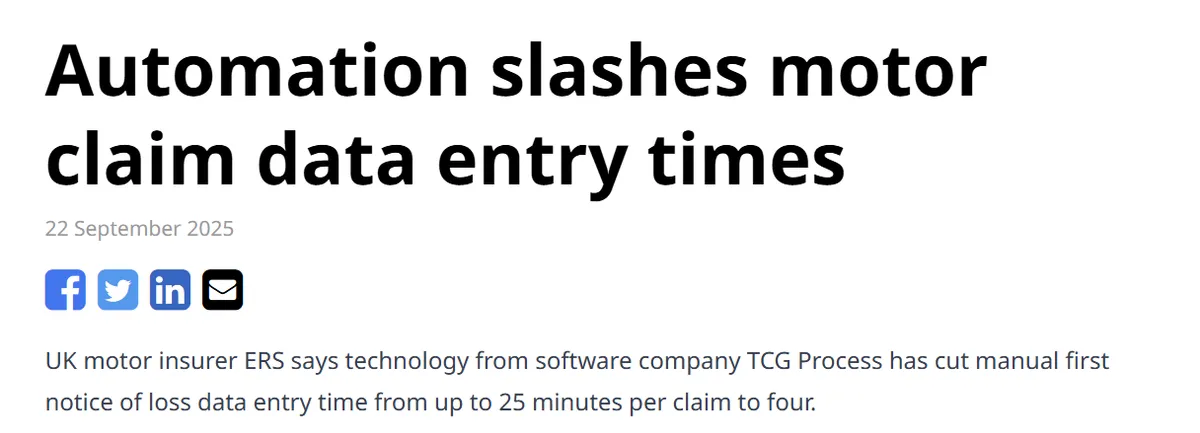
A good example is ERS, a UK motor insurer, which automated its FNOL process using AI.
Source: Insurance News
The company reduced manual data entry from 25 minutes to just four minutes per claim, increased claims processing capacity by 75%, and improved straight-through processing by 40%.
The system also validated more than 100 data fields automatically, allowing claims teams to spend less time checking information and more time resolving claims.
It's also why insurers are accelerating their investments in automation.
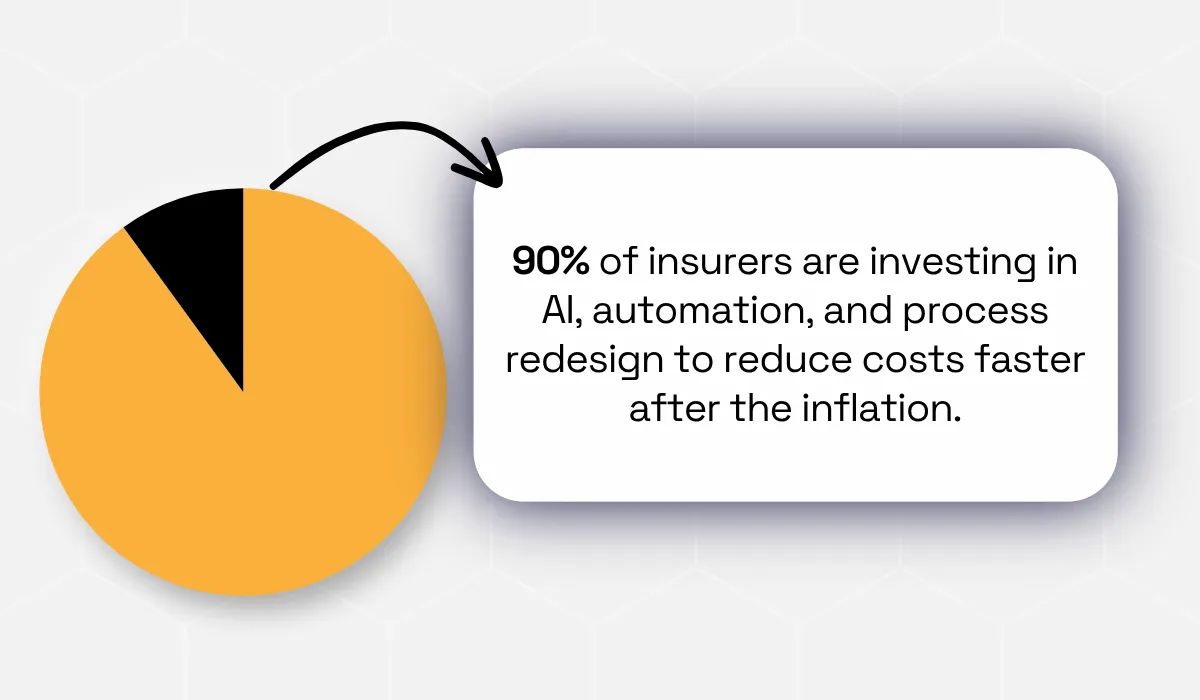
According to a McKinsey survey, more than 90% of insurers are targeting cost reductions that outpace inflation through AI, automation, and process redesign, while around one in ten aim to reduce costs by more than 20%.
But automation is only as good as the data behind it.
If the underlying business information is incomplete or outdated, AI simply processes inaccurate data faster. Reliable automation begins with reliable business data.
One company helping insurers build that foundation is Veridion.
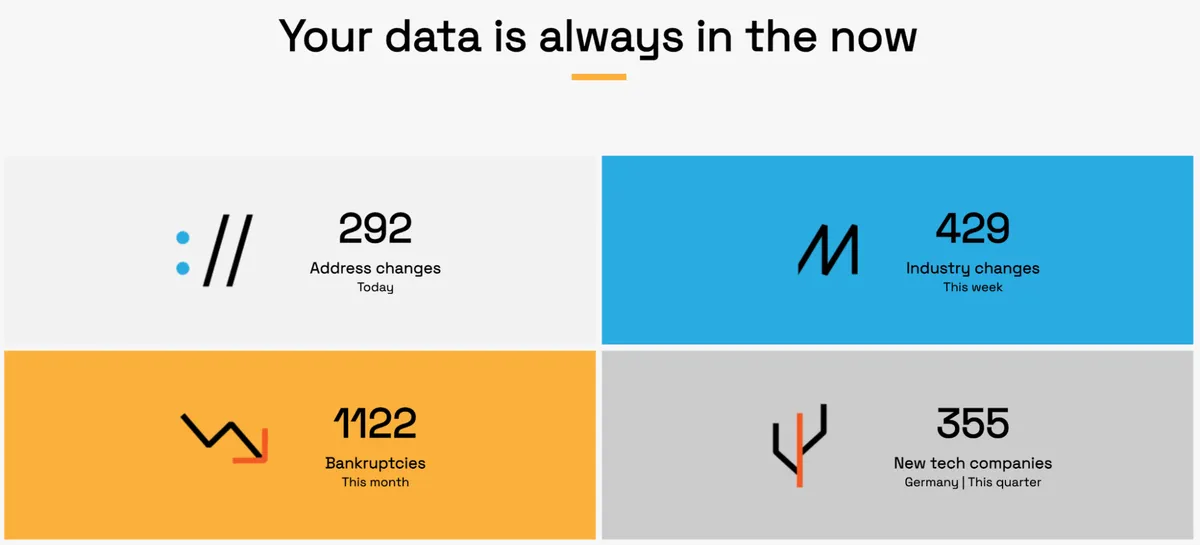
Veridion continuously tracks 186M operating companies, combining registry records with digital footprint signals to detect changes in ownership, locations, products, business activities, classifications, and operating status.
Source: Veridion
Every company is mapped across multiple classification systems, including NAICS, SIC, ISIC, NACE, NCCI, IBC, and custom taxonomies, making the data immediately usable for underwriting, pricing, and rating workflows.
The platform also matches new submissions against its global company database in around 1.5 seconds and continuously refreshes business records.
This allows insurers to monitor changes across their entire portfolio instead of waiting until renewal to identify them.
Current business data provides a foundation for faster underwriting, stronger AI models, better claims decisions, and more accurate risk assessment.
As insurers continue investing in automation and data analytics, the organisations with the most reliable business data will also be the ones making faster, more consistent, and more confident decisions.
Conclusion
When business status changes go unnoticed, even the best underwriting models can start from the wrong assumptions.
Automated status tracking closes that gap by keeping business data fresh, structured, and ready to use.
The result isn't just a faster underwriting process.
It's one where underwriters spend less time verifying information and more time applying their expertise.
In a dynamic market where businesses change every day, current data is quickly becoming one of the strongest advantages an insurer can have.
Articles
Discuss how these trends affect your organization.
Our analysts are available for a short call. Bring a specific question and we will ground it in the data.
Insights
Keep reading
More analysis, research, and outcomes grounded in live company intelligence.
Underwriting Data Analytics: A Guide
Learn what underwriting data analytics is, how it’s being used, and the best practices to keep in mind when implementing it.
How to Build a Strong Market Intelligence Strategy
Learn how to build a strong market intelligence strategy that helps you track trends, understand competitors, and make smarter decisions.
How Is AI Revolutionizing Market Intelligence?
Explore the key ways AI is transforming market intelligence workflows and helping businesses stay ahead of the competition.