Insights / Articles
Private Credit Ratings vs. Credit Estimates: What Changes in the Data Workflow?
In this article, you will learn how private credit ratings vs credit estimates will differ in data requirements, validation, and evidence workflows.

- Both private credit and credit estimate workflows start with the same borrower data.
- 54% of asset managers reported data errors.
- Entity resolution prevents the wrong borrower data from entering rating systems.
- Private credit ratings need fresher data over time.
Total private credit lending is now estimated at between $1.5 trillion and $2 trillion globally (as of the end of 2024).
And yet behind that staggering figure lies a problem: most firms struggle to get clean, usable information about the very companies they lend to.
The workflows for private credit ratings and credit estimates start in the same place: collecting borrower data, resolving entities, and joining financial records.
But how that foundation is built makes all the difference between a reliable assessment and one built on hidden errors.
Building the Shared Company Data Foundation
A private credit rating is a confidential assessment of a private company or a debt instrument’s creditworthiness and ability to meet its financial obligations.
A credit estimate is a lighter, confidential view of the likely credit risk of an unrated entity or loan. Unlike a full rating, it does not consider every factor used in a formal credit assessment.
A private credit rating and a credit estimate look like two totally different concepts. They're not, at first anyway.
Both need the same borrower data, the same entity checks. Both also need the same financial records pulled together beforehand to assess risk.
The split only happens later. So before we get to where these two products go their separate ways, let's look at what they have in common.
Initial Data Collection
The first step looks simple on paper.
Collect the borrower’s financial statements, company information, and useful third-party data. Then bring these inputs together so analysts can start assessing credit quality.
But when it comes to private credit, a Financial Stability Board (FSB) report shows that access to information can take longer for private ratings because an asset manager may sit between the borrower and the rating agency.
InterSystems, a data technology provider, found in its survey of 375 asset management firms that 54% reported challenges with data errors.
The same research found that firms often work with 20 to 29 data sources, while 41% of respondents said their IT and data teams spend up to 50% of their time handling data requests.
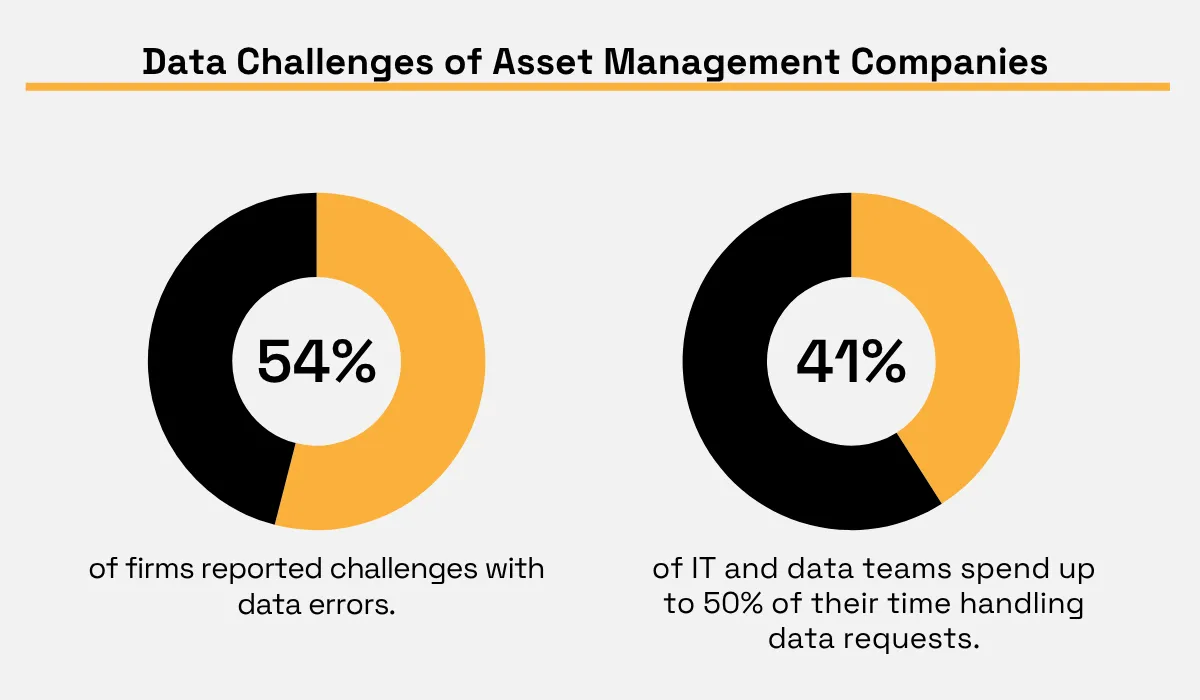
Illustration: Veridion / Data: InterSystems
Now think about what that means for a private credit workflow.
More sources do not automatically mean more useful information. Data teams still have to check what the data refers to, where it came from, and whether it belongs to the borrower being assessed.
So when a private rating team or a credit estimate team starts collecting information on a borrower, they're most likely not starting from a clean slate.
They're starting from a system that's already stretched thin, filtered through an intermediary, and prone to errors before the real analysis even begins.
And that is why the collection stage should not be about gathering more data but creating a usable starting point.
Entity and Borrower Resolution
Before a financial figure can influence a credit assessment, you need to know which company the number belongs to.
This sounds obvious until a borrower appears under a holding company in one system and an operating subsidiary in another.
The same FSB report highlights a similar problem at the market level.
In Europe, for example, the report says many private credit instruments lack standard identifiers such as International Securities Identification Numbers (ISINs) or Legal Entity Identifiers (LEIs).
Even when identifiers exist, authorities may not have all the related information.
A financial statement may sit under one legal entity. A loan record may use another name. A company database may identify the operating business separately from its parent.
For example, Lehman Brothers’s bankruptcy involved 209 registered subsidiaries (with similar-sounding names), more than $1.2 trillion in US creditor claims, and insolvency proceedings across more than 80 legal jurisdictions.
Private credit or credit estimates are nowhere near that level of complexity. But the lesson is useful: once corporate structures become layered, getting the entity wrong can pull the wrong information into the analysis.
Veridion addresses this at the data layer by resolving different company records into one canonical entity.
Its entity-resolution process combines names, addresses, registry IDs, domains, subsidiaries, and other signals to identify the underlying business.
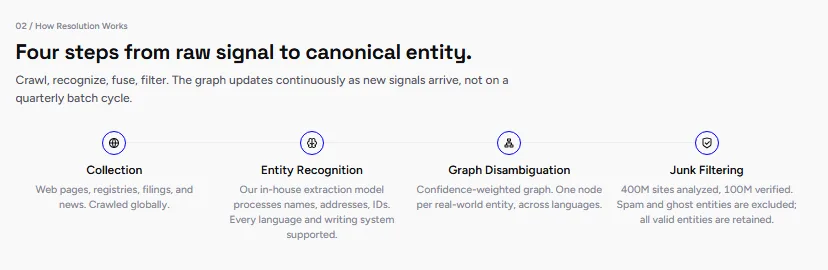
Source: Veridion
It also links parent and subsidiary entities, preserving aliases and historical identities.
For a credit team, this means the financial statement, loan record, and external company data can be tied back to the same entity before they enter the assessment.
Financial and Company-Data Joins
Once the borrower is resolved, the next question is whether all the relevant information can actually be connected.
Financial statements are only one part of the picture. Your working record may also need the company’s operating structure, industry classification, location, and wider business context.
Debt-to-EBITDA, for example, might say something about leverage. But its meaning changes when contextualised in relation to the borrower’s industry, business structure, and other exposures.
Further, experts across industry point to the lack of granular borrower and loan-level information as a major challenge in understanding private credit risk.
And even when you have relevant financial and company data, they need to be joined into one working record. And it’s far from simple.
Allvue System, a cloud-based technology and data solution, found in its 2026 GP Outlook Survey of 102 senior leaders from private equity, private credit, and venture capital firms that 92% of firms describe their own data as only moderately organized, or worse.
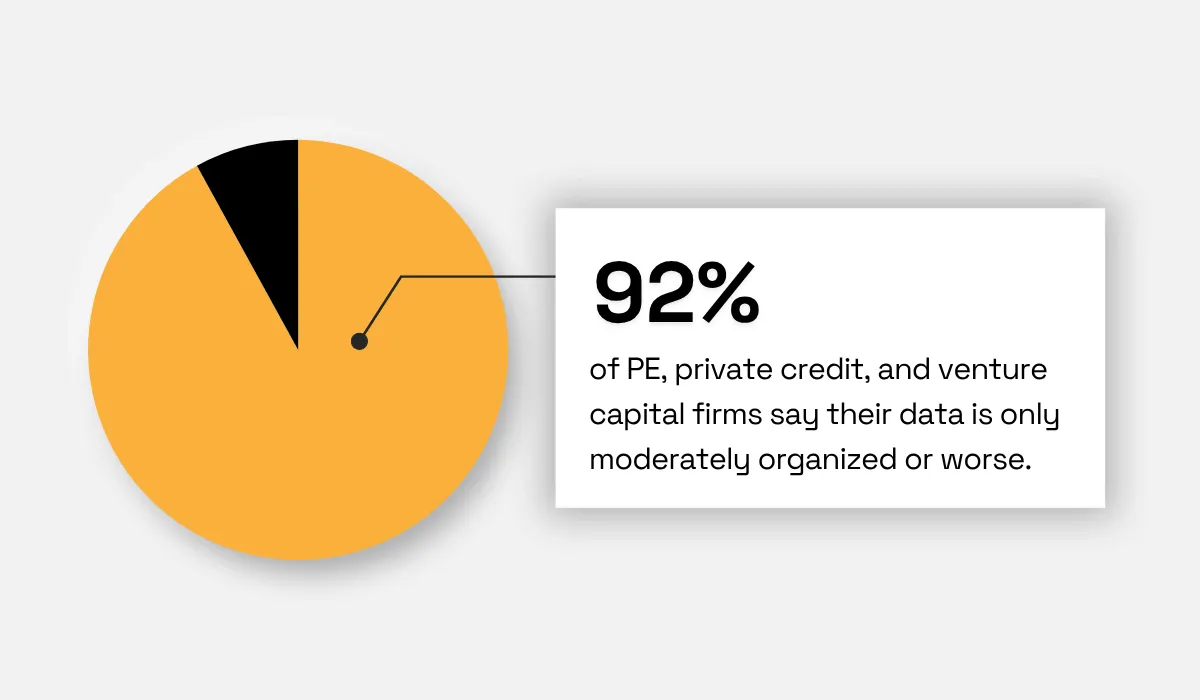
Illustration: Veridion / Data: Allvue System
So, if the join is done poorly here, right at the start, it doesn't just cause one small error. It compounds. A messy classification or an incomplete operating profile gets carried into every report, every model, every decision built on top of it later.
But if done right, before the workflows split, both a private rating and a credit estimate are built on a strong foundation.
Where the Two Workflows Diverge
A credit estimate is built to give a likely view of an unrated borrower at a point in time. A private rating has a longer life. This is where the two start to diverge.
That changes what the data workflow needs to do after the initial assessment.
Point-in-Time vs. Ongoing Refresh
A credit estimate is a defined snapshot. In other words, they have no future forecast or predictions.
One of the world’s top credit rating agencies, S&P Global Ratings, describes credit estimates as confidential indications of the likely rating of an unrated company or obligation. They use an abbreviated analysis and generally rely on information supplied by the requesting party and third-party sources.
The data job is therefore largely about getting the right information for that assessment.
A private rating is different. It typically follows a process similar to public credit ratings, including financial and credit analysis, peer comparisons, and committee oversight.
The rating, therefore, needs a data process that can support continuous change. That means a system that keeps pulling fresh information, rather than a one-time pull that has to be manually repeated.
However, data freshness is a weak point across financial asset management.
Only 3% of asset management firms in the InterSystems research used data less than five hours old for reporting. Among firms with $100 billion to $500 billion in assets under management (AUM), none reported using data less than one hour old.
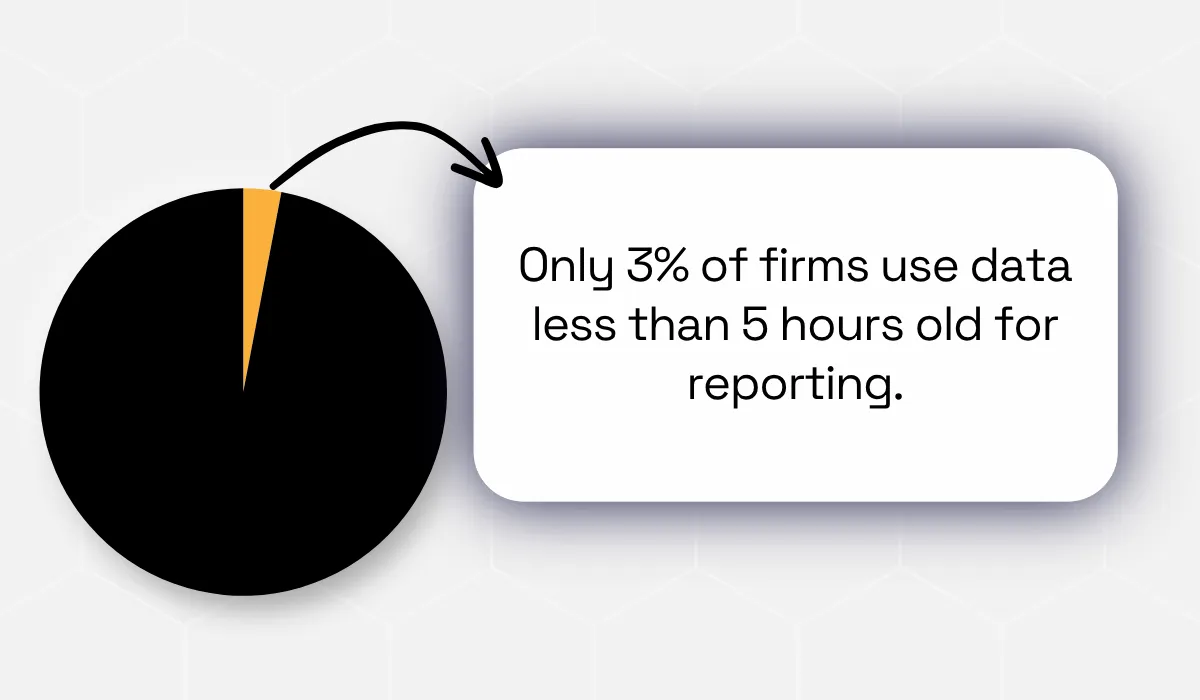
Illustration: Veridion / Data: InterSystems
Think about that for a second. Even the biggest players, with the most resources, still aren't working with truly fresh data.
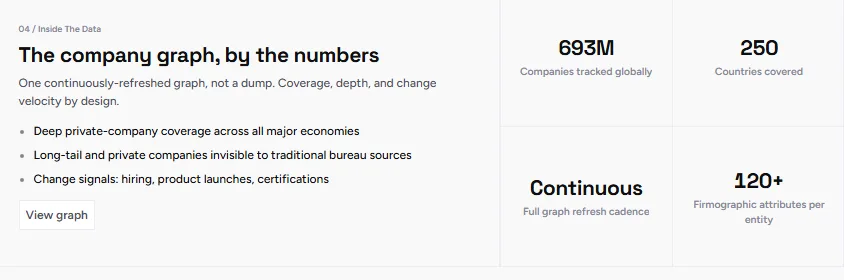
Veridion can help rating teams keep company information current by continuously refreshing the data behind an entity record. That can include changes to company attributes and other signals that may affect how a borrower is understood over time.
Source: Veridion
For a monitored private rating, this creates a more consistent basis for spotting relevant changes between formal review points, so the rating team has better visibility into what has changed and when it changed.
Surveillance Expectations and Information Gaps
Private-credit surveillance cannot stop at checking whether a borrower has missed a payment.
Industry experts recommend continuous surveillance through metrics covering leverage, borrower credit quality, concentration, liquidity, defaults, cash flows, and credit spreads, and across jurisdictions too.
But for a credit estimate, surveillance is different. As Ramki Muthukrishnan, Head of Leveraged Finance at S&P Global Ratings, explains:
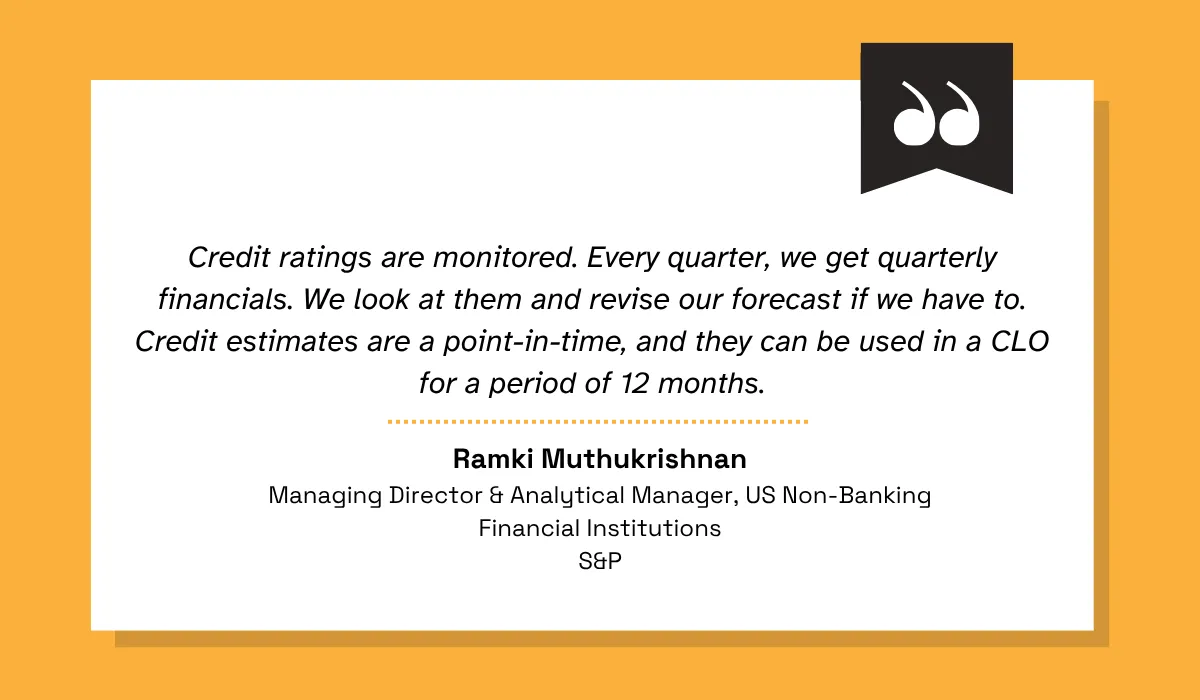
Illustration: Veridion / Quote: S&P Global Ratings
That difference changes the data workflow.
A private credit rating can change when new borrower information is collected, assessed, and compared against the existing credit view.
A credit estimate, in contrast, reflects the information available at a specific point and can serve only for a defined period.
For rating teams, the initial assessment is therefore only the starting point. Changes in debt-to-EBITDA, interest coverage, debt service coverage, loan-to-value (LTV), free cash flow, defaults, sector exposure, and credit spreads can change the risk profile over time.
The challenge is keeping these metrics fresh, consistent, and comparable as the borrower and market evolve.
Data also needs a clear history showing when a value changed, what caused the change, and which evidence supported a revised assessment.
Without that trail, surveillance can become a quarterly data refresh rather than a continuous view of credit risk.
Committee Review and Evidence Retention
Both a private rating and a credit estimate usually pass through some kind of committee review. What’s different is how often it happens, and how long the paper trail needs to survive.
A credit estimate’s committee step happens once. A private rating’s committee process recurs with every surveillance cycle. And that means the evidence behind it needs to survive across cycles, not just one moment in time.
This matters even when default rates remain modest, averaging below 3% across private credit and leveraged loans.
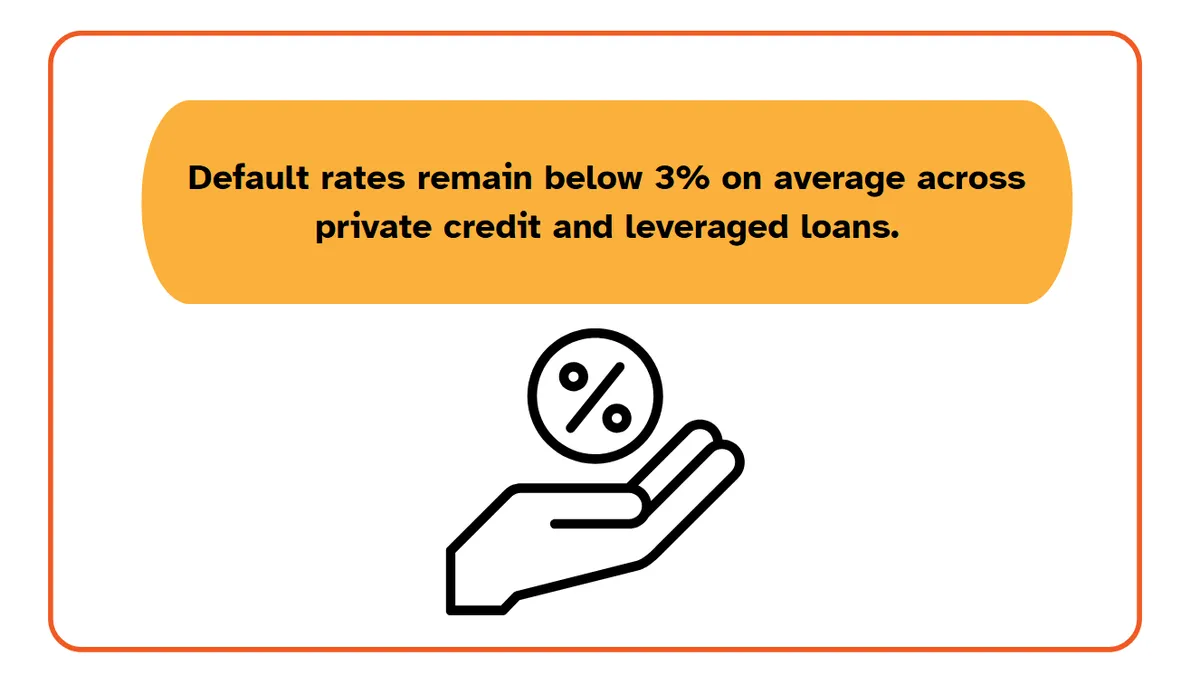
Low defaults do not remove the need for strong credit controls. They make it important to distinguish between a genuinely stable credit and one that appears stable because changes in the borrower’s financial position have not been captured or challenged.
For a private credit rating, each surveillance cycle should therefore leave a clear record of what changed since the previous review. That can include:
- Updated financial statements
- Leverage
- Liquidity
- Covenant performance
- Debt maturities
- Management information
- External credit signals
The committee should be able to see not only the latest figures, but also how they compare with the evidence used in the previous rating decision.
In a 2026 report on Hercules Capital, a private credit firm, a former analyst alleged that some company deal sourcing involved simply copying investments listed on the Google Ventures website and relying on other investors to have already done the due diligence.
Another former finance team member also described limited failsafes and cross-checks within parts of the valuation process, with a small team handling important valuations that fed into the financial statements.
The allegation highlights why a committee record should show not just what was reviewed, but whether the underlying evidence was independently verified.
The same principle applies to a credit estimate, even though the process is usually point-in-time. The evidence supporting the estimate should show which documents were reviewed, which assumptions were made, and how the final assessment followed from them.
Conclusion
The difference between a private credit rating and a credit estimate is not created at the point of data collection.
Both depend on a reliable view of the borrower, accurate entity matching, and connected financial and company information. The divergence comes after that foundation is built.
A credit estimate can answer a point-in-time question using a defined set of information.
A private rating needs a data process that can keep pace with changes in the borrower. That makes the underlying data foundation just as important as the analysis built on top of it.
When the foundation is clean, connected, and kept current, both workflows have a stronger starting point.
Articles
Discuss how these trends affect your organization.
Our analysts are available for a short call. Bring a specific question and we will ground it in the data.
Insights
Keep reading
More analysis, research, and outcomes grounded in live company intelligence.
How Market Intelligence Drives Smarter Business Decisions
Want to improve your decision-making process? This guide will show you how to leverage market intelligence for business growth.
Best Practices for Leveraging Market Intelligence
Not sure how to apply market intelligence effectively? Learn which practices top businesses rely on and how you can too.
How Is AI Revolutionizing Market Intelligence?
Explore the key ways AI is transforming market intelligence workflows and helping businesses stay ahead of the competition.