Insights / Articles
Want Better Competitive Insights? Here's a 5-Step Framework for SaaS Teams
Struggling to gain an edge? This 5-step framework provides competitive intelligence for SaaS teams to dominate the market.

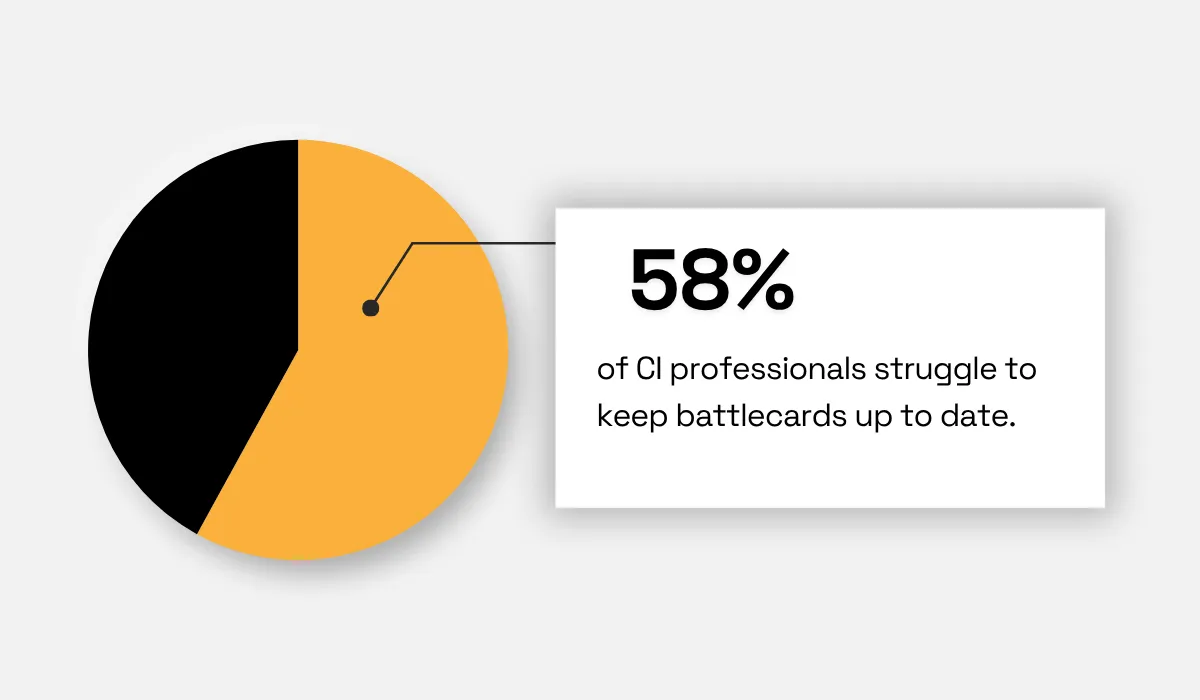
- 58% of CI professionals struggle to keep battlecards up to date.
- It isn't enough to monitor only direct competitors
- Battlecards are one of the most useful products of competitive intelligence
Picture a large SaaS company preparing its annual plan.
Product sees a feature gap. Sales hears new objections. Procurement flags a vendor shift. Each team sees a different signal, but no one has a shared view of what competitors are doing next.
This is how you miss signals hiding in plain sight. The result is slower alignment and bets made with incomplete evidence.
So how can you collect competitive insights in SaaS? This five-step framework shows you just that, so you can focus on the right threats and make better strategic decisions.
1. Define Business Questions that Matter Most
Before your team begins its competitive intelligence (CI) process, you must agree on the business questions the procedure is meant to answer.
Those questions determine what the CI workflow collects, how it filters market signals, and which deliverables reach the right stakeholders.
Without these defined boundaries, SaaS competitive intelligence can quickly become an oversized archive of pricing screenshots, product announcements, sales notes, and competitor updates that do little to shape strategic planning.
This is especially true for enterprise teams that operate in crowded information environments.
And the cost of unfocused intelligence is not only operational. It can also affect commercial performance.
The Benchmarkit 2024 report found that the blended Customer Acquisition Cost (CAC) ratio has increased by 22% year over year.
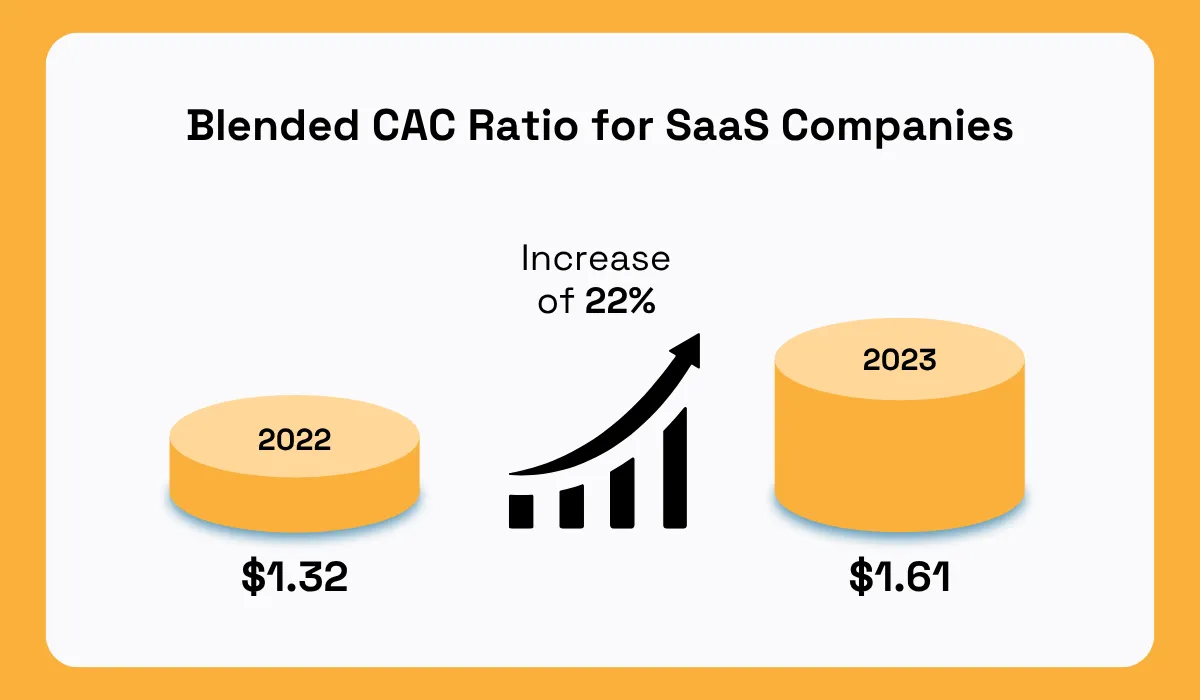
Illustration: Veridion / Data: Benchmarkit
So, as acquisition gets more expensive, CI questions need to be focused on buyer objections and competitor moves, because these are the likely factors that can increase CAC even more.
Postscript, an SMS and MMS marketing platform with a general ARR of $100 million, applied this principle early in its workflow.
At the time, its Principal Market Intelligence Manager, Mindy Regnell, used Google Alerts as an external SaaS competitive intelligence tool.
However, she recommended starting with only one or two keywords before expanding gradually.
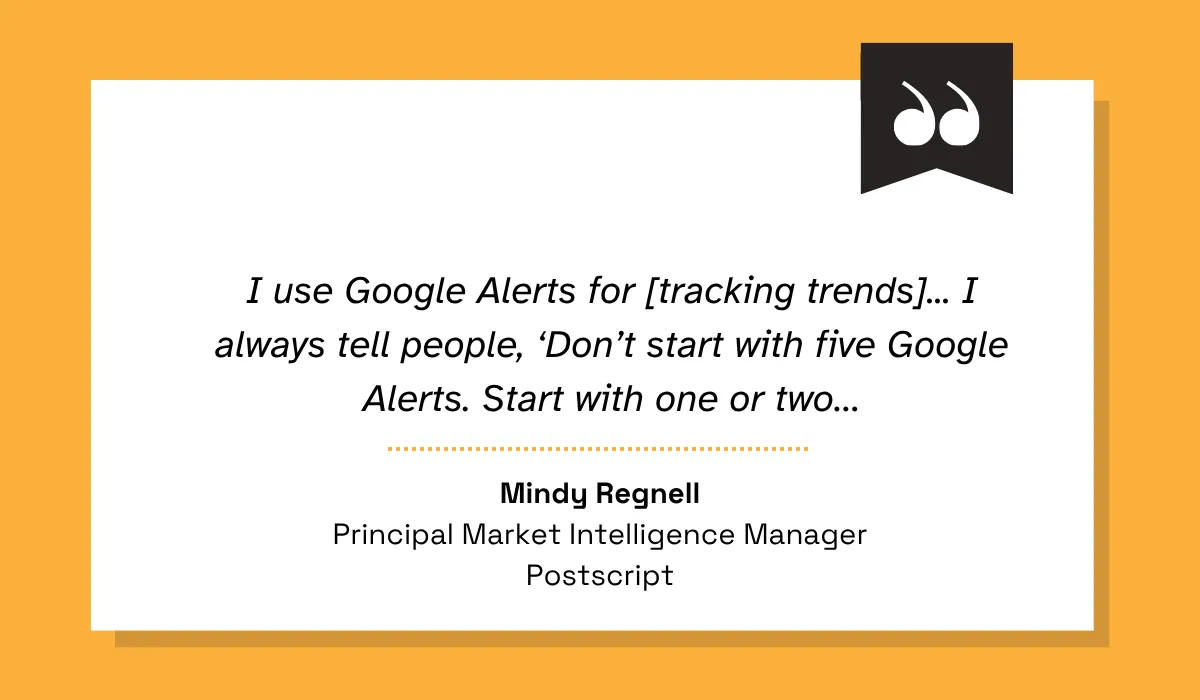
Illustration: Veridion / Quote: Competitive Intelligence Alliance
This approach is worth carrying into the entire CI process. Limit your CI brief to two or three questions tied to a live business decision. Each question should identify:
- The stakeholder who needs the answer
- The competitor (or segment) being assessed
- The decision deadline
- The action that the insight could influence
For example: “Which pricing and packaging changes could create retention risk in our top renewal cohort before annual planning?”
This gives the framework a clear purpose. It tells your team which sources to monitor and what information to validate.
In other words, do not try to boil the ocean.
A useful CI program is not measured by the number of competitor updates it captures. It is measured by whether it helps the business make better decisions at the right time.
2. Identify Your Competitor Tiers
Not every company competing for your buyer’s budget deserves the same level of attention.
A useful competitor analysis framework ranks rivals by their current deal impact and future strategic risk, rather than placing every familiar name on a single watchlist.
Use four competitor tiers to organize your workflow.
Direct | Serve the same ICP, solve the same core job, and regularly appear in active deals or RFPs. Monitor their pricing, packaging, product releases and sales claims weekly. |
|---|---|
Indirect | Adjacent tools and service providers that solve the same buyer problem differently. Review them monthly through win/loss patterns, product intelligence, and customer feedback. |
Emerging | AI-native offerings and fast-moving startups with limited current overlap but high change velocity. Track their funding, hiring, partnerships and launches. |
Market alternatives | Internal builds, spreadsheets, outsourcing or bundled tools. Capture these alternatives in loss reasons and retention-risk reviews rather than building full competitor profiles. |
These categories matter because the biggest threat is not always the competitor your team already talks about most.
Sometimes the real risk comes from an adjacent player that starts in a different category, wins a different kind of user, and then moves steadily into your market.
Tiering helps you spot the shift early, before a new rival blindsides you in deals, renewals, and expansion conversations.
That matters even more now because the 2025 SaaS Performance Benchmark Report by Pavilion found that expansion ARR represented 40% of total new ARR in 2024.
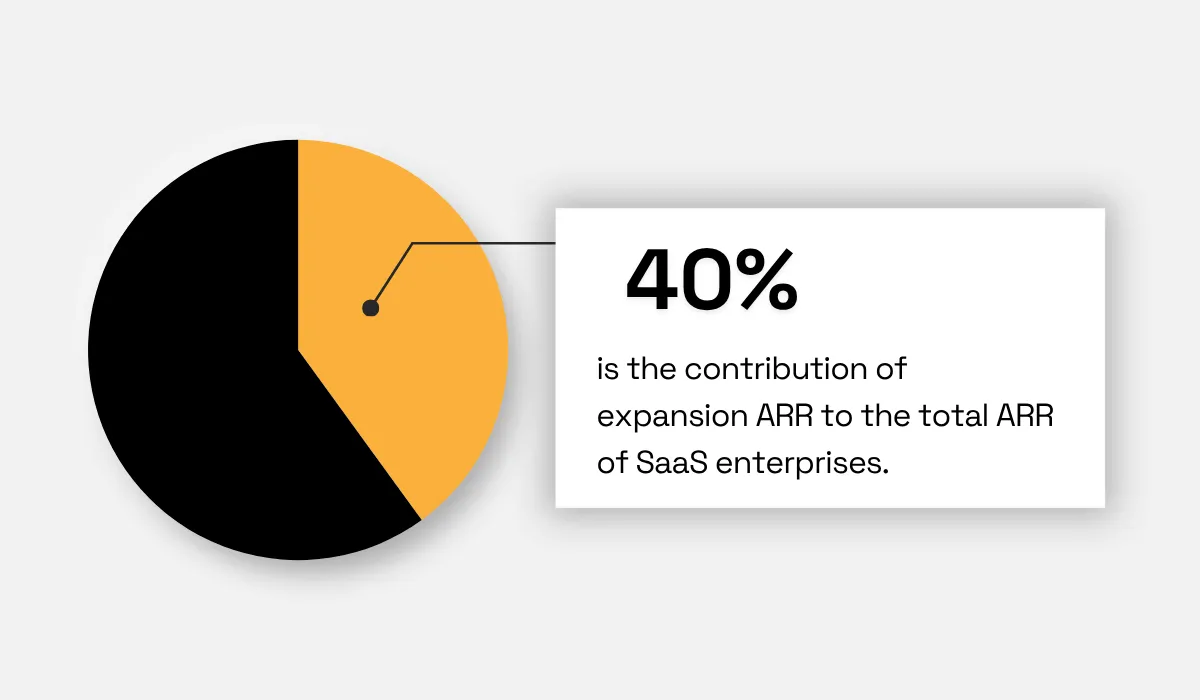
Illustration: Veridion / Data: Benchmarkit
This proves that competitor tiers should focus on both direct and indirect competitors because they can threaten renewals, upsells, and cross-sells, which can damage the expansion ARR.
Canva is a useful example. It was long seen as a simpler alternative to professional design software, but its acquisition of Affinity pushed it closer to Adobe’s traditional territory.

Source: Canva
Adobe, which only tracked “professional design suites,” might have just underestimated how quickly an adjacent tool could become a more credible competitive threat.
As of 2026, Canva is heading towards a $100 billion public valuation, while Adobe’s stock fell 23% year-to-date in early 2026.
You can avoid such pitfalls by scoring each player against deal frequency, revenue and market momentum.
By doing this, you will avoid chasing every shiny object and give your CI reporting a clear purpose.
3. Build Competitor Profiles
Competitor tiers tell you who to watch: competitor profiles make that intelligence usable.
The next step in a SaaS competitive intelligence framework is to bring all of that information into one shared competitor profile.
Without this, your team will end up with scattered sales notes, outdated pricing screenshots, and ineffective Slack messages.
But what should a competitor profile cover?
It should cover the rival’s customer base and ICP, product portfolio, pricing, integration, technology stack, geographic footprint, and financial indicators.
More importantly, it should help your team answer practical questions quickly:
- Who is this competitor selling to?
- How do they position their product?
- What do they charge?
- Which markets do they operate in?
These details help your team understand where a competitor overlaps with your business and how that overlap could affect deals or renewals.
Internal information still matters here. Sales feedback and win/loss notes can show what happened in real deals. But they shouldn’t be your only source.
Internal notes are often incomplete and based on assumptions.
A salesperson may say a deal was lost on price, when the real issue was onboarding speed and security requirements. A useful profile can verify those assumptions instead of repeating them.
The value of this is clarity.
Instead of piecing together fragments from different teams, you create one reliable view of each important competitor.
That makes reporting faster, decisions more consistent, and competitive research more useful across the business.
An AI-powered data enrichment platform like Veridion helps you build rich competitor profiles.
Thanks to its access to 693M business profiles across 461 company attributes refreshed weekly, you can continuously add updated business information to your decisions.

Source: Veridion
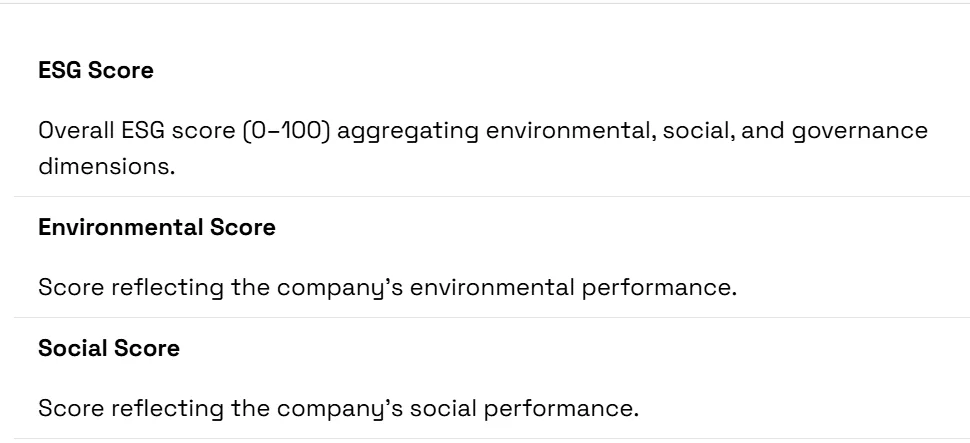
Its coverage includes company identity, industry codes, product portfolios, locations, financials, corporate hierarchies, ESG signals, and technographics.
Source: Veridion
In practice, that aids your team in verifying whether a competitor truly serves the same vertical, belongs to a larger parent company, or uses technologies that create an integration or migration opportunity.
To keep competitor profiles valuable, assign an owner, record the source, and review each profile on a set cadence based on competitor tier.
This is what turns raw competitive data into a resource your team can actually use.
4. Use These Insights to Build Battlecards
Once you’ve built your competitor profiles, the next step is to turn that intelligence into battlecards.
Battlecards are one of the most useful products of competitive intelligence because they help sales teams use research in live deals.
During discovery calls, demos, or RFPs, sales representatives do not need a 30-page competitive report.
They need a concise outline of where a rival is credible, where your company has the strongest fit, and which proof points can advance the deal.
This is what makes battlecards valuable. They turn competitive research into something sales can actually use under pressure.
Instead of forcing teams to search through scattered notes, outdated slides, or long reports, battlecards give them quick direction at the moment they need it most.
To build an effective battlecard, focus on the buyer’s decision rather than everything you know about a competitor.
Each card should include the competitor’s ICP, positioning, pricing, likely strengths, known constraints, and the situations where your product is the better fit.
Then add seller-ready guidance, such as:
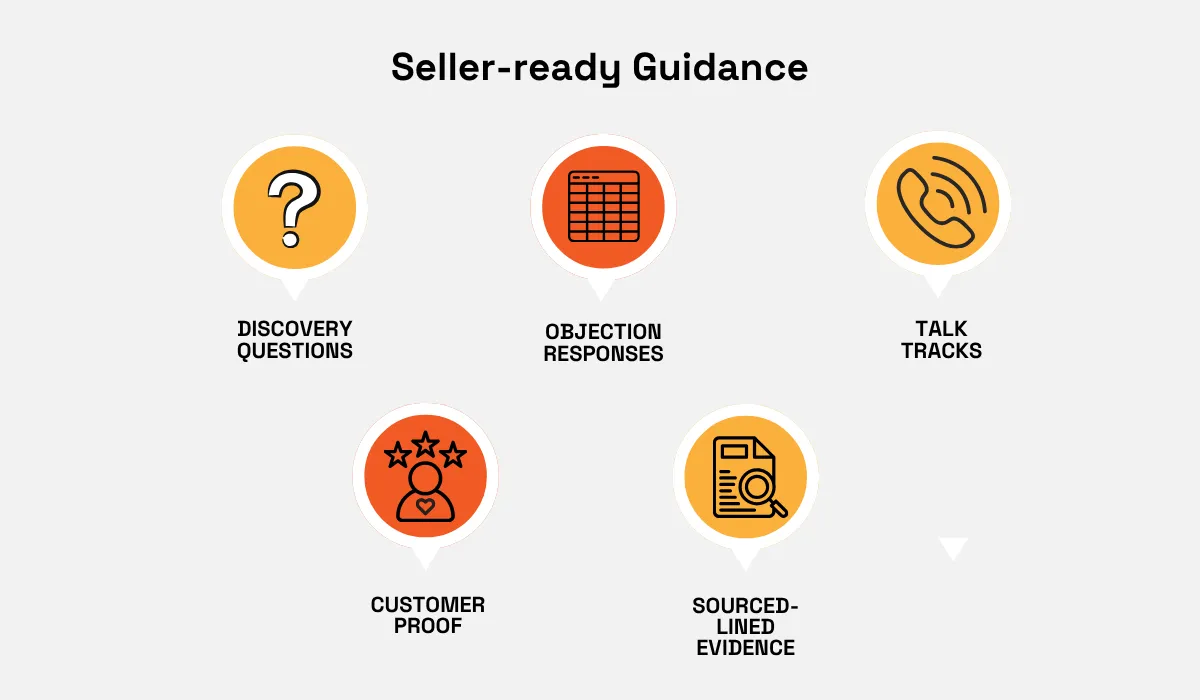
Source: Veridion
Keeping those cards current matters just as much as creating them well.
Crayon’s 2024 State of Competitive Intelligence report found that 58% of CI professionals struggle to keep battlecards up to date.
A card built on stale documentation or one-off pricing-page checks can quickly undermine credibility in front of the buyer.
Klaviyo offers a useful example of why updated battlecards matter.
Source: Crayon
Its team said older competitor information was often static and outdated, which made it harder to support sales in competitive deals.
After connecting battlecards to real-time competitive Intelligence by Crayon, it reported that competitive win rates increased by as much as 59%.
That shows how up-to-date battlecards can directly improve execution in live opportunities.
But that kind of result does not come from updating information randomly. It comes from having a clear process for deciding what needs to change and when
Sam Niro, CI Manager at Larloa, describes that process well.
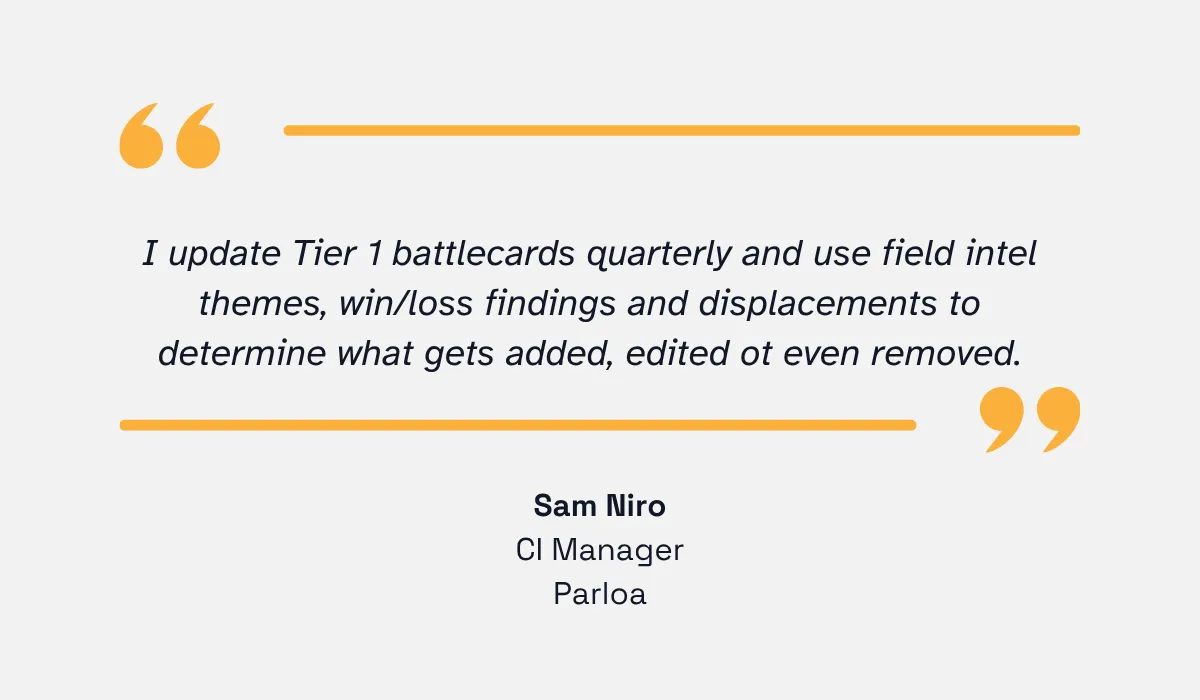
This is a useful standard.
Battlecards should be treated as living CI deliverables, updated not only when competitors make major moves, but also when field evidence shows that buyer objections, deal patterns or competitive pressure are changing.
This is how CI becomes consistent sales action.
5. Establish a CI Operating Cadence
Competitive intelligence cannot be a one-off analysis completed before annual planning.
Competitors can alter pricing, partnerships, and product capabilities between two executive meetings.
Your CI framework needs a clear operating cadence for monitoring changes, validating data, and delivering insights before a deal or renewal decision is affected.
A practical cadence usually follows three rhythms.
Weekly | Monitor Tier 1 competitor news, pricing, senior hires and field-intel themes. Tag each signal by its relevance to your ICP, retention and GTM strategy, then escalate only the moves that could affect active pipeline or customer accounts. |
|---|---|
Monthly | Refresh competitor profiles, update battlecards and synthesize win/loss findings. Share a short reporting update that answers what changed, why it matters and what action the team should take. |
Quarterly | Rescore competitor tiers, reaccess market alternatives and connect insights with the roadmap and planning cycle. |
Crayon’s Fuze case study shows why this cadence must be frequent enough to catch important changes, but selective enough to avoid noise.
Source: Crayon
Fuze is a unified communication as a service (uCaaS) company, and its product marketing team was often asked by sales how to respond to market news before the CI team had even seen it.
At the same time, more than half of its daily competitor alerts were irrelevant, forcing them to sift through noise instead of acting on meaningful shifts.
After improving its monitoring and filtering workflow, Fuze started spotting subtle competitor strategies before they could become a deal-losing danger.
This resulted in Fuze having a strategic and data edge over its competitors, allowing it to perform better in the market.
The goal is not to overreact every time a competitor changes a webpage. Instead, build a cadence that catches material moves, but is selective enough to maintain data quality.
Conclusion
Competitive insight is not a competitor spreadsheet updated when a major deal slips away.
It’s the operating discipline that helps your SaaS team decide what to build, where to compete, how to position, and which threats deserve action before they hit the pipeline.
Done well, it gives product, sales, and leadership one single view of the market, rather than five conflicting versions.
Start small, focus on the decisions in front of you, and build from there. The market will keep moving. Your team should not be the last to know.
Articles
Discuss how these trends affect your organization.
Our analysts are available for a short call. Bring a specific question and we will ground it in the data.
Insights
Keep reading
More analysis, research, and outcomes grounded in live company intelligence.
7 Best Competitive Intelligence Tools
Discover the 7 best competitive intelligence tools to help you track competitors, analyze markets, and make data-driven decisions.
6 Competitive Intelligence Challenges to Overcome
Uncover 6 major competitive intelligence challenges and how addressing them can improve decision-making and performance.
Competitive Intelligence: Importance, Components, and Collection Methods
Explore competitive intelligence: its importance, main components, and proven methods for collecting actionable data.