Insights / Articles
How to Verify Business Addresses and Company Status in the United Kingdom
Tired of uncertainty? Learn how to find business addresses and verify company status in the United Kingdom with our expert guide.

- Searching by company name alone can lead you to verify the wrong business.
- A company can appear legitimate yet require additional verification.
- Some red flags aren't always a sign of fraud.
- Structured company data is the way to verify many UK suppliers or partners at once.
Verifying a UK company may seem straightforward on paper.
Search Companies House, confirm the business exists, and move on.
In practice, effective company verification requires much more than checking whether a name appears on the register.
A company may appear legitimate on the Companies House register while important details, such as its trading name, ownership, directors, registered address, or regulatory status, have changed or require verification elsewhere.
If left unchecked, these gaps can expose your organization to compliance issues, operational disruptions, and unnecessary financial risk.
This guide walks you through the key steps of verifying a UK company and explains how enterprises can automate the process when manual verification no longer scales.
The Manual Verification Process
When you need to verify whether a UK business is legitimate, active, and operating from the address it claims, Companies House should always be your starting point.
As the UK's official registrar of companies, it maintains the authoritative record for every incorporated company across England, Wales, Scotland, and Northern Ireland.
Its records include a company's registered office, legal status, filing history, directors, and other statutory information needed to establish its legal identity.
While other official sources can help verify tax registration, regulatory authorization, and other business details, Companies House provides the foundation on which every subsequent verification step should be built.
Start With the Company Number
The first step is to identify the company’s Company Registration Number (CRN).
This unique identifier is the most reliable way to locate the correct business in Companies House and should serve as the foundation for the rest of your verification process.
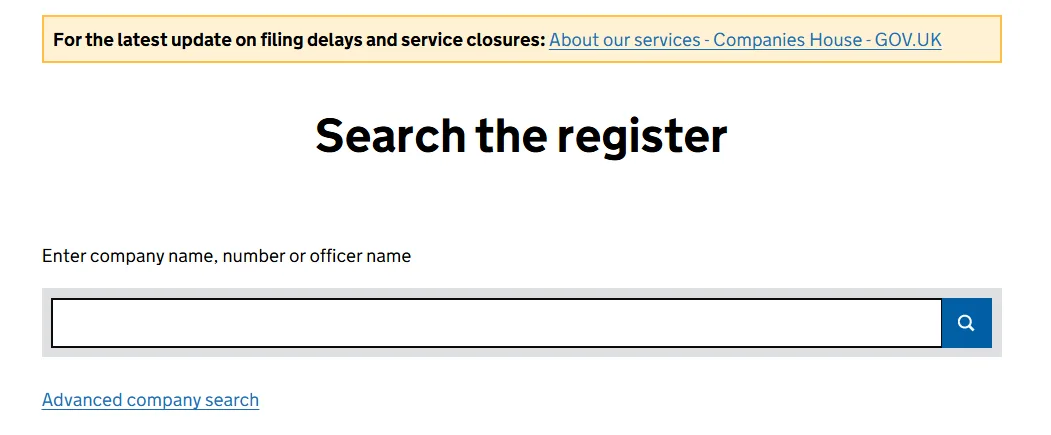
Source: Companies House
Searching by company name alone can be unreliable.
Many UK businesses have similar or nearly identical names, while others operate under trading names that differ from their registered legal entity.
As a result, a simple name search can return multiple matches, making it easy to review the wrong company or overlook the correct one.
This becomes particularly problematic when you're onboarding suppliers, conducting third-party risk assessments, or verifying large volumes of customer and vendor data.
The CRN removes that ambiguity.
Every company registered with Companies House receives a unique registration number that remains with the business throughout its lifetime, even if its name, registered office, or directors change.
Using the CRN ensures you're reviewing the correct legal entity rather than relying on a potentially ambiguous company name.
If a company doesn’t provide its CRN upfront, you can usually find it in:
- Invoices and purchase orders
- Contracts and commercial agreements
- Email signatures or company letterheads
- Official correspondence, such as quotes and proposals
- The company website, typically in the footer or legal information page
If none of these sources include the CRN, search Companies House by company name to identify the correct entity, then confirm its registration number before proceeding.
From that point onward, use the CRN, not the company name, as the primary identifier for all subsequent checks, including the company's legal status, registered office, directors, and regulatory records.
This simple practice significantly minimizes the risk of verifying the wrong organization and ensures your due diligence is built on the correct company record.
Confirm Status and Registered Address
Once you've identified the correct company using its CRN, verify that it is still legally operating and that its registered office matches the information it provides elsewhere.
These checks verify that you're dealing with the correct legal entity before proceeding to ownership, regulatory, or financial verification.
Start by checking the company's status on Companies House.
The most common statuses have very different implications for due diligence:
Company status | What it means |
|---|---|
Active | The company is legally incorporated and remains on the Companies House register. It can continue trading and enter into contracts. An active status alone doesn't confirm that the company is financially healthy or actively operating. |
Dissolved | The company has been removed from the Companies House register and no longer exists as a legal entity. It cannot legally trade or enter into new contracts. |
In administration | The company has entered a formal insolvency process and is being managed by an appointed administrator. While it may continue to operate during administration, its financial position is distressed, and its future is uncertain. |
Next, check the company’s registered office address.
Every UK company is legally required to maintain a registered office where statutory notices and official correspondence from Companies House, HM Revenue and Customs (HMRC), and courts can be delivered.
Although this serves as the company's legal point of contact, it isn't necessarily where the business conducts its day-to-day operations.
Many organizations, particularly SMEs and startups, use their accountant’s office, solicitor’s office, or a company formation agent as their registered office, while operating from entirely different commercial premises.
What matters is consistency.
Compare the registered office listed on Companies House with the address the company provides on its website, invoices, contracts, purchase orders, and other official communications.
Minor differences, such as listing a trading address alongside the registered office, are often legitimate as long as both addresses are clearly identified.
However, if the company claims a registered office that doesn't match the Companies House record or provides conflicting addresses across official documents without explanation, treat it as a warning sign.
While an address mismatch isn't conclusive evidence of fraud, it may indicate outdated records, administrative oversight, or an attempt to misrepresent the company's identity or location.
Check Ownership and Director Changes
A company's legal status and registered address tell you whether it exists.
Reviewing its directors and Persons with Significant Control (PSCs) tells you who controls it.
This is a critical step in due diligence because ownership and leadership changes can reveal potential risks that aren’t immediately obvious from the company profile alone.
On Companies House, you can review the company's current and former directors, including their appointment and resignation dates.
You can also identify its PSCs: individuals or legal entities that typically own more than 25% of the company's shares or voting rights, or otherwise exercise significant influence or control over the business.
When reviewing this information, look beyond the names themselves.
Frequent director turnover, recently appointed directors with little publicly available history, or significant ownership changes shortly before a major transaction may warrant closer investigation.
It’s also good practice to review a director’s other current and former appointments.
Companies House shows whether an individual has served as a director of other businesses, including companies that have since been dissolved or entered insolvency proceedings.
Involvement with dissolved companies isn’t automatically a red flag since many legitimate businesses close every year.
But a pattern of repeated failed companies, frequent resignations, or overlapping directorships in high-risk sectors may justify additional scrutiny.
This step has become even more important following the Economic Crime and Corporate Transparency Act (ECCTA) 2023.
As part of the reforms, Companies House introduced mandatory identity verification for directors, PSCs, and others filing information on behalf of companies.
The rollout began in 2025 to improve the accuracy of the register and make it harder for individuals to conceal their identities behind fraudulent or shell companies.
Explaining the purpose of the reforms, Louise Smyth CBE, Chief Executive of Companies House, said:
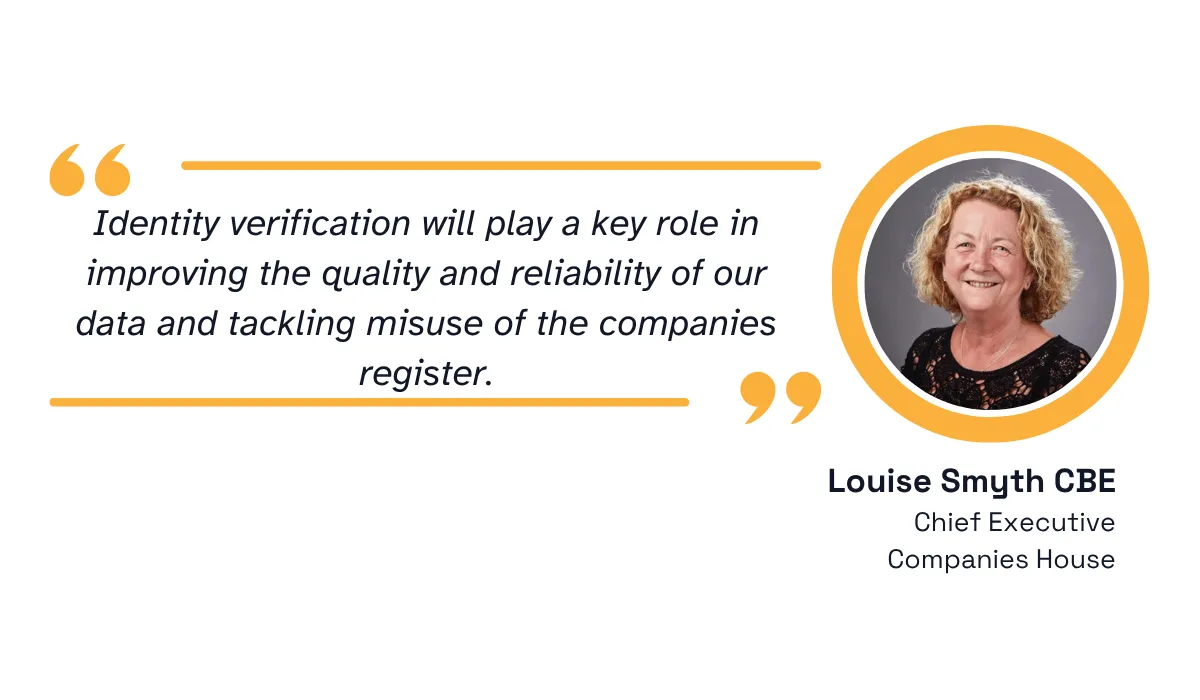
Illustration: Veridion / Quote: UK Government
As you review company officers, check whether directors and PSCs have completed identity verification where required.
An unverified officer doesn’t automatically indicate wrongdoing, as some individuals may still be within the compliance period.
However, it warrants closer attention, particularly when combined with other warning signs, such as inconsistent company information, frequent leadership changes, or a history of dissolved businesses.
Identity verification is best treated as one indicator within a broader due diligence process.
It should strengthen, not replace, the ownership, address, regulatory, and company status checks you've already completed.
Cross-Verify VAT and Regulatory Status
Companies House confirms that a company legally exists and identifies who controls it, but it doesn't verify every aspect of the business.
Depending on the nature of your relationship with the company, you should also verify its VAT registration and, where applicable, its regulatory authorization.
For those two things, you need to step outside the register entirely and check HMRC and the Financial Conduct Authority (FCA).
Start by verifying VAT registration if the company provides a UK VAT registration number.
You can verify it using HMRC’s VAT number validation service (or the UK’s participation in the EU VAT Information Exchange System (VIES), where applicable)
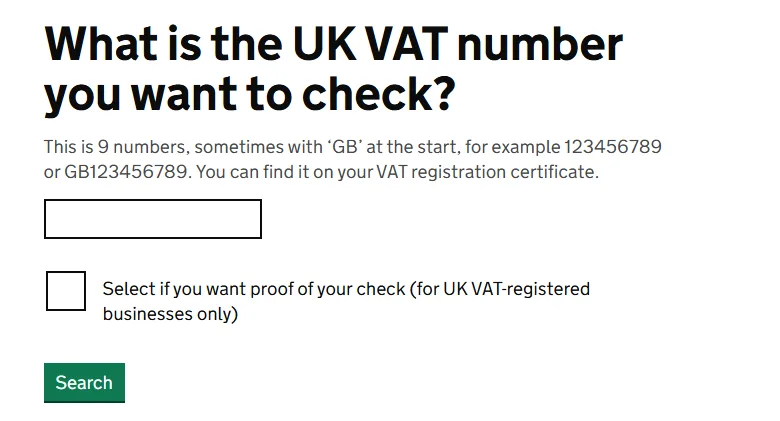
Source: HMRC
Enter the nine-digit VAT number, with or without the GB prefix, to confirm its validity and retrieve the registered business name and address.
Compare these details with the information listed on Companies House and the company's own website, invoices, or other commercial documents.
Minor discrepancies may reflect outdated records or recent administrative changes, but significant mismatches, such as a VAT number registered to an entirely different business, should be treated as a clear warning sign.
One limitation is that the service searches by VAT number rather than company name.
If the company hasn't provided its VAT number, you'll first need to obtain it from an invoice, website footer, statutory accounts, or other official documentation before you can complete the verification.
After that, check the FCA register, but only where it’s relevant
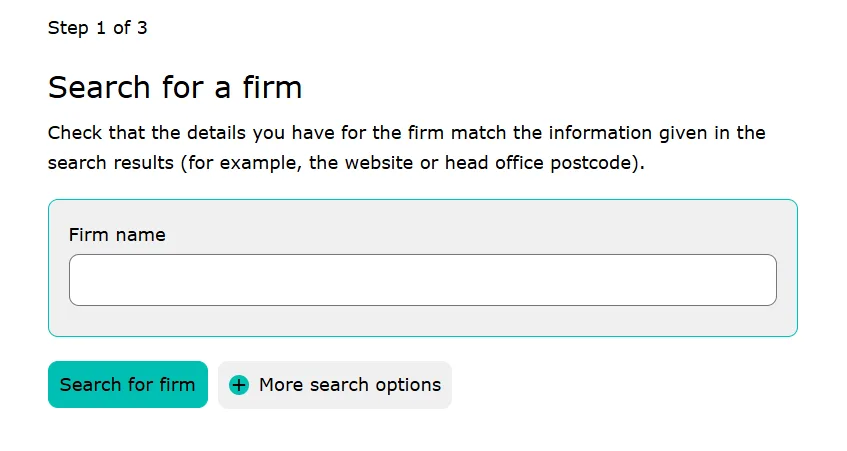
Source: FCA
Not every UK company requires authorization from the FCA.
However, if you’re dealing with a business that provides regulated financial services, checking the FCA Register is an essential part of the verification process.
This includes firms involved in:
- Insurance and insurance broking
- Consumer lending and credit brokerage
- Banking, payment, and e-money services
- Investment management and financial advice
- Cryptocurrency businesses registered for anti-money laundering (AML) supervision
The FCA Register confirms whether a firm is authorized or registered to carry out regulated activities, identifies the permissions it holds, and highlights any restrictions or disciplinary actions.
The FCA Register also helps identify clone firms: unauthorized businesses that copy the name and details of legitimate authorized firms to appear genuine.
Companies House alone cannot detect this type of impersonation, making FCA verification an essential safeguard when working with regulated financial businesses.
For most suppliers outside the financial services sector, this step won't apply.
However, when FCA authorization is required, skipping this check can leave significant gaps in your due diligence process.
Watch for UK-Specific Red Flags
Even if a company has passed the previous verification steps, a few UK-specific registration practices warrant closer attention.
These indicators aren't proof of fraud on their own, but they can help you determine whether additional due diligence is warranted.
Under the ECCTA 2023 reforms, UK companies can no longer use a standalone P.O. box as their registered office.
Instead, the registered office must be an appropriate address where official documents can be physically delivered and acknowledged.
A P.O. box is only acceptable when it's provided as part of a genuine registered office or mail-handling service linked to a physical location.
If a company's registered office resolves to nothing more than a P.O. box number, treat it as a warning sign.
While it may simply indicate that the company's records haven't been updated, it could also suggest non-compliance with the new requirements or an attempt to obscure the business's true location.
Another indicator worth reviewing is whether the registered office is a mass-registration address, a location where dozens, hundreds, or even thousands of companies are registered.
A shared registered office isn’t unusual in the UK.
In fact, the Department for Business and Trade reports that the country’s largest registered address is home to more than 77,000 companies.
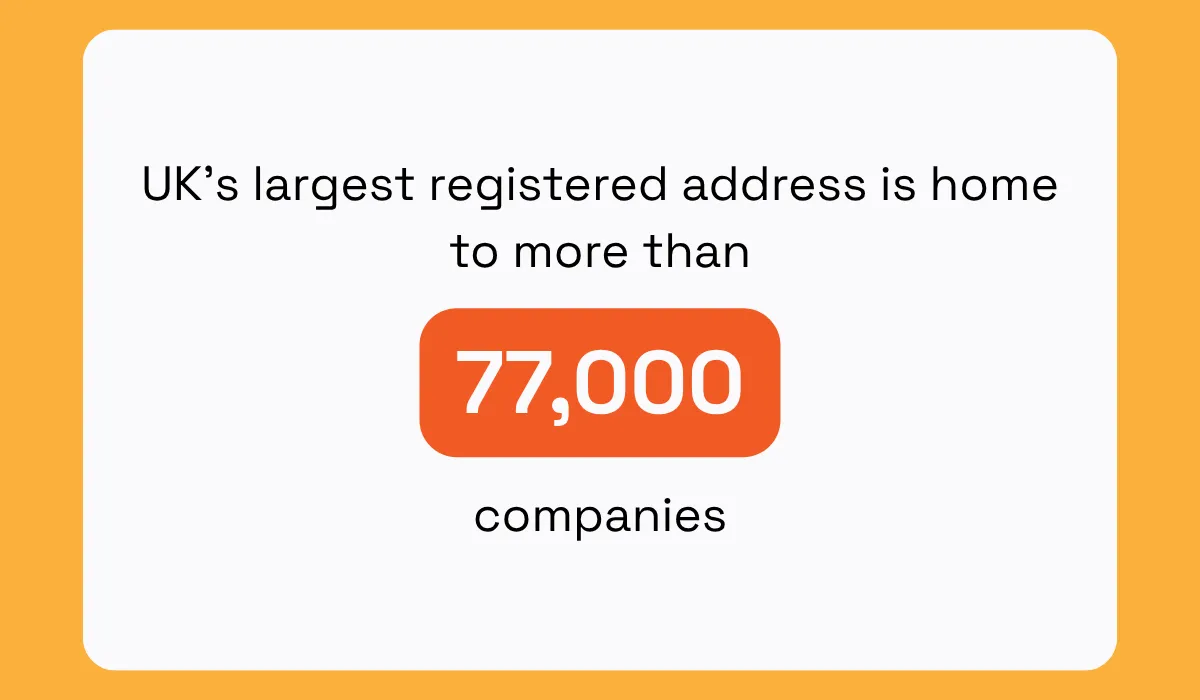
Illustration: Veridion / Data: UK Parliament
The Office for National Statistics also notes that company formation agents and virtual office providers routinely register thousands of businesses at a single address as part of legitimate registered office services.
For startups, overseas businesses, and small companies without dedicated office space, this is often a practical and legitimate arrangement.
If a shared address is combined with other signals, it may indicate a shell company or an attempt to conceal the company's true operations.
Rather than treating a mass-registration address as evidence of wrongdoing, treat it as a prompt for further verification.
Cross-check the registered office against the company's website, VAT registration, regulatory records (where applicable), and other publicly available information.
The more independent sources that align, the greater your confidence that the company is legitimate.
Verifying at Scale With Structured Data
The manual verification process described above is effective for reviewing individual companies.
However, it becomes increasingly difficult to maintain when your organization manages hundreds or thousands of UK suppliers, customers, or business partners.
Repeating the same Companies House searches, VAT checks, ownership reviews, and address comparisons for each company one at a time is time-consuming, difficult to standardize, and nearly impossible to keep up to date as company information changes.
Structured company data solves this challenge by replacing periodic manual lookups with continuous monitoring.
Instead of checking each supplier individually, procurement, compliance, and third-party risk management (TPRM) teams can monitor their entire supplier base for changes using standardized company data sourced from authoritative records.
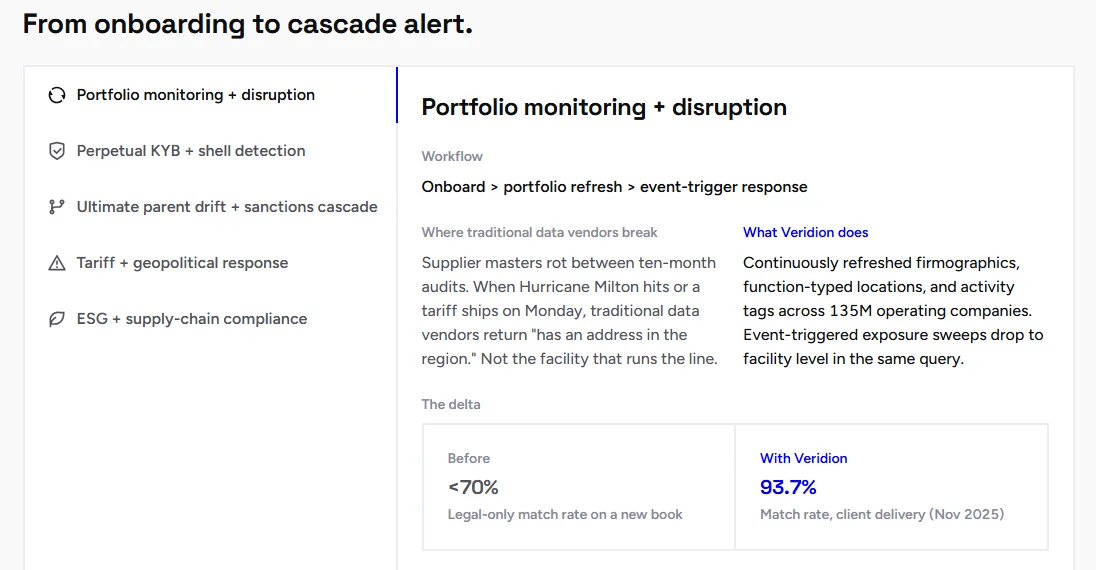
Veridion supports this approach by combining official UK registry data, including Companies House records, with continuously refreshed real-world business intelligence.
Its entity resolution engine links legal company records with information collected from company websites, regulatory filings, news sources, and other trusted public sources to create a unified company profile.
Source: Veridion
This helps organizations verify not only what a company has reported to official registries, but also whether those details align with how the business operates in practice.
Because Veridion refreshes its data weekly, organizations can continuously monitor their UK supplier base for changes such as:
- Registered office address updates
- New directors or Persons with Significant Control (PSCs)
- Changes to company status, including dissolution or insolvency
- Other business attributes relevant to supplier risk and compliance
By cross-referencing official registry information with real-world operating data, enterprises can move from reactive, one-off verification to continuous monitoring.
Rather than manually rechecking every supplier, teams can focus on the organizations whose records have changed or whose profiles contain potential risk indicators.
The benefits of this approach are reflected in one of Veridion's customer deployments.
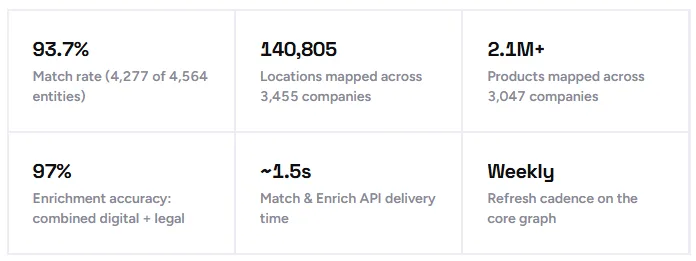
A third-party risk management platform initially achieved 68% enrichment accuracy using legal registry data alone.
After incorporating Veridion's entity resolution engine, which combines official registry records with continuously refreshed company intelligence, enrichment accuracy increased to 97%, meaning the platform could populate supplier profiles with much more complete and reliable company data. It also successfully matched 93.7% of supplier records (4,277 out of 4,564 entities).
Source: Veridion
This enabled the customer to build a more complete and reliable supplier dataset without relying solely on manual registry searches.
Conclusion
Company information doesn't stay the same for long.
Directors change, registered addresses are updated, company statuses evolve, and ownership shifts, all without notifying your procurement or compliance team.
Whether you're verifying a single new supplier manually or continuously monitoring thousands of business relationships, the goal is to identify meaningful changes before they become costly problems.
Get this right, and you're doing more than reducing fraud, compliance, and operational risk.
You're building a supplier and partner ecosystem grounded in accurate, trustworthy company information.
That's a foundation every enterprise can build on.
Articles
Discuss how these trends affect your organization.
Our analysts are available for a short call. Bring a specific question and we will ground it in the data.
Insights
Keep reading
More analysis, research, and outcomes grounded in live company intelligence.
Small Business Data: A Quick Guide
In this guide, you will learn what small business data includes, why it matters, and how it supports smarter decisions and growth.
Operational Due Diligence: A Guide for Investors
Learn what operational due diligence is, the areas investors should examine, the process to perform it, and how it helps uncover risks.
Financial Data Enrichment Explained: What it is and Why it Matters
Want to make better use of financial data? Discover how financial data enrichment improves accuracy and decision-making capabilities.