Insights / Articles
How to Verify Business Addresses and Company Status in Germany
Tired of uncertainty? Learn how to find business addresses and verify company status in Germany with our expert guide.

- Use the Handelsregister and the Unternehmensregister as key sources.
- No single record holds all company information. You'll need to combine multiple sources.
- AI-driven business intelligence platforms, like Veridion, speed up KYB checks.
You've found a promising German supplier, but verifying their information is proving harder than you thought.
You have no idea which registers to check, what information German businesses are required to disclose, what local exemptions might apply, or how to verify any of it without ever setting foot in the supplier's office.
Doing business abroad always comes with unknowns, and Germany is no exception.
To help you move forward with confidence, we'll walk you through the main steps and key official sources to check below.
1. Confirm the Company’s Legal Registration Status
The first step is checking the business's registration records in official databases. More specifically, that includes the Handelsregister and the Unternehmensregister.
The Handelsregister is Germany's official commercial register.
You can use it to verify basic company details and status, such as its legal form, shareholder lists, directors and representatives, and share capital. All the information in this register is free.
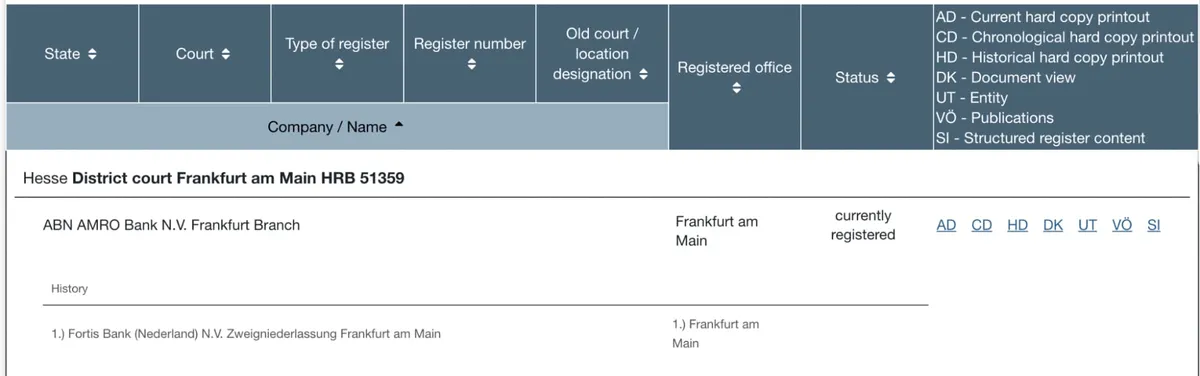
Source: Handelsregister
The Unternehmensregister is Germany's official company register, and it's more comprehensive than the Handelsregister. It has the same data plus additional company information and documents, including company filings, financial statements, and other corporate disclosures.
This register is not entirely free. Some documents are paid, with document costs typically ranging from €1 to €5.
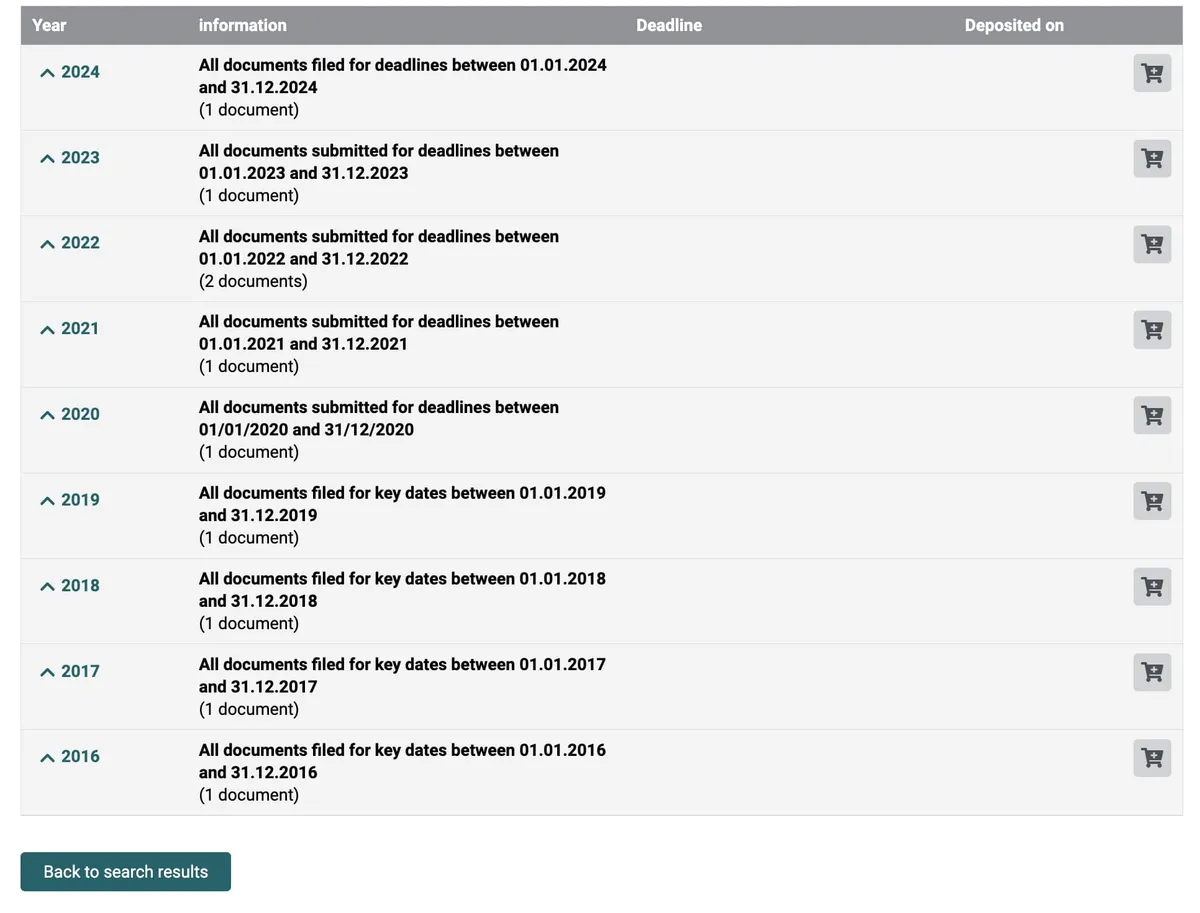
Source: Unternehmensregister
The Handelsregister is enough for verifying basic data for most businesses. But if you need to verify additional information, such as financials, you'll need to check the Unternehmensregister.
Additionally, some businesses, like sole proprietorships and freelancers, aren't required to have entries in the Handelsregister. If your supplier falls in that category, you'll again need to check the Unternehmensregister instead.
At this step, you should simply verify key company details, such as:
- Registration status
- Legal company name
- Registered office (Sitz)
- Registration court (Amtsgericht)
- Legal form (e.g., GmbH, AG, UG)
- Managing directors or authorized representatives
- Registration number (HRB for corporations, HRA for partnerships)
Enter the information you already have, such as company name, registration number, or registered office, and see if the business you're trying to verify appears in the search results.
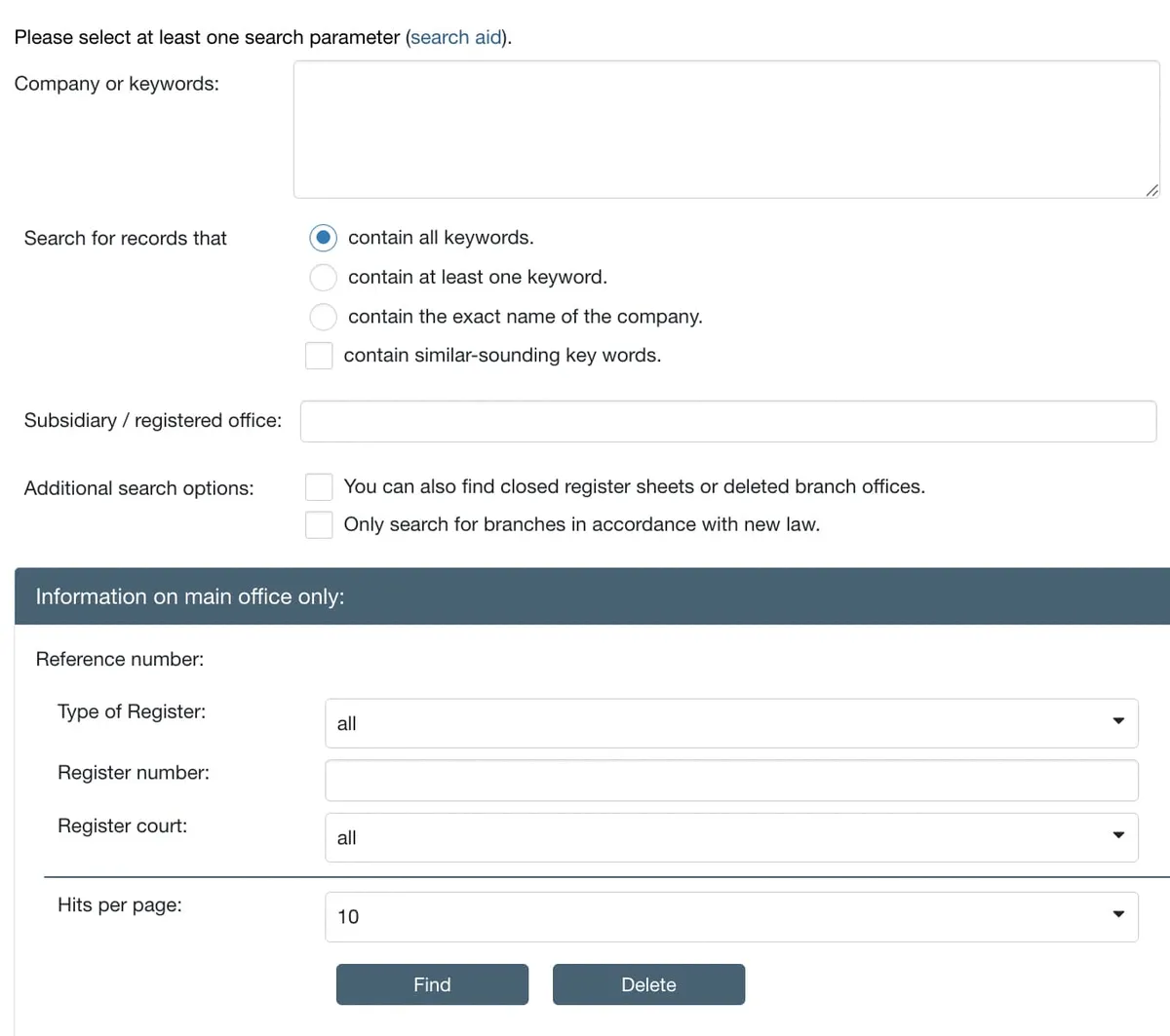
Source: Handelsregister
If you find the business you're trying to verify, see if the above information matches what the business provided to you or what it publishes elsewhere, like its website.
If it does, proceed to the next step. If it doesn't, ask the company to explain the discrepancy.
2. Verify the Company's Tax and Business Registration Details
The last step helped confirm that the entity exists and is legally registered in Germany.
Now, you should check if its tax and business registration details match your records.
This helps you avoid doing business with risky counterparties and keeps you compliant with tax and reporting requirements, like adding the right VAT ID to your invoices.
For example, audit and advisory firm Baker Tilly reports that companies with incorrect VAT IDs risk losing their VAT deduction.

Source: Baker Tilly
This shows how important it is to check that the tax and business registration details you have are indeed correct.
Here's what to verify:
- Registered address
- Legal business name
- VAT Identification Number (USt-IdNr.), where applicable
- Tax registration details (like Steuernummer, or tax number for domestic purposes)
Again, the first step is confirming that the official details match those provided to you or published by the company.
For instance, you should compare official VAT information with what the company provides on its invoices, website, or legal notice (Impressum).
Unfortunately, neither of the registers mentioned above contains these details.
To verify them, you'll need to turn to other sources, like the EU's official VIES VAT number validation tool.
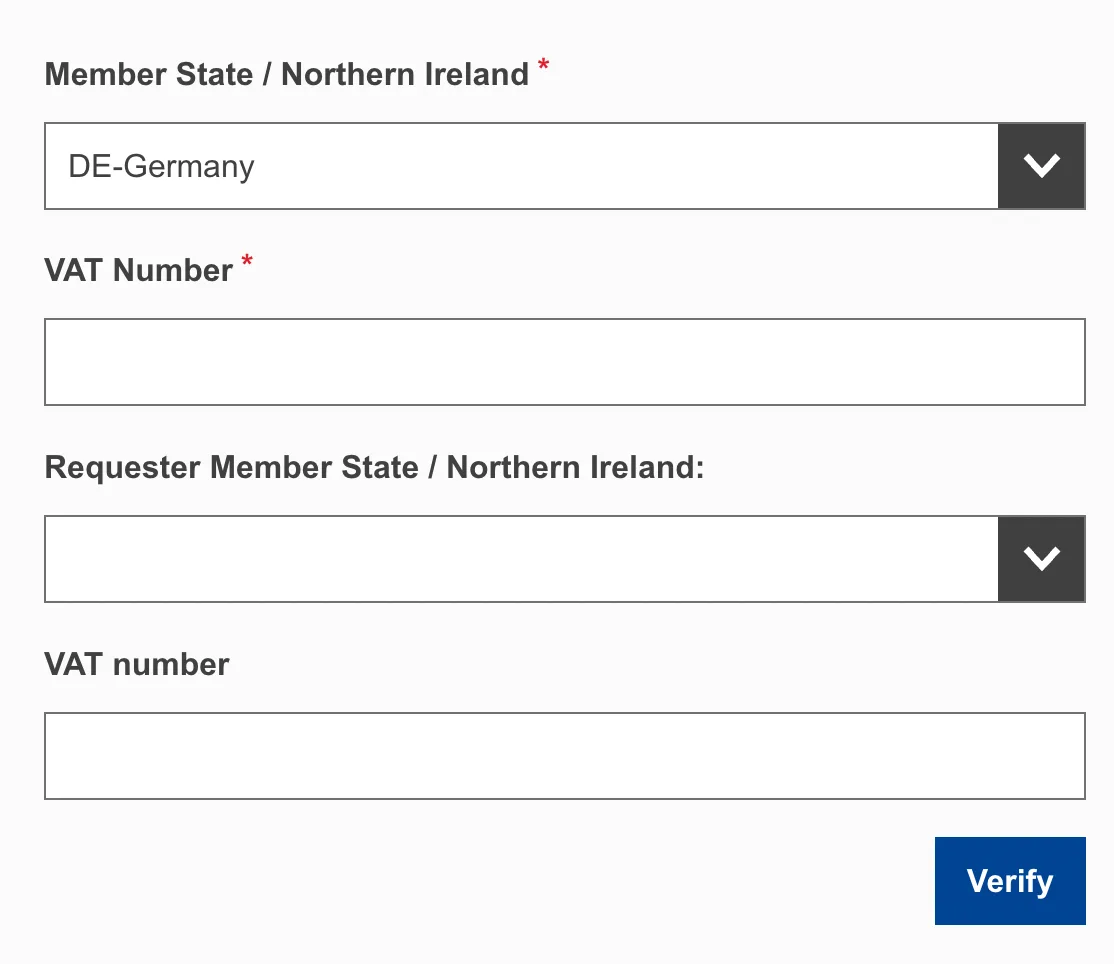
Source: European Commission
Beyond that, you'll need to know a little bit about German and EU law to accurately assess the details you find (or don't find).
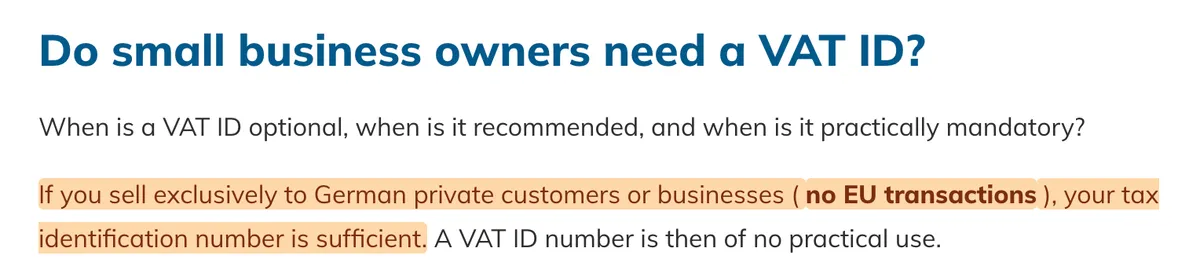
For example, you should know that small German businesses that don't trade goods or services with other EU countries aren't legally required to have a VAT ID. So a supplier not giving you one isn't necessarily a red flag, although it might seem like one.
Source: Selbststaendigkeit.de
That said, an obvious mismatch still calls for further digging and talking to the supplier.
3. Verify the Registered Business Address
Next, check if a business's official address is consistent across sources.
Since you may never interact with them in person, cross-checking their address is one of the few concrete ways to verify they're a real, active business.
To do that, compare the address in the official registers to the one on the company's Impressum and any business directories or online listings where it appears.
Look for:
- Valid postal information
- Matching company names across every source
- Consistent addresses, down to the building or suite number
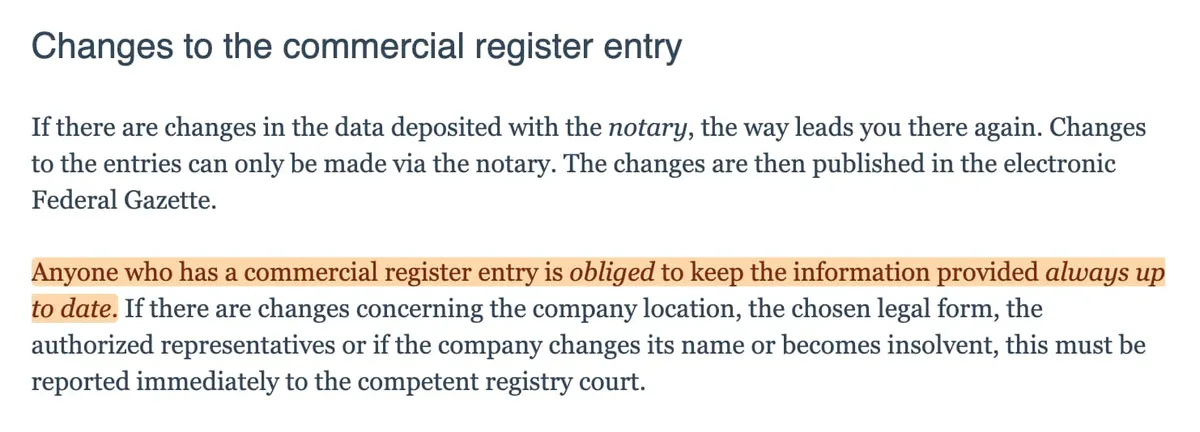
The Handelsregister is one of the most reliable starting points for this verification, as German companies are legally required to keep their information in it up-to-date.
So, in most cases, the address on file will be accurate.
Source: Consultinghouse
Discrepancies always call for further investigation, but note that they can be completely innocent.
For example, a business may simply have one officially registered address and multiple operating locations. The register will list the official one, while the supplier's website or other materials might reference the others.
This is common across Europe.
For example, analysis by The Data City, a company data firm, suggests that UK businesses have around 840,000 additional business locations compared to those officially registered.
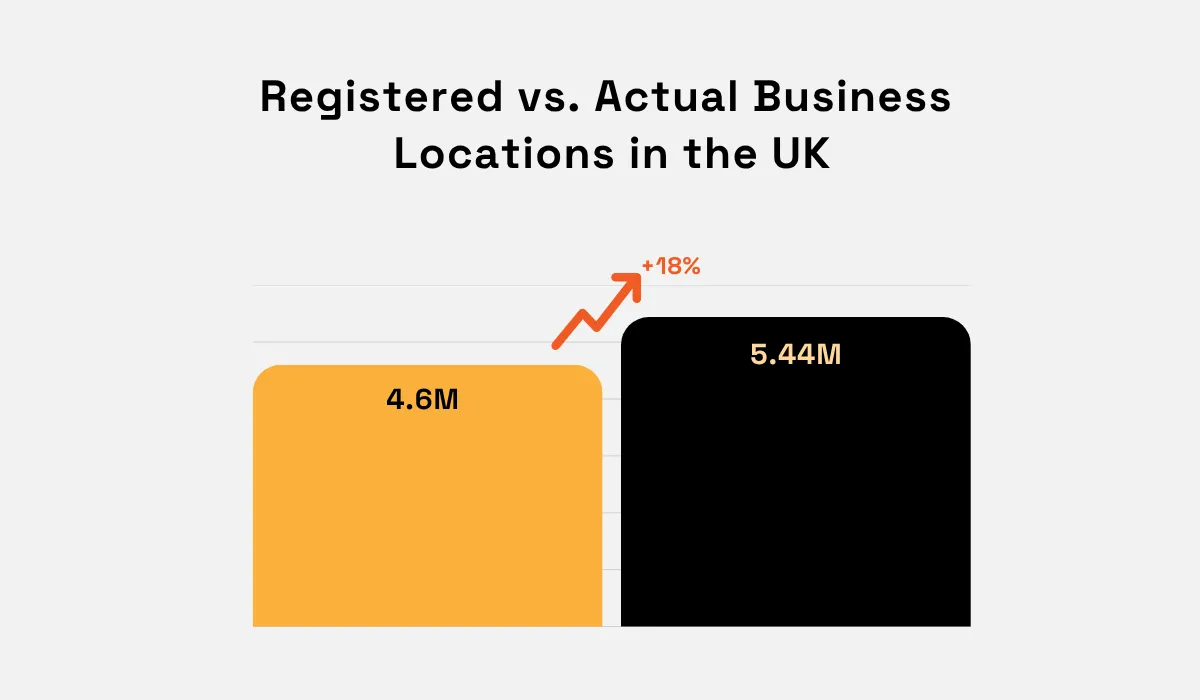
Illustration: Veridion / Data: The Data City
So discrepancies don't necessarily mean a business is illegitimate or up to something fishy. Still, it's worth asking the other party what's behind them.
4. Verify the Actual Operating Location
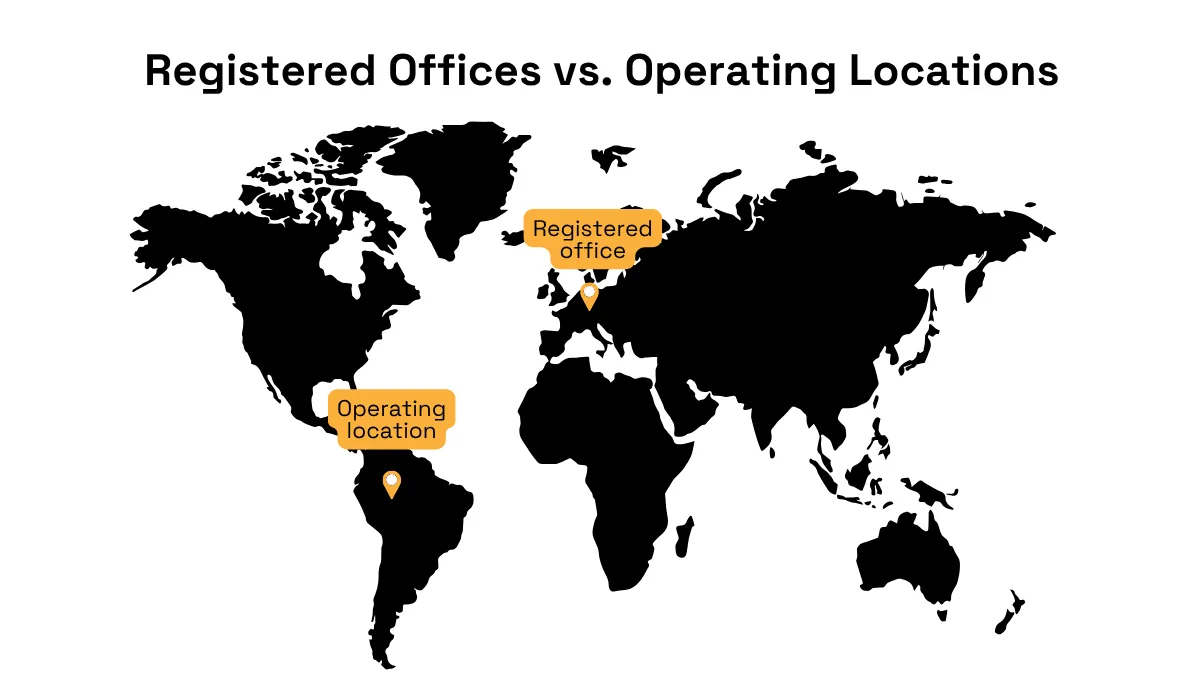
As mentioned, a registered address tells you where a company is legally domiciled, but that isn't necessarily where it operates.
Many businesses, especially larger ones, keep a registered office in one city while running headquarters, factories, warehouses, or regional branches elsewhere.
For example, a company might be registered in Munich but run its manufacturing facilities or regional offices elsewhere in Germany, or even on another continent.
Source: Veridion
This isn't necessarily a problem, but you'll want to know suppliers' actual operating locations before relying on them. This helps you confirm they're real, adjust routes in case of disruptions, and mitigate location-specific risks, like political instability and natural disasters.
In fact, operational locations often matter more than the registered address, especially if you're assessing supply chain risk, doing site visits, or evaluating a company's footprint.
Here are some ways to verify a company's physical presence:
- Visiting the company's facilities
- Google Maps and business listings
- Company photos of offices, facilities, or storefronts
- References to specific locations on the company's own website
- Street View, where available, to visually confirm a location exists
- Industrial park or business park directories, if the company operates out of one
It's best to use several methods to confirm that an address not only exists but also definitively belongs to a company or its partners.
The Wirecard scandal shows exactly why.
Prior to the scandal, many considered this German electronic payments company a rising global player.
But when Financial Times reporters tried visiting some of its partner locations in 2019, what they found was unsettling.
One address led to a suburban residential home, whose owner claimed to have no connection to Wirecard. Another turned out to be an office that doubled as the headquarters of a bus and coach rental company.

Source: The New Republic
So, what should you take away from this?
Well, first, verifying operating locations matters, and it shouldn't be skipped.
Second, beyond just ensuring the address is consistent across sources, you should confirm who it belongs to. Even something as simple as checking the storefront on Google Maps can help.
5. Confirm the Company's Industry and Business Activities
By now, you've verified key company details. You have pretty strong evidence that it exists and where it's located.
The next step is to confirm that what the business claims to do lines up with what it actually does.
This means checking things like:
- Certifications
- Industry classification
- Products and services offered
- Memberships in industry associations, where relevant
Compare this information across the company's website, product catalogs, business directories, industry-specific databases, and any filings or disclosures available through the official registers.
The aforementioned Handelsregister will come in handy here, too.
The documents available here contain information about a business's operations:
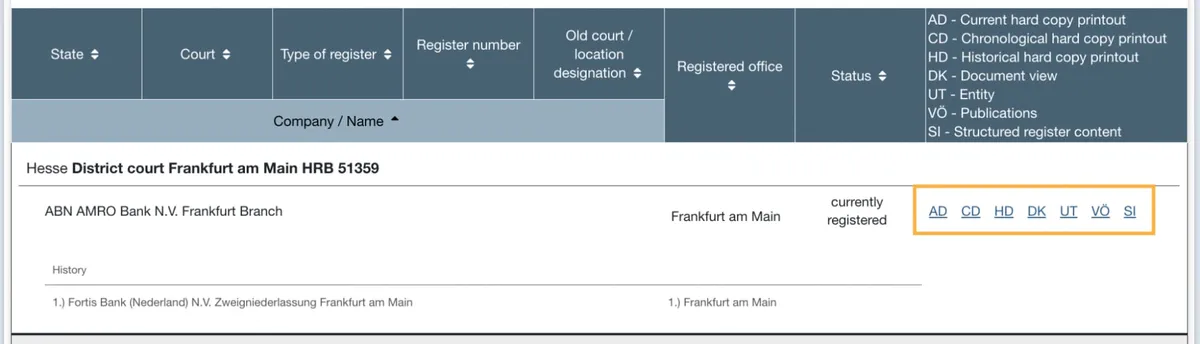
Source: The Handelsregister
Once you download and open the documents, look for the part that says "Gegenstand des Unternehmens" or something similar.
This section lists the operations the company is registered to carry out.
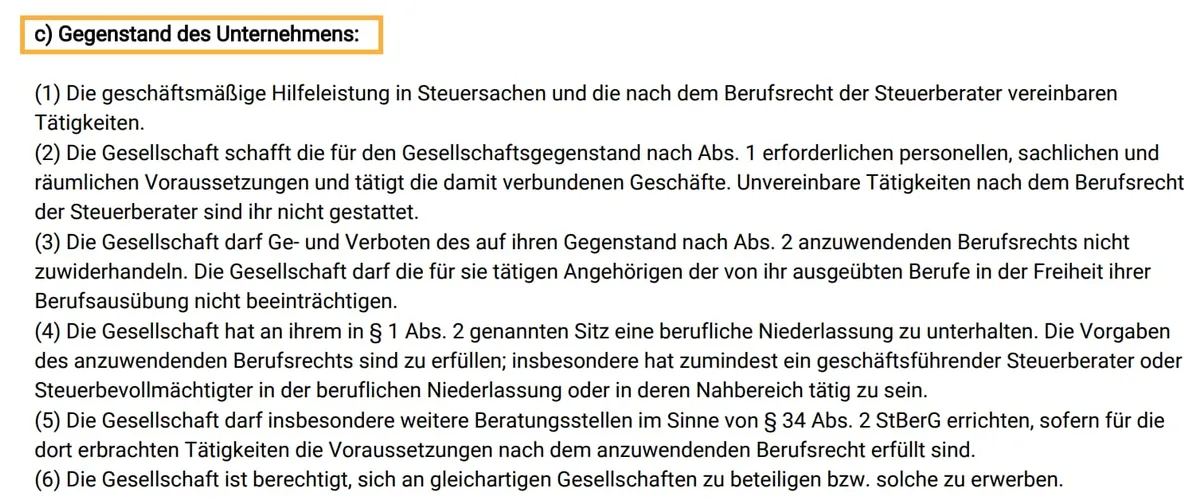
Source: The Handelsregister
Depending on the kind of work the supplier does, they might also be required to have membership in certain German associations or listings in registers like Handwerksrolle.
The Handwerksrolle in particular is a trade register for self-employed roofers, carpenters, information technicians, gunsmiths, and other craftspeople.
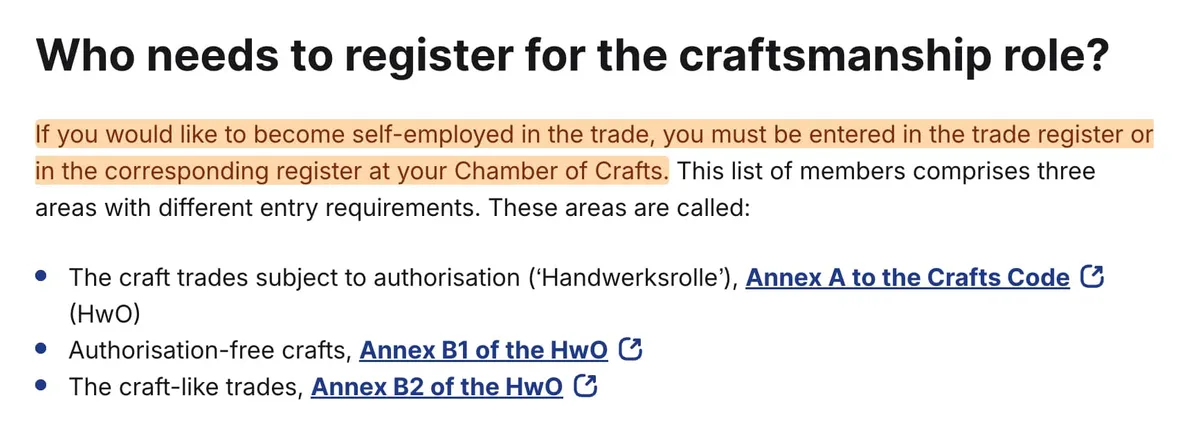
Source: The WSP.NRW
Checking memberships in sector associations, like VDMA or ZVEI, can also be helpful.
These memberships are voluntary, so they aren't proof on their own, but they are a good sign.
Sector associations also often publish searchable member lists, so checking membership is quite easy.
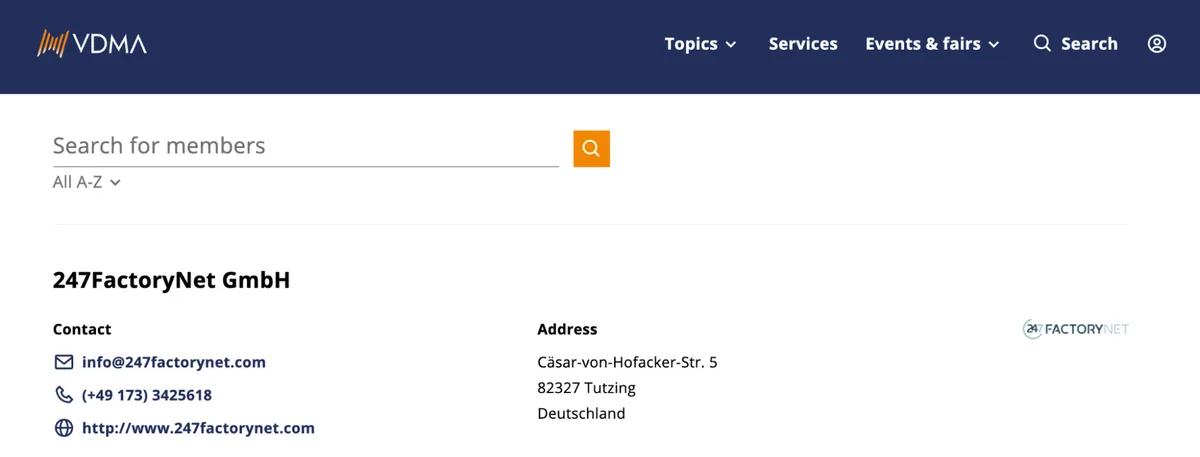
Source: VDMA
You may also need to run additional checks.
For example, if a company claims to have patented technology or a registered brand, it should show up in the DPMA's register.
The DPMA, or the German Patent and Trade Mark Office, covers German patents, trademarks, utility models, and designs, and is entirely free to search.
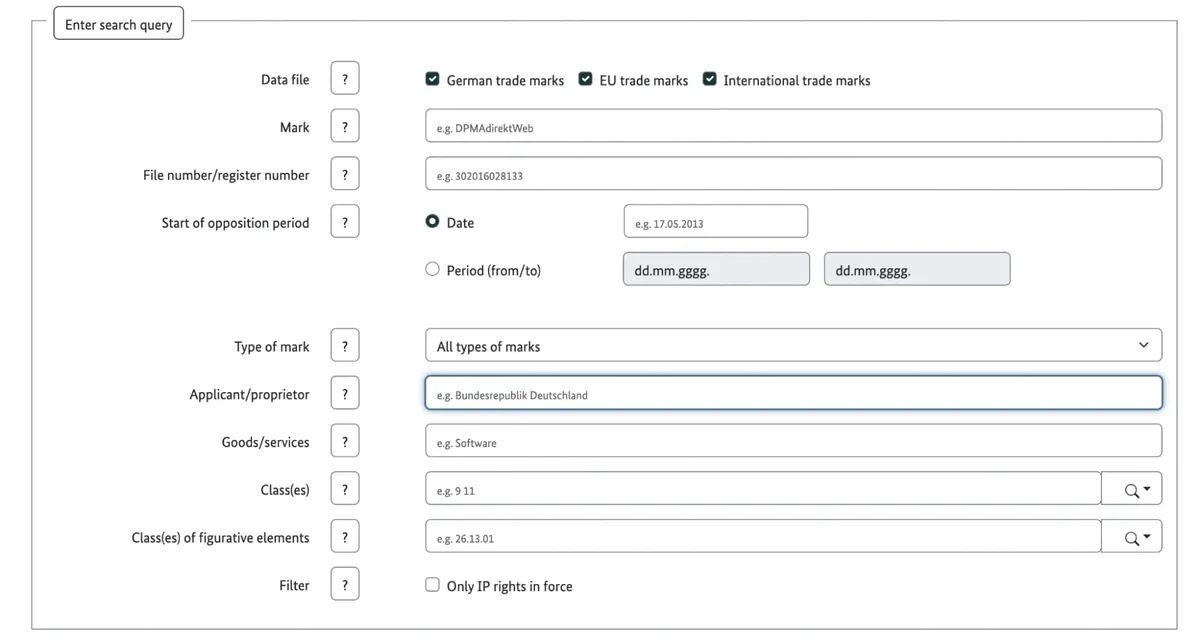
Source: DPMA
Pay attention to consistency.
If a company presents itself as a specialized manufacturer on its website but its industry classification, certifications, or filings suggest something different, that gap is worth investigating.
6. Check Whether the Company Is Still Active
A registered company isn't always an active one.
Businesses close, go dormant, or wind down without ever formally deregistering, so registration status alone won't tell you if a company is currently active. You'll need to check that separately.
Here's what can help confirm active status:
- Hiring activity
- Recent website updates
- Recent customer reviews
- New products or services
- A visible, ongoing online presence
- Business announcements or press coverage
- Recent filings or disclosures in the official registers
For example, you can go to the company's LinkedIn profile to check their hiring trends.
If they're on the rise, or if the company has several open roles, that's usually a good sign.
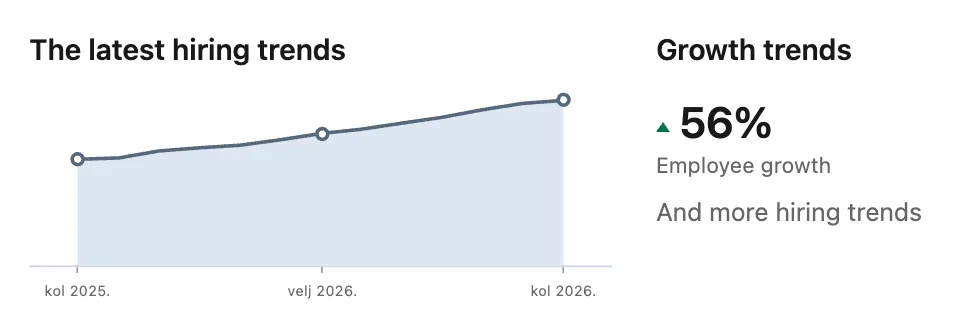
Source: Helsing on LinkedIn
Of course, things like job ads are easily fakeable, so only treat them as confirmation if everything you've checked so far lines up.
The opposite holds too: a company with a thin, outdated web presence might still be doing well. Still, it doesn't hurt to check and see if you can catch any warning signs.
Here are some to look for:
- Inactive social media profiles
- Disconnected phone numbers
- A general lack of recent activity
- An outdated or unmaintained website
- Inconsistent company details across sources
None of these signals is definitive on its own, but taken together, they give you a reasonably clear read on whether a business is still a going concern.
7. Use AI to Cross-Check and Enrich Business Data at Scale
Taking the steps above works well when you're verifying one company at a time. But when you need to check hundreds or thousands of businesses, manual verification simply doesn't work.
Just consider how much time you'd spend reviewing various sources from Handelsregister to LinkedIn, cross-referencing them, translating them from German, and finally looking up the information you still weren't able to find.
Let us do the math for you: it's a lot. Likely much more than you can handle.
That's why enterprises rarely do any manual checks anymore.
Instead, they use AI-powered business intelligence platforms like Veridion.
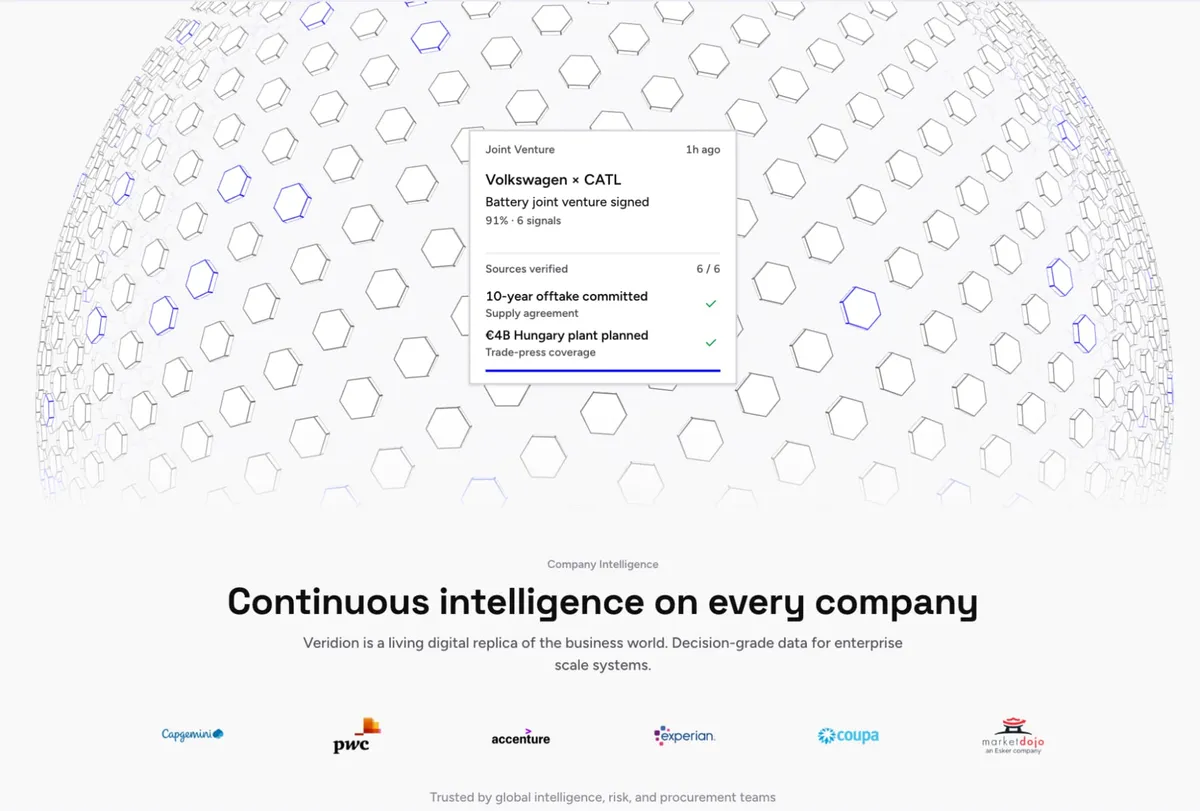
Source: Veridion
Veridion handles all the heavy lifting for them by pulling company data from 119+ sources, matching it against what it already has, and updating company profiles in real time.
Two capabilities play a key role in this process:
- Entity resolution: Fuses legal registration, digital presence, relationships, and subsidiary data into one verified profile, so the same company doesn't end up scattered across duplicate or near-duplicate records.
- Company enrichment: Fills that profile with firmographics, ownership, classification, and other data refreshed continuously as any of those sources change.
In short, Veridion combines registration data, locations, business activities, and other company signals into a single, unified, up-to-date business profile.
That way, you never have to manually review individual records from the Handelsregister, Unternehmensregister, company websites, and other databases one at a time.
Plus, Veridion isn't limited to German businesses. It collects data on every active company around the world, so it can serve you no matter which country you're doing business with.
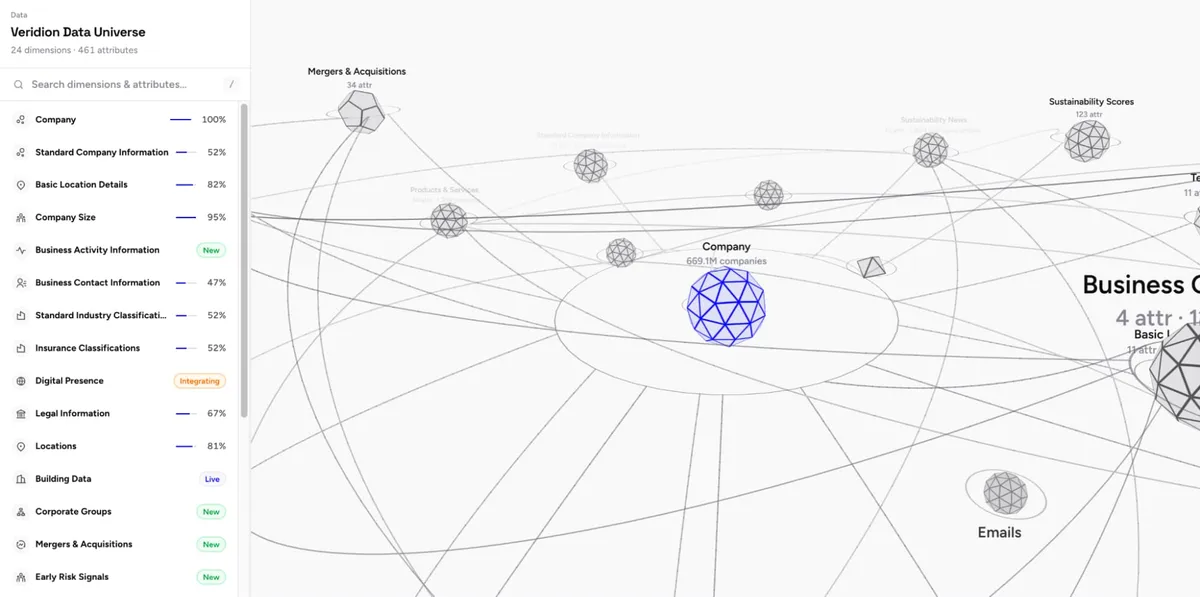
Source: Veridion
Overall, if you need to verify a handful of suppliers every now and then, manual checks across the Handelsregister and other sources will get the job done. But if you're verifying hundreds or thousands of companies, automation is the only way to keep up.
Conclusion
Verifying a German company takes more than a quick registry search. Legal status, address, operating location, and ongoing activity all need to check out and line up across sources.
If you need to verify companies at scale, whether German or global, you'll need tools like Veridion to automate the process. Checking even one company across sources can take hours, so doing it manually at scale just isn't realistic.
But if your needs are more modest, taking the steps above yourself works just fine.
Start with the registers, cross-check everything else against them, and treat consistency as the greenest of all flags.
Articles
Discuss how these trends affect your organization.
Our analysts are available for a short call. Bring a specific question and we will ground it in the data.
Insights
Keep reading
More analysis, research, and outcomes grounded in live company intelligence.
Supplier Location Intelligence: Why It Matters
Discover how supplier location intelligence can reduce risks, cut costs, and enhance procurement strategy. Learn why it matters.
Key Differences Between Competitive and Market Intelligence
Discover the key distinctions between market and competitive intelligence - so you can apply the right approach in your strategy.
9 Essential Sources of Market Intelligence
Want to boost your market knowledge? These 9 market intelligence sources will show you where to look and how to apply the insights.