Insights / Articles
How to Verify Business Addresses and Company Status in the US
Tired of uncertainty? Learn how to find business addresses and verify company status in the US to ensure legitimate dealings.

- US business records are divided across 50 separate state agencies.
- The Employer Identification Number is an identifier that follows a company across state lines.
- Company registry data changes fast, with Colorado alone recording 16,337 dissolution filings in a single quarter.
A US business address on an invoice proves very little on its own.
There's no national company register to check it against, so the work gets split across state agencies, federal tax records, and securities filings.
For procurement and compliance teams, that turns a simple question into a complex verification process.
This article covers where to look, what each source confirms, and how to run the same checks at scale.
1. Verify Through State Registries
A business entity search in a state’s registry is the starting point.
Every state runs its own database of the companies formed or registered there, and most let you search it for free by company name, entity number, or agent.
What info comes back depends heavily on which state you're in.
1. a) Search the Right State's Registry
The first task is finding the right registry.
Countries like the United Kingdom and Germany maintain one central company register.
The US doesn't work that way, since businesses register with the Secretary of State, or an equivalent agency, in the state where they're formed.
So before you search anything, you need to know which state that is.
If you don't have that information already, a few places usually have it:
- Website legal notices and terms pages
- Contracts and invoices
- Official headquarters address
- Multi-state corporate data aggregators
Once you know the state, you can run the search.
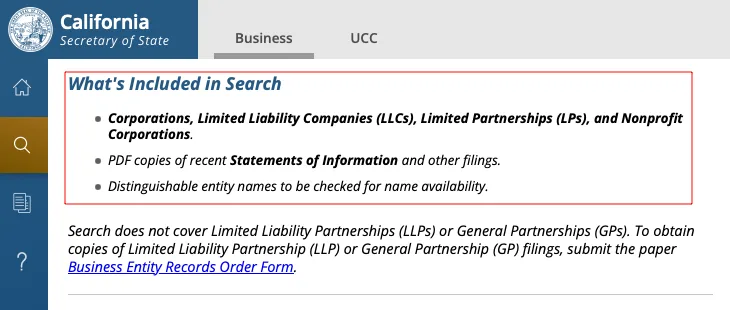
As an example, California's business search illustrates what a well-built portal offers.
Source: Bizfile Online
Back in 2023, the state reported the system held roughly 2.9 million active registered businesses, and that figure has almost certainly grown since.
With their platform, you can filter by entity type and status, and pull filed documents at no cost.
The search functionality typically differs by state, but most portals will get you the information you need.
For a corporation, the record typically covers the fields below.
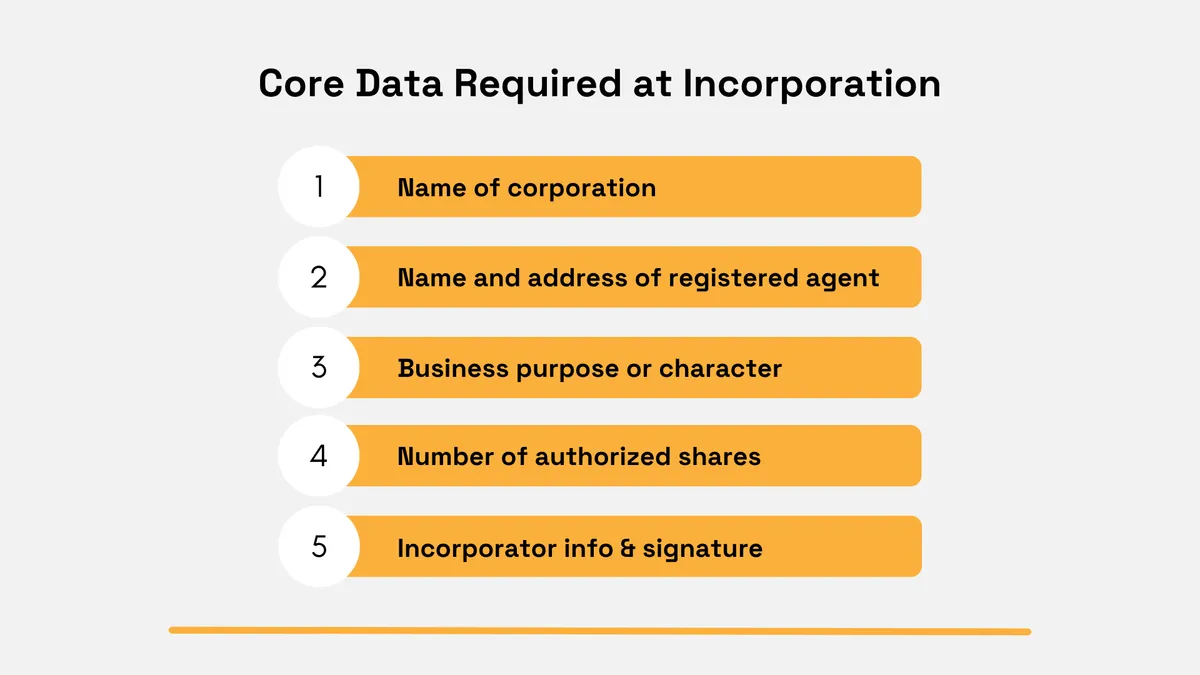
Source: Veridion
For limited liability companies (LLCs) and other structures, the collected fields are different.
This is where it’s important to slow down, because states don't gather the same information.
For instance, some states require detailed information like identifying shareholders above a 5% ownership threshold, or felony and bankruptcy information.
Others collect none of this information.
The National Association of Secretaries of State (NASS) publishes a summary of the business entity information collected by states, organized like the sample below.
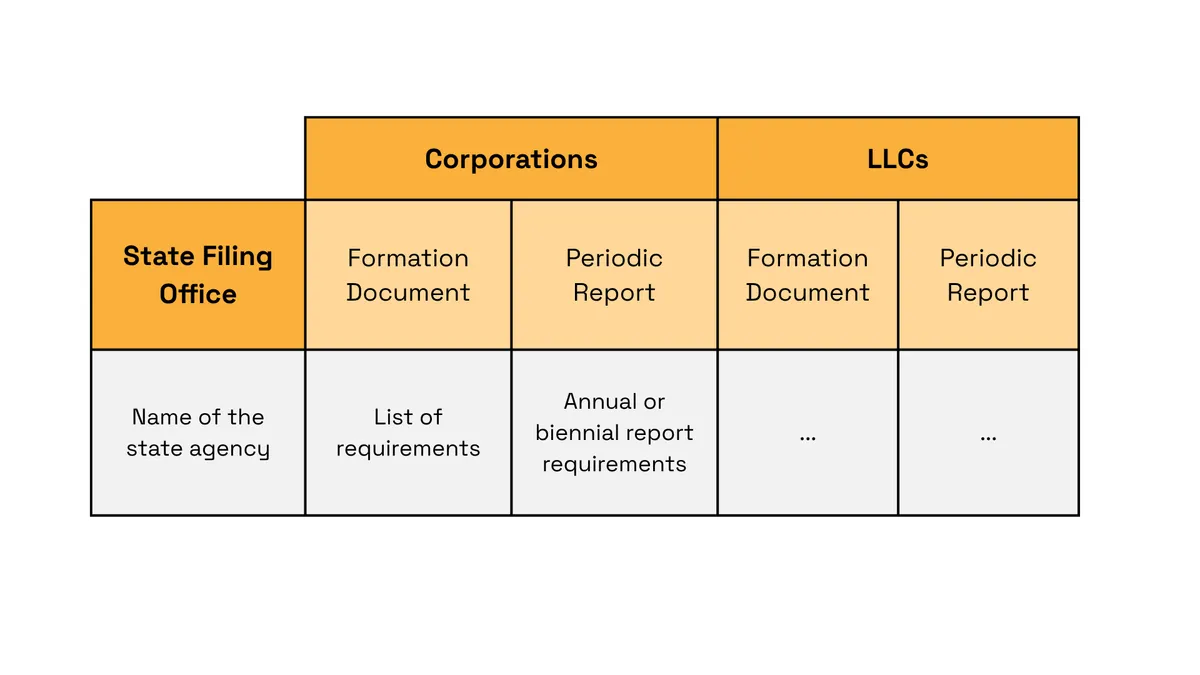
Checking it first tells you whether the field you're after even exists in that jurisdiction.
One more thing worth confirming is whether the state requires periodic reports. States that do get a refreshed snapshot of each company every year or two.
Where there's no such requirement, a record can stay untouched for years after formation, so you may be reading information that stopped being true long ago.
1. b) Confirm Status and Registered Agent
Once you've located the entity, the next check is the business entity status.
Confirming an active or good standing status means the company has kept up with its filing and fee obligations in that state.
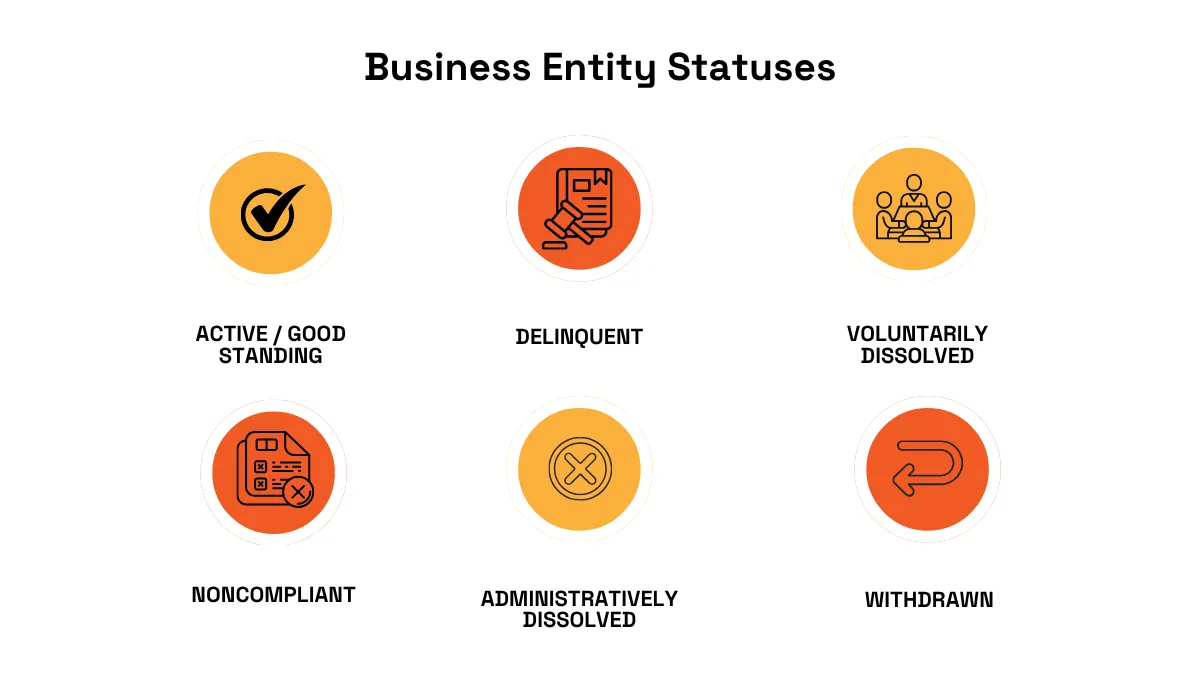
However, states use dozens of other labels, with some of the common ones shown below.
Source: Veridion
For example, a noncompliant entity might still legally exist, but has fallen behind on something like an annual report or franchise tax payment.
That isn't automatically a red flag, although in several states it's the step directly before administrative dissolution.
A withdrawn status would mean the company ended its registration and is no longer authorized to do business in that state, even if it remains healthy in its home state.
Verifying the exact status ensures you assess an entity’s full situation before you proceed.
The registered agent field is the second thing to examine.
Every entity must name an agent to receive legal documents, but the loose requirements around that role make it a recurring weak point.
Sarah Beth Felix, co-founder and chief anti-money laundering (AML) officer at Acceleron Bank, described the problem in an investigation into US registered agents by the International Consortium of Investigative Journalists (ICIJ).
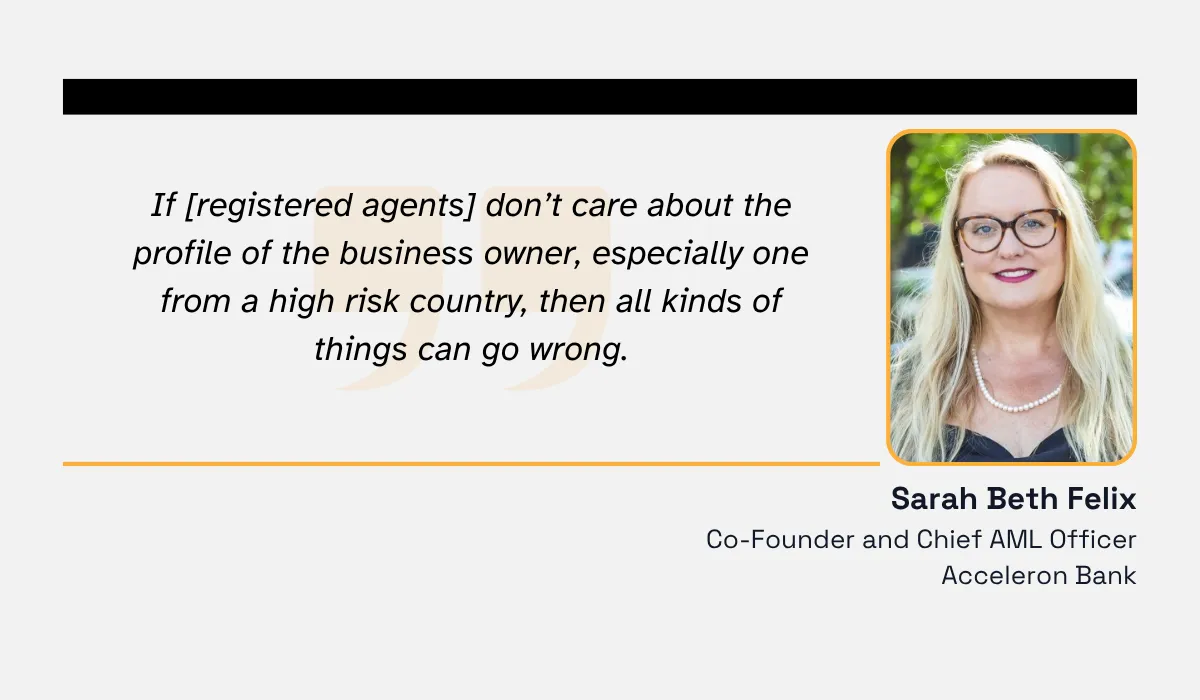
Felix was pointing out that the current system doesn’t hold agents accountable enough, as they carry no consistent duty to check who they're representing.
In this context, it helps to look for some patterns.
For instance, thousands of companies sharing one agent address could be normal for large commercial providers, but it's also an arrangement that can conceal shell entities.
A residential address serving as agent for unrelated businesses might be a stronger reason to pause, as it can indicate concealed ownership or a shell network.
In either case, these signals are a good start for a solid risk management process.
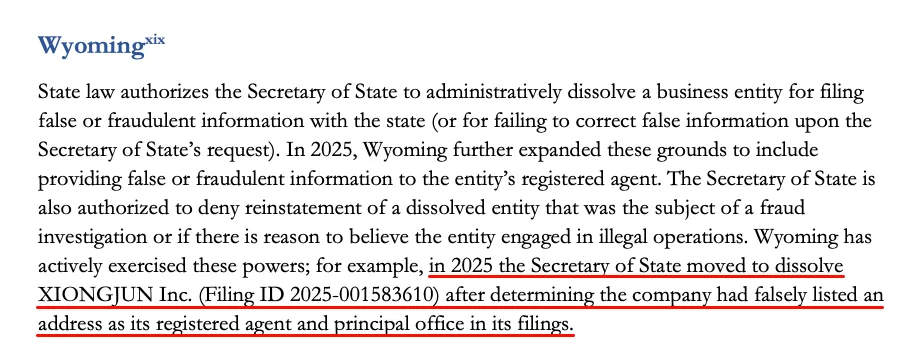
Luckily, states have also begun tightening rules. In one case in Wyoming, documented in a 2025 NASS report, a company was dissolved over a false registered agent and principal office address.
Source: NASS
Ultimately, between the business status and the registered agent address, you can usually tell whether a company is current and whether anyone real stands behind the filing.
2. Verify Through Federal Identifiers
State records tell you what a company filed and where it filed it.
But they don't connect a business to any identity at the federal level.
That's why checking the Employer Identification Number (EIN) is essential, as the closest thing the US has to a single identifier that travels with a company across state lines.
2. a) Cross-Check the EIN
A state registration number only means something inside that state.
Register the same company in four states and you get four unrelated numbers.
The EIN avoids that, because the Internal Revenue Service (IRS) issues it once and it stays with the business wherever it operates.
The second reason to lean on it is that one entity is meant to hold one EIN, and the IRS treats that as a rule.
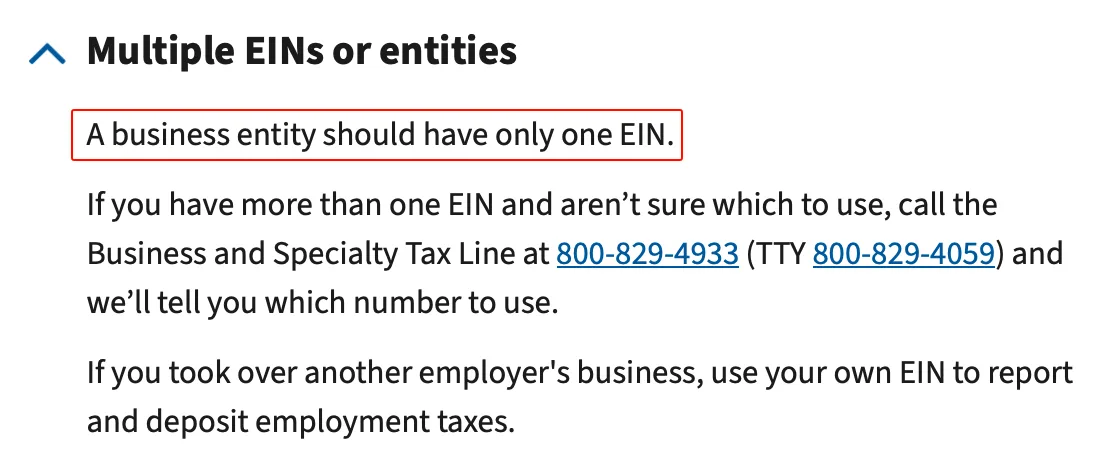
Source: IRS
Once assigned, the number isn't cancelled or handed to anyone else, which makes it a stable reference point.
So if the EIN a supplier gives you resolves to a different legal name than the one on your contract, you've found a discrepancy worth addressing before contract terms are agreed.
Obtaining the number is the harder part, since no public IRS lookup exists for most businesses.
US businesses filed more than 531,000 applications for a new EIN in June 2026 alone, and none landed in a searchable directory.
Shown below are the EIN lookup routes typically used instead.
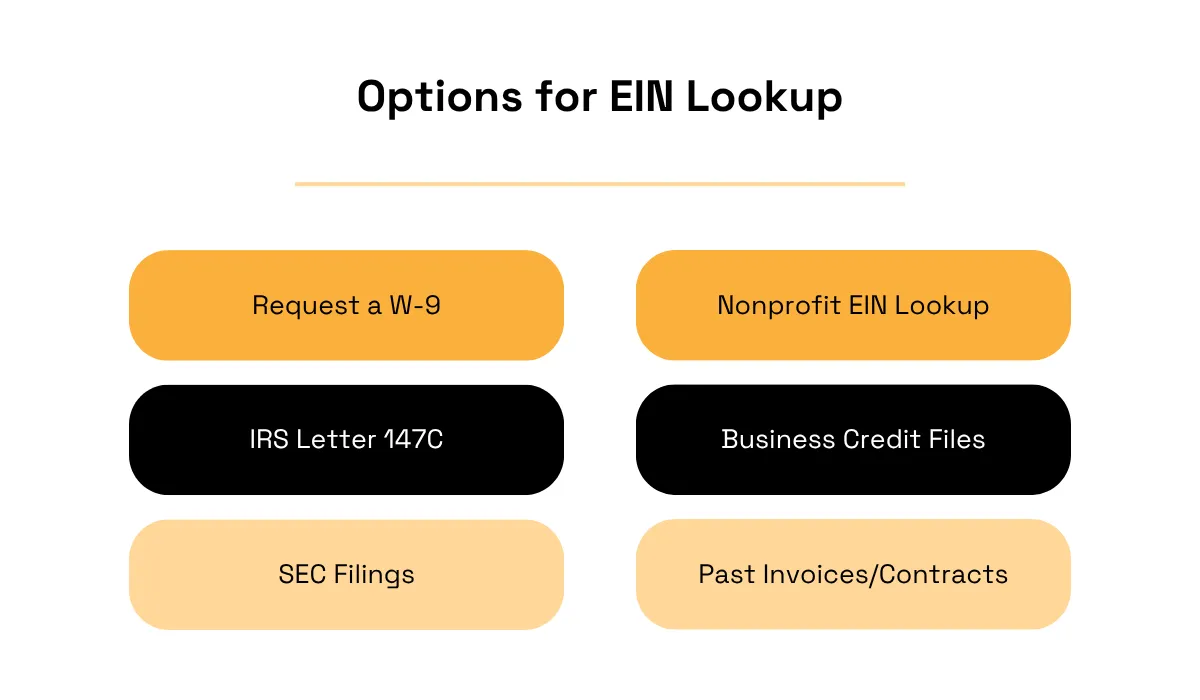
Source: Veridion
Larger organizations with formal finance teams usually hand the number over without friction, while smaller operators may not have it filed anywhere accessible, and in some cases you'll want a document instead.
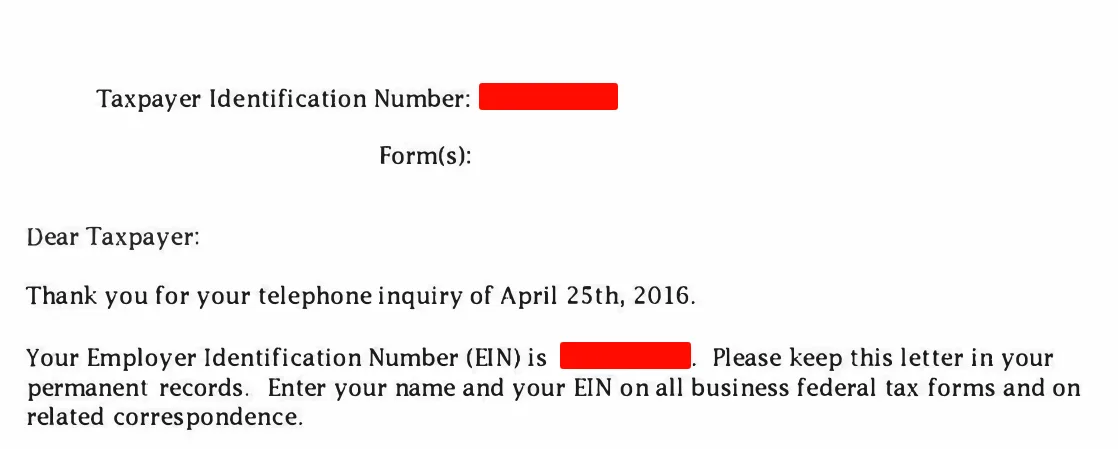
IRS Letter 147C is one document you may request.
This document is a confirmation notice sent to a business that has misplaced its EIN, and it restates the identifier number next to the registered legal name.
Source: The University of Iowa
Because it originates with the IRS instead of the supplier's own letterhead, it's considerably harder to fabricate than a number typed into an email.
If the EIN on that document doesn't match your records, don't assume bad intent right away.
A frequent cause is holding the parent company's EIN while contracting with a subsidiary that has its own. It’s the same with mergers, since the surviving entity keeps its number while the acquired company's paperwork circulates for years afterward.
These issues are fixable once you know which you're looking at, and the EIN is what surfaces the mismatch.
2. b) Check SEC Filings for Public Companies
For publicly traded companies, this entire process gets easier.
Federal securities law requires them to register and file on a schedule, and those filings are public by design.
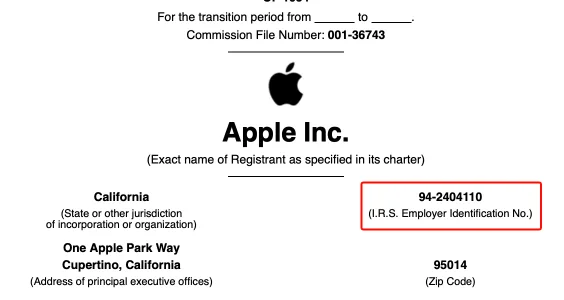
The cover page of an annual report on Form 10-K is the fastest place to look.
As a clear example, Apple's filing shows the standard layout of this document
Source: Apple
Everything you'd otherwise have to request separately is present in one block near the top, already confirmed through the filing process.
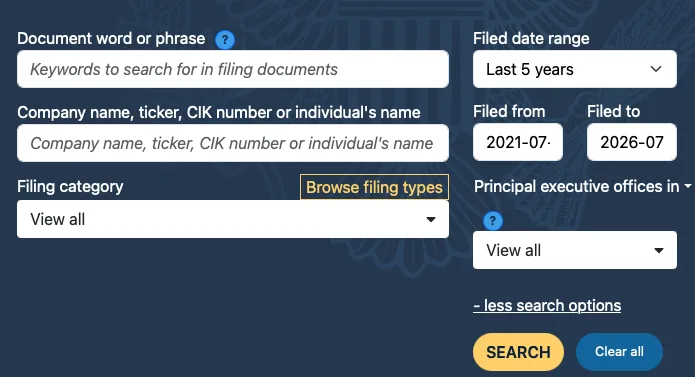
These types of documents live in EDGAR, the Securities and Exchange Commission's (SEC) filing system, whose full-text search reaches back to 2001.
Source: SEC
So you can verify an identifier without contacting the company.
Alongside the EIN, EDGAR shows:
- Former names and addresses
- Subsidiary listings
- Officers, directors, and major shareholders
- Audited financial statements
This sets a useful benchmark, and it also shows how much is missing everywhere else.
In fact, if a company hasn't registered securities with the SEC, none of this information exists for it.
That's true of the overwhelming majority of US businesses, from small suppliers to large private corporations that never issued public stock.
The table below shows the main differences in data availability.
Aspect | Public companies | Private companies |
|---|---|---|
Primary verification source | SEC EDGAR | No equivalent public database |
Where the EIN appears | Cover page of filings like Form 10-K, 10-Q, S-1, and 8-K | Not disclosed on federal tax filings |
EIN availability | Federal law requires public companies to register and periodically disclose through EDGAR | No obligation to publicly publish regulatory or identifier data |
EIN search | Full-text search by company name, ticker, or CIK at SEC EDGAR | Request a Form W-9 or search state databases, credit bureaus, or paid business data providers |
For private companies, verification comes down to what the business agrees to share and what its state happens to publish.
No filing calendar forces disclosure, and no audited statement exists to test a claim against.
The work shifts to collecting documents manually, which is manageable for a handful of vendors and difficult for almost everyone else.
A Better Alternative: Verifying at Scale With Structured Data
That leaves two practical routes for private companies: asking them directly, or checking state databases by hand.
Both work at low volumes, but neither is effective once the underlying records start changing.
To illustrate, Colorado's quarterly reporting shows how much turnover occurs inside a single state across a single quarter.
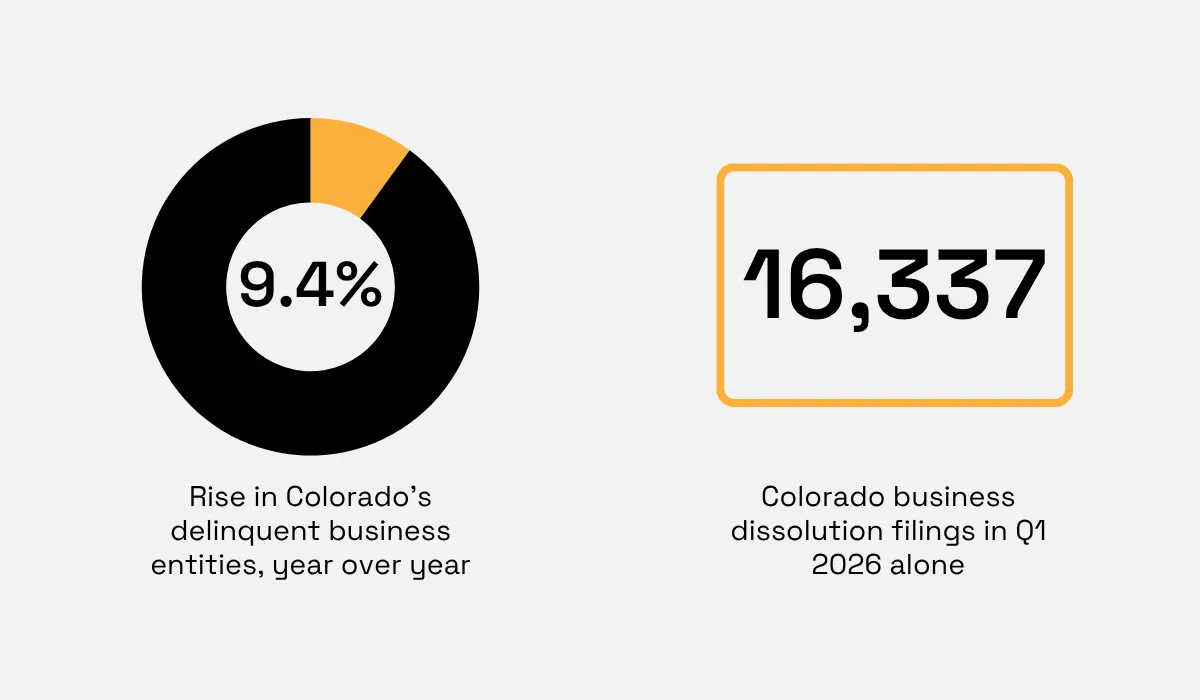
Illustration: Veridion / Data: Colorado SOS
Multiply that across every state a large supplier base touches, and a verification file assembled once is describing a different reality next quarter.
A larger verification volume increases the issue even further.
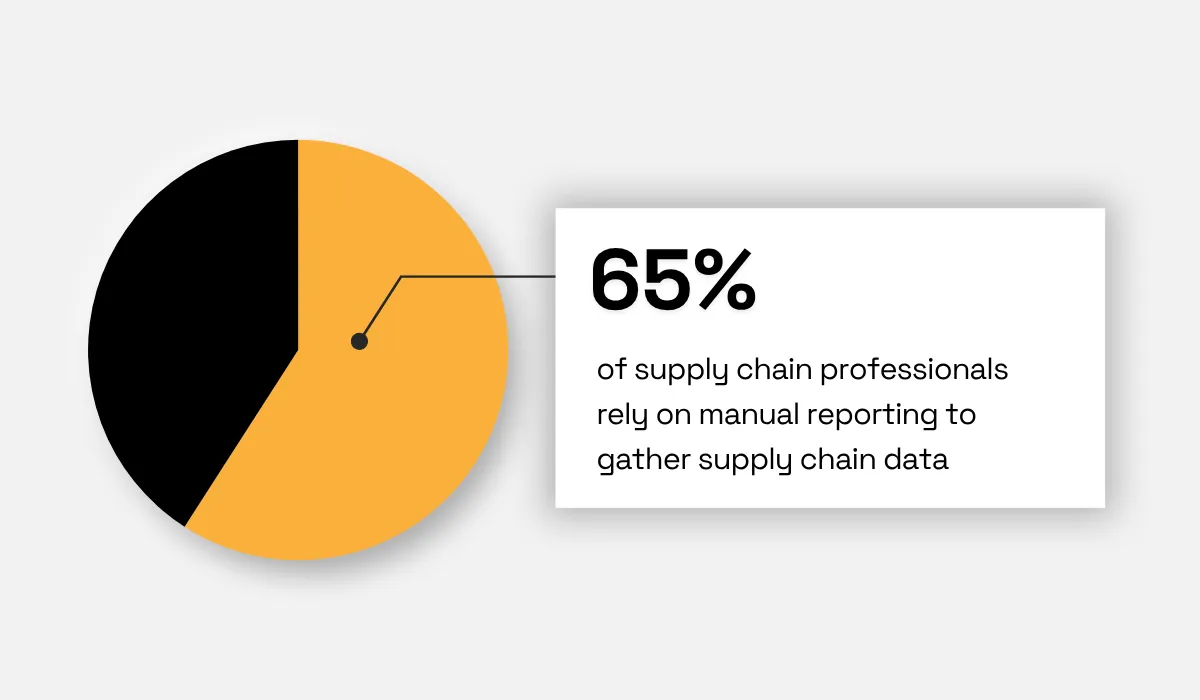
Consider the research from the Institute for Supply Management (ISM) and Amazon Business, which found most organizations gather supply chain data through manual reporting.
Checking 40 suppliers across 12 states means 40 separate manual searches, in 12 different interfaces, with 12 different sets of available fields.
Plus, there’s no straightforward way to present the results without compiling everything into a spreadsheet.
Compare that to a data intelligence tool like Veridion.
Veridion maintains a continuously refreshed graph of all active companies across all 50 states.
Registry filings are fused with the live digital footprint, so private and small businesses that never surface in financial databases are still covered.
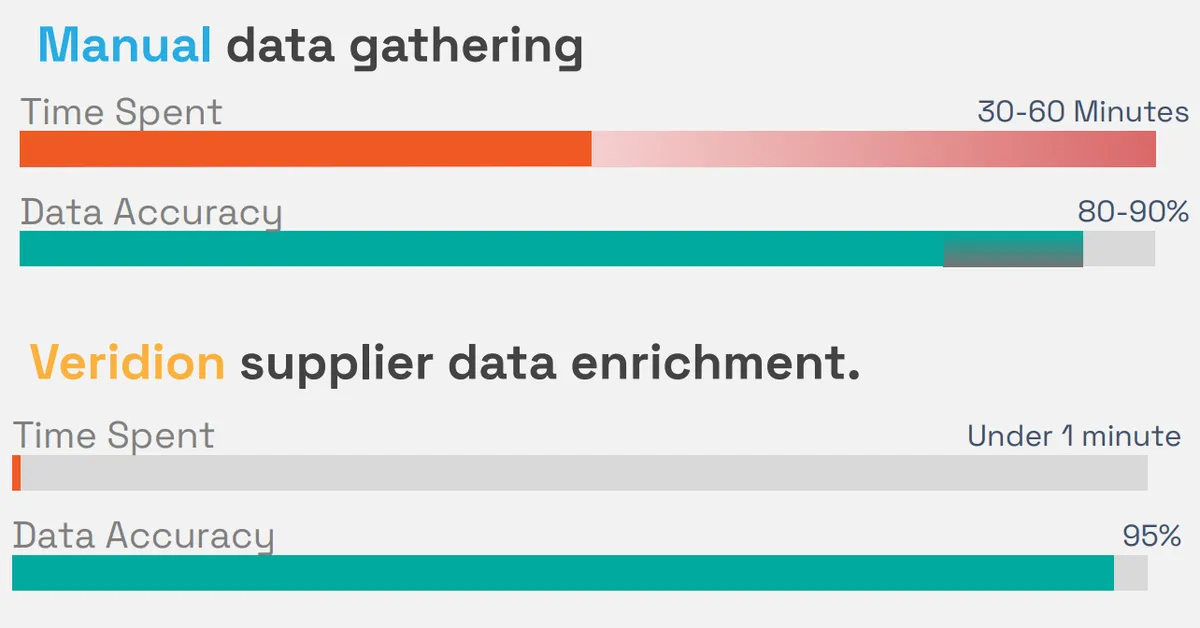
The result is an efficient process with more accurate company profiles when compared to manual data gathering.
Source: Veridion
Core company attributes get re-evaluated weekly, and every value carries a confidence score alongside a source you can trace.
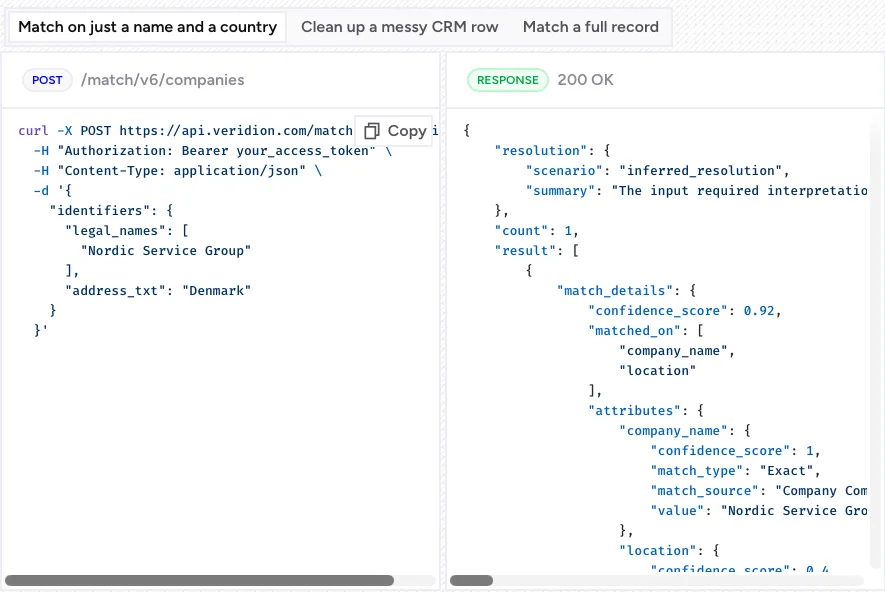
Importantly, Veridion’s Match & Enrich API allows you to search by company name and a country, resolving that input to one canonical entity, even when the name given is a trading name or the address is incomplete.
Source: Veridion
What you get back is a single profile covering legal and operating names, corporate hierarchy, verified locations, industry classifications, and the confidence attached to each field.
Additionally, duplicate suppliers are consolidated into one identity, which is where much of the inefficiencies of manual verification tend to occur.
For teams running third-party risk programs or watching vendor concentration risk, that changes verification from a task you repeat into a condition you maintain.
Conclusion
Verifying a US business address and company status takes more steps than it should, mostly because the information lives in systems that were never designed to talk to each other.
Knowing what each source can and can't confirm is what stops you from over-trusting any single one.
Start with the checks that match your current volume, and move toward structured data before your supplier list outgrows what manual work can cover.
Articles
Discuss how these trends affect your organization.
Our analysts are available for a short call. Bring a specific question and we will ground it in the data.
Insights
Keep reading
More analysis, research, and outcomes grounded in live company intelligence.
What is Third Party Risk Management (TPRM)
How to protect your business from vendor-related risks? This guide on third party risk management will walk you through the essentials.
How Veridion Supports Master Data Management
In this article, we look at how Veridion supports master data management by addressing data quality issues at their source.
5 Types of Market Intelligence You Need to Know About
Explore five different types of market intelligence that can shape your competitive edge. Find out which ones your team should prioritize.