Insights / Articles
Data-Driven Intelligence: Scaling Market Research via AI Data Pipelines
Tired of manual market research? See how AI data pipelines and decision automation are revolutionizing insights and scaling your business.

- Employees spend nearly 12 hours weekly searching across disconnected data systems.
- AI can uncover relevant companies beyond traditional keyword searches.
- Poor data quality costs organizations an average of $12.9 million per year.
- AI pipelines turn scattered data into enriched company intelligence.
There are hundreds of millions of companies operating around the world, and every day thousands of them change in ways that matter to market researchers.
New businesses emerge, suppliers expand into new markets, manufacturers launch products, and companies open, close, merge, or relocate.
Keeping up manually is not realistic.
As organizations expand their market research efforts, they need a faster, more scalable way to discover companies, enrich business data, and keep market intelligence continuously up to date.
AI takes much of that workload off your team's shoulders.
Why Traditional Market Research Doesn't Scale
Finding business information has never been easier. Finding all the relevant information and knowing it's accurate is much harder.
Modern market research requires analysts to jump between company websites, business directories, government registries, industry reports, news articles, CRM systems, spreadsheets, and countless other sources.
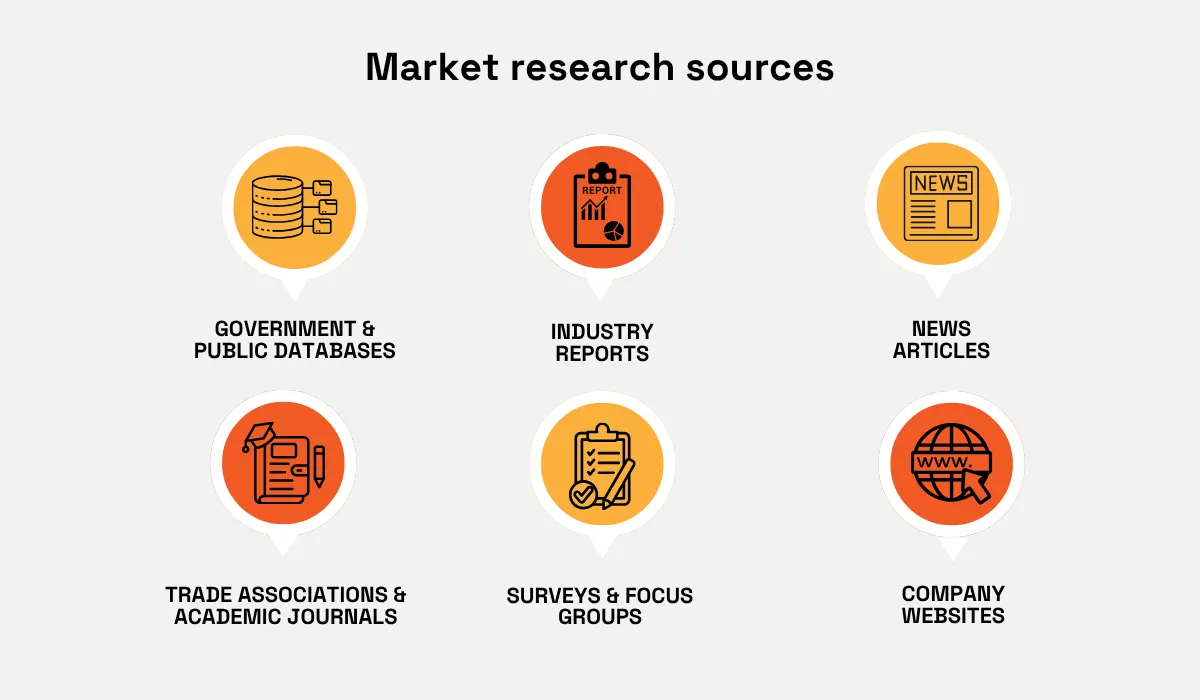
Source: Veridion
Every source fills in another piece of the puzzle, but switching between disconnected systems slows the process and makes it harder to build a complete picture of the market.
The numbers reflect that reality.
A Forrester Consulting study commissioned by Airtable found that employees spend nearly 12 hours every week searching for information trapped in disconnected systems.
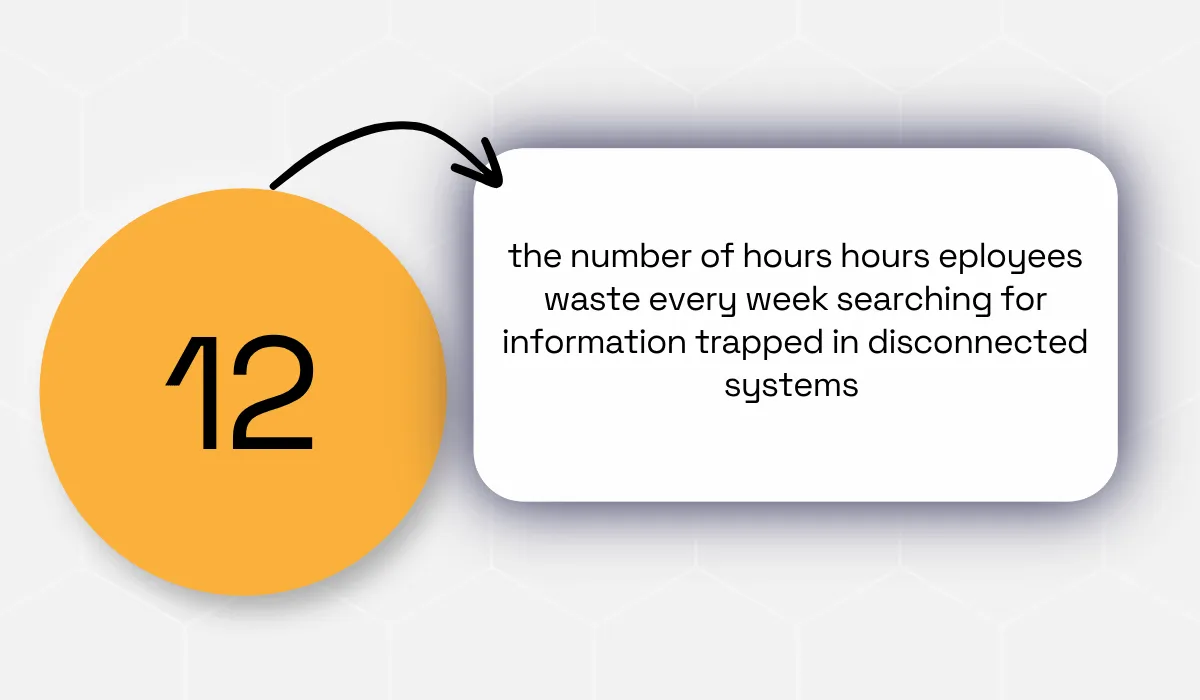
That's time spent hunting for data instead of analyzing it, spotting trends, or making strategic decisions.
And even then, there's no guarantee the information is still accurate.
Businesses evolve constantly. They launch new products, expand into new markets, open or close facilities, adopt new technologies, change ownership, and earn new certifications.
A company profile that was accurate a few months ago can already be outdated today.
That’s both inconvenient and expensive.
Outdated company information is one form of poor-quality data, and Gartner estimates that poor data quality costs organizations an average of $12.9 million every year.
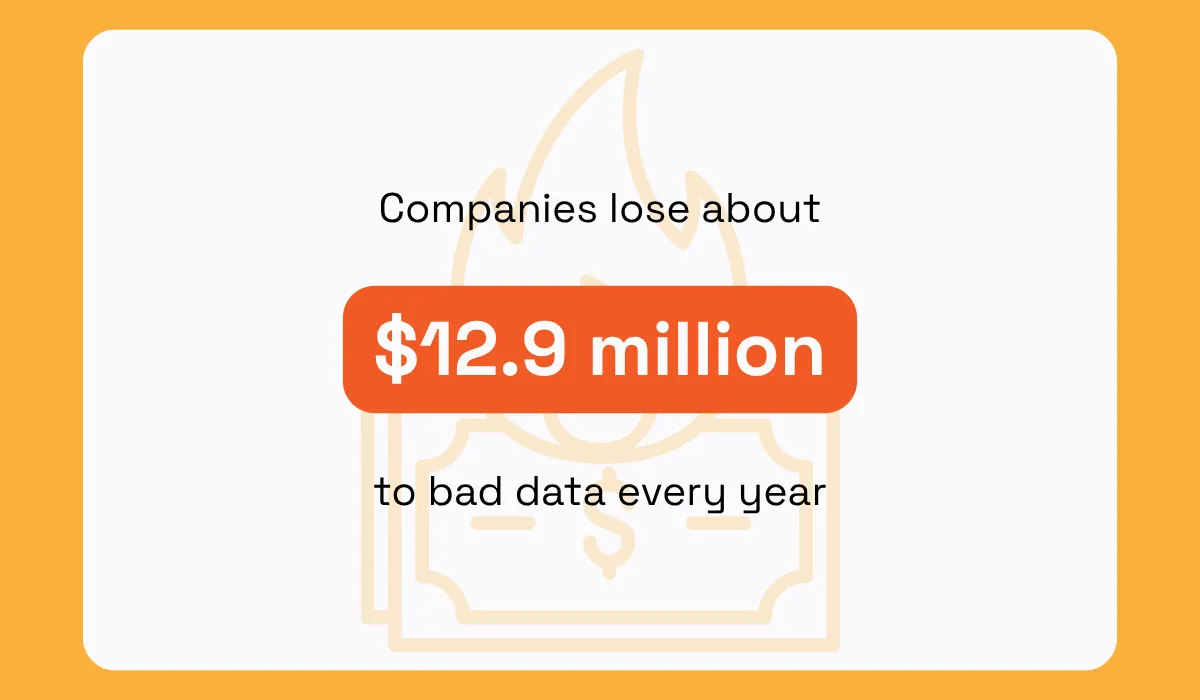
Outdated or incomplete business information can distort market sizing, cause organizations to overlook qualified suppliers, and lead to decisions based on wrong assumptions.
The challenge only grows as research expands.
Manually reviewing several dozen companies is still manageable. Tracking thousands of businesses across multiple industries and countries isn't.
Every additional company means more data to collect, more records to verify, and more changes to monitor over time.
Business databases help solve part of the problem, but they aren't always enough.
Many rely on periodic updates or a limited set of data sources, making it difficult to capture the constant changes happening across millions of companies.
And as markets become more dynamic, organizations need market intelligence that is both comprehensive and continuously refreshed.
This is a challenge many professionals deal with.
In a recent discussion about competitive research on Reddit, one marketer said they spend five to seven hours every week monitoring competitors' websites, ads, and social media just to stay informed.
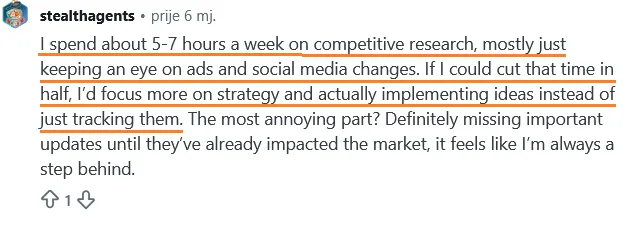
Source: Reddit
Ultimately, the biggest limitations of manual market research are speed and scale.
Organizations need complete, accurate, and continuously updated market intelligence, and that's difficult to achieve with spreadsheets, static business directories, and one-time research projects.
As the volume of business information continues to grow, organizations need a better way to collect, validate, and maintain company data.
AI-powered data pipelines make that possible.
How AI Data Pipelines Transform Market Research?
Well, they help eliminate much of those five to seven hours that marketers spend every week monitoring the market just to stay informed.
Essentially, AI-powered data pipelines continuously collect, enrich, validate, and update business information, which then helps you find quality data faster and make better decisions.
Automate Company Discovery
Whether you're mapping an emerging industry, analyzing competitors, or sizing a new market, your research is only as good as the companies you discover.
Traditional business directories and search engines rely heavily on keywords and industry classifications. The problem is that those labels don't always reflect what a company actually does.
A manufacturer of EV battery components, for example, might describe itself as an electronics company or an industrial supplier without ever mentioning electric vehicles, even though its products are essential to the EV supply chain.
AI-powered data pipelines work differently. They continuously collect information from company websites, product catalogs, regulatory filings, certifications, news articles, and other trusted sources.
Using natural language processing (NLP) and large language models (LLMs), they interpret that information to understand a company's products, technologies, services, and capabilities—not just the industry labels attached to it.
The difference becomes obvious when you search using natural language instead of keywords.
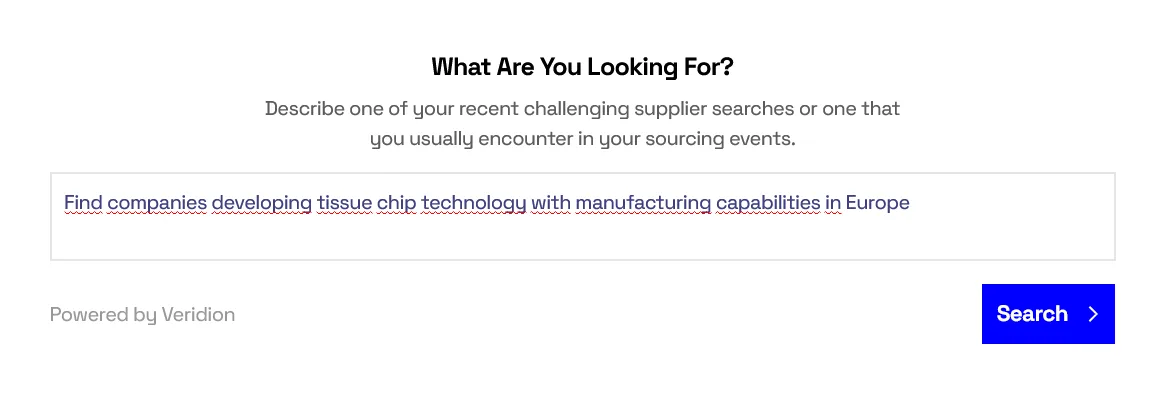
Let’s say you're researching the tissue chip market. Instead of searching across multiple websites and databases, you can simply ask an AI-powered database something like this:
Source: Scout
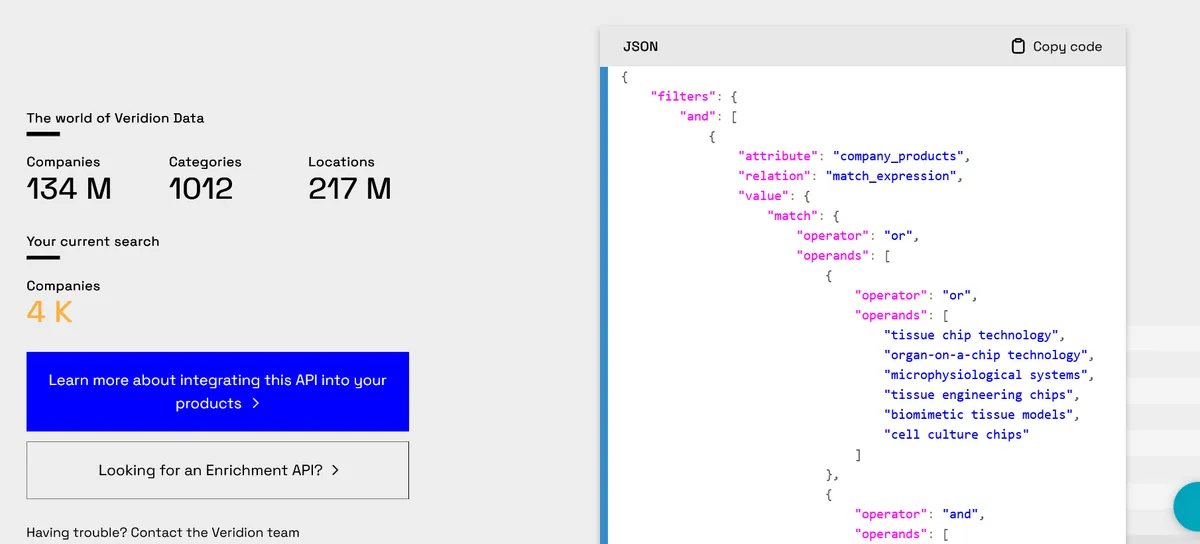
Behind the scenes, the AI expands your query by identifying related technologies, capabilities, and geographic criteria.
Instead of searching only for the exact phrase tissue chip technology, it also looks for concepts such as organ-on-a-chip technology, microphysiological systems, and biomimetic tissue models.
It also applies your location requirement across European countries and interprets broader capabilities related to research and product development.
As a result, AI finds relevant companies that a traditional keyword search would likely miss—and does it in seconds.
Source: Scout
This way of working is already helping organizations discover companies at scale.
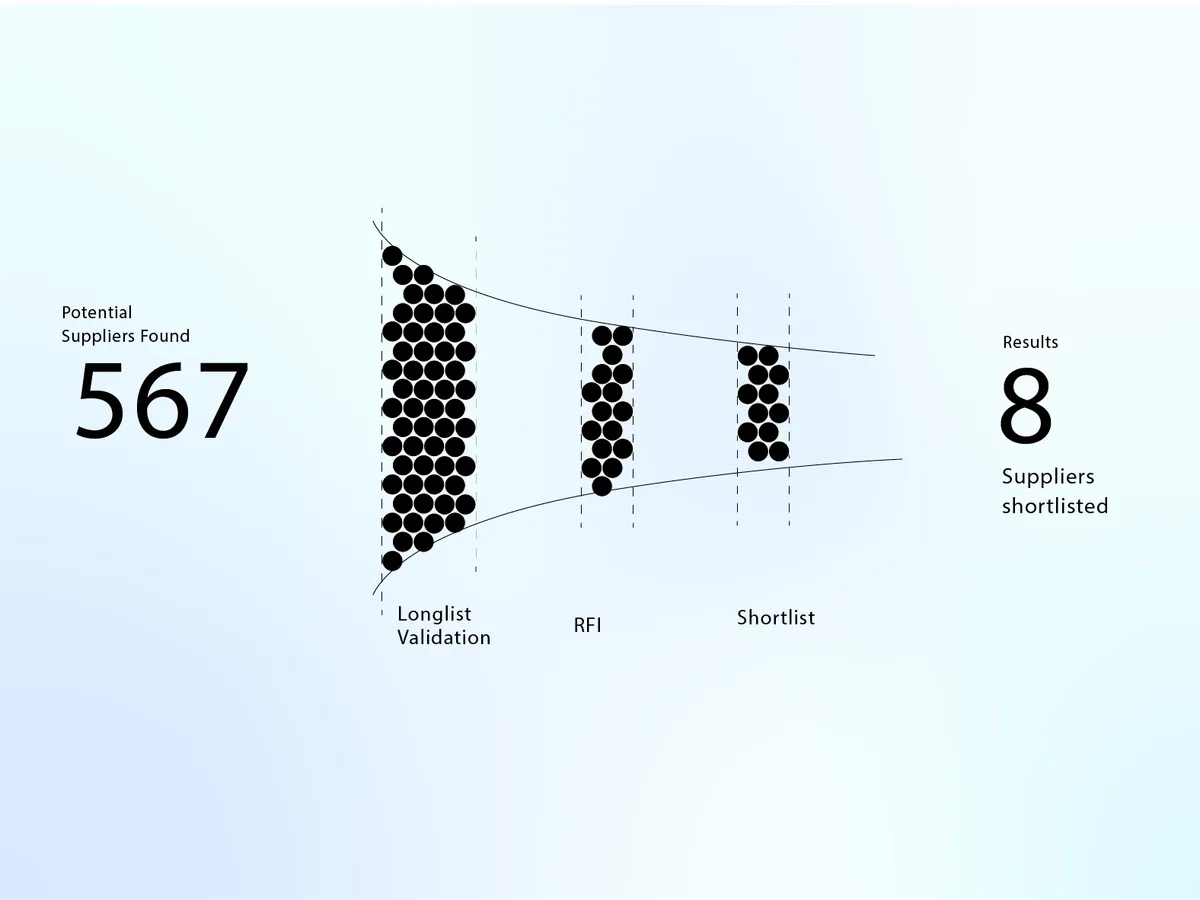
Take Linde, the world's largest industrial gas and engineering company.
When they needed suppliers for a highly specialized steam boiler project, an AI-powered supplier discovery platform identified 567 potential suppliers in just three seconds.
Source: Scoutbee
The result was an 80% larger supplier pool while reducing buyer effort by approximately 95%.
For market researchers, the biggest advantage is finding companies faster and building a more complete picture of the market by uncovering businesses that traditional research methods might never even reveal.
Provide Data Enrichment for Better Decision-Making
AI-powered data pipelines enrich company profiles by continuously collecting information from various data sources.
They standardize and connect that information into a single, structured company profile, giving you a much more complete view of every business.
But, of course, the goal isn't simply to collect more data. It's to transform scattered pieces of information into business intelligence that can be searched, compared, filtered, and analyzed.
Instead of working with basic company records, you gain access to hundreds of enriched business attributes, including:
- Products
- Technologies
- Ownership structures
- Facility locations
- Manufacturing capabilities
- Certifications
- Employee counts
- Sustainability indicators
- Supplier relationships
- And much more
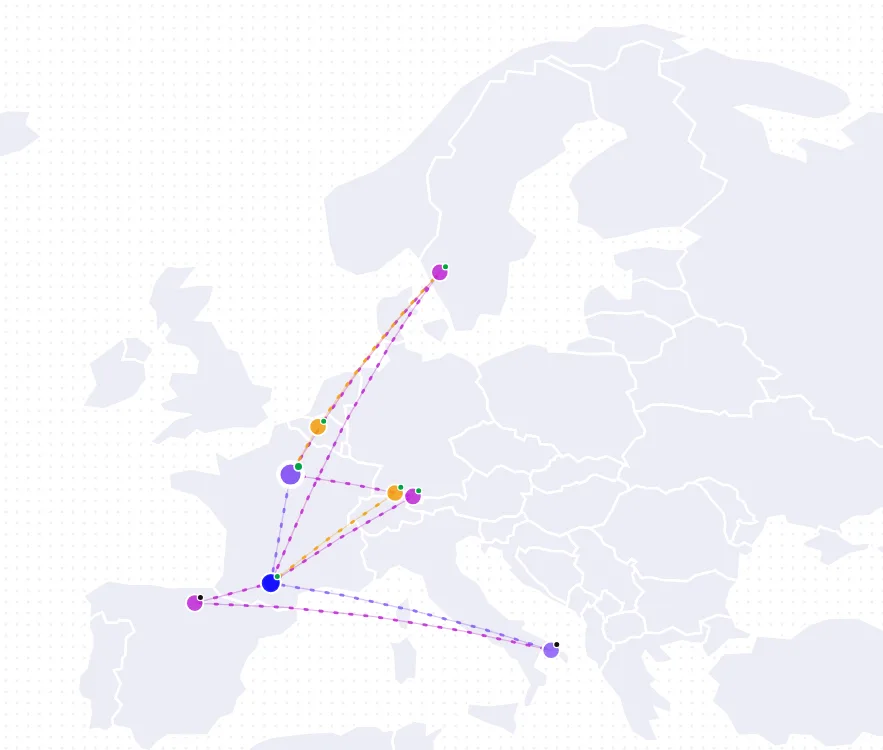
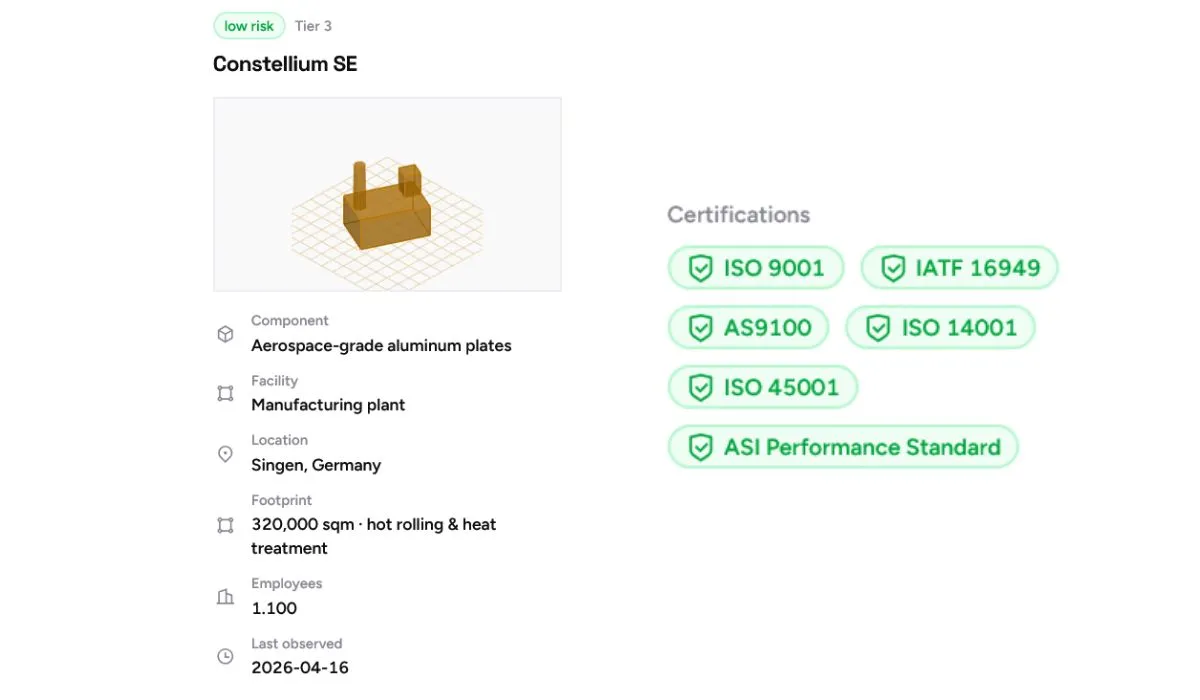
The Airbus supply chain below illustrates how enriched company data reveals not only detailed information about individual companies, but also the relationships between them.
Source: Veridion
Every supplier is connected to the broader supply chain and enriched with detailed operational information, including the components it manufactures, facility locations, facility type and size, workforce, and industry certifications.
Source: Veridion
Rather than researching each company individually, with the help of such pipelines, you can understand how companies are connected, compare their capabilities, and quickly identify potential risks, such as dependencies on critical suppliers or facilities located in higher-risk regions.
Because every company profile follows the same structured format, you can answer much more specific questions.
Instead of searching broadly for aerospace suppliers, for example, you can identify manufacturers with AS9100 certification, composite manufacturing capabilities, facilities in a specific region, or experience producing landing gear components.
Overall, AI data pipelines deliver enriched company data.
Such data helps you better understand companies, markets, and supply chains so you can make better decisions.
Improves Data Quality Through Continuous Validation
Imagine losing $125 million because of a data inconsistency.
That's exactly what happened to NASA's Mars Climate Orbiter in 1999.
One engineering team used imperial units while another used metric units, causing the spacecraft to deviate from its intended trajectory and disintegrate in Mars' atmosphere.

Source: Google
The mission became one of the best-known examples of how even a seemingly small data error can have enormous consequences.
Fortunately, your market research probably won't end with a spacecraft crashing into Mars.
But the same principle applies: if you make decisions using inaccurate data, you're much more likely to reach the wrong conclusions.
The challenge is that company data starts becoming outdated almost immediately.
Businesses launch new products, earn certifications, open facilities, relocate offices, expand into new markets, and change ownership.
If your database isn't continuously updated, it gradually becomes less reliable.
In fact, one study of 1,000 business cards found that more than 70% contained at least one change within just 12 months. Nearly 42% involved an address update, while 12% reflected a company relocation.
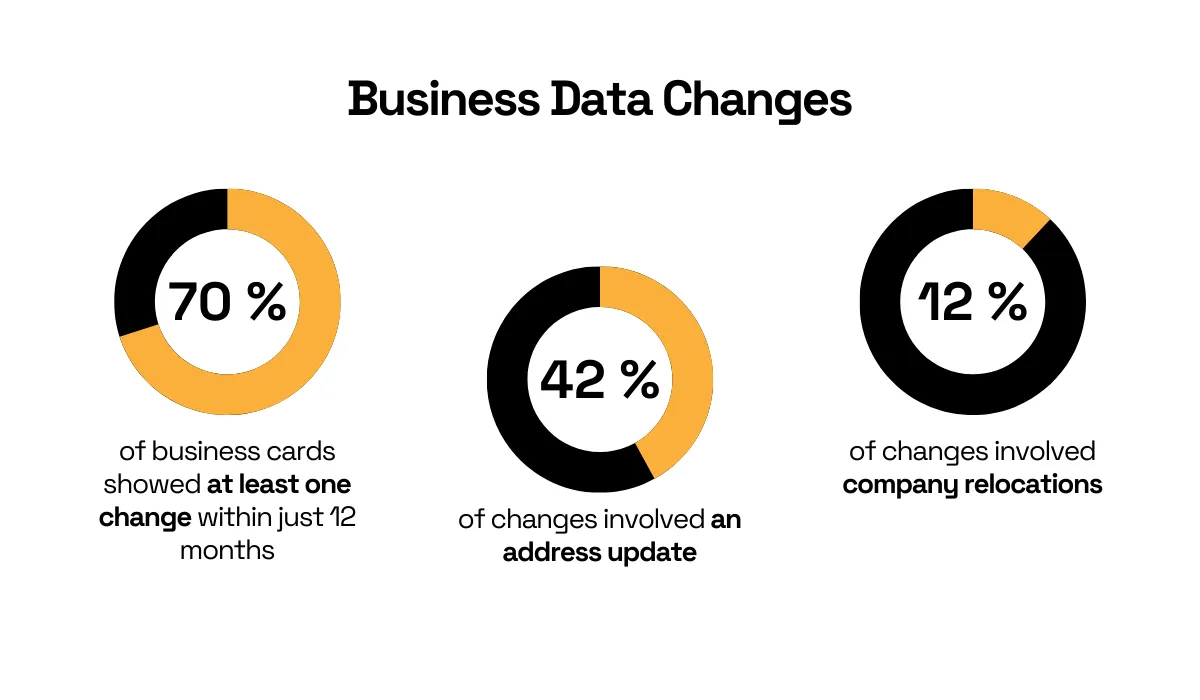
Illustration: Veridion / Data: Industry Select
If something as basic as a company's address changes this frequently, imagine how quickly product portfolios, certifications, supplier relationships, and other business information can become outdated.
That's where AI-powered data pipelines make a difference.
Instead of relying on occasional database refreshes, AI continuously monitors trusted public and commercial sources for changes to company information.
When it detects a new certification, facility, product, ownership change, or relocation, it verifies that information, reconciles conflicting records, and updates the company profile automatically.
As a result, you work with fresh business intelligence that reflects how companies operate today and can be more confident in every sourcing, investment, or market research decision you make.
Scale Market Research with Veridion's AI Data Infrastructure
Everything we've covered—from discovering companies to enriching and validating business data—comes together in Veridion.
Veridion continuously collects, validates, enriches, and updates company information to build structured business profiles covering more than 693M companies across 250 countries.
Each profile contains hundreds of searchable business attributes that help researchers move beyond basic company directories.
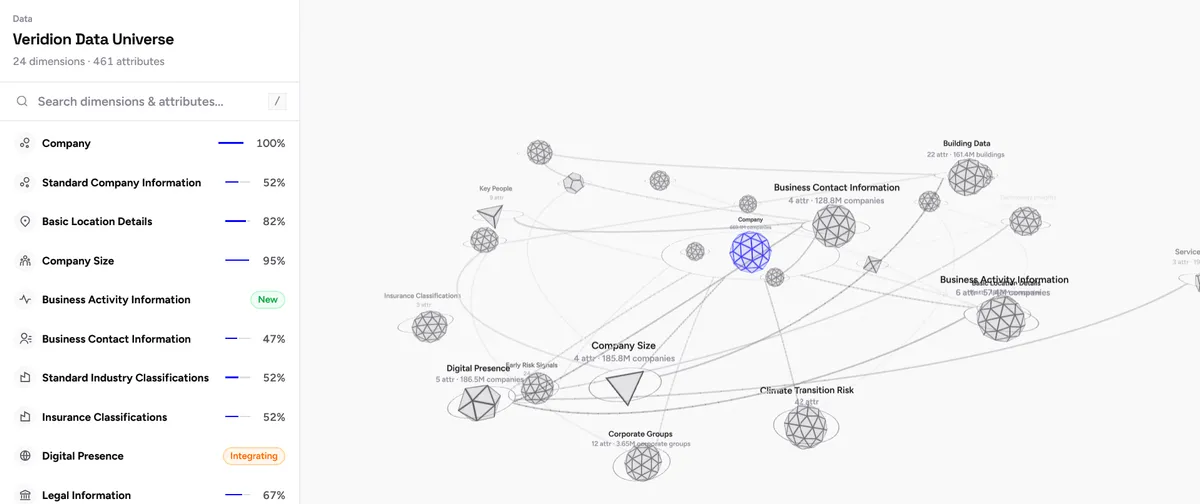
The visualization below illustrates how that information is organized.
Source: Veridion
Rather than storing isolated data points, Veridion connects company intelligence into related categories such as products and services, technologies, locations, sustainability, digital presence, corporate relationships, and business activities.
Each category contains multiple dimensions and attributes, allowing you to explore companies from different perspectives depending on your research goals.
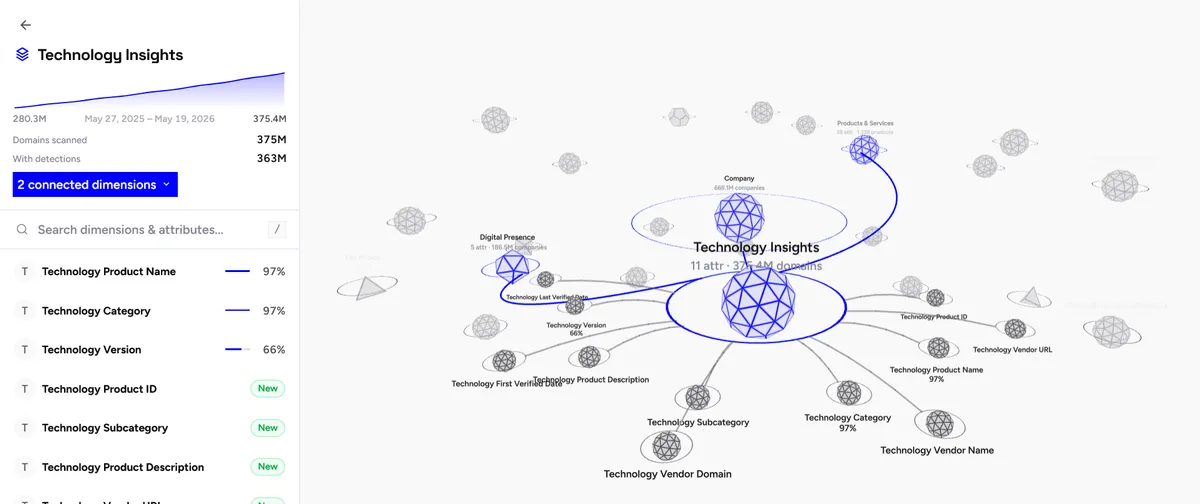
Let’s say you're researching the industrial robotics market.
You could begin with Technology Insights to identify the technologies companies use, then explore their products and services, digital presence, locations, certifications, and sustainability information—all from the same company profile.
Source: Veridion
Because every attribute is connected, you can quickly narrow your search to businesses that match highly specific criteria instead of piecing together information from dozens of disconnected sources.
Whether you're sizing an emerging market, enriching an existing company database, or mapping a supply chain, Veridion’s AI data pipeline supports discovery, enrichment, and continuous validation in one place.
Conclusion
Market research isn't getting any simpler.
Markets move faster, companies change constantly, and the amount of information keeps growing.
AI that can find, understand, and keep market intelligence up to date so you can focus on making better decisions is an advantage worth leveraging.
Articles
Discuss how these trends affect your organization.
Our analysts are available for a short call. Bring a specific question and we will ground it in the data.
Insights
Keep reading
More analysis, research, and outcomes grounded in live company intelligence.
How to Build a Strong Market Intelligence Strategy
Learn how to build a strong market intelligence strategy that helps you track trends, understand competitors, and make smarter decisions.
6 Most Important Market Intelligence Metrics
Discover six must-track market intelligence metrics that can sharpen your competitive edge and support data-driven growth.
How Successful Companies Use Market Intelligence for Business Growth
Discover how successful companies use market intelligence to unlock new growth opportunities. Learn more in our latest guide.