Insights / Articles
From Hindsight to Foresight: Building a Signal-Driven Strategic Planning Cycle
Tired of reactive planning? Transform your strategy with market signals. Build a dynamic, signal-driven planning cycle that anticipates change.

- Only 29% of organizations change plans fast enough to respond to disruption.
- Rolling forecasts can drive 43% higher revenue growth than static annual plans.
- Foresight-driven planning reveals opportunities and risks before they become obvious.
- Weaving external signals into everyday strategic decisions turns them from noise to decision-grade insights.
Businesses today can't rely on last year's plan in a fast-changing world. Annual budgets and static forecasts often fall behind reality.
That's the major problem with hindsight-driven planning: you learn what happened only after it's too late to change the outcome.
A signal-driven strategic planning cycle changes that. It uses live external data to help you act before disruption hits, not after.
Here's how enterprise teams can build one, step by step.
1. Assess Your Current Strategic Planning Process
Even the best plan fails if its assumptions are already outdated. Most enterprises still treat strategic planning as an annual ritual.
Leadership locks in budgets and targets in the fourth quarter, then revisits them once a year regardless of what changes in between.
That approach breaks down fast in a volatile market. As Gartner research found, only 29% of strategists agree their organizations change plans fast enough to respond to disruption.
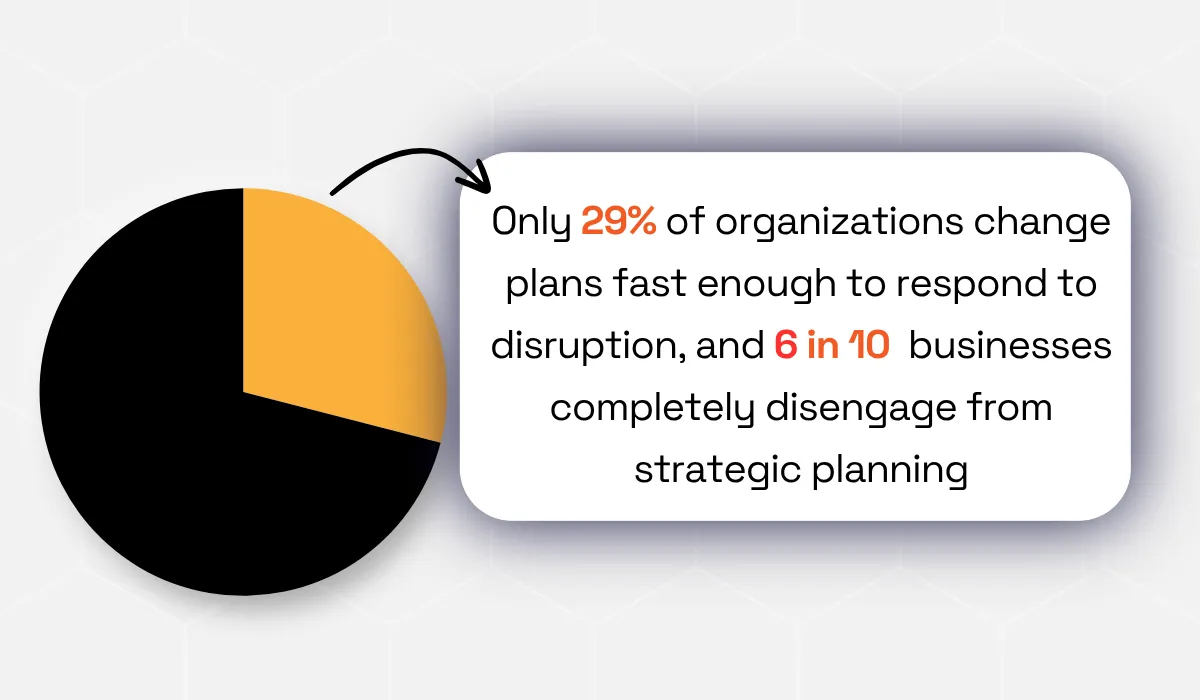
Gartner’s research also found that six in ten business leaders say their business remains disengaged from strategic planning altogether, citing a process that doesn't align with operational realities, internal barriers to changing course, and competing priorities that crowd out planning.
Outdated assumptions breed bad decisions. In an era of volatility, depending on conventional planning often misfires. Most traditional strategies are not suited for the market volatility businesses face today.
If your process still treats a plan as immutable for 12 months, consider it a flaw because if you rely on reactive decision-making, where you only adjust after crises hit, you'll lose big.
In contrast, continuous planning using real-time data enables teams to update forecasts and revise initiatives as new information becomes available.
Therefore, begin by auditing your current process rather than developing a new one. Take your last two planning cycles and list all your key assumptions regarding the market.
Highlight those that were valid and those that weren't.
For each failed assumption, determine if the signals were detectable externally before they showed up in your internal numbers. Chances are, they were.
Capture the frequency of your revisions, responsible personnel, and sources of data that power your plan.
Finally, compare your planning schedule with the pace of change in your industry. If the market evolves every month but your plan is revised annually, you'll have an inherent lag in your process that you cannot address without adjusting the planning cadence, regardless of the data you use.
Any weak spots in your current process, such as long approval delays, missing data feeds, or unchanging plans, should be considered red flags.
2. Identify the External Market Signals That Matter
Once you know where your planning cadence has a lag problem, the next step is deciding what to actually watch. Not all external data is useful, and trying to track everything guarantees you act on none of it.
You need to know which external indicators can tip you off to risks or opportunities before competitors do. These signals come from customers, competitors, industry trends, economics, and regulation.
For example, tracking changes in customer behavior (sales trends, churn rates, or social sentiment) can alert you to shifts in demand. Likewise, competitor signals, such as a new hire on LinkedIn, a product launch, or a funding round, often hint at strategic moves.
In practice, the company should build a list of signals and track them continually. Tracking signals helps organizations prepare to respond to market changes by enabling them to anticipate them, allowing for strategic action.
In other words, instead of waiting for a problem, spot it brewing. Some crucial categories are:
Customer signals | Monitor customer feedback, NPS scores, usage patterns, or social media chatter. Declining loyalty or demand in a segment can signal trouble or an unmet need. |
|---|---|
Competitive signals | Track your competitors' websites, press releases, and financial statements. Job listings also provide information about future moves that competitors are planning to make. |
Industry trends | Pay attention to industry news, trade journal publications, and analysis. |
Economic signals | These include macro-level data such as GDP, inflation rate, unemployment rate, lending terms, consumer confidence, etc. |
Regulatory changes | New legislation, taxes, or requirements may either be risks or opportunities. Often, regulatory changes signal changes in the market environment or new policy directions coming from the government. |
Start with a few signals: choose 15 to 20 signals within the five groups mentioned above, not more.
Assign each of these signals to an owner who will be responsible for tracking, detecting material changes, and reporting on them regularly. If there is no monitoring of a signal, it is not a signal at all; it is noise.
This is also where it helps to separate market research (the direct feedback you gather for a specific, short-term question) from market intelligence (the continuous, broader read on where your market is headed).
You need both, but they answer different questions, and treating them as the same thing is a common reason signal programs stall.
3. Collect and Refresh Market Data Continuously
After you know what to watch, next you gather reliable data. This is where most enterprise data programs quietly fail.
Teams pull data manually, refresh spreadsheets on a quarterly cycle, or rely on a vendor list that was accurate the day it was purchased and has been decaying ever since.
Firmographic details like ownership structure, headcount, and location shift constantly as companies merge, relocate, and restructure.
A dataset that was accurate at the start of a planning cycle can be meaningfully wrong by the time you present that plan to the board.
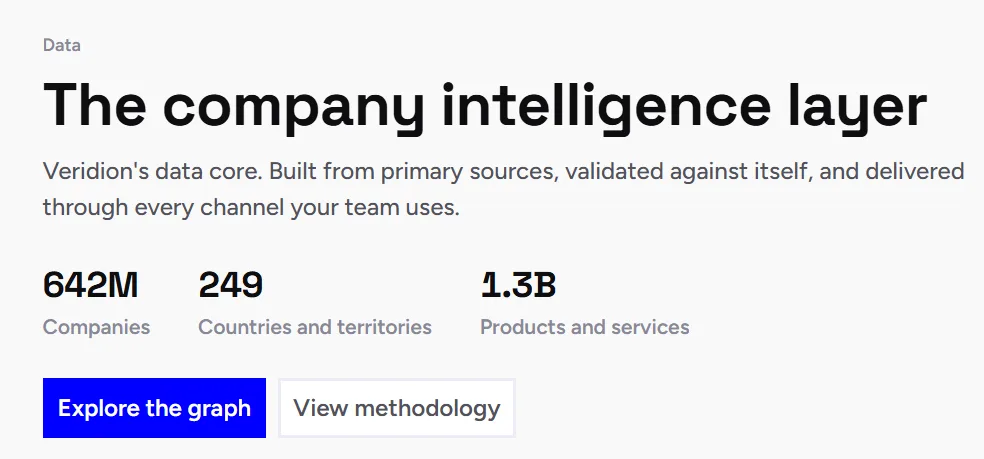
This is the exact gap Veridion is built to close. The platform maintains a continuously updated graph of 693M companies across 250 countries, with more than 461 firmographic attributes tracked per company.
Source: Veridion
Instead of a periodic pull that brings in fresh information every quarter or year, our platform operates a continuous process of pulling fresh data from the open web, extracting structured company data, matching it to existing entries, and refreshing those entries the minute there is a change, such as new hiring, a product launch, or certifications.
This continuous loop of actions transforms a snapshot into a live reading of the market, which is precisely what the whole concept of external signal tracking is all about. No manual data collection can beat this speed.
Data enrichment, the process of filling gaps and correcting errors, further boosts quality.
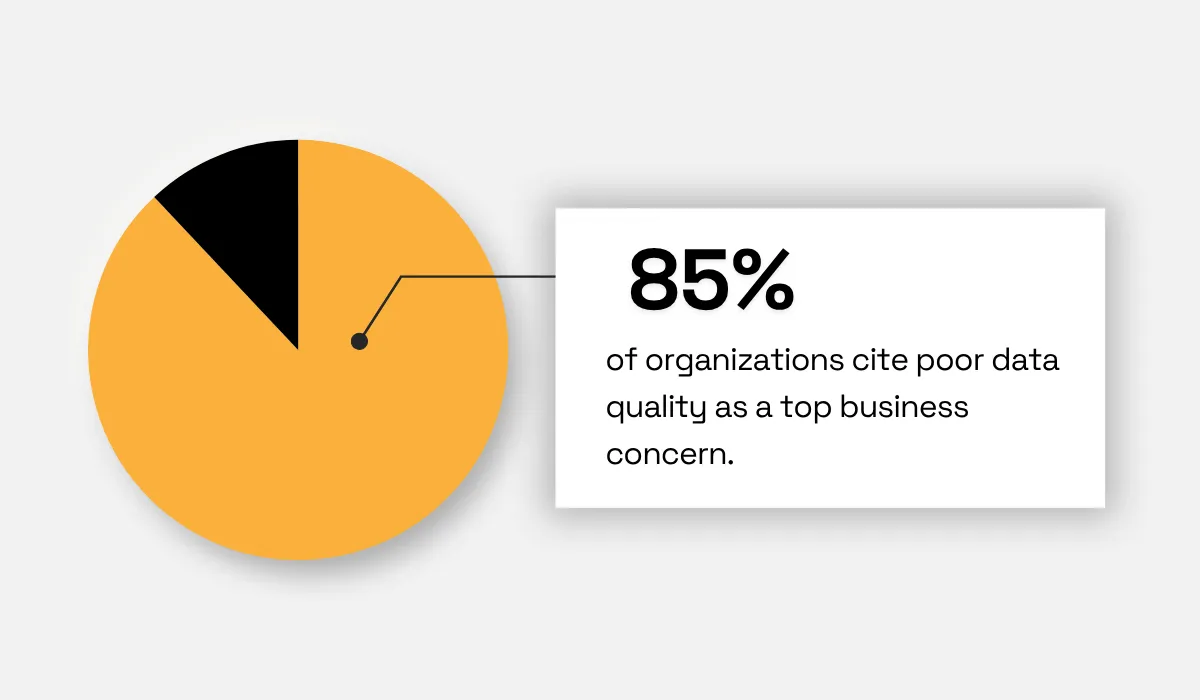
Experian found that 85% of organizations say poor-quality customer data directly hurts their operational processes, efficiency, and ability to stay agile.
Our platform's data enrichment improves completeness by adding missing fields, such as revenue, employee counts, ownership hierarchies, and more. In other words, a fragmented ERP is transformed into a unified company profile.
Why is this important? Good decisions depend on good inputs.
Try to ensure you have continuous data feeds from your selected platforms into your planning system. As for internal data (sales and financial information), connect your ERP/CRM to dashboards.
Treat your external data sources as you would any other production system, rather than as a one-time project.
Audit how often each source actually refreshes versus how often you assume it refreshes. Assign someone to validate accuracy on a fixed schedule rather than blindly trusting a feed.
Focus on continuous refresh wherever outdated data carries the highest cost: supplier risk assessment, competitor monitoring, and market sizing will generally be your best bets.
This approach prevents you from the pitfall of basing your plans on outdated information. Instead, each plan is always anchored to current reality.
4. Integrate Signals into Strategic Planning
Data collection is but part of the story. Integrating these external signals in your planning process is the next step.
Your external signals are almost useless if they are collected in a dashboard that people do not consult when planning.
The step most businesses fail to take is integration, the very step that determines success or failure in signal-based planning.
If your external signals are collected outside your planning rhythm, your consensus forecast is little more than a departmental negotiation rather than a factual perspective on the market. Your scenario plans have no anchor, and you end up with a stale plan after several weeks.
The fix is to treat external signals as a governed input to your existing planning cadence rather than a special annual project.
If you run quarterly business reviews, add a fixed agenda item for the team to review external changes before revisiting the numbers.
This approach is crucial because organizations with strong collaboration between planning teams and the rest of the business are more likely to adapt their plans fast enough to respond to disruption.
Practically, this means three things. First, set explicit thresholds for what counts as a material signal movement that warrants escalation, so the team isn't debating definitions in the middle of a crisis.
In addition, connect specific triggers to specific actions in your plan. If you know that the economic signal (such as a consumer sentiment index) is important to your planning process, establish a trigger that activates scenario planning if this indicator falls by x%.
Also, in case there is a new regulation, you can quickly assemble a task force.
Second, consider how the data and decision-making process could be integrated across departments. Do not let each department work in a silo. Create a cross-departmental planning platform or tool. For example, make sure your sales forecast aligns with new market demand signals.
Or let the procurement team modify the budget based on new supplier risk signals.
Third, consider making your planning horizon flexible rather than annual. Instead of the annual budgeting process, you could try using rolling forecasts and quarterly review sessions.
This pays off because companies that use driver-based rolling forecasts rate their accuracy as either "great" or "good" 77% of the time. This is almost triple the number for companies that use static basic models at 27%, according to the 2025 FP&A Trends Survey.
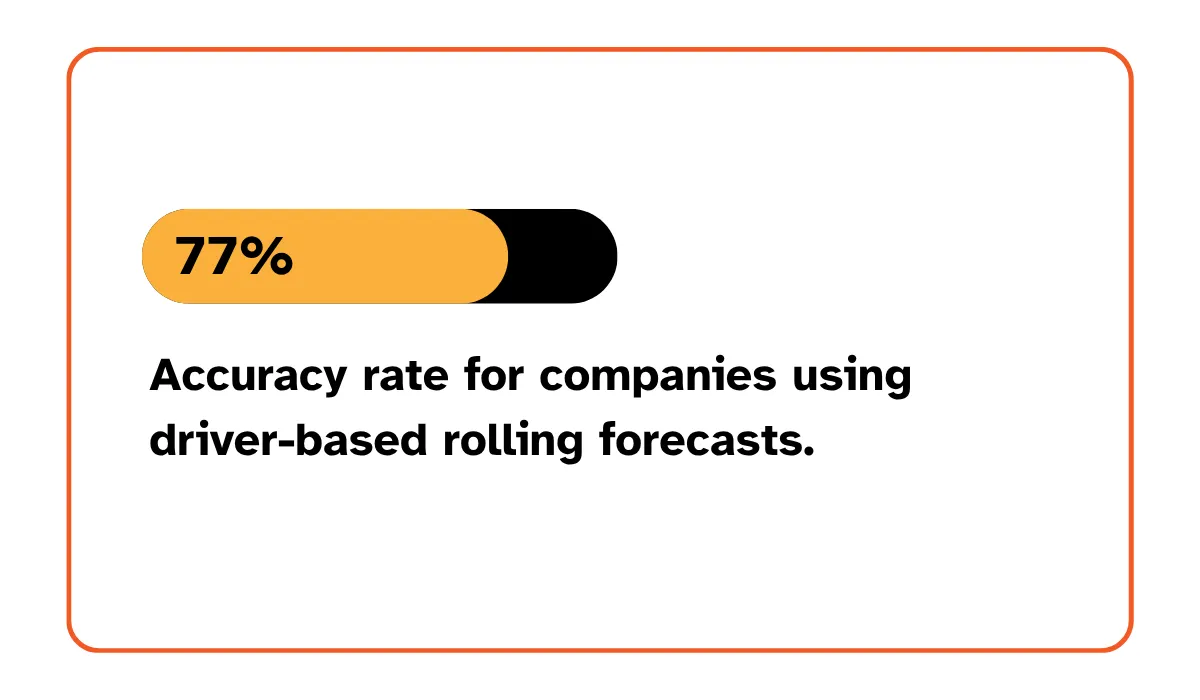
Illustration: Veridion / Data: FP&A Trends
That gap is too large to ignore.
To close it, your finance and business leaders should revisit forecasts frequently and adjust targets with each cycle. This keeps strategy in tune with the latest signals.
5. Monitor Results and Refine the Strategy
An excellent strategy cycle goes beyond just execution. It requires continuous evaluation of outcomes, learning from experience, and making changes where necessary.
This turns planning into a virtuous feedback loop.
Begin by defining key performance indicators and setting up effective evaluation processes. A Balanced Scorecard is a great approach that you may adopt.
Here's an example of a balanced scorecard:
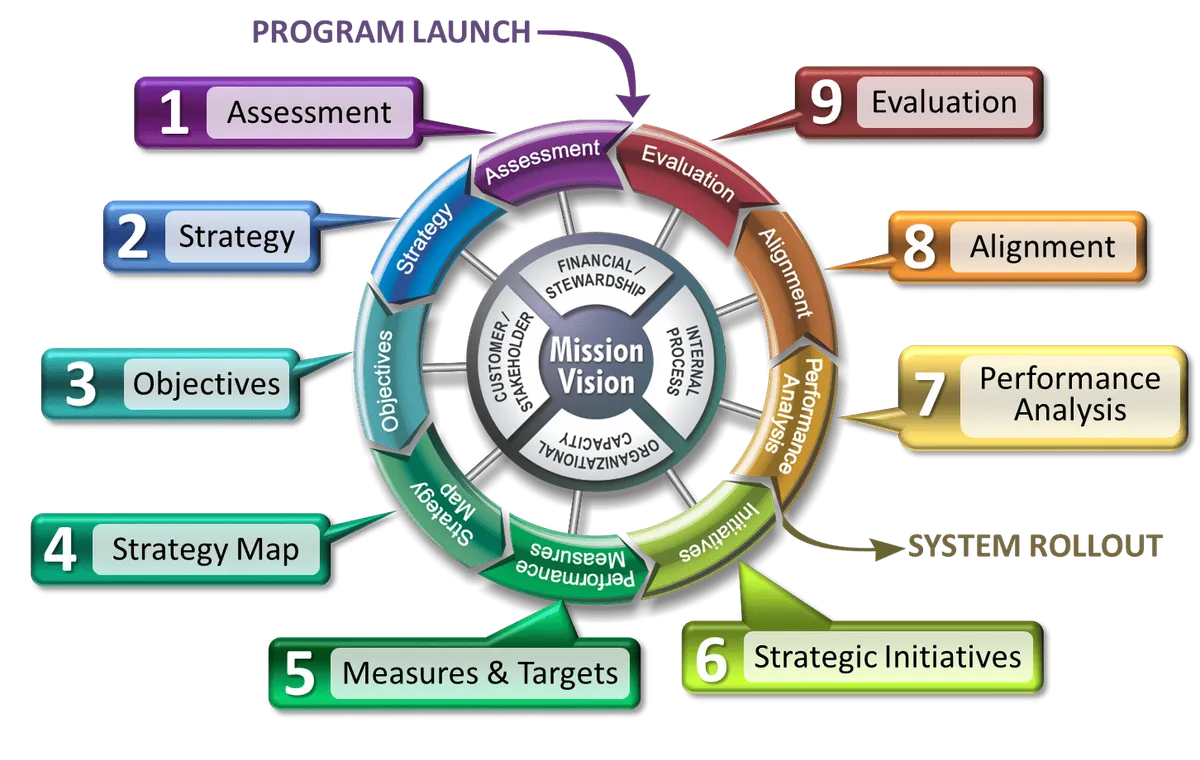
Source: Balanced Scorecard Institute
Use metrics along these lines to measure your objectives (e.g., market share, satisfaction, growth, ROI on projects).
Choose a schedule to monitor them. Quarterly strategy review meetings often serve this purpose quite nicely. During these meetings, compare your signals with real-life results. Was that signal you picked up really a good predictor of the outcome?
If a signal never correlates with a real result, drop it and look for a better one instead of tracking it out of habit.
Importantly, also survey new external data to explain variances. For example, if sales fell short, was it due to a competitor's price cut (a signal you should have caught)? Or if costs rose, which economic factors were at play?
Use dashboards that combine your firm's metrics with the market indicators you have been following.
Feedback loops also involve lessons from missed signals. If a particular trend took you by surprise, make sure you include it in your model.
For instance, if a social media initiative negatively affected your brand reputation, adjust your MI tools to detect such issues in the future. Over time, this approach will greatly improve your planning process.
Quantifying improvements is extremely important as well. Monitor your forecasting quality and decision speed. Continuous planning can improve your forecast accuracy and resource allocation, and help you pivot faster.
One way to see progress is to measure how often you needed unplanned corrections. In a well-oiled signal-driven cycle, that number should shrink.
A planning cycle that never monitors and re-evaluates stops being signal-driven no matter how much external data feeds into it. The data only pays off once the loop closes, and that loop is only as reliable as the data feeding it.
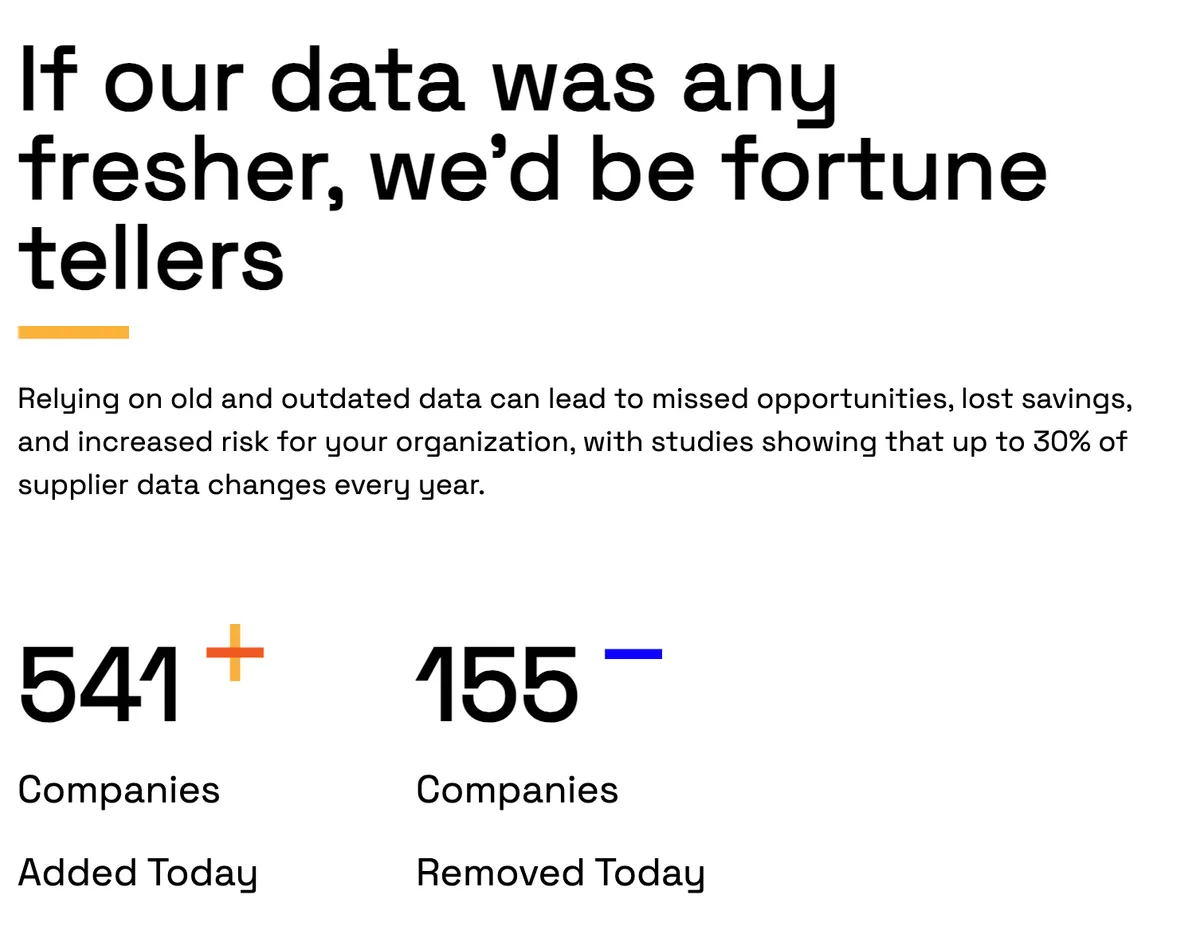
Veridion's role doesn't end at the planning stage. Its continuously refreshed company data keeps your quarterly review honest, representing the current state of the market rather than as it was when you first pulled the numbers.
Source: Veridion
Monitoring outcomes rigorously, learning quickly, and updating strategy as needed will not only help you understand what already happened but also give you the signals to tell you what's coming.
Conclusion
To turn hindsight into foresight, you must make strategic planning an ongoing, signal-driven process.
The five steps here, from auditing your current process to closing the feedback loop, turn strategic planning from an annual guess into an ongoing discipline.
You don't need to overhaul everything at once. Pick one signal, one review point, and one plan revision built on real external data, then build from there.
Every cycle you run after that gets a little sharper than the last, helping you move from reacting after the fact to leading ahead of it.
Embrace this signal-driven cycle, and you'll be ready for whatever comes next.
Articles
Discuss how these trends affect your organization.
Our analysts are available for a short call. Bring a specific question and we will ground it in the data.
Insights
Keep reading
More analysis, research, and outcomes grounded in live company intelligence.
Best Practices for Leveraging Market Intelligence
Not sure how to apply market intelligence effectively? Learn which practices top businesses rely on and how you can too.
Market Intelligence vs Market Research: What's the Difference?
Not sure whether you need market research or intelligence? Learn the key differences and when to use each.
What Are the Benefits of Data Enrichment?
Want to understand the benefits of data enrichment? This guide will explain how enriched data supports better decisions and analytics.