Insights / Articles
How to Choose a Third-Party Risk Data Provider (Without Getting Burned)
Tired of unexpected vendor issues? Learn how to identify emerging market risks and choose a third-party risk data provider that keeps you safe.

- Every third party connects you to 60–90 fourth parties.
- 25–30% of B2B company data becomes outdated every year without maintenance.
- Coverage, accuracy, and traceability matter more than the biggest database.
- Good data creates value only when it fits your existing workflows.
Choosing a third-party risk data provider is no ordinary decision.
Every vendor promises broad coverage, fresh data, and airtight accuracy.
But how much of it is true?
The provider you choose becomes the foundation for how your company sees risk.
Weak coverage, stale records, or unverified accuracy claims don't just create bad data. They create blind spots you won't discover until something goes wrong.
This blog breaks down five checks worth running before you sign.
Coverage Across Your Risk Surface
‘We cover 130 million companies.’
That sentence sounds impressive on a sales call.
But here's the question you should actually ask: does that coverage reach the parts of your risk surface that matter to you?
A provider might have huge global numbers and still be thin exactly where your risk lives, whether that's a specific region, a long tail of small suppliers, or a niche industry code.
Raw database size tells you almost nothing about whether the provider can find and verify the mid-size supplier in Vietnam or the private distributor two tiers down in your supply chain.
Further, many sub-tier suppliers, small private companies, and businesses don't file the same public disclosures as large public companies.
They don't always have an English-language website. So they simply don't show up.
The cost is not hypothetical.
In 2019, the U.S. Treasury's Office of Foreign Assets Control settled with e.l.f. Cosmetics, a color cosmetics and skincare brand, for 156 apparent sanctions violations, worth nearly $1 million.

Source: CNBC
The company had imported false eyelash kits from two Chinese suppliers.
Those suppliers, in turn, had quietly sourced materials from North Korea.
e.l.f. never checked that deep into its own supply chain.
Its due diligence looked at quality and cost, not at who its suppliers' suppliers actually were.
Now, the company wasn't looking away. It simply couldn't see that far down its own supply chain.
The issue was caught after e.l.f conducted a self-audit of its third-party suppliers.
And It’s not just e.l.f.
A 2024 study from SecurityScorecard (a cybersecurity ratings platform) found that for every third-party vendor you track, you're indirectly connected to somewhere between 60 and 90 times that number of fourth parties.
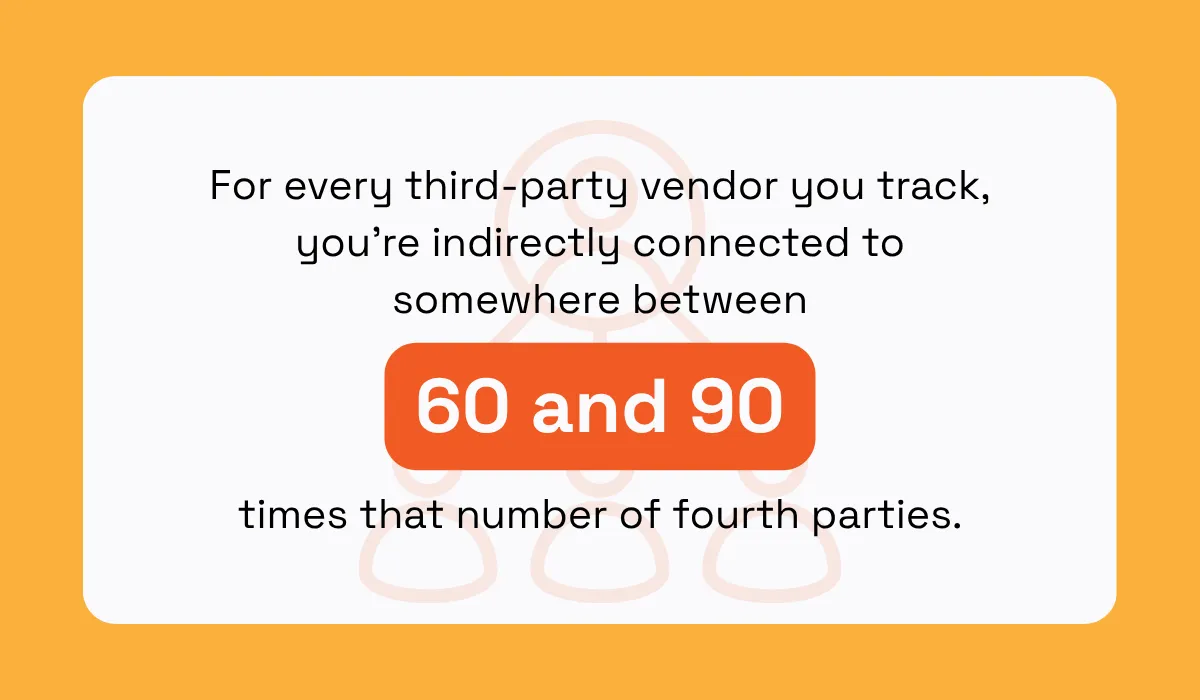
Illustration: Veridion / Data: SecurityScorecard
So, before you sign with any data provider, ask a more specific question than ‘how many companies do you cover?’
- Ask which countries have real depth, not just a database entry.
- Ask how they handle private and small businesses that don't file public reports.
- Ask whether their industry classification actually matches the sub-sector you operate in, not just the broad category.
It also helps to ask how the provider builds its coverage in the first place.
Third-party data providers that combine multiple sources, such as company websites, job postings, and local business signals alongside registries enjoy to have better data quality.
Freshness, Not Just Size
Every data provider will tell you their database is massive.
But size means very little on its own.
B2B contact and firmographic data decay fast.
So, a database of roughly 20,000 records can lose 5,000 to 6,000 usable entries annually if nobody touches it!
Per-quarter cleanups also may be of little use given the speed of decay.
So quantity and size alone tell you almost nothing about whether a third-party data provider is useful.
What you want to know is how often that data gets checked and refreshed, and what actually triggers an update.
Because without that visibility, it's easy to assume your vendor risk process is working, while that might not be the case.
AI systems make the problem worse.
AI-powered risk scoring, monitoring, and supplier classification all depend on accurate inputs.
When outdated information enters the system, automation simply spreads those errors faster.
That's why update frequency deserves as much attention as database size.
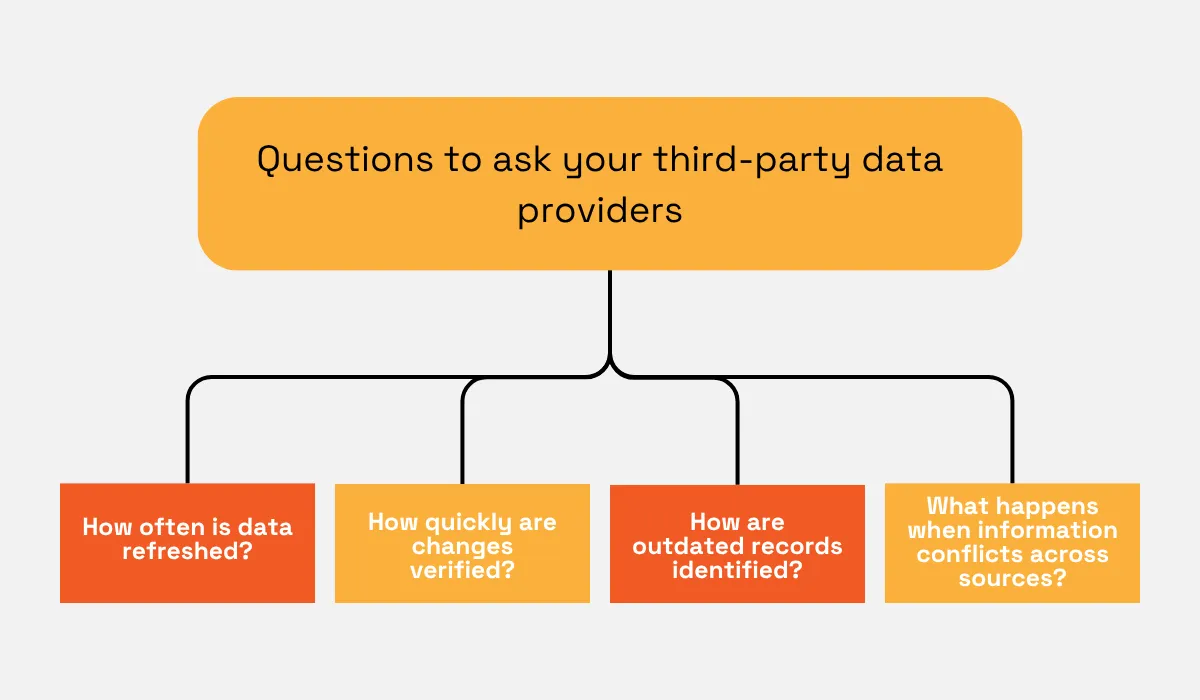
Illustration: Veridion
If you are looking for a data provider that can answer the questions asked above and more, Veridion can help.
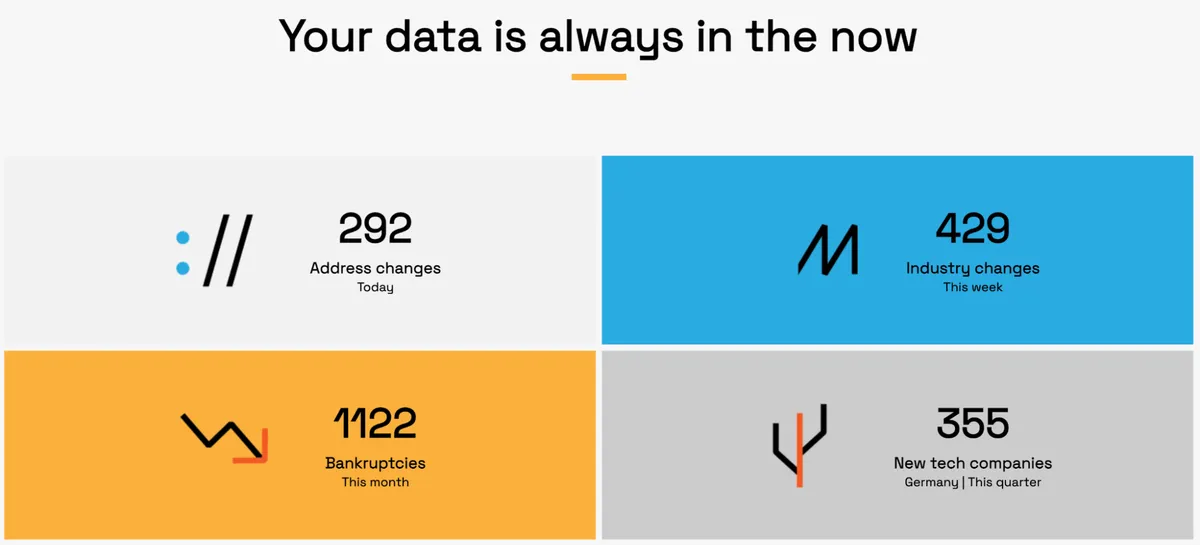
Instead of relying on static datasets, Veridion maintains information on 693M companies across 250 countries, covering more than 461 structured company attributes.
Most importantly, its database is refreshed every week, allowing customers to work with current business intelligence rather than periodic snapshots.
Source: Veridion
Veridion also combines AI-driven collection with human validation and reports over 99.7% data accuracy, making the information suitable for supplier intelligence, procurement, compliance, and third-party risk programs.
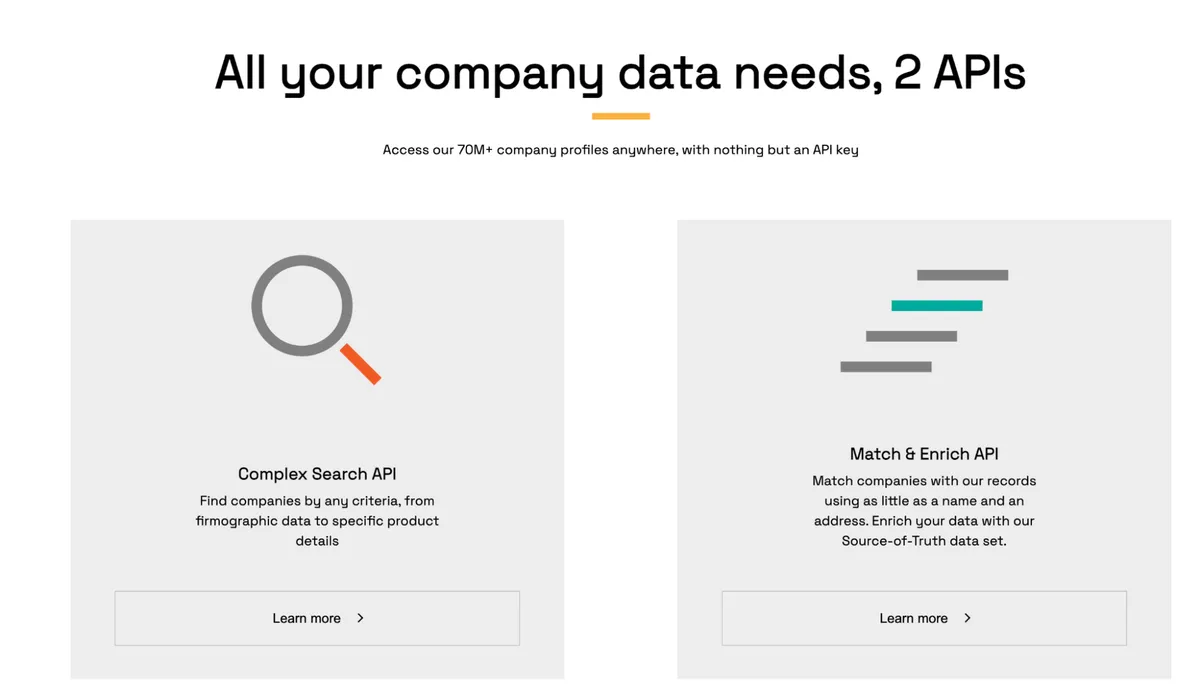
The platform also supports APIs, batch delivery, and custom integrations, making it easier to keep internal systems continuously updated instead of relying on manual refresh cycles.
Source: Veridion
When it comes to freshness, remember a smaller database that stays current will almost always outperform a much larger one that's already months out of date.
Verifiable Accuracy Claims
A third-party data provider shows you a demo; the sample records look clean, and you are almost ready to sign up with them.
But did you verify the accuracy of their data?
Per DealSignal, B2B data providers provide only 50% accuracy on average.
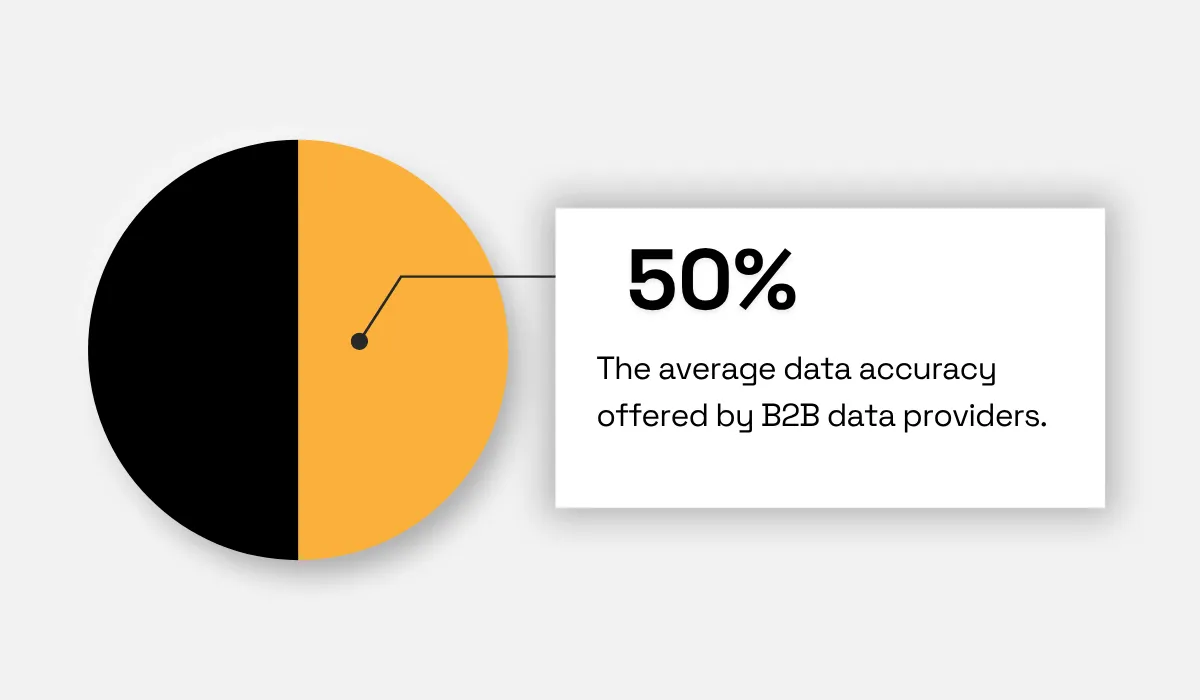
Illustration: Veridion / Data: DealSignal
This means many companies continue to operate without realizing how much inaccurate information they are using for day-to-day decision-making.
Businesses simply assume the data they have received is correct.
Unfortunately, that assumption doesn't always hold up.
Jordan Abbott, Chief Privacy Officer at Acxiom (one of the world’s largest third-party data brokers), was refreshingly honest about this in an industry interview.
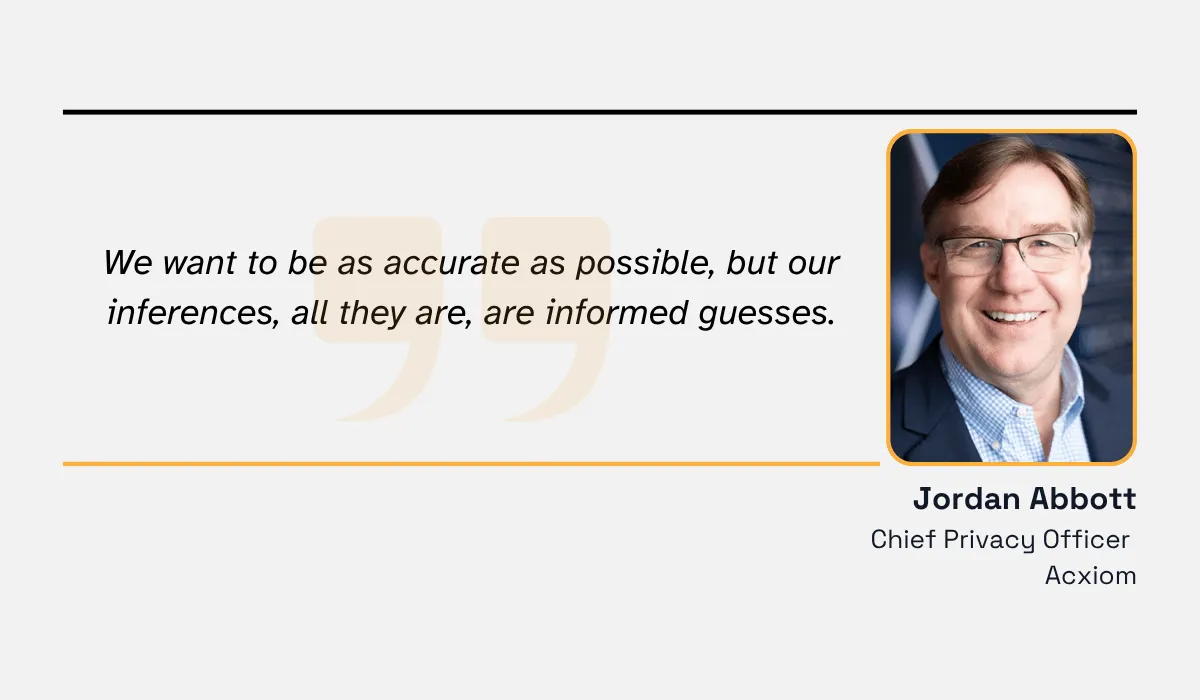
Illustration: Veridion / Quote: The Record
And he isn't the only one raising concerns.
According to Scott M.McKinley, founder and CEO of Truthset, a data-intelligence firm, third-party data brokers are incentivized to hit ‘scale targets,’ placing companies and contacts into more categories than the data actually supports, just to look more comprehensive on paper.
Alarming, isn't it?
Here’s another case: a marketing executive, Arielle Garcia, ran a check on her own profile out of curiosity.
A major data broker had tagged her as a Southeast Asian single mother of two while she was married, childfree, and had no ties to that region at all.
So, if a provider can't accurately describe one real person, why would you trust their read on thousands of companies?
And importantly, how do you avoid shady third-party data providers and check a vendor's claims instead of taking their word for it?
The first thing you can do is request a sample dataset and compare it with records you already know are accurate, such as your own customers or approved suppliers.
Then ask direct questions like:
- What accuracy rate do you achieve?
- What industry standards and benchmarks has the data been mapped against?
- How often is the data revalidated?
- Can you explain where each important data point came from?
Further, to understand the technical fitness of the data, you can use metrics such as:
- Attribute completeness
- Data freshness (average refresh cadence)
- Match rate on your sample data, accuracy, or confidence scores
- Global and industry-specific coverage and more
A data broker that can answer the above-mentioned questions and provide metric details with confidence is usually far more trustworthy than one asking you to simply believe their demos or numbers.
Full Data Traceability
If your third-party data provider tells you a supplier has changed ownership, entered a new market, or operates in a high-risk industry, you should be able to verify that information.
Otherwise, how do you know it's right?
Sales and marketing teams can often tolerate a little fuzziness. A slightly outdated job title on a lead record isn't going to trigger a regulatory review.
Risk and compliance teams don't have that luxury.
Every flagged supplier, every sanctions match, every ownership claim needs to be defensible if a regulator, auditor, or board member asks about it later.
That's why data traceability matters just as much as data quality.
Another concern is that many third-party data providers combine information from multiple sources, apply their own models, and present the final result without explaining how they reached it.
While that may seem convenient, it creates an enormous amount of accuracy and compliance risk.
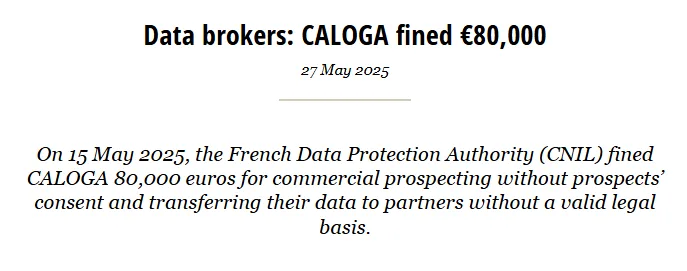
In 2025, France's data protection authority (CNIL) fined data broker CALOGA, an email marketing specialist company, €80,000 after finding that it had relied on prospect data purchased from other data brokers, online contest websites, and product testing platforms without adequately verifying how that data had been collected.
Source: CNIL
CALOGA used these records to run email marketing campaigns for its clients and also shared some of the data with partners.
During its investigation, CNIL found that the company could not demonstrate that individuals had given valid, GDPR-compliant consent before their information entered CALOGA's databases.
Although CALOGA required suppliers to meet certain contractual obligations, the regulator concluded that these safeguards and verification checks were insufficient.
Now you may be wondering: how do you avoid these risks, and what does good data provenance actually look like in practice?
A good rule of thumb is that every important data attribute should have:
- A documented source
- A timestamp indicating when it was last verified, and
- A clearly defined process for resolving conflicting information from multiple sources.
These factors could be the start of understanding third-party data traceability.
If a vendor gets vague when you check for these factors or defensive when you ask, 'How do you know this?', take that seriously.
Confidence without evidence is exactly how inaccurate information ends up driving business decisions that nobody can defend later.
Fit With Existing Workflows
Great data that sits in the wrong system might as well not exist.
You may pick a provider with strong coverage and solid accuracy, then discover the data can't actually reach the people who need it, or the tool meant to hold it simply can't handle the load.
This kind of failure is more common than you may think, and it doesn't need a hacker or a bad actor to cause real damage.
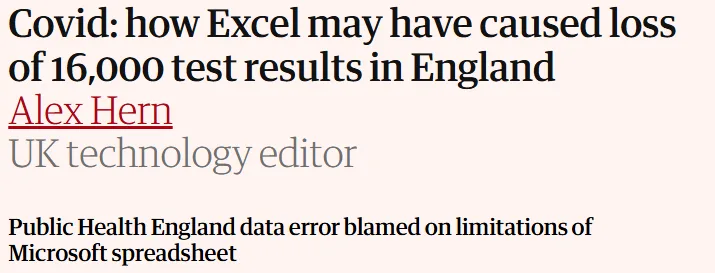
During the pandemic, one UK lab sent its daily Covid test results to Public Health England as a simple spreadsheet file.
The file kept growing as testing scaled up until it crossed the row limit built into an older version of Excel.
New rows at the bottom simply stopped loading. Nobody saw an error message.
The result was nearly 16,000 positive test results left off the official count, leaving tens of thousands of potentially infectious people outside the contact tracing process.
Source: The Guardian
The data wasn't wrong.
It simply couldn't move through the workflow the way it was supposed to.
This shows that good data creates value only when your systems can actually receive, process, and use it.
And while the lab was not a third-party data provider, they highlight what a lack of proper data integration can do.
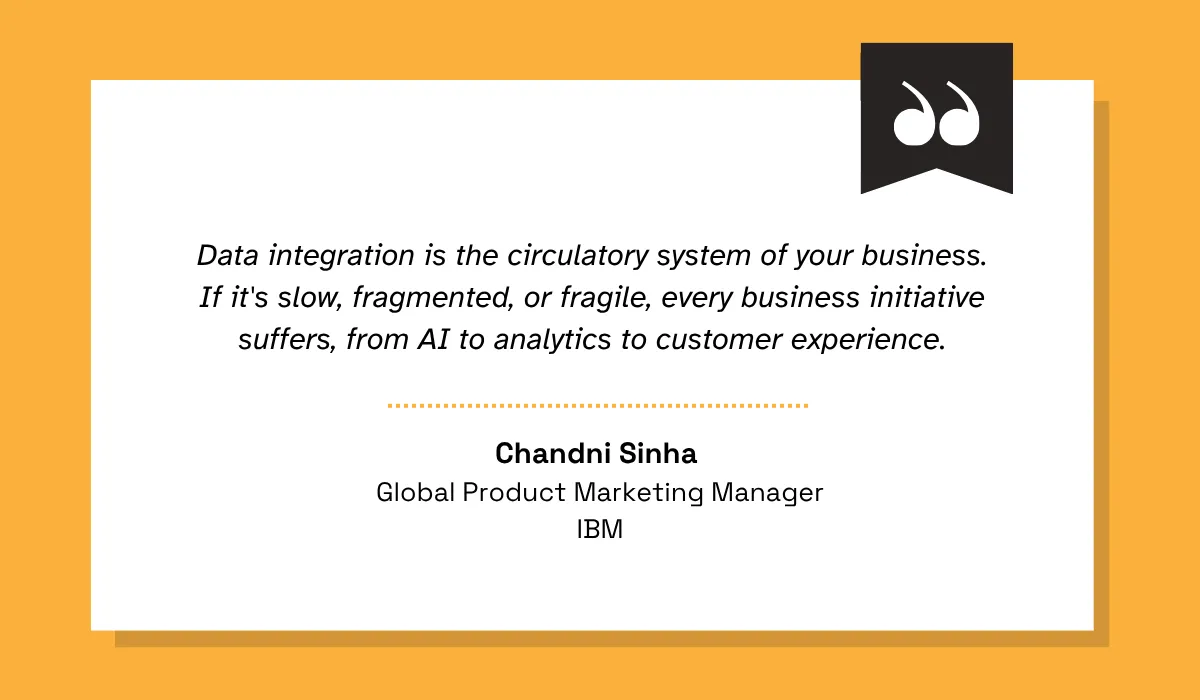
IBM Global Product Marketing Manager Chandni Sinha explains it well:
That's why integration should be one of your top buying criteria from the beginning.
Your provider should support the way your business already operates, whether that's through APIs, scheduled batch files, or direct integrations with procurement, GRC, TPRM, ERP, MDM, or analytics platforms.
Otherwise, even high-quality data becomes trapped outside the systems where decisions are made.
And the cost isn't just additional effort. Different teams start working with different versions of the same information.
Those small inconsistencies slowly reduce confidence in the entire third-party risk management system.
Before you commit to a provider, ask how their data actually reaches you.
Do they offer a real API? Batch file delivery? Direct integration with the procurement, GRC, or TPRM systems your team already relies on?
Because if the information can't move smoothly through your existing workflows, it won't create much value, no matter how accurate it is.
Conclusion
Choosing a third-party risk data provider isn't about finding the vendor with the biggest numbers or the flashiest demo.
It's about asking better questions.
Can they cover your entire risk surface? How often is their data refreshed? Can they prove where every important data point came from? And will that data fit into the way your team already works?
If the answer to any of those questions is unclear, keep looking.
Because when a third-party incident happens, you'll be relying on the quality of your data long before you're relying on your incident response plan.
Articles
Discuss how these trends affect your organization.
Our analysts are available for a short call. Bring a specific question and we will ground it in the data.
Insights
Keep reading
More analysis, research, and outcomes grounded in live company intelligence.
7 Things to Look for In a Supplier Location Intelligence Provider
Not sure which supplier location intelligence tool to choose? Discover 7 essential traits every top provider should offer.
Why Tier-2 and Tier-3 Suppliers Are Your Biggest Hidden Risk
Are your Tier-2 and Tier-3 suppliers a ticking time bomb? Learn how to identify emerging market risks before they cripple your business.
Understanding the Biggest Risks in Emerging Markets
Are you prepared for the biggest risks in emerging markets? Learn how to identify emerging market risks and protect your investments.